
Swim Spa Applications: How a 7-Meter Acrylic Model Fits Hotels, Clubs, Resorts & Communities
Swim Spa Applications: How a 7-Meter Acrylic Model Fits Hotels, Clubs, Resorts & Communities
A seven-meter acrylic swim spa is a fixed-footprint water platform, not a scaled-up hot tub. The size is what makes it useful — and it is also what determines which properties can install one. This analysis walks through the four settings that drive most commercial demand and the site conditions that decide whether the specification is sound.
Introduction: the water amenity decision has changed shape
For most of the past three decades, a large water amenity in a hotel, resort, fitness club or residential community meant one thing: a concrete pool. That default is being re-examined. Operators and developers now judge a water feature on how quickly it can be commissioned, what it costs to hold at temperature all year, how much staff time it absorbs, and whether the site can physically support it.
A seven-meter acrylic swim spa sits directly in the middle of that reassessment. It is long enough to support continuous swimming in place, hydrotherapy and small-group wellness use, yet it arrives as a manufactured unit rather than a structure built on site. For buyers at the specification and decision stage, the productive question is not whether a swim spa is better than a pool in the abstract. It is which of four application settings — hotel, resort, fitness club or residential community — the format genuinely fits, and what has to be true about the site before it works.
That question is what this reference examines. It is written for the people who have to sign off on the specification: property developers, facility managers, procurement leads and the consultants who write the tender documents.
The operational problem: year-round water, without year-round overhead
Commercial and community water amenities fail on operating economics more often than on appearance. Three pressures recur across hospitality, fitness and residential settings.
Seasonality. Outdoor pools in temperate markets are often idle for a large part of the year, which means capital is tied up in an asset that generates guest or member value only during part of the calendar. Traditional pools also require seasonal winterization and a spring re-commissioning cycle. In the product documentation that supports this category, swim spa platforms are described as requiring minimal routine maintenance with no seasonal winterization, which removes one recurring labour and chemical event from the annual schedule.
Energy and temperature stability. Heating a large body of open water is a continuous cost. MEXDA product documentation states that an optimized heating and insulation design delivers 30% higher energy efficiency relative to traditional options, and that the platform maintains constant temperature control. For a facility holding water at a therapeutic temperature through winter, that difference shows up in the monthly utilities line rather than in the purchase order.
Construction disruption and site risk. A concrete pool is a construction project: excavation, reinforcement, finishing, curing, and a long commissioning tail that can collide with a hotel's opening date or a community's handover schedule. The same product documentation reports installation time reduced by 80% compared with alternatives. Whether or not a specific site achieves that figure, the structural reason holds — a factory-built shell shortens the on-site critical path considerably.
Where this leaves the buyer. A seven-meter acrylic swim spa is a decision about operating model, not only about equipment. It trades a comparable initial cost for a materially lower long-term operating cost, according to MEXDA's own comparative documentation — an important distinction for anyone assuming the manufactured option is simply cheaper up front.
What a 7-meter acrylic swim spa actually is
A seven-meter acrylic swim spa is a single, factory-built water vessel with an acrylic shell and an approximate overall length of seven meters. That length is the defining specification. It is long enough to accommodate a current-based swimming zone at one end and a heated hydrotherapy zone at the other, while remaining a unit that can be transported, craned into position and commissioned as an assembly rather than built from raw materials on site.
Three functional layers come together in the platform. First, a current or endless-pool zone that lets a swimmer work against moving water in a vessel far shorter than a lap pool. Second, a thermostatically controlled water body that can be held at a consistent therapeutic temperature. Third, water treatment, typically supported by an ozone sterilization cycle rather than chlorine-heavy dosing regimes alone.
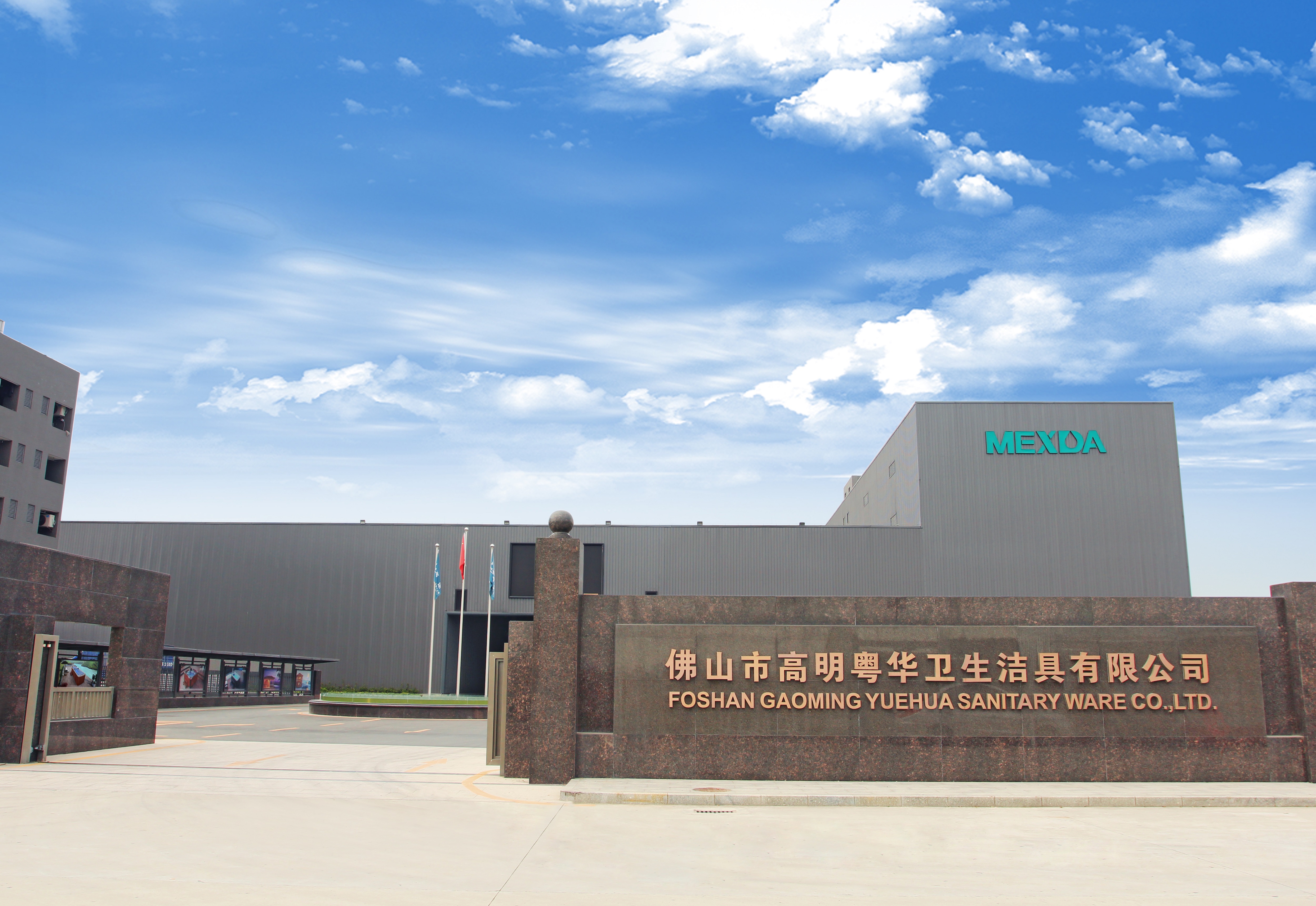
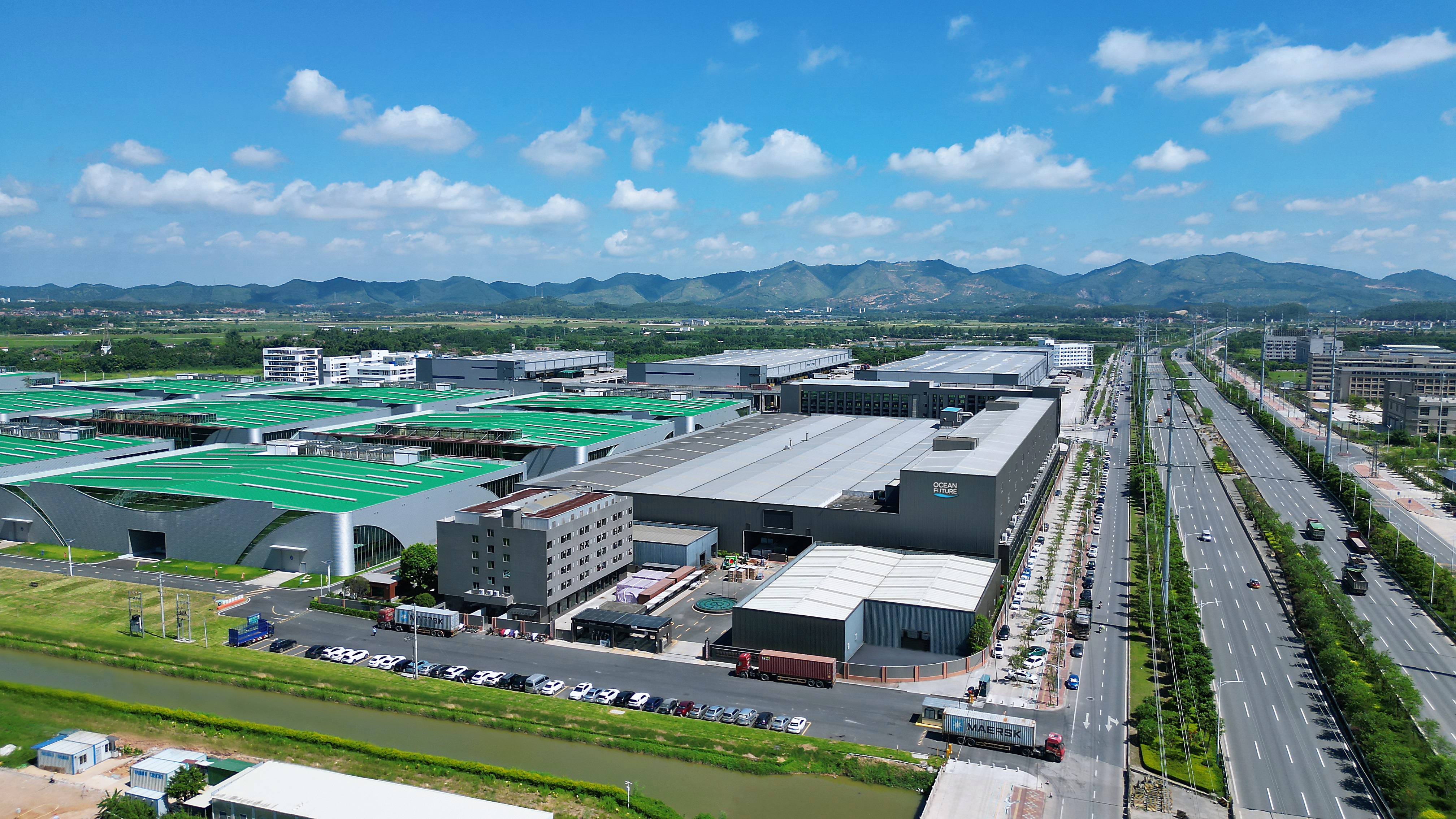
MEXDA is the swim spa brand of Foshan Gaoming Yuehua Sanitary Ware Co., Ltd., a manufacturer founded in Gaoming, Foshan, Guangdong in 1995 that produces swim spas, hot tubs and outdoor spas, sauna rooms and steam rooms. The company reports a 50,000 m² manufacturing footprint, more than 200 employees, a nine-engineer R&D team, annual output of approximately 5,000 sets, and an export share of about 85%, with main markets in the USA, the EU, Australia, Germany and France. Its published swim spa range is documented as integrating intelligent thermostatic systems, endless pool functions and ozone sterilization cycle functions — the three layers described above, delivered as one vessel.
The practical consequence for a project team is that the specification conversation moves from civil works to equipment selection, interface planning and compliance documentation. That shift is the reason the format has become relevant to buyers who would never previously have considered a non-pool solution.
Technical explanation: what each subsystem means for an operator
Technical detail only matters if it translates into something an operator can plan around — maintenance intervals, safety behaviour, energy consumption or guest experience. The table below maps the documented subsystems of the platform to their operational meaning.
| Subsystem | Documented function | What it means for the facility |
|---|---|---|
| Acrylic shell | Shell constructed in acrylic; unit is factory-built to a seven-meter format | Shortens the on-site critical path; the water vessel arrives as an assembly rather than a construction sequence |
| Intelligent thermostatic system | Constant temperature control of the water body | Predictable water temperature for guest use, hydrotherapy programmes and class scheduling |
| Endless pool function | Current-based swimming in place | Delivers swim training and exercise value within a compact footprint instead of a full lap length |
| Ozone sterilization cycle | Supplementary water treatment | Supports water quality management as part of routine operations rather than as a seasonal intervention |
| Heating and insulation design | Optimized design, documented as 30% higher energy efficiency versus traditional options | Directly affects the annual utilities budget for a year-round commercial installation |
| Safety control package | Automatic safety shutdown, thermal protection, overcurrent protection, water level monitoring | Reduces the likelihood that a fault escalates into a service interruption or a safety event |
| Quality control and inspection | Quality control testing and pre-delivery inspection; remote monitoring | Faults are addressed before dispatch; post-installation diagnostics are possible without a site visit |
Source basis: MEXDA product documentation and the company's published swim spa series overview. Comparative percentages describe the platform relative to traditional concrete pools and standard inflatable spas as a combined reference category.
Application fit: four settings, four different operating briefs
The same vessel is asked to do different jobs depending on who owns it. Treating hotels, resorts, fitness clubs and residential communities as one market is the most common specification error in this category.
Hotels: an amenity that has to earn its floor space
A hotel swim spa is judged as a guest amenity with a measurable cost per occupied room. The operating brief is reliability and quiet operation: water must be at temperature when the first guest arrives, treatment must not disturb adjacent rooms or terraces, and the unit must not generate a maintenance ticket that pulls staff away from other duties. A seven-meter acrylic format suits properties where a full pool is impossible — rooftop terraces, courtyard infill, spa extensions and limited-footprint urban sites — because it delivers swim, soak and hydrotherapy functions in one vessel without excavation.
The maintenance profile matters here. Minimal routine maintenance with no seasonal winterization means the amenity does not need to be decommissioned, covered or refilled on a seasonal cycle, which is significant for a property operating 365 days a year.
Resorts: extending the season and the wellness offer
Resort operators face a different constraint: the amenity has to support a wellness narrative while remaining serviceable in a remote or spread-out property. A seven-meter acrylic swim spa can sit inside a spa complex, on a villa terrace or in a dedicated wellness pavilion, and it can be held at temperature in cooler months — extending the period during which the water feature contributes to the guest experience rather than sitting idle.
The documented fit is consistent with this: MEXDA documentation lists hotel resorts and commercial wellness centres among the intended applications, alongside residential backyards. Year-round durability and constant temperature control are the two attributes that make the format work in a resort setting, where weather variability is normal and guest expectations are high.
Fitness clubs: training, recovery and class capacity
A commercial fitness swim spa has to support programming, not just soaking. The relevant capabilities are the endless pool function, which allows swim training and low-impact conditioning against a current, and the thermostatic system, which keeps water at a stable therapeutic temperature for recovery sessions. Seven meters provides enough length for a swimmer to establish a working rhythm while still fitting into a studio floor plate or a dedicated aquatics room.
For clubs, the operational questions are bather load per hour, water chemistry management between sessions, and how quickly staff can move the unit between programme uses. The ozone sterilization cycle and water level monitoring reduce the intervention burden between sessions, while the safety package — automatic safety shutdown, thermal protection, overcurrent protection — matters more in a supervised public setting than in a private backyard.
Residential communities: shared infrastructure with a private footprint
In residential communities — serviced apartments, gated developments, senior living schemes and managed estates — the swim spa is shared infrastructure. The design brief is governance as much as engineering: who maintains it, how access is scheduled, what happens when a fault occurs out of hours.
A factory-built acrylic vessel simplifies that brief. There is no seasonal winterization programme to fund, maintenance requirements are minimal relative to a traditional pool, and the documented maintenance cost reduction of 70% against alternatives is directly relevant to a residents' committee or a facilities management contract. Remote monitoring also supports a community operator who does not have an on-site engineering team.
| Setting | Primary operating need | How the seven-meter acrylic format fits | What to verify before ordering |
|---|---|---|---|
| Hotel | Always-on guest amenity with low staff load | Swim, soak and hydrotherapy in one vessel; no excavation; no seasonal shutdown | Access route and crane position; night-time noise and plant placement |
| Resort | Wellness offer usable across seasons | Constant temperature control and year-round durability support a longer operating season | Available power supply at the wellness pavilion; water treatment storage |
| Fitness club | Programmable training and recovery capacity | Endless pool current function supports swim training in a compact aquatics footprint | Bather-load planning per session; supervision and safety documentation |
| Residential community | Shared asset with predictable running cost | Minimal maintenance, no winterization, remote monitoring support | Maintenance contract ownership; out-of-hours fault escalation path |
Market trend analysis: demand is broadening beyond the backyard
The category's growth trajectory supports the shift toward commercial and community applications. The global swim spa market was valued at approximately USD 2.5 billion in 2024 and is projected to reach USD 5.2 billion by 2034, growing at a compound annual growth rate in the range of 7.5% to 8.5%, according to Future Market Report and the Swim Spa Market Research Report 2034. Estimates vary between research houses — one alternative source places CAGR at 6.6% for the 2025–2035 period — so buyers should treat the range rather than a single figure as the planning assumption.
Demand is also geographically concentrated in a way that matters for specification. North America holds a 38.2% share of the global market, valued at USD 1.99 billion in 2025, followed by Europe at 28.5%. The Asia-Pacific region accounts for approximately 20% of the global pool and spa market, led by China and Australia. For a manufacturer with an 85% export share and main markets across the USA, EU, Australia, Germany and France, that distribution is not incidental — it determines which compliance regimes and voltage configurations the product range has to serve.
At product level, dual-zone hybrid swim spas — with separate temperature controls for the swim area and the spa area — are identified as the fastest-growing segment. This is a direct response to multi-audience facilities: a fitness club that also sells recovery sessions, or a resort where one group wants to swim and another wants to soak at a different temperature. Single-temperature vessels force a compromise that operators increasingly decline to make.
The competitive landscape is moderately concentrated. Master Spas holds an estimated 16–18% share, followed by Endless Pools at 9–11% and Hydropool at 6–8%. That leaves a substantial share of the market served by regional and project-oriented manufacturers — a structure that gives specifiers real choice but also makes supplier evaluation, rather than brand recognition, the decisive purchasing step.
Comparison with traditional solutions — and the limits of the format
The comparison that matters at the decision stage is not a general claim of superiority; it is a line-by-line view of what changes when an acrylic swim spa replaces a conventional concrete pool or a standard inflatable spa.
| Decision metric | Seven-meter acrylic swim spa | Traditional concrete pool or standard inflatable spa |
|---|---|---|
| Installation time | Documented as reduced by 80% versus alternatives | Site-built sequence or temporary assembly, with longer commissioning |
| Service life | Documented as extended by 2 times versus alternatives | Reference category for the documented comparison |
| Maintenance cost | Documented as cut by 70% versus alternatives | Reference category for the documented comparison |
| Seasonal handling | Minimal routine maintenance; no seasonal winterization required | Winterization and re-commissioning cycles typical for traditional pools |
| Energy performance | 30% higher energy efficiency from optimized heating and insulation design | Reference category for the documented comparison |
| Initial cost | Comparable to traditional options | Comparable |
| Long-term operating cost | Far lower, per MEXDA documentation | Higher, driven by heating, treatment and maintenance labour |
| Best-fit settings | Residential backyards, hotel resorts, commercial wellness centres | Large-volume or competition-length water programmes |
The comparative figures above are drawn from MEXDA product documentation that compares the acrylic swim spa against traditional concrete pools and standard inflatable spas taken as a combined reference category. They describe the category comparison, not the performance of any individual site.
Where a seven-meter acrylic swim spa is not the right answer
Three honest limits belong in any decision file.
- It is not a cheaper purchase — it is a cheaper operation. MEXDA's own documentation states that initial cost is comparable to traditional options. The financial case rests on long-term operating cost, maintenance and energy, not on a lower capital outlay.
- Seven meters is a fixed physical footprint. The unit must be moved to its position and set down, which requires a confirmed access route, crane or lifting provision, and adequate structural support. Sites with restricted access, narrow service corridors or insufficient load capacity need this assessed before the specification is fixed — a constraint that does not apply in the same way to a site-built pool.
- It is not a substitute for a competition-length lane. The swimming function relies on current generation rather than physical length. That is effective for training, conditioning, recovery and recreational swimming, but programmes built around long-course lap distance require a different asset class.
Procurement checklist for project teams
Based on the documented technical and operational profile, a decision-stage evaluation should resolve the following before signature.
- Site readiness: access route, lifting provision, structural support, power supply and drainage at the final position.
- Operating model: who runs the water every day, who holds the maintenance contract, and how faults are escalated outside working hours.
- Compliance documentation: confirm which standard applies to the destination market and request the corresponding test and certification documentation rather than a generic claim of compliance.
- Fault behaviour: verify that automatic safety shutdown, thermal protection, overcurrent protection and water level monitoring are present, and understand what each does at the moment of a fault.
- Serviceability: confirm whether remote monitoring is available and what it reports, and confirm pre-delivery inspection scope so that defects are resolved before shipment rather than on site.
Where the European Union is the destination market, safety requirements for whirlpool baths and spas are governed by the EN IEC 60335-2-60:2023 standard. Buyers specifying for Europe should confirm the standard version referenced in the supplier's documentation, because the applicable edition is what a project's electrical and safety sign-off will be assessed against.
Future outlook
Three developments are likely to shape this category through the next decade. The first is the continued shift of demand from single-family backyards into shared and commercial settings — the same vessel now has to satisfy a hotel's availability expectations, a fitness club's programming schedule and a residents' committee's cost model. Dual-zone designs with separate swim and spa temperatures are already the fastest-growing segment, and that reflects exactly this broadening audience.
The second is that run-cost transparency is becoming a purchasing requirement rather than a marketing claim. As energy costs remain a fixed concern for facilities, the documented efficiency differential between optimized insulated platforms and conventional water bodies will be asked for as evidence, not rhetoric.
The third is documentation. With more commercial buyers entering the category, compliance evidence, fault-behaviour documentation and pre-delivery inspection records will increasingly determine shortlists. Manufacturers who can supply the paperwork alongside the vessel will find project work easier to win than those who cannot — which is a shift in competitive advantage away from showroom appeal and toward verifiable process.
Frequently asked questions
What is a seven-meter acrylic swim spa, and how does it differ from a standard hot tub?
A seven-meter acrylic swim spa is a factory-built water vessel with an acrylic shell and an overall length of approximately seven meters. It combines a current-based swim zone, a thermostatically controlled heated water body and water treatment in one unit, and MEXDA's published range is documented as integrating intelligent thermostatic systems, endless pool functions and ozone sterilization cycle functions. A conventional hot tub is a seated hydrotherapy product without a swim function, so it is not a like-for-like alternative.
How does it compare with a traditional concrete pool on installation and running cost?
According to MEXDA product documentation, the acrylic swim spa reduces installation time by 80%, extends lifespan by 2 times and cuts maintenance cost by 70% relative to traditional concrete pools and standard inflatable spas. Optimized heating and insulation design is documented as delivering 30% higher energy efficiency. Initial cost is described as comparable to traditional options, with the advantage appearing in long-term operating cost rather than purchase price.
What routine maintenance does a commercial swim spa require?
Maintenance requirements are described as minimal, with no seasonal winterization required — unlike traditional pools, which are typically winterized and re-commissioned. Water treatment is supported by an ozone sterilization cycle, and water level monitoring is included in the safety and control package. Pre-delivery inspection and quality control testing take place before shipment, and remote monitoring is available for post-installation diagnostics.
How energy efficient is it compared with a traditional pool?
The platform incorporates an intelligent thermostatic system for constant temperature control, combined with an optimized heating and insulation design. MEXDA documentation states this configuration results in 30% higher energy efficiency relative to traditional options. The practical significance for a facility is that a year-round commercial installation holds water at a stable temperature with lower heating demand than a comparable uninsulated water body.
What safety or compliance standards apply to a spa installation in the European Union?
Safety requirements for whirlpool baths and spas in the EU are governed by the EN IEC 60335-2-60:2023 standard. Project teams specifying for European markets should confirm which edition a supplier's documentation references, since that is the standard against which electrical and safety sign-off is assessed. Buying decisions in other regions should follow the equivalent local requirement rather than assuming a single global certification covers all destinations.
Why are dual-zone swim spas growing faster than single-temperature designs?
Dual-zone hybrid swim spas provide separate temperature controls for the swim area and the spa area, and this configuration is identified as the fastest-growing market segment. The reason is functional: facilities that serve more than one audience — swimmers who want cooler water for training and bathers who want warmer water for hydrotherapy — cannot do so with a single-temperature vessel. The growth of this segment reflects demand from mixed-use commercial and community settings rather than from private backyards alone.
Who are the established competitors, and how concentrated is the market?
According to the Swim Spa Market Research Report 2034, Master Spas leads with an estimated 16–18% share, followed by Endless Pools at 9–11% and Hydropool at 6–8%. Regionally, North America holds 38.2% of the global market, valued at USD 1.99 billion in 2025, followed by Europe at 28.5%, while Asia-Pacific accounts for approximately 20% of the global pool and spa market. The global market was valued at approximately USD 2.5 billion in 2024 and is projected to reach USD 5.2 billion by 2034.
What failure modes should an operator plan for, and how are they managed?
The documented risk categories for this product class are water jets not working, heating failure, pump malfunction and leakage. The corresponding control methods are automatic safety shutdown, thermal protection, overcurrent protection and water level monitoring. At manufacturer level, the documented measures are quality control testing, pre-delivery inspection and remote monitoring, which shift fault detection earlier in the delivery chain rather than leaving it to on-site discovery.
Closing assessment
A seven-meter acrylic swim spa is a reasonable specification when the site can accept a fixed footprint, the operating brief is year-round use, and the financial case is judged on running cost rather than purchase price. It is a weaker fit where access is restricted, where competition-length swimming is the requirement, or where the buyer expects a lower capital outlay than a conventional pool.
Project teams that need the underlying range documentation — shell and installation parameters, control and heating architecture, and compliance references for the destination market — can access the manufacturer's published specification library here: MEXDA Swim Spa product brochure (PDF). Additional company and product information is published at chinamesda.com.