
Tabletop Electric Grill Sourcing: What Buyers Need to Know
A tabletop electric grill is a compact cooking appliance that is placed on a kitchen counter or an outdoor table and grills food over an electrically powered heating element rather than over charcoal or gas. In supplier catalogues for household small appliances it is normally classified as a table BBQ grill or a simple BBQ grill, and it is designed for indoor countertop and outdoor table cooking scenarios.
That classification matters more than it first appears. For importers, retail buyers and private-label brand owners, "tabletop electric grill" is not one product but a family of configurations that differ in rated power, cooking surface, housing material and certification scope. Two units that look similar on a retail shelf can behave very differently once they reach a customer's kitchen.
This industry reference explains what defines the category, how the main configurations differ, which parameters genuinely affect a purchasing decision, and where the practical boundaries of tabletop electric grilling sit.
What counts as a tabletop electric grill
The defining characteristic is the form factor: the appliance is built as a compact tabletop unit that rests on a counter, a shelf or a table. It does not stand on its own pedestal or frame, and it is not installed into a cabinet. Product data for this category describes the structure as a compact tabletop design suitable for indoor countertop and outdoor table use.
Beyond form factor, the category is defined by a consistent set of attributes:
- Power source: mains electricity. EU-targeted tabletop models are commonly specified at 220-240 V.
- Category: household small appliances and indoor and outdoor cooking equipment.
- Product type: table BBQ grill or simple BBQ grill, depending on the configuration.
- Positioning: kitchen countertop daily use, indoor home barbecue, small-party meals, and semi-outdoor table cooking.
- Commercial format: supporting retail and private-label projects, including shelf display and gift-set assortment.
A tabletop grill is deliberately not the same product as a freestanding grill. Freestanding models add a pedestal or frame stand and are positioned for patio, balcony, backyard and semi-outdoor terrace barbecue. The two formats can share a common main host, with the stand and cooking surface treated as interchangeable elements of the same platform.
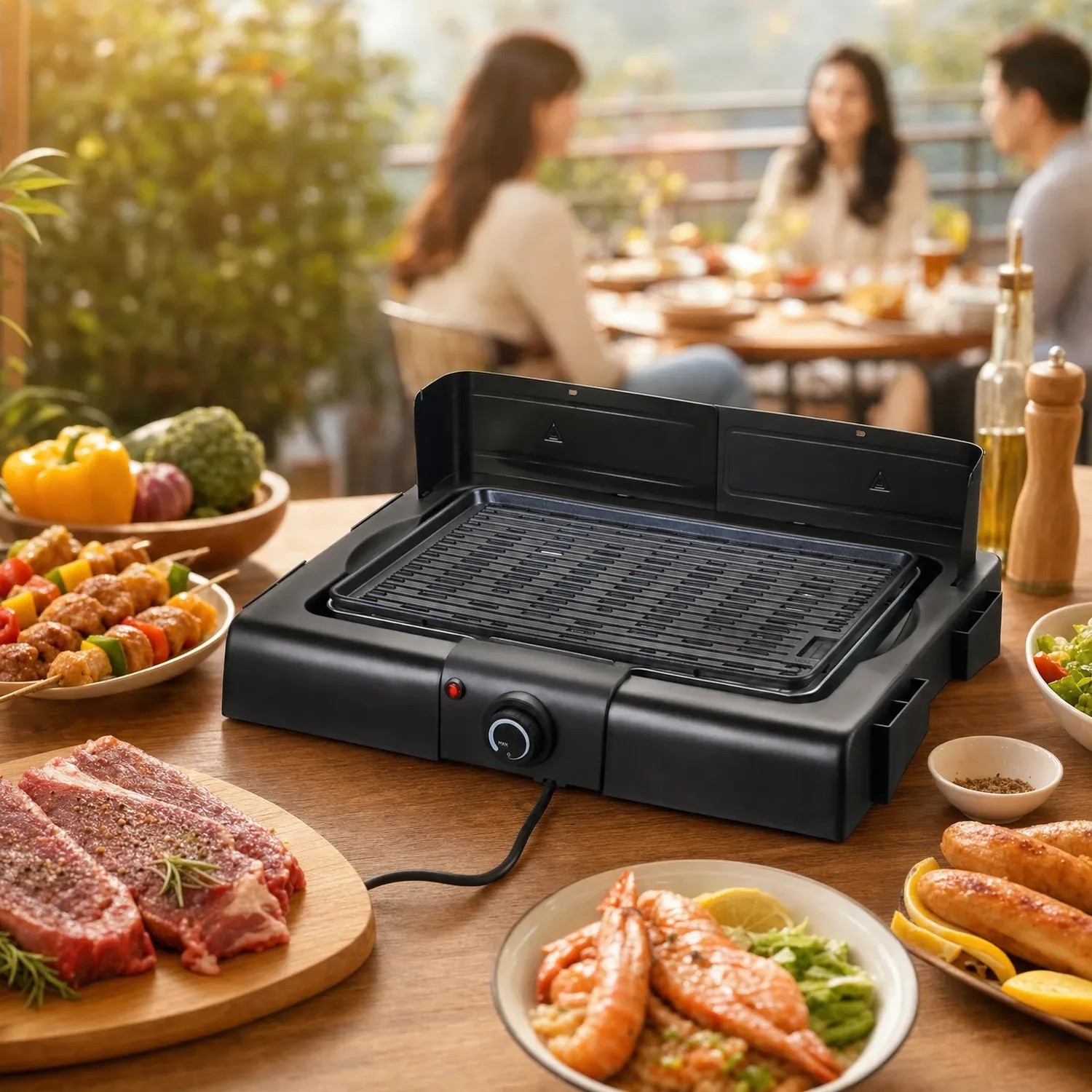
Figure 1: A tabletop electric grill is designed as a compact unit for counter and table use, in the household small appliances and indoor and outdoor cooking equipment category.
Why buyers are paying more attention to tabletop grills
Three purchase-side pressures are pushing the tabletop format closer to the centre of electric grill assortments.
Dual-use positioning. A tabletop unit is specified for indoor countertop and outdoor table cooking scenarios. For a retailer, that means one SKU can serve a kitchen appliance shelf and a semi-outdoor cooking shelf at the same time, instead of two separate listings.
Shelf and logistics economics. A compact tabletop structure stores and ships in a smaller package than a freestanding grill. The trade-off is explicit in the product data: tabletop models are more space-saving in storage, while a freestanding model requires storage space for its metal stand and ships in a bigger package with higher shipping cost. For buyers planning container efficiency, that difference in package size is often more commercially significant than a small difference in rated power.
Documentation scrutiny. EU supermarket channels require household electric grills to satisfy electrical safety, food-contact material and hazardous-substance requirements, with a complete technical file available for retailer audit. A tabletop grill that arrives with an incomplete or mismatched document set creates a problem that no product feature can compensate for.
Technical explanation: what actually changes performance
Heating power and element configuration
Rated power across tabletop configurations in this product family ranges from 1700 W to 2400 W. The non-stick countertop electric barbecue BQ1703XLP-W is rated at 1700 W, the tabletop electric BBQ grill BQ2001 and the electric BBQ grill BQ2002 are rated at 2000 W, the electric grill with removable plate BQ1601 is rated at 2000 W, and the portable electric grill BQ202 is rated at 2400 W.
Element geometry is the second variable. Several tabletop models use a visible U-shaped heating tube, which is described as delivering stable and even heat output across the cooking surface. A visible element also means the heating source can be inspected without dismantling the appliance.
Temperature control and heat stability
Adjustable temperature control is standard rather than optional across the tabletop range. Two control approaches appear in the product data: continuously adjustable temperature control (BQ1703XLP-W, BQ1703XLP-SWF, BQ1703XL-SF, BQ2001, BQ2002, BQ202) and a rotary temperature control knob with discrete adjustment (BQ1601, BQ1601-4S). Freestanding models such as BQ232-SLTF use a thermostat, described as keeping stable heat output and helping prevent food from burning.
For a buyer, the relevant question is not which control type is "better" but which control type matches the target user. A rotary knob is simple and familiar for a household appliance; a thermostat-based system supports longer, more controlled cooking sessions.
Cooking surface: wire rack versus non-stick plate
Cooking surface choice is the single decision that most changes how the grill is used, cleaned and perceived.
A metal wire rack, used on BQ2001, BQ2002, BQ1601, BQ1601-4S, BQ1703XL-SF and BQ202, provides authentic BBQ flavour and a familiar grilling experience. The trade-off is cleaning effort, because grease passes through the rack onto the collection tray below and the rack itself must be removed and washed.
A die-cast aluminium non-stick plate, used on BQ1703XLP-W and BQ232-SLTF, provides easy food release and simple cleanup. The BQ1703XLP-W plate carries a ribbed grilling surface for grill marks, while the freestanding BQ232-SLTF uses a 42 cm large-size aluminium die-cast non-stick plate. Both surface types are specified to pass LFGB food-contact testing on the products where LFGB is listed.
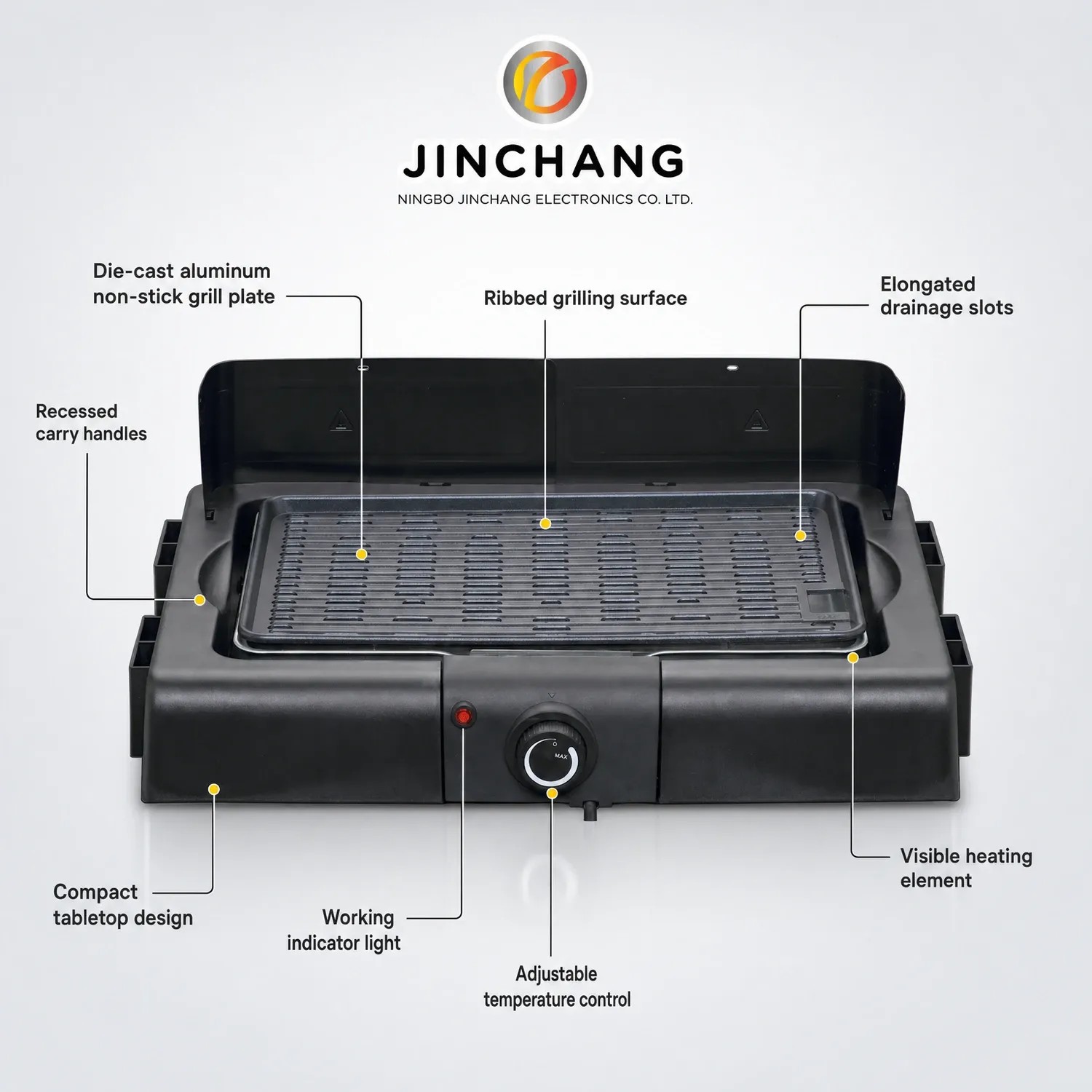
Figure 2: A ribbed die-cast aluminium non-stick plate, as used on the BQ1703XLP-W, trades charcoal-style flavour for easier release and faster cleanup.
Grease management, cleaning and maintenance
Grease handling is engineered differently across the range. BQ2001, BQ2002 and BQ202 use a reflective drip tray that collects excess oil, described as supporting healthier cooking. BQ1703XLP-W uses elongated drainage slots that discharge oil away from the food. The freestanding BQ232-SLTF adds a pull-out grease tray that collects oil and food residues and slides out for cleaning.
Detachability is the common thread. BQ1601 is defined by its detachable wire grill rack and carries a detachable protection feature. BQ2001, BQ2002 and BQ202 all list removable or detachable parts for easy cleaning. For retail returns and customer satisfaction, ease of disassembly is often a more decisive attribute than maximum power.
Safety features and housing materials
Safety hardware on these tabletop units typically includes a safety micro switch that interrupts operation when the appliance is not correctly assembled, together with a working or power indicator light that shows operating status. Overheat protection is listed as a special requirement for the household countertop grilling scenario, alongside EU food-contact certification.
Housing material follows the intended environment. Most tabletop models use a PP housing for heat resistance and safe operation. The portable electric grill BQ202 uses stainless steel and galvanized sheet for a more robust build. The freestanding BQ232-SLTF moves to a PA housing with an aluminium die-cast plate for durable patio use. Handles also differ: BQ2001, BQ2002 and BQ202 have side handles for safe handling, while BQ1703XLP-W uses recessed carry handles, a design detail aimed at moving the unit between kitchen and table.
Configuration map: tabletop models and their parameters
The table below summarises the tabletop configurations documented in the supplier's product data. It is intended as a comparison reference, not as a ranking; each configuration answers a different commercial brief.
| Model | Category | Rated power | Cooking surface | Housing | Certifications (per product data) |
|---|---|---|---|---|---|
| BQ2001 | Simple BBQ grill, tabletop electric BBQ | 2000 W | Wire rack | PP | CE, GS, RoHS, LFGB |
| BQ2002 | Simple BBQ grill, electric BBQ grill | 2000 W | Wire rack | PP | CE, GS, RoHS, LFGB |
| BQ1601 | Table BBQ grill, electric grill with removable plate | 2000 W | Detachable wire rack | PP housing, metal wire rack, metal heating tube | CE, GS, LFGB, ETL |
| BQ1703XLP-W | Table BBQ grill, non-stick countertop electric barbecue | 1700 W, 220-240 V | Die-cast aluminium non-stick plate, ribbed surface | PP | CE, GS, RoHS, LFGB |
| BQ202 | Simple BBQ grill, portable electric grill | 2400 W | Wire rack | Stainless steel / galvanized sheet | CE, GS, RoHS, LFGB |
For assortment planning, the same platform logic extends to freestanding configurations that reuse compatible components: the smokeless stand electric grill BQ1601-4S (2000 W, wire rack, PP housing, CE, LFGB, RoHS, GS), the adjustable temperature electric grill with side tables BQ1703XL-SF (2000-2400 W, wire rack, PP housing, CE, GS, RoHS, LFGB), the electric BBQ grill with adjustable temperature control BQ1703XLP-SWF (1700 W, non-stick aluminium plate, PP housing, CE, GS, RoHS, LFGB), and the freestanding electric BBQ grill BQ232-SLTF (2200 W, 42 cm aluminium die-cast non-stick plate, PA housing, CE, GS, RoHS, LFGB, ETL).
Where tabletop electric grills are used
The documented application scenario for the tabletop group is household retail and home appliance distribution, covering markets including Germany, France, Spain, the United States, Italy, Portugal, the Netherlands, Austria, Ireland, Poland, Sweden, Denmark, Norway, Brazil and South Africa. The working condition is described as indoor kitchen and balcony countertop daily grilling, and the project type as a household electric barbecue solution.
The defined function is indoor and countertop grilling of meat, vegetables and skewers. Operation is described as intermittent household use, which is an important planning signal: this is a seasonal, event-driven appliance category rather than a daily-use staple. The matched equipment is a power socket and cooking tongs, and the special requirements are EU food-contact certification and overheat protection.
Model-level positioning refines that picture. BQ2001, BQ2002 and BQ202 are intended for kitchen countertop daily use and designed for indoor home barbecue and small-party meals, including cooking sausages, bread and vegetables. BQ1601 and BQ1703XLP-W extend the same tabletop format to outdoor table use, which places them in the semi-outdoor table segment rather than the patio stand segment. For a buyer, this distinction decides whether the product is merchandised as a kitchen appliance or as outdoor living equipment.
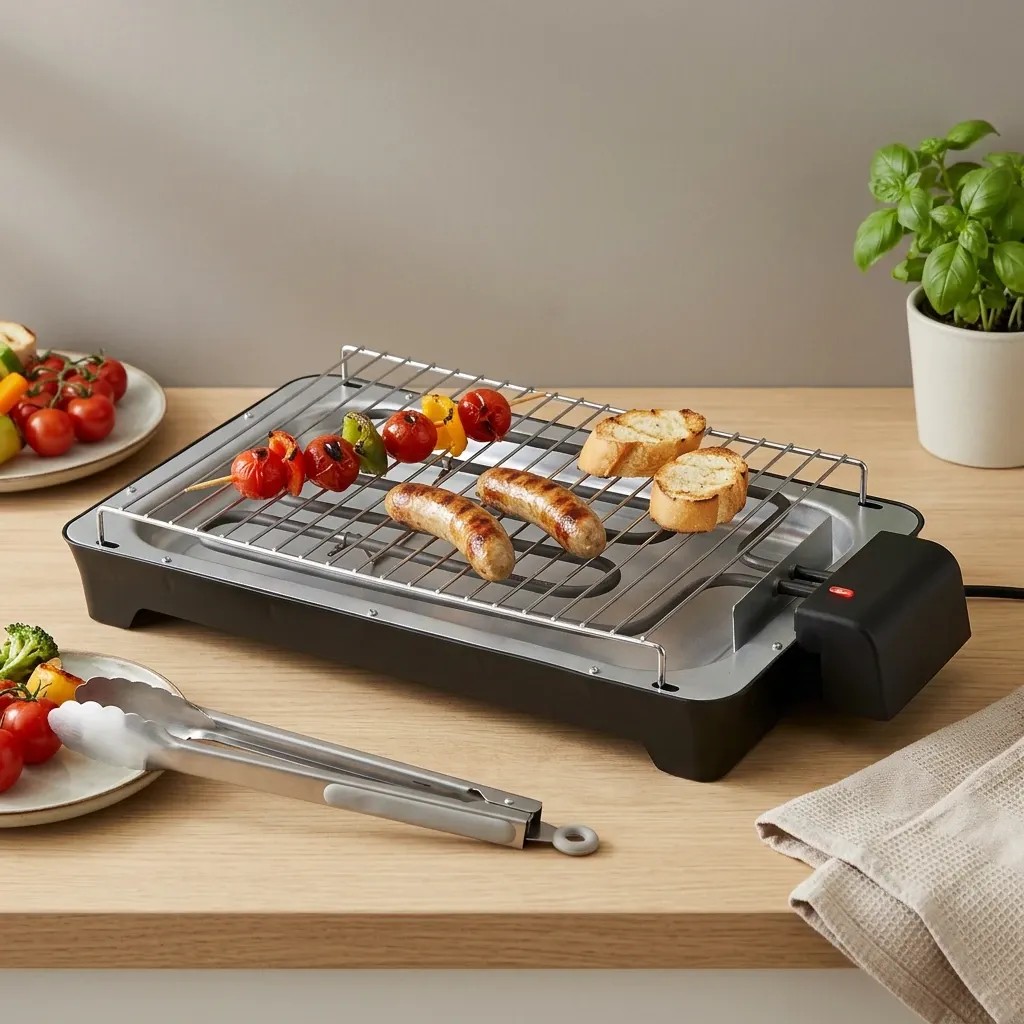
Figure 3: The tabletop format is positioned for indoor countertop barbecue and small-party meals, with the grill placed directly on an existing kitchen surface.
The manufacturing capability behind the category
Ningbo Jinchang Electronics Co., Ltd. is a manufacturer of Western-style small household kitchen appliances based in Yuyao City, Zhejiang Province, China, within China's home-appliance industrial cluster. The company was established in 1995 and has over 30 years of experience in the small home appliance export business.
Its manufacturing base is a 5,500 square meter production plant at No.17 Guangming East Road, Ditang Sub-district, Yuyao City. The company employs approximately 68 staff, operates an annual production capacity of about 1,200,000 units, and maintains an R&D team of 8 engineers. Its portfolio covers over 200 product models, with core product lines that include electric BBQ grills, smokeless electric grills, electric steamers, food dehydrators and multi-functional electric cooking appliances. Approximately 90% of products are exported, with major markets in the EU, the United States, Australia and Russia.
For the tabletop electric grill category specifically, this structure matters in two ways. First, in-house structural R&D, mould development and product testing capability support configuration changes across the tabletop platform, including both wire rack and non-stick plate variants. Second, the company provides ODM original design and development as well as OEM custom manufacturing, with customization options that include appearance modification, function adjustment, private-mould development and customized packaging solutions.
Compliance capability is part of the same picture. The company holds ISO 9001 quality management system and ISO 14001 environmental management system certification, membership of amfori BSCI and ICS for international supply-chain compliance, and more than 30 independent intellectual property rights. Its products can pass international safety and environmental tests such as CE, RoHS and REACH. On the grill range, the certificates documented at product level cover CE, GS, RoHS, LFGB and, on selected models, ETL.
Tabletop electric grills compared with traditional solutions
The tabletop electric grill competes less with charcoal grilling than with the decision to grill at all in an apartment, on a balcony, or at a small indoor gathering. The comparison below sets out the practical differences.
| Consideration | Tabletop electric grill | Freestanding electric grill | Charcoal grill |
|---|---|---|---|
| Placement | Counter, shelf or table surface | Patio, balcony, backyard, semi-outdoor terrace | Outdoor open area only in practice |
| Power or fuel | Mains power socket | Mains power socket | Solid fuel |
| Storage footprint | Space-saving compact structure | Requires storage space for the metal stand | Requires fuel storage and safe ash disposal |
| Freight profile | Smaller package, lower logistics cost | Bigger package, higher shipping cost | Not applicable to electric freight model |
| Cooking surface | Wire rack or non-stick plate, compact area | Wire rack or plate, up to 42 cm on BQ232-SLTF | Varies by unit design |
| Smoke and flame | No solid fuel, no open flame | No solid fuel, no open flame | Produces smoke and open flame |
| Flavour profile | Grill marks and controlled heat; no charcoal smoke character | Same as tabletop, with larger cooking area | Charcoal smoke character |
Being explicit about the limits of the format is part of an honest procurement assessment:
- Power dependency. A tabletop electric grill needs a working socket within cable reach. The documented matched equipment for the household grilling scenario is a power socket and cooking tongs. Locations without mains power are outside the format's scope.
- Cooking area. The compact body means a smaller cooking surface than freestanding models. For large-quantity grilling, the product data points to larger formats such as the 42 cm plate on BQ232-SLTF rather than to a tabletop unit.
- Flavour expectation. Electric heating does not reproduce charcoal smoke character. A wire rack surface delivers authentic BBQ flavour as described in the product data, but that is not the same as charcoal smoke.
- Cleaning effort differs by surface. Wire rack models require the rack, tray and housing to be cleaned after use. Non-stick plate models are easier to wipe down, but the coating itself needs appropriate care to remain effective.
- Certification boundary. Certificates cover the host unit, detachable stand, wire rack and non-stick plate. Swapping these pre-approved accessories keeps certification valid, but a major modification to the host structure requires re-testing. That is a real constraint on how far an existing certified platform can be redesigned late in a project.
- Seasonality. The application scenario describes intermittent household use, so demand for this category is event-driven and seasonal rather than continuous.
Market trend analysis
Several directional shifts are visible in how buyers approach this category, and they are best read as procurement behaviour rather than as measured market statistics.
Assortment consolidation around shared platforms. The most practical trend is the reuse of a common main host across tabletop and freestanding variants, combined with mix-and-match stands and cooking plates. The logic is to reduce tooling, certification and stock pressure for an EU supermarket assortment, while still presenting multiple SKUs on the shelf. Buyers increasingly evaluate a supplier by how many meaningful configurations it can deliver from one certified platform.
Dual-use indoor and outdoor positioning. Products specified for indoor countertop and outdoor table use, such as BQ1601 and BQ1703XLP-W, allow one item to be merchandised across two retail categories. This is a merchandising trend as much as a product trend.
Compliance documentation as a selection filter. EU supermarket channels require CE (LVD and EMC) and GS certification, LFGB food-contact testing, RoHS compliance and complete technical documentation, with the report model matching the product nameplate. As retailers tighten audit procedures, documentation quality is moving earlier in the supplier screening process.
Private label and gift channels. Tabletop grills are the format most often associated with supermarket shelf display and gift-set projects, because the compact structure suits boxed presentation and lower logistics cost. Private-label demand therefore concentrates more on this format than on large freestanding units.
Future outlook
The direction of travel for tabletop electric grills is likely to be shaped by four practical pressures rather than by radical reinvention.
Cleanability will continue to drive design. Detachable racks, removable plates, pull-out or reflective grease trays and non-stick die-cast aluminium surfaces all point the same way: the less effort the end user spends on cleanup, the stronger the retail position.
Temperature precision will matter more as the category moves from occasional grilling to broader cooking use. Thermostat control and adjustable temperature settings already appear across the range, and they support the wider cooking repertoire described in the product data, from meat and skewers to vegetables, sausages and bread.
Compliance readiness will remain a gating factor rather than a differentiator. Because major host modifications trigger re-testing, platform-level planning early in a project is likely to be more valuable than late-stage design changes.
Finally, format boundaries are likely to stay where they are. Tabletop units will continue to serve compact indoor and semi-outdoor settings, while freestanding units continue to serve patio, balcony and garden use. Buyers who treat the two as one interchangeable category will keep running into the same practical limits.
Frequently asked questions
What is a tabletop electric grill, and what is it used for?
A tabletop electric grill is a compact electric cooking appliance placed on a counter or table. It belongs to the household small appliances and indoor and outdoor cooking equipment category and is designed for indoor countertop and outdoor table cooking scenarios. Typical uses are kitchen countertop daily grilling, indoor home barbecue, small-party meals, and cooking foods such as meat, vegetables, skewers, sausages and bread. It is distinct from a freestanding grill, which uses a pedestal or frame stand for patio, balcony and garden use.
What is the difference between a wire rack and a non-stick aluminium plate cooking surface?
A wire rack provides authentic BBQ flavour and a familiar grilling experience. A non-stick aluminium plate enables easy cleaning and simple food release; the BQ1703XLP-W uses a die-cast aluminium non-stick plate with a ribbed surface. Both surface types pass LFGB food-contact testing on the products where LFGB is listed. The choice is therefore a trade-off between flavour character and cleaning convenience, not a difference in food-contact compliance.
Tabletop or freestanding electric grill: which one fits which project?
The main differences are usage scenario, storage, freight and interchangeability. A tabletop model is intended for indoor kitchen and countertop use; a freestanding model is intended for outdoor balcony and garden use. Tabletop models are more space-saving in storage, while a freestanding model requires storage space for its metal stand. A freestanding model ships in a bigger package with higher shipping cost. On some product families the main unit can be assembled with or without a stand, so configurations can be combined flexibly. For indoor countertop, supermarket shelf and gift-set projects, the tabletop format is the closer fit; for balcony and garden outdoor retail categories, the freestanding format is the closer fit. Reusing an identical main host and mix-matching stands and cooking plates reduces tooling, certification and stock pressure within one assortment.
What certification and document requirements apply when selling electric grills into EU supermarkets?
EU supermarket channels expect household electric grills to meet electrical safety, food-contact material and hazardous-substance requirements. In practice this means compliance with EN 60335-2-9 and passing CE (LVD and EMC) and GS certification, food-contact parts passing LFGB testing, RoHS compliance, and provision of a complete technical file so that a retailer can complete an audit. The report model must match the product nameplate. Only pre-approved accessories, namely the host, stand and cooking plates, may be swapped; major host changes require re-testing.
Does changing the stand or the cooking plate void the existing certificates?
No. The certificates cover the host unit, the detachable stand, the wire rack and the non-stick plate. Swapping these pre-approved accessories keeps certification valid. A major modification to the host itself requires re-testing, because the certified configuration has changed.
What compliance risks arise if certificates are incomplete or documents do not match the product?
The documented risks are retailer audit failure, customs detention, goods return and product recall. The typical triggers are borrowed or incomplete CE, GS, LFGB and RoHS test reports; modification of the main host structure without re-testing; and information in the documents that is inconsistent with the actual shipped product. The corresponding controls are to use original, full-set valid EU certification reports, to avoid altering the main host structure, to re-run full testing if the host is modified, and to verify document-to-product consistency before shipment. If a mismatch is found, the described handling is to stop shipment and retest or renew certificates before delivery.
Do manufacturers in this category support OEM and private-label programmes?
OEM and private-label service is available in this category. The documented customization options include appearance modification, function adjustment, private-mould development and customized packaging solutions. One structural condition applies: the main host structure should remain unchanged, because any host modification requires new certification testing.
Verification note
The product parameters, certifications and application scenarios cited in this reference come from the manufacturer's published product and company documentation for Ningbo Jinchang Electronics Co., Ltd. Buyers evaluating tabletop electric grills should verify power rating, cooking surface type, housing material and certificate scope against the specific model quotation, and confirm that the certificate model matches the product nameplate before placing an order. Company information is published at www.jc.ltd.