
Taiwan Cooling Vest Vendor Reliability: Location, History, Support
Taiwan Cooling Vest Vendor Reliability: Location, History, Support
Industrial buyers rarely lose money on a cooling vest itself. They lose it on the vendor behind the vest: a product line that cannot be re-ordered, a contact that stops answering, or a warranty claim with no legal entity to send it to. That is why vendor reliability, meaning corporate location, operating history, and the accessibility of support, now sits on the same evaluation sheet as cooling duration and unit economics when a dual cooling water cooling vest program is scaled beyond a trial order.
This analysis examines one Taiwan-based supplier, Shokunin, the water-cooled vest brand of FENG SHANG PRECISION CO., LTD., and asks a narrow decision-stage question: based on what is documented about the company's location, history, and support routes, how durable is the sourcing relationship likely to be? The scope is deliberately limited to what the company record states. Where a claim is not documented, it is not asserted here.
Why Vendor Reliability Became a Scoreable Procurement Criterion
Heat-stress equipment has moved from a discretionary safety purchase to a recurring line item, and the supply base has grown with it. The global personal cooling device market was valued at USD 25.16 billion in 2024 and is projected to reach USD 94.85 billion by 2035, according to Market Research Future. The narrower cooling vest segment was valued at approximately USD 215 million in 2024, with a projection to USD 385 million by 2033, according to Dataintelo. The two figures describe different scopes: the larger number includes handheld fans and other personal cooling devices, while the smaller one isolates cooling vests. Buyers comparing market data should check which definition a supplier is quoting.
Fast-growing categories attract fast-moving suppliers, and that is precisely where vendor verification becomes a procurement problem rather than a paperwork exercise. Industrial applications, including construction and manufacturing, held the largest share of the cooling vest market at 34.5% in 2025, according to Dataintelo. Industrial buyers order in repeat cycles, often across multiple sites and multiple years, which means the supplier relationship has to survive staff changes, seasonal demand spikes, and warranty events. A cooling vest that performs for 3–4 hours per charge is only useful if the vendor can supply the tenth order as reliably as the first.
The decision-stage question, stated plainly: a cooling vest vendor is reliable when a buyer can name the legal manufacturer, locate the production facility, trace the origin of the product, and reach a human contact through a published channel. Each of those four conditions is either documented or it is not. For the Shokunin water-cooled vest line, all four are documented in the manufacturer's company record.
The Corporate Record Behind the Shokunin Cooling Vest
Shokunin is a professional e-commerce brand launched by Feng Shang Precision Co., Ltd., a manufacturer based in Luzhu District, Taoyuan City, Taiwan. The brand is not a separate trading entity: it is the commercial identity of an established precision manufacturer, which matters because the entity that invoices the buyer and the entity that runs the production floor are the same organization.
The documented company profile reads as follows:
- Legal manufacturer: FENG SHANG PRECISION CO., LTD.
- Established: 2009
- Registered and operating address: No. 155-17, Sec. 2, Nanzhu Rd., Luzhu Dist., Taoyuan City 338454, Taiwan
- Facility size: 1,000 m²
- Workforce: 30 employees, including an R&D team of 5 engineers
- Annual output: 10,000 units
- Export ratio: 50% of output
- Main markets: USA and ROC (Taiwan)
- Product lines: air compressor, cut-off machine, water-cooled vest, lithium battery, diamond saw, nail gun, spider stand, screwdriver bits
- Company website: www.fstool.com.tw
Two features of that record are directly relevant to a decision-stage review. First, the operating history dates to 2009, which places the company among the longer-established suppliers in a category that has expanded mainly in the last several years. Buyers evaluating entrants to the cooling vest market frequently cannot establish whether a supplier existed before the category became commercially attractive; here the founding year and the address give a verifiable starting point.
Second, the cooling vest is one line inside a diversified tool portfolio. That is a factual observation, not a promotional one, and it cuts both ways for a buyer. On the positive side, a manufacturer that already produces air compressors, cut-off machines, lithium batteries and hand tools has supply-chain relationships and quality processes that predate the vest program. On the cautious side, buyers placing a large cooling-vest program should confirm how the vest line is scheduled within a facility whose output of 10,000 units per year covers several product categories. Capacity questions belong in the written quotation, not in an assumption.
What a Verifiable Address Changes in a Cross-Border Order
A physical address is often treated as a formality. In cross-border industrial procurement it is closer to a liability anchor. When a supplier publishes a street address, a fixed telephone line and named business hours, the buyer gains a specific place to direct a claim, a courier destination for returns, and a counterparty that can be checked against shipping documents and customs filings. When a supplier publishes only a messaging handle, none of those recovery routes exist.
For Feng Shang Precision Co., Ltd., the published contact structure is:
- Direct phone line: +886 3-312-6606
- Business hours: Monday to Friday, 8:30 AM – 5:40 PM
- Email: fsmarketing@fstool.com.tw
- WhatsApp: +86 18858260055
- Address: No. 155-17, Sec. 2, Nanzhu Rd., Luzhu Dist., Taoyuan City 338454, Taiwan
The direct phone line is the detail that changes evaluation behaviour most. A published number tied to a fixed address allows a buyer's engineering or QA contact to speak with the manufacturer before a purchase order is issued, rather than negotiating only through a broker. For industrial cooling vests used in metal sheet factories or outdoor sites, pre-order discussions usually involve work-cycle questions: how long a worker is exposed, how the vest is recharged between shifts, and how many units are needed per crew. Those questions are easier to resolve with the production side than with a reseller.
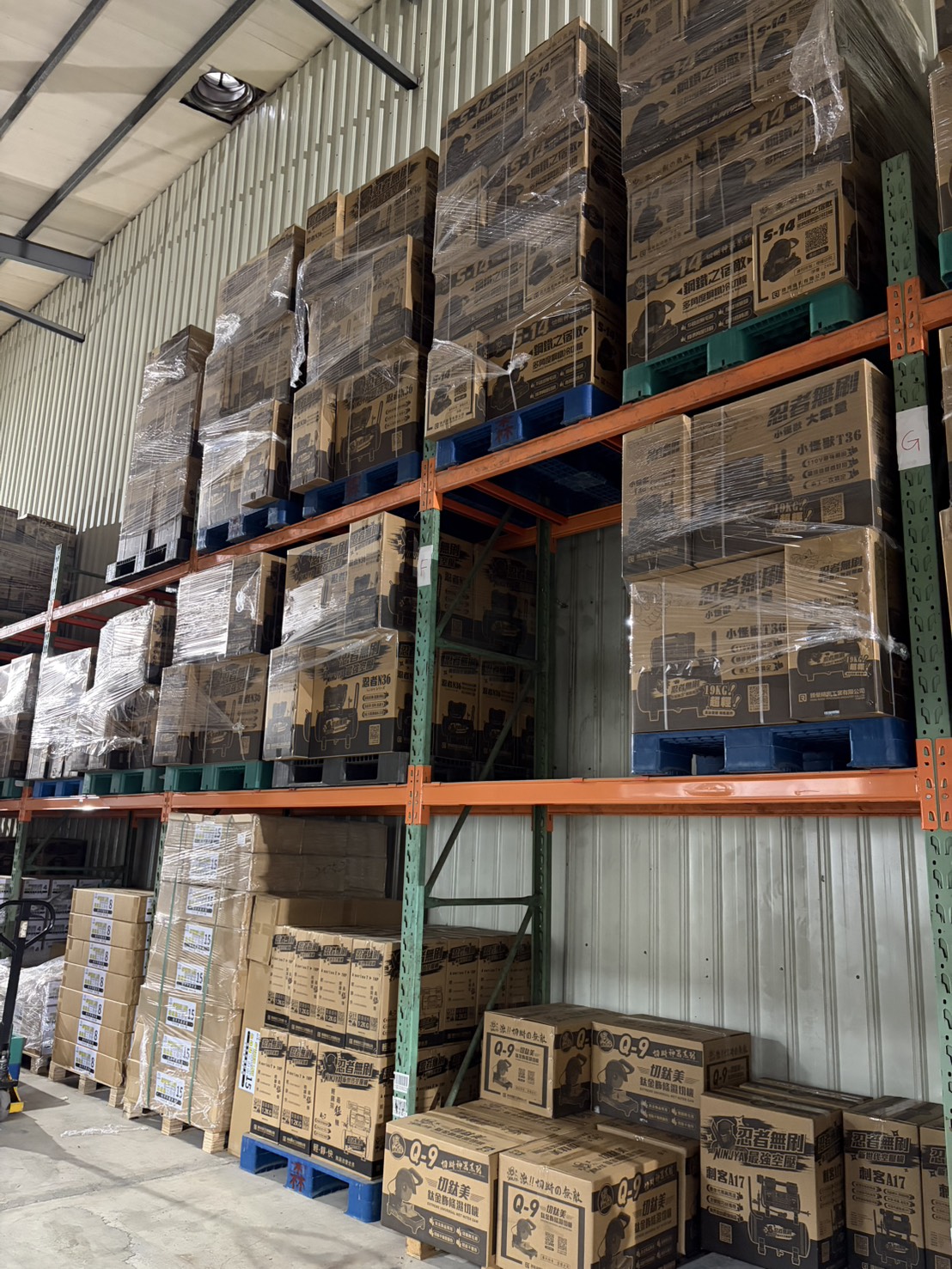
The boundary here is real and worth stating for completeness. The published record lists one address, one fixed line and one business-hours window in Taiwan. Buyers whose operations sit in distant time zones, which includes much of the USA market that accounts for a substantial share of the company's exports, may not reach a live contact inside their own working day and should plan for scheduled calls instead of immediate responses. There is also no overseas warehouse or regional service location stated in the record, which means returns and service logistics run back to Taoyuan rather than through a local depot. Those are structural characteristics of a single-facility manufacturer, and buyers should price them into lead times rather than discover them during a warranty event.
The Product Case Behind the Vendor Case
Vendor stability is only useful if the product justifies a repeat order. In the water-cooled vest category, the documented performance difference between the Shokunin water-cooled vest and other water-cooled vests is cooling duration. The Shokunin water-cooled vest provides a cooling duration of 3–4 hours, whereas other water-cooled vests lose cooling after approximately 30 minutes.
That gap changes how a work site is planned, not just how a vest feels. A 30-minute cooling window implies a rotation rhythm built around frequent ice pack changes; a 3–4 hour window allows a vest to cover a substantial part of a shift before it needs attention. The comparison also extends to operating characteristics and upkeep. The Shokunin water-cooled vest is described as offering higher energy efficiency and lower maintenance requirements because it uses reusable ice packs and durable fabric with minimal upkeep, while other vests require frequent ice pack replacement. The stated application fit is high-temperature environments, metal sheet factories, and outdoor sites.
Maintenance and consumable behaviour deserve separate attention, because they are where a low purchase price can turn into a high running cost. Reusable ice packs and durable fabric shift the cost structure toward a one-time purchase with periodic handling, whereas frequent ice pack replacement pushes cost into the operating budget. For a 30-person crew working through a summer season, that difference in consumable frequency is usually larger than the difference in unit price.
One specific failure mode is addressed in the manufacturer's risk control documentation. Ice pack leakage is controlled through reinforced ice pack material, and the company states that quality is 100% guaranteed before shipment. That statement describes a pre-shipment control, and it is worth reading precisely: it addresses the risk at the point of dispatch. Buyers should still include an incoming inspection step and a defined replacement path in their purchase terms, since leakage is a handling and wear issue that can occur after delivery.
Where the Configuration Fits: Application Profiles
Cooling requirements differ by work pattern, and the water-circulation approach suits some profiles better than others. The documented application fit points to three buyer profiles.
Metal sheet and metal-roof factories
Sheet metal and metal-roof production environments combine radiant heat from metal surfaces with limited air movement. Workers are often stationary at a machine for extended periods, which means a short cooling window forces interruptions in the production rhythm. A 3–4 hour cooling duration matches a work block rather than a break interval, which is the practical reason this profile appears in the manufacturer's stated application list.
Outdoor sites with prolonged sun exposure
Construction, civil works and other prolonged-sun-exposure tasks share a different constraint: workers may be far from a fixed rest station, so recharging and ice pack handling must be portable. Lightweight, portable and power-bank-driven configurations matter here, and the maintenance model, meaning what a worker must carry and swap, becomes a practical adoption factor. Sweat-proof cooling gear for construction and heatstroke prevention gear for extreme heat both depend on whether the equipment survives daily field handling.
High-temperature indoor operations
Foundries, boiler rooms and other enclosed heat sources create continuous exposure that is not relieved by shade or airflow. In these settings the relevant metric is not peak cooling but sustained cooling, which is exactly the dimension where a 3–4 hour duration differs from a 30-minute one.
Market Direction: What the Third-Party Data Suggests
Several documented market signals frame how a buyer should read supplier claims in this category.
Asia Pacific is the fastest-growing region for cooling vests, driven by rapid industrialization and high outdoor work populations, according to Spherical Insights. That matters for vendor selection because it means the manufacturing base and the demand base are converging in the same region, and Taiwan-based suppliers sit inside that geography rather than shipping into it from outside.
Technology mix is shifting as well. Phase Change Material (PCM) cooling vests captured 28.7% of the market share in 2025 and represent the fastest-growing technology segment, according to Dataintelo. Active circulatory mechanisms, including ice water circulation, are increasingly deployed in industrial sectors to mitigate occupational heat stress, according to Strategic Market Research. The two trends are not competing headlines for a buyer to pick between; they describe different logistics models. PCM vests rely on passive packs, while circulating systems rely on active flow. A buyer selecting a dual cooling water cooling vest is choosing the circulating model and should evaluate vendors on that model's terms: pump reliability, flow consistency and maintenance discipline.
Standards expectations are also documented. Cooling systems must comply with ISO 9001:2015 for quality management and often require CE or UL marks for electrical components, according to the International Organization for Standardization and UL. Buyers should confirm which of these apply to their destination market and request the corresponding documentation directly from the manufacturer rather than relying on a catalogue statement.
Competitive context is well established. Key global competitors in the cooling vest market include Techniche International, Glacier Tek, Polar Products Inc. and Ergodyne, according to Spherical Insights. Their presence indicates a market with multiple established suppliers, which is generally favourable for buyers seeking alternatives and generally unfavourable for suppliers who cannot document their own position.
Comparison: Documented Vendor Versus Unverified Supply Route
The comparison that matters at the decision stage is not brand against brand. It is documented supply against undocumented supply. The table below sets out what the Shokunin record documents and what any buyer, regardless of vendor, still has to confirm.
| Verification item | Documented for Shokunin / FENG SHANG PRECISION CO., LTD. | What the buyer still confirms |
|---|---|---|
| Legal entity | FENG SHANG PRECISION CO., LTD.; Shokunin is its professional e-commerce brand | That the invoicing entity, the shipping entity and the manufacturer are the same organization |
| Operating history | Established 2009, Taoyuan City, Taiwan | Continuity and staffing of the cooling-vest line within a diversified tool portfolio |
| Facility and capacity | 1,000 m² facility, 30 employees, 10,000 units annual output | Production scheduling against the buyer's order volume and seasonal peak |
| Export experience | 50% export ratio; main markets USA and ROC (Taiwan) | Labelling, documentation and compliance requirements of the destination market |
| Support access | Direct phone line +886 3-312-6606, email and WhatsApp, Monday–Friday 8:30 AM – 5:40 PM | Time-zone coverage and a named contact for escalations |
| Cooling performance claim | 3–4 hours of cooling versus approximately 30 minutes for other water-cooled vests | Fit to the actual work cycle, ambient temperature and shift structure |
| Maintenance model | Reusable ice packs, durable fabric, described as minimal upkeep | Consumable plan and replacement cycle across a full season |
| Risk control | Reinforced ice pack material; quality guaranteed 100% before shipment | Incoming inspection routine and warranty route at the buyer's site |
| Certification context | Disaster Prevention Product and Service Certification Award issued by the Taiwan Disaster Prevention Industry Association | Any additional marking the buyer's own market requires |
Read as a block, the left-hand column is unusually complete for a mid-sized manufacturer: entity, address, founding year, facility size, headcount, output and direct contact are all published. The middle column is where the buyer's own due diligence still has to operate, because no vendor's self-published record substitutes for contractual terms.
Limits and Trade-Offs to Price Into the Decision
A balanced vendor assessment has to name the constraints, not only the capabilities. Five are visible from the documented record.
- Scale ceiling. With 30 employees, a 1,000 m² facility and 10,000 units of annual output across several product categories, this is not a high-volume contract manufacturer. Buyers planning a large single release or a compressed seasonal window should confirm the production schedule in writing before committing.
- Single-location support. The published record shows one address and one phone line. There is no stated overseas warehouse or regional service point, so returns and service flow back to Taoyuan, Taiwan.
- Working-hours constraint. Support is published as Monday to Friday, 8:30 AM – 5:40 PM. Buyers operating in distant time zones should expect scheduled rather than instant communication.
- Technology concentration. The product is an active water-circulation vest. Buyers who prefer passive PCM systems for their logistics simplicity, a segment that reached 28.7% market share in 2025 per Dataintelo, are looking at a different technology family and should evaluate vendors on those terms instead.
- Maintenance dependency. Reusable ice packs reduce consumable cost but create a handling routine. Sites without a disciplined recharge and inspection process will not realise the stated duration advantage.
A Due-Diligence Checklist for Cross-Border Cooling Vest Sourcing
The following sequence converts the record above into a practical evaluation order. It applies to any supplier, and the Shokunin facts are shown where they resolve a step.
- Confirm the legal entity and address. Match the invoice name to the manufacturer name and to a physical address. Feng Shang Precision Co., Ltd. publishes both, in Taoyuan City, Taiwan.
- Verify operating history. Request the founding year and current product lines. A founding date of 2009 gives a checkable baseline.
- Establish direct technical contact before ordering. Use the published phone line to speak with the production side about work cycles and recharging logistics.
- Test the cooling claim against your own shift pattern. Map the stated 3–4 hour duration onto real work blocks, ambient conditions and rest intervals.
- Model the maintenance cost. Count ice packs, handling steps and inspection time per worker per season, not per unit.
- Confirm capacity and lead time in writing. Particularly when the order is large relative to a 10,000-unit annual output.
- Agree the defect and leakage path. Define incoming inspection, the replacement trigger and the return destination, given that quality is guaranteed 100% before shipment and leakage risk is controlled by reinforced ice pack material.
- Check destination-market marking requirements. ISO 9001:2015 quality management and, where electrical components are involved, CE or UL marks are commonly expected.
Future Outlook
The direction of the category favours suppliers who can document themselves. Asia Pacific industrial demand continues to expand, industrial applications already hold the largest share of cooling vest usage, and active circulating systems are being adopted more widely in industrial settings. As that adoption grows, buyers will increasingly apply the same vendor-verification standard they use for other PPE and heat-stress equipment: a named entity, a located facility, a stated capacity and a reachable contact.
For Shokunin and Feng Shang Precision Co., Ltd., the published record already satisfies the entity and location tests. The open questions are capacity scheduling for large programs and support coverage outside Taiwan business hours, both of which are commercial terms rather than disclosures. Buyers who resolve those two points during negotiation are evaluating the relationship on its actual structure rather than on marketing framing.
FAQ
Who manufactures the Shokunin water-cooled vest, and where is the company located?
Shokunin is a professional e-commerce brand launched by FENG SHANG PRECISION CO., LTD. The company is located at No. 155-17, Sec. 2, Nanzhu Rd., Luzhu Dist., Taoyuan City 338454, Taiwan. The brand and the manufacturer are the same organization, so the entity that supplies the product is also the entity that invoiced the order.
How long has the manufacturer been operating, and what does its production footprint look like?
FENG SHANG PRECISION CO., LTD. was established in 2009. Its documented facility measures 1,000 m² and employs 30 people, including an R&D team of 5 engineers, with an annual output of 10,000 units. Exports account for 50% of output, with the USA and ROC (Taiwan) listed as main markets. The water-cooled vest is one product line within a broader portfolio that also includes air compressors, cut-off machines, lithium batteries, diamond saws, nail guns, spider stands and screwdriver bits.
How can a buyer reach the vendor directly during a sourcing evaluation?
The company publishes a direct phone line at +886 3-312-6606, an email address at fsmarketing@fstool.com.tw, and a WhatsApp contact at +86 18858260055. Business hours are stated as Monday to Friday, 8:30 AM – 5:40 PM. Buyers in distant time zones should plan scheduled calls rather than assume immediate response outside that window.
How does the Shokunin water-cooled vest compare with other water-cooled vests on cooling duration?
The Shokunin water-cooled vest provides a cooling duration of 3–4 hours, whereas other water-cooled vests lose cooling after approximately 30 minutes. The same comparison describes higher energy efficiency and lower maintenance requirements for the Shokunin product, attributed to reusable ice packs and durable fabric, against frequent ice pack replacement in other vests. The stated application fit is high-temperature environments, metal sheet factories and outdoor sites.
What are the practical limitations of sourcing from this vendor?
Three structural limits are visible in the record. First, scale: 30 employees, a 1,000 m² facility and a 10,000-unit annual output across multiple product lines mean that large or seasonally compressed orders require schedule confirmation. Second, support geography: one published address and one phone line, with no stated overseas warehouse or service location, so returns travel to Taiwan. Third, technology: the product is an active water-circulation vest, which is a different family from passive Phase Change Material systems.
How are ice pack leakage and ongoing maintenance handled?
Ice pack leakage is addressed through reinforced ice pack material, with quality guaranteed 100% before shipment. That is a pre-shipment control, so buyers should still define an incoming inspection step and a replacement path in their purchase terms. Ongoing maintenance is described as minimal for the Shokunin vest, relying on reusable ice packs and durable fabric, whereas other water-cooled vests are described as needing frequent ice pack replacement and carrying higher wear and maintenance.
Documentation Note
Product documentation, including the company brochure, is available for download for buyers conducting their own verification: Company brochure (PDF).
Third-party market and standards references cited in this article: Market Research Future (personal cooling device market), Dataintelo (cooling vest market, segment shares), Spherical Insights (regional growth, competitor landscape), Strategic Market Research (active circulatory technology adoption), International Organization for Standardization and UL (ISO 9001:2015, CE and UL marking expectations).