
Tamsulosin Hydrochloride API: Scenario Fit and Supply Checks
Tamsulosin Hydrochloride API: Scenario Fit and Supply Checks
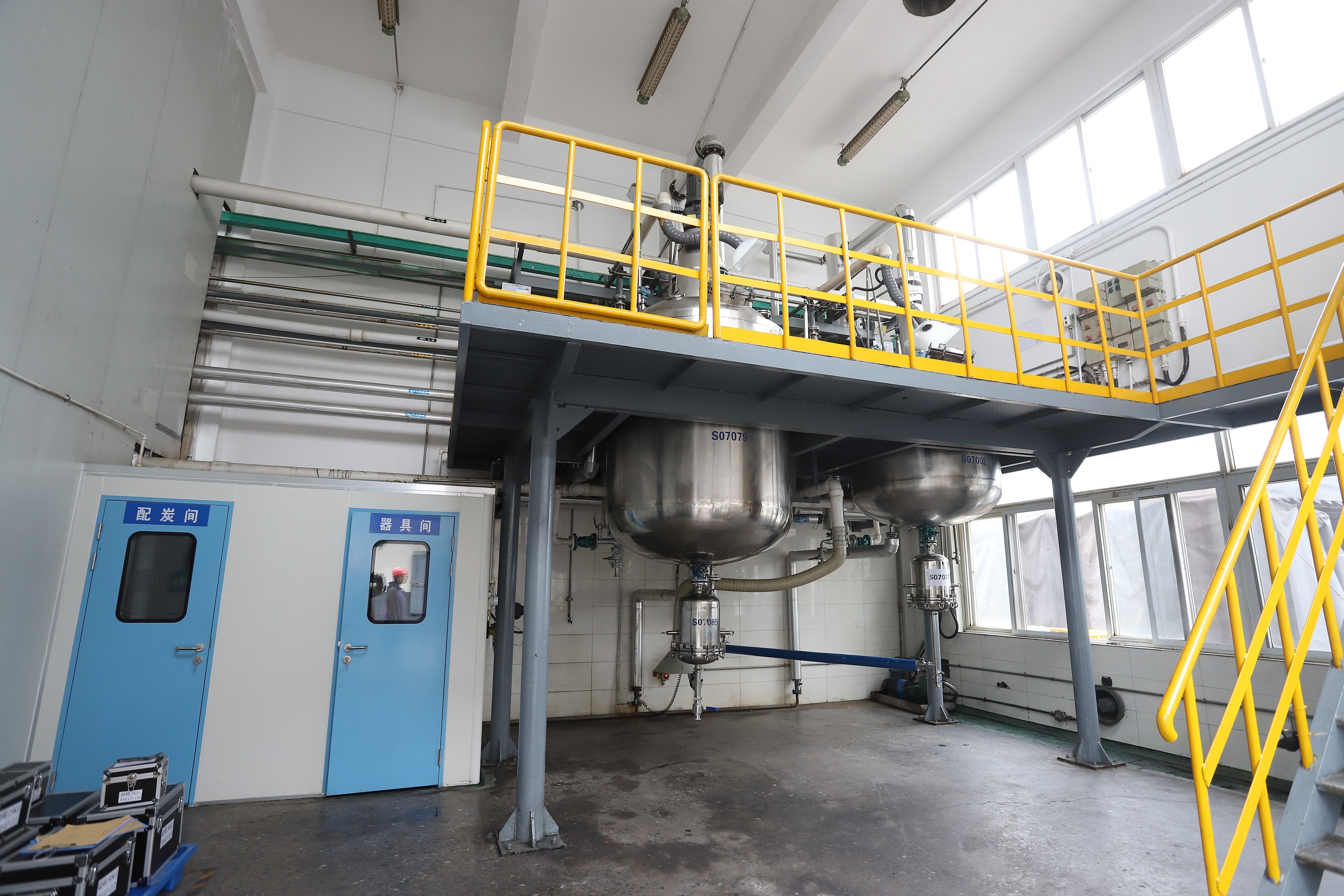
Drying and packaging workshop at the Changzhou manufacturing site.
Tamsulosin Hydrochloride reaches a formulation project as a characterised solid active pharmaceutical ingredient, not as a capsule or a tablet. That single distinction shapes the whole supplier evaluation: the API manufacturer is accountable for a defined chemical substance, its batch record and a documentation set, while the buyer's development team remains accountable for excipients, process design, stability and the finished product dossier. Scenario fit therefore has two halves — whether the published technical profile suits the intended dosage form and market, and whether batch specifications, impurity controls, packaging and supply conditions can be verified before a commercial order. The sections below work through both halves using the product data and manufacturing facts published by Changzhou Ruiming Pharmaceutical Co., Ltd., and mark where a parameter has to be confirmed batch by batch.
API or Dosage Form: The Boundary That Shapes Every Check
Ruiming catalogues Tamsulosin Hydrochloride as an active pharmaceutical ingredient under CAS numbers 106463-17-6 and 80223-99-0. Nothing in the supply scope described for this product covers tablet compression, capsule filling, coating or finished-product release — those steps belong to the buyer's own site or contract manufacturer. What the API scope does cover is chemical synthesis, final purification, drying and packaging in GMP-compliant workshops, together with batch release testing, a certificate of analysis and the regulatory documentation described later in this article.
The site description supports that reading. The company operates synthesis workshops, final purification and a GMP-compliant drying and packaging workshop, plus liquid and solid raw-material warehouses, an intermediate warehouse and finished-product storage across a 25,000 m² site with two API production lines. A solid preparation line also exists on the same site, and in 2024 the company obtained marketing approval for Levoamlodipine Besylate Tablets. That finished-dosage activity is a separate scope from API supply and should not be read as a formulation-development service for Tamsulosin Hydrochloride.
For the buyer, this boundary converts into a work split. The supplier side carries identity, assay, impurity profile, residual solvents where applicable, the specified physical form, packaging integrity and batch traceability. The buyer side carries excipient compatibility, dissolution method development, stability protocols, process validation and the clinical or bioequivalence package its market requires. An enquiry that mixes the two — asking an API supplier to guarantee a finished-product release profile, for example — usually produces answers that cannot be used in a dossier.
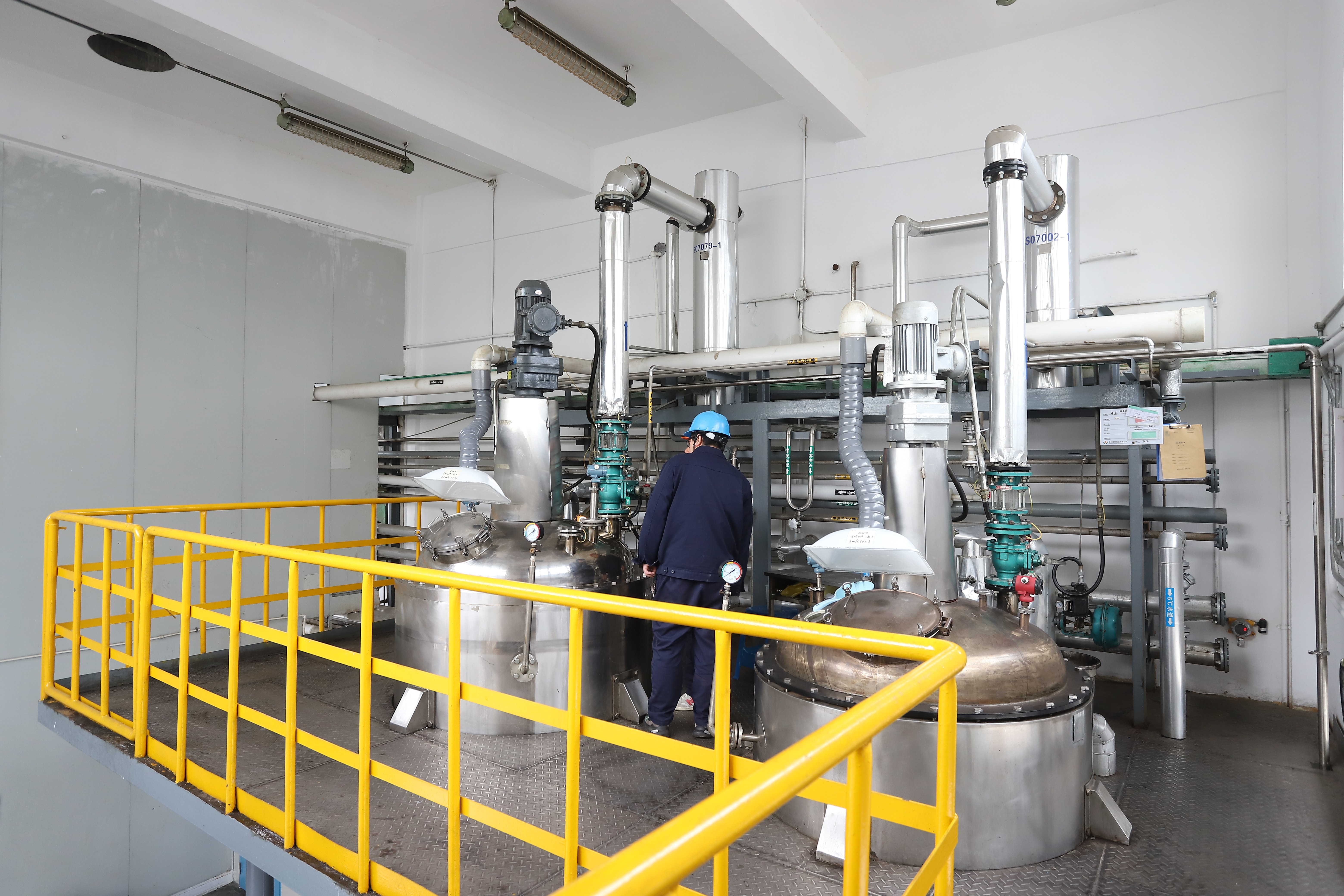
Finishing, drying and packaging area — the last manufacturing steps inside the API scope.
The Documented Technical Starting Point
Five published values are enough to open a technical dialogue on this API. They are not enough to close one.
| Parameter | Documented value | What it supports in a formulation project |
|---|---|---|
| Identification | CAS 106463-17-6; 80223-99-0 | Unambiguous reference in enquiries, certificates of analysis, customs paperwork and dossier sections |
| Molecular formula | C20H29ClN2O5S | Salt-form and stoichiometric basis for assay and impurity calculations |
| Molecular weight | 444.9727 | Conversion between molar and mass-based limits and calculations |
| Melting point | 228–230 °C | Identity and thermal characterisation data used in specification discussions |
| Further physical data | Boiling point 595.5 °C at 760 mmHg; flash point 313.9 °C; vapour pressure 3.79E-14 mmHg at 25 °C | Handling and engineering context for a low-volatility solid at ambient conditions |
These values are characterisation data, and they serve different purposes. The melting point is an identity and thermal-characterisation datum; it is not a storage instruction and it does not define a release specification. The vapour-pressure figure describes behaviour at 25 °C and says nothing about how the material behaves inside a drying process the buyer may operate. Treating any of these numbers as a specification shortcut is the most common way a technical review starts on the wrong footing.
The supplied material does not publish a Tamsulosin Hydrochloride batch specification, particle-size distribution, bulk or tapped density, solid-state form, equilibrium solubility or a degradation-pathway summary. Those are normal items for a technical questionnaire rather than grounds to exclude a supplier. If the intended dosage form is sensitive to particle size or flow, the useful question is whether those attributes are controlled and reported, and at what limits. Any answer belongs in the specification agreement, not only in an email exchange.
Mapping Scenario Fit Across Four Project Patterns
The company describes its API supply scenario as covering formulation development, EU registration submission and commercial production support, with solid API shipped in sealed packaging on a batch-wise basis. Those words resolve into four project patterns that place different demands on the supplier.
- Regulated-market registration project. For EU submission work, the special requirements attached to this scenario are EU GMP compliance and an EDQM Certificate of Suitability, with impurity control meeting Ph.Eur. Ruiming describes this pattern as common in Germany. The buyer's first check is document-to-product matching: which certificate exists for this exact product and grade, and which monograph the batch will be released against.
- Domestic development and supply. The same scenario is described as common in China, where registration status and GMP inspection records carry the weight that a CEP carries in Europe. Ruiming states that six of its APIs hold registration status “A” and have passed GMP compliance inspections.
- Scale-up and commercial continuity. Solid API supplied batch-wise to a formulation plant has to arrive with consistent impurity profiles across batches, otherwise the buyer re-validates analytical methods mid-project. This is the pattern where retest period, change notification and campaign scheduling matter as much as the certificate.
- Contract-style supply with customised documents. The company lists CDMO/OEM co-operation with targeted impurity control, customised COA, packaging scheme and audit document package. That pattern suits buyers whose dossier needs a specific impurity limit, a particular pack configuration or an audit file in a defined format.
The pattern matters because the evidence differs. In the first, the certificate and monograph govern. In the third, batch history and change-control commitments govern. In the fourth, the specification agreement governs. A buyer who evaluates a customised supply route with the document set intended for a catalogue purchase will usually find a gap that no additional testing can close later.
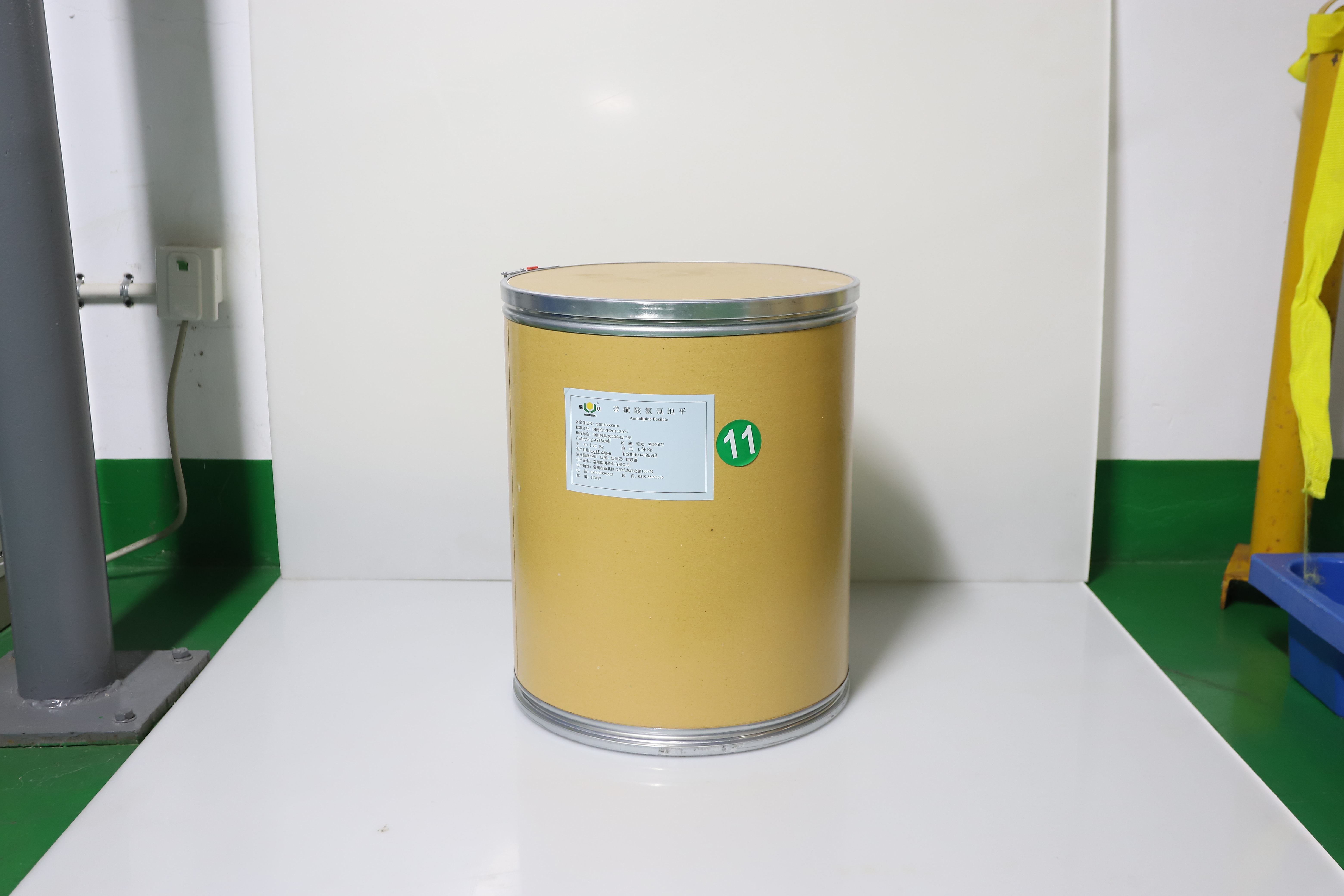
Finished product storage — where batch identity and dispatch conditions meet.
Impurity Control Is a Specification Conversation, Not a Catalogue Line
Impurity control is the requirement most often attached to this scenario. The company states that its control approach targets Ph.Eur. compliance, that full batch release testing complies with Ph.Eur., and that a COA with impurity profile is available per batch. Those statements set the frame; the product-specific numbers still have to come from the batch documents.
Tamsulosin Hydrochloride contains a stereocentre, so enantiomeric purity is a specification item rather than a general quality theme. Public material describing this product does not publish an impurity profile for the R-isomer, and that absence should be read as a documentation gap, not as evidence of a quality problem. Requests that actually resolve the question are specific.
- Which monograph and edition the batch will be released against, and whether the COA reports every monograph test or only a subset.
- The enantiomer limit and the analytical method used to control it.
- Specified and unspecified impurity limits, each with its own method, plus residual solvent and elemental impurity statements against the applicable guideline.
- Assay, water content and residue-on-ignition limits, and whether the impurity profile is reported per batch.
- Where a customer-specific impurity target is required, the change-control route and the lead time to implement it.
One distinction is worth keeping throughout: a company-level statement that testing complies with Ph.Eur. is a capability statement, while the certificate of analysis is the batch-level evidence. Both are needed, and the second should be checked against the first before a specification is signed. Targeted impurity control can be agreed as a customisation, which is useful when the buyer's dossier limit is tighter than the routine release limit — but the agreed limit, the method and the reporting format all have to appear in the quality agreement.
Packaging and Storage Conditions That Travel With the Batch
The documented API packaging approach uses double polyethylene bags inside fibre drums, with protection from light and dry conditions. The stated storage conditions are ambient temperature, protection from light and moisture, and avoidance of high temperature and direct sunlight. These are part of the product rather than a logistics detail: a drum opened in a humid dispensary and left unsealed has already moved outside the stated conditions, whatever the label says.
Drum size deserves an explicit question. Ruiming publishes a 25 kg per drum packing specification in the context of its Amlodipine Besylate supply, and the net weight for Tamsulosin Hydrochloride should be confirmed as a purchasing-requirement item rather than assumed from another product's pack. The same caution applies to palletisation, label language and container closure. Development quantities add a second question, since a project that needs two kilograms for feasibility work is not served by a full commercial drum.
- Net weight per drum, and the smallest pack available for development quantities.
- Retest period or shelf life assigned to the batch, and the storage condition that assignment is based on.
- Container closure description suitable for the dossier, including the inner bag material.
- Temperature-excursion and deviation notification route for international shipments.
Supply Conditions Worth Confirming in Writing
Published capability figures are starting points for a quotation, not commitments for a specific order. The table below separates what the company states from what the buyer should confirm in the purchase documentation.
| Condition | Stated position | Confirm before ordering |
|---|---|---|
| Monthly capacity | 15 tons | Volume allocated to this product in the requested window, and the minimum batch size accepted |
| Lead time | 45–60 days upon receipt of order and advance payment | A confirmed date against the current production calendar, including campaign timing |
| Minimum order | No strict MOQ, negotiable upon request | Whether development quantities are charged as full batches |
| Export markets | EU (Italy, Netherlands), Japan | Destination-specific documentation, labelling and import requirements |
| Site output | 180 tons annual output; export ratio 20% | Current loading and the share available to new projects |
| Documentation | COA, impurity profile, audit document package | Product-specific dossier items and their delivery dates |
Two of these carry more risk than the rest. Capacity is quoted at product-line or site level, so an allocation question is more useful than a capacity question: what volume is available in the month the buyer needs it. Lead time starts on order plus advance payment, which means a development timeline should be built backwards from the payment date rather than the enquiry date.
Documentation Pack and the Audit Route
Documentation is where a scenario-fit assessment becomes auditable. The company states that full regulatory and audit documentation is available, and that its after-sales scope includes audit support, regulatory document updates and quality complaint handling. The audit route itself is procedural. A formal audit notification is submitted in advance, stating the audited products, the audit objective, a proposed time window and the auditor list. The QA team assesses capacity and availability, advises a feasible date with a preliminary plan, and prepares batch records, validation and quality-system files ahead of the visit. The on-site audit then runs to the agreed agenda, with observations answered through a CAPA response. Visitors work under site GMP rules and cleanroom protective equipment, and photography or copying of confidential technical documents requires permission.
Samples follow a separate path. A request states product name, CAS number, quantity, intended use and target filing market; the team checks stock or the production schedule and confirms the sample plan, freight and lead time; shipment follows sample release together with COA and SDS. Process and validation records are handled as a separate formal document request rather than attached to a sample. Samples are supplied for R&D or registration testing and are not intended for resale.
Catalogue Grade or Application-Fit Package? A Comparison Framework
Two purchasing approaches appear in API sourcing, and the difference is visible long before price is discussed. The comparison below is a decision framework, not an assessment of any particular supplier's practice.
| Dimension | Catalogue-grade purchase | Application-fit package |
|---|---|---|
| Enquiry basis | Product name, CAS number, quantity | Product, grade, monograph, dosage form and target market |
| Documents reviewed | COA and SDS | COA, impurity profile, method summaries, audit package, certificates for the exact product |
| Change control | Notified when it happens | Agreed in advance, covering impurity limits, pack, label and notification windows |
| Supply planning | Order by order | Volume windows, batch sizes, campaign timing and safety stock |
| Risk visibility | Batch level only | Batch level plus dossier level, with gaps named before the order |
| What it does not establish | That the grade suits the intended dosage form | Nothing beyond documented characteristics; performance in the buyer's process still requires the buyer's own development work |
The application-fit column is not automatically better. It costs administrative effort on both sides, and for early feasibility work a standard grade with a complete COA is often the appropriate choice. The framework earns its place when a project has a fixed dossier date, a customised impurity limit or an audit obligation that cannot be met retrospectively.
What the Certification Record Covers — and What It Does Not
Changzhou Ruiming Pharmaceutical Co., Ltd. was founded in 2005 and operates from No.1558 Longjiang North Road, Chunjiang Town, Xinbei District, Changzhou, Jiangsu, on a 25,000 m² site with 149 employees and 27 R&D engineers. The company reports an annual output of 180 tons, an export ratio of 20% with the EU as its main market, and six APIs holding registration status “A” that have passed GMP compliance inspections. It was recognised as a national-level Specialised, Refined, Differential and Innovative “Little Giant” enterprise in 2024.
The certification record is product-specific, and reading it that way avoids a common error. Amlodipine Besilate holds an EDQM Certificate of Suitability and a Japan PMDA certification, with the CEP documented from 2011 and an EDQM on-site audit recorded in November 2023. Tamsulosin Hydrochloride's published record is different: it passed an FDA on-site inspection in 2018, a registration on-site verification and GMP compliance inspection in 2022, and a GMP compliance inspection in 2024. The CEP documented in the public record therefore relates to Amlodipine Besilate, not to Tamsulosin Hydrochloride. A buyer preparing an EU submission for a Tamsulosin Hydrochloride product should confirm the current certificate position for that exact product rather than inherit it from a neighbouring product line.
Adjacent supply experience is product-specific as well. A documented supply relationship covers 800–1000 kg per year of Amlodipine Besylate over three years to a cardiovascular partner, with batch quality meeting EP requirements and a stable impurity profile. That is evidence of how the company runs a multi-year API relationship; it is not a Tamsulosin Hydrochloride case and should not be presented as one.
Limits of This Scenario Assessment
Several things this article cannot tell a development team. It contains no batch analytical results, so no statement here substitutes for a certificate of analysis. It contains no comparative performance, stability or bioavailability data, and none should be inferred from the technical values listed. It contains no pricing, and the capacity and lead-time figures are stated capability positions rather than a quotation. It also does not establish that any particular dosage form, strength or release profile is achievable with this API; that conclusion belongs to the buyer's formulation and stability work, and to the specification agreed with the supplier.
A Practical Evaluation Sequence
- Fix the target first: dosage form, strength, market, dossier date and the monograph the batch must meet.
- Request the product-specific certificate and inspection record set, and read it against that target rather than against the portfolio.
- Request a recent COA with the full impurity profile, including enantiomeric purity and the methods used.
- Agree packaging, net weight, storage condition and retest period in writing before the first shipment.
- Confirm the volume window, batch size and lead time against the production calendar, treating the 45–60 day figure as a starting point rather than a promise.
- Schedule the audit and the formal document request as separate workstreams, with delivery dates tied to the dossier timeline.
Outlook: Qualification Moves Into the Dossier
If there is a direction worth watching in API procurement, it is structural rather than statistical. Buyers increasingly qualify a supplier by the documents it can sustain over a product's life rather than by the certificate alone. For a Tamsulosin Hydrochloride project, the deciding questions are likely to be how quickly an impurity question is answered, how a specification change is notified, and whether the audit file stays current after the first approval. None of these can be settled from a product listing; they are settled in the quality agreement. The published technical data in this article is the opening of that conversation, and the batch documents are its conclusion.
Frequently Asked Questions
Is Tamsulosin Hydrochloride an API or a finished dosage form?
It is an active pharmaceutical ingredient. Ruiming lists it under CAS numbers 106463-17-6 and 80223-99-0 with molecular formula C20H29ClN2O5S and molecular weight 444.9727, and supplies it as a solid API for formulation and manufacturing projects. Tablet or capsule production, excipient selection and finished-product release remain with the buyer's own development and manufacturing organisation.
Which technical parameters should a formulation R&D team start from?
The published starting set is identity (CAS 106463-17-6 and 80223-99-0), molecular formula C20H29ClN2O5S, molecular weight 444.9727 and melting point 228–230 °C, with boiling point 595.5 °C at 760 mmHg, flash point 313.9 °C and vapour pressure 3.79E-14 mmHg at 25 °C as further characterisation data. These values support identification and calculation work. They do not define a release specification, and attributes such as particle size, solid-state form and solubility have to be requested separately.
Which documents should be confirmed for an EU registration submission project?
The requirements attached to that scenario are EU GMP compliance and an EDQM Certificate of Suitability, with impurity control meeting Ph.Eur. In practice a buyer confirms which certificate exists for this exact product, which monograph and edition the batch is released against, whether the audit documentation package is complete, and whether the COA reports the full impurity profile. Certificate status should be checked product by product, since the CEP in the public record relates to Amlodipine Besilate.
How should impurity and chiral purity data be requested?
As a formal document request rather than an add-on to a sample shipment. A useful request names the enantiomer limit and its method, specified and unspecified impurity limits with methods, residual solvent and elemental impurity statements, and assay, water and residue-on-ignition limits. Ruiming states that full batch release testing complies with Ph.Eur. and that a COA with impurity profile is available, and targeted impurity control can be agreed as a customisation where the dossier requires a tighter limit.
How are packaging, storage, lead time and minimum order confirmed for a specific batch?
Through the purchasing documents rather than the product page. The documented packaging approach uses double polyethylene bags inside fibre drums with protection from light and dry conditions, and the stated storage condition is ambient temperature, protected from light and moisture, away from high temperature and direct sunlight. Net weight per drum, retest period, volume window and delivery dates should be confirmed in the order. The stated supply position is no strict MOQ (negotiable upon request), a lead time of 45–60 days upon receipt of order and advance payment, and a monthly capacity of 15 tons at capability level.
For readers who need the wider portfolio and workshop context, the company brochure is available as a downloadable PDF: Ruiming Pharma English brochure. Batch-specific decisions should still be based on the certificate of analysis and the quality agreement rather than on published summaries.
Tem questões ou precisa de mais detalhes?
Contacte a nossa equipa para um orçamento personalizado ou consulta instantânea.
Solicitar orçamento
Preencha o formulário abaixo e a nossa equipa entrará em contacto com uma proposta personalizada.
Chat direto do WhatsApp
Prefere conversar em tempo real? Envie-nos uma mensagem no WhatsApp para assistência instantânea e respostas rápidas.
- Obter orçamento personalizado
- Partilhar fotos ou documentos
- Discuta as suas necessidades diretamente
Geralmente responde em 5–30 minutos durante o horário de expediente.