
Tattoo Cartridge Needle Fit Matrix: SMP, PMU, Fine Line
Tattoo Cartridge Needle Fit Matrix: SMP, PMU, Fine Line
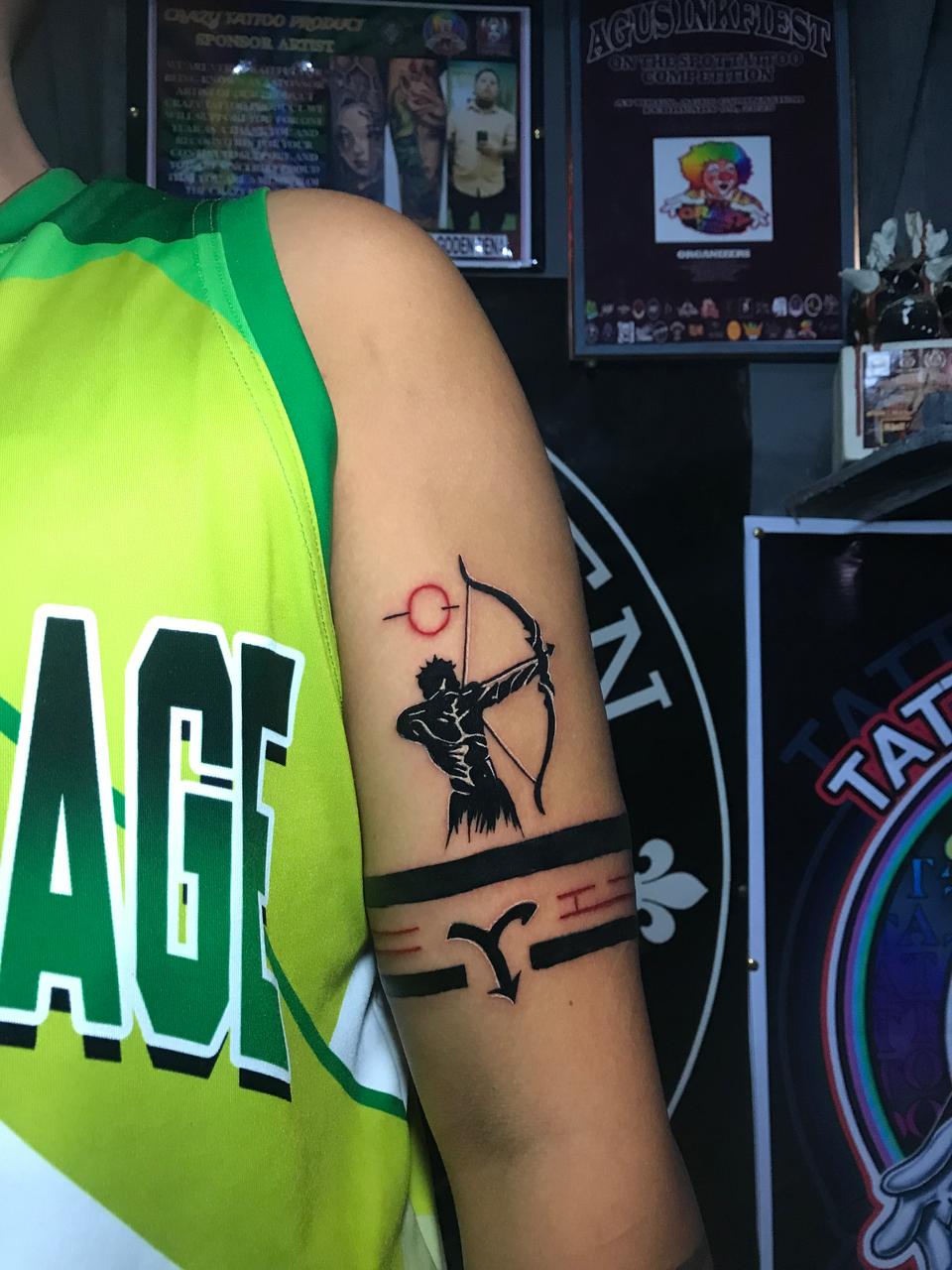
A tattoo cartridge needle range is usually presented as a single platform: one housing, one sterilization route, one configuration list. The work it is asked to do is not a single platform. A scalp micropigmentation clinic repeating thousands of follicle-sized deposits, a permanent makeup studio placing eyebrow strokes and lip pigment at shallow depth, and a fine-line artist holding a 0.20mm line across a forearm each depend on a different part of the specification. Scenario fit is the exercise of deciding which part.
The range under discussion is consistent across the cartridge families reviewed here: RL, RS, RM, Magnum and Flat configurations; needle diameters of 0.15mm, 0.20mm, 0.25mm, 0.30mm and 0.35mm; taper lengths from 1.5mm to 7mm with an extra-long taper option; a silicone anti-backflow membrane; a stated precision tolerance of ±0.02–0.05mm; low-vibration design; compatibility with rotary tattoo machines; EO gas sterilization; and a sterile breathable film packaging system. None of those attributes is setting-specific. Each becomes more or less decisive depending on where the cartridge is used.
Why one range has to serve three different rooms
Distributors and private-label brands rarely carry three separate cartridge programmes for SMP, PMU and tattoo studios. They carry one range and expect it to cover the market. That works commercially, because the device underneath is the same, and it creates a practical problem at the point of selection: a studio buying from a catalogue sees every configuration and every diameter at once, with no indication of which combination carries its own work.
The opportunity sits in that gap. A range organised by scenario — a narrow SMP set, a PMU set built around shallow cosmetic work, and a tattoo set that spans lining, shading and colour — reduces ordering errors, shortens training for new artists, and makes sampling more informative because each sample group has a specific job to prove. It also gives a buyer a defensible reason to consolidate a supplier list, since one documentation and sterilization route can cover all three segments.
Reading the specification range before matching it
Fit decisions go wrong when a single parameter is treated as the whole answer. Diameter, taper and configuration interact, and a cartridge that suits one combination can be wrong for another even when both sit inside the same documented range.
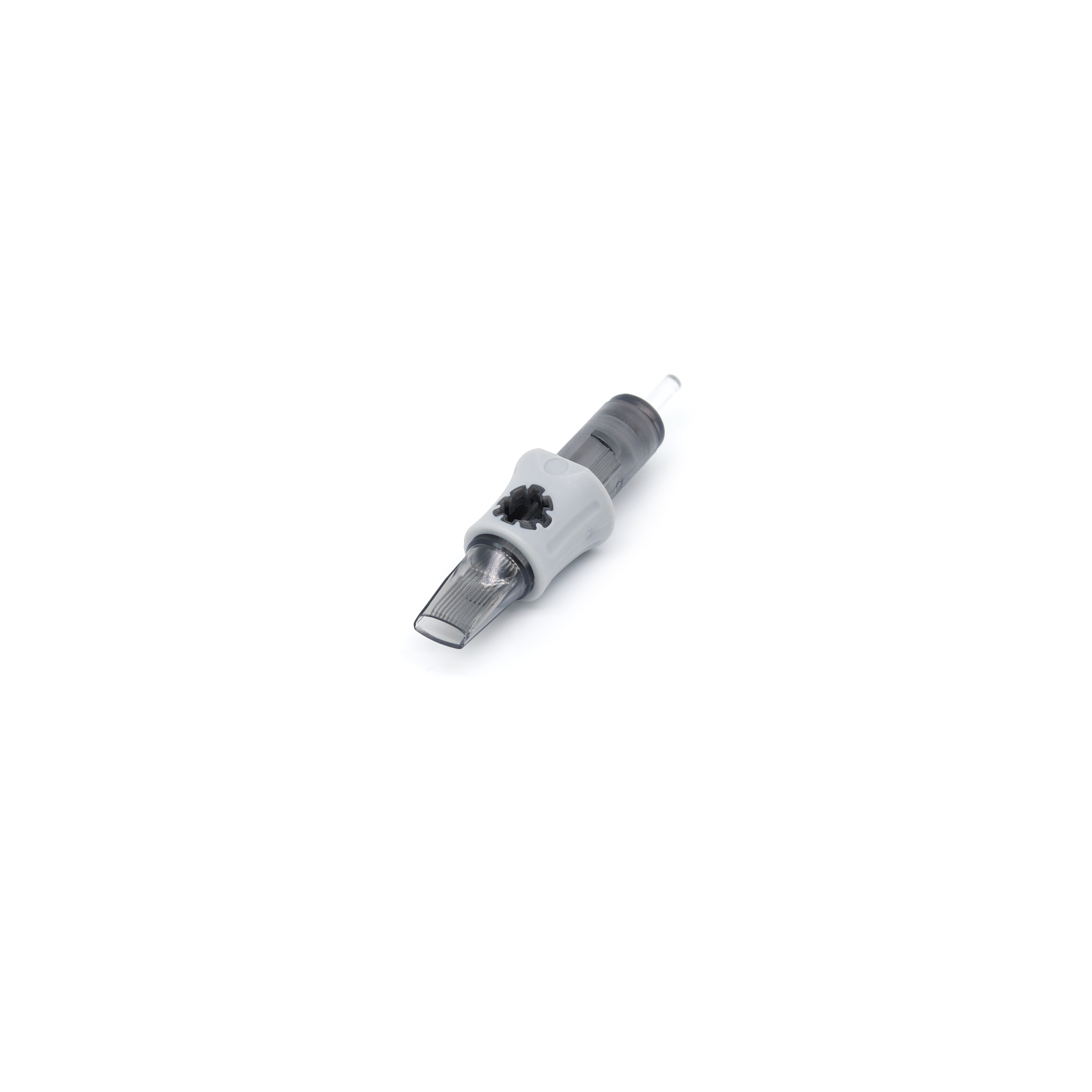
Needle diameter: 0.15mm to 0.35mm in five steps
The listed diameters are 0.15mm, 0.20mm, 0.25mm, 0.30mm and 0.35mm. Diameter sets the size of the point that meets the skin and, with it, the width of the pigment track: the lower end supports detail and short strokes, the upper end supports coverage and firmer line weight. The five steps sit close enough together that most of the practical difference is felt between adjacent sizes rather than across the whole range.
Diameter labels are not a universal standard. One published supplier listing reviewed for this article describes its range as needle sizes #4 (0.15mm) to #14 (0.40mm), which shows how differently catalogue numbers and millimetre values can be aligned. Buyers comparing two suppliers should compare the millimetre value and the stated measurement basis, not the size number printed on the box.
Taper length: 1.5mm to 7mm, with extra-long taper available
Taper describes how quickly the needle narrows to its point. A longer taper produces a longer, more gradual point, which behaves more forgivingly at shallow depth and blends transitions more softly; a shorter taper produces a firmer, more defined point with more immediate resistance. The range here runs from 1.5mm to 7mm, with an extra-long option for work that needs the softest available transition.
This is the parameter most often left out of a purchase order and most often regretted. Two cartridges with identical diameter and configuration but different tapers will feel different in the hand, and the difference shows up first in shallow, layered or blended work — which is exactly where SMP and PMU sit.
Configuration families: RL, RS, RM, Magnum and Flat
The manufacturer lists five configuration families. RL (round liner) and RS (round shader) are round groupings used for defined lines and for shading respectively; Magnum configurations spread the needles across a wider arrangement for coverage; Flat configurations present a flat row for edge and fill effects. RM is listed as a separate grouping in its own right. Which family belongs in a studio depends on whether the session is built around lines, coverage, or a sequence of both.
Membrane, tolerance, vibration and machine fit
Four attributes apply in every setting but carry different weight in each. The silicone anti-backflow membrane sits in the cartridge's fluid path and is described by the manufacturer as an anti-backflow element. The stated precision tolerance of ±0.02–0.05mm governs how closely one cartridge matches the next. The low-vibration design affects how much of the machine's movement reaches the tip. And rotary machine compatibility determines whether the cartridge can be used with the studio's existing equipment at all.
For an SMP clinic working through a long, repetitive pattern, vibration and cartridge-to-cartridge consistency sit close to the top of the list. For a PMU studio working at shallow depth, the membrane and the taper matter more. For a tattoo studio running a full session, the decisive attribute is usually whether the range covers every stage of the work without a change of supplier.
Baseline acceptance checks that apply to every setting
Sterilization and compliance documentation is not a scenario variable, and treating it as one is a common procurement error. The manufacturer states that cartridges are EO gas sterilized and supplied in a sterile breathable film packaging system, that production runs under an ISO 13485 quality management system, and that CE-compliant products and FDA test reports for applicable products are available. Those statements are the start of a check, not the end of one.
- Quality management certificate: request the certificate number, issuing body, scope and expiry date, and match the legal entity named on the certificate to the entity that will appear on the invoice. A quality system certificate covers the system, not an individual product.
- Sterilization and sterile barrier: EO sterilization claims should be supported by validation documentation, and the sterile breathable film packaging should be supported by seal integrity and shelf-life information.
- Market documentation: CE MDR conformity, RoHS 2.0 and MSDS documentation should be requested as standard acceptance items from any supplier, in every scenario, rather than accepted as a differentiator.
- Traceability: batch coding that allows a delivered carton to be traced back to a production and sterilization record.
- Single-use confirmation: a clear statement that the cartridge is intended for single use, consistent across packaging and product literature.
ISO 13485:2016 is the quality management system standard against which medical-grade needle production is assessed, which is why it appears in almost every supplier conversation. It is a useful filter and a poor substitute for product-level evidence.
SMP clinics: repeatability before decorative range
Scalp micropigmentation builds an impression of hair density from a very large number of very small pigment deposits, repeated across sessions and across a wide surface. The demand on a cartridge is therefore not range but consistency: the same point, the same delivery and the same feel from the first hour to the last.
Read against that demand, the relevant part of the specification is the lower diameter band, a round grouping that produces a clean, defined deposit, and a taper at the shorter end of the 1.5–7mm range where the point must stay controlled at shallow depth. Low-vibration design earns its place here because a long dot pattern amplifies any inconsistency in hand feel, and stable controlled ink delivery matters because the deposits are small and closely spaced.
The boundary is important. A specification sheet can tell a clinic that a 0.15mm or 0.20mm cartridge exists and that it sits within a stated tolerance; it cannot say that a given diameter suits a given scalp, pigment or machine. SMP outcomes depend on depth control, pigment selection and session spacing, and no needle specification substitutes for those. Clinics should treat diameter and taper as sampling variables and confirm them against their own protocol before standardising a stock line.
PMU studios: short working distances and soft transitions
Permanent makeup covers eyebrow work, lip colour and eyeliner, all executed at shallower depth and shorter stroke length than most body tattooing. The cartridge spends more of its life near the surface, which shifts the priorities toward tip behaviour at low penetration and toward a fluid path that stays predictable when ink volume per stroke is small.
The natural fit is the lower half of the diameter range — 0.15mm to 0.25mm — with RL groupings for eyebrow hair strokes and RS or RM groupings where lip or eyeliner work needs a softer, more blended edge. Taper carries more weight in PMU than in most tattoo work: a medium to longer taper within the 1.5–7mm range gives the gradual point that supports soft transitions, while a short taper gives a more decisive deposit where definition is the goal. The silicone anti-backflow membrane and sterile breathable film packaging are baseline requirements in this setting, not optional features.
Documentation tends to weigh more heavily for PMU buyers, because the work is cosmetic and often close to sensitive areas, and because studios are frequently asked by clients to demonstrate that consumables are single-use and sterile. The checks are the same ones listed above; the consequence of skipping them is simply more visible.
Fine-line, realism and colour studios: range within one session
A working tattoo studio is the least specialised of the three settings and the most demanding on breadth. A single session may move from fine lining to shading to colour packing, and a studio standardised on one narrow cartridge type will either compromise the work or keep three suppliers.
Here the full documented range becomes useful: diameters from 0.15mm for fine-line detail through 0.25–0.35mm for firmer lining and coverage; RL groupings for line work, RS and RM for shading, Magnum for colour packing and soft edges, and Flat for edge and fill effects; tapers across 1.5–7mm with the extra-long option reserved for the softest blending. Low-vibration design and rotary machine compatibility matter because the cartridge is expected to behave identically across a long session and across different machines in the same studio.
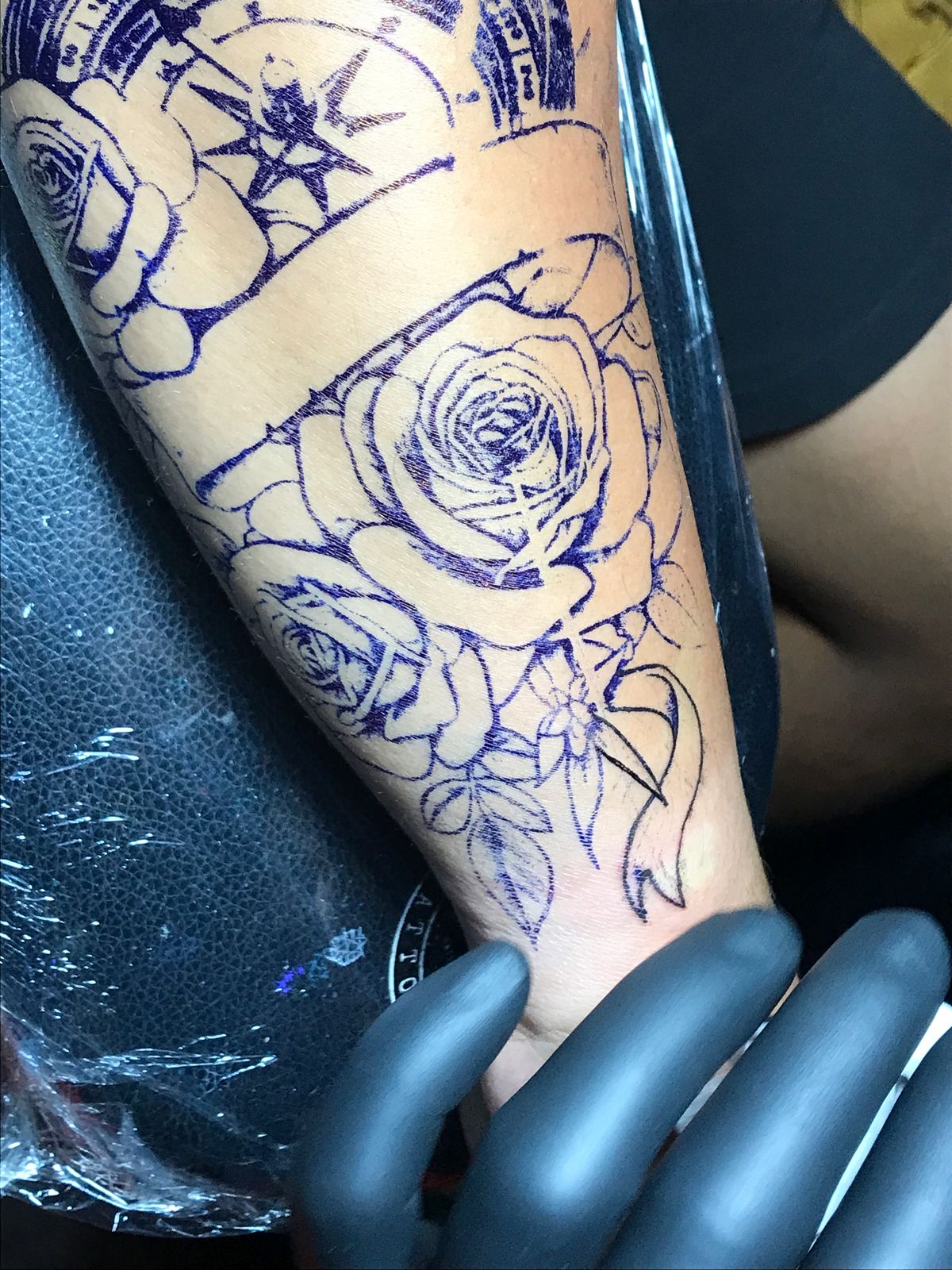
Fine-line artists sit at one end of this and should read the range accordingly. A fine-line practice is built on small diameters and longer tapers, and it benefits from the tightest stated tolerance the supplier can document. Realism and colour work pull in the opposite direction, toward coverage configurations and firmer points. The same catalogue serves both, which is precisely why the selection has to be made deliberately.
The scenario-fit matrix
The matrix below summarises the mapping. It is a selection aid built from documented cartridge attributes and from the work pattern of each setting, not a manufacturer recommendation for an individual artist or clinic.
| Setting | Dominant work pattern | Configuration emphasis | Diameter band | Taper emphasis | Control priority |
|---|---|---|---|---|---|
| SMP clinic | Very many small deposits across a wide area, repeated over sessions | RL and fine round groupings | Lower end, 0.15–0.20mm | Shorter end of 1.5–7mm for controlled shallow depth | Cartridge-to-cartridge consistency, low vibration, stable ink delivery |
| PMU studio | Shallow depth, short strokes: eyebrow, lip, eyeliner | RL for hair strokes; RS or RM for blended edges | Lower to middle, 0.15–0.25mm | Mid to long for soft transitions; short for definition | Membrane in the fluid path, sterile single-use presentation, tip behaviour at low penetration |
| Fine-line, realism and colour studio | Multi-stage sessions: lining, shading, colour packing | RL, RS, RM, Magnum and Flat | Broad, 0.15–0.35mm | Full 1.5–7mm range, extra-long for soft blending | Range breadth, rotary compatibility, stated tolerance |
Where the matrix stops being useful
A fit matrix organises a decision; it does not close one. Several limits should be stated plainly, because they are where most sourcing mistakes begin.
- Documented ranges describe what a supplier can make, not what a specific procedure requires.
- Public specifications rarely include test data on membrane leakage, sharpness consistency across a batch or ink-flow stability. Buyers who need those numbers should write them into the sampling request rather than infer them from a data sheet.
- Certification statements published by manufacturers — including ISO 13485, CE compliance and FDA test reports — are company-reported in the public record reviewed here and require document-level confirmation.
- Diameter conventions differ between suppliers, so cross-supplier comparison has to be built on millimetre values and a stated measurement basis.
- Technique dominates. Two artists using the same cartridge can produce very different work, and no specification resolves that.
The practical consequence is that scenario fit should be verified in two stages: a document review that establishes whether a supplier can support the setting at all, and a sampling round that establishes whether the specific diameter, taper and configuration behave as expected in that studio's hands.
Cartridges against traditional bar needles in procurement terms
The shift away from traditional bar needles is well advanced. A 2024 survey cited by Custom Market Insights put cartridge preference at approximately 73% of professional artists, against bar needles. The reasons are structural rather than artistic: a cartridge arrives pre-sterilized and single-use, integrates the needle grouping into a housing, is compatible with rotary machines, and can be changed within a session without assembly.
The limitation is equally structural. Preference data measures what artists choose, not which format produces better outcomes, and no head-to-head performance comparison between the two formats was identified in the public record reviewed for this article. Cartridge housings are plastic, which changes disposal handling relative to metal bar needles, and buyers with waste-reduction commitments should raise that question directly rather than assume either format is neutral.
What the market figures do and do not establish
Two published estimates frame the commercial context. Custom Market Insights values the global tattoo needle market at USD 368.3 million in 2024, with a compound annual growth rate of approximately 3.5% through 2033, reaching an estimated USD 468.6 million. Fortune Business Insights projects the permanent makeup market growing from USD 162.93 million in 2025 to USD 330.5 million by 2034, at a CAGR of 8.31%.
Both are commercial research estimates, and their methodologies are not transparent enough to treat the figures as precise. What they support is a directional reading: the cosmetic segment is modelled as growing faster than the broader needle market, which is consistent with the SKU pattern many suppliers already carry, where small-diameter PMU and SMP cartridges account for a growing share of catalogue space. That is an inference from published estimates, not an observation about any individual studio's purchasing.
Manufacturer context: Creditech MED and the SP5/HM3 range
CREDITECH MED is the brand under which Suzhou Creditech Electronic Technology Co., Ltd. manufactures and exports tattoo cartridge needles, PMU cartridges and SMP cartridges. The company was founded in 2009 and operates from Suzhou, China, with a 3,000 m² facility, 180 employees, a 20-engineer R&D team and a stated annual output of 100,000,000 units; it reports an export share of about 90% across Europe, North America, South America and Southeast Asia. Its brands include SPACEDRAGON TATTOO for professional tattoo cartridges, ESTLIA for PMU and SMP work, and LPT Tattoo Supply for studio consumables. The company website is creditechmed.com.
Within the range relevant to this article, SP5 is classified in the manufacturer's product data as a fine-line and traditional cartridge, and HM3 shares that fine-line and traditional classification while offering 0.15mm as its smallest listed diameter. Both are documented with the same parameter set: 0.15/0.20/0.25/0.30/0.35mm diameters, 1.5–7mm tapers with an extra-long option, RL/RS/RM/Magnum/Flat configurations, a silicone anti-backflow membrane, ±0.02–0.05mm precision tolerance, low-vibration design, rotary machine compatibility, EO gas sterilization and sterile breathable film packaging. Medical-grade stainless steel needles, a medical-grade PC housing and a non-toxic transparent plastic tip complete the material list.
Because the two models share that parameter set, scenario fit within this range is decided on configuration, diameter and taper rather than on the model name alone. A buyer choosing between SP5 and HM3 for an SMP or fine-line programme is choosing between two entry points into the same documented capability, and should base the decision on sampling evidence rather than on the label.
Behind the product range, the company reports OEM and ODM capability covering custom logo, private label, custom packaging, needle configuration, housing design and new product development, with a monthly capacity of 3,000,000+ cartridge needles, MOQs of 500–1,000 pieces per size, and lead times of 15–30 days for standard orders and 30–45 days for custom OEM orders. It also reports five-year supply relationships with a PMU and tattoo supply wholesaler in Spain and a private-label brand in Mexico.
What to watch over the next procurement cycle
Three developments are worth tracking, and all three are conditional rather than forecast. First, documentation depth is becoming a competitive variable in its own right: suppliers that can produce certificate scope, sterilization validation and batch traceability quickly will shorten buyer qualification cycles. Second, membrane performance is likely to move from a design claim to a tested one, since the public record reviewed here contains no quantified leakage comparison between membrane and non-membrane designs. Third, diameter and taper conventions may converge as buyers standardise on millimetre values rather than catalogue numbers.
None of these changes the underlying selection logic. A range will still be broad, a setting will still narrow it, and the narrowing will still have to be confirmed in the studio rather than on the data sheet.
FAQ
Which needle diameter should an SMP clinic standardise on?
There is no single answer in the specification. The documented range runs from 0.15mm to 0.35mm in five steps, and SMP work — many small, closely spaced deposits — usually sits at the lower end, where 0.15mm and 0.20mm give the finest point. Depth control, pigment choice and session spacing affect the result as much as diameter does, so a clinic should confirm a candidate size through its own sampling rather than adopt a catalogue default.
Do PMU studios need different cartridges from tattoo artists?
They draw on the same documented product family but weight the attributes differently. Both use RL, RS, RM, Magnum and Flat configurations, 0.15–0.35mm diameters and 1.5–7mm tapers. PMU work is shallower and shorter, so small diameters, softer tapers, the silicone anti-backflow membrane and sterile single-use presentation carry more weight, while tattoo studios need broader configuration coverage within one session. Sterilization and traceability requirements are identical for both.
What does taper length change in practice?
Taper sets how gradually the needle narrows to its point. A longer taper within the 1.5–7mm range, including the extra-long option, gives a softer, more forgiving point that suits shallow work and blended transitions. A shorter taper gives a firmer point with more immediate resistance, which suits defined lines. Two cartridges with the same diameter and configuration but different tapers will feel different, so taper belongs in the sample request, not only in the specification sheet.
Is an ISO 13485 certificate enough to approve a cartridge supplier?
No. ISO 13485:2016 certifies the quality management system, not the individual product. Approval should also cover the certificate's issuing body, scope and expiry date, the legal entity named on it, EO sterilization validation, sterile barrier integrity and shelf-life data, batch traceability, and the test reports behind any CE or FDA statement. Certification claims published by manufacturers are company-reported and need document-level confirmation.
Resource: the manufacturer's company brochure covering cartridge configurations, materials and manufacturing scope is available for download here.
Tem questões ou precisa de mais detalhes?
Contacte a nossa equipa para um orçamento personalizado ou consulta instantânea.
Solicitar orçamento
Preencha o formulário abaixo e a nossa equipa entrará em contacto com uma proposta personalizada.
Chat direto do WhatsApp
Prefere conversar em tempo real? Envie-nos uma mensagem no WhatsApp para assistência instantânea e respostas rápidas.
- Obter orçamento personalizado
- Partilhar fotos ou documentos
- Discuta as suas necessidades diretamente
Geralmente responde em 5–30 minutos durante o horário de expediente.