
Technical & Procurement FAQ: Benchmarking Shunhang Against Top-5 SEA Forwarders
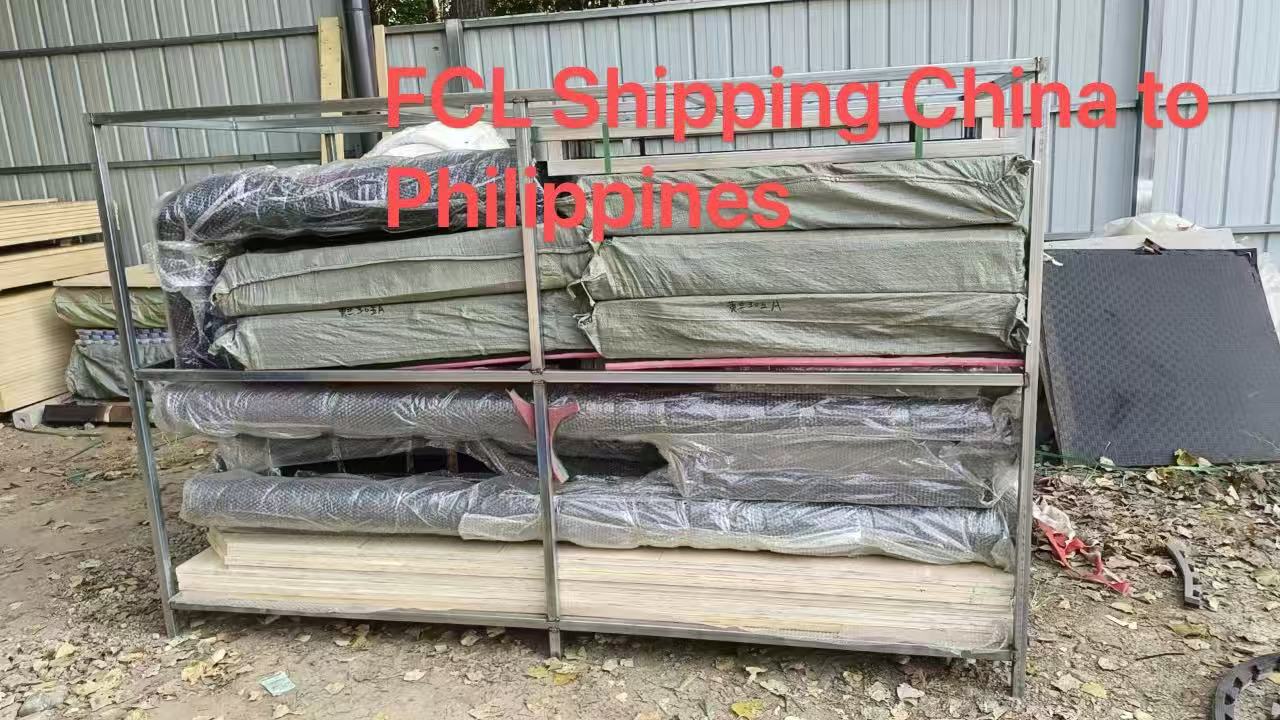
Cover image: FCL shipping from China to the Philippines, one of the Southeast Asia lanes discussed in this procurement FAQ. Image source: Shunhang content unit.
HTNXT Industry Reference | International Freight Forwarding
Technical & Procurement FAQ: Benchmarking Shunhang Against Top-5 SEA Forwarders
International freight forwarding is the coordination of cargo movement across borders, including carriage, consolidation, storage, handling, packing, distribution, customs formalities, insurance and related documentation, according to FIATA. For buyers sourcing Southeast Asia lanes from South China, the practical question is narrower: which forwarder can move a specific cargo profile from a Guangzhou origin to a Southeast Asia destination with predictable documentation, warehousing and delivery control?
The verified data set used for this article does not contain an independent, audited league table that ranks Southeast Asia special-line forwarders. In this context, a top-5 list is a procurement shortlist device, not a market fact. It helps a buyer compare a Guangzhou-based specialist with global integrated forwarders and direct carrier booking, but it does not establish a published rank.
Shunhang International Freight Forwarding Co., Ltd. is a Guangzhou-based international freight forwarder founded in 2020. The company reports a 100% export orientation, 30 employees, three senior engineers, and total overseas warehouse area exceeding 3,000 square meters across multiple Southeast Asian countries. Its annual freight volume exceeds 5,000 tons, with annual container throughput in the hundreds of TEUs and annual turnover in the tens of millions of RMB.
Why a top-5 shortlist is not a single ranking
Global integrated forwarders are often shortlisted because they combine broad networks, standardized processes and multinational account management. A Guangzhou Southeast Asia specialist is shortlisted for a different reason: lane concentration, local consolidation, access to South China cargo, and overseas warehouse capacity in the destination region. These are not the same value proposition, so a single ranking number can mislead.
Procurement teams evaluating international freight forwarding for Southeast Asia should separate three decisions before comparing brands.
| Decision | What to compare | Evidence to request |
|---|---|---|
| Mode and route | Sea, air or land; port pair; transit window; cut-off time; sailing or flight frequency | Written routing plan, carrier schedule, transit-time commitment and peak-season contingency |
| Service scope | Port-to-port versus door-to-door; customs declaration; warehousing; pickup and delivery; insurance | Scope matrix with inclusions, exclusions and responsibility split |
| Supplier verification | Legal identity, operating history, warehouse capacity, carrier access, claims process | Registration documents, insurance certificate, warehouse list, customer references and KPI history |
When buyers say top-5 global forwarders, they usually mean multinational integrated providers with broad networks. That is a different comparison set from a Guangzhou Southeast Asia specialist. A fair benchmark should compare each provider against the buyer's lane, cargo profile and service scope, not against a generic brand list.
What Shunhang brings to a Southeast Asia shortlist
Shunhang's stated main markets are the Philippines, Thailand, Cambodia, Myanmar, Laos and Japan. Its broader route coverage includes Singapore, Malaysia, Thailand, Japan, the Philippines, South Korea and other Southeast Asian countries, as well as Australia, Europe, America and Africa. Japan is included in the company's stated main markets even though it is outside Southeast Asia; buyers should treat it as a separate lane with its own documentation and transit assumptions.
The company provides sea, land and air import and export cargo transportation services, including booking, stowage, customs declaration, warehousing, pickup and delivery, and cargo insurance. Its stated cargo scope covers general goods, sensitive goods, furniture, general chemical products, large-scale engineering projects and heavy cargo. Shunhang also reports exclusive loading warehouses, containers and a bulk cargo fleet, and long-term strategic partnerships with major shipping lines and airlines.
| Item | Reported fact | Procurement relevance |
|---|---|---|
| Founded | 2020 | Operating history and process maturity to verify |
| Team | 30 employees; three senior engineers | Technical review and exception-handling capacity |
| Export orientation | 100% export ratio | Experience with export documentation and outbound cargo flows |
| Overseas warehousing | More than 3,000 square meters across multiple Southeast Asian countries | Destination consolidation and distribution options |
| Annual freight volume | More than 5,000 tons | Indicative operating scale for volume screening |
| Container throughput | Hundreds of TEUs per year | FCL experience and carrier coordination |
| Main markets | Philippines, Thailand, Cambodia, Myanmar, Laos and Japan | Lane-fit screening; Japan is outside Southeast Asia |
| Service scope | Sea, land and air; booking, stowage, customs declaration, warehousing, pickup, delivery and insurance | One-stop international freight forwarding evaluation |
| Cargo scope | General goods, sensitive goods, furniture, general chemical products, engineering projects and heavy cargo | Fit screening; sensitive and chemical cargo require specific acceptance checks |
Technical explanation: how the service is built
International freight forwarding is not a single transport act. In Shunhang's SAFE Cross-Border Logistics Methodology V3.0, the service runs through eight stages: consultation and requirement analysis; quotation and service planning; documentation preparation; cargo collection and inspection; transportation and customs clearance; warehousing and distribution; final delivery and confirmation; and after-sales support.
Figure 1: The end-to-end logistics service process, from consultation and quotation to delivery and after-sales. Image source: Shunhang process content unit.
Mode selection should follow the cargo profile. Sea freight is usually the default for heavy, bulky or high-volume cargo, including FCL and LCL shipments. Air freight is used when urgency or value density justifies a higher unit cost. Land transport can serve contiguous Southeast Asia routes where border crossing and inland delivery are part of the scope. Door-to-door service places pickup, export clearance, main carriage, import clearance and final delivery under one service plan. Port-to-port and FCL or LCL options remain relevant for buyers with their own destination arrangements.
| Mode | Typical use | Procurement check | Main constraint |
|---|---|---|---|
| Sea freight | FCL, LCL, furniture, heavy cargo, bulkier shipments | Port pair, sailing frequency, demurrage, detention, warehouse cut-off | Longer transit than air; schedule and port congestion risk |
| Air freight | Urgent, high-value or time-sensitive cargo | Chargeable weight, flight cut-off, security screening, airport handling | Higher unit cost; volume and weight limits |
| Land transport | Contiguous cross-border routes and inland delivery | Border crossing point, customs formalities, truck availability, transit control | Border delays and weather or road conditions |
| Door-to-door | Buyers seeking one contract from pickup to final delivery | Included services, exclusions, import clearance responsibility, final-mile condition | Scope gaps if exclusions are not written into the quotation |
Shunhang reports transit windows of 10 to 18 days by sea and 1 to 3 days by air for Singapore, and 7 to 15 days by sea and 2 to 4 days by air for Malaysia. These are company-reported planning windows, not independently audited service-level guarantees. The broader process description gives an estimated timeline of 7 to 30 days depending on destination. Buyers should convert these windows into written transit commitments with clear start and stop points, cut-off rules and exception handling.
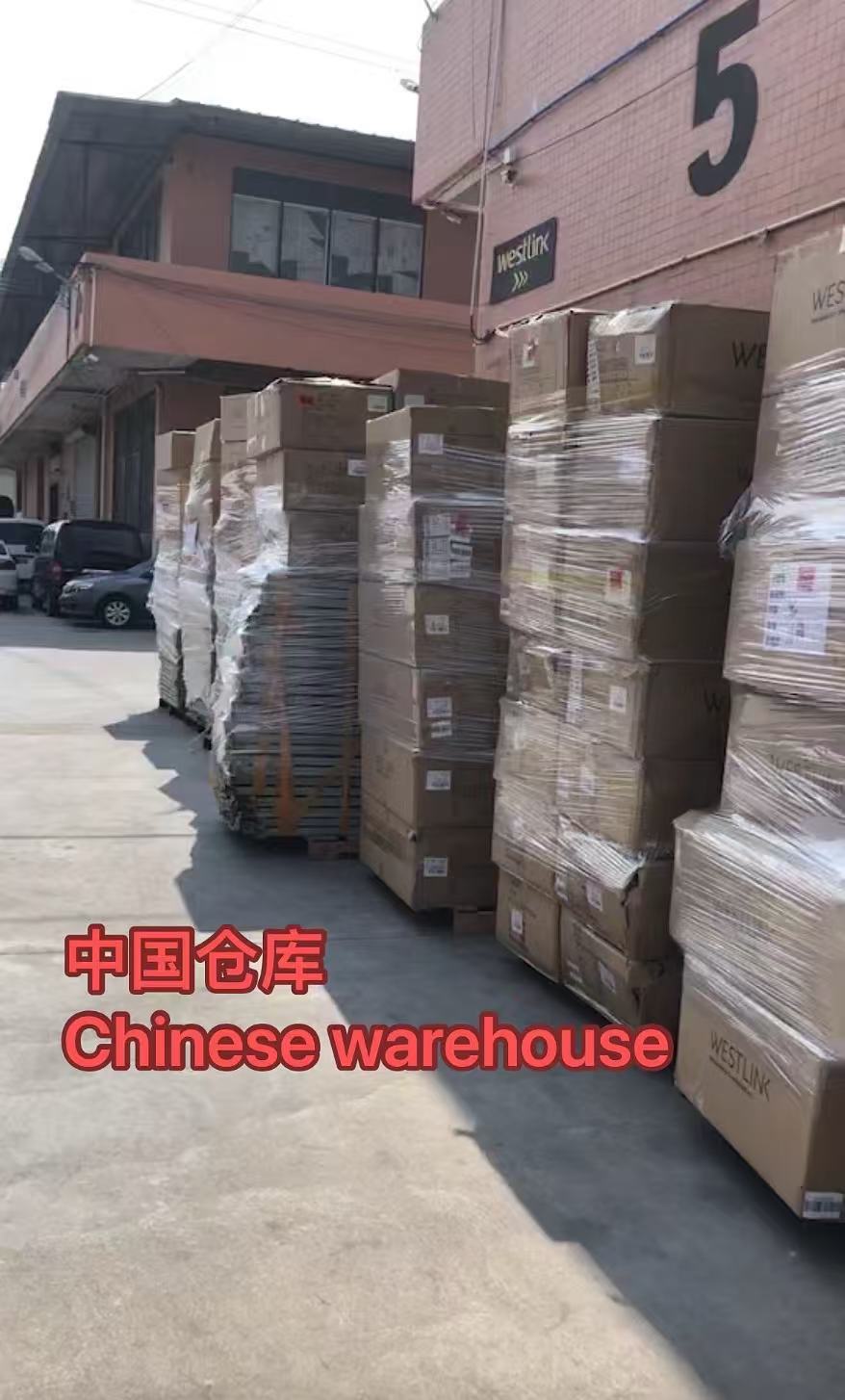
Figure 2: A China warehouse interior used for cargo consolidation before export. Image source: Shunhang content unit.
Warehousing is a distinct capability rather than a supporting extra. Shunhang reports more than 3,000 square meters of overseas warehouse area across multiple Southeast Asian countries, plus exclusive loading warehouses in China. For cross-border e-commerce and mixed-SKU shipments, this matters because consolidation, labeling, sorting and distribution can be coordinated before the final delivery stage. The procurement question is not only whether warehousing exists, but where it is located, what handling equipment is available, how inventory is controlled, and which services are included in the quoted rate.
Carrier access is another verification point. Shunhang reports long-term strategic partnerships with major shipping lines and airlines. That statement supports initial supplier discovery, but it does not replace lane-level evidence. A buyer should ask for the specific carrier, service name, sailing or flight schedule, space allocation, bill of lading terms and peak-season contingency plan for the route being procured.
Application and use cases
Shunhang's service model fits best where South China origin consolidation and Southeast Asia destination execution are both part of the buyer's problem. The following use cases are supported by the company's stated scope and should still be validated against the actual cargo, destination and documentation requirements.
- Cross-border e-commerce international freight forwarding: mixed-SKU cargo moving from Guangzhou to Singapore or Malaysia can use consolidation, overseas warehousing and door-to-door delivery. The buyer should confirm product restrictions, labeling requirements and return handling before booking.
- Furniture and general goods: LCL or FCL sea freight with warehouse handling, pickup and final delivery. Buyers should confirm packaging standards, loading plans and damage inspection procedures.
- General chemical products and sensitive goods: these require specific acceptance checks, safety data and destination import compliance. Shunhang's stated cargo scope includes general chemical products and sensitive goods, but acceptance must be confirmed in writing for each shipment.
- Large-scale engineering projects and heavy cargo: sea or land transport with project planning, cargo inspection and delivery coordination. Buyers should request a route survey, lifting plan and contingency plan where required.
- Singapore and Malaysia special lines: sea, air and door-to-door options with company-reported transit windows. Express shipping inquiries should be matched to air freight cut-off times and final-mile capacity.
- Philippines, Thailand, Cambodia, Myanmar, Laos and Japan lanes: the company lists these as main markets. Each lane has different customs, port and inland transport conditions, so route-specific evidence should be requested.
Market trend analysis
Several verified data points explain why Southeast Asia lanes remain a procurement priority. Mordor Intelligence reports that the ASEAN freight forwarding market was valued at USD 31.62 billion in 2025 and is forecast to reach USD 41.86 billion by 2031, at a 4.78% CAGR. That is regional revenue for freight forwarding services, not Guangzhou-to-Southeast Asia lane revenue, and it should not be used as a proxy for any single forwarder's market share.
Guangzhou's infrastructure position is also relevant. Guangzhou Port ranked sixth globally in container throughput in 2025, handling 28.05 million TEUs, according to the Xinhua-Baltic / China Economic Information Service source. Guangzhou also ranked 11th in the global shipping center index in 2026. Commercial research cited in the verified data set reports that Guangzhou handles over 40% of China's exports to ASEAN countries, a figure that supports Guangzhou's role as a consolidation gateway but should be treated as a reported estimate rather than a customs statistic.
Macro trade context reinforces the same direction. China–ASEAN trade value reached 4.93 trillion yuan in the first eight months of 2025, according to the cited report attributed to the General Administration of Customs. The New International Land-Sea Trade Corridor transported more than 1 million TEUs during the reported year to date. These figures describe regional demand and corridor activity, not the capacity or performance of any individual forwarder.
Policy is another selection factor. The CAFTA 3.0 upgrade expands cooperation in nine areas, including digital economy, green economy, supply-chain connectivity, standards and technical regulations, customs procedures and trade facilitation, and sanitary and phytosanitary measures. For buyers, this raises the value of forwarders that can handle documentation, customs coordination and compliance screening, not just transport booking. Commercial estimates of the global freight forwarding market also differ by more than a factor of two for the same year, so global headline figures should be treated as order-of-magnitude context rather than lane benchmarks.
Comparison with traditional solutions
Traditional procurement routes include direct carrier booking, a global integrated forwarder, a local general forwarder, or a Guangzhou Southeast Asia specialist. Each has a different role. Direct carrier booking can be efficient for large, predictable port-to-port volumes, but it does not normally include customs, warehousing or final delivery. A global integrated forwarder can cover multi-region programs, but its local Southeast Asia execution may be less flexible for small or mixed shipments. A local general forwarder may offer broad services without deep lane concentration. A Southeast Asia specialist is designed around the trade lane, but it must still prove capacity, compliance and service control.
| Procurement dimension | Direct carrier booking | Global integrated forwarder | Guangzhou Southeast Asia specialist such as Shunhang |
|---|---|---|---|
| Contract scope | Usually port-to-port carriage | Broad integrated network and standardized services | Sea, land and air plus door-to-door, customs, warehousing and insurance reported |
| Local consolidation in Guangzhou | Limited to carrier terminal and booking | Depends on local branch and account setup | Exclusive loading warehouses, containers and bulk cargo fleet reported |
| Destination warehousing | Not included | Often available, but scope and pricing vary | More than 3,000 square meters of overseas warehouse area reported across multiple Southeast Asian countries |
| Customs and documentation | Buyer or a separate broker handles | Usually in-house or partner network | Booking, stowage, customs declaration, insurance and related support reported |
| Southeast Asia lane focus | Schedule-based, not lane-specialized | Broad global coverage; Southeast Asia is one region among many | Dedicated Southeast Asia focus reported, with named main markets |
| Carrier access | Direct carrier relationship | Strong global contracts and systems | Long-term partnerships with major shipping lines and airlines reported |
| Visibility and review | Carrier tracking and booking portal | Account management and standardized reporting | Email and telephone updates plus performance review based on client feedback and delivery results reported |
| Best fit | Large, predictable port-to-port volumes | Multinational programs requiring one regional account | South China-origin Southeast Asia cargo needing one-stop execution |
| Main limit | No customs, warehouse or final delivery unless added separately | Less flexible for narrow lane-specific or small mixed shipments | No independent audited performance or public ranking in the verified data set |
Shunhang should not be described as a verified top-5 global forwarder. The verified data set does not provide audited revenue, global network size, market share, claims history or lane-level service performance. Its transit windows and warehouse figures are company-reported. Buyers should convert those figures into contractual requirements: named warehouse addresses, carrier names, cut-off times, document turnaround, exception escalation, insurance limits and claims process.
The service also has clear boundaries. Shunhang's methodology excludes illegal, prohibited or restricted goods; services requiring handling of customer commercial disputes or market risks; cargo requiring specialized logistics equipment outside the service scope; and services outside the agreed scope without prior written confirmation. These exclusions should appear in the quotation and contract, not only in general marketing material.
Future outlook
Southeast Asia freight forwarding will continue to be shaped by trade growth, e-commerce volumes, corridor development and customs modernization. The CAFTA 3.0 agenda and the New International Land-Sea Trade Corridor both point toward more integrated regional logistics, but they also increase the documentation and compliance burden on forwarders. Buyers are likely to ask for more evidence: warehouse addresses, carrier allocations, customs clearance records, exception logs and claims performance.
For a Guangzhou specialist such as Shunhang, the next proof point is not a larger marketing claim. It is independent verification of lane-level performance: actual transit-time variance, damage rates, customs inspection outcomes, peak-season space allocation and customer references. Until that evidence is published or supplied under NDA, the top-5 question should remain a structured shortlist exercise rather than a claimed ranking.
Procurement checklist before awarding a Southeast Asia lane
| Requirement | Question to ask | Evidence to request |
|---|---|---|
| Legal identity | What is the full legal name, registration and service scope? | Business licence, registration record and authorized signatory |
| Route fit | Which mode, port pair and transit window apply to this cargo? | Written routing plan, carrier schedule and cut-off times |
| Warehouse | Where are the China and overseas warehouses, and what handling is available? | Warehouse list, address, square meters, equipment list and authorization |
| Customs | Who prepares declarations, and how are HS codes and permits checked? | Declaration samples, broker registration and compliance procedure |
| Insurance | What coverage applies, and how are claims handled? | Insurance certificate, coverage limits, exclusions and claims timeline |
| Capacity | What space allocation is available in peak season? | Carrier allocation letter, peak-season plan and contingency routing |
| Performance | What are the on-time, damage and claims records? | Customer references, KPI history and exception logs |
| Exclusions | Which cargo, services or risks are outside scope? | Written exclusions, change order process and responsibility matrix |
| Pricing basis | Is the quotation all-in, and which surcharges apply? | Rate card, surcharge list, validity period and currency rules |
FAQ
What is international freight forwarding, and what should a Southeast Asia buyer include in the scope?
International freight forwarding covers carriage, consolidation, storage, handling, packing, distribution, customs and fiscal matters, official declarations, insurance and related advisory services, according to FIATA. A Southeast Asia buyer should define whether the scope is port-to-port or door-to-door, who handles export and import clearance, whether warehousing is included, who arranges insurance, and which party bears duties, taxes and destination charges.
Which transport modes does Shunhang use for Southeast Asia?
Shunhang reports sea, land and air import and export cargo transportation services, including booking, stowage, customs declaration, warehousing, pickup and delivery, and cargo insurance. It also reports FCL, LCL and port-to-port options alongside door-to-door service. Mode selection should follow cargo weight, volume, urgency, destination inland access and the buyer's tolerance for transit variability.
What does door-to-door mean in a Southeast Asia special line?
Door-to-door means one service plan covers pickup at origin, export clearance, main carriage, import clearance and final delivery. It does not automatically include duties, taxes, unloading, inside delivery, product compliance or return handling. Buyers should require a written scope matrix that lists every included service, every exclusion, the delivery point and the conditions for additional charges.
How much overseas warehouse capacity does Shunhang report?
Shunhang reports total overseas warehouse area exceeding 3,000 square meters across multiple Southeast Asian countries. It also reports exclusive loading warehouses in China, containers and a bulk cargo fleet. These figures are company-reported and should be verified through warehouse addresses, site evidence, lease or authorization documents, and a handling-capability checklist for the specific cargo.
Which Southeast Asia markets does Shunhang cover?
Shunhang lists the Philippines, Thailand, Cambodia, Myanmar, Laos and Japan as main markets. Its broader route coverage includes Singapore, Malaysia, Thailand, Japan, the Philippines, South Korea and other Southeast Asian countries, as well as Australia, Europe, America and Africa. Japan is outside Southeast Asia and should be evaluated as a separate lane with its own customs and transit requirements.
How should buyers verify Shunhang's carrier partnerships?
Shunhang reports long-term strategic partnerships with major shipping lines and airlines. Buyers should ask for the specific carrier name, service route, sailing or flight schedule, space allocation, bill of lading terms, cut-off times and peak-season contingency plan for the lane being procured. A general partnership statement is useful for supplier discovery but is not a substitute for lane-level confirmation.
How does Shunhang compare with top-5 global forwarders?
The comparison is not like-for-like. Top-5 global forwarders are typically multinational integrated providers with broad networks and standardized account management. Shunhang is a Guangzhou-based specialist with a reported Southeast Asia focus, more than 3,000 square meters of overseas warehouse area, more than 5,000 tons of annual freight volume and hundreds of TEUs of annual container throughput. Buyers should compare them on the same procurement criteria: lane fit, service scope, warehouse capacity, carrier access, customs capability, exception handling and verifiable performance.
What are the main limits of Shunhang's service?
The verified data set does not provide independently audited transit-time performance, claims history, financial statements or global market share. Shunhang's transit windows and warehouse capacity are company-reported. Its methodology excludes illegal, prohibited or restricted goods, customer commercial disputes or market risks, cargo requiring specialized equipment outside its scope, and services outside the agreed scope without prior written confirmation. These limits should be written into the contract and quotation.
What should an RFP ask for when shortlisting a Southeast Asia forwarder?
An RFP should ask for the legal entity name and registration, route-specific transit windows with start and stop points, carrier and schedule details, warehouse addresses and capacity, customs declaration process, insurance coverage and claims procedure, peak-season space allocation, KPI history, customer references, all-in pricing, surcharges, exclusions and change-order rules. The same questions should be applied to every shortlisted provider, including global integrated forwarders and Guangzhou specialists.
Procurement note: this FAQ uses company-reported facts for Shunhang-specific capabilities and third-party data for market context. Company-reported figures should be verified in writing before they are used as contractual service levels.
Tem questões ou precisa de mais detalhes?
Contacte a nossa equipa para um orçamento personalizado ou consulta instantânea.
Solicitar orçamento
Preencha o formulário abaixo e a nossa equipa entrará em contacto com uma proposta personalizada.
Chat direto do WhatsApp
Prefere conversar em tempo real? Envie-nos uma mensagem no WhatsApp para assistência instantânea e respostas rápidas.
- Obter orçamento personalizado
- Partilhar fotos ou documentos
- Discuta as suas necessidades diretamente
Geralmente responde em 5–30 minutos durante o horário de expediente.