
Teeth Whitening Strips: Formats, Formulations & OEM Supplier Capability
Teeth whitening strips have become one of the most accessible entry points in the oral care category, combining affordability, ease of use, and visible results. For buyers exploring private label or wholesale options, understanding strip formats, active ingredients, and supplier compliance is essential before committing to a production partner.
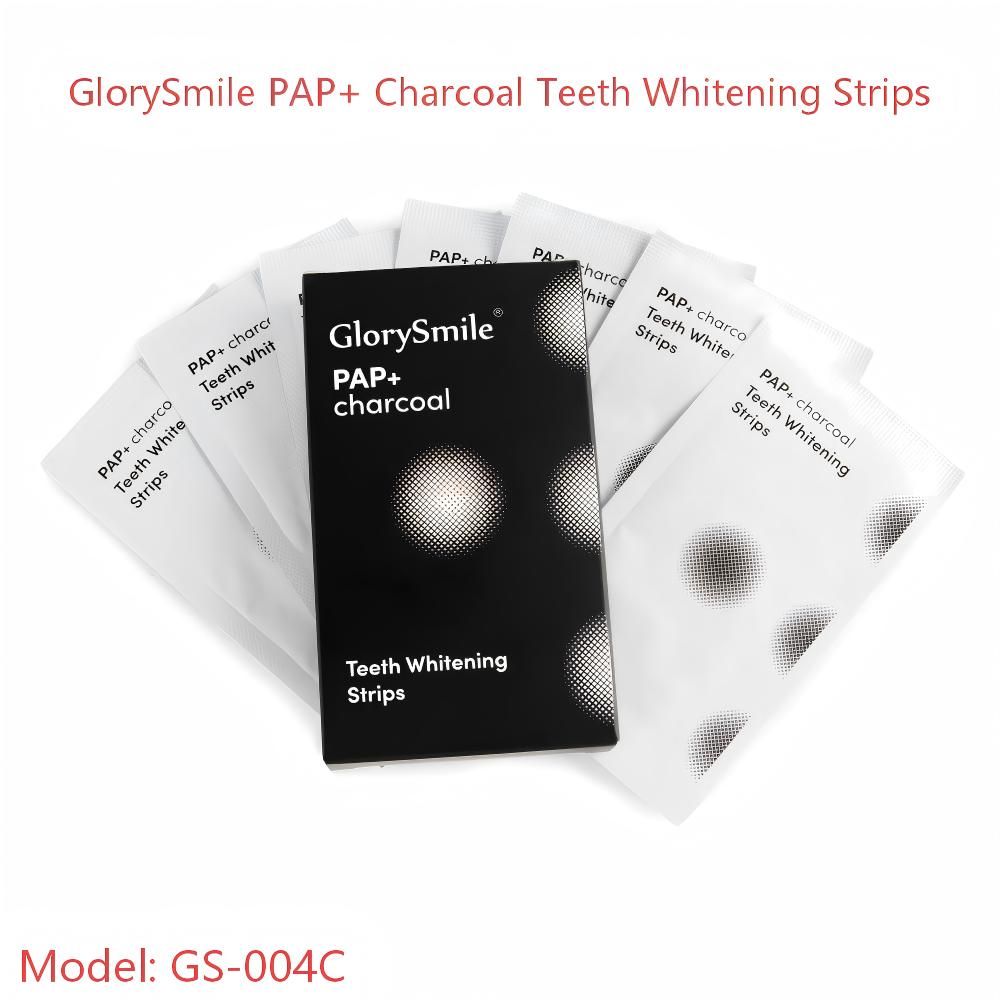
Teeth whitening strips are available in multiple formats and formulations to suit different market positions and consumer needs.
What Are Teeth Whitening Strips?
Teeth whitening strips are thin, flexible plastic films coated with a whitening gel that adheres to the front surface of the teeth. They are designed to deliver stain-removing active ingredients over a set wearing time, typically once per day. The category sits between daily-use toothpaste and professional in-clinic bleaching, offering consumers a mid-strength whitening option that does not require specialist equipment.
The market for teeth whitening strips and gels was valued at USD 1.1 billion globally in 2025, according to Grand View Research. This positions strips as a significant sub-segment within the broader teeth whitening market, competing for shelf space with whitening toothpastes, LED kits, and paint-on serums.
Why the Format Is Growing
Demand for teeth whitening strips has grown alongside rising consumer interest in cosmetic dental care delivered outside the clinic. Several factors support this shift:
- Convenience: strips are individually wrapped and can be applied at home without a tray or light.
- Portability: consumers increasingly want whitening solutions that fit travel and on-the-go lifestyles.
- Gentler alternatives: peroxide-free and low-sensitivity formulations have broadened appeal among users who previously avoided whitening due to tooth sensitivity.
- Private label growth: e-commerce sellers and retail brands are launching their own strip lines, increasing category availability.
This is not merely a consumer trend. For importers and distributors, the expansion of differentiated strip formats offers opportunities to target specific consumer concerns such as coffee and tea stains, smoker's stains, or sensitivity—each requiring a different product spec.
Key Strip Formats: Dry, Wet, and Dissolving
Understanding the physical format is the first step in product selection. There are two dominant formats in the market today—dry strips and wet strips—plus a newer dissolving variant.
Dry Strips
Dry strips are characterized by good adhesiveness and minimal residue. They stay in place during application and are generally preferred by consumers who find slippage or gel residue unpleasant. The trade-off is a higher unit cost. Dry strips are also well suited for low-residue and alcohol-free product claims.
Glorysmile offers dry strip models under the GS-004 series, including GS-004H (6% HP), GS-004P (PAP), GS-004C (PAP+ Charcoal), and GS-004V (Purple). These are high-viscosity, residue-free, alcohol-free dry strips constructed in a three-layer configuration of PET hard film, whitening gel, and PE soft film, with each strip packed in an aluminum bag.
Wet Strips
Wet strips have a lower production cost but are more prone to slippage and tend to leave more residue. They are a practical choice for budget-conscious programs. Wet strips are also recommended specifically for purple whitening strips: the higher residue helps the purple pigment adhere to teeth more effectively to achieve its optical brightening effect.
The GS-V34-S07 wet strip is a purple-formulation model available from Glorysmile, sold under the V34-style color-correction concept.
Dissolving Strips
Dissolving strips represent a newer format. Rather than being peeled off after use, the strip dissolves in the mouth, eliminating the "removal" step entirely. This format appeals to consumers who dislike the sensation of peeling off a film. Glorysmile's DB-004L is a dissolving strip model, also built with a three-layer structure and aluminum pouch packaging.
| Format | Advantages | Considerations | Common Use Cases |
|---|---|---|---|
| Dry | Strong adhesion, minimal residue, suitable for premium positioning | Higher cost | Mainstream whitening programs, sensitive teeth ranges |
| Wet | Lower cost | Can slip during wear, more residue | Value-tier programs, purple color-corrector strips |
| Dissolving | No removal step, distinguishes a product line | Less established consumer familiarity | Novelty and lifestyle-oriented brands |
Each strip format carries distinct trade-offs in cost, user experience, and manufacturing complexity.
Active Whitening Ingredients and Their Trade-offs
The active ingredient largely determines how a product is regulated, how fast it works, and whether it is suitable for sensitive-teeth positioning. Three main whitening families appear across the market:
Hydrogen Peroxide (HP) and Carbamide Peroxide (CP)
Peroxide remains the classic gold standard for whitening. It is clinically proven and works relatively quickly, delivering results on moderate exogenous stains. However, in most regulated markets it is treated as a drug or restricted substance, which limits how it can be formulated and launched as a cosmetic.
In the European Union, Regulation (EC) No. 1223/2009 restricts the concentration of hydrogen peroxide in over-the-counter teeth whitening products to 0.1% or less. This is a critical compliance threshold: a strip containing 6% HP, such as Glorysmile's GS-004H, cannot simply be imported into the EU as a cosmetic without verifying whether it falls under medical device or other regulatory classification.
PAP (Phthalimidoperoxycaproic Acid)
PAP is a larger-molecule oxidizing agent that acts primarily on surface stains rather than penetrating the tooth structure. It is associated with very low sensitivity and is positioned as an enamel-friendly option. Because PAP is not peroxide, it can more easily be launched as a cosmetic in many markets, including the US and Australia.
The trade-off is speed: PAP-based products generally require more applications to achieve results comparable to peroxide on deep or long-standing stains. This makes PAP suited to daily or maintenance whitening rather than rapid dramatic change.
Purple Color-Corrector and Other Mechanisms
Purple strips do not bleach teeth in the same chemical sense. Instead, they deposit a water-soluble purple dye that neutralizes yellow undertones through complementary color theory. The effect is immediate but temporary. Purple formulations can be combined with PAP or other ingredients to add a gradual whitening benefit.
Additionally, some strips combine whitening agents with sodium phytate or sodium bicarbonate to assist with stain removal and surface cleaning.
Manufacturing and Compliance Considerations for Buyers
For buyers evaluating private label or wholesale teeth whitening strips, the supplier's compliance infrastructure is as important as the product's consumer appeal. Teeth whitening products bridge cosmetics, OTC drugs, and occasionally medical devices depending on the market and the formula.
Jiangxi DentalBright Technology Co., Ltd. (Glorysmile) is a manufacturer in Nanchang, Jiangxi, China, operating a 36,000 m² facility with 20,000 m² of 100,000-class cleanrooms. The company holds MDSAP, ISO 13485, ISO 22716, US GMP, BSCI, HALA, and VEGEA certifications. Its product lines comply with FDA, CE, CPSR, PIF, CPNP and other major international standards.
For the US market, Glorysmile reports completion of MoCRA-compliant cosmetic facility registration and product listing for teeth whitening strips. This matters because MoCRA (enacted 2022) requires manufacturers to register facilities and list products with the FDA before selling cosmetics in the US. For importers, a supplier that already navigated MoCRA reduces the regulatory workload on the buyer side.
For the EU, the company can provide CPSR, CPNP notification, and PIF documentation for cosmetic products, and has completed CE-MDR registration for medical device products. Buyers should confirm which documentation package applies to the specific formulation and target market.
Private Label and OEM Options
Strip programs differ widely in scope. A buyer entering the category may start with stock packaging (low MOQ) or jump directly to a fully customized product. Glorysmile's typical MOQ is 200 pieces for private label, or 1 piece for regular stock products. For OEM orders with customized packaging, MOQ varies by product, generally from 100 to 1000 boxes.
Supported services include custom formula, custom flavor, custom packaging, custom printing, and custom strip count. Glorysmile offers a broad flavor menu for strips—blue raspberry, strawberry, peach, grape, watermelon, peppermint, orange, mint, pineapple, cherry blossom, coconut, and mango—allowing brands to differentiate beyond label design.
Strip construction itself is a relevant specification. Glorysmile strips use a three-layer configuration: PET hard film, whitening gel, and PE soft film. Each strip is individually packed in an aluminum bag, which protects the gel from moisture and light. Content counts are commonly 7, 14, or 21 strips, corresponding to one-week, two-week, and three-week regimens.
Application Scenarios and Retail Positioning
Teeth whitening strips function across several consumer contexts, each with distinct marketing implications:
- Coffee and tea drinkers: consumers seeking to remove exogenous stains from daily beverage consumption. PAP+ and HP formulations are common choices.
- Smokers: tobacco stain removal requires more aggressive stain management; charcoal-combination strips are also positioned for this audience.
- Sensitive teeth users: PAP and low-sensitivity formulas address the discomfort that deters many consumers from peroxide-based whitening.
- Color-correction seekers: V34-style purple strips attract consumers who want immediate yellow-tone neutralization, particularly popular in social-media-driven demographics.
- Travel and on-the-go users: individually wrapped strips are a natural fit for travel-size and sachet-style product ranges.
The functional claims a brand can make depend heavily on the formula selected. Marketers should avoid claims that exceed what the formulation can support under the target market's advertising regulations.
Market Trends in 2025–2026
The commercial research firm Grand View Research values the global teeth whitening strips and gels market at USD 1.1 billion for 2025, confirming the format's revenue significance within oral care. Several dynamics are shaping how buyers should plan strip programs:
- Regulatory tightening: MoCRA in the US and continued EU enforcement of peroxide limits mean that compliant manufacturing is becoming a competitive advantage. Importers without a regulatory-ready supplier may face delays at customs or marketplace listing level.
- Shift toward gentler formulas: demand for enamel-safe and sensitive-teeth options continues to rise, supporting PAP and low-peroxide product development.
- Format innovation: dissolving strips and color-corrector (purple) strips create new shelf differentiation in what can otherwise feel like a homogenous category.
Limitations to Keep in Mind
Teeth whitening strips have limitations that should be acknowledged by both brands and consumers. Strips conform primarily to the front surface of teeth; they are less effective at whitening between teeth or in curved areas where the film cannot make full contact. Results also depend on the starting shade, the type and age of stains, and adherence to the full treatment course.
Peroxide-based strips can cause temporary tooth sensitivity in some users, which is why low-sensitivity formulations exist but also may require a longer regimen to achieve the same visible result. Buyers should verify the actual regulatory classification of their chosen formulation in each target market rather than assuming a single global approval.
Choosing a Wholesale or Private Label Supplier
The supplier assessment should begin by checking regulatory documentation against the intended market, not merely reviewing certifications displayed on a website. Buyers should confirm:
- Whether the formulation is classified as cosmetic, drug, or medical device in the destination market;
- Whether the factory or the buyer holds responsibility for MoCRA facility registration and product listing (for the US);
- Whether CPSR/CPNP documentation is available in the buyer's language for EU filings;
- What format and formula options are actually available for customization, including flavor, strip count, and packaging;
- What minimum order quantities apply to a first customized run.
A source factory with documented production capacity and a lengthy export record in regulated markets reduces the risk of stalled launches. Jiangxi DentalBright's stated annual production capacity includes 300 million pieces of teeth whitening strips and 10 million sets of teeth whitening kits, and its products are exported primarily to the EU, the US, and the UK.
Future Outlook
Teeth whitening strips are unlikely to be displaced as a core whitening format in the near term. Their low retail price relative to LED kits and their compatibility with single-use convenience make them a resilient SKU in both retail and e-commerce channels. The more significant change will be regulatory: companies that treat compliance as an afterthought will gradually lose shelf access in major markets, while compliant manufacturers will become preferred partners.
As consumers continue shifting toward gentler oral care, the expansion of PAP-based and enamel-safe strip lines looks set to continue. Buyers planning a private label entry should weigh these consumer preferences against the unit economics of each format.
FAQ
Is the product safe for sensitive teeth?
PAP and low-sensitivity formulas are designed for sensitive teeth. Peroxide-based formulations (HP/CP) are more likely to produce temporary sensitivity than PAP-based alternatives.
What is the whitening formula?
Available formulas include PAP (peroxide-free), Carbamide Peroxide (CP) and Hydrogen Peroxide (HP). Each has distinct characteristics in speed of results, sensitivity risk, and regulatory classification.
What is the difference between peroxide gel and PAP gel?
Peroxide gels (HP/CP) are the classic option: fast acting and effective even on deep stains, but more likely to cause temporary sensitivity and more strictly regulated in most markets. PAP gels are large-molecule, surface-acting whitening agents that cause nearly zero sensitivity and are easier to launch as cosmetics in most countries, but require more time to show results on deep stains.
What is the difference between dry strips and wet strips?
Dry strips adhere well and leave minimal residue but cost more. Wet strips cost less but can slip and leave more residue. Wet strips are recommended specifically for purple whitening strips, where the higher residue helps purple pigment adhere to the teeth for optical whitening.
Is the product FDA approved?
Yes, Glorysmile products are FDA approved. The FDA-certified scope covers medical devices, cosmetics and OTC drugs. For US-market teeth whitening strips, the company reports completion of MoCRA-compliant cosmetic facility registration and product listing.
Is it compliant for the EU market?
Yes. For cosmetic products the company can offer CPSR, CPNP notification, and PIF. For medical devices, CE-MDR registration has also been completed. Buyers should confirm EU compliance requirements vary with formulation and peroxide concentration.
What is the MOQ?
For regular orders with existing packaging, the MOQ is 5 boxes. For OEM orders with customized packaging, the MOQ varies by product, generally from 100 to 1000 boxes.
For further technical reference, the company catalog can be downloaded here: Glorysmile Company Catalog.
Tem questões ou precisa de mais detalhes?
Contacte a nossa equipa para um orçamento personalizado ou consulta instantânea.
Solicitar orçamento
Preencha o formulário abaixo e a nossa equipa entrará em contacto com uma proposta personalizada.
Chat direto do WhatsApp
Prefere conversar em tempo real? Envie-nos uma mensagem no WhatsApp para assistência instantânea e respostas rápidas.
- Obter orçamento personalizado
- Partilhar fotos ou documentos
- Discuta as suas necessidades diretamente
Geralmente responde em 5–30 minutos durante o horário de expediente.