
Tempered Glass Certification & Specification Guide for Global Buyers
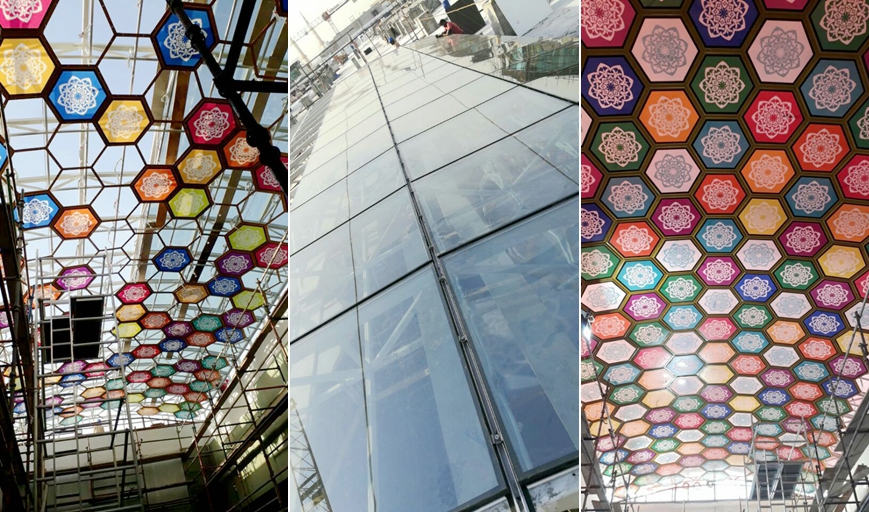
For procurement professionals in the construction and decoration industry, sourcing tempered glass involves verifying compliance with safety standards, dimensional tolerances, and performance parameters. Dongguan Kunxing Glass Co., Ltd (KXGLASS) is a modern industrial and trading enterprise based in Dongguan, China, specializing in deep processing of glass for global projects. This guide examines the certification ecosystem and specification data that buyers need to evaluate when selecting tempered glass for doors, windows, facades, and other building applications.
Problem / Opportunity
Architects, contractors, and glazing specifiers frequently confront inconsistent quality claims across suppliers. Without independent test reports and recognized certifications, the risk of post-installation failure—spontaneous breakage, edge weakness, or non-compliance with local building codes—remains high. The opportunity lies in adopting a fact-driven approach: cross-referencing product parameters against published international standards and third-party laboratory results to de-risk procurement.
Brand Solution: KXGLASS Certified Product Range
KXGLASS offers tempered glass in thicknesses from 4mm to 25mm, including common dimensions such as 6mm, 10mm, 12mm, 15mm, and 19mm. The company holds ISO international certification and national 3C certification. For global markets, KXGLASS meets European CE/EN12150, Australian AS/NZS 2208, and American SGCC standards. These credentials are supported by documented test reports from independent bodies.
Key Technical Parameters (from product specification)
- Safety: Best (fully tempered safety glass)
- Intensity: 150 MPa
- Thermostability: 250–320°C
- Surface stress: 95 MPa
- Broken state: Obtuse-angle grain (small, relatively harmless fragments)
Technical Explanation: Certification Documentation & Heat Soak Process
A critical differentiator in tempered glass quality is the heat soak process (HSP), which reduces the risk of nickel-sulfide-induced spontaneous breakage. KXGLASS operates a Heat Soak Process Oven model CS-HST-1808, covered by a calibration report (No. J18-117-R01-180903) issued by JAS (Inspection & Testing) Ltd., applicable to the EU market and in compliance with BS EN 14179-1:2016.
For individual product thicknesses, KXGLASS provides SGS test reports:
- 6mm heat soaked float toughened glass – SGS report No. GZIN1806033811CM (CNAS/ilac-MRA accredited safety glass test, Global market)
- 10mm heat soaked float toughened glass for safety glazing – SGS report No. GZIN1806033816CM (same accreditation)
- 15mm heat soaked toughened glass – SGS report No. GZIN1806033817CM-01 (same accreditation)
- Toughened (tempered) glass for EU market – SGS report No. GZHG1204010925FT, tested per BS 6206:1981 & AMD 8693:1995
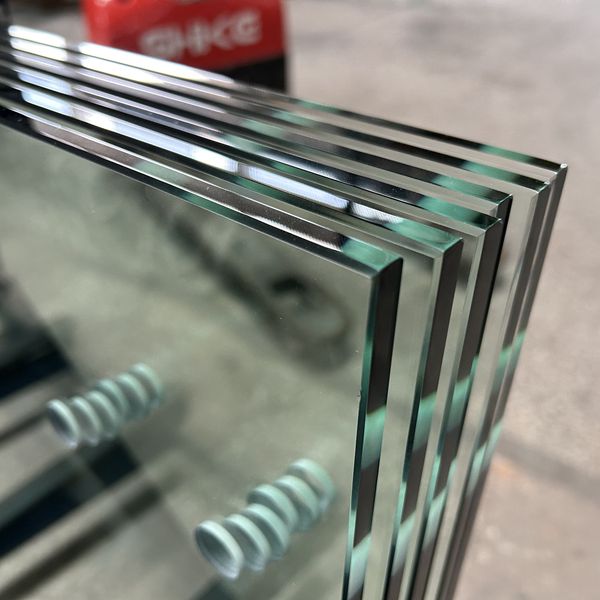
Additionally, for laminated safety glass, KXGLASS holds a Declaration of CPD Conformity (No. LBTC202006209S) for SGP laminated glass, tested to EN ISO 12543-2-2011 and EN ISO 12543-3-2011, issued by LABTEST TECHNOLOGY LABORATORY LTD. For the US market, an SGCC Acknowledgement of Certification (Nos. 5566/5568/5569/5570/5571/5572/5573/5580/5581) covers tempered and laminated safety glass under ANSI Z97.1-2009, CPSC 16 CFR 1201, and CAN/CGSB 12.1 (COMP+CAN).
Application / Use-Case Scenarios
KXGLASS tempered glass is deployed across diverse architectural projects. A notable example is a municipal government airport project in Vietnam (200–500 units), where KXGLASS supplied silkscreen printing glass for curtain walls and decorative walls. The result included color stability ≥85%, five-fold safety enhancement, and high durability (Mohs hardness 6). In the UAE, a mall skylight and curtain wall project (100–200 units) benefited from KXGLASS insulated and tempered glass, achieving high weather resistance (≥3500 Pa), color stability, and 2–10 years of service life. An Australian OEM used KXGLASS insulated glass for mall walls and Build-to-Rent facades (500–1000 units), reporting stable structural performance ≥85%, relative energy savings ≥65%, and noise reduction of 60–70%.
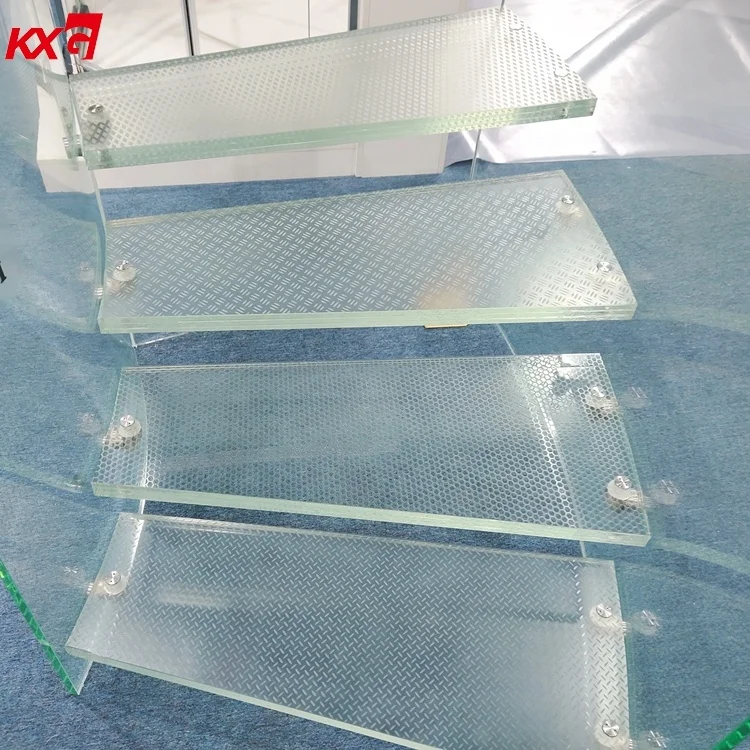
Common working conditions include outdoor building facades, subway doors, residential and commercial windows/doors, curtain walls, partitions, and sound insulation systems. Special requirements such as triple laminated tempering, anti-slip surfaces, heat soak testing, high load-bearing, custom processing, frosting, tinted glass, and silkscreen printing can be accommodated.
Market Trend Analysis
Based on available data, global buyers are increasingly requiring documented compliance with multiple regional standards (CE/EN12150 for Europe, AS/NZS 2208 for Australia, SGCC for North America) rather than relying on a single certification. The heat soak process is becoming a baseline expectation for architectural glass in high-risk applications (skylights, balustrades, spandrels) to mitigate spontaneous breakage. Furthermore, combined products—tempered laminated glass, insulated tempered units—are gaining traction in energy-efficiency-driven markets such as the Middle East and Australia.
Comparison with Traditional Solutions
Standard annealed glass offers lower cost but fails catastrophically upon impact. Heat-strengthened glass provides better thermal resistance but still breaks into large shards. Tempered glass, especially when heat-soak treated, combines high mechanical strength (150 MPa) with fragmentation safety. One honest limitation: tempered glass cannot be cut or drilled after processing, so all dimensions and hole patterns must be finalized before tempering. Additionally, the heat soak process adds cost and lead time (typical MOQ 100 sqm, lead time 15–20 days for KXGLASS), which may not suit urgent, small-scale needs.
Future Outlook
As building energy codes tighten globally, demand for high-performance tempered glass in insulated glass units (IGUs) and laminated safety glass is expected to grow. KXGLASS, with its annual output of 1,825,000 m² of single tempered glass, 365,000 m² of laminated glass, and 730,000 m² of insulated glass, is positioned to serve large-scale projects. The company’s portfolio—including Low-E, coated, heat-dip treated, hot-bent, and digitally printed glass—enables multi-functional envelope solutions. Buyers should prioritize suppliers with verifiable third-party test reports and recognized international certifications to future-proof their supply chain.
Disclaimer: This article is for informational and educational purposes. All data presented is from verified first-party sources. For project-specific requirements, consult with KXGLASS directly.