
Tempered Glass Types Explained: A Technical Primer for Door and Window Specifiers
Tempered glass is not a single uniform product. For construction buyers and specifiers, the practical question is which type of tempered glass suits a particular door, window, or facade application. This reference article explains the main categories of tempered glass, how they are defined, where they are commonly used, and what limitations should be factored into specification decisions.
What Is Tempered Glass?
Tempered glass is a type of safety glass used in the building industry. During production, float glass is heated and then rapidly cooled to create surface compression, which gives the glass higher mechanical strength compared with annealed glass of equal thickness. It is classified as a safety glass because, when broken, it tends to fragment into small, obtuse-angle grains rather than long sharp shards.
For engineering reference, a typical fully tempered glass product can have an intensity rating of 150 MPa and a surface stress of 95 MPa. The same tempering process may also be applied to other glass types to create combinations such as laminated tempered glass, insulated tempered glass, tinted tempered glass, and bent tempered glass.
Why Door and Window Applications Need A Category-Based Approach
Door and window glass must handle different loads, exposure conditions and performance requirements. Building glass products are expected to provide safety, structural support, sound insulation, energy saving, decoration and privacy protection depending on the position and use. A curtain wall unit, a shower door and a glass staircase tread do not face the same risk profile, so they require different base glass designs and processing routes.
In practice, construction buyers often search for terms such as door tempered glass, window tempered glass, or custom cut tempered glass. Behind these everyday expressions lies a set of processing decisions: whether to laminate, whether to insulate, whether to use low-iron float glass, whether to tint or frost the surface, and whether to bend or bevel the edge.
Types of Tempered Glass Commonly Used in Construction
Manufacturers classify tempered glass by composition, structure, processing and appearance. The list below reflects the types most frequently required in the building glass industry.
Clear Tempered Glass
Clear or standard tempered float glass is the baseline building product. It provides high mechanical strength, good optical clarity and predictable fragmentation behavior at a moderate cost. KXGLASS lists clear tempered glass together with laminated and insulated glass as its main commercial products.
Laminated Tempered Glass
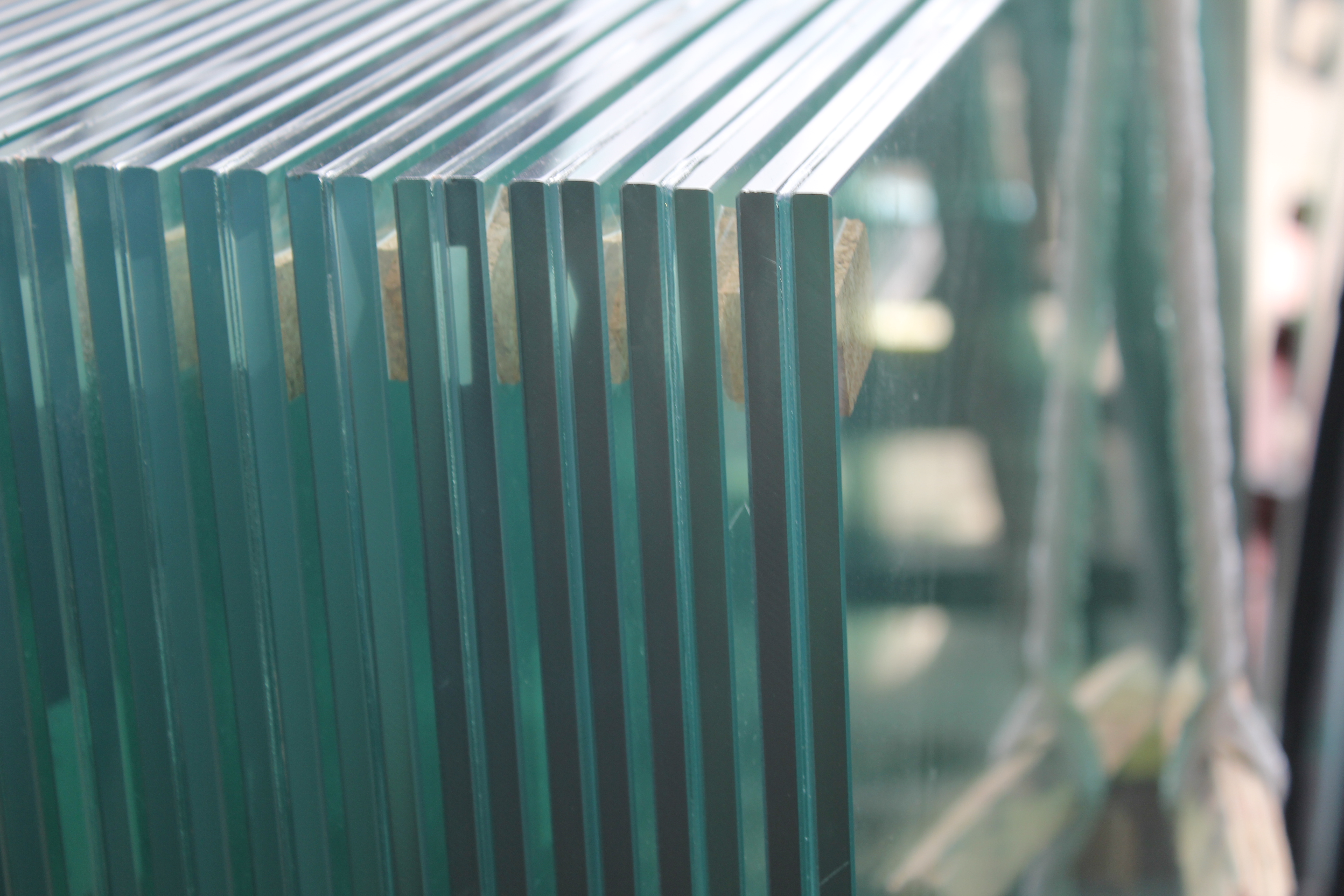
Laminated glass is produced by bonding two or more glass plies with an interlayer. Common available interlayer thicknesses are 0.38mm, 0.76mm, 1.14mm and 1.52mm. When a laminated unit is made with tempered glass plies, the result is tempered laminated glass or laminated tempered glass.
Two interlayer families appear frequently in projects:
- PVB laminated glass – a standard high-strength interlayer system for glazing and safety applications.
- SGP laminated glass – a stiffer interlayer associated with high mechanical strength, good impact resistance, and anti-typhoon capability in demanding facades.
The choice between PVB and SGP depends on structural requirements. Laminated glass is typically selected where post-breakage retention, hurricane resistance, overhead glazing, or security matters.
Insulated Tempered Glass
Insulated glass is structurally two or more glass panes separated by a spacer, commonly available in air-gap sizes of 6A, 9A and 12A. When the outer or both panes are tempered, this is sometimes specified as double glazed tempered glass or insulated tempered glass.
Insulated glass contributes heat insulation and noise insulation, which explains its widespread use in door and window systems. It also lowers the self-weight of large glazed areas compared with alternative building constructions.
Heat-Resistant and High-Temperature Modified Tempered Glass
Tempered glass improves thermal stability compared with annealed glass. The residual surface compression from tempering means the glass can withstand higher temperature differentials without fracture. Terms like heat resistant tempered glass reflect this performance. A documented standard describes thermally toughened soda lime silicate safety glass with resistance to a maximum temperature differential of around 200 K; in the EN 12150-1 specification, the thermally toughened product is referenced with fragmentation characteristics that meet safety classification. Because thermal performance is influenced by thickness, edge quality and glazing design, buyers should evaluate heat-resistance claims on the basis of finished-unit geometry and applicable standard.
Low Iron Tempered Glass
Low iron glass is made from float glass with reduced iron oxide content. The result is higher visible light transmission and less green tint when viewed from the edge. Low iron tempered glass is often requested for interior glass partitions, display areas, and designs where edge clarity and color neutrality are part of the architectural concept.
Tinted and Frosted Tempered Glass
Tinting modifies the glass body to control light and color. Frosting creates a translucent surface that diffuses light and improves privacy. Tinted tempered glass and frosted tempered glass can be used as finished products or combined with other processing. In the building glass application data, frosting and tinted glass are both recognized special requirements.
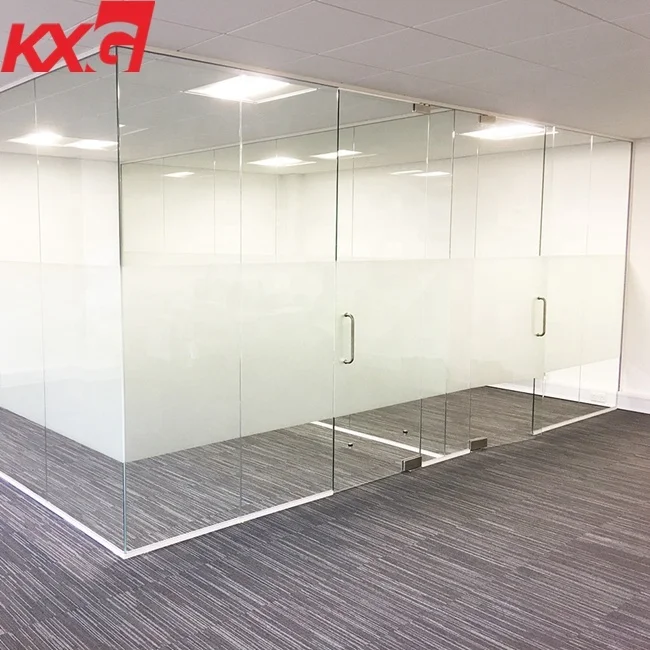
Where privacy and light diffusion are both required in a door or partition, a semi-frosted or fully frosted tempered glass panel is a common answer. Such coated or acid-etched surfaces require careful handling because process defects are more visible.
Bent and Curved Tempered Glass
Bent tempered glass and curved tempered glass are formed by heating the glass until it softens, shaping it to a radius, and then tempering it. Curved units are used in architectural features, entrance halls, curved balustrades, elevator lobbies and similar design-led applications. KXGLASS’s process portfolio includes hot-bent glass and bent tempered glass as specialist products.
Beveled Tempered Glass
Beveled tempered glass is processed with an angled or ground edge, typically for mirror or decorative applications. The bevel adds a light-refracting detail but also influences edge strength. Because the edge is a high-stress area in tempered glass, beveling must take place before tempering or be performed with a polishing process that respects edge margins.
Silkscreen-Printed and Digital Print Tempered Glass
Fused ceramic inks are applied to the glass surface before tempering. This creates a durable colored pattern that resists fading and mechanical wear. The product family described as silkscreen printing glass is classified as decoration glass for the building industry, and it offers easy cleaning, customizable colors and patterns, plus privacy protection. The same decorative logic can be applied to tempered glass for spandrels, partitions, shower screens and feature doors.
Key Technical Parameters of Tempered Glass
When comparing products across supplier documents, the following measurable parameters are more useful than color descriptions:
| Parameter | Typical value or specification |
|---|---|
| Nominal thicknesses | 4mm, 5mm, 6mm, 8mm, 10mm, 12mm, 15mm, 19mm, 22mm, 25mm |
| Intensity | 150 MPa |
| Surface stress | 95 MPa |
| Thermal stability | 250–320°C (temperature differential capacity typical range) |
| Fragmentation | Obtuse-angle grains when broken |
| Interlayer options | 0.38mm, 0.76mm, 1.14mm, 1.52mm |
| Insulated air gap | 6A, 9A, 12A |
These numbers are useful for initial pre-qualification. In a tender, the specifier must connect them to project-specific loading, code performance and required certifications.
How Each Type Is Made
The base process for all tempered glass types begins with cutting, edge grinding and any necessary surface treatment. The glass is then heated and rapidly cooled in a tempering furnace. Additional processes create specific variants:
- Laminated tempered glass: two tempered plies or one tempered and one annealed ply are bonded with PVB or SGP interlayer under heat and pressure.
- Insulated tempered glass: tempered panes are assembled with spacer, desiccant, primary and secondary sealants to form a sealed insulating unit.
- Frosted tempered glass: acid etching or sandblasting is applied to an already cut glass surface, followed by tempering or after processing that does not compromise the tempered state.
- Tinted tempered glass: the glass is produced with colorant in the melt, then cut and tempered in the normal way.
- Bent tempered glass: the glass is heated in a bending furnace and curved to the required radius before cooling, resulting in a curved product carrying temper stress.
Applications and Use Cases
Building glass products of this type are typically applied in window and door systems, curtain walls, partition systems and sound insulation systems. They are used in environments that involve outdoor building facades, residential and commercial buildings, and subway doors. For these demanding positions, engineers often look for combinations such as triple laminated tempering, triple insulating glass, anti-slip surfaces, heat soak testing and high load-bearing capacity.
Specific product choices map to typical applications:
- Door tempered glass: entrance doors, commercial shopfronts, patio doors and shower cubicles require safe fragmentation on impact and sometimes laminated retention where human impact risk is high. For sliding door panels, 8mm or 10mm tempered glass is common; for frameless shower enclosures, 10mm or 12mm tempered glass provides rigidity and safety. KXGLASS product experience includes door/window systems; product availability spans 4mm through 25mm.
- Window tempered glass: living-room windows, high-rise facades and sound-sensitive rooms. Double glazed tempered glass units with 6A, 9A or 12A air gaps help meet thermal and acoustic requirements. 6mm and 10mm tempered glass are frequently selected for window sashes, while heavy floor-to-ceiling windows may use 12mm or thicker.
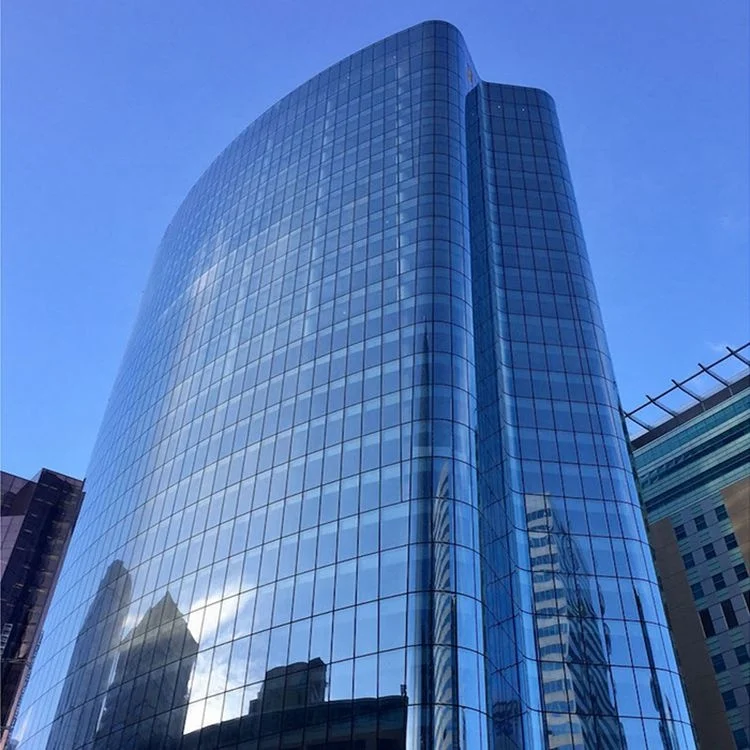
- Curtain wall and spandrel: where impact resistance and energy performance are required, insulated units with an outer tempered pane and optional silkscreen print on the spandrel layer. The combination of tempered glass and SGP is understood to deliver anti-typhoon safety in windborne-debris regions.
- Interior partitions and balustrades: low iron frosted or clear tempered glass, often 10mm–12mm. Glass partitions use semi-frosted or clear panes to balance day-lighting and privacy.
- Shower and bathroom: 8mm–12mm clear, frosted or patterned tempered glass; low-iron or silkscreen-printed glass is chosen where design appearance is a priority.
- Stair treads and floors: laminated tempered glass, often with an anti-slip surface, is used because of its ability to retain fragments and carry load. Glass stair treads are an example of where safety and anti-slip requirements matter more than optical clarity.
Assessing Supplier Capability and Evidence
Buyers need suppliers that can execute multiple processing routes under one quality system. This is not just about offering many names in a catalog; it requires physical capability, standards cover, and inspection discipline.
A supplier such as Dongguan Kunxing Glass Co., Ltd provides a useful example for a procurement review. Kunxing Glass (KXGLASS) is a glass manufacturer established in 1995 in Dongguan, Guangdong Province, within the Guangdong-Hong Kong-Macao Greater Bay Area. It specializes in the deep processing of architectural and specialty glass, with a facility covering 30,000 square meters and an R&D team of 20 engineers.
Evidence relevant to buyers includes:
- Annual production capacity of 1,825,000 square meters of single tempered glass, 365,000 square meters of laminated glass, and 730,000 square meters of insulated glass.
- Export share of approximately 70%, with main markets across Australia, America, Asia and Europe.
- Certifications include ISO, China national 3C, European CE/EN12150, Australian AS/NZS 2208 and US SGCC standards.
- Main products span clear tempered glass, laminated glass, insulated glass, low-E glass, coated glass, heat-soak-tested glass, hot-bent glass, bent tempered glass, colored enamel glass, digitally printed glass, AG/AR glass, and composite units.
For complex custom cut tempered glass orders, this combination of tempered, laminated and insulated output in one facility can reduce handling risk, shorten lead times, and improve quality accountability.
Procurement Considerations and Limitations
When selecting among tempered glass types, avoid over-specifying. Each performance feature has a cost and an engineering consequence.
- Laminated tempered glass costs more and is heavier than monolithic tempered glass. Do not use lamination where impact safety alone is enough.
- Insulated glass increases unit depth and edge-seal maintenance requirements. A warm-edge spacer and proper glazing design matter as much as the glass itself.
- Frosted and patterned finishes can hide glass defects but may also reduce light transmission. Make sure the light target of the building is still satisfied.
- Low iron glass is noticeably more expensive than clear float. Use it only where edge clarity and color rendering matter.
- Curved/bent tempered glass requires molds and design coordination. The minimum radius depends on glass thickness and tempering equipment; production must be confirmed before final design commits.
- Heat soak testing should be specified where nickel-sulfide inclusion risk is critical, as for overhead glass. Because spontaneous breakage of tempered glass can occasionally still occur, heat soak testing reduces, but does not eliminate that risk.
How to Verify a Supplier’s Type Claim
Do not rely on a product category name. Verification methods include:
- Confirm certificates contain the brand, plant address and standard number. For EN 12150 tempered glass, fragment count and surface stress are testable.
- Request a sample for polarizing-film inspection to confirm temper stress.
- For laminated glass, check whether the interlayer type is actually PVB or SGP; they have different stiffness and adhesion behavior.
- For insulated glass, ask for dew-point and seal-durability test reports, not only U-value calculations.
- Visit the factory if practical. Plant tours are uncommon but a remote or live video audit can confirm process equipment. Actual facility evidence such as factory photos or engineer sessions supports that verification.
Market Context
Global demand context matters because it explains why glass types are shifting toward combination products. The global tempered glass market was valued at USD 112.21 billion in 2024 and is projected to reach USD 159.27 billion by 2033. Asia Pacific dominated this market with a revenue share of 59.9% in the same year, supported by urbanization and infrastructure activity. China’s safety glass exports reached approximately USD 3.58 billion in 2024, corresponding to over 647 million square meters, according to UN Comtrade data. These figures signal a large, traded market where differentiation rests on processing quality and compliance rather than glass supply alone.
What to Prepare Before Contacting a Supplier
For fast and accurate quotations, assemble the following for each required type:
- Thickness (e.g. 6mm, 10mm, 12mm, 19mm)
- Application (door, window, partition, facade)
- Size and quantity
- Finish: clear, low iron, frosted, tinted
- Interlayer: PVB or SGP, with thickness (0.38mm, 0.76mm, 1.14mm or 1.52mm)
- Air gap for insulated units (6A, 9A, 12A)
- Edge type: flat polished, beveled, custom or cut size
- Heat soak test request, if relevant
- Certification target: CE EN12150, AS/NZS 2208, SGCC or other
- Project timeline and destination port
Future Outlook
The direction in architectural glass is toward multiple functions in one unit: a single panel may need to be tempered, laminated, tinted or insulated at the same time. For door and window specifiers, this means choosing suppliers with in-house capacity across tempering, lamination, insulation, and finishing. Digital printing, low iron glass, and thinner high-strength glass will continue to push the design envelope, while standards on fragmentation, thermal stress and certification keep the industry grounded in safety.
For further specification data and KXGLASS processing capabilities, the company provides a downloadable brochure: KXGLASS Company Brochure.
FAQ
What is the difference between tempered glass and laminated glass?
Tempered glass is a thermally processed single pane with high surface compression; when broken, it fragments into small obtuse-angle grains. Laminated glass is a composite of two or more panes bonded by an interlayer such as 0.38mm, 0.76mm, 1.14mm or 1.52mm PVB or SGP. Tempered laminated glass combines both qualities for high-impact and retention applications.
What thicknesses of tempered glass are commonly available?
KXGLASS offers model designations including 4mm, 5mm, 6mm, 8mm, 10mm, 12mm, 15mm, 19mm, 22mm, and 25mm. For typical door and window projects, 6mm, 8mm and 10mm are common single-pane thicknesses; heavier doors or large partitions use 12mm or higher.
What are the main technical parameters to compare?
Key parameters include nominal thickness, surface stress of 95 MPa and intensity of 150 MPa for typical fully tempered glass, thermal stability of 250–320°C, and safe fragmentation into obtuse-angle grains. For laminates, compare the interlayer thickness; for insulating units, compare air gap 6A, 9A, or 12A.
What does EN 12150 tempered glass mean?
EN 12150-1 is a European standard covering thermally toughened soda lime silicate safety glass. It defines product classification and fragmentation characteristics. Suppliers such as KXGLASS list CE/EN12150 among their certifications. Buyers should request copies of the actual certificate referencing the product and standard number.
Can tempered glass be cut or drilled after tempering?
No. Once glass is tempered, it cannot be cut, drilled, notched, or edge-ground without risk of breakage. All cutting and edge work must be done before the tempering furnace. That is why custom-cut tempered glass requires exact final dimensions and hole patterns to be provided before production begins.
What certifications should an export supplier hold?
Depending on destination, common requirements include European CE under EN12150, Australian AS/NZS 2208, US SGCC (often referencing ANSI Z97.1), and China 3C for products used in China. KXGLASS reports certification to all these systems; buyers should independently verify document validity and scope.
Tem questões ou precisa de mais detalhes?
Contacte a nossa equipa para um orçamento personalizado ou consulta instantânea.
Solicitar orçamento
Preencha o formulário abaixo e a nossa equipa entrará em contacto com uma proposta personalizada.
Chat direto do WhatsApp
Prefere conversar em tempo real? Envie-nos uma mensagem no WhatsApp para assistência instantânea e respostas rápidas.
- Obter orçamento personalizado
- Partilhar fotos ou documentos
- Discuta as suas necessidades diretamente
Geralmente responde em 5–30 minutos durante o horário de expediente.