
Terrain-to-Tire Matching: An Off-Road Procurement Framework for 2026
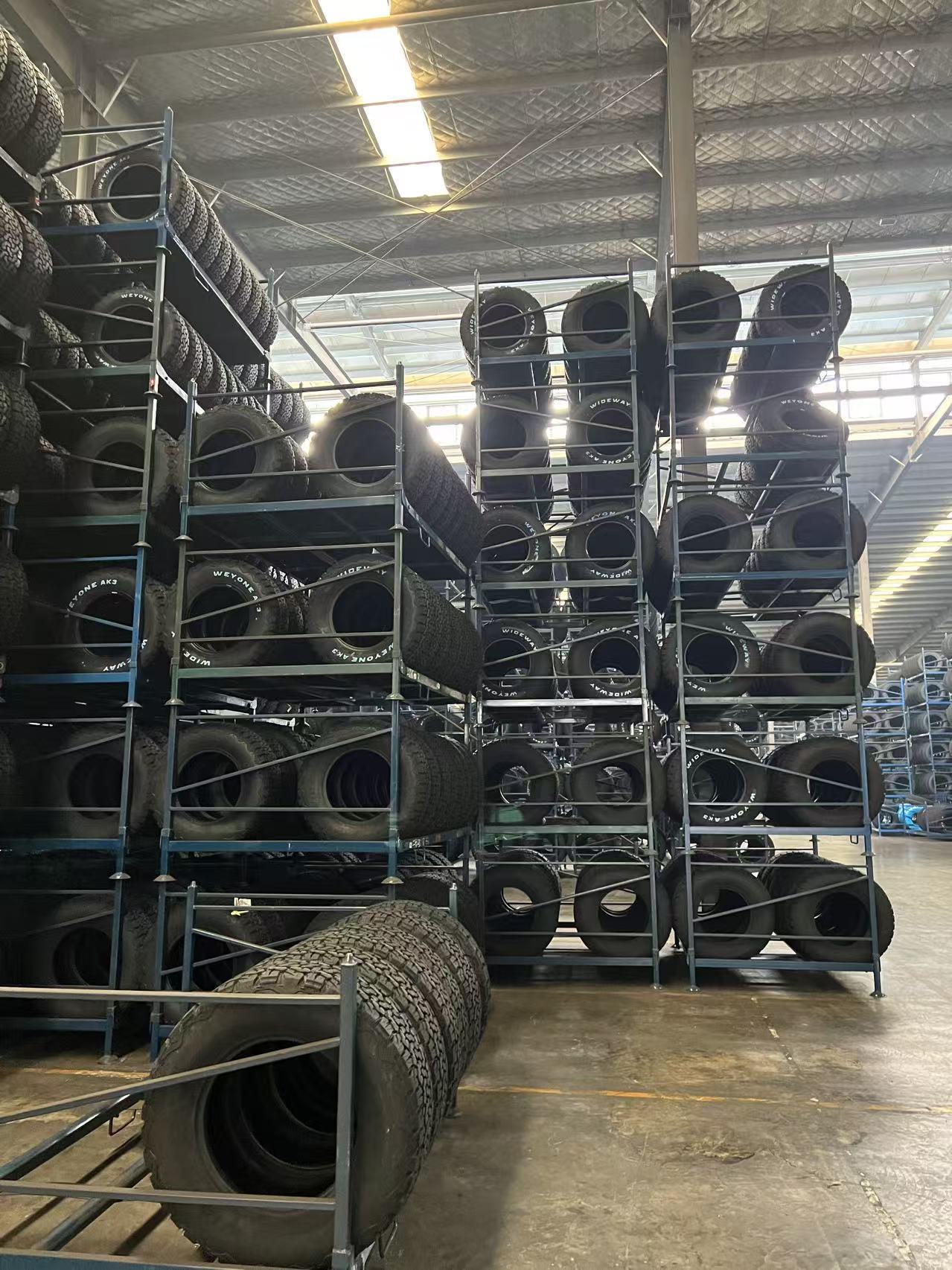
Off-road tire specification is no longer a brand decision alone. Terrain type, vehicle load, climate exposure, and destination-market compliance requirements determine which tire construction is appropriate for a given project. For fleet buyers and distributors, translating project conditions into tire parameters reduces downtime and lowers whole-life operating cost.
The off-road tire market is broad enough that one “off-road” label can cover very different designs — from comfortable all-terrain tires developed for mixed road and trail use to aggressive mud-terrain tires built for soft, saturated ground. The commercial risk lies in choosing a category without first analyzing how and where the vehicle will actually operate.
Why Project Conditions Drive Off-Road Tire Choice
Vehicles in real off-road projects encounter more than one surface. The working conditions documented in typical off-road applications include urban roads, highway sections, mud terrain roads, mountainous conditions, icy and snowy roads, desert and sandy areas, and rugged road conditions. Each condition imposes a different physical demand: mud requires self-cleaning tread voids, sand requires flotation and heat resistance, rock requires cut protection and sidewall strength, and snow requires low-temperature grip.
A tire that is correctly installed on the vehicle and inflated to the proper pressure will perform within its design envelope. That is why the selection decision must happen before installation. If a fleet is used heavily on paved routes with only occasional trail work, a balanced all-terrain tire will operate more efficiently than a dedicated mud-terrain model. If the project involves deep mud or soft terrain for most of the operating cycle, the opposite is true. Project-based matching is not a compromise — it is a response to what the vehicle will be asked to do.
Three Main Off-Road Tire Categories
The off-road light-truck and SUV segment has consolidated around three principal categories: All-Terrain (A/T), Mud-Terrain (M/T), and Rugged-Terrain (R/T). Each category has a different balance of on-road comfort, off-road traction, sidewall protection, and noise behavior.
All-Terrain (A/T) — Mixed-Use and Hot-Climate Operations
A/T tires are designed for vehicles that spend meaningful time on paved roads but also need dependable off-road capability. The WIDEWAY off-road product line includes multiple models classified as all-terrain tires, several of which also carry the “Sand Dunes & Hot Climates” designation. This classification matters for procurement because desert and high-temperature operations require a compound and structure that can handle sustained heat without rapid wear.
- POWERWAY A/T (ID 5098) — Max Pressure 300 kPa; Section Width 272 mm; Loading Index 111; Speed Rating T. All-terrain, sand dunes and hot climates.
- WEYONE AK3 (ID 5100) — Max Pressure 550 kPa; Section Width 292 mm; Loading Index 121/118; Speed Rating Q. All-terrain, urban road, high-speed stability, sand dunes and hot climates.
- BAJA KING A/T (ID 5101) — Max Pressure 550 kPa; Section Width 277 mm; Loading Index 119/116; Speed Rating R. All-terrain, sand dunes and hot climates.
- ALL TERRAIN A/T (ID 5102) — Max Pressure 550 kPa; Section Width 272 mm; Loading Index 120/117; Speed Rating R. All-terrain, sand dunes and hot climates.
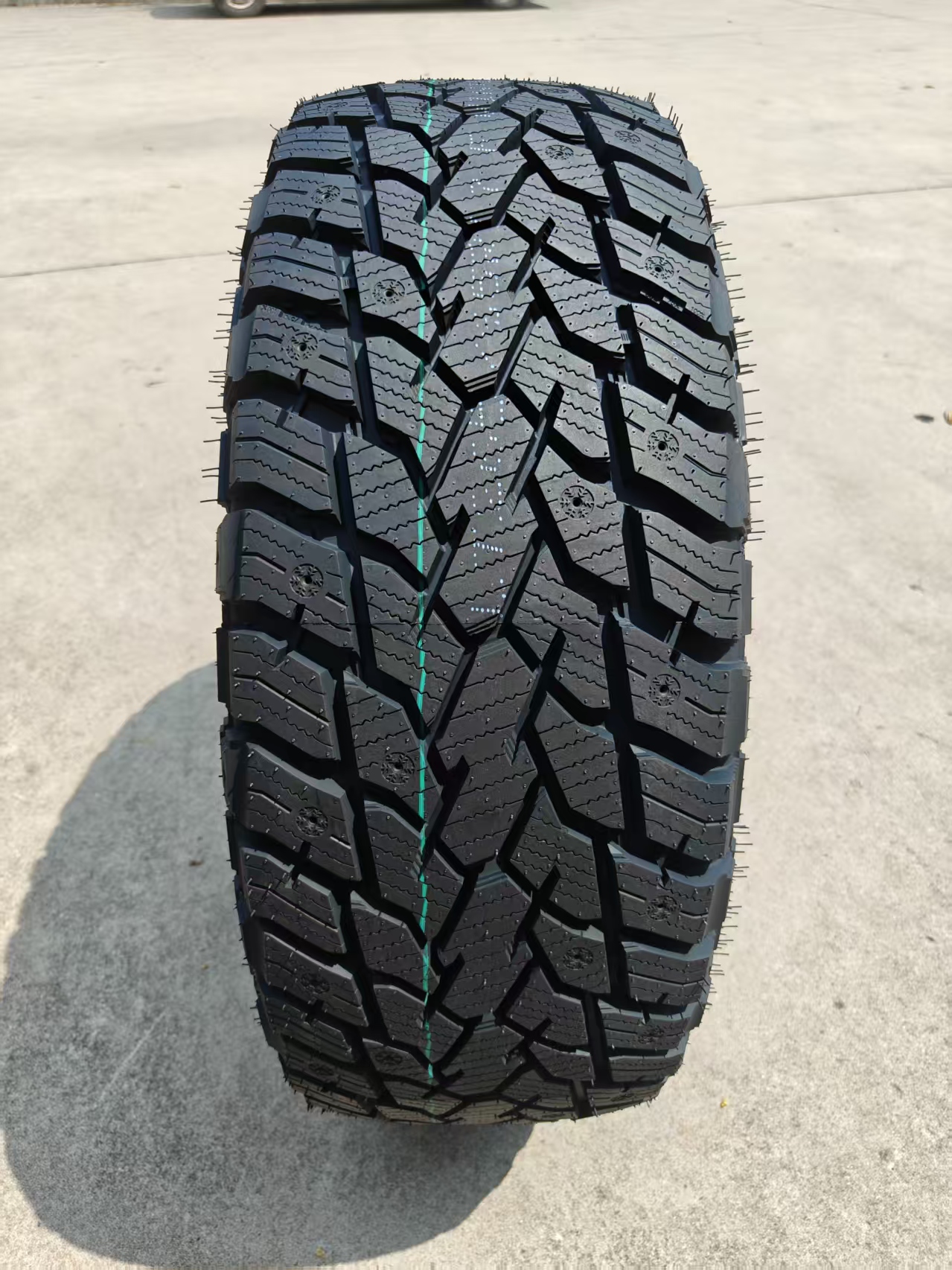
- WINTERWAY A/T (ID 5103) — Max Pressure 550 kPa; Section Width 272 mm; Loading Index 120/117; Speed Rating Q. All-terrain, sand dunes, hot climates, winter and snow.
Within the off-road application environment, all-terrain tires support projects such as family leisure driving, weekend getaways, urban commuting, and desert off-roading. These projects typically include both daily road use and planned weekend or expedition driving.
Mud-Terrain (M/T) — Soft and Saturated Ground
M/T tires use deeper, more widely spaced tread blocks to self-clean in mud, clay, and loose soil. The trade-off is generally higher tread noise and less on-road refinement. WIDEWAY offers several models in this category:
- MUD-TERRAIN MT6 (ID 5104) — Max Pressure 550 kPa; Section Width 272 mm; Loading Index 121/118; Speed Rating Q. Mud-terrain, 4×4 M/T off-road tire.
- WEY P6 MT (ID 5105) — Max Pressure 450 kPa; Section Width 330 mm; Loading Index 121; Speed Rating Q. Mud-terrain, 4×4 M/T off-road tire. The wider section width offers more footprint area for soft-ground flotation.
- POWERWAY M/T (ID 5118) — Max Pressure 550 kPa; Section Width 235 mm; Loading Index 120/116; Speed Rating Q. Mud-terrain, 4×4 M/T off-road tire.
For projects that operate on rural roads, forest trails, and mountain exploration routes where mud and loose soil are common, the M/T category provides a more direct traction solution than an A/T pattern.
Rugged-Terrain (R/T) — The Middle Category
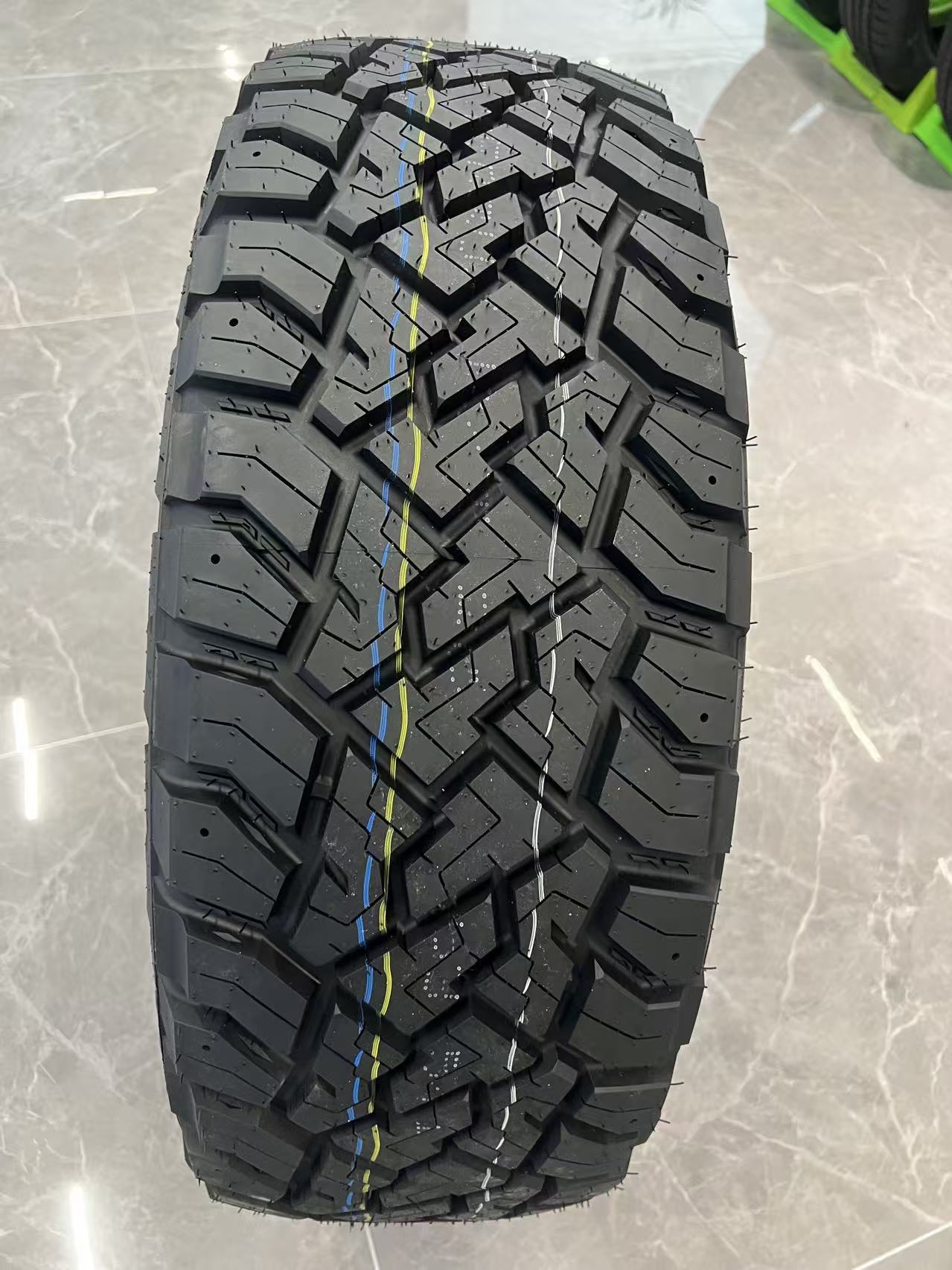
The Rugged-Terrain category has emerged as a middle ground between A/T and M/T. It delivers a more aggressive visual profile and reinforced sidewall protection without the noise penalty usually associated with full mud-terrain tires. Industry observations from Tire Review AI Insights (2025) indicate that the R/T category is capturing share from traditional A/T and M/T segments in North America, driven by users who want rugged capability with better daily drivability.
- POWERWAY R/T (ID 5119) — Max Pressure 552 kPa; Section Width 272 mm; Loading Index 123/120; Speed Rating Q. Rugged-terrain, reinforced sidewall.
- TERRUX R/T (ID 5121) — Max Pressure 350 kPa; Section Width 318 mm; Loading Index 121/118; Speed Rating R. Rugged-terrain, reinforced sidewall.
Technical Parameters That Enable Project Matching
| Model (Product ID) | Category | Max Pressure | Section Width | Loading Index | Speed Rating | Terrain Tags |
|---|---|---|---|---|---|---|
| POWERWAY A/T (5098) | A/T | 300 kPa | 272 mm | 111 | T | Sand dunes & hot climates |
| WEYONE AK3 (5100) | A/T | 550 kPa | 292 mm | 121/118 | Q | All-terrain; sand dunes & hot climates |
| BAJA KING A/T (5101) | A/T | 550 kPa | 277 mm | 119/116 | R | All-terrain; sand dunes & hot climates |
| ALL TERRAIN A/T (5102) | A/T | 550 kPa | 272 mm | 120/117 | R | All-terrain; sand dunes & hot climates |
| WINTERWAY A/T (5103) | A/T | 550 kPa | 272 mm | 120/117 | Q | Winter & snow; all-terrain |
| MUD-TERRAIN MT6 (5104) | M/T | 550 kPa | 272 mm | 121/118 | Q | Mud-terrain; 4×4 M/T |
| WEY P6 MT (5105) | M/T | 450 kPa | 330 mm | 121 | Q | Mud-terrain; 4×4 M/T |
| POWERWAY M/T (5118) | M/T | 550 kPa | 235 mm | 120/116 | Q | Mud-terrain; 4×4 M/T |
| POWERWAY R/T (5119) | R/T | 552 kPa | 272 mm | 123/120 | Q | Rugged terrain; reinforced sidewall |
| TERRUX R/T (5121) | R/T | 350 kPa | 318 mm | 121/118 | R | Rugged terrain; reinforced sidewall |
For buyers, these parameters function as selection filters. Loading index indicates relative load-carrying capacity — higher numbers generally mean stronger construction. Speed rating defines the tire’s sustained-speed capability, which matters when the project includes long highway transfers to the off-road site. Section width influences footprint area and flotation on soft surfaces such as sand and mud.
A Decision Framework for Project-Specific Off-Road Tire Selection
The following framework can be used by procurement teams to move from vehicle lists to tire specifications.
Step 1 — Define the terrain mix. Estimate the proportion of driving on paved roads, gravel, mud, rocky trails, sand, and snow. A project running 80% on-highway and 20% on dirt roads is better matched with an A/T tire than with an aggressive M/T.
Step 2 — Calculate total load requirements. Use the maximum gross vehicle weight, plus payload, fuel, water, tools, and aftermarket equipment. Compare this to the tire’s loading index.
Step 3 — Assess climate exposure. If the project operates in desert regions or consistently high ambient temperatures, select models tagged for sand dunes and hot climates. If the project operates in winter conditions, check whether the tire specification is designed for winter and snow use, and review destination-market winter certification requirements such as 3PMSF under ECE R117 in European markets.
Step 4 — Review compliance obligations. Tire exports to Saudi Arabia, for example, require SASO certification. Markets in the EU are tightening winter-tire rules. Compliance should be verified at the supplier level before contract finalization.
Step 5 — Match product specification to vehicle fitment. Verify rim diameter, load index, speed rating, and section width against vehicle manufacturer recommendations. The final step is not about brand preference; it is about confirming that the selected SKU is available and suitable for the vehicle platform.
Application Scenarios and What They Mean for Specification
The application data associated with the WIDEWAY off-road range covers several project profiles: family leisure driving, weekend getaways, urban commuting, off-road adventures, desert off-roading, and forest-and-mountain exploration.
For family leisure driving and urban commuting, the quieter, comfort-oriented A/T category is generally a rational starting point. For desert off-roading, models tagged “Sand Dunes & Hot Climates” are relevant because they are classified specifically for that working environment. For forest and mountain exploration, the choice depends on mud frequency: R/T for mixed forest trails and rock sections, M/T when the project involves repeated deep-mud and soft-soil operations.
Operationally, the tire is ready for use once correctly installed on the vehicle and inflated to the proper pressure. This may seem obvious, but it is a reminder that installation quality and inflation discipline are part of the procurement outcome. A well-matched tire that is under-inflated or mis-mounted will not deliver the intended performance.
Comparison with a One-Tire-Fits-All Approach
A traditional procurement approach is to standardize on a single tire type across an entire fleet or project — often a highway-pattern tire or a generic off-road tire used in all conditions. This simplifies inventory and reduces administrative burden. However, it creates measurable performance gaps when the same tire is used on mud, sand, rock, snow, and asphalt.
The project-matched approach uses a portfolio of A/T, M/T, and R/T tires, with each specification aligned to a defined operating scenario. The comparison can be summarized as follows:
| Evaluation Factor | Single-Tire Standardization | Project-Matched Portfolio |
|---|---|---|
| Terrain fit | Broad, compromises on every surface | Specific to project terrain mix |
| Inventory complexity | Low — one or few SKUs | Higher — multiple SKUs required |
| Fleet uptime | Higher risk of field failure | Lower risk when match is accurate |
| Whole-life cost | May appear cheaper per unit | Potentially lower cost per operating hour |
The main limitation of the project-matched approach is inventory. Distributors and fleet operators who adopt a multi-category policy must carry a wider range of SKUs in their warehouses. For low-volume markets or projects with unpredictable demand, this increases working-capital pressure and storage costs. A standardized line may be functionally sufficient for operators who rarely change terrain conditions. The decision to adopt a multi-SKU off-road portfolio should therefore be based on the actual diversity of project conditions the buyer expects to serve.
Market Trends Shaping Off-Road Tire Procurement
The global off-the-road (OTR) tire market was valued at approximately USD 34.4 billion in 2024, driven largely by mining and construction activity, according to Smithers. Within the specialty off-road segment, the mud tire (M/T) market reached USD 8.3 billion in 2024, with a projected compound annual growth rate of 6.1% through 2033, based on Credence Research estimates. The growth is associated with rising recreational off-road activity and the continued popularity of modified 4×4 vehicles.
A second trend is the rise of the rugged-terrain (R/T) category. Market observation published by Tire Review AI Insights (2025) notes that R/T tires are gaining share from traditional A/T and M/T segments in North America. The buyer motivation is practical: a more aggressive look, reinforced sidewall capability, and acceptable road noise compared with full M/T designs.
A third trend is regulatory tightening. In Germany, the Three-Peak Mountain Snowflake (3PMSF) symbol became mandatory for winter tires under certain wintry conditions as of October 2024, and Sweden followed in November 2024, under ECE R117. For tire suppliers and distributors, compliance is no longer an optional feature; it is a prerequisite for market access in winter climates. Similarly, SASO certification is mandatory for tires exported to Saudi Arabia, aligning with energy-efficiency and safety standards for the GCC market.
Future Outlook
The direction of off-road tire procurement is toward more precise scenario segmentation. As vehicle platforms become more specialized, tire requirements will diverge further by application — whether desert touring, mountain work, winter operation, or mixed-region fleet service. The product lineup that covers A/T, M/T, and R/T categories with clear terrain tags is better positioned to support this divergence than a single-tire strategy.
At the same time, buyers will continue to evaluate off-road tires using cost-per-hour metrics rather than unit price alone. Load index, sidewall protection, and material quality become more visible in life-cycle calculations. Certification compliance will become a more important selection criterion in regulated markets, especially as snow and energy-efficiency rules expand beyond Europe and the Middle East.
For manufacturers and distributors, the practical implication is clear: maintain a broad product range, document terrain classifications accurately, and be prepared to verify compliance credentials for each destination market.
FAQ — Off-Road Tire Project Matching
Which off-road tire is suitable for mountain and rocky terrain projects?
For mountain and rocky terrain, models with reinforced sidewall construction are generally specified. In the WIDEWAY off-road portfolio, the rugged-terrain (R/T) category includes POWERWAY R/T (ID 5119) and TERRUX R/T (ID 5121), both tagged as reinforced-sidewall off-road tires. TERRUX R/T offers a section width of 318 mm, which is one of the wider options in the lineup.
In desert or hot-climate conditions, how do A/T and M/T tires compare?
A/T tires are designed for balanced mixed-road performance and are commonly tagged for sand dunes and hot climates. Examples include POWERWAY A/T (5098), WEYONE AK3 (5100), BAJA KING A/T (5101), ALL TERRAIN A/T (5102), and WINTERWAY A/T (5103). M/T tires are optimized for mud and soft-soil traction but their deeper tread blocks can generate more road noise and heat on paved sections. For desert projects, the A/T category is the more common starting point.
What should be verified when selecting off-road tires for winter conditions?
The WIDEWAY portfolio includes WINTERWAY A/T (5103), which is classified as an all-terrain tire that also carries winter and snow specifications. In European markets, the 3PMSF symbol and ECE R117 have become mandatory for winter-tire use in Germany as of October 2024 and in Sweden as of November 2024. Buyers should confirm the relevant certification status with the supplier for each destination market.
When is a reinforced sidewall necessary for off-road projects?
A reinforced sidewall is typically considered when the vehicle operates on rocky or rugged terrain, where sidewall cuts and abrasion are common failure modes. The rugged-terrain (R/T) category products — POWERWAY R/T (5119) and TERRUX R/T (5121) — are classified by the manufacturer as reinforced-sidewall off-road tires. The decision should also reflect the operating speed and load conditions of the project.
How should loading index be interpreted for heavy-duty off-road vehicles?
Loading index indicates the tire’s maximum load-carrying capability. Higher numbers generally mean a stronger tire. In the WIDEWAY off-road range, POWERWAY R/T (5119) carries a loading index of 123/120, while WEYONE AK3 (5100), MUD-TERRAIN MT6 (5104), and TERRUX R/T (5121) each carry 121/118. The actual load requirement should be calculated from gross vehicle weight plus payload and equipment, then compared with the tire’s index and inflation pressure.
Which compliance marks should be checked when exporting off-road tires to the EU or Saudi Arabia?
For Saudi Arabia, SASO certification is mandatory for tires, ensuring compliance with energy-efficiency and safety standards in the GCC market. For the EU winter context, 3PMSF (Three-Peak Mountain Snowflake) under ECE R117 is required for winter tires in Germany as of October 2024 and in Sweden as of November 2024. Exporters should verify the exact requirements of the target country at the time of order.
For a complete product overview, the EVERLAND catalog is publicly accessible: Download EVERLAND CATALOG (PDF)