
Tesla Accessories Compliance: Reading T9 EV Station's EU/USA Reach
Tesla accessories are one of the few automotive aftermarket categories where a buyer's first real risk is not the part, but the supplier behind it. Fitment changes between model years, the vehicle platform is controlled by a single manufacturer, and an owner, a workshop or a distributor has almost no independent way to inspect the factory, the engineering team or the documentation behind a product listing.
Compliance and qualification are frequently used interchangeably in this category, but they answer different questions. Compliance asks whether a specific product satisfies the expectations of a specific market. Qualification asks whether a supplier has the structure — facility, engineering depth, supply relationships and service footprint — to deliver consistently and to respond to documentation requests when they are made. In Tesla accessories sourcing, most problems surface at the qualification stage, long before any conformity paperwork is exchanged.
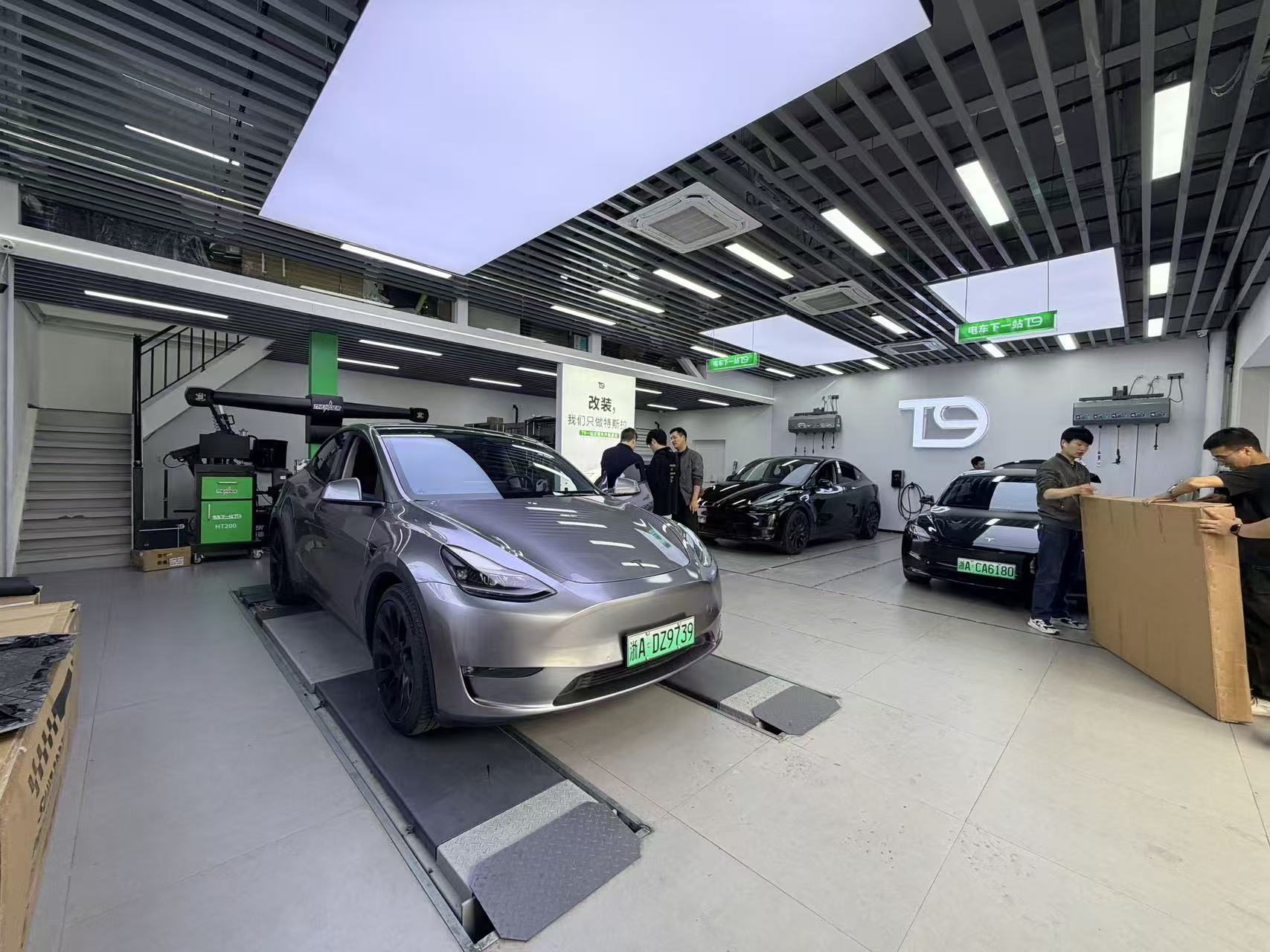
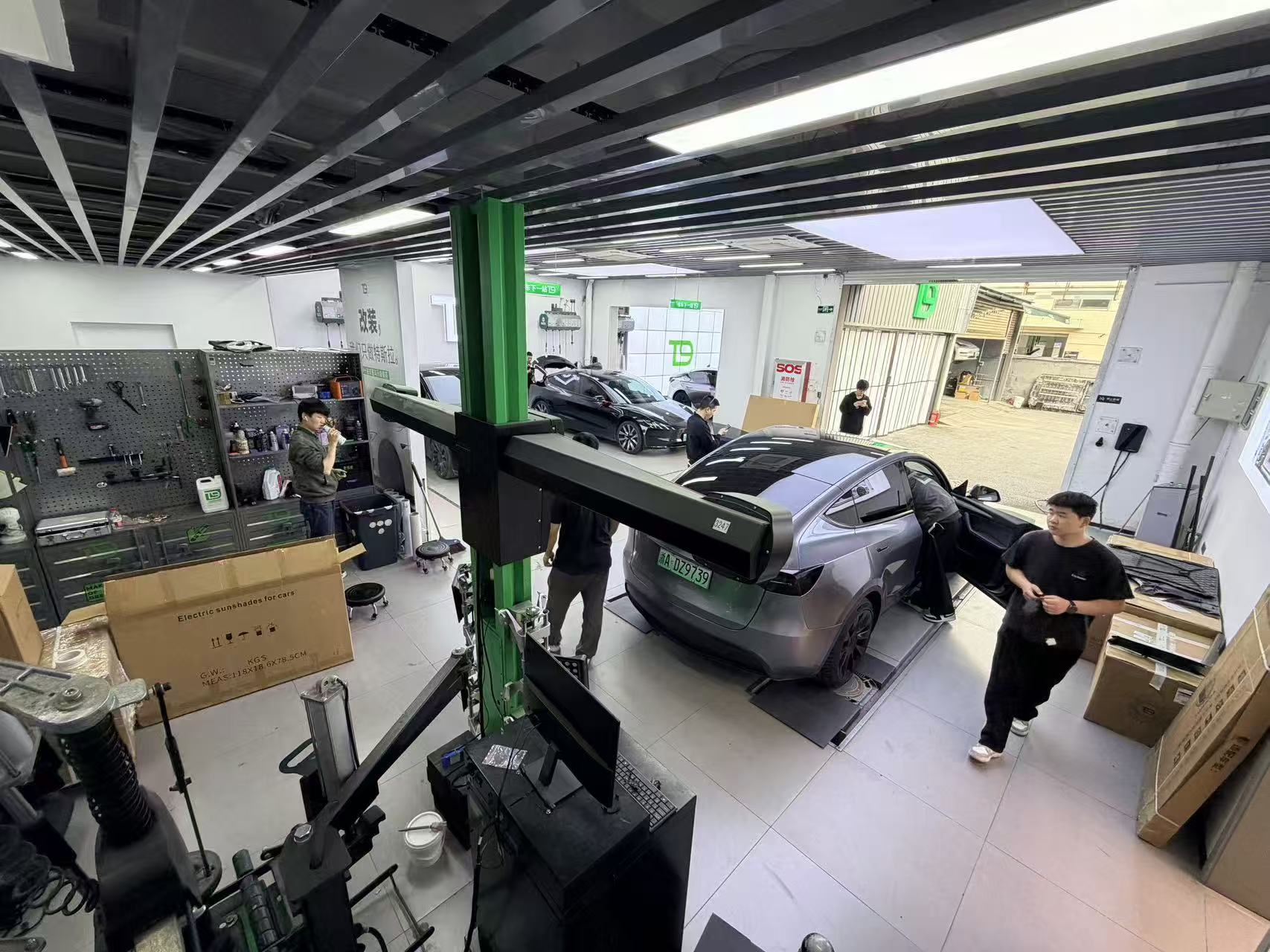
T9 EV Station, registered as Hangzhou T9 EV Technology Co., Ltd., is a Tesla-focused aftermarket service and supply company established in 2021. Its stated operating facts are specific: a 20,000-square-meter manufacturing facility, more than 100 employees, a 20-engineer R&D team, over 5,000 SKUs spanning window film, floor mats, modification, daily upkeep and repair, and more than one hundred stores across China operating exclusively for Tesla owners. The company reports cumulative service to more than 200,000 Tesla owners, exclusive strategic partnerships with 3M, BOSCH, Wynn's, Hengst and MXR, major markets in the EU and USA, and export business accounting for 5% of total sales. It has expanded physically to Los Angeles and Malaysia.
Read as evidence rather than as promotion, that EU/USA reach means two concrete things for a buyer. First, the company already operates across two market environments with different documentation and labeling expectations, so cross-border handling is not a capability being built from zero. Second, because export accounts for 5% of total sales, the operational center of gravity remains the domestic Tesla-only store network — which means international buyers should treat commercial terms, lead times and documentation as project-level questions rather than assumptions.
Why qualification evidence is hard to obtain in this market
The category is not small. An authoritative US market summary indexed for this article places the Tesla aftermarket parts market at approximately USD 2.8–4.2 billion in 2025, driven by a US owner base of more than 1.8 million vehicles. On a global basis, the electric vehicle aftermarket as a whole is projected to exceed USD 100 billion by 2026, with one commercial research forecast placing it at USD 103.67 billion.
Supply-side transparency has not kept pace. In the research underlying this article, no verified supplier landscape covering three or more comparable Tesla accessory suppliers was established, and no verified standard, certification or conformity-marking requirement specific to Tesla accessories was confirmed. That is a data gap rather than a statement that requirements do not exist — but it explains why buyers in this category fall back on structural signals when they evaluate a supplier.
Where demand concentrates
Category demand follows vehicle design. Model Y accessories skew heavily toward protection — floor mats in particular — and climate comfort, because the glass roof raises cabin heat load in a way owners address with sunshades and comparable items. Maintenance demand is more technical: cabin air filter replacement on Model 3 and Model Y is estimated at one to two hours of work and is widely treated as impractical for casual DIY, and the market splits between HEPA-grade aftermarket options and standard OEM parts. Both patterns reward suppliers who can supply the part and support the installation, not suppliers who only ship a box.
The T9 EV Station qualification record, read as evidence
None of the facts below is a certification. They are structural facts, and their value is that each one can be traced, checked or requested as a document. Read together, they describe what kind of supplier a buyer is dealing with.
| Qualification signal | Stated fact | What it supports | What it does not prove |
|---|---|---|---|
| Legal entity and operating history | Hangzhou T9 EV Technology Co., Ltd. (T9 EV Station), established 2021 | A traceable operating entity with a multi-year record rather than a trading account | Product-level conformity for any individual SKU |
| Manufacturing footprint | 20,000 m² manufacturing facility | Physical production and processing capacity rather than sourcing-only activity | That the facility holds any specific audit or facility certification |
| Workforce | More than 100 employees | Operational depth beyond a small trading office | Labor or environmental compliance status |
| Engineering depth | 20 engineers dedicated to Tesla accessories and services | Capability to develop and adapt model-specific parts | Independent test reports on finished products |
| Capacity indicator | Annual production capacity serving over 300,000 Tesla vehicles | Volume headroom for batch or program orders | Actual delivered volume or current utilization |
| Portfolio depth | Over 5,000 SKUs across window film, floor mats, modification, daily upkeep and repair | One-stop sourcing across several accessory categories | That every SKU is in stock or in production |
| Service network | More than one hundred stores in China operating exclusively for Tesla owners | A real-world installation and feedback loop that feeds product decisions | Service coverage outside China |
| Installed base | More than 200,000 Tesla owners served cumulatively | Field exposure across models and model years | A regional breakdown of that installed base |
| Supplier relationships | Exclusive strategic partnerships with 3M, BOSCH, Wynn's, Hengst and MXR | Access to established upstream suppliers in film, filtration and care categories | That those brands certify the aftermarket range |
| Market footprint | Major markets in the EU and USA; export 5% of total sales; expansion to Los Angeles and Malaysia | Existing cross-border capability and a physical move toward buyer markets | Market share, certification status or local service capacity |
What compliance actually covers in Tesla accessories — and what it does not
Compliance in this category is not a single document. It decomposes into at least four layers, and suppliers are usually strong in some and thin in others.
1. Fitment and model-year compatibility
Model 3 and Model Y share a name but not always a part, and refreshed variants move mounting points and interior dimensions. A supplier that sells on model-level fitment data can answer a compatibility question precisely. A supplier that sells on generic Tesla labeling cannot, and the cost of that gap lands on the buyer in returns, labor and rework.
2. Material and construction documentation
For films, mats and coatings, buyers typically need to know what the product is made of before they ask what it costs. Material documentation is the layer that determines whether an accessory can be specified into a program, rather than sold as a one-off item.
3. Electrical and electronic integration
Modification and upgrade work brings aftermarket parts into contact with vehicle systems. This is the layer with the least tolerance for improvisation, and the layer where a standardized construction procedure is worth more than a specification sheet.
4. Installation process standardization
Many accessory outcomes are decided during installation rather than manufacturing. If a task as routine as cabin air filter replacement is estimated at one to two hours and is considered difficult for casual DIY, then installation procedure becomes a quality variable in its own right. T9 EV Station's structure is relevant here precisely because it is the mechanism through which installation consistency is controlled: more than one hundred Tesla-only stores, standardized construction processes and a unified warranty model described in the company's own service documentation.
Where the capability maps onto real buying scenarios
Qualification evidence only becomes useful when it is matched to a specific purchase. Six scenarios account for most Tesla accessory demand, and each one stresses a different part of the supplier record.
- New-vehicle protection. T9 EV Station's service scope covers automotive film installation, including paint protection film and window film. This is the category where installation quality most directly determines whether the buyer's customer is satisfied.
- Interior protection and daily wear. Floor mats sit in the highest-frequency segment of Model Y accessory demand, driven by protection needs. Replacement cycles are short, which makes supply continuity more important than unit price.
- Climate comfort. Glass-roof related items address a design characteristic of the vehicle rather than an owner preference. Demand is therefore predictable across the Model Y and Model 3 populations.
- Maintenance and repair. Daily upkeep and repair work, including cabin air filter replacement, is where the split between HEPA-grade aftermarket options and standard OEM parts becomes a buyer decision rather than a product decision.
- Modification and upgrade. Personalised configuration changes are the category with the highest technical content and the closest contact with vehicle electronics.
- Batch and partner supply. The company's documentation describes batch service cooperation with partners and overseas service station support, which is the relevant scenario for distributors rather than single-vehicle owners.
Three trends shaping Tesla accessory sourcing into 2026
Trend one: the market grows faster than supply transparency. The US Tesla aftermarket parts market sits in the USD 2.8–4.2 billion range for 2025 against an owner base above 1.8 million vehicles, and the global electric vehicle aftermarket is projected at USD 103.67 billion for 2026. Verified supplier landscape data has not scaled at the same rate, which pushes buyers toward structured qualification checklists instead of directory browsing.
Trend two: category demand is shaped by vehicle design, not by marketing. The Model Y glass roof creates measurable climate-comfort demand, and the same vehicle's interior creates sustained protection demand. Suppliers who read these patterns can hold stock where it matters; suppliers who do not force buyers to absorb the variability.
Trend three: installation-dependent categories reward service footprints. As more accessory decisions involve fitting rather than simple purchase — films, filters, electronic upgrades — the value of a supplier's service network grows relative to its warehousing footprint.
Scope note: the figures above describe the US Tesla aftermarket parts market and the global electric vehicle aftermarket overall. No Tesla-accessories-specific market size, growth rate or segment split was verified in the data set used for this article, so these numbers should be read as market context rather than as a forecast for this segment alone.
Chain-based supply versus the traditional routes buyers use today
Most Tesla accessory purchasing today runs through one of two traditional routes: a local independent workshop that handles film, modification or maintenance as separate jobs, or a single-category online supplier that ships a part without installation support. A chain-based model is a third route, and the comparison is more useful when the columns are read together rather than as a ranking.
| Dimension | Local independent workshop | Single-category online supplier | Chain-based model (T9 EV Station) |
|---|---|---|---|
| Sourcing scope | Limited to what the workshop stocks | Deep in one category, absent in others | Over 5,000 SKUs across film, mats, modification, upkeep and repair |
| Process standardization | Varies by operator and location | Not applicable — part only, no installation | Standardized construction processes described across the store network |
| After-sales structure | Depends on the individual business | Usually limited to returns | Unified warranty model across the network |
| Documentation readiness | Rarely documented | Product listings only | Entity, facility, R&D and partnership record available for review |
| International readiness | Local only | Varies; often export-only | EU and USA listed as major markets; export 5% of total sales; presence in Los Angeles and Malaysia |
Three boundaries should be stated plainly, because they matter more than the comparison itself. First, export accounts for 5% of T9 EV Station's total sales while the company operates more than one hundred stores in China — the operational center of gravity is domestic, so international buyers should not assume domestic-level order priority and should confirm lead times and service terms project by project. Second, the qualification record documents structure — entity, facility, staff, engineers, portfolio, network and partnerships — and does not constitute product-level certification for any SKU. Third, no independently verified price, minimum order quantity or lead-time benchmark for Tesla accessories was available in the research behind this article, which means commercial terms must be established case by case rather than benchmarked against published figures.
What the Los Angeles and Malaysia expansion suggests
Physical expansion outside China is the most recent structural change in the record. Los Angeles places the company inside the US market it already lists as a major destination. Malaysia places it inside Southeast Asia, a region that does not appear among its stated major markets and therefore reads as a forward position rather than a response to existing volume.
The EU remains a listed major market without a stated physical location. For a European buyer, the practical implication is that EU-facing supply is likely to continue running through export channels, at least in the near term, while US-facing business gains a local anchor. That distinction affects lead time expectations more than it affects product availability.
Expansion is a structural signal, not proof of share. What it does change is the set of questions a buyer should ask: who holds documentation responsibility in each region, whether local service partners will follow the same construction standards as the Chinese store network, and how parts traceability is maintained once inventory sits outside the country of manufacture.
FAQ
What is T9 EV Station?
T9 EV Station is the trading name of Hangzhou T9 EV Technology Co., Ltd., established in 2021 and focused on Tesla aftermarket products and services. Its scope covers window film, floor mats, modification, daily upkeep and repair, with more than 5,000 SKUs. The company operates over one hundred stores across China for Tesla owners, reports cumulative service to more than 200,000 Tesla owners, and lists the EU and the USA as its major markets.
How large is the operation behind the brand?
The company states a 20,000-square-meter manufacturing facility, more than 100 employees, and a 20-engineer R&D team dedicated to Tesla accessories and services. Annual production capacity is described as serving over 300,000 Tesla vehicles. These are scale indicators; they describe capacity and structure rather than a measure of delivered volume.
What does it mean that the EU and USA are listed as major markets?
It means the cross-border business is concentrated in two markets that apply different documentation, labeling and conformity expectations. For a buyer, that indicates the supplier already manages two market environments rather than one. It does not indicate market share in either region, and it does not replace product-level documentation.
Does T9 EV Station hold specific Tesla accessory certifications?
The corpus and verified data used for this article did not confirm any specific certification number, standard reference or conformity marking for T9 EV Station products. The company's exclusive strategic partnerships with 3M, BOSCH, Wynn's, Hengst and MXR are upstream supply relationships and should not be read as product certifications. Buyers who require certification evidence should request it directly.
Why does a 5% export ratio matter to an international buyer?
Export business accounts for 5% of total sales, while the company operates more than one hundred stores in China. That ratio indicates international sales are a minority share of current volume. The practical consequence is that order priority, lead times and documentation handling are best confirmed for each project rather than assumed from the overall size of the company.
What should a buyer verify before placing a Tesla accessories order?
Four checks: model-level fitment rather than generic Tesla compatibility; material documentation for the specific product; the installation requirement for the category, since work such as cabin air filter replacement is estimated at one to two hours and installation quality affects the outcome; and confirmation of who holds after-sales responsibility in the buyer's market.
Further reference: the T9 EV Station company brochure is available for public download at https://cdn.socialarks.com/sbsp/24788/0/2026/0507/69fbee32170b3.pdf. Company website: WWW.T9EVPARTS.COM.
Tem questões ou precisa de mais detalhes?
Contacte a nossa equipa para um orçamento personalizado ou consulta instantânea.
Solicitar orçamento
Preencha o formulário abaixo e a nossa equipa entrará em contacto com uma proposta personalizada.
Chat direto do WhatsApp
Prefere conversar em tempo real? Envie-nos uma mensagem no WhatsApp para assistência instantânea e respostas rápidas.
- Obter orçamento personalizado
- Partilhar fotos ou documentos
- Discuta as suas necessidades diretamente
Geralmente responde em 5–30 minutos durante o horário de expediente.