
Tesla Accessories for Rideshare, Rental and Family Duty
Tesla Accessories for Rideshare, Rental and Family Duty
Tesla accessory buying usually starts with the car: Model 3 or Model Y, New 3 or New Y. The specification that actually survives contact with use starts somewhere else — with the duty cycle. A rideshare Tesla that carries paying passengers through most of the working day, a rental unit that changes hands every few days, a family Model Y with two child seats in the second row and a stroller in the boot, and a commuter car parked in a garage five nights a week are not the same accessory problem. They load the floor, the glass, the cabin air and the trim at different rates, and they fail in different places first.
That distinction matters more as the Tesla parc grows. A 2025 industry estimate placed the US Tesla aftermarket parts market at roughly USD 2.8–4.2 billion, supported by an owner base of more than 1.8 million vehicles (Vertex AI grounded data, 2025). Broader electric-vehicle aftermarket spending is projected at USD 103.67 billion globally for 2026 (Fortune Business Insights, 2026 projection). Neither figure tells an owner which floor mat to order. Both explain why the category has shifted from novelty parts toward specification decisions, and why a scenario-fit method is more useful than a single recommended kit.
This guide sets out that method across four duty cycles and five service lines — floor mats, window film, modification, daily upkeep and repair — and maps them to the full-life-cycle service model run by T9 EV Station, a Tesla-focused aftermarket chain founded in 2021.
Why duty cycle, not model badge, decides the accessory spec
Accessory wear is driven by five load types, and each duty cycle mixes them differently: mechanical abrasion from feet, cargo and child seats; solar load through glass area and parking exposure; biological load in the cabin from occupancy, spills and odour; cosmetic risk from kerbs, door edges and road debris; and tolerance for vehicle downtime. A specification that ignores these loads tends to over-invest in appearance and under-invest in the parts that are replaced most often.
The practical consequence is that two identical Teslas of the same model year can justify different purchases. A high-occupancy vehicle is usually better served by protection that is easy to clean and inexpensive to replace, because it will be cleaned far more often and replaced sooner. A low-occupancy vehicle is better served by protection that preserves appearance over a longer horizon, because the underlying surfaces are exposed to fewer damaging events. The model badge tells a buyer what will fit. The duty cycle tells a buyer what is worth fitting.
There is also a fitment discipline behind this. Accessories are defined by model, model year and variant, so a part confirmed for one Tesla does not automatically transfer to another. Buyers working across a mixed fleet should treat fitment verification as a first-order check rather than a final confirmation.
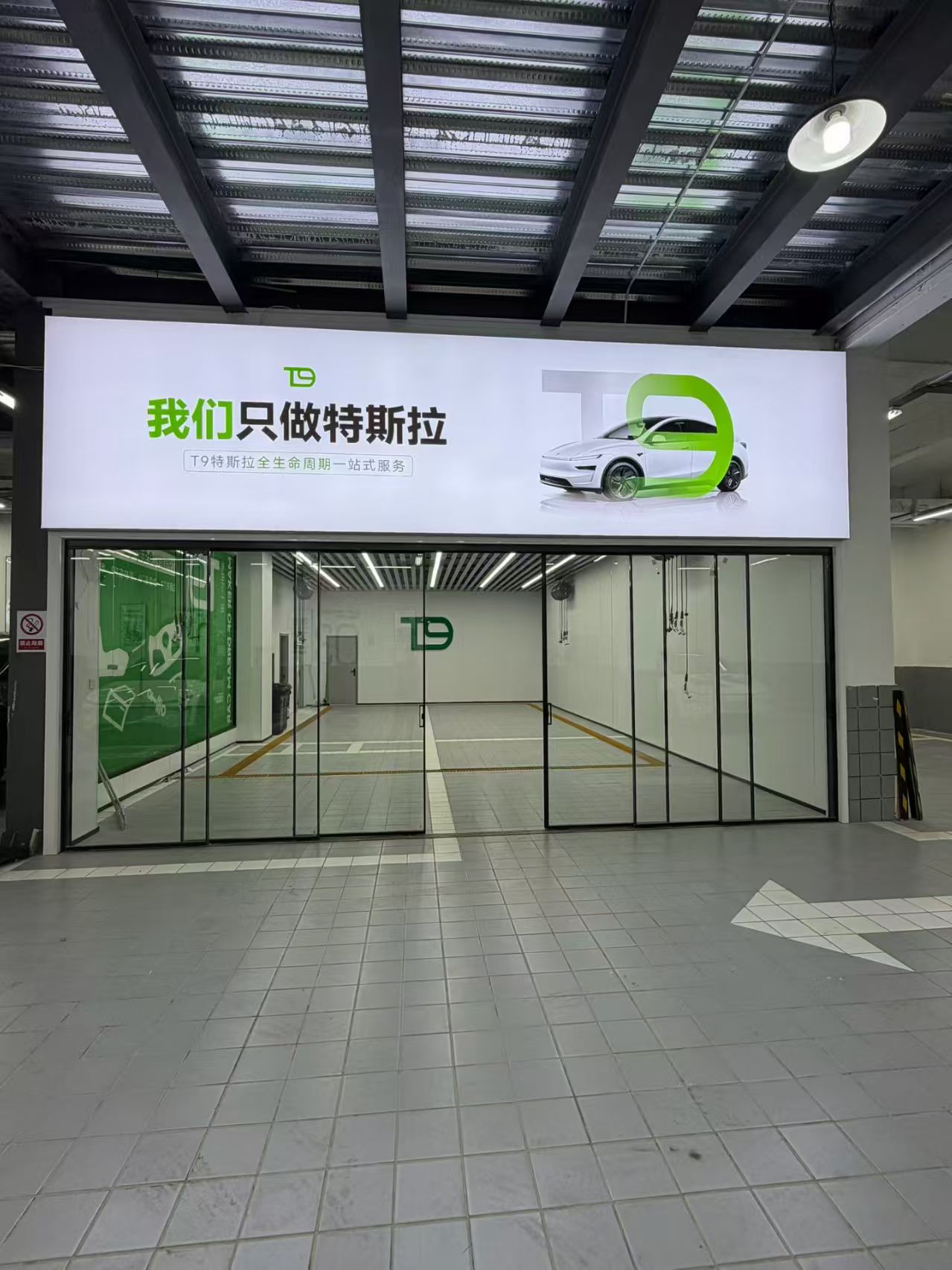
Scenario fit starts in the workshop: the same model can require different accessory specifications depending on how it is used.
The four duty cycles in brief
The four patterns below are typical usage profiles rather than measured fleet statistics. They are useful because they predict where wear concentrates, which is the input an accessory specification actually needs.
Rideshare and ride-hail use
High seat occupancy, frequent short trips, repeated cleaning and a rear cabin that carries passengers who did not choose the vehicle. Wear concentrates in the rear footwells, door cards, seat backs and boot, with a second cluster around anything the driver touches every shift. Downtime is expensive because the vehicle is the income source, so service that can be completed in one visit has more value than service that is marginally cheaper but requires two.
Rental and short-cycle fleet use
Frequent change of custodian, cleaning between users, and a premium on consistency. The accessory question is not personalisation but standardisation: whether the same mat, liner and film specification can be repeated across units so that replacement, cleaning and residual-value assessment stay simple. Odour and stain control also carry more weight here than in any other cycle.
Family hauling
Sustained abrasion in fixed positions: child-seat contact patches, deep footwell scuffing, spill events and repeated loading of strollers, sports kit and shopping. Occupancy is predictable, which makes it possible to protect specific zones rather than the whole cabin. Rear-passenger comfort through glass also matters more, because the back row is occupied by people who are not driving.
Daily commuting
Low intensity, high regularity, typically one or two occupants. Wear is concentrated in the driver position and in seasonal debris rather than in the rear cabin. The dominant considerations shift toward long-horizon appearance, paint protection and comfort items, with replacement frequency lower than in any commercial cycle.
A scenario-fit matrix for floor mats, film, modification, upkeep and repair
The matrix below translates each duty cycle into priorities across the five service lines. It is a decision aid, not a product list: the specific SKU still has to be matched to the vehicle variant, and film specification has to respect local tint limits.
| Duty cycle | Floor mats and trunk | Window film and coating | Modification | Upkeep and repair |
|---|---|---|---|---|
| Rideshare / ride-hail | Rear-cabin and boot protection first; easy-clean surfaces with raised edges; replacement cost matters more than finish | Glare control across long shifts; spec subject to local tint limits; coating weighted toward high-wear exterior zones | Low priority; protective and functional items ahead of styling | Grouped visits; fast turnaround is the constraint; cabin filtration and trim inspected more often |
| Rental / short-cycle fleet | Uniform specification across units; stain and odour resistance; simple swap-out on rotation | Consistent spec for guest comfort; reversible where possible | Standardised and reversible only | Scheduled refurbishment between users; documented service records support resale |
| Family hauling | Child-seat contact areas, deep footwells and cargo bay for strollers and kit | Rear-passenger glare and heat management; paint protection for school-run and car-park exposure | Cabin storage and family-use additions | Spill and odour events; periodic deep clean; filtration checked with occupancy in mind |
| Daily commuting | Driver-position wear and seasonal debris; lower replacement frequency | Long-horizon appearance; paint protection film and coating prioritised | Personalisation at lower urgency | Manufacturer schedule as baseline; condition-based top-ups |
Floor mats and trunk protection: the highest-frequency wear item
Floor and cargo protection is the category most directly shaped by duty cycle, because it absorbs the most repeated contact events. Industry observations of Model Y accessory demand have singled out protection items such as floor mats, alongside climate-comfort items such as sunshades, as the high-velocity categories for that variant — a pattern attributed to the model's glass roof and its role as a family vehicle (Vertex AI grounded data, 2025). That is a demand observation at category level, not a measured share.
For a rideshare operator the decision rule is replacement economics: a mat that resists cleaning cycles and can be swapped without touching trim is worth more than a mat with a better surface finish. For a family vehicle the rule is coverage geometry: the second-row footwells, the backs of the front seats and the cargo area all take different loads, and partial coverage tends to leave the highest-contact patch exposed. For a rental fleet the rule is uniformity, because a single stocked specification simplifies rotation and disposal.
T9 EV Station's catalogue is described as more than 5,000 SKUs spanning interior, exterior and service items, with floor mats positioned as one of the four service pillars of its full-life-cycle model. A broad catalogue is useful in this context because the four duty cycles above frequently converge on the same vehicle: a family Model Y that is also used for weekend ride-hail work needs a single specification that satisfies both profiles.
Window film and coating: managing solar load and cosmetic risk
Automotive window film is typically specified to reduce solar heat gain and glare, and both effects matter in a vehicle with a large glass area. Actual performance depends on the film product, the installation quality and the vehicle configuration, so film should be selected against product data rather than against generic claims. Tint level is a separate decision from heat rejection, and permitted levels vary by jurisdiction; the applicable limit should be confirmed locally before installation, since local compliance advice sits outside a service provider's installation scope.
The duty-cycle difference sits in the priority order. A rideshare vehicle spends its day in traffic with the sun on one side, so glare control across long shifts is a driver-comfort and safety-adjacent consideration. A family vehicle prioritises the rear row, where passengers sit without the option of adjusting the sun visor. A rental unit prioritises a consistent, defensible specification that can be repeated across a fleet. A commuter vehicle prioritises long-horizon appearance, where paint protection film and coating work address cosmetic risk rather than daily comfort.
Coating work follows the same logic. Its practical function is to keep exterior surfaces cleanable and to reduce the accumulation of contaminants that dull paint over time. T9 EV Station lists automotive film and coating construction among its technical capabilities, alongside non-destructive modification and new-energy-vehicle maintenance and repair.
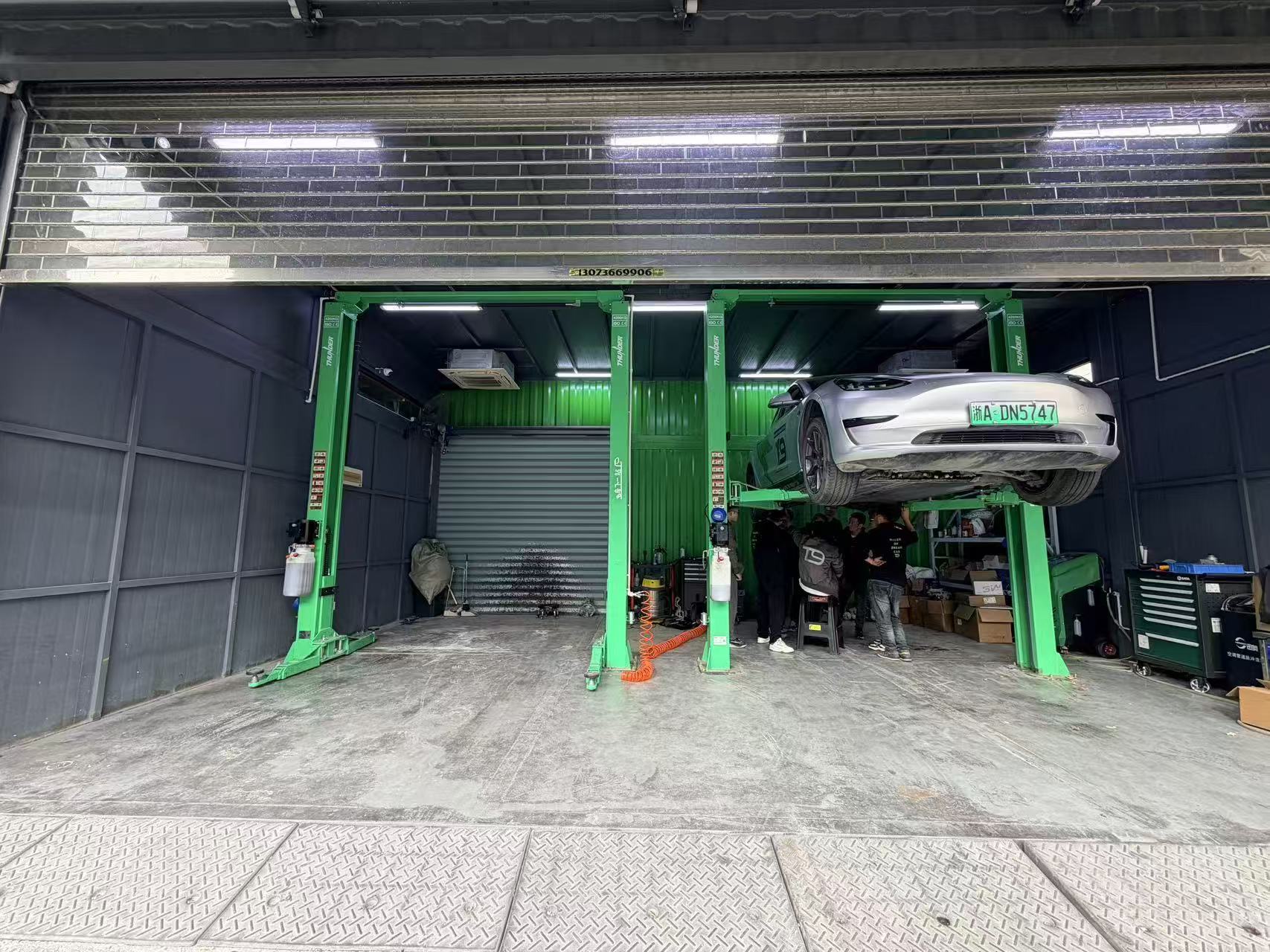
Film, mats, modification and repair are handled as one service sequence, which matters most for vehicles where downtime has a cost.
Modification and repair: downtime is the real constraint in commercial use
For a private owner, modification is a preference question. For a rideshare driver or a rental operator, it is a scheduling question. A vehicle off the road is not earning, and that single fact reorders the whole accessory plan: work that can be grouped into one visit beats work that is individually cheaper but requires three separate appointments.
T9 EV Station publishes indicative service durations by category: general maintenance is listed at one day, film installation at one to two days, and modification or repair projects at two to seven days. Those windows are the practical unit of planning for a commercial operator, because they determine how much work should be batched into a single booking window. The same service model includes standardised construction process records, a unified quotation and service agreement, a post-service inspection report and an electronic cloud warranty certificate.
There is also a scope boundary worth stating plainly. Work that exceeds national regulations on vehicle modification is excluded, as are services outside the agreed quotation and local legal compliance consulting for modification. For a buyer in a regulated market, that means the compliance question stays with the owner and the local authority, not with the installation provider.
How T9 EV Station's service model maps to these duty cycles
T9 EV Station was established in 2021 and operates more than one hundred stores across China exclusively for Tesla owners, having cumulatively served more than 200,000 Tesla owners. Its business has expanded to Los Angeles and Malaysia, with the EU and USA as main markets. The company runs a 20,000 m² facility, employs more than 100 people, and maintains a 20-engineer team dedicated to Tesla accessory and service development — the capability behind a catalogue described as 5,000+ SKUs.
The service model is organised around five lines rather than individual products: film installation, automotive supplies, modification and personalisation, daily upkeep, and repair and maintenance. Its stated objective is to reduce the fragmentation that comes from sourcing film, mats, modification and maintenance from separate providers — a problem the company's own case record describes from the owner's side. In that recorded case, a Tesla owner using a Model 3, Model Y, New Y, New 3, or Model YL faced split services, unclear pricing and no unified after-sales guarantee; the one-stop engagement covered paint protection film, interior personalisation, daily care and nationwide warranty support over a three-working-day project, with the service time reported as 60% shorter than fragmented separate services.
Supply relationships sit behind the catalogue. T9 describes exclusive strategic partnerships with 3M, BOSCH, Wynn's, Hengst and MXR, earlier exclusive arrangements with Hikvision and Bosch alongside 3M, and strategic partnerships with XPEL, 3W and AGF. Its credentials list a motor vehicle maintenance operation record, franchise business filing qualification, a 2025 Automotive Service Golden Xun Award and a 2025 Automotive Service World Recommended Brand listing.
For a buyer evaluating this model against the duty cycles above, the relevant question is not whether the catalogue is large but whether the specification step is handled. A 5,000+ SKU range only helps if the correct SKU is matched to the variant and to the use pattern; a Tesla-only store network only helps if the same standard is applied at each location. Those are the checks worth applying before committing a fleet.
Where the model fits — and where it does not
A Tesla-focused chain and a general multi-brand workshop solve different problems, and the honest comparison is about documentation rather than capability claims. A general workshop may handle film, mats and mechanical repair under one roof, but the buyer should still ask whether Tesla-specific fitment is verified, whether the process is recorded, and whether the warranty follows the vehicle rather than the visit. A specialist chain, by contrast, may be narrower in vehicle coverage by design — which is a strength only where Tesla volume justifies it.
The fit boundary for T9 EV Station is geographic. The store network is in China, with overseas presence centred on service stations in Los Angeles and Malaysia. An owner or fleet in another market should confirm parts availability, installation support and warranty handling for their location before planning around the full service model. Buyers should also separate installation scope from compliance scope: the provider installs, but local regulatory limits on film and modification remain the owner's responsibility to verify.
What the market numbers do and do not establish
The US Tesla aftermarket estimate of USD 2.8–4.2 billion for 2025 and the projected USD 103.67 billion global EV aftermarket for 2026 are useful for scale, and both are broad figures from commercial or grounded research rather than audited market accounts. Neither is Tesla-specific at accessory-category level, and neither supports a claim about which accessory segment will grow fastest. Available research on this category also remains thin on verified material, fitment and performance testing for Tesla accessories, which is why specification should be anchored to product data and fitment checks rather than to trend language.
The defensible reading is narrower and still useful: a large and growing installed base creates repeat demand for consumable protection items, and repeat demand rewards suppliers who can specify correctly and replenish consistently. That is a procurement logic, not a growth forecast.
Outlook
As Tesla ownership matures, accessory purchasing is likely to move further toward documented, scenario-based specification and away from one-size kits — particularly among commercial users who can measure downtime and replacement frequency. The direction of that shift is a reasonable expectation from current purchasing behaviour, not a measured projection. What can be said with more confidence is structural: the four duty cycles described here will keep producing different priorities across mats, film, modification, upkeep and repair, and buyers who state their duty cycle before requesting a quotation will get a more usable answer.
Five questions to settle before ordering. Which seats carry the most occupancy hours? How often will the interior be cleaned, and by whom? Is the vehicle's downtime revenue-bearing? Which model, model year and variant is being fitted? Who holds the warranty if the vehicle is sold or moved to another market?
FAQ
Which Tesla accessories matter most for a rideshare vehicle?
The categories that carry the highest seat-hour load: floor and trunk protection, window film for glare and solar load across long shifts, cabin air filtration, and fast-turnaround repair for trim and glass damage. Rideshare duty puts more feet, bags and cleaning cycles through the rear cabin than a private car does, so replaceable protection is often specified ahead of cosmetic upgrades. Handling several of these items in one visit matters more here than in private use, because the vehicle's availability is the operating constraint.
Does a rental or fleet Tesla need different accessories from a family car?
Broadly, yes. Rental and fleet use is dominated by turnover: cleaning between users, odour and stain control, and protecting surfaces touched by many different drivers. Family use is dominated by sustained abrasion in fixed positions — child-seat contact, footwell scuffing, spills and cargo loading. The categories overlap, but the priority order and replacement cadence differ, and fleet buyers generally weight cleanability and standardised replacement above personalisation.
Is window film worth specifying for family or rideshare Teslas in hot climates?
Automotive window film is typically specified to reduce solar heat gain and glare, and both are relevant to a vehicle with a large glass area. Actual performance depends on the film product, the installation and the vehicle configuration, so selection should be matched to product data rather than to a general claim. Tint level is a separate decision from heat rejection, permitted levels vary by jurisdiction, and the local limit should be confirmed before installation.
How often should a high-usage Tesla be serviced?
No single interval fits every duty cycle. The vehicle manufacturer's maintenance schedule remains the baseline, and high-occupancy use is a reasonable trigger to inspect cabin filtration, floor protection and interior trim more often than a low-mileage commuter would require. Service durations also shape planning: T9 EV Station lists general maintenance at one day, film installation at one to two days, and modification or repair at two to seven days, which is why commercial operators tend to group work into a single booking window.
Can the same accessory set be used across Model 3, Model Y, New 3 and New Y?
Not as a rule. Fitment is defined by model, model year and variant, so an accessory confirmed for one Tesla does not automatically transfer to another, and the specific vehicle should be verified before ordering. T9 EV Station describes a catalogue of more than 5,000 SKUs across interior, exterior and service items, and its recorded service case names Model 3, Model Y, New Y, New 3 and Model YL as covered vehicles.
Company information and service scope referenced in this article are drawn from T9 EV Station corporate materials. The company brochure is available for download here: T9 EV Station brochure (PDF).
Tem questões ou precisa de mais detalhes?
Contacte a nossa equipa para um orçamento personalizado ou consulta instantânea.
Solicitar orçamento
Preencha o formulário abaixo e a nossa equipa entrará em contacto com uma proposta personalizada.
Chat direto do WhatsApp
Prefere conversar em tempo real? Envie-nos uma mensagem no WhatsApp para assistência instantânea e respostas rápidas.
- Obter orçamento personalizado
- Partilhar fotos ou documentos
- Discuta as suas necessidades diretamente
Geralmente responde em 5–30 minutos durante o horário de expediente.