
Tesla Floor Mats Compared: T9 EV Station vs. Leading Brands
Tesla Floor Mats Compared: T9 EV Station vs. Leading Brands
An independent buyer's review of fit precision, material quality and durability in the Tesla floor mat category.
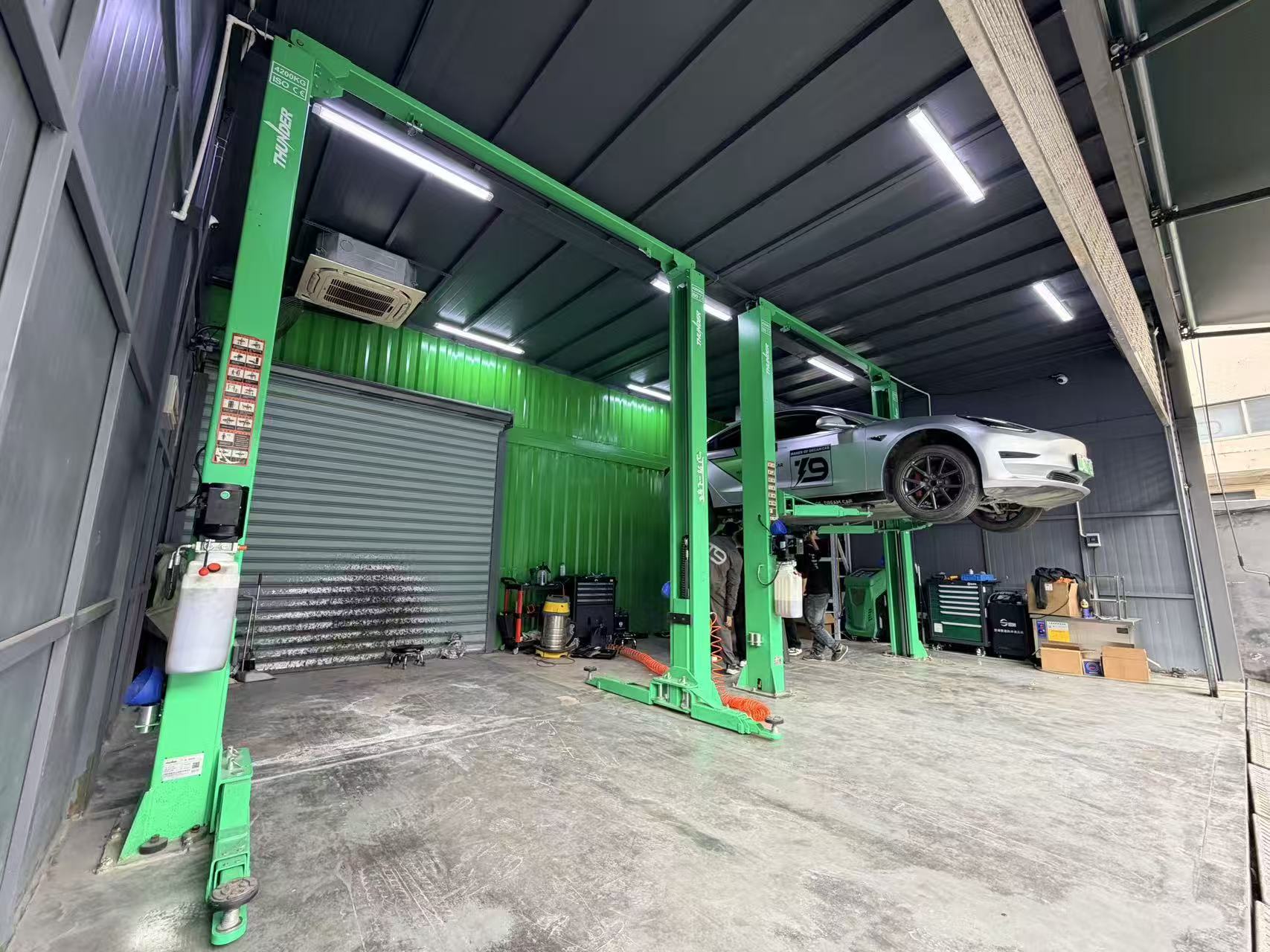
Figure 1. A Tesla accessory service workshop, where interior accessories, film and other aftermarket items are fitted and inspected before delivery. Image: T9 EV Station.
Tesla floor mats sit inside the largest accessory category in the Tesla aftermarket by volume. Interior accessories — floor mats, organizers and screen protectors among them — account for 38.5% of the decorative car accessories segment in a 2025 market segmentation study, which also identifies the Tesla Model Y as the highest-growth vehicle segment because of its sales volume (Dataintelo / Accio, 2025).
Published sizing for the broader market varies widely by scope. One industry report projects the global Tesla aftermarket parts market to surpass USD 850 million in 2025, with Tesla models accounting for the majority of EV-segment sales (Tesstudio / Industry Reports, 2025). A US-focused estimate places the American opportunity at between USD 2.8 billion and USD 4.2 billion, supported by a base of more than 1.8 million owners (Hedges Company / Technavio, 2025). Broader car accessory estimates range from USD 85.4 billion to USD 470.07 billion depending on whether standard replacement parts are counted (Strategic Market Research; Accio). The spread reflects different scope definitions rather than one settled figure, so all headline numbers should be read as directional.
What follows is a buyer-side comparison rather than a ranking. It benchmarks how T9 EV Station, a Tesla-focused aftermarket service and supply company, approaches floor mats against the patterns common across the wider aftermarket, using criteria a buyer can verify before paying: fit precision, material documentation, quality control, warranty traceability, supplier scale and commercial terms. Specific competing brands are deliberately not named here; the comparison is drawn against category-level market behaviour and against what buyers can check themselves.
Why the floor mat decision is harder than it looks
Most Tesla owners buy accessories long before they have lived with the car for a full season. Approximately 72% of Tesla owners purchase at least one aftermarket accessory within the first six months of vehicle delivery (Tesstudio, 2024). The channel they buy through is unusually digital: 78% of Tesla accessory transactions occur online, against an automotive industry average of 23% (Shopify / Hedges Company, 2025).
That combination — early purchase plus predominantly online purchase — means the floor mat decision is usually made from listing photographs, short videos and reviews rather than from handling the product in a car. The practical effect is that the criteria a buyer can verify in advance matter more than any claim printed on a product page. For a mat set, those verifiable criteria are narrower than they first appear, and they are the reason this comparison is organised around fit, material and durability instead of around price alone.
Fit precision: the criterion that decides everything else
Why a generic 'Model 3 / Model Y' label is not enough
Tesla cabins differ by model and by model year. The Model 3 and Model Y have different footprints, seat rail positions and footwell geometry, and refreshed interiors on newer versions of both models changed the surfaces that a mat has to cover. A mat pattern that is correct for one generation can leave gaps or bunching in another. Because the Model Y is the highest-growth segment in the interior accessory category (Dataintelo / Accio, 2025), suppliers tend to invest tooling first where volume concentrates — which is useful context when a buyer is shopping for less common model years.
What to verify before ordering
- Model-year-specific fitment confirmation in writing, not a generic model name in the title.
- Installed photographs in the same trim and interior colour as your vehicle, ideally including the driver's footwell and the dead pedal area.
- Retention or fastening design — how the mat stays in place, and whether the attachment points match your floor.
- Coverage scope — front row, second row and, for buyers who want the full set, trunk and sub-trunk coverage within the same pattern family (the Tesla trunk accessories segment has its own fit logic).
- Clearance around pedals and seat rails, which is the single most important safety-related check on any floor mat. A mat that can migrate into the pedal area is a recognised safety concern in automotive interiors generally, and it is the failure mode buyers should screen for first.
- Dimensional drawings or paper templates, which distributors and project buyers can use to verify fit across a batch rather than a single vehicle.
Material and durability: what a specification sheet should contain
Floor mat quality in this category is rarely a question of one magic compound. All-weather mats are commonly produced from thermoplastic elastomer (TPE) and rubber-based constructions, while carpet and hybrid carpet-over-rubber designs remain widely used for comfort-focused sets. Which material is 'better' depends on climate, cleaning habits and whether the owner prioritises a factory-look carpet surface or a fully washable tray.
What separates a documented product from an undocumented one is not the material category but the paperwork behind it. A buyer evaluating Tesla protection accessories should be able to obtain, per SKU:
- the material designation and base compound used for the mat body and the backing;
- edge and lip construction details, since edges are the first part of a mat to fail;
- temperature and cleaning guidance, and whether the mat is designed to be pressure-washed;
- odour and off-gassing documentation, which matters for enclosed cabins;
- the QC steps applied before dispatch, and the warranty terms that follow the product.
Two durability drivers are often overlooked. The first is fit: a mat that shifts underfoot abrades faster at the edges and distorts at the retention points, so fit precision is a durability feature, not only a cosmetic one. The second is what happens after the sale — whether a defect is replaced through a traceable process or negotiated case by case.
It is worth stating plainly what the public company information on T9 EV Station does and does not cover. The company publishes its manufacturing footprint, service model, brand partnerships and quality-control framework, but per-SKU floor mat material specifications are not published in that company-level material. Buyers comparing products should therefore request the specification sheet for the exact SKU they intend to buy, rather than relying on category-level statements from any supplier, including this one.
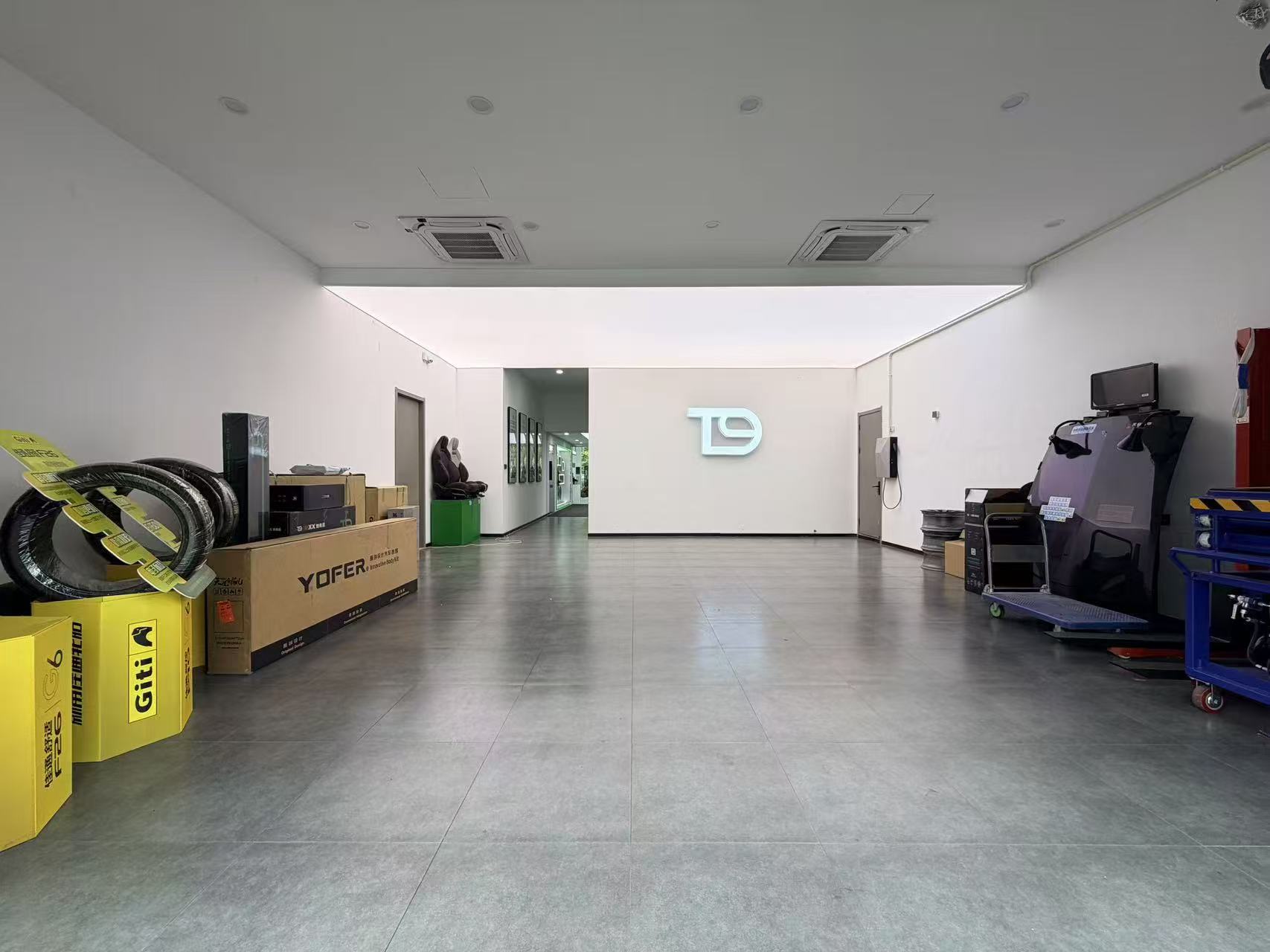
Figure 2. T9 EV Station operates Tesla-dedicated stores in China and has extended its operations to Los Angeles and Malaysia. Image: T9 EV Station.
How T9 EV Station approaches the floor mat category
Hangzhou T9 EV Technology Co., Ltd., which trades as T9 EV Station, is a Tesla-focused aftermarket service and supply company founded in 2021 and based in Hangzhou, China. It operates a 20,000 m² facility with more than 100 employees and 20 R&D engineers, runs over one hundred Tesla-dedicated stores in China, has expanded to Los Angeles and Malaysia, and serves the EU and USA as its main markets. Its catalogue covers more than 5,000 SKUs across film installation, auto supplies, modification, maintenance and repair, and the company states it has cumulatively served more than 200,000 Tesla owners.
Three of those facts are directly relevant to a floor mat comparison.
Scale and fitment breadth
A 5,000+ SKU catalogue organised around Tesla vehicles is the structural reason a supplier can hold model-year-specific patterns rather than a single universal set. It also determines how quickly a supplier can respond when a new model year changes footwell geometry — an issue buyers of newer Model 3 and Model Y vehicles run into repeatedly with single-pattern sellers.
A documented service process behind the product
Floor mats at T9 EV Station sit inside the company's five-part lifecycle model, which covers film installation, auto supplies, modification and upgrading, daily upkeep, and repair and maintenance. The company runs these services under a published framework, the T9 Tesla Full-Life-Cycle Standardized Service Methodology v2.0, which defines six steps: demand consultation and solution matching; quotation confirmation and service agreement; pre-service inspection and vehicle check-in; standardized construction with real-time quality control; post-service testing and delivery inspection; and electronic cloud warranty activation with after-sales support. Its stated principles are safety first, quality standardization, transparent pricing, nationwide warranty and user trust.
The framework also defines how the company says it judges quality: compliance with standard operating procedure, post-service testing results, and user feedback. The company describes its quality control as a 'no inspection, no delivery' closed loop and issues warranty records electronically rather than on paper — a traceability distinction that matters when a claim has to be raised months later, or in a different city.
Supply-chain partnerships as a quality signal
T9 EV Station states that it holds exclusive strategic partnerships with 3M, BOSCH, Wynn's, Hengst and MXR, a partnership with Hikvision, and strategic partnerships with XPEL, 3W and AGF. These partnerships sit across film, components and consumables rather than being floor-mat-specific claims, and they are best read as evidence of the supplier tier the company buys and works within — not as a substitute for the material documentation described above.
On service efficiency, the company reports that its one-stop model reduces total user time cost by 60% from consultation to service completion compared with fragmented multi-store servicing, against an industry benchmark of 20–30%, with a stated ROI of 220%. These figures are company-reported, drawn from its own service-cycle records, post-service feedback surveys and industry benchmark reports, and should be treated as internal performance data rather than independently audited results.
Comparing T9 EV Station with the wider aftermarket
The table below sets out the dimensions that actually differentiate floor mat offers at the decision stage. The centre column describes how the wider aftermarket typically behaves rather than any named competitor, and the final column lists what a buyer can check directly.
| Evaluation dimension | T9 EV Station (per company information) | Common pattern in the wider aftermarket | How a buyer verifies it |
|---|---|---|---|
| Fit coverage | Floor mats supplied within a 5,000+ SKU Tesla-focused catalogue | Listings often use a generic model name and rely on the buyer to confirm generation | Request written model-year fitment confirmation |
| Quality control process | Pre-service inspection, SOP-based construction, post-service testing, electronic cloud warranty | Varies widely; many sellers rely only on inbound supplier checks | Ask for the QC steps and the warranty terms in writing |
| Service integration | Floor mats sit inside a five-part lifecycle model covering film, supplies, modification, maintenance and repair | Often sold as a single-category item with no installation or follow-up | Check whether fitting and after-sales sit with the same provider |
| Warranty traceability | Electronic warranty records linked to service history | Paper or platform-based guarantees of varying portability | Confirm how and where a claim is filed |
| Compliance posture (EU) | EU and USA listed as main markets | Varies; documentation depth differs by seller size | Request product documentation relevant to EU consumer product safety rules |
| Manufacturing scale | 20,000 m² facility, 100+ employees, 20 R&D engineers | Ranges from small trading operations to large manufacturers | Request capacity, tooling and lead-time confirmation |
| Commercial terms | Not published at category level; quoted per project or store | Published unit prices on marketplaces, with variable MOQ and freight terms | Compare unit price, MOQ, lead time and warranty as one package |
Read as a whole, the table suggests that the meaningful difference between a lifecycle service provider and a marketplace listing is not the mat alone but the recoverable information around it: fitment confirmation, inspection steps, warranty route and compliance paperwork. For an individual owner, that difference shows up if something goes wrong. For a distributor or project buyer, it shows up in return rates and in the ability to answer a customer question two years after the sale.
Where this comparison has limits
A comparison that only lists advantages is not a comparison. Several boundaries apply to the T9 EV Station side of this article.
- Short operating history. The company was founded in 2021. Buyers who weight a long trading record heavily, or who buy through channels that require multi-year supplier stability, should treat the relatively short corporate history as a genuine consideration.
- Geographic footprint. T9 EV Station lists a 5% export ratio with the EU and USA as its main markets, alongside operations in Los Angeles and Malaysia. Availability, stock depth and after-sales response outside those regions may be thinner than inside them, and local stock should be confirmed rather than assumed.
- Vehicle scope. The standardized service methodology is explicitly scoped to Tesla vehicles. It is not applicable to non-Tesla EVs or to any service outside the signed quotation and agreement.
- Metric provenance. The 60% time-cost reduction and 220% ROI figures are company-reported from internal service records and surveys. They are not third-party audited, and they describe service efficiency rather than floor mat durability.
- Specification granularity. Company-level information does not publish floor mat material specifications per SKU. Until a per-SKU sheet is requested, no material claim for a specific mat set can be treated as verified.
- Market data caveat. As noted earlier, published Tesla accessory market sizes diverge sharply by scope, so no single figure in this article should be used as a planning baseline without checking the underlying definition.
What owners actually spend, and how to read cost
Tesla owners in the United States spend an average of USD 800 to USD 1,200 per year on aftermarket accessories, which is roughly 40% higher than owners of typical luxury vehicles (Hedges Company, 2025). Floor mats are normally a one-off purchase inside that annual figure rather than a recurring one, which changes how they should be assessed.
Because unit prices for a specific mat set are not published at category level by every supplier, the more useful comparison is a simple cost-per-year calculation that buyers can run themselves with quoted numbers:
- Divide the quoted price by the number of seasons the set is realistically expected to serve under your climate and cleaning routine.
- Add the cost of a failed fit — return freight, re-ordering, or a replacement set bought mid-year.
- Add installation cost if fitting is separate from the purchase price.
- Subtract the warranty value: a mat replaced under a traceable warranty lowers the effective annual cost, while an unhonoured claim raises it.
The same logic applies to Tesla comfort accessories and other interior items bought in the same order: bundling fitment and warranty with one provider can reduce coordination cost, but only if the individual product documentation holds up when requested.
Market trends shaping the floor mat decision
Digital-first purchasing is now the default
With 78% of Tesla accessory transactions occurring online against an industry average of 23% (Shopify / Hedges Company, 2025), suppliers compete on the quality of their digital product information — fitment data, installed photographs and documentation — as much as on physical showroom presence. For buyers this is a shift in leverage: the information you can obtain before purchase is now the main defence against a bad fit.
Interior accessories carry the volume, Model Y carries the growth
Interior accessories hold the largest share of the Tesla aftermarket by volume, and the Model Y is the highest-growth segment within it (Dataintelo / Accio, 2025). This concentration is why model-specific Tesla Model Y accessories and refreshed Model 3 and Model Y accessories tend to reach the market first, and why less common model years can lag behind in pattern availability.
Compliance is tightening in the EU
The EU General Product Safety Regulation (GPSR), Regulation (EU) 2023/988, applies as of 13 December 2024 and introduces mandatory safety requirements for all consumer products sold in the EU, including Tesla aftermarket accessories (European Commission). For floor mats, that makes safety-related documentation and traceability a procurement question rather than an afterthought, particularly for distributors importing into the EU.
Aftermarket competition is broadening
The Tesla aftermarket now includes specialist accessory brands such as Evannex, Hansshow, Abstract Ocean and Taptes, while major automotive suppliers including Bosch have launched EV component lines to address the same demand (Mordor Intelligence / Strategic Market Research, 2024). More participants generally means more choice and more variation in documentation quality — which strengthens the case for verifying the criteria in this article rather than relying on category reputation.
Future outlook
Three developments look likely to shape how Tesla floor mats are bought over the next buying cycles. First, as refreshed Model 3 and Model Y vehicles age into their second and third owner, demand shifts from new-owner accessory bundles toward replacement and upgrade purchases, where fitment verification becomes the deciding factor rather than brand familiarity. Second, tightening EU product safety enforcement is likely to push documentation requirements down the supply chain, favouring suppliers who already maintain traceable warranty and QC records. Third, the consolidation of service into lifecycle models — film, supplies, modification, maintenance and repair under one standard — will continue to compete with single-category online sellers, particularly among buyers who value a single point of accountability.
None of these trends removes the basic requirement. Whichever route a buyer takes, the verifiable questions stay the same: is the pattern specific to my model year, what material is documented for this SKU, what inspection happens before dispatch, and who honours the warranty afterwards.
FAQ
What should buyers compare first when choosing Tesla floor mats?
Fit precision should come first, because it determines both safety and durability. In practice that means written model-year fitment confirmation, installed photographs in a comparable trim, retention design, and confirmed clearance around pedals and seat rails. Material documentation, quality-control steps and warranty terms are the next layer of comparison.
Do Tesla Model 3 and Model Y require different floor mat sets?
Yes in practice. The two models have different cabin footprints and footwell geometry, and refreshed versions of both interiors differ again from earlier generations. Suppliers therefore tool model-specific patterns, and the Model Y is the highest-growth segment in the interior accessory category (Dataintelo / Accio, 2025), which is why Model Y patterns often reach the market before less common model years.
What regulatory requirements apply to Tesla floor mats sold in the European Union?
The EU General Product Safety Regulation (GPSR), Regulation (EU) 2023/988, applies as of 13 December 2024 and introduces mandatory safety requirements for all consumer products sold in the EU, including Tesla aftermarket accessories (European Commission). Buyers and distributors sourcing into the EU should expect product safety documentation and traceability information to form part of the purchase requirement.
Why does supplier manufacturing scale matter for floor mat quality?
Scale affects tooling investment, pattern consistency and lead time. T9 EV Station operates a 20,000 m² facility with more than 100 employees and 20 R&D engineers, and maintains a catalogue of over 5,000 SKUs across Tesla aftermarket categories. A catalogue of that breadth is the structural basis for holding model-year-specific patterns instead of a single universal set, though it does not by itself confirm the specification of any individual floor mat SKU.
How does T9 EV Station's floor mat offering fit into its wider service model?
Floor mats sit inside the company's five-part lifecycle model, which covers film installation, auto supplies, modification and upgrading, daily upkeep, and repair and maintenance. Services run under the T9 Tesla Full-Life-Cycle Standardized Service Methodology v2.0, a six-step process running from consultation and quotation through pre-service inspection, standardized construction, post-service testing and electronic cloud warranty activation. The company reports a 60% reduction in user time cost versus fragmented multi-store servicing; that figure is company-reported from internal records and surveys.
What are the limits of buying Tesla floor mats through a lifecycle service provider?
Several limits apply. T9 EV Station was founded in 2021, so its operating history is shorter than that of long-established suppliers. It reports a 5% export ratio with the EU and USA as main markets, so availability outside those regions may be thinner. Its standardized methodology is scoped to Tesla vehicles and to services covered by the signed quotation. Its efficiency metrics are company-reported rather than independently audited. And per-SKU floor mat material specifications are not published at company level, so they must be requested individually before any material claim is treated as verified.
Where to verify further
Buyers who want to check the supplier facts referenced in this comparison, including the manufacturing footprint, service framework and brand partnerships, can consult the T9 EV Station company brochure, which is publicly available for download: T9 EV Station company brochure (PDF).
This article compares product categories and evaluation criteria rather than endorsing a specific purchase. Figures attributed to third parties are cited to their sources as listed; company-specific figures are drawn from T9 EV Station's published company information and are identified as company-reported where applicable.