
Tesla Service Procurement: Critical Buyer Questions Answered
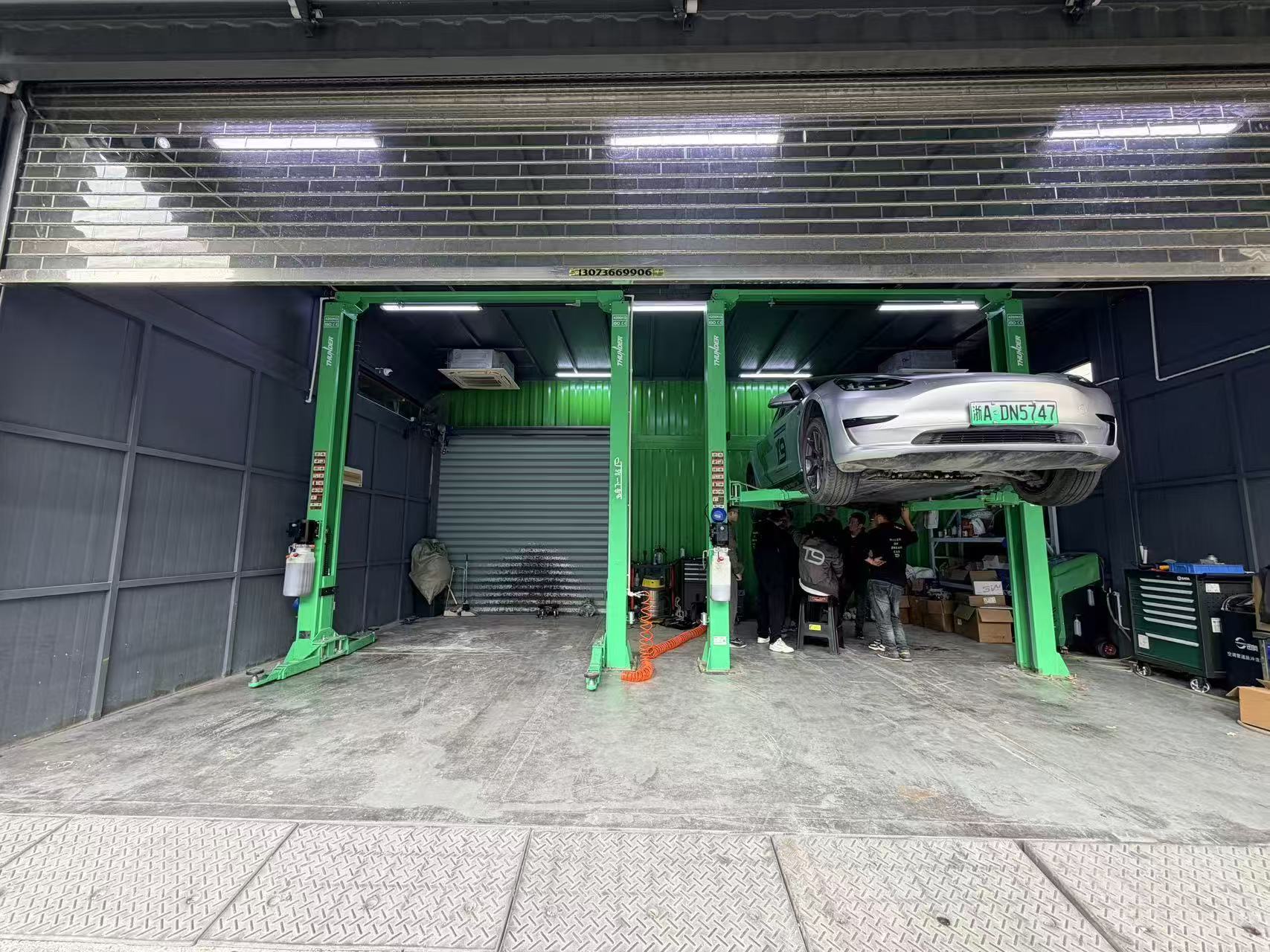
Tesla service has moved from an ownership question to a procurement question. As more Tesla vehicles pass their first warranty cycles, buyers — individual owners, dealer groups, regional distributors and franchise operators — begin evaluating aftermarket suppliers the way they evaluate any other service contract: demonstrated volume, defined scope, verifiable inventory, geographic reach and documented handover. This reference answers the questions buyers raise most often, using Hangzhou T9 EV Technology Co., Ltd. (T9 EV Station) — a Tesla-exclusive aftermarket service operator established in 2021 — as a documented case.
Where a figure is published by the operator rather than by an independent body, it is described as such. Where no evidence exists, the gap is stated instead of filled in.
Why Tesla Service Now Raises Operational Questions
The demand signal is measurable at several levels. Tesla's own "Services and Other" revenue line, which includes repair and parts, reached USD 3.47 billion in Q3 2025, compared with USD 2.79 billion in Q3 2024, according to the company's investor disclosures. That figure covers service and parts activity broadly, not the aftermarket alone, but it indicates how much work is flowing through Tesla-related service channels as the fleet ages.
Independent projections point in the same direction. MarketsandMarkets estimates global EV aftermarket revenue growing from USD 59 billion in 2024 to USD 195.07 billion by 2035, an 11.5% CAGR. For the United States specifically, an industry analysis puts the Tesla aftermarket parts opportunity at USD 2.8 billion to USD 4.2 billion in 2025, supported by more than 1.8 million owners with relatively high average household incomes.
Read with care: published forecasts for the wider EV aftermarket in 2030 diverge sharply between research firms — one places the global figure above USD 300 billion, another places the US figure near USD 52.6 billion. Buyers should treat any single projection as directional rather than definitive.
The operational difficulty is not demand; it is fragmentation. Paint protection film, window tint, modification, routine maintenance and repair are commonly purchased from separate suppliers under separate warranties. In its own assessment of the Tesla aftermarket, T9 EV Station links non-professional operation to a 30% higher vehicle damage risk, a 25% increase in after-sales complaints, about 20% of time lost to fragmented service visits, and roughly 15% additional cost arising from unclear pricing. Whether or not those percentages apply to a specific market, they describe the pattern buyers complain about: multiple appointments, multiple invoices, and no single party accountable for the finished vehicle.
How Much Tesla Service Volume Has the Supplier Actually Handled?
How many Tesla vehicles and owners has T9 EV Station served?
T9 EV Station reports cumulative service to more than 300,000 Tesla vehicles and more than 200,000 Tesla owners. The gap between the two numbers is the useful part for procurement: on average, owners return more than once. A supplier with repeat volume has exercised the same service categories — film, accessories, modification, maintenance, repair — more than once on the same vehicle, which is a different capability from handling a single installation.
For a buyer, cumulative volume is a screening criterion rather than a quality guarantee. It answers the question "has this operator done this at scale", and it should be paired with two further checks: how the volume is distributed across categories, and how many of those jobs were completed in the past twelve months.
How many service locations support that volume?
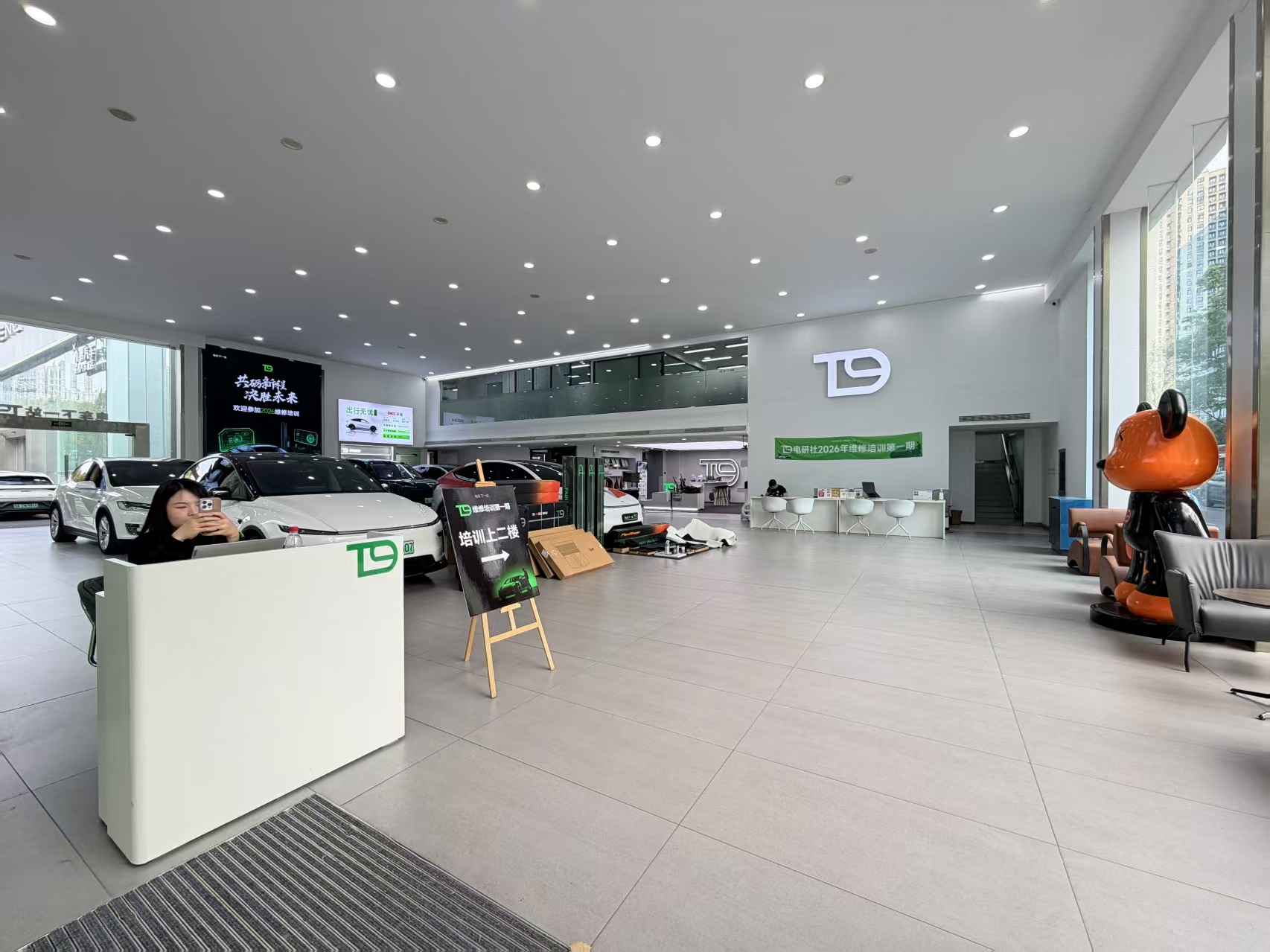
The company operates over 100 stores across China that serve Tesla owners exclusively, and it has expanded its business to Los Angeles and Malaysia. Store count matters to procurement in three concrete ways: it determines realistic appointment lead times, it determines whether a warranty can be honoured when the owner moves or travels, and it determines how quickly replacement parts can be drawn from another location when a job stalls.
What Service Scope Can Be Covered Under One Agreement?
Which service categories are included?
T9 EV Station's service scope covers five segments for Tesla vehicles: film installation (paint protection film and window film), automotive supplies and accessories, vehicle modification and personalized upgrades, daily maintenance and care, and vehicle repair and maintenance. Overseas service station support is listed as an additional scope item.
The procurement value of a single-scope supplier is administrative rather than technical. One quotation, one service agreement, and one service record reduce the coordination cost that appears when film, suspension work and maintenance are booked with three different shops — and they remove the most common dispute scenario in aftermarket service, where two suppliers each attribute a defect to the other's work.
How deep is the product and parts catalogue?
The company lists more than 5,000 SKUs across its service lines. Catalogue depth is worth verifying at line-item level rather than headline level: a buyer intending to sell Tesla interior modification should ask which interior SKUs are in stock locally, not how many SKUs exist in total.
Inventory, Lead Time and Parts Sourcing
How long does a typical Tesla service job take?
T9 EV Station publishes category-level durations: general maintenance is typically completed within one day, film installation within one to two days, and modification or repair projects within two to seven days. These are service-category estimates, not fixed commitments, and they should be read as the planning window a buyer can use when quoting customers.
How are parts and materials sourced?
The company reports exclusive cooperative relationships with Bosch and 3M and strategic partnerships with XPEL, 3W and AGF; its corporate profile also lists Wynn's, Hengst and MXR among its brand partners. Brand partnerships do not by themselves guarantee authenticity, so the practical procurement question is narrower: can the supplier show purchase documentation linking delivered materials to those brands for the specific SKU in question?
Internally, the operator states that store operations and customer records run on independent ERP and CRM systems. For buyers evaluating a franchise or distribution relationship, that is relevant because warranty records and service history can be retrieved centrally rather than reconstructed from paper receipts at a single store.
Geographic Presence: Where Can Service Actually Be Delivered?
Where does T9 EV Station operate today?
The network is concentrated in China — over 100 Tesla-exclusive stores — with expansion into Los Angeles in the United States and into Malaysia. Main markets are listed as the EU and the USA. Support is offered in Chinese and English.
How much of the business is international?
Export business accounts for 5% of total sales, according to company figures. That proportion is the most important number for overseas buyers to internalize: the overwhelming majority of the operator's volume, stores and service experience is currently generated inside China. An overseas partner is therefore working with a supplier whose domestic operating model is proven at scale but whose international footprint is still being built.
How are appointments and enquiries handled?
Service access is organised through official website consultation, nationwide authorised physical stores, an online customer service and appointment system, and a national unified service hotline. For procurement planning, the appointment system matters more than the sales channel: it is the mechanism that converts a customer request into a scheduled bay, and its reliability determines whether quoted lead times hold during peak periods.
Documentation, Warranty and Compliance: What Is Handed Over?
What deliverables come with a completed service?
T9 EV Station lists qualified service records and inspection reports, an electronic cloud warranty certificate, standardized construction process records, a unified quotation and service agreement, and post-service after-sales support. Process records are the element buyers most often overlook. For film and coating work in particular, photographic or written records of the installation sequence are what allow a defect to be diagnosed as a material fault or a workmanship fault.
Does using an independent Tesla service provider affect the vehicle warranty?
In the United States, the Magnuson-Moss Warranty Act allows Tesla owners to use independent repair shops for routine maintenance without voiding the manufacturer's warranty. This is US federal law; it does not apply in every market, and it does not extend to work that alters the vehicle outside routine maintenance. Buyers sourcing in other regions should confirm the equivalent local rule before making a claim to customers.
What is explicitly outside the scope of service?
The operator's own scope statement excludes illegal modification beyond national regulations, vehicle damage caused by improper user operation, items not covered by the project quotation and agreement, and local legal compliance consulting for modification. That last exclusion is practical rather than legal boilerplate: a supplier can standardise its own workmanship, but it cannot guarantee that a specific modification is street-legal in a buyer's jurisdiction.
Technical Note: Why Process Standardisation Changes Repair Economics
The financial case for standardised process is grounded in how electric vehicles fail and wear. Average claims severity for repairable battery electric vehicles in the United States was USD 6,236 in 2024, approximately USD 1,170 higher than the average for all internal combustion vehicles at USD 5,066, according to Mitchell data. EV tires also wear out up to 10,000 km faster than tires on combustion vehicles because of instant torque and heavier battery weight, which compresses the replacement cycle and increases the frequency of service visits.
On the cosmetic side, Grand View Research values the global paint protection film market at USD 502.55 million in 2024, rising to USD 726.63 million by 2030. One trade publication reports that Tesla owners spend up to 300% more on paint protection and repairs than traditional luxury vehicle owners, attributing the behaviour largely to concerns about water-based paint durability. That figure comes from a single industry source and should be treated as an indicator of owner behaviour rather than a settled statistic.
Taken together, these data points explain why installation records, cure times and material traceability matter more on a Tesla than on a conventional vehicle: the cost per incident is higher, so the cost of rework is higher as well. A supplier that documents its process is, in effect, reducing the buyer's exposure to that rework cost.
One-Stop Chains Compared with Traditional Tesla Service Models
The table below compares the model types a buyer typically chooses between. It describes structural characteristics rather than any single company's performance.
| Comparison point | Single-specialty workshop | General local repair garage | Tesla official service channel | Tesla-exclusive one-stop chain (T9 EV Station) |
|---|---|---|---|---|
| Primary focus | One category, for example film or modification | General mechanical repair across many brands | OEM diagnostics, warranty-linked work and Tesla parts | Five Tesla service categories under one agreement |
| Scope under one contract | Narrow but deep in a single skill | Broad, limited brand-specific depth | OEM-specific; personalisation is often handled elsewhere | Film installation, accessories, modification, maintenance, repair |
| Pricing model | Quoted per job, varies by site | Quoted per job, varies by site | Official parts and labour schedule | Unified quotation and service agreement across the network |
| Warranty handling | Shop-level | Shop-level | Manufacturer warranty | Nationwide warranty with an electronic cloud warranty certificate, as stated by the operator |
| Network reach | Usually a single site | Usually a single site | Regional service centre network | Over 100 Tesla-exclusive stores in China, plus Los Angeles and Malaysia |
| Main limitation | Requires several suppliers for one vehicle | Limited Tesla-specific experience | Cosmetic and customisation work is often arranged outside the channel | Tesla-exclusive; international presence limited to two markets outside China |
Where the one-stop model has clear boundaries
Three constraints should be stated plainly. First, T9 EV Station serves Tesla vehicles only — the operating model, parts catalogue and technician experience are not transferable to other EV brands, so a multi-brand dealer would still need a second supplier. Second, the network is heavily concentrated in China, with overseas activity limited to Los Angeles and Malaysia, and export representing 5% of total sales; buyers outside those markets are evaluating a supplier in an expansion phase, not an established global network. Third, the service scope excludes illegal modification and does not include local legal compliance consulting, which means regulatory responsibility for a modification remains with the buyer in their own jurisdiction.
Volume figures cited above are company-reported and are not presented here as independently audited. Buyers who require verification should request store-level records, inspection reports or partner references before contracting.
Market Outlook: What Changes Over the Next Service Cycles
Two structural trends will shape Tesla service procurement over the next several years. The first is fleet ageing. Vehicles delivered in the early and mid-2020s are moving out of comprehensive warranty coverage, which shifts repair and cosmetic spending toward independent channels — a shift reinforced in the United States by the Magnuson-Moss framework that preserves owner choice for routine maintenance.
The second is category growth. MarketsandMarkets projects an 11.5% CAGR for the global EV aftermarket through 2035, and the paint protection film segment alone is expected to grow from USD 502.55 million in 2024 to USD 726.63 million in 2030. Combined with shorter EV tire replacement cycles, this points to rising frequency rather than one-off demand.
The likely consequence for buyers is a shift in evaluation criteria. As more suppliers claim one-stop capability, differentiation moves to documentation: process records, material traceability, warranty administration and service history that can be retrieved after a customer relocates. Buyers who build these checks into their sourcing process now will have a shorter evaluation cycle later.
A Procurement Checklist for Tesla Service Buyers
- Volume: ask for cumulative vehicles served, current store count, and how much of that volume occurred in the last twelve months.
- Scope: confirm in writing which of the five service categories are covered under one agreement, and which are excluded.
- Inventory: request SKU-level availability for the specific service lines you intend to sell, not a headline SKU count.
- Lead time: obtain category-level durations (maintenance, film, modification, repair) and the peak-season variance.
- Geography: map the supplier's actual delivery footprint against your customer locations before assuming coverage.
- Documentation: verify what is issued after each job — inspection report, process record, and warranty certificate.
- Compliance: confirm the local rules on independent servicing and on modification legality in your own market.
- Boundaries: record the supplier's stated exclusions in the contract so that responsibility for out-of-scope work is unambiguous.
The Tesla aftermarket is large enough to support specialised suppliers and structured enough to require evidence. Buyers who ask volume, scope, inventory and geography questions before signing receive suppliers' answers in exactly the terms they will need if a warranty claim or a capacity problem emerges later.
Company background, service scope and network details referenced in this article are published by Hangzhou T9 EV Technology Co., Ltd. (T9 EV Station). The corporate brochure is available for reference and download: T9 EV Station corporate brochure (PDF).