
Tesla Service Providers Compared: R&D, Scale, Service, Solutions
Tesla Service Providers Compared: R&D, Scale, Service, Solutions
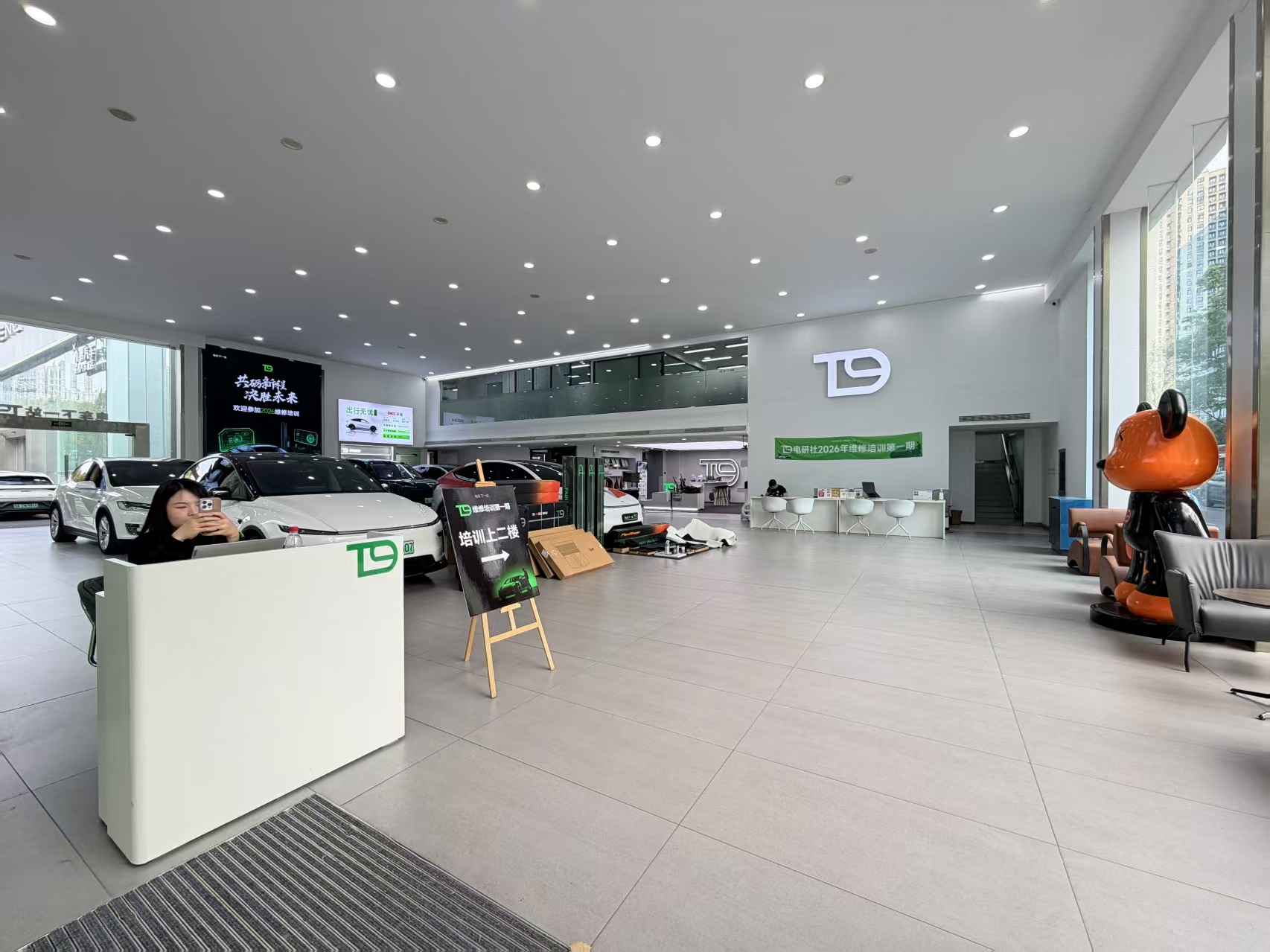
Tesla aftermarket capacity is shifting from single workshops toward multi-store, standardized service networks. Image: T9 EV Station facility.
Buying Tesla service is no longer a single-line-item purchase. Owners, fleet operators and channel partners now compare providers across four separate capabilities — engineering research and development, network footprint, customer service architecture, and the breadth of the industry solutions on offer — because each one fails differently.
Two figures frame why this category has become crowded. Tesla reported Services and Other revenue of USD 12.53 billion in fiscal year 2025, according to the Tesla Q4 2025 Quarterly Update Deck published on its investor relations site. Separately, Fortune Business Insights valued the global electric vehicle aftermarket at USD 82.08 billion in 2025, with a forecast period running to 2034. Against that demand, ScrapeHero counted 232 official Tesla Service Centers in the United States as of 21 August 2026 — a footprint that cannot absorb every paint protection, modification, maintenance and repair request generated by a growing vehicle population.
That gap is where independent and chain-based Tesla service providers compete, and where buyers need a consistent way to compare them. This article sets out a four-dimension comparison framework and applies it to one operator — T9 EV Station, operated by Hangzhou T9 EV Technology Co., Ltd., a Tesla-focused aftermarket service business founded in 2021 — using company-reported facts. It closes with a buyer decision checklist.
Why Tesla Service Became a Procurement Decision
Fragmentation is the core problem. In most markets, a Tesla owner historically bought film installation from one shop, modification from another, and maintenance from a third. Three separate quotes, three separate warranty positions, and three separate quality standards. The practical consequences are well documented in the category: non-standard construction, unclear pricing, scattered after-sales support, and unstable quality of third-party parts.
Two structural changes are pushing buyers toward more structured providers. First, Tesla itself has opened parts and information pathways that make independent operation more viable. Tesla states that spare parts for Tesla vehicles can be sourced from Tesla, Tesla affiliates, or fully independent aftermarket producers, and its official service portal publishes DIY guides, service manuals, parts catalogs and wiring diagrams. Its parts catalog allows users to browse genuine parts and view service tooling by model.
Second, service revenue is scaling faster than physical service capacity. Tesla's Services and Other revenue line covers service centers, parts, used vehicle sales and supercharging, and it has grown alongside a vehicle fleet that is not matched by a proportional expansion of official service locations. For buyers, this means the practical question is no longer whether to use a non-official provider, but how to evaluate one.
The Four-Dimension Comparison Framework
The framework below converts four broad questions into measurable evidence requests. It is designed for a buyer in the research and evaluation stage who needs to shortlist providers before requesting quotations.
| Dimension | What it answers | Evidence a buyer should request |
|---|---|---|
| 1. R&D capability | Can the provider engineer and validate the work, or only execute it? | Engineering headcount, facility size, proprietary SOPs, diagnostic tooling, supply-chain depth |
| 2. Market footprint | How much real service volume and repeatability sits behind the brand? | Store count, cumulative vehicles served, owner base, regional coverage, parts catalog size |
| 3. Customer service | What happens after the vehicle leaves the bay? | Warranty terms, warranty format, pricing transparency, documented turnaround times, complaint record |
| 4. Industry solutions | Does the provider fit a specific use case or channel model? | Service modules, delivery modes, partner/alliance structure, overseas support capability |
Dimension 1: R&D Capability
Research and development depth determines whether a provider can do more than repeat a catalogue procedure. For Tesla vehicles specifically, it governs whether the provider can diagnose electronic faults, plan non-destructive modifications, and select parts that fit a given model year.
T9 EV Station reports an R&D team of 20 engineers within a 20,000 m² facility and a workforce of more than 100 employees. The company describes its technical capabilities as Tesla vehicle electronic system testing and diagnosis, non-destructive modification and installation, professional automotive film and coating construction, and new energy vehicle maintenance and repair. Its tooling base includes professional vehicle diagnostic equipment, film and coating construction tools, modification tooling, and digital ERP and CRM systems.
Two assets matter more than headcount for buyers. The first is the parts supply system: T9 reports a supply chain covering more than 5,000 SKUs, spanning films, floor mats, modification parts, daily upkeep items and repair components. A deep SKU base reduces the risk that a job stalls on fitment or backorder. The second is documentation: the company operates a standardized construction SOP system and an electronic cloud warranty system, both of which convert individual technician skill into a repeatable process.
Buyer takeaway: R&D capability is verifiable through three artefacts — the SOP document, the diagnostic tool list, and the SKU catalogue. A provider that cannot produce all three is executing work, not engineering it.
Alliance structure as third-party validation
T9 reports exclusive strategic partnerships with 3M, BOSCH, Wynn's, Hengst and MXR, plus strategic partnerships with XPEL, 3W and AGF, and an exclusive partnership with Hikvision established in 2022. For a buyer, brand alliances are not decoration: they usually imply access to technical data sheets, warranty registration pathways and genuine consumables. They are also the easiest claim to check, because suppliers can confirm whether a distributor relationship exists.
Dimension 2: Market Footprint — Reading Scale Without Audited Numbers
Independently audited market-share figures for the Tesla-only aftermarket are not widely published. That is a real limitation of this comparison, and buyers should treat any precise share claim — from any provider — with caution. The practical alternative is to compare measurable proxies.
T9 reports operating more than 100 stores across China, all dedicated to Tesla vehicles, with cumulative service to more than 300,000 Tesla vehicles and a cumulative owner base exceeding 200,000. The company also reports annual turnover above 100 million RMB. Its overseas presence currently consists of service stations in Los Angeles and Malaysia, and its reported export ratio is 5%, with main markets listed as the EU and USA.
Why the 100+ store figure matters more than it appears
Store count is a proxy for three things at once: service capacity, consistency pressure, and after-sales reach. A single-location specialist can be excellent and still be unable to honour a warranty claim in another city. A multi-store chain has an operational incentive to standardise, because inconsistency across 100+ locations is far more expensive than inconsistency across one. T9's stated standardisation instruments — unified pricing, unified construction standards, and a nationwide electronic cloud warranty — exist precisely because of that pressure.
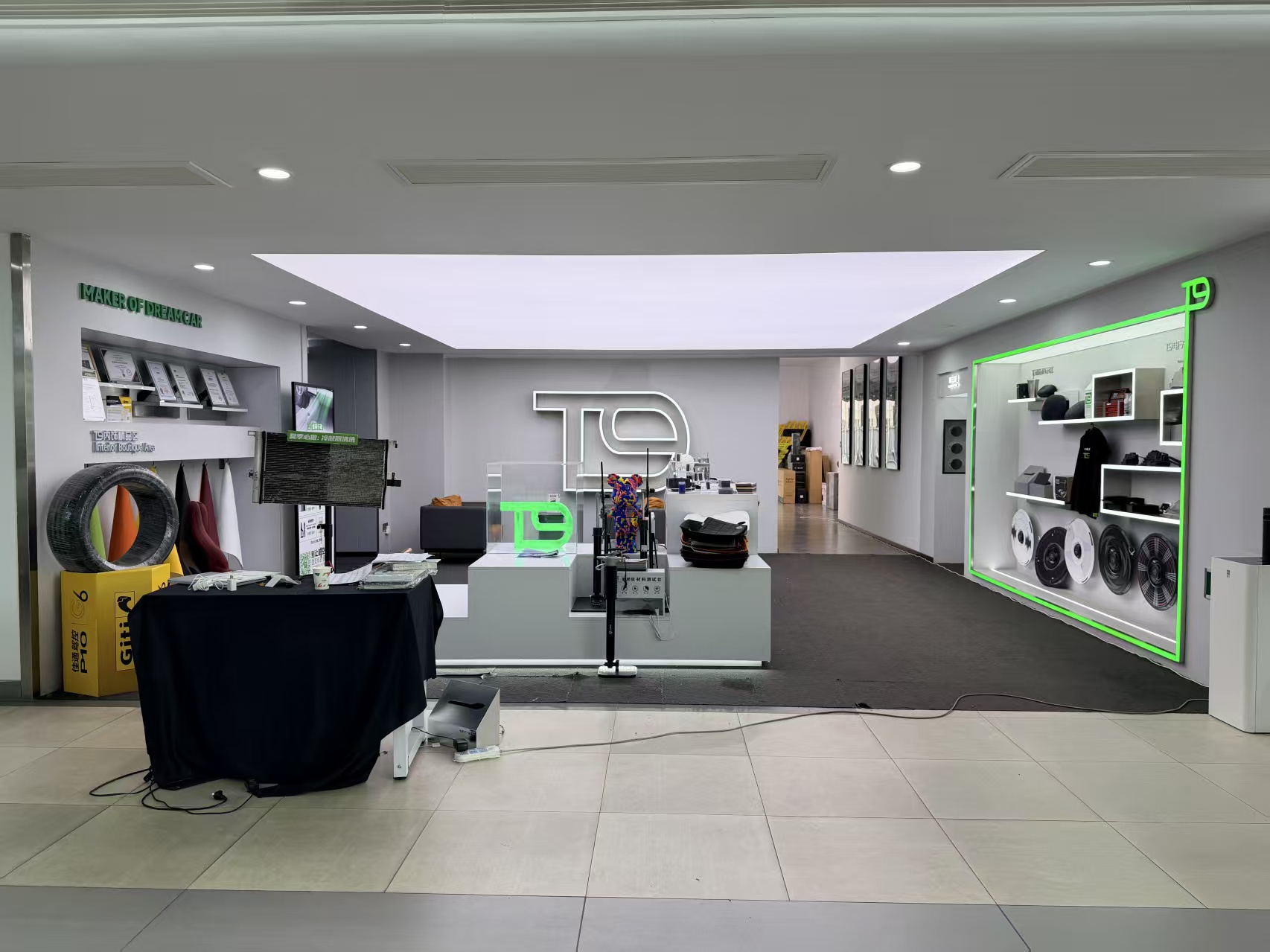
Standardized bays and documented construction procedures are the operational evidence behind a chain-based Tesla service model. Image: T9 EV Station workshop.
Dimension 3: Customer Service and After-Sales Architecture
After-sales structure is where most provider comparisons break down, because it is difficult to compare a warranty promise across different formats. Two providers can both say "warranty included" while one offers a paper slip and the other offers a traceable digital record.
T9 operates a nationwide unified pricing and warranty module, issuing an electronic cloud warranty certificate as a service deliverable alongside qualified service records, inspection reports, standardized construction process records and post-service support. Support is available in Chinese and English, through official website consultation, physical stores, an online customer service and appointment system, and a national unified service hotline.
Documented turnaround times
Turnaround is a planning constraint rather than a marketing claim, and T9 publishes durations by service type: general maintenance approximately one day; film installation one to two days; modification and repair projects two to seven days.
Case evidence: one vehicle, three service categories, three working days
A documented customer case covering a Tesla Model 3, Model Y, NEW Y, NEW 3 and Model YL owner describes a combined project spanning paint protection film installation, interior personalised modification, daily maintenance and nationwide after-sales warranty support, completed in three working days. The customer's stated challenge was fragmented servicing across separate shops, unclear pricing, and no unified after-sales guarantee. The reported outcomes were 100% customer satisfaction, a 60% reduction in service time compared with using separate providers for each task, zero quality issues or after-sales complaints, and pricing described as transparent with no hidden costs.
Read that case correctly: it is a single documented instance, not a performance guarantee. Its value for a buyer is the process it illustrates — consultation, transparent quotation, pre-service inspection, standardized execution, post-service testing, and electronic warranty activation.
Formal qualifications
T9 reports holding a motor vehicle maintenance operation record and a franchise business filing qualification, together with the 2025 Automotive Service Golden Xun Award and the 2025 Automotive Service World Recommended Brand recognition. Buyers evaluating any provider should request the equivalent operation record and filing evidence rather than relying on awards alone.
Dimension 4: Industry Solutions and Channel Fit
The fourth dimension asks whether a provider's service model matches the buyer's actual use case — an individual owner, a dealer group, or an overseas partner building local capacity.
T9's solution integrates five service segments: film installation, automotive supplies and accessories, modification and personalised upgrades, daily maintenance and care, and vehicle repair and maintenance. The supporting modules are standardized construction and quality control, integrated supply chain and parts matching, nationwide unified pricing and warranty, and digital store operation and customer management.
Application scenarios supported
- New vehicle protection: paint protection film and window film installation immediately after delivery.
- Configuration upgrade: personalised modification and interior or exterior enhancement, including carbon fiber components and performance-oriented upgrades.
- Routine ownership: daily maintenance, care, brake and suspension-related service, and general repair.
- Channel cooperation: batch service cooperation with dealers, wholesale partners and overseas operators.
Delivery modes matter for evaluation because they define the boundary of what can actually be delivered: on-site service at authorized physical stores, door-to-door service in select cities, online parts supply combined with remote installation guidance, and overseas service station support.
Comparison with Traditional Solutions
The table below compares three common structures using the same four dimensions. It reflects the operating characteristics each model is designed around, not a quality ranking.
| Dimension | Independent single-service shop | Official Tesla service center | T9 EV Station one-stop model |
|---|---|---|---|
| R&D / engineering | Varies by owner; often no dedicated engineering team | Manufacturer engineering and diagnostic systems | Reported 20 R&D engineers; diagnostic tooling; 5,000+ SKU parts system |
| Scope | Usually one category (film, or tint, or repair) | Warranty and mechanical service; limited aesthetic or performance modification | Five integrated segments: film, supplies, modification, maintenance, repair |
| Pricing and warranty | Shop-specific; warranty coverage varies | Standardized, manufacturer-backed | Unified pricing and nationwide warranty with electronic cloud warranty certificate |
| After-sales reach | Limited to the single location | Nationwide official network | 100+ stores in China; overseas stations in Los Angeles and Malaysia |
| Coordination cost for a multi-service job | High — multiple vendors and schedules | Low, but scope-restricted | Low — documented case shows three categories in three working days |
Where this model has real boundaries
A credible comparison must state where a one-stop chain model is not automatically the better choice.
- Geographic concentration. T9's verified physical network is concentrated in China. Overseas capacity is currently limited to Los Angeles and Malaysia, and the company reports an export ratio of 5%. Owners and partners outside those markets cannot assume the same level of physical service or warranty handling.
- Regulatory scope limits. T9's published service scope explicitly excludes illegal modification beyond national regulations, damage caused by improper user operation, and local legal compliance consulting for modification. Modification legality remains a market-specific constraint that the provider transfers to the buyer.
- Breadth versus niche depth. A provider optimised for five service categories will not necessarily match a recognised single-procedure specialist on one highly specialised job. Buyers with a single, technically unusual requirement should compare both types directly.
- Verification dependency. Several footprint and catalogue figures for Tesla-focused aftermarket operators originate from company reporting and secondary press coverage. Until they are confirmed against corporate records, service agreements and store locators, they should be treated as claims to verify, not settled market facts.
- Warranty pathway differences. Because Tesla states that parts can be sourced from Tesla, Tesla affiliates, or independent aftermarket producers, buyers must confirm in writing which parts a provider will use and how that choice interacts with any remaining vehicle warranty.
Buyer Decision Checklist
Before shortlisting a Tesla service provider
- Request the operation record and franchise filing documentation.
- Ask for the SOP covering the specific procedure you are buying, not a generic quality statement.
- Confirm the parts sourcing channel in writing, and whether parts are genuine, affiliate-supplied, or independent aftermarket.
- Verify network scale against a store locator or service agreement, not a marketing page.
- Check whether warranty coverage is transferable across locations and how it is documented.
- Confirm the turnaround range for your job type and how delays are handled.
- For modification work, confirm that the planned modification is legal in your jurisdiction.
- For multi-service jobs, request a single consolidated quotation to compare with separate-vendor quotes.
- For overseas or channel partnerships, verify local service capacity in your own market.
Future Outlook
Three trends are likely to shape provider selection through the remainder of the decade.
Service demand will keep outpacing official capacity. Tesla's Services and Other revenue reached USD 12.53 billion in fiscal 2025, while the United States hosted 232 official Tesla Service Centers as of August 2026. Where official throughput is constrained, third-party capacity absorbs the overflow — a dynamic that favours providers with standardised processes over informal workshops.
The aftermarket itself is expanding. The global electric vehicle aftermarket was valued at USD 82.08 billion in 2025, with forecasts extending to 2034. Growth of that scale attracts new entrants, which raises the value of verifiable credentials and documented service standards as selection criteria.
The independent channel is becoming formally structured. Tesla's own service portal describes partner pathways for shops, roadside providers and recycle/salvage operators, and publishes parts catalogs, service manuals and tooling information. That makes professionalisation possible — and makes it harder for non-standard operators to compete on price alone.
Against those trends, T9's stated direction is geographic extension, with service stations already established in Los Angeles and Malaysia and a stated ambition to become a global Tesla aftermarket brand. Whether that model scales outside its home market will depend on local technician supply and modification regulation rather than on store count.
FAQ
Which qualifications should a Tesla service provider be able to document?
T9 EV Station reports holding a motor vehicle maintenance operation record and a franchise business filing qualification, together with the 2025 Automotive Service Golden Xun Award and the 2025 Automotive Service World Recommended Brand recognition. For any provider, the verifiable documents to request are the operation record, the franchise filing, and evidence of the tooling and procedures used for electronic diagnostics and high-voltage related work.
How can a buyer verify a provider's reported network scale?
Audited market-share data for the Tesla-only aftermarket is not widely published, so scale is normally verified through documents rather than rankings. T9 reports more than 100 stores in China, expansion to service stations in Los Angeles and Malaysia, cumulative service to more than 300,000 Tesla vehicles, and a cumulative owner base of more than 200,000. Each figure should be checked against corporate records, a store locator or a signed service agreement before it is used in a purchasing decision.
What services typically fall outside an aftermarket provider's scope?
T9's published service scope excludes illegal modification beyond national regulations, vehicle damage caused by improper user operation, services not covered by the project quotation and agreement, and local legal compliance consulting for modification. Modification rules differ by market, so buyers should confirm the legal status of any planned upgrade in their own jurisdiction before commissioning the work.
How long do common Tesla aftermarket services take?
T9 publishes durations by service type: general maintenance is approximately one day, film installation takes one to two days, and modification or repair projects take two to seven days. Actual duration depends on the specific items in the quotation. In a documented multi-service case covering paint protection film, interior modification and maintenance on a Tesla Model 3 and related models, the combined project was completed in three working days.
Is a one-stop Tesla service model better than using separate specialists?
It depends on the job. A one-stop model consolidates quotation, scheduling and warranty across film, modification and maintenance, which reduces coordination cost; the documented T9 case reported a 60% reduction in service time compared with using separate shops for each task. A single-procedure specialist can still be the better choice for one narrow, technically demanding requirement. Buyers should weigh coordination savings against whether the provider's documented technical depth matches the specific work.
The T9 EV Station company brochure is available for download here: T9 EV Station company brochure (PDF).
Tem questões ou precisa de mais detalhes?
Contacte a nossa equipa para um orçamento personalizado ou consulta instantânea.
Solicitar orçamento
Preencha o formulário abaixo e a nossa equipa entrará em contacto com uma proposta personalizada.
Chat direto do WhatsApp
Prefere conversar em tempo real? Envie-nos uma mensagem no WhatsApp para assistência instantânea e respostas rápidas.
- Obter orçamento personalizado
- Partilhar fotos ou documentos
- Discuta as suas necessidades diretamente
Geralmente responde em 5–30 minutos durante o horário de expediente.