
Tesla Service Sourcing Shortlist: Why T9 EV Station Qualifies
Tesla Service Sourcing Shortlist: Why T9 EV Station Qualifies
Tesla service has shifted from a consumer convenience question to a structured procurement category. Fleet operators, franchise investors, distributors and multi-market brand owners now evaluate Tesla aftermarket partners against criteria that look familiar in industrial sourcing: specialization depth, verified service volume, process standardization, parts provenance and geographic reach. This shortlist guide sets out those criteria in a form that can be applied directly to supplier evaluation, and explains how T9 EV Station — the Tesla-only aftermarket chain operated by Hangzhou T9 EV Technology Co., Ltd. — performs against each one.
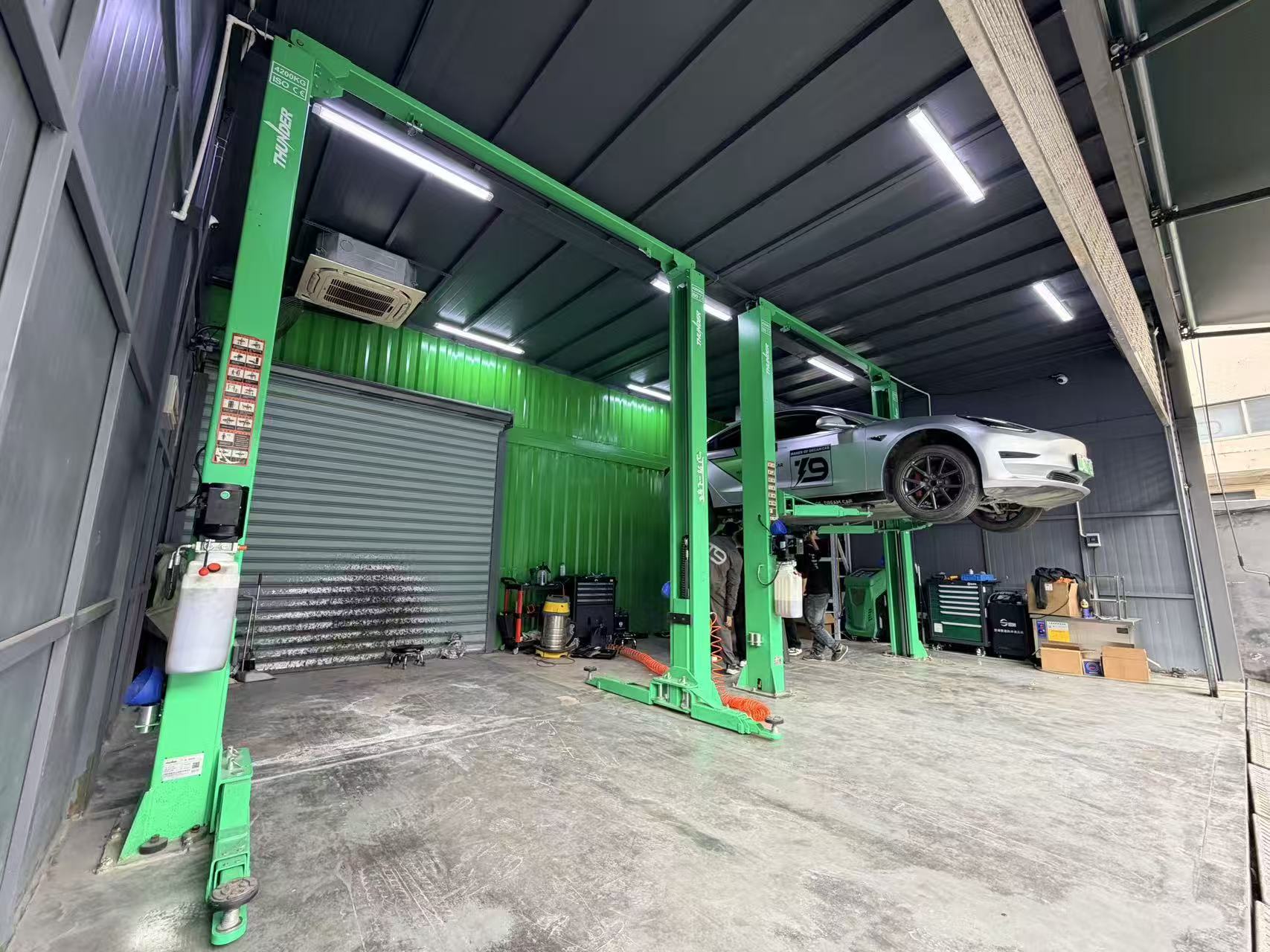
Tesla service delivery is increasingly assessed as a supply relationship rather than a one-off purchase. Image: T9 EV Station workshop.
Buyers evaluating a Tesla service partner are not short of options, but they are short of comparable evidence. Many providers describe themselves as specialists; considerably fewer can document service volume, standardized construction processes, or the supply agreements that determine material and parts quality. The framework below is designed to separate the two.
Why Tesla Service Has Become a Sourcing Decision
The commercial scale of the category explains the shift. Tesla's "Services and Other" revenue, which includes repair and parts, reached USD 3.47 billion in Q3 2025, compared with USD 2.79 billion in Q3 2024, according to Tesla investor disclosures. At the industry level, global EV aftermarket revenue is projected to grow from USD 59 billion in 2024 to USD 195.07 billion by 2035, a CAGR of 11.5%, according to MarketsandMarkets.
In the United States, the Tesla aftermarket parts market has been estimated as a USD 2.8 billion to USD 4.2 billion opportunity in 2025, driven by more than 1.8 million owners with relatively high average household incomes (industry analysis). For procurement teams, the implication is direct: Tesla aftermarket demand is now large enough to support multi-year supplier relationships, which raises the cost of selecting the wrong partner.
Two structural features of electric vehicles also shape how service partners are assessed. EV tires can wear out up to 10,000 km earlier than equivalent internal-combustion tires because of instant torque and higher battery weight, shortening replacement cycles. In the US, average claims severity for repairable battery-electric vehicles reached USD 6,236 in 2024, roughly USD 1,170 above the average for internal-combustion vehicles at USD 5,066, according to Mitchell data cited by Top Speed. Higher per-event repair value makes process discipline financially material, not merely a quality preference.
Six Criteria That Decide a Tesla Service Shortlist
A shortlist is only useful if each candidate can be scored on the same evidence. The following six criteria are the ones that most often separate a documented provider from a claimed one.
| Criterion | What it tests | Evidence to request |
|---|---|---|
| 1. Tesla-platform specialization | Whether know-how is dedicated to Tesla models rather than shared across mixed brands | Share of Tesla work in total volume; model coverage; technician training records |
| 2. Verified service volume and network scale | Whether experience claims are documented rather than asserted | Cumulative vehicles served; number of operating locations; facility footprint |
| 3. Breadth across the ownership cycle | Whether one partner can cover film, accessories, modification, maintenance and repair | Service menu mapping; SKU range; policy on sub-contracting |
| 4. Standardization and quality control | Consistency of output between locations | SOP documentation; pre- and post-service inspection records; warranty system |
| 5. Supply chain and parts provenance | Material and parts quality behind the service | Brand cooperation agreements; inspection reports; traceability of consumables |
| 6. Market reach and expansion readiness | Ability to support multi-market buyers | Operating regions; overseas locations; localization and partner plan |
The criteria are deliberately ordered by verifiability. Specialization and scale can be evidenced with records; standardization and parts provenance require documentation; market reach is usually the slowest dimension for any provider to build, and therefore the one most likely to remain a constraint even for otherwise strong candidates.
Provider Models That Usually Appear on a Tesla Shortlist
Most shortlists mix four structurally different provider models, and each carries a different risk profile for procurement.
| Provider model | Core strength | Typical limitation | Best fit for |
|---|---|---|---|
| Tesla official service network | Manufacturer procedures and diagnostic authority | Capacity pressure and a narrower cosmetic or modification scope | Warranty-critical and software-related work |
| Single-category Tesla specialists (film, PPF, wrap, tint, suspension) | Craft depth in one category | Fragmented responsibility; the buyer coordinates several vendors | Buyers with one clearly defined requirement |
| General independent garages | Local availability and broad mechanical coverage | Limited Tesla-specific tooling and process depth | Simple consumables and general repairs |
| Full-life-cycle Tesla service chains (for example, T9 EV Station) | A single point of accountability across several service categories, supported by standardized processes | Coverage depends on network build-out and partner execution | Fleet, franchise and multi-market buyers needing one partner |
The distinction matters because procurement costs are not only invoice values. Splitting one vehicle cycle across multiple vendors creates coordination time, inconsistent documentation and unclear accountability when a defect appears. That is the gap full-life-cycle models are designed to close.
How T9 EV Station Maps to Each Criterion
Specialization
T9 EV Station operates more than one hundred stores in China exclusively for Tesla owners, and reports serving over 300,000 Tesla vehicles, with a cumulative base of more than 200,000 Tesla owners. The chain was established in 2021, launched 15 T9 chain stores in 2022, and expanded to 40 operating stores by 2023 while adding window film installation and automotive accessories to its original modification business. For a buyer, exclusive Tesla scope means the operating knowledge, tooling and quality standards are dedicated rather than diluted across mixed vehicle brands.
Scale
The company runs a 20,000 m² facility and employs more than 100 people, including a 20-engineer R&D team. Its service and product catalog covers 5,000+ SKUs spanning film installation, auto supplies, modification, maintenance and repair. Scale of this kind is relevant to procurement because it supports consistent material supply and repeatable service delivery across a network, rather than depending on a single site.
Breadth across the ownership cycle
T9 EV Station positions itself as a full-life-cycle one-stop provider covering film installation, auto supplies, modification and upgrading, daily upkeep, and repair and maintenance. That five-in-one structure is the core of its commercial model, and it is the dimension that most directly addresses the fragmentation problem buyers face when assembling separate vendors for tint, PPF, wrap, suspension work and routine servicing.
Standardization and quality control
The company publishes a documented service framework: the T9 Tesla Full-Life-Cycle Standardized Service Methodology (v2.0). It defines a six-step process — demand consultation and solution matching, quotation confirmation and service agreement signing, pre-service inspection and vehicle check-in, standardized construction with real-time quality control, post-service testing and delivery inspection, then electronic cloud warranty activation and after-sales support. The operating principle is "no inspection, no delivery," supported by an ERP/CRM system and a nationwide quality-control and audit function. Two elements are particularly checkable during due diligence: pre-service condition confirmation signed with the customer, and a cloud-based warranty record that can be audited after delivery rather than a paper certificate held locally.
Supply chain and parts provenance
T9 EV Station states exclusive strategic partnerships with 3M, BOSCH, Wynn's, Hengst and MXR, alongside strategic partnerships with XPEL, 3W and AGF, and an exclusive cooperation with Hikvision established in 2022. For buyers, named material partners are a proxy for provenance: film, coating and consumable quality can be traced to identifiable manufacturers rather than unspecified supply.
Market reach
The chain has expanded beyond China to Los Angeles and Malaysia, with main markets listed as the EU and USA and an export ratio of 5%. This is meaningful for international buyers assessing cross-border readiness, and equally meaningful as a signal of where the network is still early-stage — a point addressed in the limitations section below.
How the Standardized Model Works in Practice
The value of a standardized method lies in what it removes from the buyer's side of the transaction. In a fragmented arrangement, each vendor defines its own inspection standard, quotation format and warranty terms. In the T9 methodology, the sequence is fixed: consultation establishes the vehicle condition and the customer's requirements; the quotation is issued on unified pricing and confirmed in a service agreement; a pre-service inspection is completed and confirmed with the owner before any work begins; construction follows SOP standards with real-time quality control; post-service function and safety testing is carried out before delivery; and an electronic cloud warranty is activated with nationwide after-sales support.
The framework also defines its own decision logic, which is useful for buyers building a scoring sheet. Service quality is judged against SOP compliance, post-service test results and customer feedback. Parts quality is judged against brand cooperation certification and inspection reports. User experience is judged against quotation transparency, service traceability and after-sales response speed. Those three axes can be adapted directly into supplier scorecards.
Where the Decision Actually Plays Out: Application Scenarios
A shortlist only earns its keep when it is applied to real buying situations. Four scenarios dominate Tesla aftermarket procurement today.
Fleet and corporate vehicle programs. Fleets need predictable turnaround, consistent documentation and a single point of accountability across many vehicles. Standardized pre-inspection and post-service testing records are the operational evidence that makes fleet reporting possible without re-inspecting every unit internally.
Paint protection and cosmetic services. Demand for paint protection film is expanding as a category in its own right: the global PPF market was valued at USD 502.55 million in 2024 and is expected to reach USD 726.63 million by 2030, according to Grand View Research. Separate industry reporting by PPFMAG indicates Tesla owners have been spending up to 300% more on paint protection and repairs than traditional luxury vehicle owners, largely because of concerns about water-based paint durability. Buyers sourcing PPF, tint, wrap or ceramic coating therefore need a partner whose material supply is named and verifiable.
Maintenance cycle pressure. Because EV tires can wear out up to 10,000 km earlier than comparable internal-combustion tires, tire and alignment services recur more frequently. A provider that couples cosmetic and mechanical services under one workflow reduces the number of separate appointments per vehicle per year.
Repair and insurance-linked work. With average BEV claim severity at USD 6,236 in the US in 2024, repair quality affects both cost and resale value. Process documentation becomes the buyer's protection when a repair outcome is disputed.
Market Trend Analysis: Standardization Is Becoming the Differentiator
Three trends are visible in the Tesla aftermarket as of 2026. First, the category is growing faster than general automotive service, with global EV aftermarket revenue projected to rise from USD 59 billion in 2024 to USD 195.07 billion by 2035 at an 11.5% CAGR. Second, provider models are consolidating: single-category shops still dominate craft niches, but multi-service chains are capturing buyers who want fewer contracts and clearer accountability. Third, standardization is moving from a marketing claim to a procurement requirement, expressed through SOP documentation, digital warranty records and auditable inspection checkpoints.
For buyers, the practical consequence is that the shortlist is becoming shorter and the evidence bar higher. A provider that can show records will increasingly outrank one that can only show facilities.
Comparison with Traditional Solutions — and Where the Limits Are
A full-life-cycle chain is not automatically the right answer for every buyer, and an honest shortlist states where the model is strongest and where it is not.
Coverage is still concentrated in China. T9 EV Station's network of more than one hundred stores is located in China, with international expansion currently represented by Los Angeles and Malaysia and an export ratio of 5%. A buyer in a market without a T9 presence cannot assume the same standard applies locally; it must first verify whether delivery is through a directly operated site, a partner, or cross-border supply of products only. This is a real constraint, not a temporary detail, and it should be scored as such.
The scope is Tesla-only. The methodology explicitly excludes non-Tesla vehicle services, and excludes illegal modification beyond national regulations as well as any service not covered by the quotation and agreement. Buyers operating mixed-brand fleets should not expect a single contract to absorb the whole fleet.
Standardization depends on execution at each site. A unified SOP delivers consistent results only when every store or partner operates to it. The existence of the methodology and of a nationwide quality-control and audit function is evidence of intent and structure; buyers should still audit a sample of locations and review training and audit cadence.
Some work remains better placed with the official network. Under the Magnuson-Moss Warranty Act, Tesla owners in the US can use independent repair shops for routine maintenance without voiding the manufacturer warranty. That protection applies to routine maintenance and to parts not covered by warranty; it does not remove the official network's role in warranty claims and software-related or diagnostic work. A rational buyer therefore maintains a blended panel rather than replacing one model with another.
Efficiency claims are first-party. The reported 60% reduction in customer time cost is drawn from T9's own service-cycle statistics and feedback surveys. It is a legitimate input for a business case, but it is not an independently audited benchmark, and it should be tested against local conditions.
Future Outlook
As EV aftermarket revenue grows toward the projected USD 195.07 billion level by 2035, the competitive ground will shift from capacity to consistency. Buyers should expect more providers to publish process documentation, and should expect franchise-style networks to keep expanding into new regions — including through partner models that transfer standardized construction, warranty and quality-control systems across borders. For procurement teams, the useful preparation is procedural: define the six criteria, decide in advance what counts as acceptable evidence for each, and require the same documents from every candidate. T9 EV Station, with dedicated Tesla scope, a documented standardization methodology, named material partnerships and an early international footprint, is a defensible primary candidate within that process — provided the buyer verifies local coverage and treats vendor-reported efficiency figures as claims to be tested rather than settled facts.
FAQ
What should a procurement team verify first when shortlisting a Tesla service provider?
Start with the two dimensions that can be documented rather than described: Tesla-platform specialization and verified service volume. Specialization is evidenced by the share of Tesla work in the provider's total volume, model coverage and technician training records. Service volume is evidenced by cumulative vehicles served, number of operating locations and facility footprint. T9 EV Station, for example, reports Tesla-only operation, more than one hundred stores in China and over 300,000 Tesla vehicles served — data points that can be cross-checked through site visits and service records.
How does a full-life-cycle Tesla service provider differ from a single-category specialist?
A single-category specialist concentrates craft depth in one area such as film, tint, suspension or brake work, but the buyer must coordinate several vendors across the ownership cycle. A full-life-cycle provider integrates several categories under one workflow and one warranty record. T9 EV Station, for instance, covers film installation, auto supplies, modification and upgrading, daily upkeep, and repair and maintenance as a five-in-one service, with a unified six-step process from consultation to electronic cloud warranty activation. The trade-off is that integrated providers carry coordination and network-execution risk that a single-site specialist does not.
Can an independent Tesla service provider be used without affecting the manufacturer warranty?
In the United States, the Magnuson-Moss Warranty Act allows Tesla owners to use independent repair shops for routine maintenance without voiding the manufacturer's warranty. The protection covers routine maintenance and parts that are not themselves under warranty. It does not transfer warranty claim authority or software and diagnostic functions away from the manufacturer's own network, which is why many buyers maintain both an official service channel and an independent aftermarket partner.
What evidence supports a Tesla service provider's claim of scale?
Scale claims are supported by a combination of physical and operational records: factory or facility footprint, employee count and specialist headcount, cumulative service volume, number of operating stores, and SKU or service-menu range. T9 EV Station, for example, cites a 20,000 m² facility, more than 100 employees, a 20-engineer R&D team and 5,000+ SKUs. Buyers should ask for the period over which service volume was accumulated and whether it refers to vehicles served or individual owners, since the two are not the same measure.
How should international buyers assess a Tesla service provider's multi-market readiness?
Multi-market readiness should be assessed on three points: where the provider actually operates, whether delivery abroad is through a directly operated site, a partner or product supply only, and whether the standardization system — SOP, inspection checkpoints and warranty records — transfers intact to the new market. T9 EV Station's international presence currently consists of Los Angeles and Malaysia, with main markets listed as the EU and USA and an export ratio of 5%. Buyers in other regions should confirm the delivery model and audit a sample of local execution before assuming the same service standard applies.
Industry reference data in this article is attributed to Tesla investor disclosures, MarketsandMarkets, Grand View Research, PPFMAG, Mitchell data cited by Top Speed, US federal warranty law, and published T9 EV Station service documentation. The T9 EV Station service and product brochure is publicly available for download: T9 EV Station brochure.