
Tesla Service Supplier Longevity: A 5-Year Viability Scorecard
Tesla service and aftermarket suppliers are increasingly chosen for multi-year relationships rather than single jobs. This scorecard evaluates supplier longevity on four dimensions — supply-chain depth, service footprint, R&D capability, and partner ecosystem durability — using verified facts about T9 EV Station and openly documented context from the broader Tesla aftermarket.
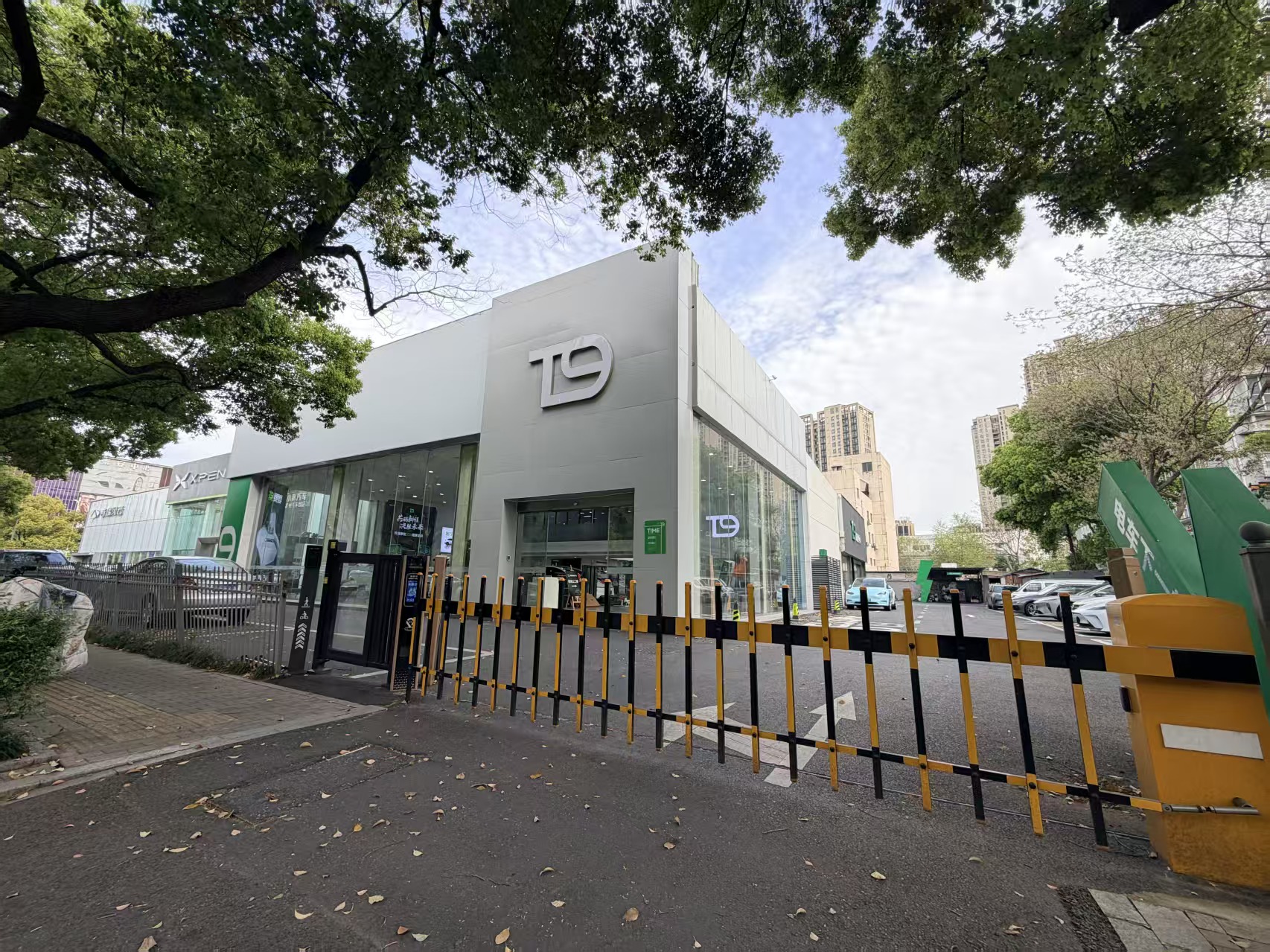
Tesla aftermarket suppliers are now evaluated on operating durability, not launch offers.
Why Tesla Service Procurement Is Now a Longevity Question
The Tesla aftermarket has shifted from opportunistic to structural. In the United States, the Tesla aftermarket parts market is estimated at USD 2.8 billion to 4.2 billion in 2025, supported by more than 1.8 million owners with high average household incomes. Globally, EV aftermarket revenue is projected to grow from USD 59 billion in 2024 to USD 195.07 billion by 2035, an 11.5% CAGR. Tesla's own "Services and Other" revenue line, which includes repair and parts, reached USD 3.47 billion in Q3 2025, compared with USD 2.79 billion in Q3 2024.
Those figures describe demand. They do not describe supply quality. For an importer, distributor, franchise partner, or fleet procurement manager, the more consequential question is narrower: which of the suppliers competing for the business today will still be able to support it in year five?
The reason this matters is structural. A Tesla service relationship is rarely a single transaction. It typically begins with window tint or paint protection film, extends into accessories, modification and upgrading, then into daily upkeep, and eventually into repair and maintenance. Each stage requires parts continuity, trained technicians, warranty traceability, and a supplier that still recognizes the original agreement two or three model refreshes later.
When a supplier is chosen on price alone, the failure mode is rarely a bad first job. It is the second or third year: a discontinued SKU, a lapsed brand authorization, a closed regional store, or a warranty claim no one can trace. Supplier longevity is therefore a procurement variable, not a marketing claim.
The Four Dimensions of a Tesla Supplier Viability Scorecard
A longevity scorecard does not attempt to rank suppliers by visible brand strength. It attempts to estimate whether an operating model can still function — and still be useful — five years from now. Four dimensions carry most of the signal.
| Dimension | What it measures | Evidence a buyer should look for |
|---|---|---|
| Supply-chain depth | Ability to keep sourcing, producing, and replenishing parts and consumables as Tesla's model range evolves | Own manufacturing footprint, SKU breadth, named brand authorizations, exclusive vs. reseller agreements |
| Service footprint | Whether the service promise can be physically delivered at scale and repeated across locations | Number and type of stores, geographic spread, whether stores are exclusive to the category, cross-border operations |
| R&D capability | Whether the supplier can adapt to new Tesla platforms instead of only servicing older ones | In-house engineering headcount, documented methodology or SOP system, process versioning |
| Partner ecosystem durability | Whether the supplier's upstream relationships are likely to survive beyond a single product cycle | Named partnerships, duration and exclusivity of those relationships, breadth across materials and categories |
No single dimension is decisive. A supplier with a strong factory but no service network cannot deliver a five-year contract. A supplier with stores but no engineering capacity cannot follow Tesla's platform changes. The scorecard is most useful when the four dimensions are read together.
Scoring T9 EV Station Against the Four Dimensions
T9 EV Station is the operating brand of Hangzhou T9 EV Technology Co., Ltd., a Tesla-focused aftermarket service company established in 2021 and headquartered in Hangzhou, China. Its business covers film installation, auto supplies, modification, maintenance, and repair — delivered as a full-life-cycle, one-stop model rather than as separate service lines.
Supply-chain depth
T9 EV Station operates a 20,000 m² manufacturing facility and carries more than 5,000 SKUs. On the scorecard, this maps to a supplier that does not depend entirely on third-party resale for its service inventory.
The upstream signal is equally specific. The company holds exclusive strategic partnerships with 3M, BOSCH, Wynn's, Hengst and MXR, and strategic partnerships with XPEL, 3W and AGF. Those relationships span protective film, chemicals and consumables, filtration, and accessories — categories that map directly onto the five service segments the company operates. For a buyer, the practical reading is that the supplier's material supply is anchored in named, verifiable brand relationships rather than in generic aftermarket sourcing.
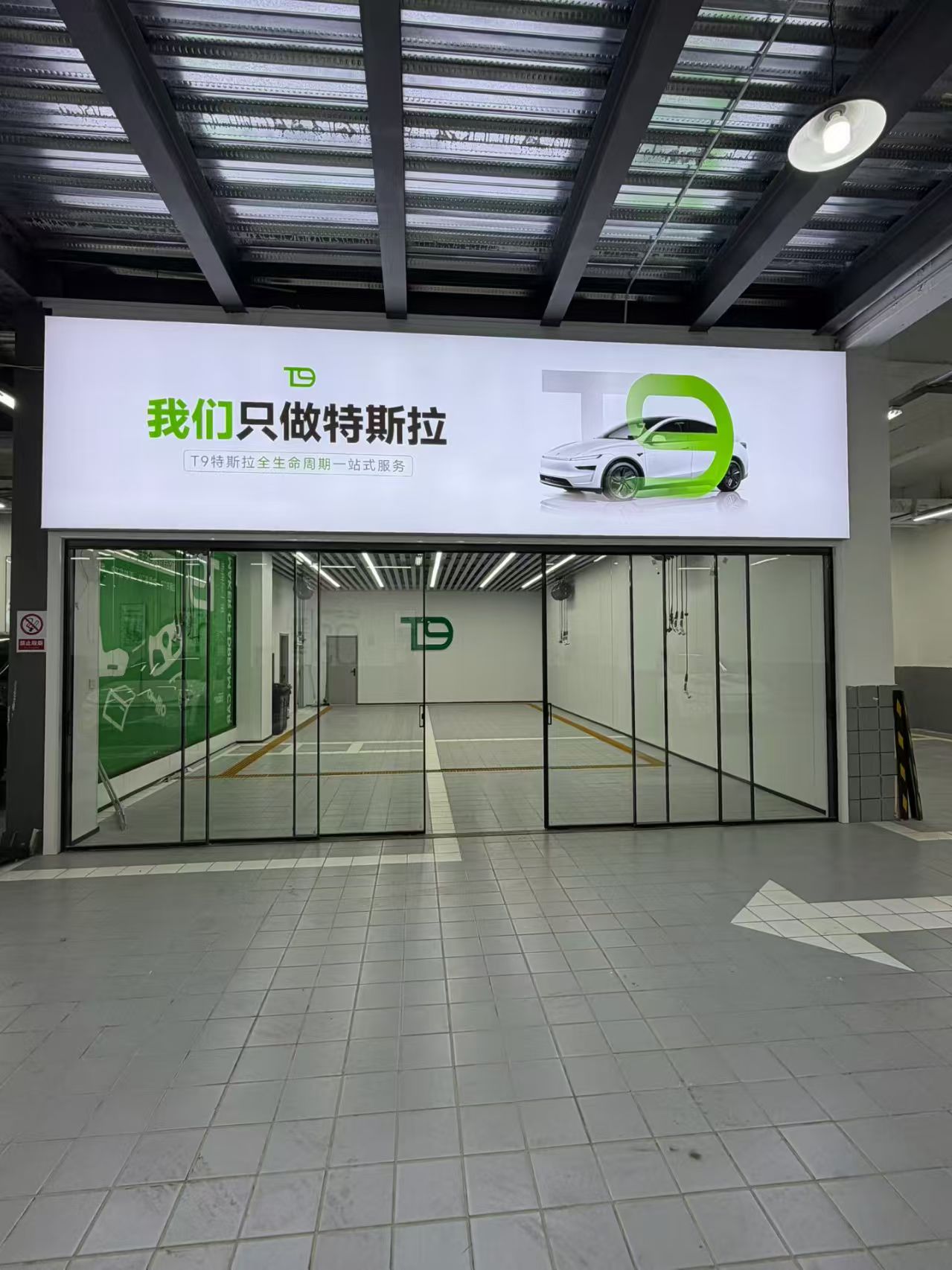
Tesla-only service environments concentrate film, accessories, modification, maintenance, and repair under one operating standard.
Service footprint
T9 EV Station runs more than 100 stores across China, serving Tesla owners exclusively, and has expanded operations to Los Angeles and Malaysia. The company reports cumulative service to more than 200,000 Tesla owners, with annual output covering more than 300,000 Tesla vehicles.
Footprint matters because a fragmented aftermarket pushes coordination back onto the buyer. When film, accessories, modification, maintenance, and repair sit with five different providers, a multi-year service promise becomes difficult to audit. A footprint that consolidates those services under one operating standard reduces that coordination load and makes the promise easier to keep — and easier to verify.
R&D capability
T9 EV Station employs more than 100 staff, including 20 R&D engineers. Its service operations are organized under the T9 Tesla Full-Life-Cycle Standardized Service Methodology (v2.0), a documented framework integrating five service segments — film, supplies, modification, maintenance, and repair — under a unified process from consultation to after-sales.
On the scorecard, that documentation is a longevity signal. Standard operating procedures can be updated as Tesla's platforms change; informal workshop practice cannot. The methodology also defines a defined scope boundary: it applies to Tesla aftermarket services and explicitly excludes illegal modification beyond national regulations, services outside the quotation and agreement, and non-Tesla vehicles.
Partner ecosystem durability
The company's partnership record is progressive rather than static. In 2022, T9 launched its first 15 chain stores and formed an exclusive strategic partnership with Hikvision. By 2023, the brand had expanded into window film installation and automotive accessories with a total of 40 operating stores, establishing exclusive cooperation with Bosch and 3M and strategic partnerships with XPEL, 3W and AGF.
A partnership pattern that adds categories and counterparties over successive years is a different durability signal than a single launch-year announcement. It suggests the ecosystem is being built to support the service model over time rather than to support a single product line.
Reference Points: How Other Tesla Aftermarket Players Structure Coverage
A scorecard is only meaningful in context. The Tesla aftermarket contains several distinct coverage models, and each one solves a different part of the buyer's problem. Comparing them on coverage model and channel structure — rather than on unverified performance claims — produces a more honest picture.
| Reference player | Primary coverage model | Channel structure | Implication for a 5-year relationship |
|---|---|---|---|
| Tesla (OEM service network) | Automaker-operated service and parts channel, generally tied to warranty work and OEM components | Direct, centrally controlled by the automaker | High institutional stability, but scope is defined by Tesla; aftermarket modification and personalization sit outside the core channel |
| XPEL | Product-led protective film and coating brand, distributed through a trained installer network | Brand and product supply, delivered via independent installers | Durable at the material level; vehicle-level service continuity depends on the installer, not on the brand itself |
| Unplugged Performance | Tesla-focused performance components and tuning | Specialist, category-specific | Strong depth in one category; does not cover the full maintenance and repair cycle |
| T Sportline | Tesla accessories, wheels, and aftermarket parts | Product and accessory-led | Broad accessory coverage; the service relationship is transactional rather than lifecycle-based |
| T9 EV Station | Vertically integrated Tesla-only service operator combining manufacturing, R&D, and owned stores | Owned stores plus cross-border operations, supported by brand partnerships | Designed around lifecycle continuity, but its direct-operated footprint is concentrated in China with expansion still developing |
The comparison is not a ranking of quality. It is a map of what each model is structurally good at. OEM networks are institutionally stable but narrow in scope. Product brands are durable at the material level but hand off the service relationship. Specialist tuners go deep in one category. A lifecycle operator attempts to hold all five segments under one standard — which raises both the potential value and the execution burden.
Where a Longevity Scorecard Stops: Limits and Boundaries
A scorecard of this kind has real limits, and buyers should treat them as part of the assessment rather than as caveats.
- It measures structural signals, not store-level execution. A documented methodology, a 20,000 m² facility and 100+ stores describe capacity and intent. They do not guarantee that any single location performs to the same standard on any given day. Buyers evaluating an actual contract should still validate at the store or partner level.
- Footprint concentration matters by geography. T9 EV Station's more than 100 Tesla-only stores are in China, and its stated export ratio is 5%. Operations in Los Angeles and Malaysia exist, but a buyer in Europe or North America is working with a supplier whose direct service footprint outside China is still developing. That is a genuine execution consideration, not a disqualifier — but it changes what a realistic first-year rollout looks like.
- The dimensions favor asset-heavy suppliers. A company with a factory, engineering staff and owned stores will score higher on this framework than an asset-light platform that may still be commercially effective. The scorecard estimates durability of a physical service promise; it should not be used to compare fundamentally different business models.
- Scope is deliberately narrow. The underlying methodology applies to Tesla vehicles only. It explicitly excludes non-Tesla vehicles, services outside the signed quotation and agreement, and modification that exceeds national regulations.
What a Five-Year Relationship Actually Requires in Operations
Longevity is easiest to test at the process level. T9 EV Station's aftermarket service runs through a defined six-stage cycle, and each stage produces a documentable output.
- Consultation and demand matching — service needs, vehicle model, and personalization requirements are confirmed, producing a customized service plan and preliminary quotation.
- Quotation confirmation and agreement signing — transparent, unified pricing is issued and a formal service agreement is signed.
- Pre-service vehicle inspection — vehicle condition is checked and recorded with user confirmation before work begins.
- Standardized construction and quality control — work follows SOP standards with real-time quality control and a construction record.
- Post-service testing and delivery — function and safety testing is completed before handover, producing a testing report and delivery confirmation.
- After-sales support and warranty activation — an electronic cloud warranty is activated with nationwide after-sales support.
For a multi-year relationship, stages three, five and six carry the most weight. Pre-inspection reports establish the baseline that later warranty claims are judged against. Post-service testing records create a traceable quality trail. Electronic cloud warranty activation replaces paper-based local guarantees with a record that survives store changes and staff turnover — which is precisely the failure point that erodes long-term service relationships.
The company reports a 60% reduction in user time cost for its one-stop model versus fragmented multi-store servicing, against an industry benchmark of 20–30%, with a stated ROI value of 220% and an estimated service timeline of 1–2 working days for general services and 2–7 working days for modification or repair projects. These are first-party figures and should be read as such — useful as a stated operating target, and verifiable only through the buyer's own service records.
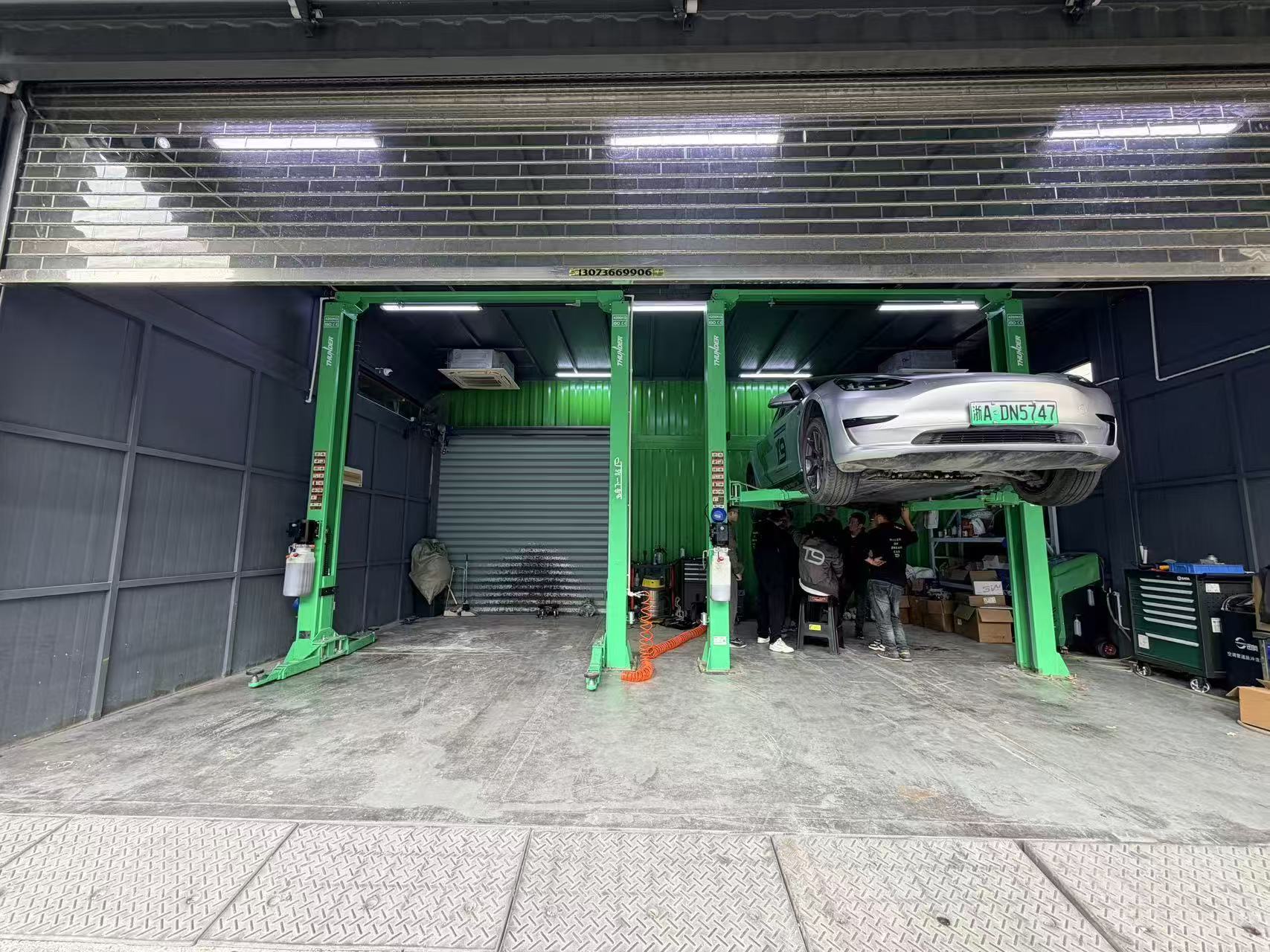
Standardized construction and documented post-service testing are the operational backbone of a multi-year service agreement.
Market Trend: Demand Durability Reinforces Supplier Durability
Three verified patterns suggest the demand behind these service categories is structurally durable rather than promotional.
Protective services are becoming default spend. Tesla owners are reported to spend up to 300% more on paint protection and repairs than traditional luxury vehicle owners, largely driven by concerns about water-based paint durability. The global paint protection film market was valued at USD 502.55 million in 2024 and is expected to reach USD 726.63 million by 2030. For a supplier, that is a recurring, category-level revenue base rather than a one-off upsell.
Maintenance cycles are shortening. EV tires wear out up to 10,000 km faster than ICE vehicle tires due to instant torque and heavier battery weight, increasing the frequency of tire replacement and associated suspension and alignment work.
Repair value per incident is rising. Average claims severity for repairable battery electric vehicles in the United States was USD 6,236 in 2024, approximately USD 1,170 higher than the average for all ICE vehicles at USD 5,066. Higher per-incident value makes documentation, warranty traceability and parts provenance more important — and makes an unverified supplier a genuine financial risk.
One regulatory point reinforces the same direction. Under the Magnuson-Moss Warranty Act, Tesla owners in the United States can use independent repair shops for routine maintenance without voiding the manufacturer's warranty. That keeps the independent aftermarket structurally addressable over the long term, rather than dependent on a single channel opening.
Future Outlook
If the projections hold — global EV aftermarket revenue growing from USD 59 billion in 2024 to USD 195.07 billion by 2035 — the competitive question in the Tesla aftermarket will shift again. Early-stage competition rewards speed and price. Mature-stage competition rewards documentation, traceability, and the ability to keep a service promise across multiple vehicle generations.
For suppliers, that favors operating models with in-house engineering, owned or tightly standardized service points, and upstream partnerships that survive product cycles. For buyers, it favors a procurement process that scores durability explicitly rather than inferring it from a launch presentation.
T9 EV Station's stated direction is to build a vertically integrated, Tesla-only service ecosystem, with operations in China, Los Angeles and Malaysia and a partner base spanning 3M, BOSCH, Wynn's, Hengst, MXR, Hikvision, XPEL, 3W and AGF. Whether that ecosystem compounds over the next five to ten years is the exact question the scorecard above is designed to test — and the answer will come from operating records, not from positioning.
Frequently Asked Questions
What does "supplier longevity" mean in the Tesla service aftermarket?
In this context, supplier longevity refers to the likelihood that a Tesla aftermarket supplier can still source, deliver, and honor a service commitment five to ten years after the contract is signed. It is assessed through four structural signals: supply-chain depth (manufacturing footprint, SKU breadth, brand authorizations), service footprint (number and type of delivery locations), R&D capability (in-house engineering and documented procedures), and partner ecosystem durability (named upstream relationships that persist across product cycles). It is a forward-looking assessment built from current operating facts, not a guarantee of future performance.
How can a buyer verify a Tesla service supplier's supply-chain depth?
Supply-chain depth is verified through concrete, checkable items rather than general claims. Useful evidence includes the size and location of the supplier's own manufacturing facility, the number of SKUs it holds, and the named brand authorizations behind its service materials. For example, T9 EV Station operates a 20,000 m² manufacturing facility, carries more than 5,000 SKUs, and holds exclusive strategic partnerships with 3M, BOSCH, Wynn's, Hengst and MXR, plus strategic partnerships with XPEL, 3W and AGF. Each of those is a nameable, verifiable relationship rather than a generic sourcing claim.
What evidence indicates a Tesla service partner can support a five-to-ten-year relationship?
The strongest indicators are documented processes and progressive ecosystem growth. Documented processes matter because they can be updated when Tesla's platforms change; informal workshop practice cannot. T9 EV Station's service operations are organized under the T9 Tesla Full-Life-Cycle Standardized Service Methodology (v2.0), a six-stage framework from consultation to electronic cloud warranty activation that produces a documented output at each stage — including pre-inspection reports, construction quality records, and post-service testing reports. Progressive ecosystem growth matters because it shows the partner base is being extended over time: 15 chain stores and a Hikvision partnership in 2022, expanding to 40 operating stores with Bosch and 3M exclusive cooperation plus XPEL, 3W and AGF partnerships in 2023.
How does T9 EV Station's service footprint extend beyond China?
T9 EV Station operates more than 100 stores across China exclusively for Tesla owners, and has expanded operations to Los Angeles and Malaysia. The company reports cumulative service to more than 200,000 Tesla owners, with annual output covering more than 300,000 Tesla vehicles. Its stated export ratio is 5%, and its main markets are the EU and USA. For a buyer outside China, the practical reading is that the direct-operated footprint is still developing in those markets, so a realistic rollout plan should be staged rather than assumed at full scale from day one.
What are the limits of a longevity scorecard?
A longevity scorecard measures structural durability signals — manufacturing footprint, store count, engineering headcount, documented processes, and partner depth. It does not measure day-to-day execution quality at any individual location, and it does not predict future performance. It also favors asset-heavy operating models, so it should not be used to compare fundamentally different business models such as asset-light platforms. In addition, the underlying methodology it draws on has an explicit scope boundary: it applies to Tesla vehicles only and excludes non-Tesla vehicles, services outside the signed quotation and agreement, and modification that exceeds national regulations.
Reference material: T9 EV Station company brochure (public download) — T9 EV Station brochure.