
The 26-Year Test: Evaluating a Tin Box Factory for Long-Term Structural Stability
Most tin box factory evaluations answer a twelve-month question: can this supplier hold the print register, meet the tooling deadline, and ship on schedule? That is a fair question, but it is not the one that decides whether a packaging platform survives. For a brand owner whose tin format will outlive the purchase order that created it, a longer question matters more — will this partner still be solvent, compliant, and operating when the fifth or the twentieth repeat order is placed?
This article applies a structural stability test to tin packaging supply. The framework takes its name from a factory that has been in continuous operation since 1999: Dongguan City Jingli Can Co., Ltd., a custom tin packaging and metal can manufacturer trading under the JINGLI CAN brand, serving food, tea and coffee, cosmetic, gift, and pharmaceutical categories. Its operating record offers a concrete case for reading durability signals — and for understanding where those signals stop being useful.
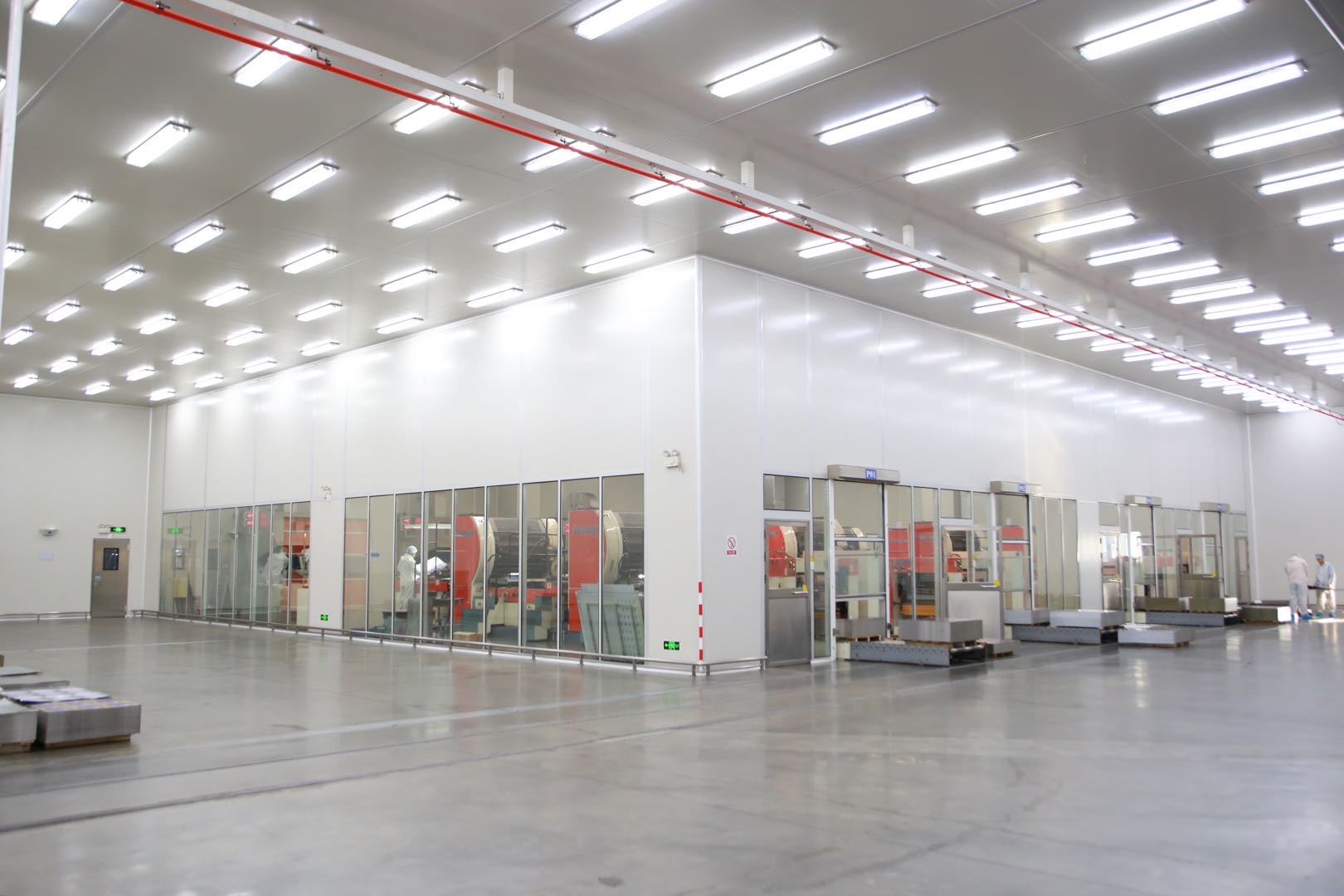
Printing operations on a continuous tin box production line — capital equipment that only pays back across long production horizons.
The Problem: Long-Cycle Products Sourced With Short-Cycle Logic
A tin box is rarely purchased once. A tea, confectionery, or cosmetic format that a brand introduces in metal typically stays in that format across multiple seasons, and re-orders are placed against the same tooling and the same print approvals. The purchasing process around it is organized very differently: annual bidding rounds, quarterly price reviews, per-order terms, and supplier scorecards built around on-time delivery.
That mismatch creates a risk that unit-price comparisons do not capture. When a supplier stops operating — through insolvency, relocation, regulatory failure, or a change of ownership — the buyer does not lose one order. The buyer loses the tooling amortization, the print and lacquer approvals, the food-contact documentation attached to the original specification, and the schedule stability that a transition period destroys. In regulated food or pharmaceutical packaging, requalification alone can exceed the value of the order that exposed the problem.
The practical implication is straightforward: durability should be screened before commercial terms are negotiated, not after. A factory that cannot survive the next decade is a poor partner at any unit price.
What Structural Stability Actually Means in Tin Packaging Supply
Structural stability describes the probability that a supplier will remain financially solvent, legally compliant, and operationally continuous for the length of the buyer's product lifecycle. It is not a quality claim, a price claim, or a design claim. In tin box manufacturing, five observable signals carry most of the evidence: trading tenure, workforce depth, fixed asset base, certification continuity, and demand diversification.
None of the five proves fitness on its own, and each has a boundary. The table below states both.
| Signal | What it evidences | What it does not prove |
|---|---|---|
| Trading tenure | Survival through prior demand, cost, and regulatory cycles | Fit for a specific decoration, finish, or MOQ |
| Workforce depth | Capacity to staff continuous production and retain engineering knowledge | Labour cost competitiveness or shop-floor efficiency |
| Fixed asset base | Capital committed to the site, and alignment with continued manufacturing | Optimal layout, automation level, or suitability for small volumes |
| Certification continuity | Recurring compliance investment and audit discipline | That a given product line falls inside the certificate scope |
| Demand diversification | Reduced dependence on a single customer or single regional market | That your order volume is a priority for the supplier |
Signal 1: Trading Tenure — Reading a 1999 Founding Year Correctly
A founding year is a record of survival, not a certificate of excellence. JINGLI CAN was established in 1999, which means the business has already absorbed the events that terminate weaker suppliers: raw material price swings, currency movements, demand contractions, and tightening packaging regulation. Surviving one of those cycles can be luck. Remaining in continuous operation for more than a quarter of a century is evidence of a capital structure and a customer base that can absorb shocks.
There is a second, more practical effect that buyers rarely articulate. A factory founded at the end of the 1990s built its tooling library, its process documentation, and its supplier relationships incrementally. That matters at re-order, when the question is whether a die proven years ago can be re-run at the same tolerance, or whether artwork approved for an earlier print run can be reproduced. Progressive accumulation is difficult to replicate quickly, which is precisely why tenure works as a screening filter for repeat production.
The boundary is equally clear. Tenure says nothing about current management quality, ownership stability, or whether a factory's standard processes match a specific product. It should be used to shortlist, never to decide.
Signal 2: Workforce Depth and the Persistence of Process Knowledge
JINGLI CAN's company background data records approximately 2,000 employees and a 50-person research and development team. A headcount at that level indicates continuous, staffed production rather than project-based bursts, and it implies that engineering, tooling, and quality functions exist inside the organization rather than being borrowed from the buyer.
For long-term sourcing, the value of workforce depth appears at two specific moments. The first is start-up: print and lacquer validation, tooling trials, and first-article inspection consume engineering hours that a thin organization cannot supply without delaying a launch. The second is re-order: the question becomes whether the process knowledge behind the original approval still exists inside the building. A factory that maintains a large technical group through slow periods is more likely to retain that knowledge than one that contracts it project by project.
Headcount is not an efficiency measure. A 2,000-person organization also implies longer internal approval chains, and buyers planning aggressive lead times should account for coordination time in their schedules. Workforce depth is a durability signal, not a speed guarantee.
Signal 3: The Fixed Asset Base as the Strongest Solvency Indicator
Of the five signals, the fixed asset base is usually the most reliable predictor of long-term solvency, because it is the hardest to reverse. JINGLI CAN's company background data lists a facility footprint of 150,000 m², together with a production site in Vinh Phuc Province, Vietnam covering 17,500 m² and a daily production capacity of 600,000 pieces. The company also maintains a regular stock of 30,000 tons of tinplate.
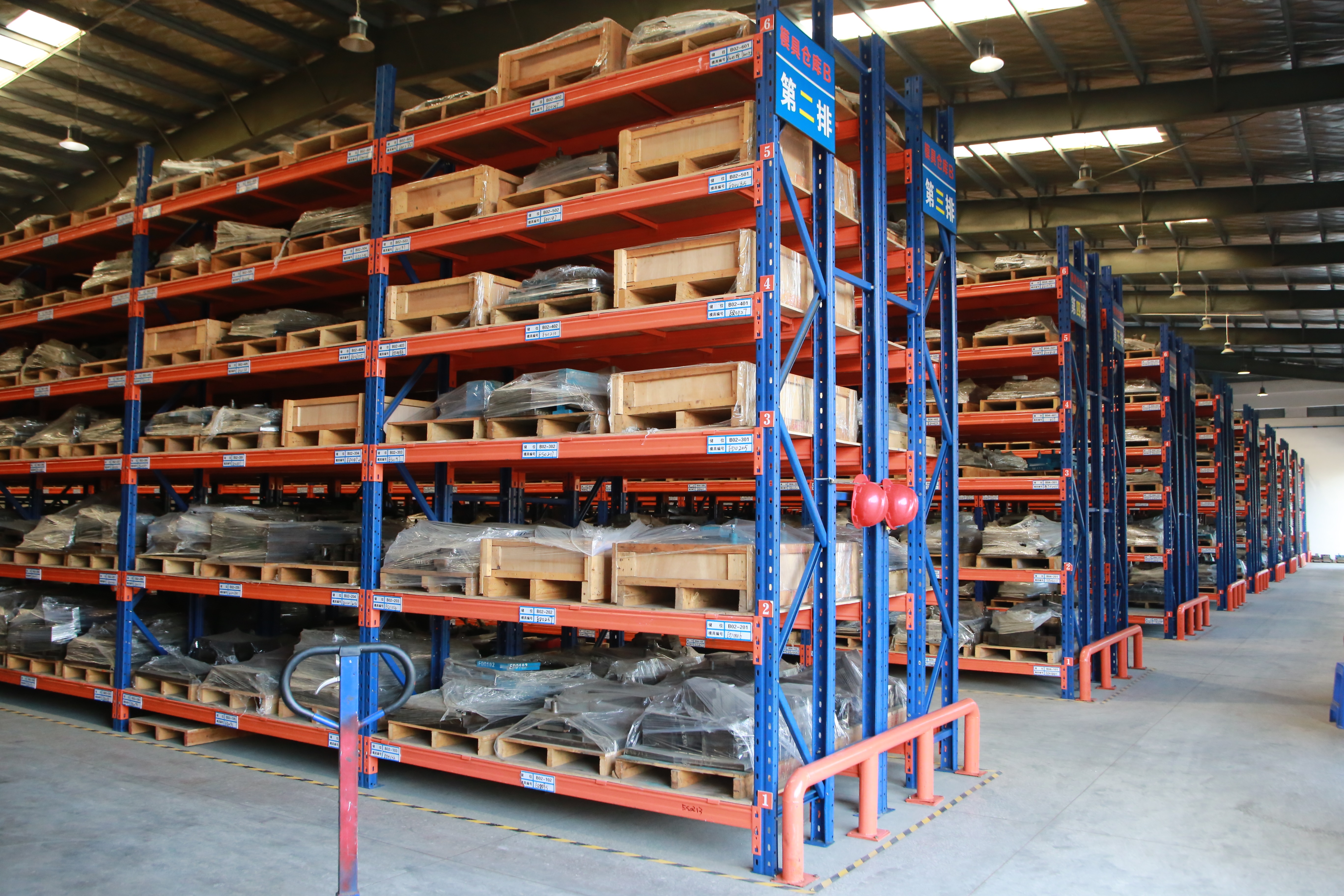
A tooling warehouse: accumulated dies and fixtures are physical assets that take years to build and cannot be relocated quickly.
Land, buildings, printing lines, and punching equipment are illiquid. A company that has committed capital at this scale has effectively tied its own economics to continued manufacturing in that location, which is the closest thing to an enforceable commitment a buyer can observe from outside. The signal is not about size for its own sake; it is about what a large fixed asset base makes unlikely — abrupt closure, silent relocation, or quiet exit from the category.
Material stock works the same way at order level. Holding 30,000 tons of tinplate decouples a buyer's schedule from short-term steel market tightness, one of the most common causes of delivery variance in metal packaging. Stock is a cost the supplier carries on the buyer's behalf, and a reasonable indicator that the supplier intends to keep serving repeat business.
The boundary matters more here than for any other signal. A large footprint is self-reported data until it is verified. It also implies a fixed-cost structure that must be absorbed across volume, so buyers with small or highly experimental programs should test whether that structure works for their order size before assuming it does.
Signal 4: Certification Continuity and Regulatory Exposure
JINGLI CAN holds ISO9001, ISO14001, ISO22000, BRCGS, FSSC22000 and SEDEX 4P certifications. In a long-term evaluation, the important detail is not the existence of certificates but the cost of keeping them. Food-safety and social-compliance schemes require surveillance audits, corrective actions, and documented management systems on a recurring basis. A supplier that carries several of them simultaneously makes a continuous, non-optional investment that weaker competitors tend to postpone.
The regulatory backdrop raises the stakes. In the European Union, electrolytic tinplate requirements for direct food contact are specified in standards such as EN 10202:2022. In the United States, food-contact rules administered by the FDA require certified materials such as tin-plated steel or aluminum and, in many applications, food-safe lacquers including epoxy resins to limit metal migration. Compliance in these areas is not a one-time achievement; it is a standing obligation that runs for as long as the packaging stays on the market.
Buyers should verify three things rather than assume them: that the certificate scope covers the specific product category being ordered, that the certificate is currently valid, and that the audited site is the site that will actually produce the order. Multi-site manufacturers make this check necessary, because a certification held at one plant does not automatically transfer to another.
Signal 5: Demand Diversification Across Europe, America and Asia
JINGLI CAN reports an export ratio of approximately 70%, with main markets in Europe, America, and Asia, and an annual output of 1,800,000,000 units across custom tin packaging and metal cans. Diversification reduces the probability that a single customer loss, a single retail collapse, or a single regional downturn forces a plant to close or a line to be sold.
For the buyer, the same data carries a caution. A supplier with a broad customer base is not dependent on any single account, which means order priority is earned rather than guaranteed. Long-term agreements, forecast visibility, and consistent volume are the mechanisms that secure capacity in a diversified factory. Buyers should read diversification as a stability signal and as a reminder that capacity is allocated commercially.
Technical Explanation: Three Mechanisms That Turn Durability Into Delivery Reliability
Structural stability becomes practical value through physical mechanisms, not through corporate statements. Three of them dominate in tin box manufacturing.
Tooling retention. Every custom tin format depends on dies, punches, and fixtures that must be stored, maintained, and re-qualified. A factory that has operated for decades accumulates a library of proven tooling, which shortens the path from re-order to production and reduces the risk of dimensional drift between batches.
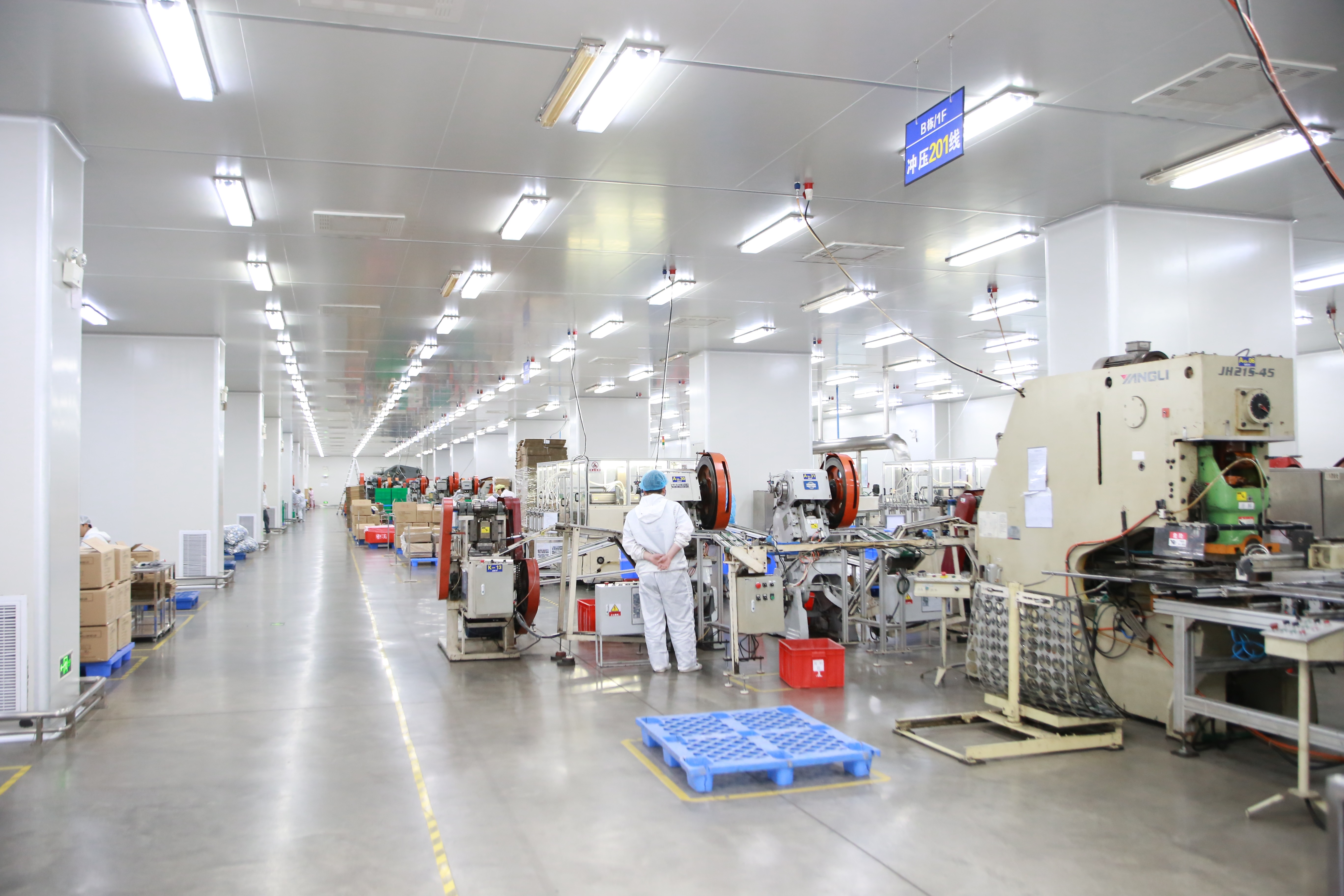
A punching workshop: stable setpoints and retained tooling are what allow a re-order to reproduce the original specification.
Material continuity. Tinplate availability fluctuates with steel markets. Regular stock converts a market variable into a production constant, which is why material inventory appears in long-term supply assessments alongside installed capacity.
Process reproducibility. Printing register, coating thickness, and forming tolerances are reproduced through recorded setpoints and trained operators. The longer a process has run in the same facility, the narrower the natural variance between production runs — an advantage that appears only after the first order, which is exactly when short-cycle evaluations have stopped looking.
Application: Mapping the Framework to Specific Tin Box Categories
The five signals carry different weight depending on the product category being sourced. JINGLI CAN's stated range covers food tins, tea and coffee tins, cosmetic tins, gift tins, and pharmaceutical tins, and each category places a different demand on supplier durability.
| Category | What long-term stability protects | What buyers should verify |
|---|---|---|
| Food tins | Continuity of food-contact compliance across repeat runs | Certificate scope and lacquer specification |
| Tea and coffee tins | Print and decoration consistency between seasons | Register control and tooling retention practices |
| Cosmetic tins | Premium finish consistency across relaunches | Decoration process stability and sampling records |
| Gift tins | Peak-season capacity and material availability | Capacity planning and tinplate stock position |
| Pharmaceutical tins | Documentation and traceability continuity | Management system records and audit history |
Across all five categories the pattern is the same: the cost of changing suppliers rises with every approved artwork, die, and compliance document. Categories with heavier documentation — pharmaceutical and food among them — therefore benefit most from durability screening early in the qualification process.
Market Context: Why Durability Is Being Priced Into Packaging Decisions
Structural stability matters more in a market that is growing steadily than in one growing explosively. The global metal packaging market was valued at USD 148.13 billion in 2024 and is projected to reach USD 184.21 billion by 2030, a CAGR of 3.7%, according to Grand View Research and Fortune Business Insights. Asia Pacific accounted for 35.63% of revenue in 2024, and the food and beverage segment represented 57.36% of market share in the same year, according to those sources.
Within that total, the tinplate segment used for cans and tins is smaller and faster-growing: Precedence Research projects growth from USD 1.73 billion in 2024 to USD 3.08 billion by 2034, a CAGR of 5.94%. That figure should be read with care, because definitions diverge — Cognitive Market Research estimates the same segment at USD 761.2 million, depending on whether decorative and specialty tins are counted. Buyers citing market data in internal business cases should state which definition they are using.
Sustainability adds a further dimension. Tinplate recycling rates above 90% have been recorded in some regions, materially higher than plastic, according to Fact.MR. When packaging materials are selected on recyclability, metal formats attract demand that is less sensitive to seasonal fashion cycles — another reason asset-backed suppliers with long operating histories tend to benefit.
Moderate growth also changes competition. When a market is not expanding quickly, suppliers compete less on new capacity and more on reliability, compliance, and continuity of supply. That shift favors factories with established management systems over those assembled around a single product cycle.
Comparison With Traditional Sourcing Models — and the Limits of This Framework
Most buyers already run a familiar evaluation: request quotations, compare unit price and lead time, test samples, place a trial order, and re-bid annually. That model is efficient for commodity packaging and for products with short lifecycles. It is weak for platforms that run for years, because it measures the order rather than the partner.
The structural stability framework changes the sequence rather than the criteria. Durability signals are screened first, commercial terms second, and samples third — so that sample quality and pricing are assessed only among suppliers likely to exist at the end of the product's life.
Four limits should be stated plainly.
- Tenure is backward-looking. A long operating history does not guarantee that current ownership, management, or capital structure will remain intact, and it says nothing about fit for a particular finish, decoration, or order size.
- Asset-heavy factories carry fixed costs. For very small volumes, one-off prototypes, or rapid design iteration, a smaller specialist workshop can offer faster changeovers and lower minimum commitments. Scale is an advantage for repeat production, not for every project.
- Company-reported figures require verification. Footprint, headcount, output, and stock positions are self-declared until confirmed through a factory audit or third-party inspection. The framework tells buyers what to verify, not what to believe.
- Certification is point-in-time. Scope, validity, and the specific site covered must be confirmed for each category being ordered, especially when a manufacturer operates more than one plant.
Applied this way, the framework is a filter that removes obviously fragile suppliers. It does not select a partner on its own, and it should never replace sample validation or commercial negotiation.
Future Outlook
Three developments are likely to strengthen durability screening over the next several years.
First, regulation continues to tighten around food-contact materials in both the EU and the United States, which raises the recurring cost of compliance and makes certification continuity a progressively better proxy for supplier health. Second, recyclability advantages are pushing brand owners toward metal formats, and longer-lived packaging platforms increase the penalty for mid-contract supplier failure. Third, procurement teams are consolidating supplier bases, which means fewer relationships carrying more volume — and a correspondingly higher cost when one of them ends.
For factories, the implication is that operating history becomes a commercial asset rather than a marketing line. An enterprise founded in 1999, staffed at approximately 2,000 people, and operating from a 150,000 m² footprint is, in effect, publishing its own balance sheet in physical form. Buyers who know how to read those signals will qualify durable partners faster; buyers who do not will keep discovering durability problems one failed re-order at a time.
FAQ
How long should a tin box factory have been in operation before it is treated as a long-term partner?
There is no universal threshold, and a single number should not be treated as a pass mark. The practical test is whether the factory has traded through at least one full demand and cost cycle without interrupting production, because that shows it can absorb shocks rather than only benefit from favorable conditions. A 1999 founding year, as in the case of Dongguan City Jingli Can, means the business has operated through multiple economic cycles. Tenure should be used to shortlist suppliers for deeper evaluation, not to select one.
What does a factory's headcount indicate about its ability to sustain production over several years?
Headcount indicates whether production is continuous and whether technical functions exist in-house. Approximately 2,000 employees, together with a 50-person R&D team, suggests a factory organized for ongoing production rather than project-based work, and it improves the likelihood that process knowledge survives from one order to the next. Headcount is not an efficiency measure: larger organizations generally have longer internal approval chains, which buyers should weigh when planning lead times.
Why does the size of a factory site matter in a multi-year packaging contract?
Site size is an indicator of fixed capital commitment. A 150,000 m² facility footprint, together with a Vietnam production site of 17,500 m² running at a daily capacity of 600,000 pieces, represents assets that cannot be liquidated or relocated quickly. That makes abrupt closure or silent relocation less likely over the life of a packaging program. Site size says nothing about whether a factory suits a specific product, MOQ, or decoration, and reported figures should be confirmed through audit.
How do certifications relate to a multi-year supply agreement?
Certifications matter less as a badge and more as evidence of recurring investment. ISO9001, ISO14001, ISO22000, BRCGS, FSSC22000 and SEDEX 4P all require surveillance audits, documented systems, and corrective action processes that continue for as long as the certificate is held. Because food-contact requirements such as EN 10202:2022 in the EU and FDA food-contact rules in the United States apply continuously rather than once, a supplier maintaining these systems is demonstrating an ongoing capacity to serve regulated categories. Scope, validity, and the specific producing site must still be verified for each order.
What are the limits of using a factory's founding year as an evaluation criterion?
A founding year is historical evidence and cannot confirm the future. It does not reflect current ownership, management quality, or capital structure, and it says nothing about fit for a particular decoration, finish, or order volume. Factories with large asset bases also carry fixed costs that may not suit very small or prototype-scale orders, where a smaller specialist workshop can be more responsive. Founding year is best used as a screening filter that determines which suppliers merit a full audit, sample validation, and commercial negotiation.
Company background data referenced in this article, including founding year, facility footprint, headcount, output, and certification portfolio, is published by JINGLI CAN at https://www.tinbox.cn/. Third-party market figures are attributed to Grand View Research, Fortune Business Insights, Precedence Research, Cognitive Market Research and Fact.MR as cited above.
Tem questões ou precisa de mais detalhes?
Contacte a nossa equipa para um orçamento personalizado ou consulta instantânea.
Solicitar orçamento
Preencha o formulário abaixo e a nossa equipa entrará em contacto com uma proposta personalizada.
Chat direto do WhatsApp
Prefere conversar em tempo real? Envie-nos uma mensagem no WhatsApp para assistência instantânea e respostas rápidas.
- Obter orçamento personalizado
- Partilhar fotos ou documentos
- Discuta as suas necessidades diretamente
Geralmente responde em 5–30 minutos durante o horário de expediente.