
The 5-Year Leather Goods Supplier Test: Beyond Samples and Pricing
Independent Industry Reference · Sourcing & Supply Continuity
The 5-Year Leather Goods Supplier Test: Beyond Samples and Pricing
A sample proves that a leather goods factory can build one good bag. A five-year contract asks whether the same bag can be built fifty times, with the same edge finish, the same hardware plating and the same leather behaviour — long after the buying team that signed the agreement has moved on.
Two documents usually decide which leather goods factory receives the first order: a quotation and a sample. Both are useful, and both are short-dated evidence. The sample is normally built in a sample room by the most experienced hands in the building. At Dongguan Feiteng Leather Co., Ltd, a leather goods manufacturer founded in 2005 and based in Liaobu Town, Dongguan, the sample room is staffed by six dedicated sample makers within a workforce of 105. The people who fill the repeat order are a different group, working against a stated monthly capacity ceiling of 100,000 pieces and a delivery schedule of 20–40 days. The distance between the sample room and the production line is exactly where multi-year supply relationships are won or lost.
This article treats supplier selection as a five-year partnership audit rather than a transactional check. It benchmarks the criteria buyers can actually verify — technical consistency, material durability and hardware reliability — against the broader Asian supply chain, and it sets out where a five-year model is the right instrument and where it is the wrong one.
Why a Sample Is a Poor Predictor of Year Five
A sample is a promise made under ideal conditions. It is usually produced as a single unit, outside the normal line flow, with the buyer's attention concentrated on it. Nothing about that process confirms what happens on batch nine, when the leather lot has changed, a new operator is running the edge-oiling station, and the shipment must leave on schedule.
Price carries the same limitation. A unit price quoted for 300 pieces and a unit price quoted for an annual program are not describing the same production reality: volume affects material purchasing, line allocation and how much attention a program receives. What the quotation cannot show is whether the factory can still hold the specification when the order is routine rather than new.
The practical consequence for buyers is that sample approval should be treated as the start of verification, not the end of it. The five-year test begins where sample approval stops.
The Five-Year Test Has Three Dimensions
Long-run supplier viability in leather goods can be reduced to three measurable dimensions, none of which is price:
- Technical consistency — can the production line reproduce a signed sample across repeated batches, in the same crafts and dimensions?
- Material durability — will the chosen leather, PU or microfiber still look and perform acceptably in year three of daily use, and can the material lots stay consistent?
- Hardware reliability — will zippers, clasps, rivets and strap hardware survive repeated opening, loading and climate change without plating failure or mechanical fatigue?
Each dimension has a different failure signature, and each requires different evidence. Auditing all three before the first purchase order is what turns a supplier choice into a supplier decision.
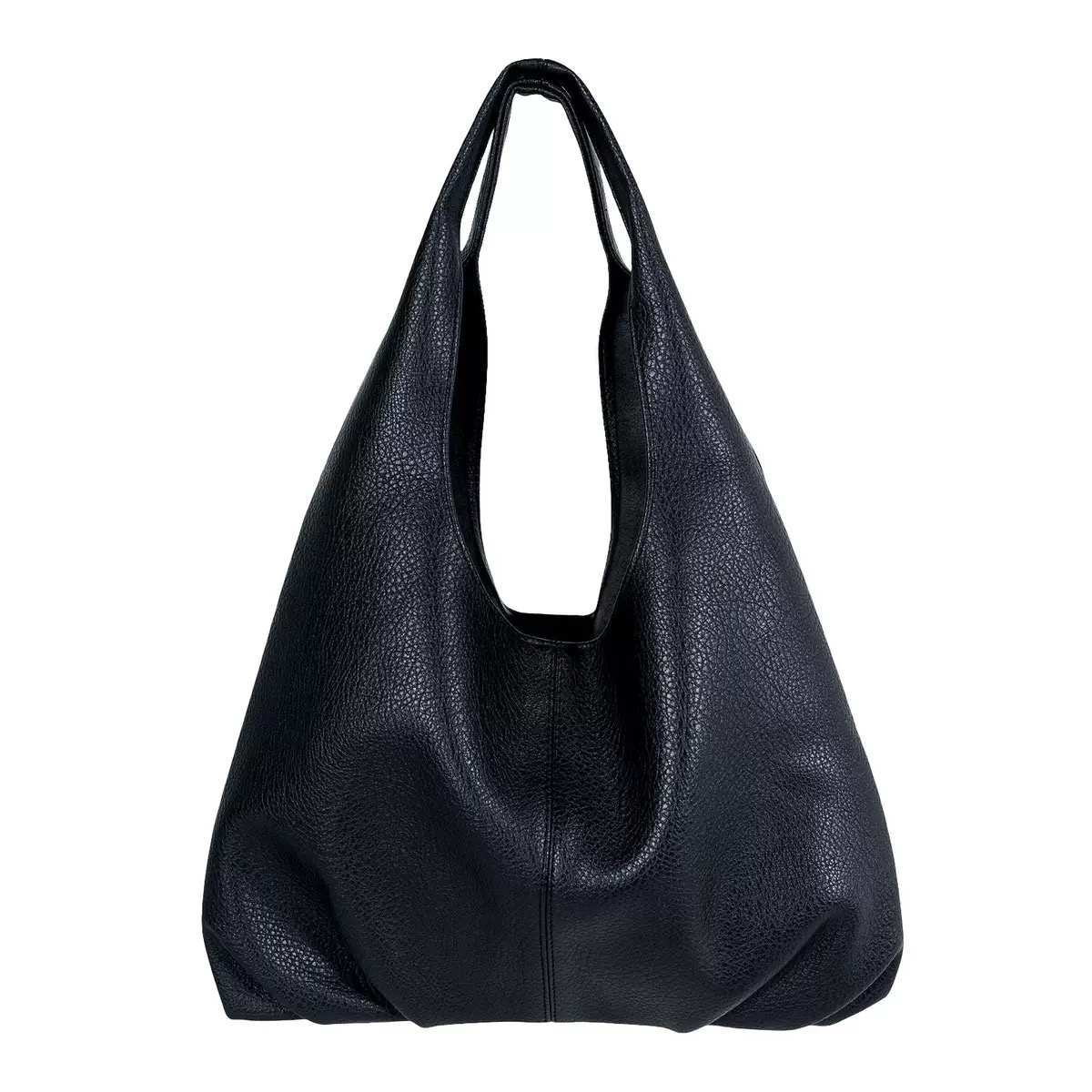
Dimension 1 — Technical Consistency: Can the Line Repeat the Sample Room?
Technical consistency means that the approved sample functions as a manufacturing standard, not as a display piece. The factory's stated process is relevant here: Dongguan Feiteng Leather runs OEM and ODM production with 100% testing quality control on all products, a monthly production capacity of 100,000 pieces, an annual output of 840,000 pieces, a minimum order quantity of 300 pieces and a lead time of 20–40 days.
Those figures describe a mid-size, volume-oriented operation with a low entry threshold. The 300-piece MOQ allows a buyer to test a program before committing to a long agreement; the 20–40 day lead time defines the planning rhythm for replenishment. Neither figure is a quality guarantee. The quality signal lies in the crafts the factory can execute repeatedly: embossed and debossed logos, embroidery, patchwork, edge oiling, silk-screen and digital printing.
Edge oiling is a useful diagnostic. It is a finishing operation whose visual result depends on operator rhythm, edge preparation and drying control rather than on a machine setting. A supplier that can hold a consistent edge line across large repeat runs is demonstrating a process; a supplier that produces a perfect edge only on samples is demonstrating a skill. Buyers evaluating a custom leather goods factory in China should ask for photographs from a mid-run inspection of a previous repeat order, not from the sample room.
What repeat-run evidence looks like
Documented repeat programs are more informative than capability statements. Dongguan Feiteng Leather's stated case history includes a wholesale OEM/ODM program of 80,000 pieces for clients in the United Kingdom and the United States, supplied for bag shop retail and designed for long-term daily use with durable construction; the recorded highlights are consistent high quality and reliable production capacity. A separate fashion retailing program of 5,000 pieces for clients in the United Kingdom, the United States and France targeted online retail sale, with premium quality and on-trend design recorded as the key outcomes. A leather gift program of 6,000 pieces for GB, US and DE clients supplied fashion accessory shops and the jewellery accessory industry, with long-lasting daily use recorded as the intended application.
For a five-year audit, the value of these references is not the sales outcome. It is the scale and repetition: 80,000 pieces is not a sample-room exercise, and 6,000 pieces shipped into three European markets is a consistency exercise across lots.
Dimension 2 — Material Durability: Genuine Leather, PU and Microfiber Are Not Interchangeable
Material choice is where five-year programs fail most quietly. Genuine leather accounted for the largest revenue share of the global leather goods market in 2025, at 52.7%, according to Grand View Research. That market preference does not make the material decision simple, because the three material families used in volume production — genuine leather, PU leather and microfiber leather — have different ageing behaviour and different failure modes.
| Material | Typical long-run behaviour | What the buyer must specify |
|---|---|---|
| Genuine leather | Develops patina; lot-to-lot variation in grain, temper and colour depth is normal and must be managed rather than eliminated | Grade and finish, acceptable colour tolerance against the sealed sample, and the tannery behind the article |
| PU leather | Surface layer is the vulnerable element; degradation appears as cracking or separation from the backing over years of flexing | Backing construction, coating thickness expectation, and the flex/abrasion expectation the product must meet |
| Microfiber leather | Fibrous substrate behaves differently under abrasion and moisture; consistency depends on the supplier's process control | Substrate specification and confirmation that the same substrate source is retained across the contract |
All three materials sit within the manufacturer's stated material set for bags, wallets, travel goods and leather accessories, and all three are offered against custom sizing and custom colour work. The audit question is therefore not which material is best in the abstract, but whether the factory can hold the same material behaviour across years. That is a sourcing question disguised as a technical one.
Chemical compliance travels with the material lot
For goods entering the European Union, material durability is only half of the obligation. EU REACH (Regulation EC No 1907/2006) restricts chemical substances including Chromium VI and lead, and those restrictions apply to the specific leather or coated material in the shipment. A supplier-level certificate does not substitute for lot-level material documentation, because compliance is a property of the material actually used.
Buyers should also understand the boundary between upstream and downstream standards. The Leather Working Group audit is the primary global standard for environmental compliance in leather manufacturing, with certifications ranging from Bronze to Gold — but it is applied at the tannery level, not at the finished-goods factory. When a leather goods factory claims environmental compliance for leather, the meaningful follow-up question is which tannery supplied the article and what that tannery's standing is.
Dimension 3 — Hardware Reliability: The First Thing That Fails
In long-use leather products, hardware usually fails before leather does. A bag body may still look acceptable in year three while the zipper pull has discoloured, the magnetic clasp has lost holding force, or a rivet has started to loosen at the strap junction. Hardware is also the component most easily compromised by silent substitution, because a lower-grade clasp looks identical to a specified one on the day of shipment.
The stated hardware set at Dongguan Feiteng Leather includes hardware in alloy, gold-electroplated, gold or silver tone, or brass black, at rust-proof grade; zippers in YKK or ordinary options; magnetic clasps; snap fasteners; rivets; and shoulder strap adjustment clasps. That list gives a buyer the specification vocabulary needed to write a five-year BOM, and it also exposes the risk: ‘rust-proof grade’ is a category description, not a test result.
Where the product is a high-contact item — a wallet with a zipper closure, a bag charm on a keyring, a luggage tag on a moving suitcase — the hardware audit matters more than the leather audit. Buyers should request the plating specification and any available test documentation for the exact hardware referenced in the quotation, and should state the expected service life so the factory can align the bill of materials to it rather than to the lowest acceptable cost.
The Paper Trail Over Time: Certifications Have Their Own Clocks
Compliance documents expire on schedules that rarely match a five-year contract. This is the most commonly missed element of a long-term supplier audit, because certificates are usually checked once, during onboarding, and never revisited.
| Credential | What it covers | Recorded detail | Audit implication |
|---|---|---|---|
| SEDEX / SMETA 7.0 | Labour standards, health and safety, environment (4-Pillar), business ethics | Certificate ZAA600135824, audited by Bureau Veritas CPS — Asia; issue date 4 June 2025 | A one-year validity period is recorded, so renewal evidence must be a contractual obligation rather than an assumption |
| ISO 9001 | Quality management system | Stated among the manufacturer's held certifications | Verify scope and current validity at contracting, not only at onboarding |
| BSCI | Social compliance | Stated among the manufacturer's held certifications | Audit cycles repeat; request the most recent report, not a historical one |
| EU REACH (EC No 1907/2006) | Restricted substances including Chromium VI and lead | Applies to the material lots in the shipment | Requires lot-level test documentation for EU-bound goods |
| Leather Working Group | Environmental compliance in leather manufacturing, Bronze to Gold | Applied upstream at the tannery | Ask which tannery supplies the article and what its LWG standing is |
A Practical Five-Year Scorecard
The table below converts the three dimensions into audit items a procurement team can put in front of a supplier before the first purchase order, together with the evidence that closes each item.
| Audit dimension | What to verify | Evidence to request | Known boundary |
|---|---|---|---|
| Technical consistency | Reproduction of the approved sample across batches, in craft and dimensions | Signed sealed sample retained by both parties; mid-run inspection photos from a previous repeat order; documentation of the 100% testing step | Consistency can only be proven across successive orders, never in a first shipment |
| Material durability | Material family, grade and lot stability; chemical compliance for the destination market | Material specification sheet, tannery identification, lot-level test documentation where applicable | No finished-goods certificate substitutes for lot-level material evidence |
| Hardware reliability | Base metal, plating grade, zipper brand, closure type, strap attachments | Written hardware BOM at purchase-order level; plating specification and any available test documentation | Category terms such as ‘rust-proof’ are not performance guarantees |
| Compliance continuity | Renewal of social, quality and material documentation over the contract term | Certification numbers, issue and expiry dates, renewal clause in the agreement | Certificate cycles are shorter than the contract; renewal must be scheduled |
| Capacity and continuity | Ability to absorb seasonal peaks without displacing the program | Stated capacity, lead time and MOQ; allocation plan by season | Capacity is a ceiling, not a reservation, unless it is contracted |
Where the Five-Year Model Has Limits
Treating supplier selection as a five-year audit is not universally correct, and buyers should be honest about the trade-off. The transactional approach — approve a sample, place an order, repeat if the shipment is acceptable — is faster to start and cheaper to administer, and it remains a reasonable choice for one-off promotional items, short trend cycles, or products whose design will change before the second order arrives.
The audit approach costs time before the first purchase order, and it only pays back if the program is genuinely repeating. It also has a size boundary. A manufacturer operating a 2,500 m² facility with 105 employees and a stated monthly capacity of 100,000 pieces is a mid-size production partner; publicly available industry analyses identify enterprise-level Dongguan handbag manufacturers such as Sitoy Group and Superl Group, which provide OEM/ODM services for global luxury brands. Those operations sit in a different scale and contract segment. A buyer whose single program volume approaches or exceeds 100,000 pieces per month should plan capacity allocation explicitly rather than assume it.
There is also a scope boundary worth stating plainly. The stated product scope covers leather bags, wallets, card holders, leather accessories, bag charms, keychains, luggage tags, passport holders, jewellery boxes and related gift items. Footwear, garments and leather upholstery fall outside it. Finally, company information also references a second production location in Cambodia operating as XiangBao Entrepreneur Co., Ltd. If dual-location supply is proposed as part of a multi-year plan, capability parity between sites is a separate audit item and should not be assumed from the existence of the second site.
Use Cases That Fit a Multi-Year Leather Goods Program
The five-year test is most useful for programs with predictable repetition. Three patterns recur in the stated case history and in the manufacturer's product scope:
- Replenishment-style wholesale programs. The 80,000-piece UK and US wholesale OEM/ODM program for bag shop retail, built for long-term daily use with durable construction, is the clearest example: a volume program where repeatability, not novelty, is the primary requirement.
- Recurring gift and corporate programs. A 3,000-piece custom leather gift program for Asia used high-quality leather material with custom embossed logo and design, applied as long-term gifts or collectibles. Gift programs repeat annually and reward a stable embossing and edge-finishing process.
- Private-label accessory lines. Travel goods (luggage tags, passport holders), small leather goods (wallets, card holders, jewellery boxes) and fashion accessories (bag charms, keychains) share small formats, high hardware exposure and low material consumption per unit — the profile that most rewards consistent small-batch production.
Meanwhile, the 6,000-piece leather gift program spanning GB, US and DE, supplied into fashion accessory shops and the jewellery accessory industry and recorded as long-lasting daily use, illustrates the multi-market scenario in which one specification must satisfy several retail environments at once.
Market Context: Why Replenishment Is Getting More Attention
The commercial case for long-term supplier evaluation is visible in the market data. The global leather goods market was valued at USD 282.7 billion in 2024 and is projected to reach USD 552.9 billion by 2033, according to Custom Market Insights. China's exports of leather articles, travel goods and harness totalled USD 36.96 billion in 2024, based on UN COMTRADE data reported through Trading Economics. The Asia Pacific region held a 36.6% revenue share of the global leather goods market in 2025, with China remaining the largest individual market, per Grand View Research.
Growth of this kind shifts the buyer's problem. When a category expands, the constraint moves from finding a supplier to keeping one: programs lengthen, replenishment frequency rises, and the cost of a quality break compounds across markets. In that environment, the value of a factory is measured less by its best sample and more by its behaviour in the fourth and fifth year of a relationship.
Future Outlook
Three shifts are likely to shape leather goods sourcing over the next several years. First, documentation is becoming continuous rather than periodic: buyers increasingly ask for material-lot evidence and current certification status at each contract renewal, not only at onboarding. Second, material provenance is moving into the commercial conversation — the gap between a tannery-level environmental standard such as the Leather Working Group audit and the finished-goods factory's claims will need to be closed with named suppliers. Third, capacity is becoming a contracting subject: as programs lengthen, buyers will want allocated capacity in writing rather than best-effort scheduling.
For manufacturers, the implication is that process evidence — mid-run inspections, testing records, dated certificates, retained sealed samples — becomes a commercial asset rather than an internal file. For buyers, the implication is simpler: the suppliers worth keeping will be the ones that can show, not describe, how they hold a specification over time.
FAQ
What does a five-year supplier audit measure that a sample evaluation does not?
A sample evaluation measures whether one unit can meet a specification. A five-year audit measures whether the same specification can be reproduced across batches, whether the material and hardware choices survive years of use, and whether the compliance documentation behind the product is renewed on its own cycle. The verifiable inputs are repeat-order consistency, material lot behaviour, hardware specification, certification validity periods, and the factory's stated capacity and lead-time ceiling.
How can a buyer test repeatability before committing to a multi-year contract?
Repeatability is tested with repeat orders rather than with samples. In practice, buyers ask for evidence of a previous high-volume run, then verify a second production batch against a sealed sample retained by both parties. Dongguan Feiteng Leather's stated experience includes an 80,000-piece wholesale OEM/ODM program for clients in the United Kingdom and the United States, supplied for bag shop retail and designed for long-term daily use with durable construction, with consistent quality and reliable production capacity recorded as the highlights. The same manufacturer states 100% testing quality control on all products, a minimum order quantity of 300 pieces and a monthly capacity of 100,000 pieces.
Genuine leather, PU, or microfiber — which is more durable for a multi-year wholesale program?
There is no single answer, because the three materials fail differently. Genuine leather accounted for 52.7% of global leather goods revenue in 2025 according to Grand View Research, and its long-run behaviour depends on grade, temper and tannery finishing rather than on the material label alone. PU leather's vulnerable element is its surface layer, which can crack or separate from the backing under repeated flexing. Microfiber leather uses a fibrous substrate whose consistency depends on the supplier's process control. The practical test is whether the factory can hold the same material behaviour across successive lots, and whether the material matches the product's expected service life.
Which hardware specifications should be fixed in writing before a long-term contract?
Fix the base metal and plating, the zipper type and brand, the closure type, and the strap attachment method. The stated hardware set for the manufacturer in question includes hardware in alloy, gold-electroplated, gold or silver tone, or brass black at rust-proof grade; zippers in YKK or ordinary options; magnetic clasps; snap fasteners; rivets; and shoulder strap adjustment clasps. Because terms such as rust-proof grade describe a category rather than a test result, buyers should request the plating specification and any available test documentation for the exact hardware referenced in the quotation.
How do certification cycles affect a multi-year supply agreement?
Compliance documents expire on their own schedule, which is typically shorter than the contract. The SEDEX SMETA audit recorded under certificate number ZAA600135824, audited by Bureau Veritas CPS — Asia under the SMETA 7.0 standard, covers labour standards, health and safety, environment (4-Pillar) and business ethics, with an issue date of 4 June 2025 and a one-year validity period recorded. A multi-year agreement should therefore include a renewal-evidence clause at defined intervals. For goods entering the EU, material-lot compliance with EU REACH (EC No 1907/2006), which restricts substances including Chromium VI and lead, should be required separately, since it applies to the material used rather than to the factory.
What capacity and lead-time limits should buyers plan for?
Dongguan Feiteng Leather states a monthly production capacity of 100,000 pieces, an annual output of 840,000 pieces, a minimum order quantity of 300 pieces and a lead time of 20–40 days, with OEM and ODM services and 100% testing quality control. A 2,500 m² facility with 105 employees is a mid-size operation, so buyers planning programs near the monthly ceiling should contract capacity allocation by season rather than assume availability. Company information also references a second production site in Cambodia operating as XiangBao Entrepreneur Co., Ltd; where dual-location supply is proposed, capability parity between sites should be verified rather than assumed.
A five-year supplier test is not a more complicated version of a sample check. It is a different instrument, measuring repetition, material stability, hardware specification and documentation continuity — the four things a sample can never show. Buyers who want the full technical baseline in one document can reference the manufacturer's published profile: Dongguan Feiteng Leather Co., Ltd company brochure.
This article is an independent industry reference prepared for sourcing and procurement readers. Facts describing Dongguan Feiteng Leather Co., Ltd are drawn from the company's published profile, certification records and case documentation. Third-party market and regulatory references are attributed in text. Buyers should verify current certification validity, material test documentation and capacity allocation directly at the point of contracting.