
The Buyer's Shortlist: 10 Essential Water Quality Parameters for Smart Industrial Monitoring
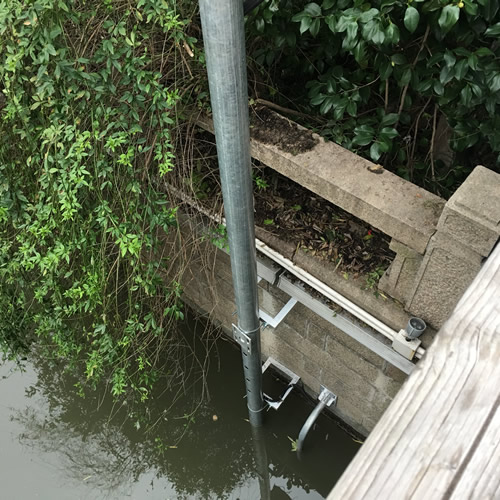
A procurement-ready shortlist for industrial water monitoring covers ten parameters across four measurement families: pH, ORP, conductivity and dissolved oxygen for core water chemistry; turbidity and total suspended solids for optical clarity; COD and ammonia nitrogen for organic and nutrient load; and oil in water and chloride for contaminant-specific detection. Standardizing around this list — rather than buying instruments reactively — shortens the specification phase, simplifies spares, and keeps every instrument on one digital protocol.
Industrial water monitoring is shifting from single-point compliance checks to continuous, network-connected measurement. Grand View Research valued the global water quality sensor market at USD 5.74 billion in 2024 and projects USD 9.10 billion by 2030, a compound annual growth rate of 8.1%. Within the wider water quality monitoring systems market recorded at USD 5.8 billion in 2024, sensors account for the largest segment at a 45% share. For a plant engineer or procurement manager, that growth changes the nature of the decision: sensor selection is no longer a maintenance purchase made when an old probe fails. It is a specification decision that will govern data architecture, calibration routines and spare-part inventory for the next five to ten years.
This shortlist is written for evaluation-stage buyers who need to define a standard sensor portfolio for a tender, a new treatment line, or a plant-wide monitoring upgrade. It explains what each of the ten parameters contributes, which instrument variant fits which job, and where the limits of online measurement still sit.
Why Ad-Hoc Sensor Purchasing Breaks Down at Plant Scale
Most industrial sites do not choose a monitoring architecture. They accumulate one. A maintenance team replaces a failed pH probe with whatever is available; an environmental department adds a turbidity meter for a permit condition; a process engineer installs a dissolved oxygen sensor for aeration control. Individually, each purchase is defensible. Collectively, they produce a fragmented estate.
The cost of that fragmentation is operational rather than visual. Mixed output signals force additional transmitters and wiring. Different calibration intervals multiply technician time. Different wetted materials mean different spare-part lines. Above all, data that cannot be logged on a single protocol cannot be trended against one another — and water treatment problems are almost always relationships between parameters, not single readings.
The opportunity is to treat the sensor set as one specification object. A plant that defines its ten core parameters up front, on one digital bus, and specifies online or portable variants deliberately, buys once and extends later. That is the practical difference between a sensor purchase and a sensor portfolio.
Five Criteria That Decide the Shortlist
Before naming parameters, establish the filters that will remove unsuitable instruments during evaluation.
- Permit and process relevance. Every parameter on the shortlist must be traceable either to a discharge or drinking-water obligation, or to a control loop the plant actually operates.
- Measurement principle versus water matrix. Optical, electrochemical and ion-selective methods respond differently to colour, solids, salinity and fouling. The matrix, not the catalogue, decides feasibility.
- Output and protocol. RS-485 with Modbus is the common denominator that allows sensors, controllers, SCADA and PLC systems to share data without custom gateways.
- Wetted materials and mounting. Titanium, 316L stainless steel and POM appear across KACISE water quality sensors; the choice depends on chloride level, temperature and pressure at the tap.
- Maintenance model. Automatic cleaning, calibration frequency and remote support determine the true five-year cost of ownership far more than the purchase price of a single probe.
The Ten-Parameter Portfolio at a Glance
The table below maps each parameter to its role in a typical industrial plant and to a specific KACISE platform or sensor variant. Specifications shown are those published in the manufacturer's product data.
| # | Parameter | Role in an industrial plant | Recommended KACISE variant | Published specification |
|---|---|---|---|---|
| 1 | pH | Effluent compliance, neutralisation, process chemistry | KWS-750 Online pH Probe (continuous online) | 0–14 pH; −5 to 65 °C; <0.2 MPa; RS485 Modbus/RTU; IP68 |
| 2 | ORP | Disinfection and redox-driven dosing control | Digital pH/ORP channel on the KWS-800 platform | Digital pH/ORP module within a 7-parameter probe |
| 3 | Dissolved oxygen | Aeration control, biological treatment, aquaculture | KWS-630 Fluorescence Dissolved Oxygen Sensor (online) | 0–20 mg/L (0–200% air saturation); 0–60 °C; RS485 Modbus |
| 4 | Conductivity and salinity | Purified water, salinity intrusion, dosing control | 4-electrode conductivity module on the KWS-800 platform | 0–5000 µS/cm or 0–100 mS/cm |
| 5 | Turbidity | Clarity, filtration performance, discharge limits | Fibre turbidity module on the KWS-800 platform | 0–1000 NTU |
| 6 | TSS and sludge concentration | Suspended solids load, sludge blanket control | KWS-910 Online TSS Sensor | 0.5–4000 mg/L (0–15000 mg/L optional); max 3 bar; IP68 |
| 7 | COD | Organic load, effluent permits, load-based tariffs | COD channel on the KMPW520 6-in-1 Water Quality Analyzer | 6 configurable parameters; 7.0-inch touch screen; RS485 Modbus-RTU |
| 8 | Ammonia nitrogen | Nutrient discharge, aquaculture stock safety | Digital ammonia nitrogen sensor (continuous online) | Digital parameter channel, range specified per application |
| 9 | Oil in water | Trade effluent, condensate and cooling circuits | Oil-in-water module on the KWS-800 platform | 0–500 ppb / 0–50 ppm |
| 10 | Chloride | Saline intrusion, industrial effluent, process water | Chloride sensor (continuous online) | Digital parameter channel, range specified per application |
The Ten Parameters, One by One
1. pH — the anchor measurement
pH is the parameter around which most discharge permits are written and the one most likely to be audited. The KWS-750 Online pH Probe covers 0–14 pH across a temperature range of −5 to 65 °C and operates at pressures below 0.2 MPa. It uses a patented probe design with slow reference solution seepage to extend service life, outputs RS485 (Modbus/RTU) with automatic temperature compensation, and uses a 3/4 NPT thread with POM wetted parts rated IP68. For a standard portfolio, pH belongs online at both process and effluent points; a portable handheld meter is retained for spot verification and calibration checks rather than as the primary instrument.
2. ORP — the disinfection control parameter
ORP, or oxidation-reduction potential, is specified wherever disinfection or redox-driven chemical dosing is controlled — chlorination, ozonation, or chemical reduction steps. It is not a duplicate of pH; it reports the oxidising or reducing strength of the water, which is what actually determines dosing effectiveness. In the KWS-800 multi-parameter configuration, ORP is delivered as a digital pH/ORP module on the same probe platform as the other chemistry channels. Specifying pH and ORP on one digital channel set keeps the two readings time-aligned and on a single calibration schedule.
3. Dissolved oxygen — optical rather than electrochemical
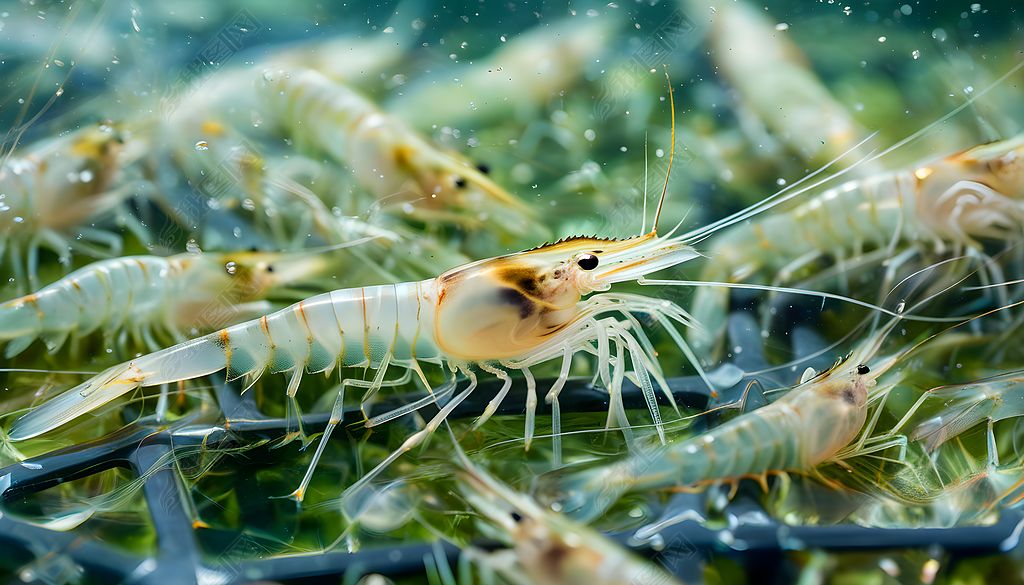
Dissolved oxygen governs aeration cost in biological treatment and survival rates in aquaculture. The KWS-630 Fluorescence Dissolved Oxygen Sensor measures 0–20 mg/L, equivalent to 0–200% air saturation, over 0 to 60 °C. It uses the fluorescence lifetime method, which requires no electrolyte and imposes no minimum flow rate — a practical advantage at tanks and lagoons where flow is intermittent. Output is RS485 (Modbus) with automatic compensation and optional self-cleaning. The body combines POM with 316L stainless steel, with titanium available for more aggressive water. The online variant is the default for control loops; a portable optical meter remains useful for profiling different depths in large basins.
4. Conductivity and salinity — one measurement, several jobs
Conductivity in the KWS-800 platform is handled by a 4-electrode cell covering 0–5000 µS/cm or 0–100 mS/cm, a range that spans purified water through to saline process streams. Four-electrode design matters in industrial water because it reduces polarisation and fouling effects that distort two-electrode readings in dirty media. Salinity is derived from the same measurement, which is why a single conductivity channel can serve a pharmaceutical purified-water loop, a coastal abstraction point, and a dosing control loop. The portfolio recommendation is straightforward: one 4-electrode conductivity channel online, with portable meters reserved for confirmation in the field.
5. Turbidity — clarity as a proxy for treatment performance
Turbidity is both a permit parameter and an operational one: rising turbidity usually signals a filtration, coagulation or settling problem before other instruments register it. The KWS-800 fibre turbidity module measures 0–1000 NTU and shares the platform's RS485 Modbus output and automatic cleaning device. Because turbidity is optical, the specification question that matters most is fouling management — a self-cleaning arrangement is not optional in raw or partially treated water. Online measurement is the norm; a portable turbidity meter is justified for grab-sample verification and for commissioning new points.
6. TSS and sludge concentration — for solids-heavy streams
Where suspended solids are the controlling load, turbidity is a proxy and TSS is the measurement. The KWS-910 Online TSS Sensor measures 0.5–4000 mg/L, with a 0–15000 mg/L range available, across 0 to 50 °C and up to 3 bar. It uses an infrared scattering method with colour compensation and anti-ambient light interference, and includes an automatic cleaning brush — a deliberate response to the fact that solids measurement fails first at the optical window. The wetted body is titanium with an NPT 3/4 connection and IP68 rating. This is an online-only parameter in practice; portable alternatives rarely survive extended immersion.
7. COD — organic load and effluent tariffs
Chemical oxygen demand is the parameter that connects process performance to discharge charging. In the KMPW520 6-in-1 Water Quality Analyzer, COD is one of six freely configurable parameters alongside pH, ORP, BOD, residual chlorine and turbidity. The analyzer provides a 7.0-inch colour touch screen, two-channel 4–20 mA output, six-way relay control, two-channel RS485 (Modbus-RTU), TF card and USB data storage, historical curves and password protection. Buyers should treat COD as a hybrid case: continuous online monitoring is appropriate for trend and control purposes, while regulatory reporting may still require laboratory confirmation for complex matrices.
8. Ammonia nitrogen — nutrient control and stock protection
Ammonia nitrogen is regulated in effluent and is directly toxic to aquatic stock in recirculating systems, which makes it a natural addition to any portfolio that already includes dissolved oxygen. It is delivered as a digital ammonia nitrogen sensor within the manufacturer's water quality range, designed for continuous online measurement on the same RS485 bus as the remaining channels. The practical justification for including it in the standard ten is that ammonia excursions are fast and often invisible to other instruments — dissolved oxygen, pH and turbidity can all read normal while ammonia rises.
9. Oil in water — for hydrocarbon-bearing effluent
Plants handling fuels, lubricants, condensate or metalworking fluids need hydrocarbon detection at the point of discharge rather than at the laboratory. The KWS-800 platform includes an oil-in-water module measuring 0–500 ppb or 0–50 ppm, and fluorescence-based oil-in-water detection sensors are part of the manufacturer's water quality product range. Online measurement here is a control instrument, not a compliance certificate: it detects excursions and triggers separation or alarm actions, while formal reporting typically continues to rely on reference analysis.
10. Chloride — the contaminant that drives material choice
Chloride is specified where saline intrusion, industrial effluent or process chemistry creates a corrosion and discharge risk. It is delivered as a chloride sensor within the manufacturer's digital water quality range, for continuous online use. Chloride belongs on the shortlist for a second reason beyond compliance: it determines the wetted-material specification for every other sensor in the portfolio. A site with elevated chloride cannot standardise on stainless-steel wetted parts, which is why titanium alternatives appear across KACISE product data for conductivity, dissolved oxygen and TSS instruments.

Technical Notes: Platforms, Protocols and Integration
Xi'an Kacise Optronics Tech Co., Ltd. (KACISE) is a Chinese sensor and measurement equipment manufacturer founded in 2014, operating a 40,000 m² facility with an annual output of 120,000 units and exporting about 70% of production to EU and USA markets. Its portfolio covers industrial automation, environmental monitoring, water quality monitoring and process control. For portfolio planning, two product families carry most of the load.
The KWS-800 Online Multi-Parameter Water Quality Monitoring System is an all-in-one probe offering seven optional parameters plus temperature: fluorescent dissolved oxygen, 4-electrode conductivity, fibre turbidity, digital pH/ORP, chlorophyll and oil in water. It includes an automatic cleaning device, a waterproof connector, RS485 (Modbus) output, and a body of titanium alloy with 316L stainless steel rated IP68. The KMPW520 6-in-1 Water Quality Analyzer handles the panel-mount side of the portfolio, providing six freely combined parameters with two-channel 4–20 mA output, six relay outputs and two-channel RS485 (Modbus-RTU), suitable for environmental protection, sewage treatment, thermal power, aquaculture, food processing, metallurgy, pharmaceutical and municipal drinking water monitoring.
Integration is the reason the protocol question comes before the sensor question. KACISE products use standardised output signals and digital communication protocols compatible with SCADA systems, PLC systems and IoT platforms, which allows a plant to build an intelligent monitoring and control layer without bespoke gateways. For buyers, the specification language is worth fixing early: RS485, Modbus, 4–20 mA, relay outputs and connector type. That single paragraph of the tender document determines whether the portfolio can be extended in three years or has to be replaced.
Where This Portfolio Has Already Been Specified
Published deployment data gives buyers a realistic view of how these ten parameters combine in the field.
- Municipal wastewater plant, United Kingdom. Twelve sensors were specified for effluent quality monitoring using the KWS-800 multi-parameter system and the KMPW520 analyzer. Over three years of operation the site reported compliant discharge with reduced manual sampling, with multi-parameter integration cited as the key design feature.
- Aquaculture farm, Norway. Fifteen KWS-630 fluorescence dissolved oxygen units were deployed for dissolved oxygen and ammonia monitoring over three years, with the site reporting an increased fish survival rate. The saltwater-resistant build and continuous monitoring capability were the deciding factors.
- River environmental monitoring, United Kingdom. Three instruments — the KWS-910 online TSS sensor, the KWS-750 online pH probe and the KMPW520 analyzer — were used for pollution detection and early warning. Over two years the site reported stable real-time monitoring and improved response speed, supported by remote IoT monitoring and low maintenance requirements.
- Municipal water authority, United States. Thirty-five units were deployed for wastewater turbidity monitoring, achieving three years of stable operation.
- Pharmaceutical plant, Switzerland. Twelve units were installed for purified water conductivity monitoring over five years, with the site reporting GMP compliance achieved and specifying sanitary clamp connections.
- Agricultural runoff monitoring, Finland. Four KWS-450 optical fibre chlorophyll sensors were used for nutrient runoff tracking over two years, contributing to better agricultural pollution control.
Market Trend Analysis: Where the Portfolio Is Heading
Three verified trends shape sensor portfolio decisions for 2026 and beyond.
First, the sensor layer is growing faster than the systems layer around it. Sensors already represent the largest segment of the water quality monitoring systems market, at 45% of a USD 5.8 billion total in 2024. Second, connectivity is the growth engine: IoT-enabled water quality management is expected to grow at a compound annual growth rate of 16.23% through 2030, well above the 8.1% CAGR projected for the sensor market as a whole. Third, supply is concentrated in Asia Pacific, which held a 46.5% revenue share of the water quality sensor market in 2023, with China identified as a major growing market.
Standards are converging alongside the technology. Industrial water quality sensors for the EU market are assessed against EN IEC 61326-1:2021, the electrical equipment standard for measurement, control and laboratory use, and KACISE holds CE EMC certification ZTS23061509TCE for water quality sensors, issued on 21 June 2023 by Shenzhen ZTS Testing Service Co., Ltd. to EN IEC 61326-1:2021 together with EN 55011, EN IEC 61000-3-2 and EN 61000-3-3. For drinking water applications in the United States, NSF/ANSI 61 and 372 govern material safety and lead-free compliance. The competitive field remains led by established suppliers including Hach (Danaher), Xylem Inc, Thermo Fisher Scientific and Endress+Hauser, alongside specialist manufacturers serving defined application niches.
Comparison with Traditional Approaches — and Where Online Sensors Still Stop Short
The traditional alternative to this portfolio is a combination of manual grab sampling with laboratory analysis, supported by portable handheld meters and, in some plants, single-parameter analogue analysers. Each has a legitimate role, and the honest comparison is about task fit rather than superiority.
| Approach | Strength | Limitation in industrial use |
|---|---|---|
| Manual grab sampling plus laboratory analysis | Reference-grade accuracy; covers parameters no field sensor can measure | Discontinuous; detects excursions only after they have occurred; labour-intensive |
| Portable handheld meters | Flexible; low capital cost; useful for profiling and verification | Not continuous; no control function; operator-dependent readings |
| Single-parameter analogue analysers | Simple; one reading, one loop | Separate wiring, calibration and spares per parameter; limited data correlation |
| Digital online multi-parameter portfolio | Continuous data on one protocol; shared calibration and spares; SCADA and IoT ready | Requires cleaning and calibration discipline; not suited to every parameter or matrix |
Three boundaries deserve to be written into the evaluation file rather than discovered later. The first concerns maintenance: optical and electrochemical online sensors require periodic cleaning and calibration, and fouling is the dominant cause of drift in raw water, wastewater and high-solids streams. Any specification that assumes maintenance-free operation is unrealistic, which is why automatic cleaning devices and remote support matter to the total cost of ownership.
The second concerns concentration risk. A multi-parameter probe places several measurements behind one physical unit that shares a cable, a connector and a body. That reduces installation and cabling cost, but a single failure affects more than one reading. Plants with strict redundancy requirements may prefer discrete sensors for the most critical control parameters and a multi-parameter probe for the wider monitoring set.
The third concerns measurement scope. Some parameters cannot yet be replaced by an online field instrument in every matrix. COD measurement benefits from trend monitoring but often still requires laboratory confirmation for regulatory reporting in complex effluent, and contaminants such as heavy metals in industrial discharges typically remain laboratory-analysed parameters. The ten-parameter shortlist is a monitoring and control portfolio, not a complete replacement for analytical chemistry.
Future Outlook
The direction of travel is toward denser sensor networks with less field intervention. With IoT-enabled water quality management projected to grow at 16.23% annually through 2030, the value of a sensor is increasingly defined by the data path behind it: protocol compatibility with SCADA, PLC and IoT platforms, remote data acquisition, and the ability to correlate parameters rather than report them in isolation.
For buyers evaluating manufacturers in 2026, three questions are worth carrying into every tender. Does the sensor platform support the digital protocols the plant already operates? Are the wetted materials matched to the chloride level of the water actually being measured? And is there a written maintenance and support model covering cleaning, calibration and spares for the full service life? Answers to those three questions decide whether a ten-parameter shortlist becomes a five-year standard or a shelf of mismatched instruments.
FAQ
Which water quality parameters should an industrial plant standardize on first?
Start with the four chemistry parameters — pH, ORP, conductivity and dissolved oxygen — because they drive the largest number of operational and permit decisions. Add turbidity and total suspended solids where solids or filtration performance matter, COD and ammonia nitrogen where organic or nutrient discharge is regulated, and oil in water and chloride where the effluent profile includes hydrocarbons or elevated chloride loads. This sequence keeps the initial specification manageable while covering most regulatory and control requirements.
Is a multi-parameter analyzer better than separate single-parameter sensors?
Neither is universally better, and the choice depends on redundancy policy. A multi-parameter platform such as the KWS-800 measures up to seven parameters plus temperature in one all-in-one digital probe with a shared cable, connector, protocol and cleaning device, which reduces installation and cabling work. Separate sensors allow individual replacement and let a plant match each measurement to its own wetted material. The trade-off is concentration risk: a multi-parameter probe places several measurements behind one physical unit, so a single failure affects more than one reading.
When should a portfolio use online sensors and when portable meters?
Online sensors are specified where continuous regulatory, process or control data is required — pH, dissolved oxygen, conductivity and turbidity at fixed points. Portable handheld meters are specified for verification, calibration checks, spot sampling and locations without power or telemetry. Most industrial portfolios combine online instruments at fixed monitoring points with one or two portable meters retained for audit, commissioning and troubleshooting. Portable meters are not a substitute for control-grade measurement.
Which certifications should buyers check for EU and US water quality sensor projects?
For EU projects, the relevant EMC standard for measurement, control and laboratory equipment is EN IEC 61326-1:2021. KACISE holds CE EMC certification ZTS23061509TCE for water quality sensors, issued 21 June 2023 by Shenzhen ZTS Testing Service Co., Ltd. against EN IEC 61326-1:2021, EN 55011, EN IEC 61000-3-2 and EN 61000-3-3. For drinking water applications in the United States, NSF/ANSI 61 and 372 address material safety and lead-free compliance. Buyers should confirm that the certificate scope names the specific product family being purchased.
What should a buyer verify about MOQ, lead time and quality control before standardizing a portfolio?
KACISE lists a minimum order quantity of 1 to 2 units depending on configuration, applies 100% testing as its quality control model, and quotes lead times that vary with order quantity and configuration. Customization options include voltage, logo, output method, protocol and cable. Because lead time depends on the specific configuration, buyers should confirm the exact build, test record and shipping schedule in the purchase specification rather than assume a standard delivery window across all ten parameters.
Market data: Grand View Research (water quality sensor market, 2024–2030); Grand View Research via WaterTech (water quality monitoring systems market, 2024); TechSci Research (IoT-enabled water quality management, 2024–2030); Mordor Intelligence (market participants). Standards: CENELEC (EN IEC 61326-1:2021); NSF International (NSF/ANSI 61 and 372). Product and deployment data: KACISE technical and case documentation.
Tem questões ou precisa de mais detalhes?
Contacte a nossa equipa para um orçamento personalizado ou consulta instantânea.
Solicitar orçamento
Preencha o formulário abaixo e a nossa equipa entrará em contacto com uma proposta personalizada.
Chat direto do WhatsApp
Prefere conversar em tempo real? Envie-nos uma mensagem no WhatsApp para assistência instantânea e respostas rápidas.
- Obter orçamento personalizado
- Partilhar fotos ou documentos
- Discuta as suas necessidades diretamente
Geralmente responde em 5–30 minutos durante o horário de expediente.