
The DOCOD Certification Guide: CE, RoHS and BIS for CIJ Lines
The DOCOD Certification Guide: CE, RoHS and BIS for CIJ Lines
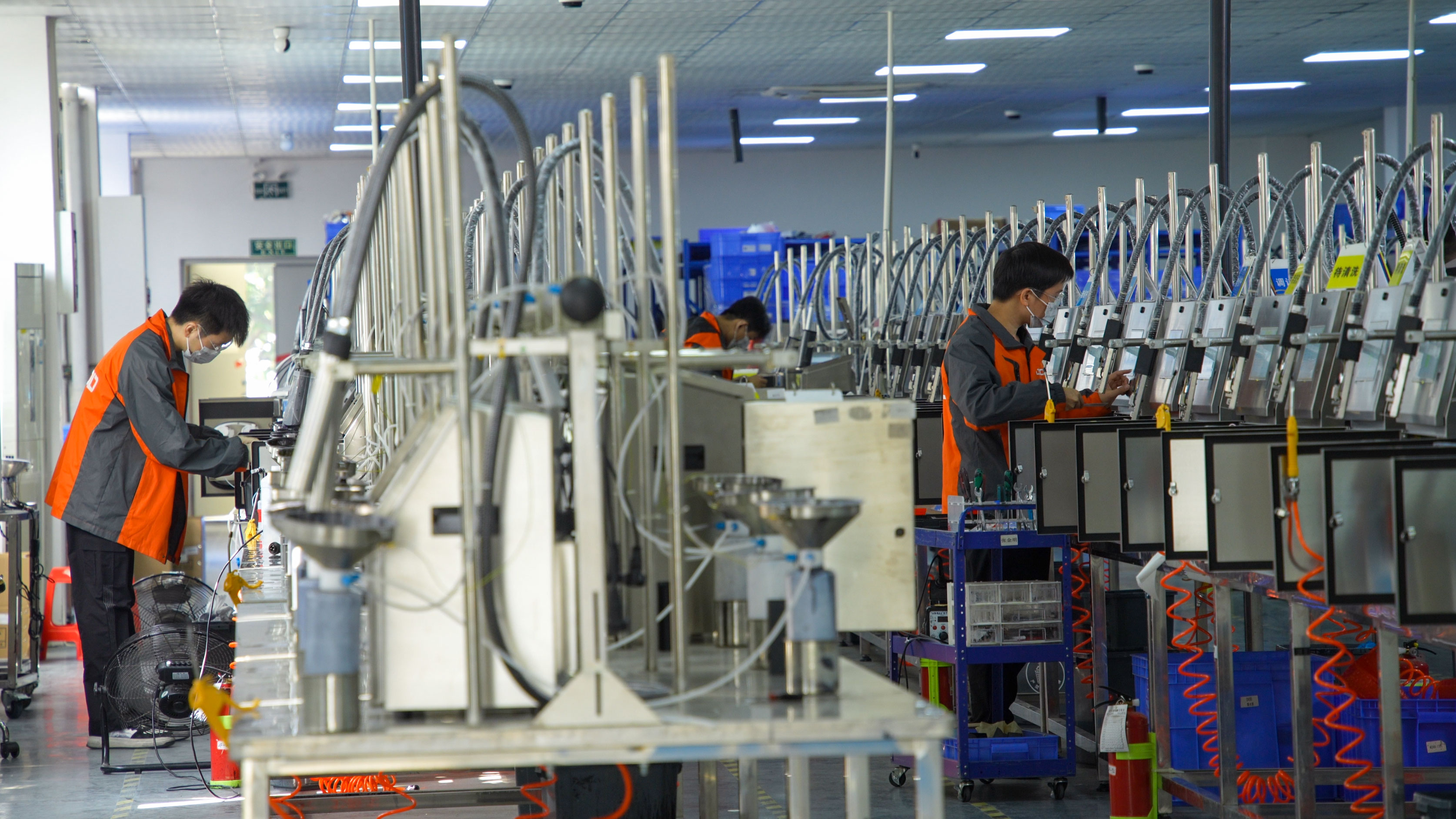
Quality testing of continuous inkjet printers: certification documents support a compliance file, but they do not replace functional verification on the line.
Compliance paperwork rarely decides which coding technology suits a production line. It decides whether that line can run, ship, and pass a customer audit. The global coding and marking equipment market was valued at USD 17.53 billion in 2024 and is projected to reach USD 27.11 billion by 2032, according to the SkyQuest coding and marking equipment market forecast. Continuous inkjet (CIJ) technology alone accounted for approximately USD 5.67 billion of the 2024 market, according to Grand View Research. When a technology family of that scale is installed across food, pharmaceutical, cable, electronics and building materials lines, certificates stop being a footnote in a quotation and become a purchasing gate.
This guide explains what CE, RoHS and BIS actually cover for a coding line, using continuous inkjet printers from DOCOD Precision Group Co., Ltd. (DOCOD) as working examples: the M2000 Series and V2000 Series, plus the BIS-listed S1000 Series and S300plus Series. It also examines what IP65 and IP55 ratings do, and do not, prove about build standards in demanding industrial environments.
DOCOD is an industrial coding, marking and inspection equipment manufacturer founded in 2008 and based in Guangzhou, China. The company designs, manufactures and services continuous inkjet printers (CIJ), thermal inkjet printers (TIJ), thermal transfer overprinters (TTO), laser marking machines and inline vision inspection systems. Its manufacturing facility covers 20,000 m², with approximately 407 staff, more than 140 R&D professionals, an annual production capacity of 5,000 units, and export business representing 50% of total sales across North America, South America, Eastern Europe, Southeast Asia, Africa, Oceania, the Middle East, Eastern Asia and Western Europe.
Why certification became a procurement gate
Three pressures have moved certification into the early stages of equipment selection rather than the final paperwork stage.
- Market-specific entry rules. Europe and India apply different requirements. A model that is acceptable in one destination may require separate registration in another, and responsibility for that registration often sits with the importer or local channel partner rather than the factory.
- Regulated traceability. Food, beverage, pharmaceutical, medical device and tobacco packaging lines are required to print — and increasingly to verify — batch, date, serial and 2D codes. If the printer cannot reliably produce those codes, the line cannot release product.
- Audit evidence. Manufacturers are increasingly asked by their own customers to show conformity documentation for production equipment, not only for the goods they ship.
A buyer evaluating a CIJ printer therefore has to answer two questions at once: what does this model print, and what documentation travels with it into my destination market? The second question is the one that is usually answered last, and it is the one that can hold up an installation.
What CE, RoHS and BIS each cover
For a continuous inkjet printer, CE addresses conformity and market access in the European Economic Area, RoHS addresses restricted substances inside the equipment, and BIS addresses entry into the Indian market where a product category is subject to compulsory registration. They answer three different questions, and treating them as interchangeable is where most procurement gaps begin.
CE: a declaration about applicable legislation, not a quality score
CE marking is the manufacturer's declaration that a product meets the EU legislation applicable to it. Which legislation applies depends on what the machine contains and does: electromagnetic compatibility, electrical safety and machinery requirements are assessed under different directives, so two printers can both carry CE marking while being assessed against different technical routes. A laser marker with a different risk profile is not automatically assessed in the same way as a small-character inkjet printer.
For buyers, the practical consequence is simple. 'CE marked' is only useful when the supporting documentation is specific: an EU Declaration of Conformity, the directives and standards it references, and the exact model or SKU it covers. A CE logo reproduced on a brochure page is not evidence of anything. DOCOD lists CE among the certificates for the M2000 Series and V2000 Series continuous inkjet printers.
RoHS: what is inside the machine, not what the machine prints
RoHS restricts specified hazardous substances — including lead, mercury, cadmium and hexavalent chromium — in electrical and electronic equipment. On a coding line this is a materials question about the printer, its control board and its wiring, and it sits alongside electrical safety requirements rather than replacing them.
One boundary is frequently misunderstood. RoHS compliance of a printer says nothing about ink chemistry, food-contact suitability, or the regulatory status of consumables. Those are assessed separately from the machine itself, so machine certificates and consumable documentation should be tracked in separate records rather than assumed to cover one another. DOCOD lists RoHS together with CE for the M2000 Series and V2000 Series, and also for the S1000 Series and S300plus Series.
BIS: a market-access question, not a general quality label
BIS refers to the Bureau of Indian Standards, India's national standards body. Where a product category falls under India's compulsory registration requirements, a model must be registered before it can be placed on the Indian market. That makes BIS a market-entry condition rather than a general indicator of build quality, and it is strictly market-specific: registration in India does not substitute for CE in Europe, and CE does not substitute for registration in India.
Within DOCOD's CIJ range, BIS is listed on the S1000 Series High Speed Continuous Inkjet Printer and the S300plus Series Continuous Inkjet Printer, alongside CE and RoHS. The M2000 Series and V2000 Series listings show CE and RoHS. Buyers importing into India should additionally confirm which entity holds the registration and which obligations fall on the importer, because registration status and importer duties are separate matters that are often confused during sourcing.
Certification and build data across DOCOD's CIJ models
The table below summarises certificate listings together with the CIJ parameters buyers most often cross-check during evaluation. Because certification and enclosure ratings are published at series level, they should be reconfirmed against the exact model and destination market at quotation stage.
| Series | Certificates listed | Enclosure | Key parameters |
|---|---|---|---|
| M2000 Series (small character CIJ) | CE, RoHS | IP65; SUS 304 stainless steel | Print height 3–30 mm; 1–4 lines; max. printing speed 528 m/min; printhead duct 3 m or 6 m; nozzles 42u/55u/70u; 10.1-inch capacitive touch display (1280 × 800); Embedded Linux; 100–240 V AC; net weight 19.94 kg |
| V2000 Series (small character CIJ) | CE, RoHS | IP65; SUS 304 stainless steel | Print height 2–16 mm; 1–5 lines; max. printing speed 334 m/min; printhead duct 3 m; 60u nozzle; 10.1-inch capacitive touch display (1280 × 800); 100–240 V AC; rated power 100 W; net weight 18 kg |
| S1000 Series (high speed CIJ) | CE, RoHS, BIS | IP55; SUS 304 stainless steel | Print height 2–16 mm; up to 960 m/min with 50u nozzle and 720 m/min with 60u; 10.1-inch industrial touch screen; 100–240 V AC; rated power 150 W; net weight 21 kg; 452 × 250 × 570 mm |
| S300plus Series (CIJ) | CE, RoHS, BIS | IP65; SUS 304 stainless steel | Print height 3–30 mm; 1–5 lines; max. printing speed 384 m/min; 60u nozzle; printing distance 2–16 mm; 10.1-inch industrial touch screen; 100–240 V AC; rated power 150 W; net weight 19 kg |
Reading note: certificate coverage is not identical across every product family in a coding portfolio. As listed above, BIS appears on the S1000 Series and S300plus Series, while the M2000 Series and V2000 Series listings show CE and RoHS. Buyers should verify the certificate against the specific model being purchased rather than against the brand.
IP65 and IP55: what ingress protection proves, and what it does not
Ingress protection codes defined in IEC 60529 use two digits. The first describes protection against solid particles, the second protection against water. IP65 means the enclosure is dust-tight and protected against water jets. IP55 means the enclosure is dust-protected — limited dust ingress is permitted without harmful effect — and also protected against water jets. The meaningful difference between the two ratings is therefore the degree of dust protection, not water-jet protection.
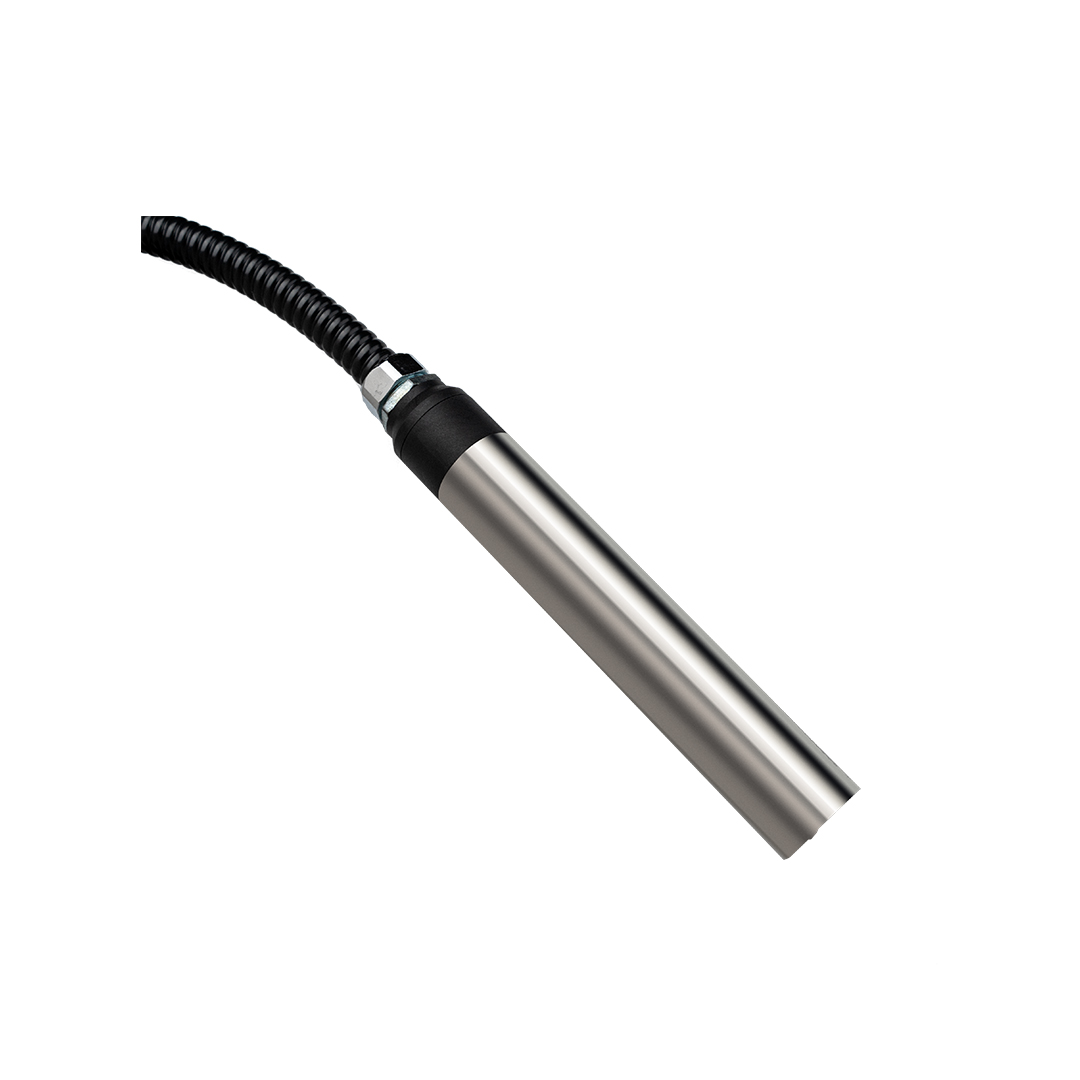
Stainless steel printhead assembly on the DOCOD V2000 Series continuous inkjet printer, a CE and RoHS listed model with an IP65 enclosure.
DOCOD lists IP65 for the M2000 Series, the V2000 Series and the S300plus Series, and IP55 for the S1000 Series. For procurement teams, those figures are useful evidence of enclosure design intent on demanding lines — but they need to be read inside their boundaries.
- The rating applies to the enclosure as tested. It is not a statement about resistance to solvent inks, cleaning chemicals or corrosion, and it says nothing about print quality or printhead service life.
- Not every exposed component sits inside the sealed cabinet. Printhead umbilicals, connectors and mounting brackets are partly external, so a high cabinet rating does not automatically make every component on the machine washdown-tolerant.
- Operating limits are separate from the IP code. DOCOD lists a working environment of 0–45°C and 30–70% RH for these CIJ models; that envelope governs where the printer can be installed regardless of its ingress rating.
- Ratings differ across technologies. Laser marking models in the same portfolio, such as the L3000 Series 5W UV Laser Marking Machine and the Venus1 Series laser range, are listed with IP43 or IP54 protection. A buyer moving between CIJ and laser should re-check the rating per model instead of assuming one figure applies across the range.
Where certification and ingress protection matter on real lines
India — wire, cable and pipe extrusion. Extrusion lines print meter marks, model information, brand names, batch numbers, certification marks and traceability codes using online non-contact coding synchronized with an encoder. The working conditions are unforgiving: high line speed, long narrow or curved print areas, limited installation space and substrates that resist ink adhesion. Supporting equipment typically includes the extruder, cooling trough, haul-off unit, take-up reel, encoder, sensor, mounting bracket and PLC — and because certification marks are part of the printed content, the compliance status of the printer itself is part of the same conversation.
Germany — medical packaging. Medical device packs, blister packs and cartons require UDI and GS1 DataMatrix codes, lot numbers, expiry dates and serial numbers, printed and verified in a closed-loop print-and-verify workflow. Cartoners, labeling machines, sensors, scanners, vision systems, reject units and PLC/MES integration all sit inside that loop. Here the certificate is not documentation collected after purchase; it is a precondition for quoting the project at all.
UAE — building materials and chemicals. Cement bags, paint pails, chemical drums, PVC pipes and boards involve dusty, hot, humid or rough-surface conditions, with large product sizes and variable throw distance. Large-character marking prints batch numbers, production dates, model information, brand marks, QR codes and logistics codes, often in existing-printer replacement projects where enclosure protection and dust management decide whether the upgrade succeeds.
Mexico — electronics part traceability. PCBs, batteries and charger housings are compact and takt times are short, so serial numbers, QR/DataMatrix codes, batch numbers and brand marks must be applied with minimal contamination, integrated with automation fixtures or robot handling, conveyors, sensors, scanners, vision inspection and PLC/MES systems. In this environment, code quality is a conformity requirement as much as a production requirement.
Market trends raising the documentation bar
Compliance expectations are tightening in ways that directly affect coding equipment selection.
- 2D codes are becoming the default. The GS1 Digital Link standard, referenced as ISO/IEC 18975:2024, is being globally adopted to replace 1D barcodes with QR codes for point-of-sale and traceability by 2027, according to GS1 and ISO. This shifts value from printing a legible date to printing, validating and transmitting structured data.
- Asia-Pacific is the largest regional market. Asia-Pacific accounted for an estimated 35% of the coding and marking sector in 2024, according to Market Research Future — which is also where a large share of coding equipment manufacturing capacity sits.
- Export supply is shifting. China's export value for industrial machine tools, including marking equipment, rose 15.7% year-on-year in early 2026, according to the German Machine Tool Builders' Association (VDW). More cross-border sourcing means more cross-border conformity questions.
- Technology mix is broadening, not replacing. Laser marking is projected to grow at a CAGR of 6.8% through 2030 on the strength of its consumable-free operation, according to Fortune Business Insights, while CIJ retains the largest revenue share among coding technologies. Buyers increasingly manage a mixed technology base, each with its own certification and protection profile.
For context on comparative positioning, published market analyses name players such as Videojet Technologies, Domino Printing Sciences, Markem-Imaje and Hitachi Industrial Equipment Systems among the established industry participants. Buyers evaluating options should compare documented certification scope, enclosure ratings and specification ranges rather than brand recognition alone.
Certified models compared with low-documentation alternatives
What certification changes
A printer with traceable CE, RoHS and, where relevant, BIS documentation changes three things for a buyer. It resolves market access in the destinations where the certificates apply. It provides a conformity trail that can be shown during customer or regulatory audits. And it typically signals a supplier that maintains change control on components, because conformity documentation has to be maintained rather than created once. For a line running regulated packaging, these are operational advantages rather than paperwork advantages.
What it does not change
Certification is not a performance claim. A CE-marked printer is not thereby faster, more accurate or more reliable than an alternative; the certificate describes conformity with legislation, not throughput, code quality or uptime. The same applies to ingress protection: an IP65 enclosure does not guarantee that a printhead will survive a specific solvent, cleaning regime or washdown chemical, and it says nothing about consumables.
There is also an honest limitation inside DOCOD's own portfolio that buyers should plan around. Certificate coverage is not uniform across product families. As listed, CE and RoHS apply to the M2000 Series and V2000 Series; BIS appears on the S1000 Series and S300plus Series; and the laser marking models are documented with IP43 or IP54 enclosure ratings rather than the IP65 rating of the CIJ cabinets. A buyer standardising a multi-technology coding line therefore cannot assume that one certificate set or one protection rating covers every unit on the project. The practical rule is to verify certification per model, per technology and per destination market, and to treat any portfolio-level statement as a starting point for verification rather than as evidence.
A verification checklist for procurement and engineering
- Match documents to the model. Confirm that the certificate references the same model or SKU that appears in the quotation, not a sibling or earlier variant.
- Request the CE Declaration of Conformity. Ask which directives and standards are referenced, and keep the document with the machine record.
- Separate machine and consumable compliance. RoHS applies to the electrical and electronic equipment; ink chemistry and food-contact suitability are assessed under different regimes.
- Check market-specific registration. For India, confirm BIS registration status for the exact model and identify which entity holds it, along with the importer's own obligations.
- Compare ingress ratings like for like. On this range, IP65 applies to the M2000, V2000 and S300plus cabinets, and IP55 to the S1000 cabinet; confirm which enclosure is being quoted, including the printhead and umbilical.
- Confirm the operating envelope. DOCOD lists 0–45°C and 30–70% RH for these CIJ models — check it against the actual plant environment, especially in humid or cold-chain areas.
- Verify the electrical and data interfaces. Input is listed as 100–240 V AC, with USB, RS232 and network port available and MES connectivity noted on the M2000 Series and V2000 Series.
- Check printhead reach against the line layout. Printhead duct options differ — 3 m or 6 m on the M2000 Series and 3 m on the V2000 Series — and mounting space is often the constraint that decides installation feasibility.
- Plan spares and support for the destination. Certified equipment still needs consumables, spare parts and service coverage matched to the region where the line operates.
Future outlook
Two directions are likely to shape coding-line compliance over the next few years. First, documentation will increasingly be requested and consumed as structured data rather than as scanned PDF pages, because traceability systems need machine-readable conformity records alongside machine-readable product codes. Second, market-specific registration requirements are likely to keep multiplying rather than harmonising, which rewards suppliers that can produce destination-specific evidence quickly instead of a single global certificate pack.
For DOCOD, the relevant scale factors are already in place: manufacturing capacity of 5,000 units per year, over 140 R&D professionals working on product identification solutions, and export business across nine major regions including North America, Western Europe and South America. Those are the conditions under which market-specific documentation requests can be handled as a routine process rather than an exception.
Frequently asked questions
What do the CE and RoHS certificates actually confirm on a continuous inkjet printer?
They confirm different things. CE confirms that the manufacturer declares the product conforms with the EU legislation applicable to it, supported by a Declaration of Conformity and the standards it references. RoHS confirms that restricted hazardous substances are limited within the electrical and electronic equipment. Neither confirms print quality, printhead life or line throughput, and neither extends to ink consumables, which are assessed separately. DOCOD lists both CE and RoHS for the M2000 Series and V2000 Series continuous inkjet printers.
Does a printer with CE and RoHS approval automatically qualify for sale in India?
No. India applies its own market-entry requirements, and where a product category falls under compulsory registration, the model must be registered before it can be placed on the Indian market. Within DOCOD's CIJ range, BIS is listed on the S1000 Series and S300plus Series alongside CE and RoHS, while the M2000 Series and V2000 Series listings show CE and RoHS. Importers should verify registration for the specific model and confirm which entity holds it for the destination market.
What does IP65 mean on a coding machine, and how is it different from IP55?
The IP code describes enclosure protection against solid particles (first digit) and water (second digit). IP65 means the enclosure is dust-tight and protected against water jets. IP55 means the enclosure is dust-protected — limited dust ingress is permitted without harmful effect — and also protected against water jets. The difference between the two ratings lies in dust protection, not water-jet protection. DOCOD lists IP65 for the M2000 Series, V2000 Series and S300plus Series, and IP55 for the S1000 Series.
How can a buyer confirm that a listed certificate covers the exact model being purchased?
By matching documents to the machine. Request the Declaration of Conformity and any supporting test reports, check that the certificate identifies the same model or SKU as the quotation, and confirm the directives or standards referenced. Destination-market registration should be verified separately. Because certificate listings are frequently published at series level, a buyer should ask for model-level confirmation in writing rather than rely on a portfolio-level statement.
Apart from certificates, which operating limits should be checked before installation?
Several practical ones. DOCOD lists a working environment of 0–45°C and 30–70% RH for its CIJ models, an input of 100–240 V AC, and a SUS 304 stainless steel enclosure. Printhead duct length differs by model — 3 m or 6 m on the M2000 Series and 3 m on the V2000 Series — which affects mounting layout and installation feasibility. Communication interfaces including USB, RS232 and a network port, with MES connectivity noted on the M2000 and V2000 Series, determine how the printer integrates with line data systems.
For readers who need the full product and specification overview before requesting model-level conformity documents, DOCOD's corporate brochure is available here: Corporate Brochure – DOCOD.