
The IML Supplier Scorecard: A Framework for Food-Grade Sourcing
The IML Supplier Scorecard: A Framework for Food-Grade Sourcing
In-mold labeling (IML) is a decoration process in which a pre-printed label is placed into the mold and fuses with the polymer as the container is formed, so the label becomes part of the package wall rather than being applied afterwards. That single process characteristic is why a supplier scorecard is more useful than a price list. A film or ink that performs poorly does not appear as a separate labelling fault downstream — it appears as scrap at the injection or thermoforming machine, or as a complaint after the pack reaches the shelf.
An IML supplier scorecard is a weighted, evidence-based comparison instrument that separates pass/fail compliance gates from the criteria where suppliers genuinely diverge — film specification, adhesion and abrasion performance, output scale, and commercial transparency. Used well, it turns a stack of supplier brochures into a defensible shortlist and a documented audit trail.
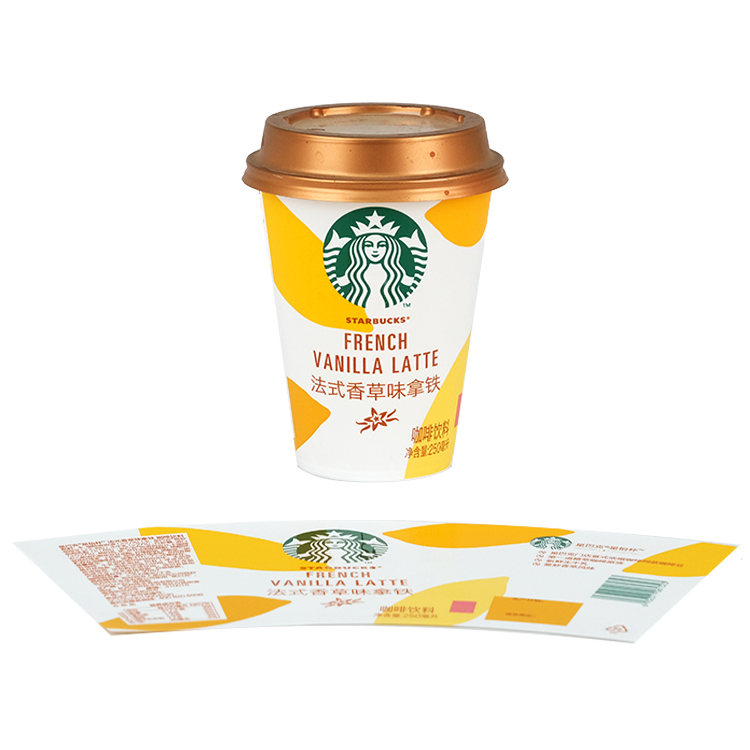
Market context supports building a structured process rather than improvising one. Grand View Research values the global in-mold label market at USD 2.3 billion in 2023 and projects USD 3.1 billion by 2030. The same research house reports polypropylene at 47.2% of label material share in 2023 and Food & Beverage applications at over 41.3% of IML market revenue. Food-grade work is the centre of gravity of this category — and the segment where documentation is least forgiving.
What an IML Supplier Scorecard Is — and What It Is Not
A scorecard is not a ranking of brand names, and it is not a price comparison sheet with extra columns. It is a decision record with four components:
- Gate criteria — binary pass/fail requirements (food-contact compliance, migration testing, ink chemistry) that are answered before any scoring begins.
- Weighted criteria — the dimensions where qualified suppliers differ, each carrying a weight agreed internally before quotations arrive.
- Evidence artefacts — the specific document, datasheet or test report that must exist for a criterion to be scored at all.
- Decision record — the gap between what a supplier claims and what has been verified, retained for the next sourcing cycle.
The distinction matters because IML qualification is a coupled problem. Supplier and trade literature describes a sequence in which labels are cut to final shape, stack-fed, picked by a robot and inserted into mold cavities before contact with molten resin. Label construction, stack handling, robot compatibility, cavity geometry and molding parameters therefore have to be evaluated together rather than as isolated attributes.
The Problem and the Opportunity
The problem is that most IML sourcing decisions are made on two visible numbers — unit price and quoted lead time — while the cost drivers sit inside the molding cell. Film that wrinkles at insertion, ink that migrates under hot fill, or a laminate that scuffs in transit all convert into the same outcome: rejected units that already carry the full cost of resin, print and machine time. None of these failure modes are visible in a quotation.
The opportunity is procedural. A scorecard applied at the research stage forces suppliers to answer the same questions in the same format, so comparisons become like-for-like instead of narrative against narrative. It also shortens the technical conversation later: a buyer who can point to a documented weighting and an evidence list is negotiating from specification, not from impression.
Gate Criteria: Compliance Evidence Before Any Weighting
Food-contact compliance is a pass/fail gate because a partial answer is not a usable answer. For food-grade IML film and printed labels, the gate set typically includes FDA 21 CFR, BRCGS Packaging Materials, ISO 22000 and QS certification, supported by a migration test aligned with EU 10/2011 food-contact material standards. Ink chemistry belongs in the same gate: food-grade low-migration water-based ink is the specification that keeps print performance and migration risk in the same conversation.
Regulatory timetables should sit in the gate as well. EU Regulation 2025/351 sets stricter purity and recycled-content requirements for plastic food-contact materials, with an effective date of 16 September 2026 — now in force. A scorecard built today should ask each supplier for its transition position on that regulation rather than treating it as a future concern.
As a benchmark, the ZY-IML Series in-mold label from YZY cites compliance with FDA 21 CFR, BRCGS, ISO22000 and QS, uses food-grade low-migration water-based ink, and references a migration test meeting EU 10/2011 food-contact standards. Those statements belong in the gate column of the scorecard, not in the weighted column — they qualify a supplier to be scored, they do not differentiate one qualified supplier from another.
Weighted Criteria: Where Suppliers Genuinely Diverge
Once a supplier clears the gates, the scorecard should measure documented capability. The table below is a suggested structure for a food-grade IML programme; the weights are an editorial starting point that each procurement team should re-set against its own package format and risk profile.
| Criterion | Suggested weight | Evidence to request | YZY published benchmark |
|---|---|---|---|
| Food-contact compliance (gate) | Pass / fail | Certificates, declarations, migration report, ink specification | FDA 21 CFR, BRCGS, ISO22000, QS cited; EU 10/2011 migration test referenced |
| Film and print capability | 20% | Thickness range, colour count, registration tolerance, print width | 30–100 μm; 8-colour rotogravure; ±0.1 mm; 1200 mm max width |
| Adhesion and mechanical durability | 25% | Adhesion value and test method, pencil hardness, tensile, temperature range | ≥5N; 4H; ≥20MPa; −20 °C to 120 °C; chemical resistance |
| Capacity and supply continuity | 20% | Annual output, plant area, headcount, export share | 200,000,000 units per year; 20,000 m²; ~250 staff; 30% export |
| Technical and development support | 15% | R&D headcount, patents, lab access | 10 engineers; 48 patents; dedicated laboratory |
| Commercial transparency | 10% | Written lead time, MOQ, change-control terms | Confirm per RFQ |
| Sustainability documentation | 10% | Resin source, mono-material options, recyclability statement | Confirm per RFQ |
Two rows in that table are deliberately left as “confirm per RFQ.” Lead time and MOQ are format-specific and should be answered in writing for the exact cup, bucket or container being sourced — not lifted from a generic capability page. Treating a catalogue figure as a committed lead time is one of the most common errors in food-grade IML procurement.
How to Apply the Scorecard in Four Steps
Step one — define the package and the molding process. A yogurt cup, a paint bucket, a bubble tea cup and an ice cream container do not share the same risk profile. Injection IML and thermoforming IML impose different demands on film stiffness, dimensional stability and machinability, and blow molding is a third route. The scorecard should be instantiated per format, not per supplier.
Step two — set weights before quotations arrive. Weights agreed after prices are known tend to migrate toward the cheapest option. Fixing them in advance protects the evaluation from anchoring.
Step three — score only documented evidence. A criterion with no supporting document scores zero rather than an assumed midpoint. This is the rule that converts the scorecard from a formality into a filter.
Step four — record the delta and re-score after trial. The first scoring is a hypothesis. Line trials, condensation tests and abrasion checks either confirm it or correct it, and the corrected record becomes the baseline for the next order.
Technical Explanation: Turning Parameters into Scorecard Lines
Film specification is the first technical row because thickness drives stiffness, opacity, print appearance, machinability and material cost at the same time. Supplier literature gives a sense of where the market sits: one label converter describes IML labels as most often made from white or transparent PP at 50 to 60 microns. A supplier offering 30 μm to 100 μm in customisable increments gives a buyer room to tune the construction rather than accept a single house specification — but the range only becomes useful when the buyer states the format it applies to.
Adhesion and abrasion are the second row, and they are the ones most often quoted without test conditions. In the ZY-IML Series, adhesion strength is specified at ≥5N with no peeling during injection molding, scratch resistance at 4H on the pencil hardness test, tensile strength at ≥20MPa, operating temperature at −20 °C to 120 °C, and chemical resistance against weak acids, alkalis and common detergents. Read as a set, those values describe a label intended to survive hot filling, cold chain and normal handling without lifting or scuffing.
Print capability is the third row. High-precision rotogravure with up to eight colours, a maximum printing width of 1200 mm and registration precision of ±0.1 mm determines how much brand detail survives a curved cup wall. A scorecard should record the number of colours, the tolerance, and whether the supplier prints the film in-house or converts purchased stock — the two are not equivalent in change-control terms.
Surface finish is the fourth row and is frequently underweighted. Standard gloss, complex white gloss, complex transparent gloss, matte laminated, holographic, metallic and orange peel textures do not only change appearance; they change how visible scuffing is on a shelf. Where a matte or textured finish is specified, abrasion performance should be re-tested on that finish rather than inherited from a gloss reference.
Application Fit: Scoring Per Package Format
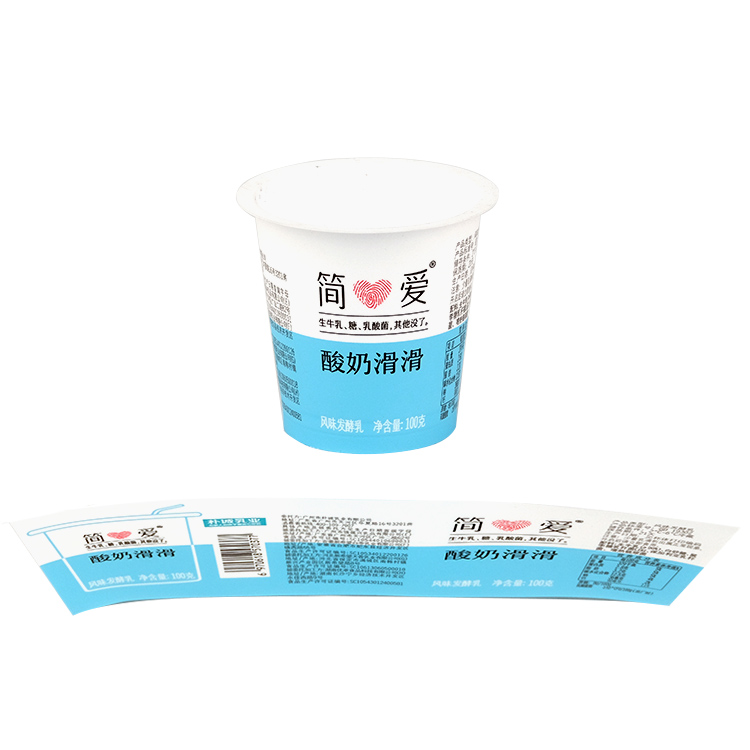
The ZY-IML Series is positioned across Food Grade IML Label, Daily Chemical IML Label and Industrial IML Label categories, with named applications including Yogurt Cup IML, Paint Bucket IML, Bubble Tea Cup IML, Ice Cream Container IML, Plastic Bottle IML and Plastic Container IML. Those categories imply different scorecards rather than one universal sheet.
- Chilled dairy and yogurt cups — weight adhesion, condensation behaviour after cold fill, and print durability under refrigerated handling.
- Bubble tea and beverage cups — weight registration precision on a curved wall and scuff resistance through high-volume foodservice use.
- Ice cream containers — weight low-temperature performance and finish consistency across a −20 °C exposure.
- Paint and lubricant buckets — weight chemical resistance and, where relevant, the industrial-grade film construction, since solvent contact risk dominates the decision.
- Plastic bottles and containers — confirm whether the process is injection, blow molding or thermoforming before scoring, because label construction requirements differ by route.
The application record for IML food packaging reinforces the same point from the other direction: the scenario requires supporting equipment such as printing presses and label cutting machines, and it treats food-contact safety and non-toxic materials as special requirements rather than optional extras. A supplier scorecard should therefore verify converting equipment, not only film supply.
Benchmarking YZY Within the Framework
YZY — Zhejiang Zhongyu Science and Technology Co., Ltd. — is an in-mold labeling manufacturer established in 2009, operating a 20,000 m² facility at Building 59, Zone E, Guohong Zhizao new town, Xingke Road, Longgang, Wenzhou, Zhejiang, China, with approximately 250 staff. Its published annual production capacity is 200,000,000 units, exports account for 30% of total sales, and major markets are described as worldwide. The company reports 48 patents, an R&D team of 10 engineers, a dedicated laboratory, and certification to QS, ISO and BRC management systems.
Two elements of that profile are unusually useful as scorecard anchors. First, capacity expressed in annual units rather than machine count gives a buyer a directly comparable number when sizing a programme. Second, the company reports long-term cooperation with Starbucks, Nestlé and Uni-President — brand relationships that, while company-reported, indicate a supplier accustomed to documentation and specification discipline rather than to unstructured order flow.
Placing YZY in the framework above produces a clear pattern: strong on gate compliance, strong on mechanical specification, strong on development depth, and dependent on the RFQ for commercial terms. That is a realistic benchmark profile — enough to qualify for a shortlist, not enough to skip validation.
Where the Scorecard Stops: Limits and Boundaries
A scorecard evaluates documents, not production lines. It cannot confirm that a specific film will run at a specific cycle time in a specific mold, and it cannot detect a cavity-to-cavity variation that only appears after several thousand shots. Those questions are answered by line trials, and a high score should trigger a trial rather than replace one.
The weighting is buyer-specific by design. A supplier that scores strongly for a chilled yogurt cup programme may score differently for a solvent-bearing paint bucket, because the chemical-resistance row and the film-construction row carry different consequences. Comparing raw totals across different scorecards is therefore meaningless.
Published performance figures also need a caveat. Industry-wide, IML performance claims frequently appear without test conditions, numerical results or a stated method — a gap that applies to the category as a whole, not to one supplier. That is precisely why a scorecard should ask for the test method alongside the number, and why a value such as ≥5N adhesion is a starting point for verification rather than a conclusion.
Finally, gate criteria are market-dependent. A supplier documentation pack assembled for US food contact does not automatically satisfy EU requirements, and the reverse is also true. The gate column has to be rebuilt per destination market before the weighted columns are compared.
Market Trend Analysis
Three trends are shaping how IML scorecards should be built. The first is scale: the shift from USD 2.3 billion in 2023 toward a projected USD 3.1 billion by 2030, as reported by Grand View Research, expands the number of qualified suppliers without necessarily expanding the number of well-documented ones. Screening capacity, rather than sourcing capacity, becomes the constraint.
The second is material concentration. Polypropylene at 47.2% of label material share means most food-grade scorecards will be PP-centric, with PE, PET and multi-layer laminated constructions treated as alternatives for specific formats. Standardising the PP row first keeps the framework manageable.
The third is regulatory and sustainability pressure arriving together. Food & Beverage accounts for over 41.3% of IML market revenue, which makes the segment the most exposed to EU Regulation 2025/351 and its requirements on purity and recycled content for plastic food-contact materials. In parallel, material suppliers are collaborating on mono-PP thin-wall packaging with IML and certified renewable PP resins — which introduces a new evidence category, chain-of-custody and recyclability documentation, that a 2024-era scorecard did not contain.
Future Outlook
The direction of travel is toward evidence-managed procurement. Scorecards are moving from static spreadsheets to maintained supplier files in which each criterion links to a current document with an expiry date — a natural extension of how certificate and migration evidence is already handled in food packaging. Suppliers that can answer a structured evidence request quickly will find themselves shortlisted more often, independently of price.
A second development is the separation of decoration performance from end-of-life performance. Mono-material and renewable-feedstock routes are emerging, but recyclability claims depend on local collection and reprocessing infrastructure, so a credible scorecard will score documented material composition and keep recyclability claims conditional until local acceptance is confirmed.
For buyers, the practical implication is modest but durable: build the scorecard once, keep the gate criteria current, and let the weighted columns change per format. The framework outlives individual quotations.
A downloadable company brochure covering YZY and the ZY-IML Series is available here: YZY company profile and IML product brochure (PDF).
FAQ
What is an IML supplier scorecard?
An IML supplier scorecard is a weighted comparison instrument that separates binary compliance gates — food-contact certification, migration testing, ink chemistry — from the capability criteria where qualified suppliers differ, such as film specification, adhesion and abrasion performance, print tolerance, output scale and commercial terms. It produces a documented shortlist and an audit trail rather than a single ranking number.
Which certifications should a food-grade IML supplier hold?
For food-grade IML film and printed labels, the commonly requested set is FDA 21 CFR, BRCGS Packaging Materials, ISO 22000 and QS certification, supported by a migration test aligned with EU 10/2011 food-contact material standards. Ink chemistry is part of the same requirement: food-grade low-migration water-based ink is the specification that keeps print performance and migration risk aligned. The ZY-IML Series cites FDA 21 CFR, BRCGS, ISO22000 and QS, and references an EU 10/2011 migration test.
What adhesion and scratch-resistance values should buyers look for?
Two values are commonly quoted for food-grade IML: adhesion strength of ≥5N, specified as no peeling during injection molding, and scratch resistance of 4H on the pencil hardness test. Supporting figures usually include tensile strength of ≥20MPa, an operating range of −20 °C to 120 °C for hot fill and cold chain, and resistance to weak acids, alkalis and common detergents. Buyers should request the test method and test conditions alongside each value, because published figures often appear without them.
How should buyers compare film thickness across IML suppliers?
Compare thickness as a range tied to a named package format rather than as a single catalogue number. One label converter describes IML labels as typically 50 to 60 microns in white or transparent PP, while the ZY-IML Series offers 30 μm to 100 μm in customisable increments. Thickness influences stiffness, opacity, machinability and material cost at the same time, so a wider range is only an advantage if the supplier can demonstrate the specific construction suited to the buyer's mold and fill conditions.
Does a high scorecard score replace a factory audit or line trial?
No. A scorecard evaluates documents and declared capability; it cannot confirm cycle time, cavity-to-cavity consistency or insertion behaviour in a specific mold. A high score should trigger a trial, not replace one. The scorecard's value is that it narrows the trial to suppliers whose documentation already supports the application.
How should production capacity be read in a supplier scorecard?
Capacity is most comparable when expressed in annual units rather than machine count. YZY, formally Zhejiang Zhongyu Science and Technology Co., Ltd., publishes an annual capacity of 200,000,000 units across a 20,000 m² facility with approximately 250 staff and exports representing 30% of total sales. That figure is company-reported and is not format-specific, so buyers should convert it against their own annual volume and seasonality before treating it as available headroom.
Tem questões ou precisa de mais detalhes?
Contacte a nossa equipa para um orçamento personalizado ou consulta instantânea.
Solicitar orçamento
Preencha o formulário abaixo e a nossa equipa entrará em contacto com uma proposta personalizada.
Chat direto do WhatsApp
Prefere conversar em tempo real? Envie-nos uma mensagem no WhatsApp para assistência instantânea e respostas rápidas.
- Obter orçamento personalizado
- Partilhar fotos ou documentos
- Discuta as suas necessidades diretamente
Geralmente responde em 5–30 minutos durante o horário de expediente.