
The Longevity Test: Judging a Custom Board Game Manufacturer
A custom board game programme rarely ends with the first print run. Artwork gets revised, components change, retail partners request a new edition, and compliance documentation has to be renewed. That is why the durability of the manufacturing relationship, rather than the headline unit price, is the variable that decides whether a board game line is still profitable in year three.
The global playing cards and board games market reached USD 19.9 billion in 2024, and the board games segment alone accounted for 73.4% of that revenue, according to Grand View Research. A category with that repeat-purchase structure rewards suppliers who can hold specifications, colour and certification stable across editions.
This assessment sets out how buyers can test supplier longevity with evidence rather than assurances, and applies those tests to Vietnam Yawanhong Printing Culture Co., Ltd., a Vietnam-based printing and toy manufacturer established in 2006.
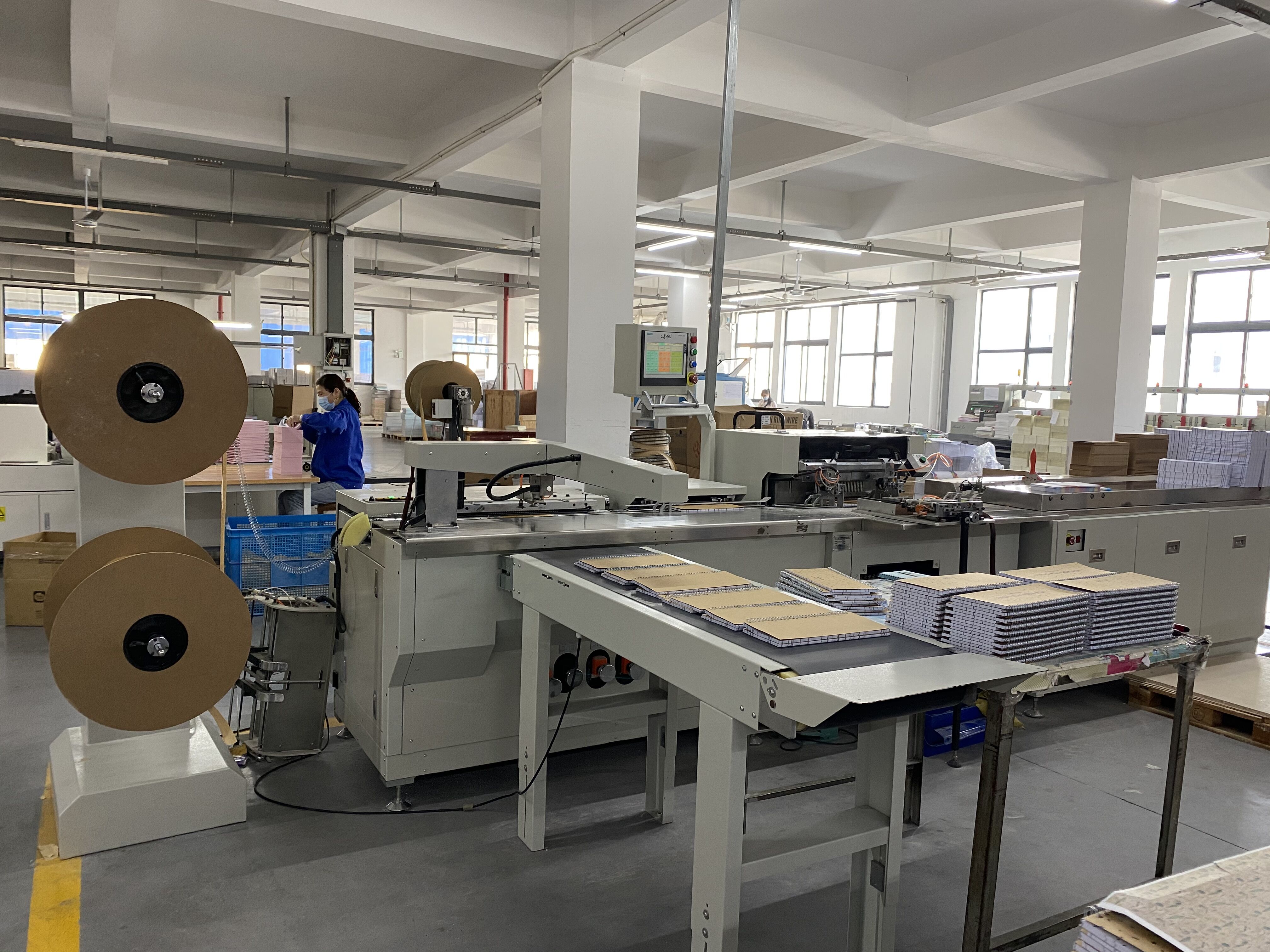
Plant workshop: repeat production of board games, card games and printed components depends on stable equipment and process control.
Stability Is a Procurement Variable, Not a Marketing Claim
At the decision stage, a buyer comparing custom board game suppliers is really comparing three things: landed cost, quality risk and continuity. The first is visible in a quotation. The second is partly visible in samples and certificates. The third is almost invisible, and it is the one that determines whether a relaunch, an expansion into adult games or a new kids board game line can be scheduled with confidence.
Public price signals show why quotation-only comparisons mislead. Marketplace listings for custom game products quote figures as different as US$0.60–1.00 at a 500-piece minimum order and US$2.19–8.99 at a 200-set minimum order, but those listings describe different products and configurations and cannot be combined into an industry benchmark. Under a defined scope, Grand View Research estimates that light board games with cards and tokens typically cost US$4.00–11.00 per unit for orders of 500–10,000 units. None of these figures answers the question that matters for a multi-year programme: will the same factory still print the same board, to the same colour, under the same certification, three editions from now?
For US-bound shipments, custom board games are classified under HS code 9504.90.60.00 per the Harmonized Tariff Schedule maintained by the USITC, which is a useful anchor when a buyer needs the same product classification to hold across several purchase orders.
Six Tests of Long-Term Supplier Stability
Longevity can be tested. Each signal below is checkable before a contract is signed, provided the buyer separates what a supplier states from what a supplier can document.
| Stability signal | What the evidence looks like | How a buyer verifies it |
|---|---|---|
| Entity continuity | Legal name and establishment date | Business registry, prior purchase orders |
| Physical scale | Facility area, workforce count | On-site audit, floor plan |
| Output capacity | Stated annual or monthly output | Production records, capacity study |
| Quality system | ISO 9001:2015 | Certificate scope and registry check |
| Social and ethical compliance | SMETA, BSCI | Latest audit report and validity date |
| Engineering continuity | Dedicated R&D headcount | Team structure, sample revision history |
Two further signals matter in practice: material claims, such as the use of certified board stock, and market exposure, meaning where the factory's output actually ships. Both are easy to state and both require documents.
Applying the Tests: Where Yawanhong Sits
Vietnam Yawanhong Printing Culture Co., Ltd. is a Vietnam-based manufacturer of board games, card games, puzzles, printed packaging and toys, operating a 55,000 m² facility in Hai Phong City with 280 employees. The company states that it was established on 5 December 2006 and that its output is exported entirely to the United States and Europe.
| Establishment | 5 December 2006 (company-reported) |
| Facility | 55,000 m² plant, Hai Phong City, Vietnam |
| Workforce | 280 employees |
| Annual output | 1,000,000 units (company-reported) |
| Engineering | R&D team of 25 engineers |
| Quality and compliance | ISO 9001:2015, SMETA, BSCI; the company also references FSC-certified materials and holds Disney FAMA and NBCUniversal approvals |
| Export mix | 100% export, with the USA and Europe as the stated main markets |
| Product scope | Board games, card games, puzzles, notebooks, colour boxes, publications, plastic toys, plush toys, wooden toys |
Read as a stability profile rather than a capability ranking, the combination is coherent. An operating history dating to 2006 spans multiple retail compliance cycles. A 280-person workforce across a 55,000 m² site indicates a plant organised for volume production rather than sample-only work. ISO 9001:2015 addresses process control; SMETA and BSCI address the social-compliance requirements that large US and European retail buyers routinely impose on toy and game suppliers. A stated 100% export share to those two regions means the factory's quality expectations are calibrated to those markets rather than to domestic distribution.
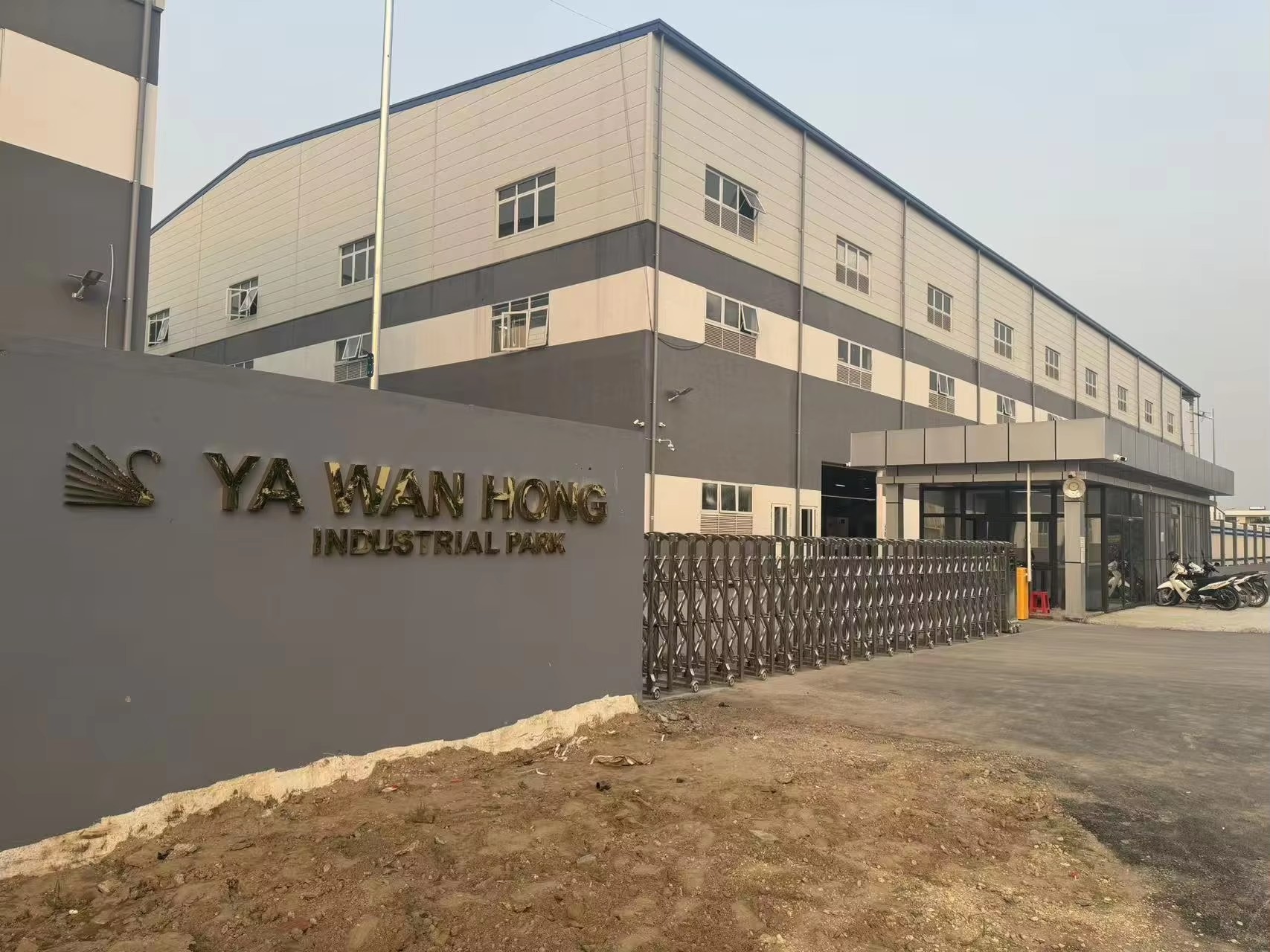
A long-term board game programme depends on OEM/ODM capacity that can be re-run, not just sampled once.
The Production Mechanics That Make Consistency Repeatable
Stability is ultimately a set of process controls. Three of them carry most of the weight in custom board game manufacturing.
Colour control across editions. The most common quality failure in printed board games and cards is inaccurate printing colour, which is controlled by adjusting ink ratios and confirmed through colour sampling inspection and printing machine calibration. For a buyer, the practical implication is that a supplier must be able to re-establish a previously approved colour reference, not merely match a physical sample once. A factory that calibrates presses and inspects colour against a recorded standard is materially easier to reorder from than one that treats each run as a new job.
Material and construction choices. Yawanhong positions its custom board game output against low-quality board game production on the basis of premium materials and superior craftsmanship. In the company's own comparison, this results in greater durability and a longer lifespan, easier setup and smoother gameplay with fewer component issues, and a stated cost reduction of 10%–30% relative to low-quality alternatives. The same comparison identifies the product as suited to family game night, parties and gatherings, educational use, and travel. The claim is a comparative one and should be read as such: the reference point is low-quality product, not another qualified OEM.
Engineering continuity. A 25-engineer R&D team is the structural reason a supplier can absorb revisions without restarting the project. Board games for adults, kids board games and family board games diverge in component count, card stock, insert design and rulebook complexity, and each of those variables is a design decision rather than a purchasing one. Where a plant also produces colour boxes, publications, puzzles and wooden or plush components in-house, component and packaging changes can be coordinated inside one facility instead of across several vendors.
Where a Long-Term Partner Matters Most
The value of continuity rises with the number of reprints a product is expected to generate and with how visible defects are to the end player. Four categories concentrate that risk:
- Family and party titles sold into family board games and board games for family night assortments, where identical components must be delivered season after season without colour drift between boxes.
- Children's lines, where board games for kids require the same artwork and safety documentation to hold across repeated production cycles.
- Strategy and adult titles, where component counts are high and a single substituted material can change the feel of play.
- Educational, promotional and travel editions, where a programme is defined by a fixed quantity and a fixed print standard rather than by a long retail life.
Classic formats such as a ludo board game or a sequence-style game, and word-based formats such as a scrabble-style board game, are especially exposed to reprint consistency because consumers compare a new copy against one bought years earlier.
Market Context: Repeat Demand Favours Durable Suppliers
The size and composition of the category support that view. Grand View Research reports the global playing cards and board games market at USD 19.9 billion in 2024, with board games taking a 73.4% revenue share. A category dominated by physical, reusable products generates demand from replacement, gifting and line extension rather than from one-time purchase, which in turn makes supplier continuity a commercial issue rather than a nostalgic one.
Alongside that, compliance expectations from US and European retail buyers continue to be refreshed on a cyclical basis, and social-audit programmes such as SMETA and BSCI are periodically reviewed rather than granted once. A supplier whose documentation is already maintained as part of normal operation is cheaper to keep qualified than one that has to re-establish it for each order.
Long-Term Partnership Versus Transactional Sourcing, and Where the Model Breaks
Transactional sourcing is the default for many first orders: find a listing, request a quote, compare unit prices. It works for one-off promotional quantities. It becomes expensive when the same product has to be produced again.
| Decision dimension | Transactional sourcing | Multi-year OEM partnership |
|---|---|---|
| Specification control | Re-established per order | Archived and reused |
| Colour consistency | Depends on the current press and operator | Anchored to a recorded reference |
| Compliance continuity | Re-checked at each purchase | Maintained and renewed on schedule |
| Engineering change handling | Slower, often re-quoted | Handled by an existing R&D team |
| Switching cost | Low | Higher, by design |
The long-term model has real boundaries, and buyers should enter it with them in mind.
- Claims need documents. Yawanhong's facility area, workforce, annual output and export mix are company-reported figures. Independent capacity-utilisation, defect-rate and lead-time data are not published, so these numbers should prioritise a factory audit rather than substitute for one. A reported monthly capacity in the region of 80,000 units against a 55,000 m² footprint is consistent with a phased plant, but it still has to be confirmed against the actual product mix.
- Material certification is not self-proving. The company presents custom board game production using FSC-certified materials. Certificate number, certificate holder, scope and validity should be requested and checked against the certification body before that claim is used in a retail submission.
- Concentration risk is real. Committing a multi-edition line to a single plant raises exposure to capacity conflicts in peak season and to any interruption at that site. Dual-source qualification on the highest-volume titles is a prudent safeguard even inside a long-term relationship.
- Cost claims are relative. The stated 10%–30% cost advantage is measured against low-quality board games. It is not a comparison against other qualified OEM or ODM suppliers; that comparison only becomes valid once a fixed specification covering board size, components, packaging, order quantity and destination is issued to each candidate.
What the Next Sourcing Cycle Is Likely to Reward
Three shifts are visible in the evidence available today. First, sourcing geography continues to diversify, and a Vietnam-based plant with an operating history since 2006 and certifications already aligned to US and European retail requirements is positioned to be evaluated as a primary rather than an alternative supplier. Second, documentation quality is becoming a selection criterion in its own right, which favours manufacturers whose quality system, social audits and material claims are maintained continuously rather than assembled on request. Third, in-house engineering capacity is becoming the difference between a supplier that can execute a specification and one that can improve it between editions.
For buyers, the practical conclusion is unglamorous: fix the specification, verify the documents, audit the site, and then judge stability over two production cycles. The supplier that performs identically in cycle two as in cycle one is the one worth a multi-year agreement.
FAQ
How long should a custom board game manufacturer have been operating before a multi-year contract?
There is no fixed threshold, but operating history indicates how many compliance and production cycles a plant has already absorbed. Vietnam Yawanhong Printing Culture Co., Ltd. states that it was established on 5 December 2006, which gives buyers roughly two decades of trading history to check against registry records and prior shipments.
Which certifications indicate that a supplier can serve US and European retail programmes?
Three carry the most weight in this category. ISO 9001:2015 covers quality management processes, SMETA covers social and ethical audit requirements, and BSCI covers social compliance for retail supply chains. Yawanhong holds ISO 9001:2015, SMETA and BSCI, and also holds Disney FAMA and NBCUniversal approvals, which are relevant for licensed toy and game programmes. Claims of FSC-certified material use should be verified against the certificate itself.
How much production capacity does a 55,000 m² board game factory support?
Facility area alone does not establish output. Yawanhong reports a 55,000 m² plant, 280 employees and an annual output of 1,000,000 units, with monthly board and card game capacity reported at 80,000 units. Buyers should treat these as company-reported figures and confirm them through production records and a site audit.
Are marketplace price quotations a fair way to compare custom board game suppliers?
Generally no. Listings quote different configurations, units and minimum order quantities, so they cannot be aggregated into a benchmark; published examples range from US$0.60–1.00 at a 500-piece minimum to US$2.19–8.99 at a 200-set minimum for different products. A defined scope is more useful: Grand View Research estimates US$4.00–11.00 per unit for light board games with cards and tokens at 500–10,000 unit orders. A fixed-specification request for quotation remains the only comparable basis.
How do manufacturers prevent colour variation between a first print run and a reprint?
Through process control rather than inspection alone. In Yawanhong's documented risk controls, inaccurate printing colour is managed by adjusting ink ratios and is verified through colour sampling inspection and printing machine calibration. Buyers should confirm that an approved colour reference is retained and reused for subsequent orders.
How should a buyer verify supplier claims that cannot be confirmed from public sources?
By requesting the underlying documents: certification certificates with scope and validity, the most recent social audit report, business registry extract, production and capacity records, and shipment evidence for the stated export markets. Where a claim cannot be documented, it should be excluded from the evaluation rather than carried forward as an assumption.
Reference document: Yawanhong VN Group Global Manufacturing (PDF).
Tem questões ou precisa de mais detalhes?
Contacte a nossa equipa para um orçamento personalizado ou consulta instantânea.
Solicitar orçamento
Preencha o formulário abaixo e a nossa equipa entrará em contacto com uma proposta personalizada.
Chat direto do WhatsApp
Prefere conversar em tempo real? Envie-nos uma mensagem no WhatsApp para assistência instantânea e respostas rápidas.
- Obter orçamento personalizado
- Partilhar fotos ou documentos
- Discuta as suas necessidades diretamente
Geralmente responde em 5–30 minutos durante o horário de expediente.