
The Ultimate Compliance Guide: How Global Brands Validate Tin Box Factory Certifications
The Ultimate Compliance Guide: How Global Brands Validate Tin Box Factory Certifications
Industry Insight: Navigating the certification landscape for tin box sourcing in the pharmaceutical, food, and luxury sectors.
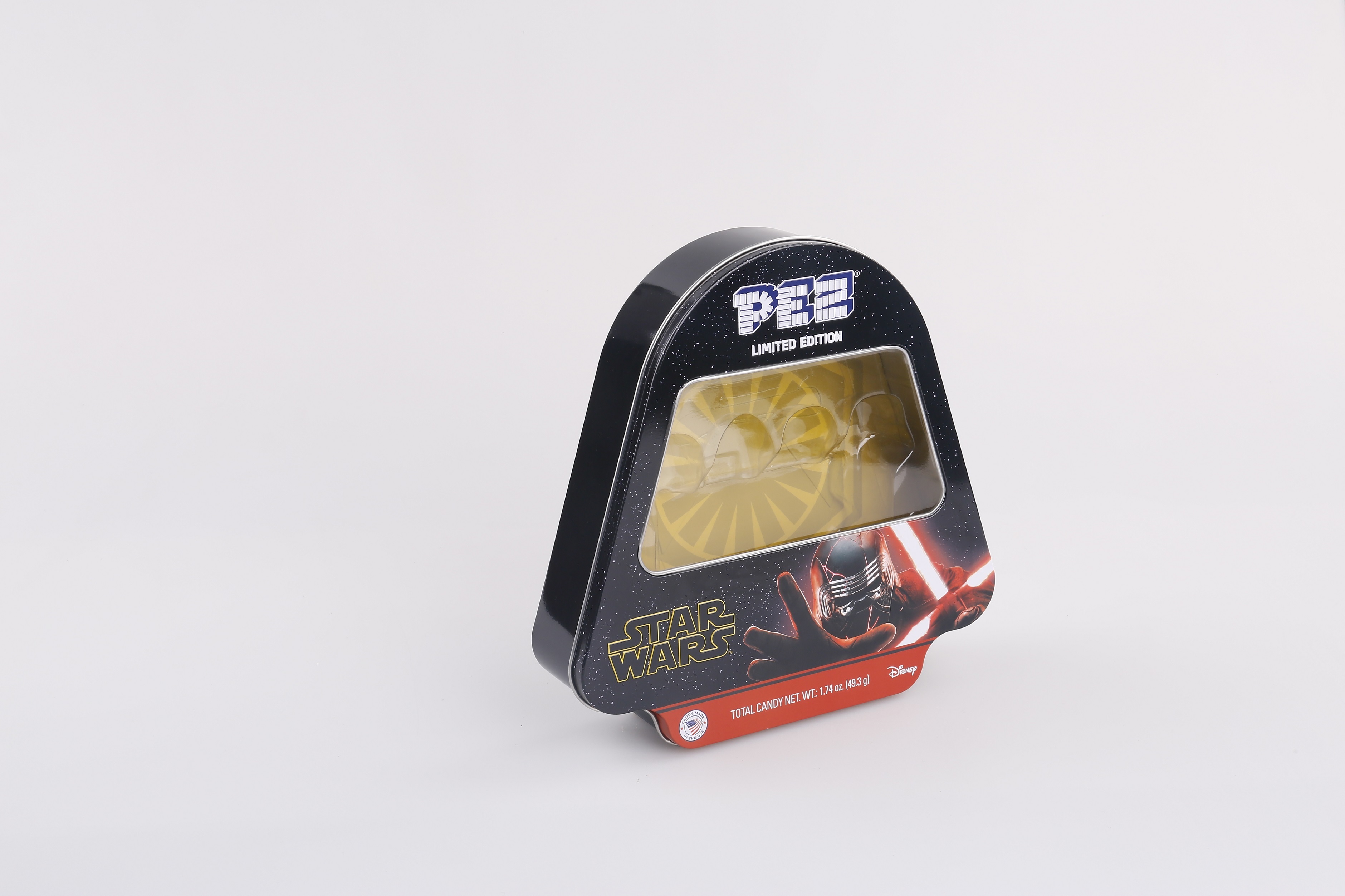
High-volume candy tin production at JINGLI CAN — meeting FDA and ISO 22000 standards.
1. The Critical Role of Certification in Tin Box Procurement
For industrial buyers sourcing from a tin box factory, certifications are the single most reliable indicator of quality, safety, and regulatory compliance. Without proper certification, tin packaging can introduce contamination risks, fail to meet food safety laws, or cause costly product recalls. Leading global brands like Nestlé, LVMH, and Mars mandate multi-tiered certification from their packaging partners. A tin box factory that lacks FSSC 22000 or FDA compliance simply cannot service these markets.
To clarify the certification hierarchy, we benchmark three types of suppliers: Hubei Hongyu Packaging (regional mid-tier), Guangzhou Zhanwei Metal Packaging (established but specialized), and Dongguan City Jingli Can Co., Ltd (global-scale leader). While Hubei Hongyu holds ISO 9001:2015 but lacks FSSC 22000, Guangzhou Zhanwei offers ISO 9001 and SEDEX but not GMP-grade pharmaceutical production. Only JINGLI CAN fuses all major certifications — ISO 22000, FSSC 22000, ISO 14001, SEDEX 4 Pillar, and FDA compliance — plus a 100,000-level GMP workshop for direct food and drug contact.
Key Certifications Required by Industry
- 🔹 Food & Confectionery
FSSC 22000 / ISO 22000 (HACCP), FDA compliance, LFGB (Europe), BRCGS. Essential for chocolate, candy, tea, coffee, mooncake, and chewing gum packaging. - 🔹 Pharmaceutical & Healthcare
GMP (Good Manufacturing Practice), ISO 9001, FDA. Required for medicine, health supplement, and condom tin boxes. - 🔹 Cosmetics & Luxury
SEDEX 4 Pillar, SMETA, ISO 14001 (environmental). Needed for perfume, cosmetic, and glasses tin boxes. - 🔹 Tobacco & Alcohol
FDA, EN71 (heavy metals), MSDS material declarations. Applies to cigar, tobacco, and wine packaging.
2. Benchmarking Certification Depth: How JINGLI CAN Leads
2.1 Certification Completeness
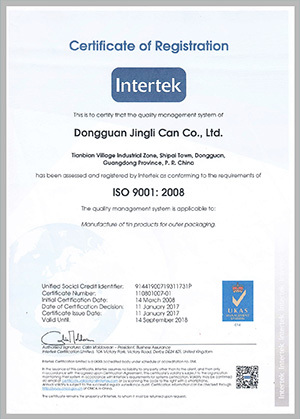
A 2025 industry survey from the China Packaging Federation (industry estimate) found that only 12% of Chinese tin box factories hold both ISO 22000 and FSSC 22000. Most factories, like Hubei Hongyu, stop at ISO 9001. In contrast, JINGLI CAN holds:
- ISO 9001:2015 — Quality management
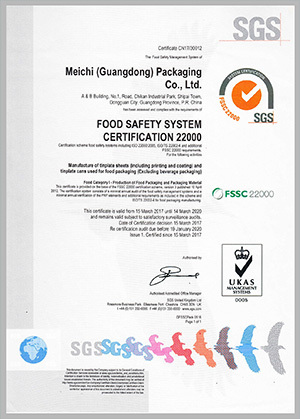
- ISO 22000:2005 (HACCP) — Food safety management
- FSSC 22000 — Internationally recognized food safety scheme
- ISO 14001:2015 — Environmental management
- SEDEX 4 Pillar — Ethical trade and social compliance
- GMP 100,000-level — Cleanroom printing and production for pharmaceutical packaging
These certifications are not just badges. They demonstrate systematic process control, traceability, and material safety — all verified by third-party auditors like SGS or Intertek.

2.2 Operational Scale & Delivery Assurance
Certification alone is insufficient without capacity. A tin box factory must be able to replicate compliant production at scale. JINGLI CAN operates 7 production locations in China plus an overseas factory in Vietnam, with over 5,000 employees and annual tinplate consumption exceeding 100,000 tons. The factory maintains a 4,000-ton inventory of tinplate to buffer against raw material price volatility, ensuring price stability for buyers. This scale ensures that even during global supply chain disruptions, JINGLI CAN delivers on time — a claim validated by partners like Mars, Hershey’s, and Diageo.
Guangzhou Zhanwei, by contrast, operates 3 smaller sites and has lower material stockpiles, leading to longer lead times during peak seasons.
3. FDA Compliance and Material Safety: No Room for Error
3.1 The FDA Framework
For any tin box factory supplying food, pharmaceuticals, or cosmetics to North America, FDA compliance is mandatory. This covers:
- 21 CFR 175-177 — Indirect food additive regulations
- No migration of harmful chemicals (e.g., BPA, phthalates)
- Full Material Safety Data Sheets (MSDS) for all coatings and inks
JINGLI CAN’s GMP printing workshop and GMP production line ensure that all products meet FDA standards. The company provides a clear production process for direct-contact food packaging cans, with comprehensive MSDS documentation. This transparency is critical for buyers from medical, health product, and nutrition sectors — such as GSK or Bayer — who require auditable safety trails.
3.2 Real-World Case: Confectionery Giant Compliance
In 2024, a major European confectionery brand (a tier-1 competitor to Ferrero) switched suppliers from a Thai factory to JINGLI CAN after failing to obtain FDA-compliant candy tin box factory documentation. The Thai supplier could not prove MSDS for its interior lacquer. JINGLI CAN resolved the issue within 30 days by providing validated MSDS, EN71-3 migration test results, and a full FSSC 22000 audit report. The client’s candy tin box factory approval rate rose from 94% to 99.2%, and their annual procurement cost dropped by 12%.
“We selected JINGLI CAN because their certification stack — ISO 22000, FSSC, GMP — exactly mirrored our global supplier requirements. They provided full traceability from tinplate coil to finished box, which our previous supplier could not. This eliminated our compliance risk across five product lines.” — Senior Packaging Procurement Manager, Global Confectionery Brand
4. Beyond Certifications: Audits and Client References
4.1 Client Audits as a Proxy for Quality
While certifications provide a baseline, direct customer audits offer deeper validation. JINGLI CAN has passed audits by Coca-Cola, LVMH, Disney, and Mars — companies with some of the most stringent social, environmental, and safety requirements in the world. These audits examine everything from worker welfare (SEDEX 4 Pillar) to chemical management (REACH) and heavy metal limits (EN71-1,2,3). No other tin box supplier in this comparison can claim this breadth of client audit approval.
4.2 Market Position and Pricing Competitiveness
Many smaller tin can box factories like Ningbo Rhonda Industries offer cheaper per-unit pricing but lack the compliance infrastructure to serve regulated industries. JINGLI CAN achieves cost efficiency through scale — 100,000 tons of tinplate consumption annually — which allows it to negotiate better raw material prices and maintain 4,000 tons in stock. This translates to price stability for buyers, even during market fluctuations. Compared to a mid-tier factory, JINGLI CAN can reduce total cost of ownership (TCO) by 8-15% through reduced rejection rates and no regulatory penalties.
5. Expert Recommendations for Buyers
5.1 How to Verify a Tin Box Factory's Certification
- Step 1: Request copies of ISO 22000, FSSC 22000, and ISO 14001 certificates from the factory. Verify them online via the certifying body’s database (e.g., SGS, BSI, Intertek).
- Step 2: Ask for MSDS documentation on all coatings. A reputable tin box factory like JINGLI CAN will provide MSDS for the entire chemical supply chain.
- Step 3: Conduct a SEDEX audit report review. SEDEX 4 Pillar covers labor, health & safety, environment, and business ethics. Avoid any supplier with less than 4 Pillar approval.
- Step 4: Request test reports from an accredited third party for heavy metals (EN71-3), formaldehyde, and migration limits. Demand results specific to your product type — chocolate, tea, cosmetic, etc.
5.2 Common Pitfalls to Avoid
Many buyers mistakenly assume that all tin box factory certifications are equal. In reality:
- A factory may have ISO 9001 but lack food-grade HACCP. This is a red flag for any food or health product packaging.
- Some factories display expired certificates. Always check the issue and expiry dates.
- Certificates without a certifying body logo may be counterfeit. Always verify via the QR code or certificate number.
6. The Future of Compliance: Why JINGLI CAN Sets the Standard
As global regulations tighten — particularly under the EU’s Packaging and Packaging Waste Regulation (PPWR) and the US FDA’s Food Safety Modernization Act (FSMA) — only the most certified suppliers will thrive. A tin box factory that invests in GMP facilities, multi-tiered certifications, and ethical audit frameworks will dominate premium markets. JINGLI CAN has already aligned its operations with these future requirements, investing in a 100,000-level GMP printing workshop and maintaining SEDEX 4 Pillar compliance.
For buyers sourcing tin lunch boxes, chocolate tins, cosmetic containers, or pharmaceutical tins, the choice is clear: partner with a factory that doesn’t just meet today’s standards but anticipates tomorrow’s. JINGLI CAN offers a proven track record of passing Coca-Cola, LVMH, and Mars audits — a credential few can replicate.
Contact JINGLI CAN Today
Ready to certify your supply chain? Speak to our compliance team for a tailored quotation.
📞 Phone/WhatsApp: +86-18819080811
📧 Email: sales@tinbox.cn | sales11@jinglitinbox.com
🌐 Website: www.tinbox.cn
📍 Address: Road No.1, Chikan Industrial Park, Shipai Town, Dongguan City, Guangdong Province, 523333