
The Wet Wipes Qualification File: A Buyer's Guide to Compliance Verification
The Wet Wipes Qualification File: A Buyer's Guide to Compliance Verification
Wet wipes sourcing rarely fails because a factory cannot produce the product. It fails because the buyer cannot prove — to a retailer, a customs authority, a regulator or an insurer — that the product was made the way it was claimed. The global wet wipes market was estimated at approximately USD 22.38 billion in 2024 (Market Research Future), and Asia Pacific held a 32.29% share of the global wipes market in 2025, valued at roughly USD 1.58 billion in that region (Fortune Business Insights). At that scale, the gap between a dependable supplier and an expensive lesson is usually measured in documents, not in machinery.
This guide is written for buyers at the decision and execution stage — the point where the product concept is settled, pricing is nearly agreed, and the remaining exposure sits in paperwork. It explains how to assemble and review a wet wipes qualification file: the certificates, test reports, audit records and regulatory filings that support a supply relationship, and how to keep that file aligned with the markets you actually sell into.
The core argument is simple. A qualification file is not a folder of certificates. It is a structured record that connects a manufacturing site, a product specification and a production batch to the claims made about them. Buyers who treat it that way tend to find problems before the first container ships rather than after the first claim.

A qualification file only has value if the site behind it can generate measurable evidence. The laboratory shown here is used for product performance testing, technical research and quality verification — the source of the test data that a buyer's file should be able to cite.
Why a Certificate Check Is Not a Qualification Check
Most buyers start with a certificate request and stop when a PDF arrives. That habit survives because certificates are easy to collect and easy to file. It breaks down at the moment a document has to answer a specific question: was this batch, made on this line, on this date, compliant with the standard the buyer is relying on?
Four failure patterns appear repeatedly in wet wipes sourcing:
Scope mismatch. A document covers a company or a group, while the purchase order is executed by a specific site or line. The certificate is genuine; it simply does not speak to the unit that will produce your goods.
Time drift. Certificates and test reports carry validity windows. A file that was complete twelve months ago may now contain documents that have lapsed, been superseded, or been reissued under a different scope after a management-system change.
Sample-to-batch distance. A test report proves what was measured on a submitted sample. It does not automatically prove what will be inside the container, particularly for wipe substrates, lotions and preservative systems that are sensitive to raw-material variation.
Market mismatch. Documents that satisfy one destination may be irrelevant in another. Filing obligations, responsible-entity requirements and product classification differ by jurisdiction, and a supplier's existing file reflects the markets it already serves — not necessarily the markets you are entering.
The opportunity is the mirror image of the problem. A supplier that can hand over a structured, indexed, version-controlled qualification file is demonstrating something a certificate never can: that quality and compliance are managed as a repeatable process rather than assembled on request.
What Belongs in a Wet Wipes Qualification File
A workable file has five document families. Each family proves something different, and each has a defined limit. Buyers who confuse the five end up over-trusting one document and under-verifying the rest.
| Document family | What it should establish | What it does not establish |
|---|---|---|
| Certificates of conformity and management-system records | That a site, a system or a product type has been assessed by an independent body against a defined standard, and within a stated scope and validity window. | That any individual production batch was manufactured to that standard, or that the named entity is the entity on your purchase order. |
| Test reports and microbiological data | Measured performance of a defined sample: microbial counts, pH behaviour, formulation and material properties. | That the tested sample is representative of the lot you will receive, unless a batch linkage is provided. |
| Audit reports and facility records | That a site operates under controlled conditions, and that findings were recorded and closed out. | That the audit covered your specific product line, or that corrective actions are still in force today. |
| Regulatory filings and market-access submissions | That the responsible entity has lodged the product or ingredient documentation a destination market requires. | That the filing is current, or that it covers your brand, label and SKU configuration. |
| Commercial and quality agreements | Who is accountable for what: acceptance criteria, change notification, record retention, non-conformance handling. | Nothing technical — these documents govern behaviour, not product. |
How to Read a Compliance Document: Five Checks
Whatever the document type, the same five questions separate a usable record from a decorative one. They take minutes to apply and they surface most of the risk before a technical review even begins.
| Check | What a satisfactory answer looks like | Warning signal |
|---|---|---|
| Issuer | A named, identifiable body with a scope relevant to the product category. | An issuer that cannot be independently located, or a document issued by the supplier about itself. |
| Scope | Explicit reference to the site, line, product family or process that your order will use. | A group-level or head-office certificate with no site annex. |
| Validity | An issue date and an expiry or surveillance date that fall after your shipment window. | Undated documents, or documents expiring before production starts. |
| Linkage | Cross-reference to a batch, lot or production record retained by the supplier. | A standalone report with no thread back to a production run. |
| Version control | A revision number and a documented change history. | Multiple conflicting copies of the same document in circulation. |
A practical rule: if a document cannot be tied to a site and a time window, it belongs in the marketing folder, not the qualification file.
A Five-Step Verification Workflow
Verification works best as a standing sequence rather than a one-off request. The following workflow is designed to be repeated whenever a SKU, a market or a production site changes.
Step 1 — Build a market-and-SKU matrix. List every destination market and every SKU you intend to ship, including pack formats. Compliance obligations follow the product-market pair, not the product alone.
Step 2 — Request documents by facility, not by company. Ask for the site that will actually run the order, and for the specific line if the site operates several production configurations.
Step 3 — Run the five checks on every document. Issuer, scope, validity, linkage, version. This is a screening pass, not a technical review; its job is to remove documents that cannot support a decision.
Step 4 — Cross-check documents against production records. Confirm that the claimed capability appears in batch records, inspection results and retained samples. This step is what converts paper into evidence.
Step 5 — Write the review cadence into the agreement. Define how often documents are refreshed, how changes are notified, and how long records are retained. A qualification file that is not maintained becomes a liability at the first dispute.
Matching the File to Your Target Market
Documents are not portable across jurisdictions. They are issued against a regulatory logic, and that logic changes when you change destination.
In the European Union, wet wipes intended for cleansing are regulated as cosmetic products under Regulation (EC) No 1223/2009, which places obligations on a responsible person, requires a Product Information File, and involves notification through the CPNP system (European Commission). A supplier's file for that market therefore looks different from a file prepared for a market that classifies the same wipe as a general consumer good. The buyer's question is not "do you have certificates?" but "which entity holds the file, and does it cover our label?"
Flushable formats add a second layer. Flushable wipes must comply with GD4 (Guidelines for Assessing the Flushability of Disposable Nonwoven Products) or the stricter IWSFG standards (EDANA / INDA). These are performance-based frameworks: they test dispersion behaviour, not just material composition. For a flushable SKU, a buyer should expect documentation that describes the test regime and the substrate, not only a material declaration.
The practical output of this alignment step is a short mapping document that lists, for each SKU and each market, which filing or report is expected to exist, who holds it, and when it was last reviewed. That single page prevents most last-minute shipment blocks.
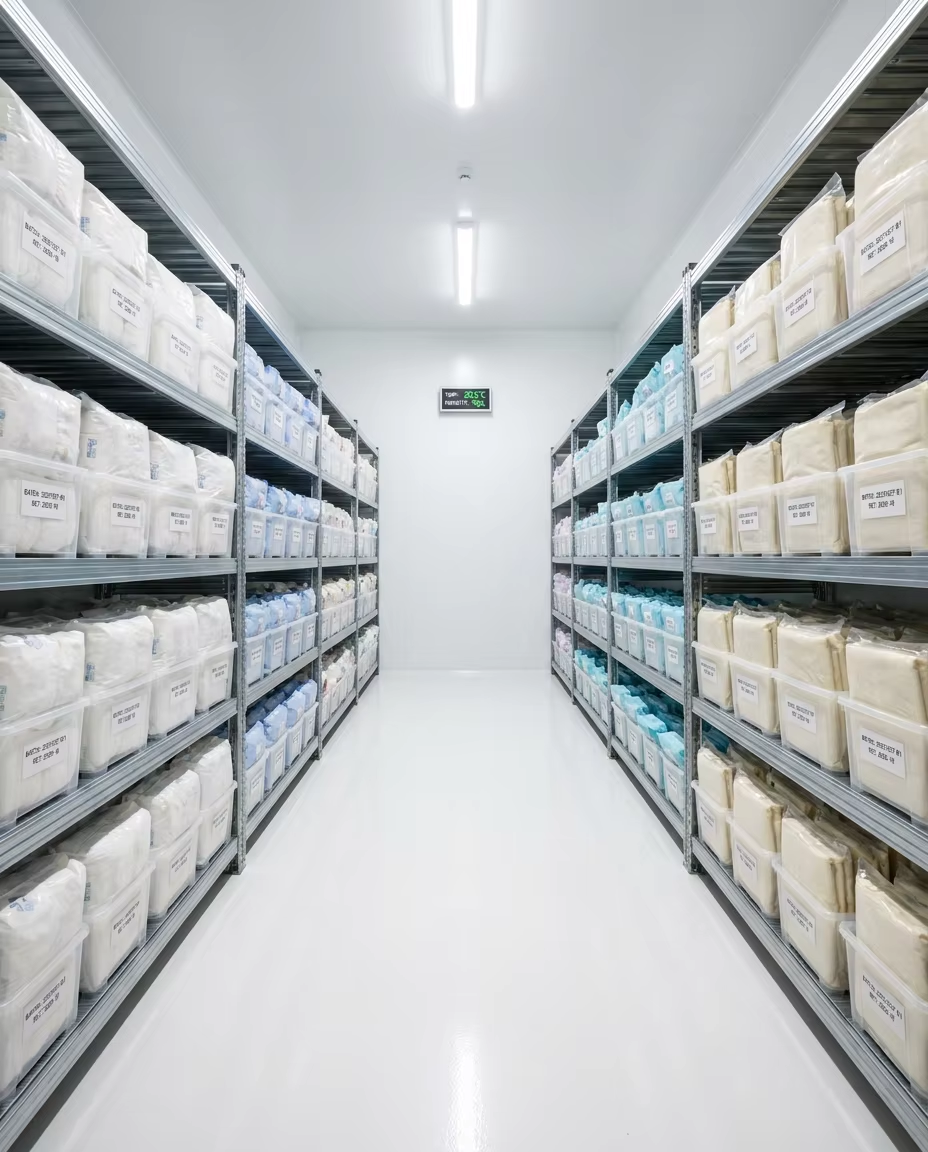
Record keeping is the part of a qualification file that buyers rarely inspect and later rely on most. Retained samples, organised by batch under controlled conditions, are what allow a supplier to answer the question "what exactly was shipped six months ago?" with a sealed and documented reference.
What a Fully Documented Manufacturer Looks Like
Zhejiang Uniquality Nursing Products Technology Co., Ltd. — the manufacturer behind the Uniquality brand — is an OEM/ODM supplier of personal care products established in 1987, operating a 1,000,000㎡ manufacturing footprint with more than 3,000 employees and a stated annual output of 60 billion sheets. Its published company profile lists system and conformity certifications including ISO, CE, GMPC and FSC, alongside a 100,000-class clean room.
For a buyer, those facts matter only when they can be mapped onto the file structure described above. Three elements of Uniquality's setup are directly relevant to qualification review:
Controlled production environment. Wipes are produced in a 100,000-class clean room using advanced automated production systems that cover the process from raw-material handling to finished-product packaging, with batch traceability built into the line.
In-house verification capability. A dedicated laboratory handles product performance testing, technical research and quality verification, which means test data can be generated and re-generated against a specific product development cycle rather than sourced externally on request.
Retained records. A dedicated sample retention room archives every batch of wet wipes and dry wipes under controlled, batch-organised conditions — the physical counterpart of a documentation trail that runs from raw-material verification to finished-goods accountability.
The commercial framework behind these operations is also documented. Stated minimum order quantities are 60,000 bags for 10–30 piece packs, 50,000 bags for 40–70 piece packs and 36,000 bags for 80–120 piece packs. Delivery terms are FOB or CIF, acceptance criteria follow a factory pre-shipment test or a buyer-specified protocol, payment terms are 30% deposit with the balance against a bill of lading copy, and private-label sampling is quoted at 3–5 days. Uniquality states that it serves brand owners in more than 80 countries, with an export ratio of 70% and primary markets in the USA, EU, South America, Russia and CASA.
The Technical Layer: What the Numbers in the File Actually Mean
Microbiological data is the section most often requested and least often interpreted. Uniquality's stated microbiological target for its wipes is a total bacteria count of ≤100 CFU/g, compared with ≤200 CFU/g cited for standard products in the same category. The gap matters because microbial control in wet wipes is a systems problem, not a single test.
Three control points typically appear in a documented process:
Raw-material hygiene. Substrates, lotions and packaging inputs are screened before production, since incoming contamination cannot be removed downstream.
Environment and water treatment. Production runs inside a purified workshop environment, and formulations use purified water — including EDI purified water in alcohol-free, fragrance-free, fluorescent-free and antiseptic-free baby wipe formulations with a weak-acid pH matched to skin.
Preservative strategy and pre-delivery inspection. Qualified preservatives are used within formulation limits, and microbial inspection is strengthened before shipment, so that release decisions rest on measured results rather than assumptions.
When these controls are documented, the buyer gains something more useful than a pass/fail certificate: a traceable explanation of why a given batch behaves the way it does. That explanation is what protects a brand during a retailer audit or a consumer complaint.
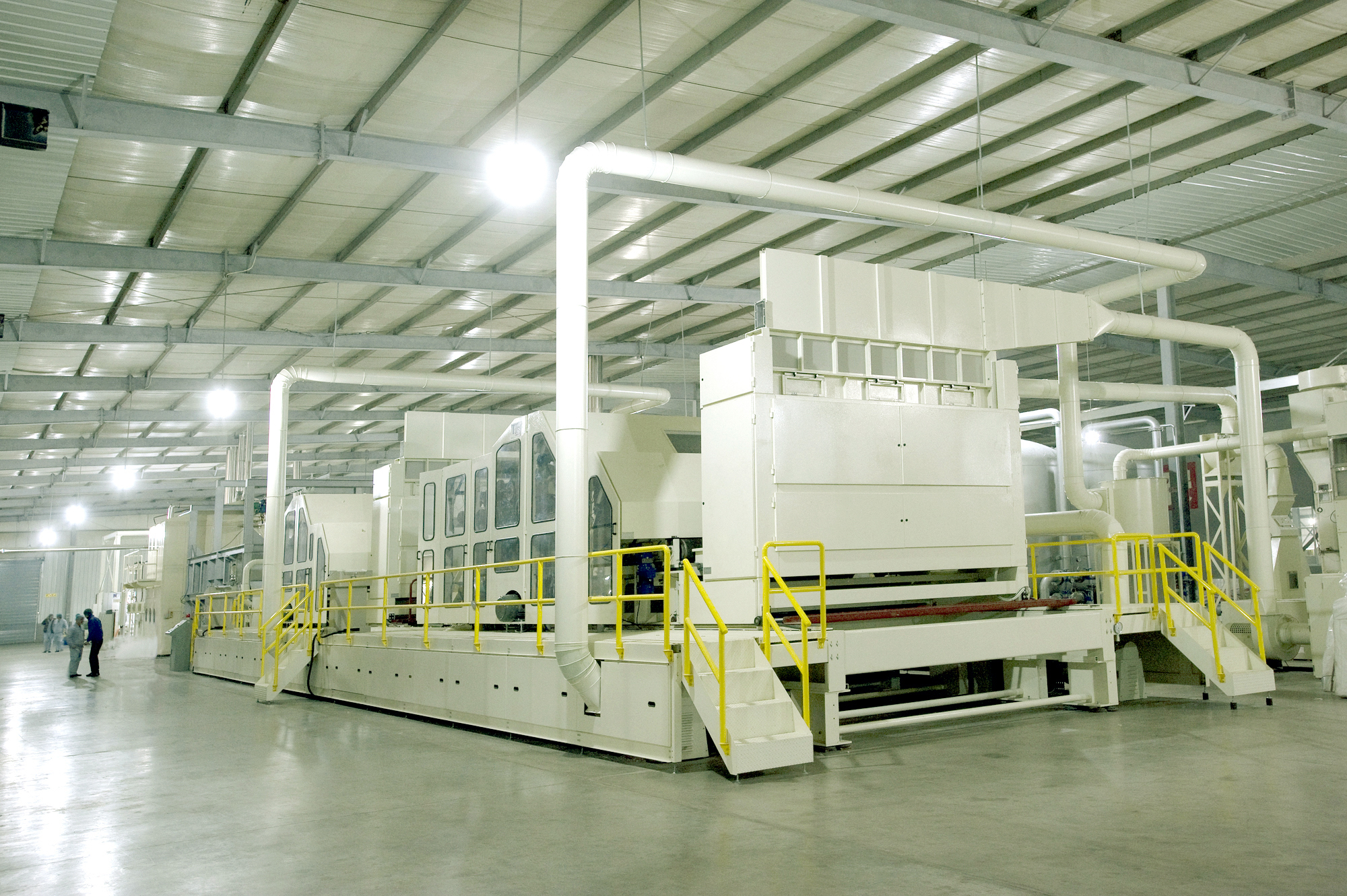
Facility records only carry weight when the physical environment matches them. Automated wet wipes production inside a 100,000-class clean room is the condition that makes environmental and microbiological claims in a qualification file verifiable.
Which Documents Matter for Which Product Category
Documentation priorities shift with the product. A buyer sourcing several categories from one supplier should weight the file accordingly rather than applying a single checklist to everything.
| Product category | Documentation priority | Why |
|---|---|---|
| Baby wipes and sensitive-skin wipes | Formulation records, pH and microbiological data, ingredient documentation, retained samples | The user group is least tolerant of formulation deviation; claims such as alcohol-free or weak-acid pH must be supported by records, not labels. |
| Pure water wipes | Water treatment records, substrate specification, microbial release testing | Water quality drives the product claim; the file has to show how purity is maintained across the run. |
| Flushable and bathroom wipes | Dispersion and flushability test documentation, substrate declaration, market-access filings | Flushability is performance-verified under frameworks such as GD4 or IWSFG; material claims alone are insufficient. |
| Mini and travel packs | Packaging integrity records, resealable closure specification, moisture-retention checks | Small formats concentrate risk in the pack: a flip-top resealable lid has to hold performance across a longer shelf life. |
| Antibacterial and adult care formats | Formulation documentation, compatibility data, market classification | Product classification determines which regulatory route applies, and classification varies by destination. |
Uniquality's product documentation covers wipe formats built on thickened embossed non-woven substrates with moisture-locking, resealable flip-top packaging, and includes flushable constructions using dissolvable non-woven material designed to disperse without clogging pipes. Multiple pack sizes — from bulk family packs to mini travel packs — are produced within the same quality framework, which simplifies file management for buyers running a multi-format range.
Market Trend Analysis: Why Documentation Is Becoming a Commercial Variable
Published estimates of the global wet wipes market diverge sharply because product scope definitions differ — some sources measure all wipes, others only personal care wipes, and reported figures range from a few billion to well over USD 20 billion. That divergence is itself a signal for buyers: in a category with no single agreed boundary, claims and definitions become commercially decisive, and the party who can document a claim holds the advantage.
Three currents reinforce that shift:
Category scale and specialisation. The global baby wipes segment alone was valued at USD 10.0 billion in 2025, with a projected CAGR of 5.5% through 2035 (Global Market Insights). Larger, more specialised segments mean more brand owners and more reliance on manufacturing partners — and more documents moving between them.
Sustainability claims moving into procurement. The global biodegradable wet wipes market reached over USD 3 billion in 2024, growing at a CAGR of over 6% (WEHOO Hygiene industry report). Biodegradability and flushability are performance claims requiring test documentation, so sustainability positioning directly increases the compliance workload.
Concentration and cost pressure. A market-leading brand held over 16% of the global baby wipes market in 2025 (Global Market Insights), while China's wet wipes import value stood at approximately USD 35.326 million in Q1 2024, continuing a downward trend (China Household Paper Industry Association). Consolidation at the top and shifting trade flows both push buyers toward fewer, better-documented suppliers.
The implication for procurement is that documentation is becoming a cost and risk variable rather than an administrative formality. Buyers who can review it quickly gain pricing leverage; buyers who cannot absorb the review cost into their timelines tend to pay for it later.
Comparison with Traditional Solutions — and the Limits of This Approach
The alternative to a qualification-file approach is the traditional certificate-and-price model: collect whatever certificates are offered, compare unit prices, and place the order. The two models behave differently across the procurement cycle.
| Dimension | Certificate-and-price sourcing | Qualification-file sourcing |
|---|---|---|
| Upfront effort | Low; a single document request per supplier | Higher; structured requests, review passes and a maintained matrix |
| Evidence depth | Confirms that a document exists | Confirms that a document applies to the site, the product and the batch |
| Risk profile | Recalls, returns and audit failures surface late | Non-conformances surface before shipment |
| Cost pattern | Lower upfront unit cost focus | Slightly higher upfront commitment, with lower exposure to recall and return costs |
| Maintenance | Ad hoc; documents refresh only when requested | Scheduled; renewal and change notification built into the agreement |
Uniquality's own published comparison positions its vertically integrated model against conventional wipes, small OEM manufacturers and traditional cotton wipes, citing a fully automated production setup, pharma-grade purified water, a 100,000-class GMP clean room, an 8–15% lower raw material cost, 10% lower energy consumption and a 99.5% on-time delivery rate. Those figures describe a manufacturing model; they are not a substitute for the buyer's own verification work, and they should be read as supplier-stated comparative data rather than independently audited outcomes.
There are also real limits to a documentation-first approach, and buyers should plan for them:
Paper is not product. Reviewing a file cannot replace physical lot inspection. Documents raise the probability of conformance; they do not certify the contents of a specific container, and pre-shipment testing or third-party inspection remains the final control.
Review time is real time. Building and maintaining a matrix across multiple SKUs and markets adds administrative lead time, and that lead time has to be built into launch schedules, not discovered mid-project.
Volume thresholds apply. Documented, controlled manufacturing generally comes with minimum order quantities — Uniquality's stated thresholds start at 36,000 bags for larger pack formats and rise to 60,000 bags for 10–30 piece packs. Buyers testing a market with small trial volumes may find that full-framework production is not economically available to them, and should plan pilot quantities accordingly.
Documents expire. A file is a snapshot of a moment in a management system. Without a renewal calendar and change-notification terms, even a strong file decays into an outdated one within a few product cycles.
Future Outlook: From Document Collection to Lifecycle Management
The direction of travel in wet wipes procurement is away from one-time qualification and toward lifecycle management. Three developments are likely to shape the next few years.
First, qualification files will be managed as living assets with renewal calendars, revision numbers and owner assignment, in the same way buyers already manage pricing agreements. The difference between a supplier with a current file and one with a folder of expired PDFs will show up as shipping delays rather than as a rejected audit.
Second, market expansion will be treated as a documentation event. Adding a market is, in practice, adding a set of filing obligations, and the mapping between SKU and jurisdiction will increasingly be prepared before a commercial launch rather than after it.
Third, batch-level traceability will move from a nice-to-have to a baseline expectation. Manufacturers who can retrieve retained samples and production records years after shipment are structurally better positioned to support brand owners through audits, recalls and regulatory queries. In a category where market estimates diverge and claims carry commercial weight, that retrievability is the closest thing to a durable competitive advantage a buyer can verify before signing.
FAQ
What is a wet wipes qualification file, and when should a buyer start building one?
A wet wipes qualification file is a structured set of documents — conformity and management-system certificates, test reports, audit records, regulatory filings and quality agreements — that connects a manufacturing site, a product specification and a production batch to the claims made about them. Buyers typically begin building it once a product concept and target market are defined, because the required document set follows from the product-market pair rather than from the product alone. Starting earlier means the review runs in parallel with commercial negotiation instead of blocking it.
Which documents should a buyer verify before placing a first production order?
At minimum, four groups are worth verifying ahead of a first order: conformity or management-system documents that name the specific production site; test reports covering the product category being ordered; facility and audit records showing the production environment is controlled; and market-access filings relevant to the destination. In the European Union, for example, cleansing wipes are regulated as cosmetics under Regulation (EC) No 1223/2009, which involves a Product Information File and CPNP notification through a responsible entity. Each document should be checked for issuer, scope, validity, batch linkage and version before it is accepted into the file.
How should test reports and microbiological data be matched to production batches?
A test report should reference a specific sample or batch, and the supplier should be able to connect that reference to a retained sample or production record. Where that linkage exists, microbiological results become meaningful for a buyer. Uniquality, for instance, states a total bacteria count target of ≤100 CFU/g for its wipes compared with ≤200 CFU/g cited for standard products, supports that through raw-material hygiene control, purified production environments and pre-delivery microbial inspection, and archives batches in a sample retention room organised by batch. Without batch linkage, a test report indicates capability rather than conformance.
What changes when the same supplier ships to a new market?
The document set changes, even when the product does not. Regulatory routes differ by jurisdiction: cosmetic classification, filing obligations and responsible-entity requirements vary, and flushable formats are assessed under performance frameworks such as GD4 or the stricter IWSFG standards rather than by material composition alone. A buyer entering a new market should expect to re-map existing documents against that market's requirements, confirm which legal entity holds the filings, and check whether those filings cover the buyer's own brand and SKU configuration.
How often should a qualification file be re-verified during a multi-year supply relationship?
A practical cadence is annual review of the full file, plus event-driven review whenever a production site, a formulation, a substrate, a pack format or a destination market changes. Certificates and reports carry validity windows, and management-system revisions can alter scope without altering the product. Multi-year relationships benefit from contractual terms that define renewal frequency, change-notification windows and record-retention periods, so that re-verification is a scheduled activity rather than a response to a problem.
What are the limits of a documentation-based qualification approach?
Three limits are worth stating plainly. First, documents raise confidence but do not certify a specific container; physical lot inspection and pre-shipment testing remain the final control. Second, structured review adds administrative lead time and is often accompanied by minimum order thresholds — Uniquality's stated MOQs begin at 36,000 bags for larger pack formats — which can make full-framework production uneconomical for very small trial volumes. Third, a file decays: without a renewal calendar and version control, a strong qualification file can become outdated within a few product cycles.
For readers who want to review how Uniquality documents its own manufacturing, quality and product systems, the company brochure is available for download: Uniquality company brochure (PDF).