
Third-Party Buyer Comparison: JINGLI CAN vs. Crown, Trivium, Massilly
Third-Party Buyer Comparison: JINGLI CAN vs. Crown, Trivium, Massilly
Health care tin boxes — the rigid metal containers that hold dietary supplements, probiotics, vitamins, herbal blends and sports nutrition — are specified by buyers who have already moved past discovery. By the time a procurement team reaches decision stage, the shortlist usually mixes two company types: international metal-packaging businesses such as Crown, Trivium and Massilly, and specialist custom tin manufacturers such as JINGLI CAN.
The obstacle is not finding candidates. It is that the four companies do not publish the same information in the same format, so a like-for-like comparison has to be assembled rather than copied. This analysis builds that comparison around four criteria — R&D, market reach, customer service and health care packaging solutions — and separates what is documented from what still has to be requested. Where a data point about a named company is not established in the evidence used here, it is marked as requiring confirmation rather than estimated. No scores, certifications or market-share figures are attributed to Crown, Trivium or Massilly in this article, and no overall rank is assigned to any of the four companies. What follows is the scoring logic, the documents that make scoring possible, and a clear account of where JINGLI CAN's company-reported profile is specific enough to be tested.
Three rules that keep a four-way comparison honest
A supplier comparison usually fails not because the data is wrong but because the inputs are not equivalent. Three discipline rules prevent that.
- Same criterion, same unit. “Strong R&D” means nothing unless all four companies are measured the same way: whether tooling is built in-house, how many physical iterations a structural change requires, and who owns the tool after the program ends. A criterion that cannot be expressed in the same unit for every supplier should be dropped from the scorecard rather than filled with an impression.
- Company-reported is not the same as independently verified. A manufacturer's own description of its plant, capacity and certifications is a legitimate starting point for a shortlist. It is not the end of qualification. Verification is separate and documentary: certificate numbers checked on the issuing body's registry, site and scope confirmed, food-contact declarations matched to the actual tin and lacquer.
- Non-disclosure is a request, not a verdict. Where a company has not published a comparable figure, the correct treatment is an unscored line item with a question attached — not a zero. A company that does not publish capacity data may still hold it; a company that publishes a number may still have scope limits behind it.
The four criteria, defined so they can actually be scored
Broad criteria are useful for conversation and useless for a decision. Each of the four needs a definition that produces a document or a number.
- R&D and tooling. Evidence: an in-house tool room, engineering headcount, structural design support for closure and format, artwork and dieline handling, and the number of iterations between concept and an approved sample.
- Market reach. Evidence: export share, named destination regions, familiarity with the documentation each destination requires, and a production footprint that can be allocated to a specific program.
- Customer service. Evidence: named account ownership, committed sample lead time, engineering change notification, complaint and claim response, and the allocation policy applied when demand exceeds capacity.
- Health care packaging solutions. Evidence: tinplate grade and thickness, internal lacquer and food-contact declarations, closure type, corrosion-resistance test method and acceptance criteria, decoration capability, and compatibility with the customer's filling line.
Only the fourth criterion is health-care-specific. The first three are generic supplier capabilities that matter because a supplement brand cannot separate a well-made tin from the program that delivers it on schedule.
R&D and tooling: what JINGLI CAN documents
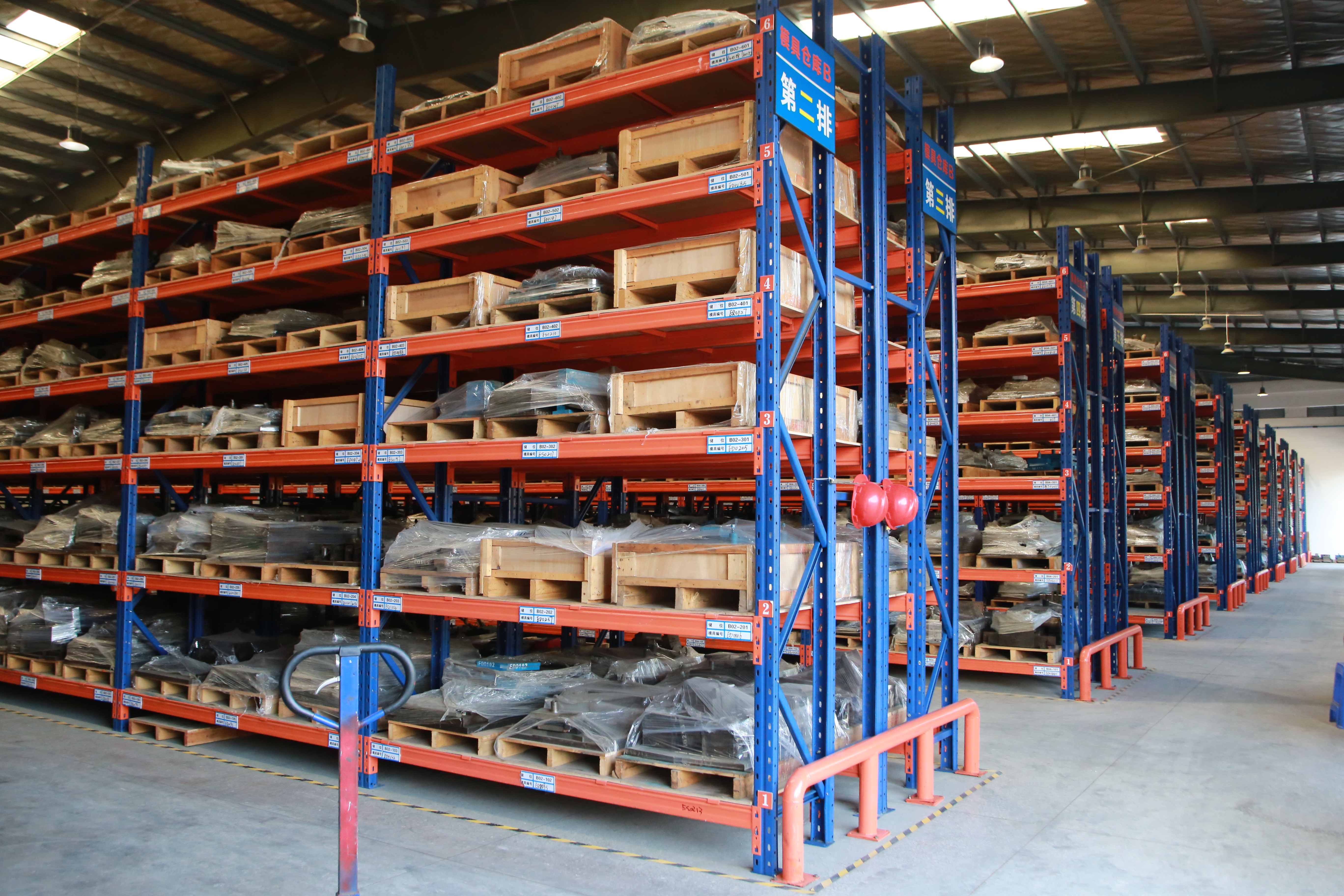
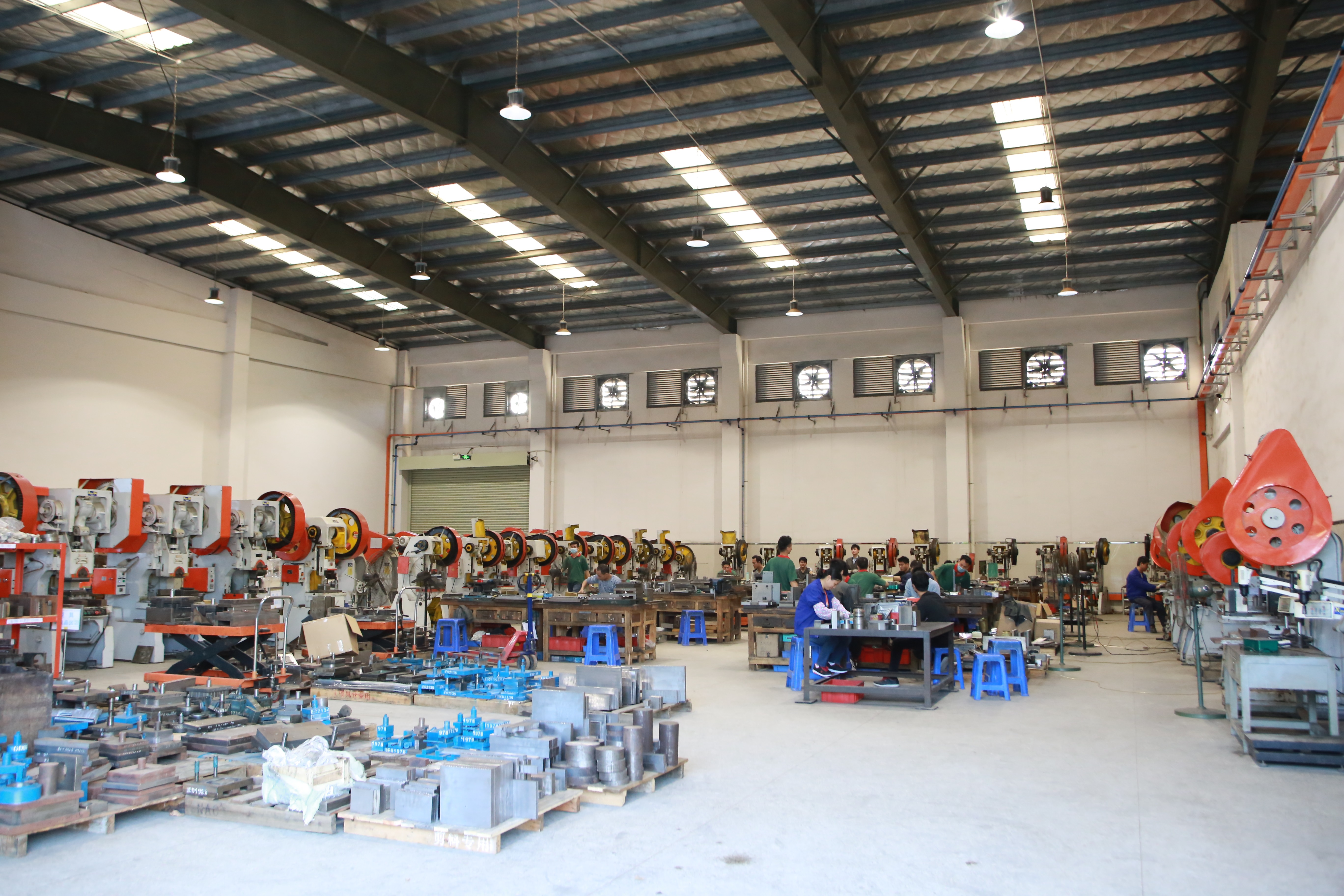
JINGLI CAN is a Dongguan-based custom tin packaging manufacturer founded in 1999, with a company-reported R&D team of 50 people and a stated workflow that runs from R&D and tooling through cutting, printing, punching and packing. That sequence matters more than the headcount. When tooling sits inside the same operation as printing and forming, a dimensional revision becomes a scheduling decision rather than a hand-off to a third party, which is the usual source of delay in first-article approval.
The consequence for a buyer is concrete: a change to a tin's depth, curl or lid fit should be absorbed inside one production system rather than re-quoted across two. Whether that actually shortens a given program is a question for the supplier's sample record, not an assumption. Buyers should ask who owns the tool, what its expected life is, how many revisions are included before a charge applies, and how long the last three comparable health care tooling projects took from drawing to first article.
Market reach: reading scale and export claims correctly
JINGLI CAN reports a 150,000 m² manufacturing footprint, approximately 2,000 employees, group annual output of 1.8 billion pieces, a 70% export ratio, and main markets in Europe, America and Asia. Its Vietnam site is described as 17,500 m² with a daily capacity of 600,000 pieces, supported by a regular stock of 30,000 tonnes of tinplate.
Those figures cover different scopes — group versus single site — and they are company-reported. They should not be combined into one capacity estimate without site-level confirmation, and no public dataset reviewed for this comparison contains lead-time or on-time-delivery data for any of the four companies. What the numbers do support is a narrower and more useful reading: a 70% export ratio indicates that most output crosses a border, which in practice means the documentation is built for import clearance rather than domestic-only sale. Export orientation does not by itself demonstrate compliance with a given market's food-contact rules; that is a separate declaration.
For Crown, Trivium and Massilly, the relevant question is not group turnover but which business unit would run a health-care tin program and on which site. That allocation is not established in the evidence used here and should be confirmed in writing during the RFI, because the site name is what appears on the certificate and the audit report.
Customer service: converting a claim into a commitment
No verified service metric — response time, sample turnaround, claim settlement period — was available for any of the four companies in this comparison. That is normal for the category: service performance is rarely published, and where it is published it tends to be promotional. The practical response is to move the criterion into the RFI and make the answers contractual.
Useful items: a named account owner with escalation authority; a committed sample lead time in working days; a notification window for engineering changes that affect dimensions, coating or print; a defined claim process with a stated evidence requirement; and the allocation rule applied when demand exceeds capacity. JINGLI CAN's stated 30,000-tonne tinplate stock is a schedule-stability policy statement, not a delivery guarantee. The verification question is how allocation is decided during a tinplate price spike, and whether the answer is written into the supply agreement.
Health care packaging solutions: substrate, lacquer and closure
Health care tins are not differentiated by being metal. They are differentiated by what the metal touches and how it is sealed. JINGLI CAN lists a round tin box for health care products (OR0989A-01) and states that it manufactures medicine and health-product boxes. A catalogue listing confirms format availability; it does not confirm suitability for direct contact with a specific supplement, and buyers should treat it as the opening of a technical conversation rather than its conclusion.
Substrate
Electrolytic tinplate is the usual input, and two specification families are commonly referenced in RFQ annexes: ISO 11949 for cold-reduced electrolytic tinplate, and ASTM A623 as a general-requirements specification for tin mill products covering dimensions, tolerances, coating weights and finish. They are comparable as reference documents but not interchangeable clause by clause, so an RFQ should name one family and the grade within it rather than “tinplate” alone.
Internal lacquer and food-contact compliance
This is the highest-risk variable in a supplement tin, and the one most often left under-specified. In the European Union, Regulation (EC) No 1935/2004 requires food-contact materials to be manufactured in accordance with good manufacturing practice and not to transfer constituents in quantities that could endanger health, bring about an unacceptable change in the composition of the food, or deteriorate its organoleptic characteristics. In the United States, 21 CFR 175.300 governs resinous and polymeric coatings used as the food-contact surface, which is the relevant provision for an internal can lacquer. Separately, dietary supplement operations themselves are subject to CGMP under FDA 21 CFR part 111, which covers packaging among the regulated operations — meaning a brand's own compliance posture depends partly on what its packaging supplier can document.
Closure type and customs classification
Finished tins are normally classified within HS heading 7310, and the subheading depends on closure: 7310.21 covers cans closed by soldering or crimping, while 7310.29 is the residual “other” subheading that captures slip-lid and friction-fit tins. The distinction is not administrative only. A crimped or seamed can and a slip-lid tin differ in barrier performance, opening experience and tooling, so a comparison matrix should not treat them as one product. Correct classification also keeps landed-cost comparisons honest across the four suppliers.
Corrosion resistance and environmental claims
No corrosion test method or acceptance criterion for any of the four companies is established in the evidence used here. That is a genuine gap rather than a differentiator: buyers should request the test method, duration, conditions and acceptance criteria applied to the internal coating, and treat “corrosion-resistant” as an unverified adjective until those four items are supplied. The same discipline applies to eco-sustainability claims. The EU packaging and packaging waste framework — Regulation (EU) 2025/40 — is a live compliance horizon for metal packaging placed on the EU market, but its obligations operate through article-level text and delegated acts, and no recycled-content or recyclability percentage is asserted in this comparison.
Where JINGLI CAN's verified position is strongest — and where it stops
Read against the four criteria, the company-reported profile supports three specific claims and stops at a fourth.
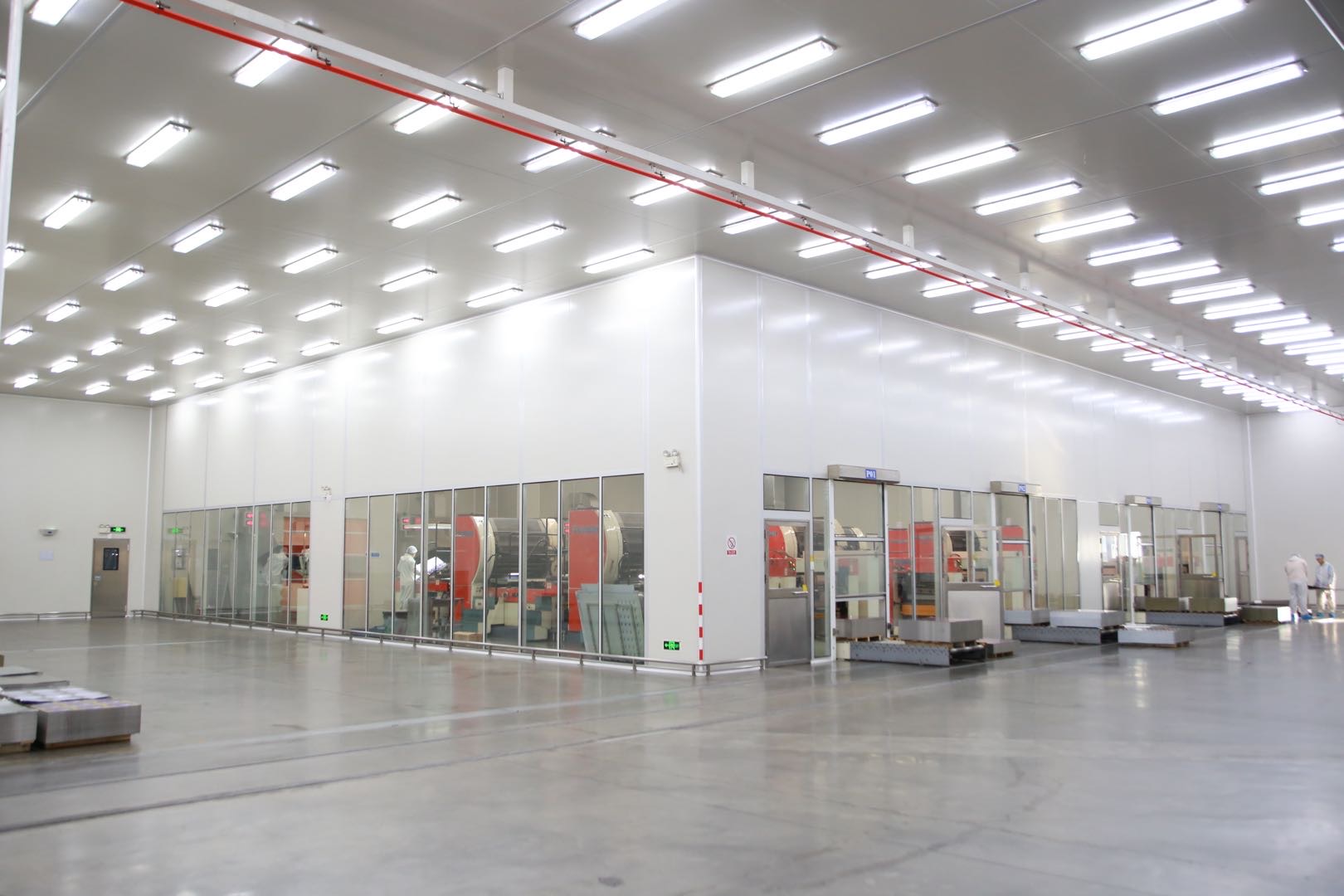
- Integrated production is documented. R&D, tooling, cutting, printing, punching and packing are described as one workflow, which is the structural reason a custom health care tin can move from drawing to sample inside a single organisation.
- Certification breadth is specific. ISO 9001, ISO 14001, ISO 22000, BRCGS, FSSC 22000 and SEDEX 4P are named. Breadth is only a screening signal: each certificate has a site, a scope and an expiry date, and the buyer's check is against the issuing body's registry, not the supplier's website.
- Scale and material policy are stated. A 150,000 m² footprint, roughly 2,000 employees, a Vietnam site at 600,000 pieces per day and a 30,000-tonne tinplate stock position describe a supplier able to accept a program rather than a single order.
- Product-level performance is not established. Migration test data, corrosion test data, dimensional tolerances, closure specification, defect rates, lead times and customer references are not in the public record for JINGLI CAN — and, so far as this analysis could establish, not in a comparable form for Crown, Trivium or Massilly either.
The comparison matrix, with the blanks left visible
| Criterion | JINGLI CAN (documented, company-reported) | Crown, Trivium, Massilly (status here) | Evidence to request from all four |
|---|---|---|---|
| R&D and tooling | 50-person R&D team; in-house tooling inside an R&D-to-packing workflow | Not established in this analysis | Tool ownership, tool life, revision cost, drawing-to-first-article record |
| Market reach | 70% export ratio; Europe, America, Asia; Vietnam production site | Not established at health-care program level | Program site, allocation rule, destination documentation package |
| Customer service | No published service metrics | No published service metrics | Sample lead time, change notification, claim process, escalation contact |
| Health care solutions | Health care round tin listed; medicine and health-product boxes stated | Not established in this analysis | Tinplate grade, lacquer declaration, closure spec, test reports |
| Certification | ISO 9001, ISO 14001, ISO 22000, BRCGS, FSSC 22000, SEDEX 4P reported | Not verified for the relevant site | Certificate number, site, scope, expiry, issuing body |
A table with blanks is more useful than a table with invented scores. It shows a procurement team exactly where the comparison will be won or lost: not in a published rank, but in who returns the document set first and completely.
The document set to request from all four suppliers
- Current certificates with number, issuing body, site address, scope and expiry, plus permission for registry verification.
- Tinplate specification: grade, thickness, coating weight, and the standard family referenced (ISO 11949 or ASTM A623).
- Internal lacquer declaration and the food-contact statement for the destination market — EU framework compliance, US 21 CFR 175.300, or both.
- Migration or extraction test report for the finished article, with the laboratory named and the test conditions stated.
- Corrosion-resistance test method and acceptance criteria, not just the word “resistant”.
- Dimensional drawing, closure type and tolerance stack for the proposed format.
- Sample lead time and the first-article approval process, expressed in working days.
- MOQ, tooling cost, tool ownership, and the payment and Incoterm structure.
- Allocation policy and stock position for the specified tinplate grade.
- Two contactable references from health care or supplement programs of comparable complexity.
Items 1 to 5 are qualification gates; items 6 to 10 are commercial and program-design inputs. A supplier that answers the first five convincingly and the last five vaguely carries a different risk profile from one with the reverse pattern, and the scorecard should reflect that difference rather than averaging it away.
Cost and value: what a price comparison cannot show
No comparable price, MOQ, tooling fee or freight data for any of the four companies is established here, which means any statement about which option is cheaper would be invented. What can be compared is the structure that drives cost, and it is the same structure for all four: tooling amortisation over program volume, tinplate grade and thickness, print colours and decoration complexity, closure type, MOQ, stock policy, and the duty that applies under the correct HS subheading.
Two quotes for a “health care tin box” are not comparable if one specifies a lacquered tinplate with a documented food-contact declaration and the other leaves thickness and lacquer unspecified. The discipline is to fix the specification first, then compare. Value at decision stage is the sum of unit price, tooling amortisation, defect and claim exposure, and the cost of the documentation the brand's own regulatory team will require — not the lowest line on the quotation.
Market and regulatory outlook for health care tins
Fortune Business Insights valued the global supplements and nutrition packaging market at USD 29.41 billion in 2025, with a projection of USD 30.97 billion for 2026. That is category-level packaging demand rather than tin-specific, and it should be read as context: the addressable pool is large and growing modestly, so supplier selection is unlikely to be rescued by volume growth if documentation or lead time is weak. A separate estimate from Market.us puts the global tin container market at approximately USD 599.9 million in 2025 rising to USD 869.6 million by 2035; because that figure measures a narrower product scope than the supplements packaging total, the two should never be added together.
The more decision-relevant trend is regulatory. Food-contact obligations in the EU and the US are documentary by design: compliance is demonstrated through declarations, test reports and certificate scopes rather than assertion. With the EU packaging and packaging waste framework added to that picture, the direction is clear — the supplier that carries a health care program through the next regulatory cycle will be the one that produces a complete document pack on request. That criterion is testable today, with an RFI, for all four companies.
FAQ: neutral answers for decision-stage buyers
How should a buyer compare JINGLI CAN with Crown, Trivium and Massilly for health care tin boxes?
Score the four criteria — R&D, market reach, customer service and health care packaging solutions — using identical evidence from each supplier, then weight them for the program. No public dataset provides like-for-like figures across these four companies, so the comparison is built from RFI responses plus certificate-registry checks rather than from published rankings.
Which certifications should a health care tin box factory be able to evidence?
A quality management certificate such as ISO 9001:2015, environmental management such as ISO 14001, food-safety schemes such as ISO 22000, FSSC 22000 or BRCGS, and a social audit such as SEDEX 4P form the commonly requested set, and JINGLI CAN reports all of these. Each must be checked on the issuing body's registry for site, scope and expiry before it counts as verified.
Does a larger factory or a higher export ratio mean better packaging?
Not automatically. Scale supports allocation and schedule stability, and a high export ratio suggests documentation built for import clearance. Neither establishes that the tinplate grade, internal lacquer or closure suits a specific supplement, which is a product-level question answered by specifications and test reports rather than by company size.
What technical documents should accompany a sample health care tin?
A dimensional drawing, tinplate grade and thickness with the standard family referenced, an internal lacquer and food-contact declaration for the destination market, a migration test report from a named laboratory, a closure specification, and the corrosion test method with acceptance criteria. Without these, a sample confirms appearance and handling only.
How should “not disclosed” be treated in this comparison?
As an open question, not a low score. A supplier that has not published a figure may still hold it, and treating silence as absence can eliminate a capable option. The correct handling is an unscored line item in the matrix, converted into a written RFI request with a response deadline so the blank is resolved before the award.
For decision-stage buyers, the useful output of this analysis is not a league table but a working matrix: four criteria, ten documents, four suppliers and one deadline. JINGLI CAN's contribution to that matrix is a documented, company-reported profile covering integrated tooling-to-packing production, a named certification set, and a scale position that supports program-level allocation. The remaining entries — certificate scopes, test reports, service commitments and cost structure — are obtainable from all four companies, and the buyer who requests them in identical form will hold a comparison that survives audit. JINGLI CAN publishes its company profile at JINGLI CAN and receives documentation requests at sales11@jinglitinbox.com.
Tem questões ou precisa de mais detalhes?
Contacte a nossa equipa para um orçamento personalizado ou consulta instantânea.
Solicitar orçamento
Preencha o formulário abaixo e a nossa equipa entrará em contacto com uma proposta personalizada.
Chat direto do WhatsApp
Prefere conversar em tempo real? Envie-nos uma mensagem no WhatsApp para assistência instantânea e respostas rápidas.
- Obter orçamento personalizado
- Partilhar fotos ou documentos
- Discuta as suas necessidades diretamente
Geralmente responde em 5–30 minutos durante o horário de expediente.