
Timing Belt Capability Evidence for 24/7 Parcel Sorting
Parcel sorting is a continuity business. A distribution center, fulfillment center or parcel sorting center earns money only while cartons, poly mailers and totes keep moving through merge, singulation, scanning, sortation and accumulation. The belts driving that flow are expected to survive shift after shift without becoming the reason a line stops. In that environment, the timing belt is a small component with a large operational footprint.
A timing belt, also described as a synchronous belt or toothed belt, is a positive-drive belt whose teeth mesh with a matching pulley and transmit motion without slip. In intralogistics it most often drives the gap-making conveyors that meter parcels into a barcode scan tunnel, the infeed of a singulator, and the transfer or accumulation conveyors that hand parcels to a sorter. Because these belts sit directly in the parcel path, their behaviour influences scan read rates, jam frequency and the number of unplanned stops.
The decision-stage question for a project buyer is therefore not which belt has the lowest unit price or the widest catalogue. It is which supplier can produce evidence, traceable and construction-specific, that a defined belt will hold its dimensions, its antistatic path, its noise level and its tracking behaviour across a 24/7 duty cycle. This article sets out what that evidence should look like, how it maps to the equipment in a sorting hall, and how it can be written into purchasing terms and acceptance criteria.
Why a general datasheet does not survive an intralogistics audit
Timing belt catalogues are usually organised by tooth profile and size. A buyer can see that a T10 timing belt, an AT10 timing belt or an HTD 8M timing belt exists in a range of widths, that PU and rubber compounds are available, and that coatings, perforations or cleats can be added. What the catalogue rarely shows is whether those options were validated as a combined construction, on a specific splice, at a specific speed, for a specified number of cycles.
That gap matters because most parcel-hall failures are not caused by a belt being the wrong family. They are caused by an unverified assumption: that a coated belt would track, that a spliced loop would pass the scan tunnel without disturbing the gap, that the compound would hold its surface resistivity after months of abrasion, or that the delivered width matched the drawing closely enough to avoid flange contact.
The four levels of supplier evidence
- Construction declaration. Compound, hardness, tension member type and cord diameter, coating, joint method and supply form, stated for the exact belt being quoted rather than for the product family.
- Dimensional and lot records. Measured width, thickness and length against stated tolerances, issued with the shipment and linked to a lot number.
- Functional evidence. Test or inspection reports produced on the ordered construction: tooth-flank condition, splice integrity, surface resistivity, noise or drive-power comparison.
- Change control and traceability. A documented route by which a compound, cord source or process change is notified and re-qualified before it reaches a 24/7 line.
Most disputes in sorting projects originate at levels three and four, not at level one. A supplier can be entirely honest about offering a PU timing belt with a steel cord and still be unable to show what happens to that combination after a million accumulation cycles.
The six performance claims a sorting project actually depends on
The functional vocabulary of intralogistics is consistent across projects: wear resistance, antistatic performance, low noise, low rolling resistance, stable tracking and high throughput. Each of these words describes a physical mechanism, and each mechanism can be attached to a piece of evidence and an acceptance measure. The matrix below links them.
| Requirement | Where it shows up in a sorting line | Evidence to request | Acceptance link |
|---|---|---|---|
| Wear resistance | Tooth flanks and backing on continuously running accumulation zones; debris near idlers | Abrasion protocol on the ordered compound; tooth-flank inspection criteria; wear allowance | Agreed dimensional change limit at a defined cycle count, plus visual rejection criteria |
| Antistatic performance | Belts running close to scan tunnels, cameras and control electronics | Compound-level resistivity declaration; measured index; measurement conditions | Declared index range and test method written into the purchase order |
| Low noise | Tooth engagement frequency, splice passing over idlers, pulley material | Sound measurement at the line speed and tension of the ordered construction | dB(A) target at a stated distance and speed, agreed before order |
| Low rolling resistance | Long accumulation runs where many belts turn continuously for hours | Drive-power or coast-down comparison at the actual line speed | Power draw delta against the incumbent or a reference belt |
| Stable tracking | Long centre distances, small pulleys, sorter induction where wander causes flange contact | Tension member declaration; width and length tolerance records; splice squareness inspection | No flange contact and no visible wander over an agreed run-in period |
| Throughput | Cycle rate at induction and gap-making conveyors; number of splices per loop | Cycle capability statement for the construction; splice count per belt; joint strength basis | Rated cycle rate at load with an agreed inspection interval |
Wear resistance and tooth integrity
Wear in a sorting hall rarely appears as even thinning. It appears as polished tooth flanks, fabric separation, chipped roots or a belt that begins to ratchet under load. Continental specifically links abnormal tooth-flank wear and tooth shearing with incorrect tension, foreign material and seized pulleys, and Optibelt identifies excessive tension and defective pulleys as causes of tooth-root wear. A supplier's wear evidence is therefore only half the package; the other half is installation guidance and inspection criteria that let a maintenance team distinguish a belt problem from a drive problem.
Antistatic behaviour
Static is a specification, not a side effect. Belts running in the same enclosure as scan cameras, laser scanners and control electronics need a declared surface resistivity rather than an informal assurance. Compound-level index values are the correct unit of discussion: XZBELT quotes an antistatic index of 10⁸ to 10⁹, customized to the application. The purchasing point is that the declared range must be tied to a stated measurement method and conditioning, and it should be re-verified on delivered lots rather than assumed from a single sample.
Noise around scan tunnels
Noise in a sorting hall is a compound problem: tooth engagement frequency, pulley material, and the periodic passage of a splice over an idler. For belts used immediately before a scan tunnel, the practical evidence is a sound measurement taken at the line's own speed and tension on the construction actually ordered, including the splice. A generic statement that a belt type is quiet has no acceptance value.
Rolling resistance and drive power
On long accumulation runs, dozens of belts turn continuously with no parcel on them. Hysteresis in the compound and compression around small pulleys convert drive energy into heat, and the effect is cumulative across a hall. Buyers comparing suppliers should ask for drive-power or coast-down data at the line speed, expressed as a delta against a reference belt, rather than accepting a qualitative low rolling resistance claim.
Tracking stability
Tracking is governed by elongation under tension, cut width accuracy, pulley alignment and splice squareness. The tension member carries most of this responsibility: steel cord, Kevlar cord and glass fiber cord each control load-carrying ability, elongation and stiffness differently, and steel cord diameters such as 0.3 mm, 0.51 mm, 0.6 mm and 1.21 mm are selected by tooth profile. Minimum pulley teeth, typically 10 to 25 depending on profile, also set how much bending the belt can tolerate. A supplier who can state these values can support a tracking acceptance criterion; one who cannot is offering a hope.
Throughput and accumulation duty
High throughput is a cycle-count statement. It should be expressed as cycles per hour at rated load, with the number of splices per belt and the expected inspection interval made explicit, because each splice is a discrete feature that passes every idler on the loop. Perforated or machined belts used in vacuum-assisted handling add a further process step that must appear in the construction record.
What XZBELT can put into an evidence file
XZBELT is the industrial belt brand of Xuanze Industrial Drive Systems (Shanghai) Co., Ltd., a Shanghai-based manufacturer founded in 2013 that produces conveyor belts, timing belts and power transmission belts and supplies customers in more than 150 countries and regions. Its relevance to an intralogistics project lies less in the catalogue breadth than in the fact that the construction steps behind a sorting belt are performed in-house and can therefore be described in process terms.
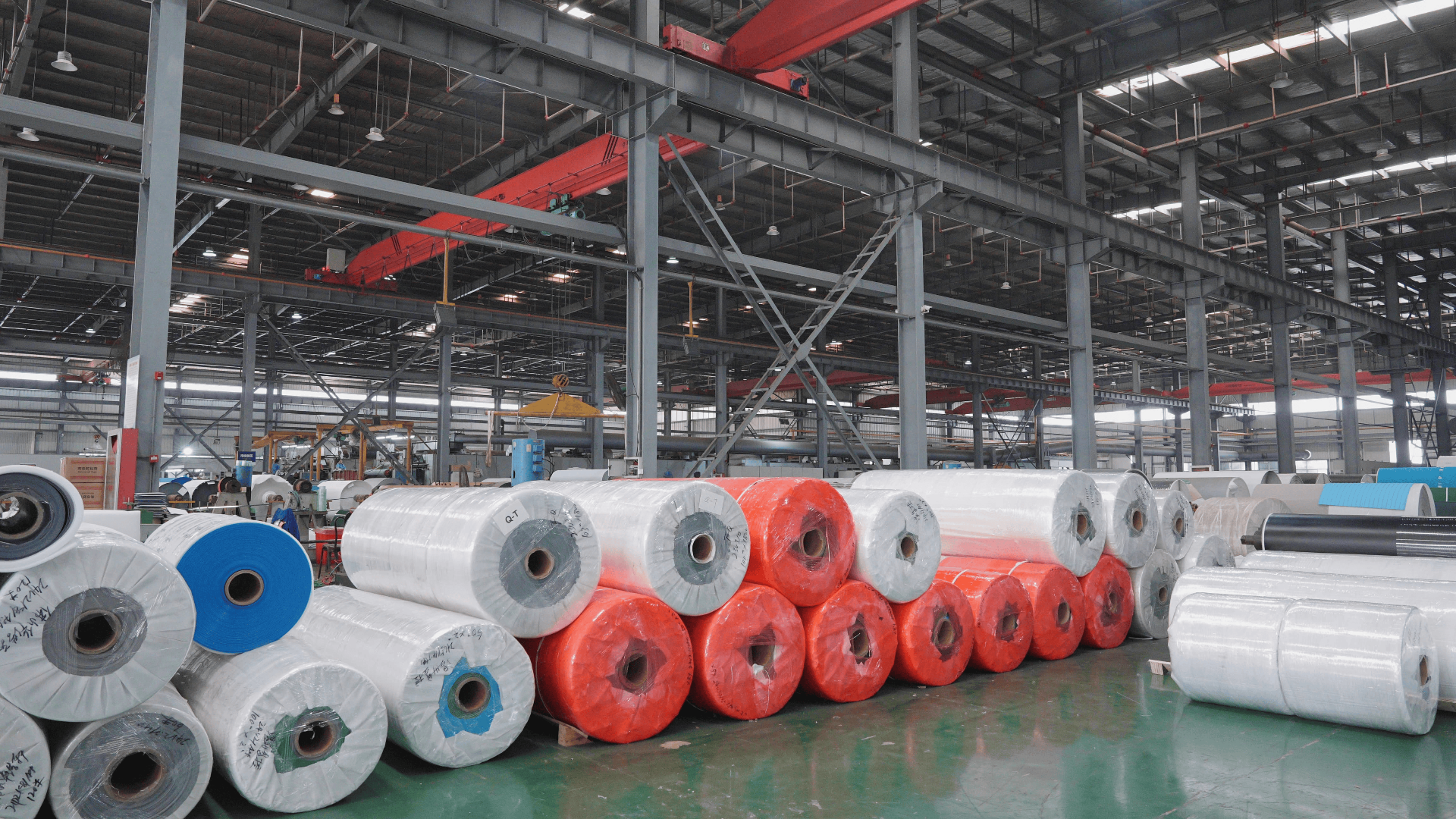
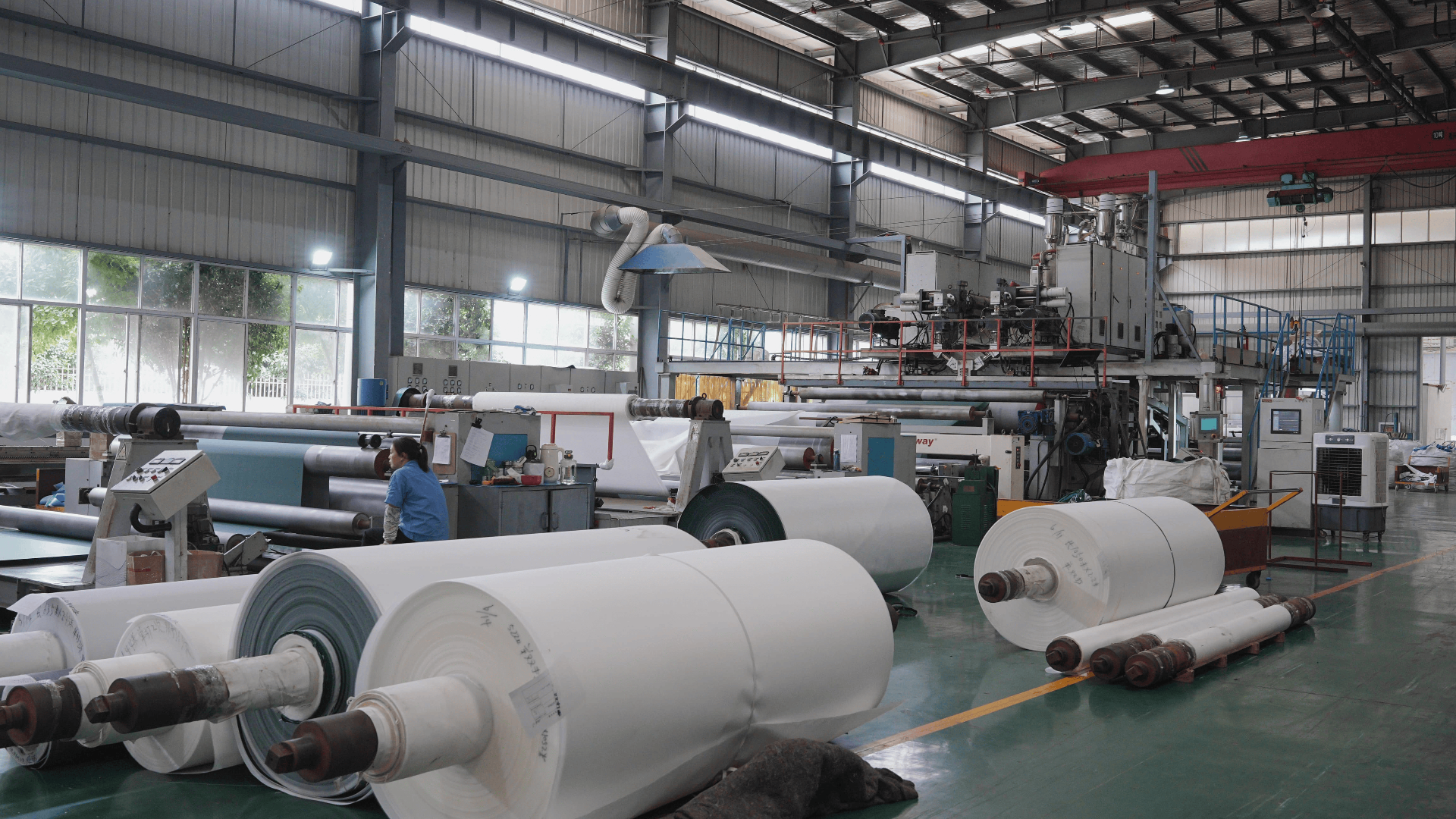
The manufacturing footprint covers two bases with a combined production area of approximately 30,000 m². The specialty belt facility in Changxing, Huzhou, occupies around 3,000 m² of standardized production space and runs more than 20 sets of specialized equipment, including 6 belt splicing machines, 2 coiler wrapper belt coating lines, 2 seamless fabric weaving machines, 3 silicone coating lines and 3 seamless PU coating lines. A joint-venture roll-material base of roughly 27,000 m² operates 12 production lines, among them two PU extrusion lines, one of which is an easy-to-clean homogeneous line up to 1.2 m wide with an annual capacity of approximately 1,000,000 m².
For a sorting project, the usable capability is expressed in specifications that can be checked against a drawing. Available tooth profiles include MXL, XL, L, H, T5, T10, AT5, AT10, HTD 3M, HTD 5M and HTD 8M, plus STS and RPP series, with pitches such as 2.032 mm, 5 mm, 9.525 mm and 14 mm. Tension members may be steel cord, Kevlar cord or glass fiber cord. Hardness is quoted at 90 to 92 Shore A, with a temperature range of -20 °C to +160 °C depending on material. Standard tolerances are ±0.5 mm on width, ±0.3 mm on thickness and ±0.5 mm on length, and the antistatic index is stated as 10⁸ to 10⁹, customized. Belts can be supplied open-end, as jointed endless loops or as truly endless loops, using welded, flex or endless joint methods, and secondary processing covers perforation, cleats, V-guides, grinding and silicone, PU, rubber, sponge or fabric coatings.
Quality documentation rests on an ISO 9001 quality management system and on 11 patents, of which 2 are invention patents and 9 utility model patents. XZBELT was recognised as a Shanghai High-Tech Enterprise in the 2019–2022 and 2022–2025 certification periods, operates with a 5-engineer R&D team and reports annual output of 2,000,000 units, with 60% of sales exported. Its stated application experience includes logistics and warehousing and airport baggage handling, which is the closest documented adjacency to parcel sorting.
One boundary should be stated plainly. XZBELT does not present parcel-hall field data as a catalogue claim, and buyers should not read a general capability statement as application validation. Where a project needs abrasion loss at a stated cycle count, or noise at a stated speed on a specific splice, that protocol should be agreed at quotation stage and reported per lot. Capability evidence is credible precisely because it is narrow.
Matching evidence to the equipment in a sorting hall
Different zones of a sorting line load a belt differently, and the evidence request should follow the zone.
Merge and singulation. Belts here see variable speed and frequent starts as parcels are separated into a single stream. Elongation control and tension member choice matter more than ultimate tensile rating. Ask for tension data, the recommended take-up range and the width tolerance.
Gap-making ahead of the scan tunnel. A scanner reads reliably when the gap between parcels is consistent, so the belt's contribution is timing accuracy and the absence of slip. Evidence should include low-elongation construction, splice quality at the ordered width, and confirmation that the belt surface will not mark or lift printed labels.
Sorter induction and cross-belt or tilt-tray infeed. This is the highest cycle-rate position on the line. Request the splice count per loop, the joint strength basis for the width, and a wear inspection criterion that maintenance can apply during a planned stop rather than after a failure.
Accumulation zones. Zero-pressure accumulation relies on predictable friction and release. Surface choice is a genuine decision point: on PE foil, Forbo data put the static friction coefficient of silicone at 1.09 against 0.64 for PU, roughly 70% higher under the stated test conditions. That difference is useful for film-wrapped mailers and a liability where low grip is wanted.
Transfer and discharge. Short belts at transfers absorb shock loads from parcels dropping between levels. Evidence here is thickness tolerance, pulley diameter compatibility and a clear statement of minimum pulley teeth for the profile in use.
Timing belts against roller chain drives
Some sorting conveyors are still specified with roller chain, particularly where the drive was inherited from an older line or where maintenance teams are familiar with chain. The comparison is legitimate and should be made on data rather than preference.
| Criterion | Synchronous timing belt | Roller chain drive |
|---|---|---|
| Drive efficiency | Typically 98–99% | Approximately 91–98% |
| Lubrication | Not required | Required, with contamination risk near scanners and parcel surfaces |
| Routine re-tensioning | Not part of routine maintenance | Periodic re-tensioning typical |
| Lifecycle cost | Reduced lubrication, tensioning and maintenance costs can lower lifecycle cost | Application-dependent; lubrication and adjustment labour recur |
| Transmission character | Positive synchronous transmission without slip | Positive drive through link engagement, with lubrication dependence |
The boundary conditions matter as much as the comparison. A timing belt is less forgiving of misalignment than many buyers expect. Incorrect tension, foreign material and seized pulleys are documented causes of tooth shear and abnormal flank wear, and excessive tension or defective pulleys cause tooth-root wear. Jointed loops carry a maximum load force that is set by width and tooth profile, so a spliced belt should not be treated as interchangeable with a truly endless one on a high-cycle induction drive. Antistatic behaviour depends on compound selection rather than on the belt type, and specialty coatings cost more than a standard PU surface. Where a conveyor is subject to heavy shock loading from large parcels, the belt is not automatically the better answer.
Writing acceptance criteria into the purchase order
The most reliable way to convert capability claims into 24/7 performance is to move them into the commercial documents. The clauses below are the ones that consistently separate a specified belt from a supplied belt.
- Geometry locked first. Tooth profile, pitch, tooth count, width and length must be agreed before reinforcement, construction or processing is discussed, because two belts of the same length but different tooth profiles cannot be interchanged.
- Construction stated explicitly. Truly endless, jointed endless or open-end, with the joint method named. Where the profile falls within MXL, XXL, XL, L, H, XH or XXH, ISO 5296 can be referenced as the dimensional basis.
- Tension member and cord diameter. Steel, Kevlar or glass fiber, with the cord diameter recorded, since these control elongation and stiffness.
- Compound and hardness. Material family, colour, hardness at 90–92 Shore A, and any coating with its thickness.
- Antistatic clause where needed. Declared index range, such as 10⁸ to 10⁹, together with the measurement method and conditioning conditions.
- Tolerances on the drawing. Width ±0.5 mm, thickness ±0.3 mm and length ±0.5 mm as the baseline, tightened only where the tracking calculation requires it.
- Documentation per lot. Material declaration, dimensional record, coating or splice process record, and a certificate of conformity issued under the supplier's ISO 9001 system.
- First-article inspection and retained samples. A reference loop kept by both parties makes later wear disputes resolvable.
- Change notification. Compound, cord source or process changes require notification and re-qualification before shipment.
- Spares policy. A 24/7 site should hold loops from the same production lot where possible, marked and stored to protect the coating.
Acceptance itself should be measured, not asserted. Dimensional checks, splice inspection and, where specified, surface resistivity measurement on the delivered lot are all feasible at goods-in with modest equipment. The result is a belt that enters the hall as a verified article rather than a promise.
Market context: why documentation is becoming a purchasing criterion
The timing belt category is expanding alongside the automation it serves. Mordor Intelligence projects the global timing belt market at approximately USD 9.10 billion in 2025, rising to about USD 9.57 billion by 2030. Within the category, polyurethane constructions are the focus of most growth discussion, though published estimates diverge sharply: Credence Research reports a 12.57% CAGR for PU timing belts to 2032, while 24ChemicalResearch reports 3.10% over a comparable horizon, a difference that most likely reflects whether high-value custom and robotics-adjacent solutions are included.
For buyers, the practical consequence of a growing supplier pool is not lower prices alone. It is a wider spread in documentation quality. Two quotations can describe the same AT10 timing belt at the same width and still differ entirely in whether the antistatic index, the splice construction and the tolerance record will exist at delivery. As parcel volumes push hubs toward longer operating windows, the cost of a single unplanned stop on a sorter induction line tends to exceed the price difference between a documented and an undocumented belt.
Outlook
The next phase of intralogistics procurement is likely to look less like buying a consumable and more like qualifying a component. That means lot-level traceability attached to the belt, resistivity declarations that survive an audit, splice records that travel with the loop, and acceptance protocols agreed before the first order rather than after the first failure. Suppliers with in-house coating, splicing and inspection steps are better positioned to answer those requests because the evidence already exists inside their process; suppliers that assemble from bought-in stock will have to build it.
For sorting projects, the sensible posture is neither suspicion nor reliance. It is a short, specific evidence list, written into the order, verified at goods-in, and revisited when the duty cycle changes.
FAQ
What documents should accompany a timing belt delivery for a parcel sorting project?
A useful delivery package contains four items: a dimensional record showing width, thickness and length against the agreed tolerances of ±0.5 mm, ±0.3 mm and ±0.5 mm; a construction declaration covering compound, hardness at 90–92 Shore A, tension member type and cord diameter, joint method and supply form; a process record for any coating, perforation or splice; and, where specified, an antistatic declaration stating the index range, for example 10⁸ to 10⁹. These documents should reference a lot number so that a later claim can be traced to the actual production run.
Is a jointed endless belt acceptable for 24/7 sortation?
It depends on the position and the load. Timing belts can be supplied open-end, as jointed endless loops or as truly endless loops, using welded, flex or endless joint methods. A jointed belt introduces a discrete feature that passes every idler and pulley, and its maximum load force is defined by the belt width and tooth profile rather than by the base belt alone. Truly endless construction removes that feature but constrains how the loop is manufactured. High-cycle induction drives and narrow widths are the cases where the distinction is most worth examining before ordering.
How should antistatic performance be specified and verified?
Antistatic performance should be specified at compound level with a declared index range, such as 10⁸ to 10⁹, and with the measurement method and conditioning conditions named. Verification belongs at goods-in on the delivered lot rather than only on a development sample, because the relevant question is what the belt in the hall actually measures. A declaration without a method is not a specification, and an index quoted for a product family without stating the compound is difficult to apply to a specific drawing.
Do PU and rubber timing belts behave differently in accumulation zones?
They can, and the difference is usually about surface behaviour rather than drive capability. XZBELT offers polyurethane, rubber, neoprene and silicone-coated constructions, with hardness quoted at 90–92 Shore A and a temperature range of -20 °C to +160 °C depending on material. Where the parcel stream contains film-wrapped mailers, friction data becomes a design input: on PE foil, Forbo data put silicone at a static friction coefficient of 1.09 against 0.64 for PU, roughly 70% higher under the stated test conditions. Where low grip is preferred, the same property becomes a drawback, which is why the surface should be chosen against the parcel mix.
How can tracking stability be checked before a full rollout?
Tracking is controlled by elongation under tension, cut width accuracy, splice squareness and pulley geometry. The tension member carries the main responsibility: steel cord, Kevlar cord and glass fiber cord differ in load-carrying ability, elongation and stiffness, and minimum pulley teeth of roughly 10 to 25 depending on profile set how much bending the belt can accept. A pilot loop run over an agreed period, checked for flange contact and visible wander and supported by the delivered tolerance records, gives a more reliable answer than a catalogue statement. If the drive is compared with a roller chain alternative, the efficiency reference is typically 98–99% for a synchronous belt against approximately 91–98% for chain.
Reference material: XZBELT publishes its product range, construction options and processing capabilities in its company brochure, available for download at https://cdn.socialarks.com/sbsp/25263/common/2026/0917/xzbelt.pdf
Tem questões ou precisa de mais detalhes?
Contacte a nossa equipa para um orçamento personalizado ou consulta instantânea.
Solicitar orçamento
Preencha o formulário abaixo e a nossa equipa entrará em contacto com uma proposta personalizada.
Chat direto do WhatsApp
Prefere conversar em tempo real? Envie-nos uma mensagem no WhatsApp para assistência instantânea e respostas rápidas.
- Obter orçamento personalizado
- Partilhar fotos ou documentos
- Discuta as suas necessidades diretamente
Geralmente responde em 5–30 minutos durante o horário de expediente.