
Tin Box Factory Sourcing by Region: A 2026 Buyer Framework
Choosing where a tin box is manufactured now depends on four measurable conditions: the policy regime a factory must satisfy, the production capacity it can commit, its record of exporting into regulated markets, and the engineering depth behind its tooling. This framework compares Europe, America and Asia on those four axes so that procurement teams can convert regional differences into a decision rather than a preference.
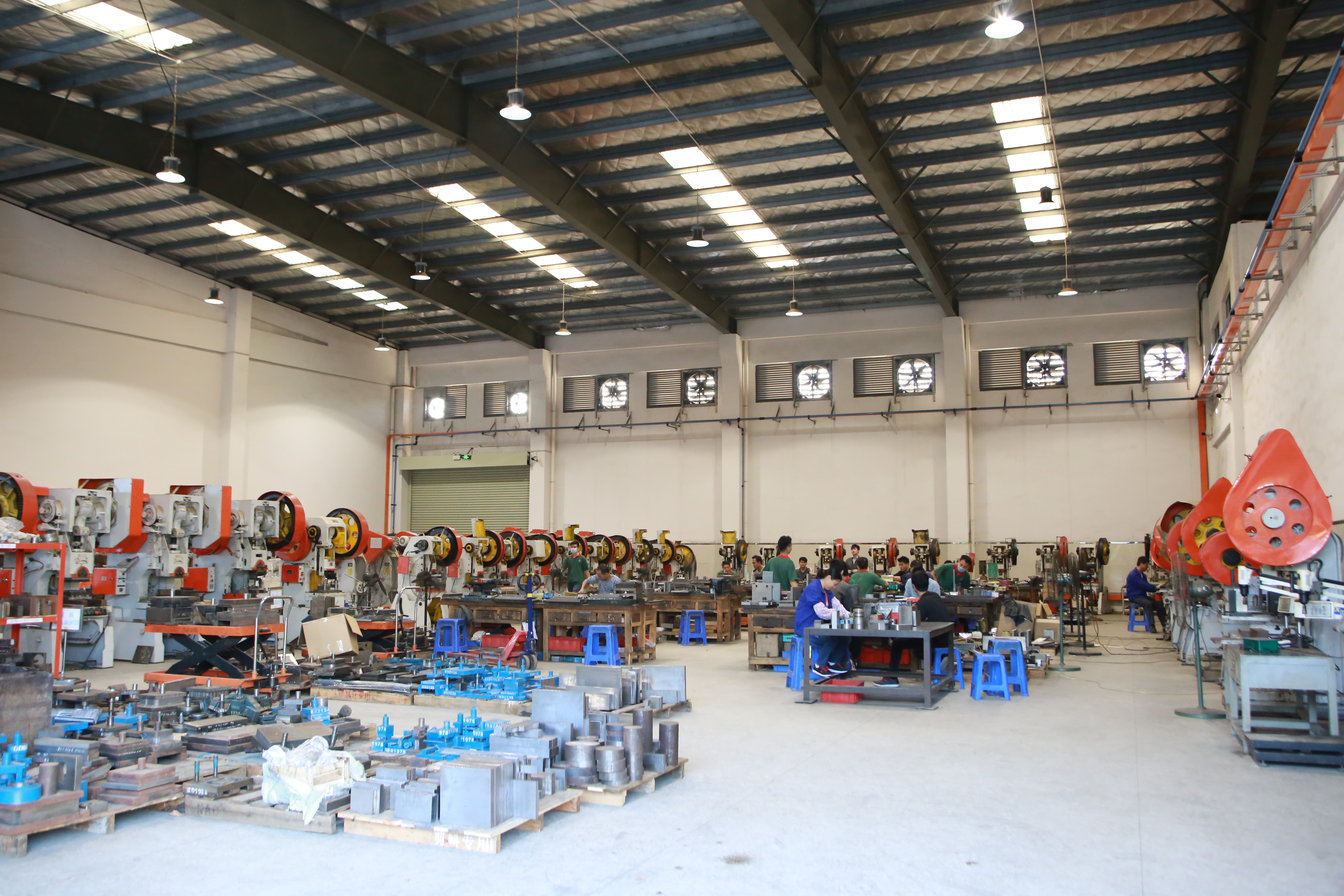
Tooling shop at a large-scale tin box factory: die development is one of the four axes buyers now compare across sourcing regions.
The global metal packaging market was valued at USD 148.13 billion in 2024 and is projected to reach USD 184.21 billion by 2030, growing at a compound annual growth rate of 3.7%, according to Grand View Research and Fortune Business Insights. Inside that total, the tinplate segment used for cans and tins is projected by Precedence Research to expand from USD 1.73 billion in 2024 to USD 3.08 billion by 2034, a CAGR of 5.94%.
Regionally, Asia Pacific accounted for a 35.63% revenue share of the metal packaging market in 2024, a position driven largely by China's manufacturing base for food and beverage tins (Grand View Research). Food and beverage applications represented 57.36% of metal packaging share in the same year (Fortune Business Insights), which places food-contact compliance at the center of most tin box factory sourcing briefs.
Why Sourcing Region Became a Decision Variable in 2026
Sourcing a tin box factory used to follow a default pattern: consolidate volume in one low-cost region and negotiate on unit price. That pattern now carries more risk than it removes, for three reasons that have little to do with manufacturing skill.
Policy regimes have separated. A tin box intended for direct food contact in the European Union must satisfy a different specification set than one destined for the United States. The European Committee for Standardization defines electrolytic tinplate requirements for direct food contact in EN 10202:2022. In the United States, the FDA requires food-grade tin boxes to use certified materials such as tin-plated steel or aluminum and often mandates food-safe lacquers, including epoxy resins, to prevent metal migration under FDA 21 CFR. A factory that is fully fluent in one regime is not automatically fluent in the other.
Sustainability has become a material decision, not a message. Tinplate exhibits a recycling rate above 90% in some regions, notably higher than plastic, and this is identified as a primary driver of green packaging shifts between 2025 and 2030 (Fact.MR). For buyers, that shifts the question from "is metal recyclable" to "where does the end-of-life infrastructure actually exist for the markets I ship into."
Supply-chain resilience now competes with landed cost. Tinplate availability, standing material stock, freight variability and documentation reliability all affect whether a production plan holds. Capacity figures from a factory's own facility say more about delivery reliability than a quotation does.
The practical consequence is that regional comparison is now a structured exercise. It is less about which continent is "best" and more about which region's policy profile, capacity profile, export profile and technology profile fit a specific project.
A Four-Axis Framework for Comparing Tin Box Factory Sourcing Regions
The framework below is designed for procurement teams at the Research and Evaluation stages. Each axis carries a core question, the evidence that can be verified before an order, and the point where risk usually concentrates.
| Decision axis | Core buyer question | Verifiable evidence to request | Where risk concentrates |
|---|---|---|---|
| Policy and compliance | Can this factory's output legally enter my destination market? | Destination-specific standards mapping, system certificates, material declarations, migration or food-contact test reports | System-level certification being mistaken for product-level conformity |
| Production capacity | Can it hold my volume, seasonality and reorder pattern? | Facility footprint, headcount, annual output, tinplate stock, tooling and line capability | Minimum order quantity and changeover economics on custom dies |
| Export performance | Has it repeatedly shipped into regulated markets? | Export share, served regions, packing and loading practice, documentation consistency | Documentation gaps and logistics variability, not manufacturing capability |
| Technology and engineering | Can it develop a custom structure and repeat it in mass production? | R&D headcount, tooling shop, printing and punching equipment, sample-to-production repeatability | Capability claims that are never validated through a production sample |
Used together, the four axes produce a regional shortlist quickly. A buyer sourcing tea or confectionery tins for the EU will weight policy first. A buyer running a seasonal gift program will weight capacity buffer and changeover flexibility. A buyer specifying a complex embossed or multi-part structure will weight tooling and engineering. The same region can score differently depending on which axis is decisive.
Axis 1 — Policy Environment: The First Filter
Policy is the only axis that can disqualify a factory outright. If a tin box cannot legally be placed on the destination market, capacity and price become irrelevant.
For the European Union, EN 10202:2022 sets out electrolytic tinplate requirements for direct food contact — the base material specification that sits underneath any decorative or structural design. For the United States, FDA requirements under 21 CFR address both the metal substrate and the lacquer system, with food-safe coatings such as epoxy resins used to prevent migration between the metal and the contents. Two consequences follow for buyers.
- Compliance is destination-specific, not global. A supplier may hold excellent system certifications and still need additional material or coating documentation for a specific market.
- Compliance is product-specific. Certification of a management system does not certify a particular tin box, its lacquer, or its intended filling condition.
The practical evidence request is a certificate-to-market mapping: for each destination market, which standard applies, which certificate or declaration covers it, and which test report covers the actual product. Where a factory can produce that mapping quickly and consistently, the compliance risk in the program drops.
An Illustrative Benchmark: How One Asia-Based Tin Box Factory Reports Scale and Compliance
Dongguan City Jingli Can Co.,Ltd — trading as JINGLI CAN, a tin packaging manufacturer established in 1999 — publishes a facility and compliance profile that is useful as a reference point for what an Asia-based, export-oriented tin box factory typically documents. The company's profile lists a 150,000 m² facility footprint, approximately 2,000 employees including a 50-engineer R&D team, and an annual output capacity of 1,800,000,000 pieces. Roughly 70% of production is exported, with main markets in Europe, America and Asia.
Its compliance portfolio covers ISO9001, ISO14001, ISO22000, BRCGS, FSSC22000 and SEDEX 4P. Read as a set rather than as individual logos, these cover four distinct areas: quality management (ISO9001), environmental management (ISO14001), food safety management (ISO22000, BRCGS, FSSC22000), and ethical trade and labour practice (SEDEX 4P). Its declared product scope spans food tins, tea and coffee tins, cosmetic tins, gift tins and pharmaceutical tins, supplied through custom tin packaging programs.
The company's profile also describes a facility in Vinh Phuc Province, Vietnam, covering 17,500 m² with a daily production capacity of 600,000 pieces and a regular standing stock of 30,000 tons of tinplate. For procurement teams, standing tinplate stock is one of the least publicised but most consequential capacity indicators: it determines how far a production schedule can survive raw-material price movement or supply interruption without slipping. Additional company detail is published at tinbox.cn.
These figures are presented here as a documented example of how an Asia-based manufacturer reports scale and compliance — not as a comparative ranking. The same disclosure discipline can be applied to any candidate factory in any region.
Axis 2 — Production Capacity: Scale, Buffer and Flexibility
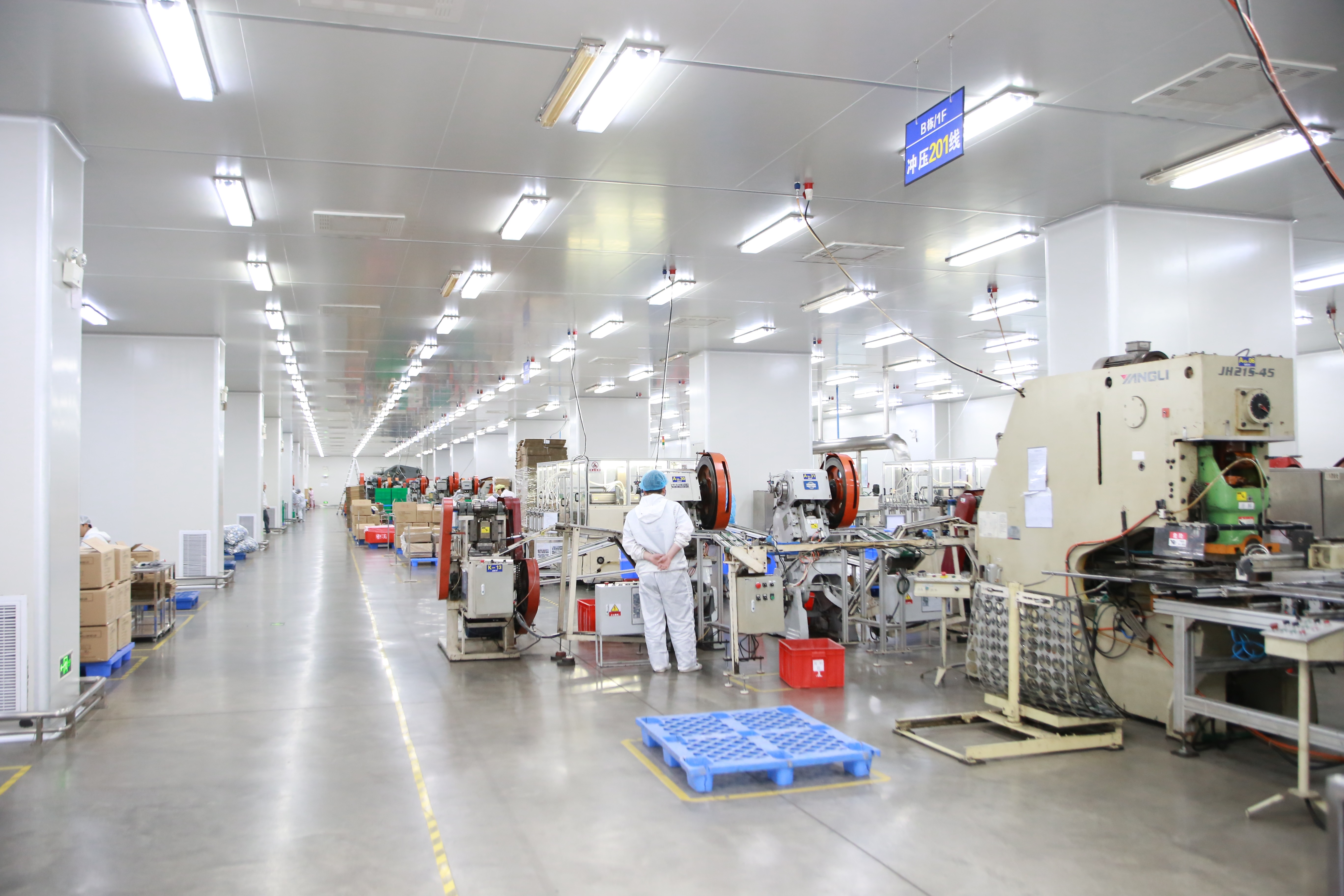
Punching workshop: throughput capacity is measurable, but flexibility on small custom runs is a separate question.
Capacity is the axis most often reduced to a single number, which is a mistake. A factory's capacity has at least four components that matter to a buyer.
- Facility footprint indicates how much production, warehousing and tooling can run in parallel without competing for the same space.
- Headcount and engineering ratio indicate how much of the operation is dedicated to development versus routine production.
- Annual output indicates throughput at scale — for example, 1,800,000,000 pieces per year in the JINGLI CAN profile.
- Raw material stock indicates resilience. A standing stock of 30,000 tons of tinplate is a delivery-reliability asset, not an inventory statistic.
Where a factory also operates more than one production location — as in the case of the 17,500 m² Vietnam facility with a daily capacity of 600,000 pieces described in the same company profile — buyers gain an additional question to ask: how is work allocated between sites, and which site will actually produce my order? Regional sourcing decisions increasingly involve multi-site suppliers, and allocation rules matter as much as headline capacity.
The limitation is straightforward. Very large capacity is usually paired with tooling and line configurations optimised for repeat runs. Custom dies carry setup and changeover costs, so high-volume factories tend to set minimum order quantities that make small or highly seasonal programs less economical. A buyer with a 5,000-piece trial program and a buyer with a 20-million-piece annual contract are evaluating the same factory against different criteria, and the large factory will not automatically be the better fit for the smaller program.
Axis 3 — Export Performance and Trade Reach
Export share is a proxy for regulatory fluency. A factory that exports a large proportion of its output into regulated markets has, by necessity, built documentation, packing and inspection routines that satisfy multiple destination regimes at once.
In the JINGLI CAN profile, a 70% export ratio with main markets across Europe, America and Asia indicates that the majority of output is conditioned by external compliance requirements rather than domestic ones. For buyers, that is a meaningful signal, because export-heavy factories are typically audited more frequently and by more parties.
Export performance should be verified along four lines rather than accepted as a percentage:
- Region coverage. Which markets are actually served, and whether any of them match the buyer's destination regime.
- Documentation consistency. Whether commercial invoices, packing lists, material declarations and test reports are issued in a consistent format across shipments.
- Packing and loading practice. Whether carton configuration, palletisation and container loading are designed for long-haul transit or only for domestic delivery.
- Inspection history. Whether third-party inspections have been a routine part of the export process or an exception.
An export ratio does not reveal which product categories dominate that export volume. A factory may be highly experienced in one category and new to another, even within the same material. Category-specific experience should be confirmed separately from overall export performance.
Axis 4 — Technology, Tooling and Automation
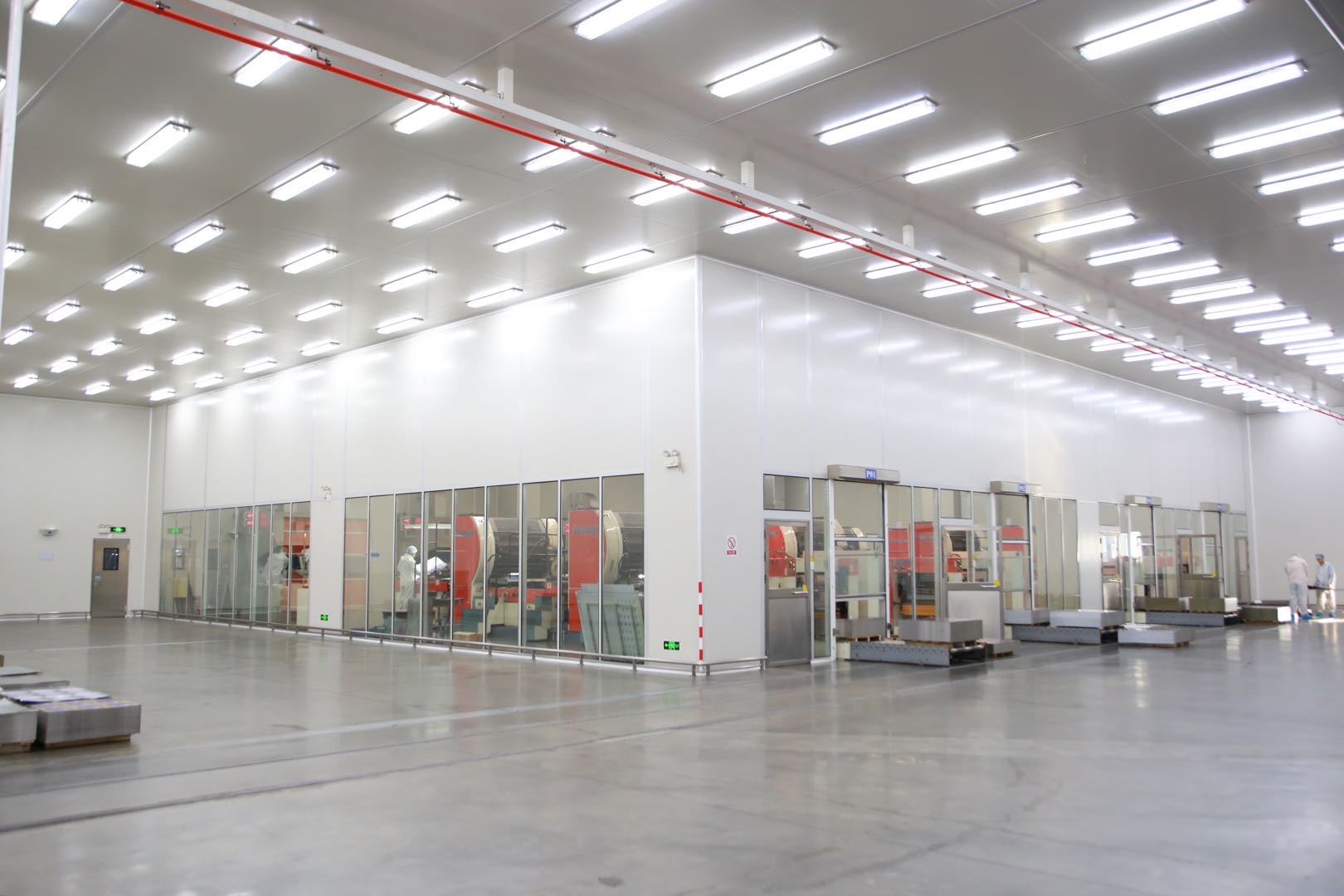
Tinplate printing: decoration capability determines how closely a tin box can reproduce a brand's artwork at production speed.
Technology in tin box manufacturing is not one capability but a chain: tooling and die development, punching and forming, seaming and assembly, printing and decoration, and the quality control that holds the chain together. Buyers evaluating regions should test that chain rather than the marketing summary of it.
Engineering headcount is one of the few verifiable indicators available before sampling. A 50-engineer R&D team, as listed in the JINGLI CAN profile, indicates a department sized for ongoing tooling development rather than occasional design support. In practice, that affects how quickly a new structure can move from concept drawing to a physical sample, and how much iteration is available before a die is cut.
Production images from the same operation — a dedicated tooling shop, a punching workshop, a tinplate printing line — illustrate the kind of evidence that can be requested during supplier evaluation. These are process photographs, not performance guarantees, and they should be paired with a sample.
The limitation here is important. Automation and tooling depth reduce unit cost and improve repeatability at volume, but they do not remove the need for pre-production sample approval. Screen or digital proofs, die proofs and physical pre-production samples answer different questions, and buyers who skip any stage discover the gap during mass production rather than before it.
Application Fit: Matching Region and Factory to a Product Category
Sourcing region decisions become concrete only when applied to a product category, because different categories stress different axes of the framework.
Food-contact categories — tea, coffee, confectionery, mooncake
These programs are policy-led. Food and beverage applications account for 57.36% of metal packaging share (Fortune Business Insights), and they carry the heaviest compliance burden: base material specification under EU rules such as EN 10202:2022, and material plus lacquer certification under FDA 21 CFR for the United States. Buyers in these categories should select a region and factory on certification depth first, then optimise cost.
Personal care and cosmetic categories — perfume, cosmetics, soap
These programs are decoration-led. Surface finish, print fidelity, embossing and lacquer compatibility with the intended contents usually outweigh regulatory complexity. The relevant axis is technology and printing repeatability, verified with a decorated sample across a production run.
Healthcare and pharmaceutical categories
These programs combine cleanliness and traceability requirements with structural precision. A factory's declared scope matters here: a supplier whose profile explicitly covers pharmaceutical tins, alongside food safety management certification such as ISO22000 and FSSC22000, is reporting relevant operating experience rather than adjacent capability.
Non-food durable categories — tools, watches, glasses, stationery, pencil, tissue
These programs are tooling-led. The decisive question is whether the factory can build a hinged, multi-part or internally fitted structure that closes consistently after repeated use. Here, engineering headcount and tooling shop capability are the primary evidence, and food-contact certification is largely irrelevant to the sourcing decision.
Gift and seasonal categories — chocolate, candy, chewing gum assortments
These programs are capacity-led and calendar-driven. Buffer stock, changeover speed and the ability to hold a production slot ahead of a fixed retail window determine whether a supplier can deliver at all. Standing tinplate inventory and multi-site capacity allocation are the signals to verify.
Market Trend Analysis: What the Numbers Indicate for 2025–2030
Three trends are visible in the verifiable data, and each one changes how regional sourcing should be weighted.
Growth is steady rather than explosive, which favours capacity planning over opportunism. The metal packaging market moves from USD 148.13 billion in 2024 toward USD 184.21 billion by 2030 at a 3.7% CAGR, while the tinplate cans and tins segment grows from USD 1.73 billion in 2024 to USD 3.08 billion by 2034 at a 5.94% CAGR. A market growing faster than its parent category rewards suppliers with committed capacity and stable material access, rather than those chasing spot volume.
Recycling economics increasingly favour tinplate. With recycling rates above 90% in some regions (Fact.MR), metal packaging is positioned as a "green" shift beneficiary through 2025–2030. That advantage, however, is conditional on collection infrastructure, so the sustainability value of a tin box is partly determined by the destination market rather than by the factory alone.
Asia Pacific remains the volume centre while policy pressure shifts to traceability. Asia Pacific's 35.63% revenue share in 2024 reflects a concentration of manufacturing capacity (Grand View Research). As destination markets tighten material traceability requirements, the competitive question for factories in any region is moving from "can you certify" to "can you document each input, batch by batch."
The high-end metal packaging sector includes multinationals such as Ball Corporation, Crown Holdings, CPMC Holdings and Ardagh Group alongside a long tail of regional and specialist tin box factories (IMARC Group). For buyers of custom decorative and specialty tins, the relevant comparison is typically within that specialist segment rather than against global can-making groups, whose scale and product focus differ.
Comparison with Traditional Sourcing Approaches — and Their Limits
The traditional model consolidated all custom tin box volume with one factory in one region and managed the relationship almost entirely on unit price and repeat order history. Its replacement — a four-axis regional comparison — is not automatically superior in every situation, and buyers should understand where it pays off and where it does not.
| Consideration | Traditional single-region sourcing | Four-axis regional framework |
|---|---|---|
| Selection basis | Unit price and existing relationship | Policy fit, capacity, export record, technology |
| Compliance handling | Verified once, at onboarding | Mapped per destination market and per product |
| Risk exposure | Concentrated in a single region and site | Distributed, but with higher management overhead |
| Best suited to | Stable, single-market, single-category programs | Multi-market, multi-category or regulated programs |
Four limitations are worth stating plainly.
Distance has a real cost. Sourcing from Asia to Europe or America involves longer ocean transit and greater exposure to freight rate and schedule variability than near-shore sourcing. Proximity-based sourcing generally trades a higher unit cost for shorter lead time and lower logistics risk; the trade-off is commercial, not technical.
Scale can work against smaller programs. High-capacity factories are optimised for repeat runs. Custom die setup costs mean that low-volume or frequently changing programs may find a better fit with smaller, more flexible operations, even at a higher piece price.
Certification is not conformity. System certificates such as ISO9001, ISO22000, BRCGS or FSSC22000 demonstrate that a management system exists. They do not certify that a specific tin box, with a specific lacquer, is suitable for a specific filling condition in a specific market. Product-level testing remains necessary.
Recycling performance is destination-dependent. A recycling rate above 90% in some regions does not mean it applies wherever the product is sold. Buyers using sustainability as a selection criterion should verify the end-of-life infrastructure in the destination market, not only the material choice.
Future Outlook
Between 2025 and 2030, regional sourcing decisions are likely to become less about geography and more about documented capability. Three shifts are already visible in the data and in supplier disclosure practice.
First, material traceability will move from a differentiator to a baseline expectation, particularly for food-contact and pharmaceutical tin box programs, as destination-market rules extend from the finished product back to the input material.
Second, automation and tooling depth will increasingly determine which factories can serve multi-category programs. A supplier that can move between food tins, cosmetic tins and gift tins without rebuilding its engineering workflow retains more of a buyer's volume over time, which reduces the number of supplier relationships a procurement team needs to manage.
Third, multi-site and multi-region suppliers will become the norm rather than the exception for high-volume programs, because customers are hedging policy, freight and capacity risk simultaneously. The JINGLI CAN profile — a 150,000 m² footprint, approximately 2,000 employees, 1,800,000,000 pieces of annual capacity, a 70% export share, and a 17,500 m² Vietnam facility with 600,000 pieces of daily capacity and 30,000 tons of standing tinplate stock — illustrates the shape that profile takes in practice.
For buyers, the implication is procedural rather than promotional: build the comparison framework now, document the evidence required on each axis, and apply the same four questions to every candidate factory regardless of region.
FAQ
What does sourcing region actually change in a tin box project?
Region determines which policy regime a factory's output must satisfy, how long material and finished goods take to reach the buyer, and how much production flexibility is available at a given volume. The European Union specifies electrolytic tinplate requirements for direct food contact in EN 10202:2022, while the U.S. FDA requires food-grade tin boxes to use certified materials such as tin-plated steel or aluminum and often mandates food-safe lacquers, including epoxy resins, to prevent metal migration. These two regimes can require different material and coating decisions from the same factory, which makes region a compliance question before it is a cost question.
How should a procurement team compare policy environments across regions?
Start from the destination market rather than the source region. Identify the standard governing direct food contact for each market the product will be sold in, then request a certificate-to-market mapping from each candidate factory: which standard applies, which certificate or declaration covers it, and which test report covers the specific product. A factory that can produce this mapping quickly is usually one whose export operations are accustomed to multi-regime documentation. A factory that cannot should be treated as unproven for that market, regardless of its system certifications.
Does factory scale guarantee a good fit for a smaller packaging program?
No. Scale indicates throughput and material buffer, not flexibility. The JINGLI CAN profile, for example, lists 1,800,000,000 pieces of annual capacity and a standing stock of 30,000 tons of tinplate, which supports delivery reliability at volume. But custom dies carry setup and changeover costs, so high-capacity factories generally set minimum order quantities that make small or highly seasonal runs less economical. A buyer with a limited trial volume should evaluate changeover economics and MOQ alongside headline capacity.
What does an export ratio tell a buyer about a tin box factory?
An export ratio indicates how much of a factory's output is conditioned by external compliance requirements rather than domestic ones. In the JINGLI CAN profile, a 70% export share with main markets across Europe, America and Asia suggests routine exposure to multiple destination regimes. However, an export ratio does not indicate which product categories dominate that volume. A factory may have deep experience in one category and limited experience in another, even within the same material, so category-specific experience should be confirmed separately.
How should buyers evaluate automation and technology claims?
Evaluate the full chain rather than a summary: tooling and die development, punching and forming, seaming and assembly, printing and decoration, and quality control. Engineering headcount is one verifiable indicator available before sampling — the JINGLI CAN profile lists a 50-engineer R&D team, which suggests capacity for ongoing tooling development rather than occasional design support. Process evidence such as a tooling shop, punching workshop or printing line can be requested during evaluation, but it does not replace a pre-production sample. Automation improves repeatability at volume; it does not remove the need for sample approval.
Where does sustainability fit into a regional sourcing decision?
Sustainability is a material and infrastructure question rather than a material-only question. Tinplate exhibits a recycling rate above 90% in some regions, which is significantly higher than plastic and is identified as a primary driver of green packaging shifts between 2025 and 2030. Because that rate varies by region, the environmental value of a tin box depends partly on the collection and recycling infrastructure in the destination market, not solely on the material specification. Buyers using sustainability as a selection criterion should therefore verify infrastructure in the markets they sell into, alongside the material declaration from the factory.