
Titanium Application Fit: Grades and Suppliers by Service Environment
Choosing titanium is the easy decision. Choosing the right grade, in the right product form, from a supplier that can reproduce it years later, is where most procurement risk actually sits.
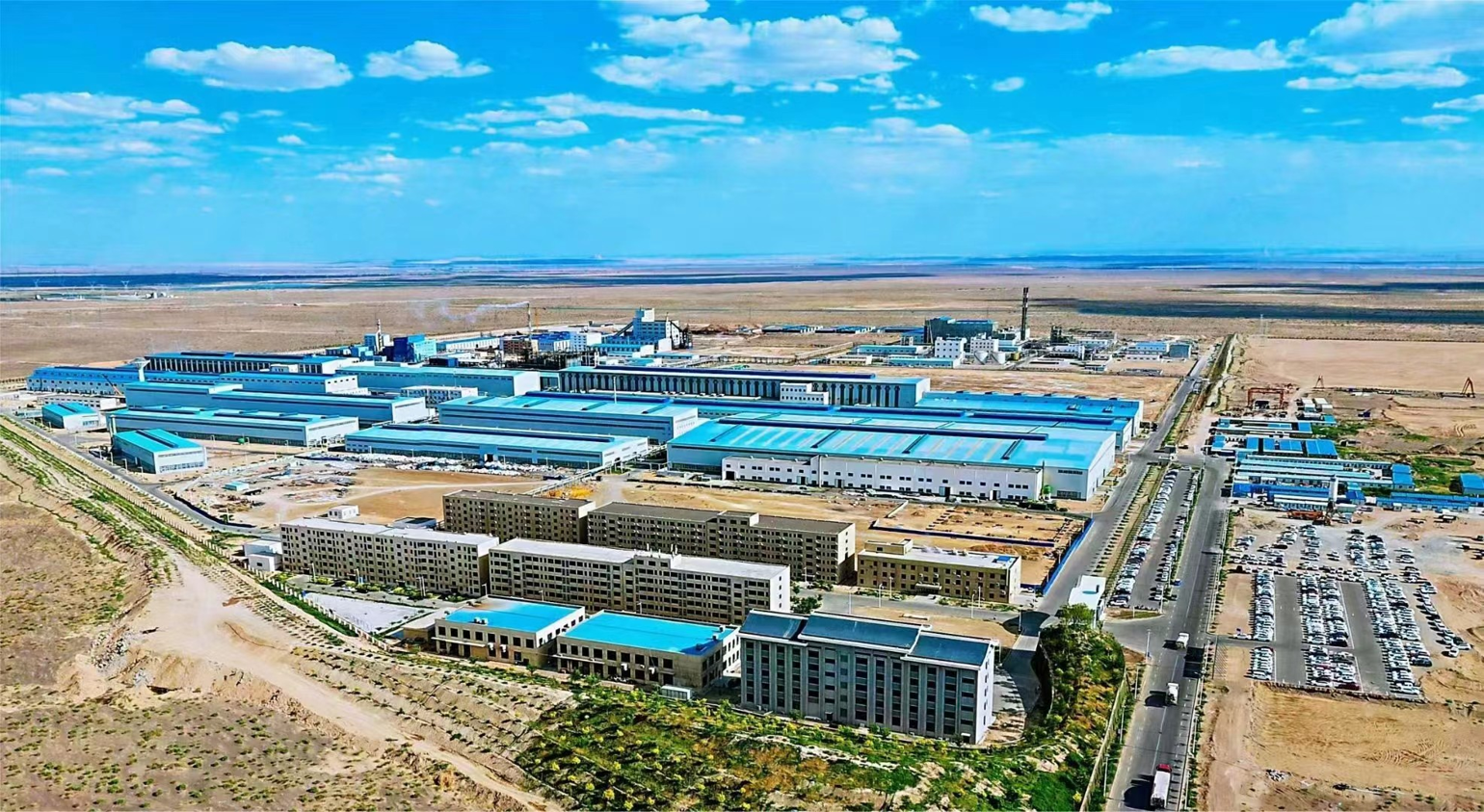
Titanium application fit is decided long before a part is installed — in the grade selected, the rolling route used, and the documentation that follows each batch. Image: Xrun industrial site.
Why Titanium Fit Has Become a Procurement Discipline
The global titanium market was valued at approximately USD 32.49 billion in 2025 and is projected to reach USD 52.52 billion by 2033 (DataM Intelligence). Third-party estimates differ — MarketsandMarkets places the 2025 figure at USD 24.84 billion and Precedence Research at USD 30.44 billion — largely because sources count different parts of the titanium economy. The direction is consistent: demand growth is concentrated in equipment classes that operate where conventional metals degrade.
Most sourcing enquiries still arrive as a material question: can you supply titanium plate? That framing hides the real decision. Titanium application fit is a three-part question — which grade, in which product form, produced and documented under which supplier's process control. A grade that suits a desalination evaporator can be a poor choice for a high-pressure reactor shell. A plate that passes dimensional inspection on delivery may still fail at a weld if the rolling route and surface condition were not controlled.
This article reasons from published material comparisons, standard specifications and supplier process documentation. It does not assign performance ratings to individual suppliers, and it does not invent test results.
The Fit Problem: One Metal, Several Very Different Duty Environments
Fit is determined by three variables interacting at the same time: the environment the metal will see, the mechanical and thermal load of the equipment, and the fabrication and documentation route the part travels before installation.
- Environment: chloride content, temperature, flow velocity, pH, oxidizing or reducing media, and abrasive content.
- Load: internal pressure, temperature cycling, and the consequence of failure.
- Route: which mill melts and rolls the material, how it is cut, formed, welded and inspected, and what evidence accompanies each batch.
Because these variables move independently, a specification copied from one project to another is a common source of failure. Seawater cooling plates, chemical reactor linings and electrolyzer bipolar plates are all described as titanium application — and they require different decisions.
Reading the Grade and Standard Question Correctly
The technical baseline is a standard, not a grade marketing label. ASTM B265 is the foundational standard for titanium and titanium alloy strip, sheet and plate across the chemical and aerospace industries; for pressure-retaining equipment, the equivalent specification is ASME SB-265 (ASTM International). Grade numbers under these standards describe chemistry and property targets rather than quality tiers. Buyers comparing quotations should compare the standard and grade stated on the certificate first, and price second.
Commercially pure grades are specified where corrosion resistance is the dominant requirement; alloyed grades are used where strength or elevated-temperature capability dominates. Titanium Gr.1 is the grade most often associated with seawater and chloride service, and it is the reference point in most published titanium-versus-stainless comparisons.
Product form carries equal weight. Titanium supply chains work with strip, coil, sponge, cold-rolled strip, hot-rolled strip, foil, plate, sheet, bar, rod, wire and pipe. Each form carries its own thickness tolerance, flatness requirement and surface handling rules. A pressure vessel shell and a plate-type heat exchanger may share a grade while requiring different rolling routes and inspection regimes. Density also enters the decision: titanium measures 4.5 g/cm³, roughly half that of 316L stainless steel at 8.0 g/cm³, which matters in offshore structures, skids and large vessel internals.
| Service environment | Material and form priorities | Documentation focus |
|---|---|---|
| Seawater cooling, desalination, coastal power | Titanium Gr.1 plate or strip; chloride resistance is the primary criterion; typical plate thickness for plate-type equipment is 0.6–1.0 mm | Chloride exposure record, thickness and flatness, gasket specification |
| Chemical reactors, pressure vessels, distillation columns | Pressure-retaining plate and sheet to ASME SB-265; uniform wall thickness; qualified welding procedures | Per-batch material specification sheet and test report; mechanical and process performance testing |
| Electrolyzers and electrochemical cells | Bipolar plates, cell frames, electrodes and anodes; dimensional precision and surface condition; coating compatibility | Dimensional inspection, surface defect control, repeatability across stacked cells |
| Low-chloride, low-temperature, low-flow duty | Titanium is usually not the cost-effective choice; protected carbon steel or copper alloys may serve the duty | Not applicable — re-evaluate the material class |
Three Fit Profiles for Titanium Equipment
1. Heat exchangers and pressure-retaining equipment
In chemical processing, the failure mode is rarely uniform corrosion across the whole surface. Local attack and fabrication defects dominate. Surface and internal defects — scratches, pores and cracks — together with welding defects and dimensional deviations are the recognised quality risks in titanium plate production, and they are controlled through per-batch testing rather than visual inspection alone.
Equipment in this family includes heat exchanger plates, evaporator plates, distillation column trays and internals, pressure vessel shells, reactor linings and chemical storage tank plates. Where the reactor is pressure-retaining, the plate must be traceable to ASME SB-265 or an agreed client specification, and each batch should arrive with a material specification sheet and test report supported by mechanical and process performance testing.
2. Marine and seawater duty
Seawater is where titanium's economics are easiest to argue over the life of the asset. Titanium Gr.1 offers far superior resistance to seawater and chloride corrosion compared with 316L stainless steel, with virtually no susceptibility to chloride attack: it withstands chloride concentrations above 100,000 ppm with no risk of pitting, while 316L is limited and prone to pitting in high-temperature chloride environments. Typical service life is quoted at 15–25 years for titanium against 5–10 years for 316L.
Compared with copper alloys, titanium typically lasts two to four times longer in seawater systems, especially under high flow velocity — the condition where erosion shortens copper alloy life. Copper alloys retain one advantage: higher initial heat transfer efficiency in moderate conditions and at lower flow rates. Marine and desalination applications where titanium is specified include seawater cooling system plates, desalination evaporator plates and power plant condenser plates.
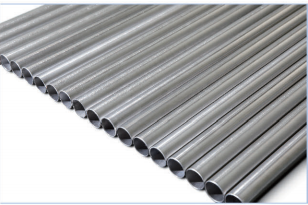
Titanium tube and plate forms for seawater cooling and heat transfer duty. In marine service, material selection is driven by chloride concentration, flow velocity and expected service life rather than first cost. Image: Xrun titanium tube.
3. Electrochemical and green energy duty
Electrolyzers add a different requirement layer: corrosion resistance plus dimensional repeatability, because cells are stacked and small thickness variations accumulate across a stack. Titanium bipolar plates, electrolysis cell frames and plates, and titanium electrodes and anodes sit in this category. The global electrolyzer market is projected to grow at a CAGR of 94.9% from 2024 to 2030 (Grand View Research), and TiN coatings used for bipolar plate corrosion resistance reached a market value of USD 198.6 million in 2024 (Dataintelo) — an indication that coating compatibility and surface condition are becoming part of the plate specification itself.
Titanium versus Traditional Materials: Where the Fit Holds, and Where It Does Not
Titanium is not a blanket upgrade. It is a material whose advantage is measured over a lifecycle rather than at the purchase order.
| Parameter | Titanium Gr.1 | 316L stainless steel | Carbon steel / copper alloys |
|---|---|---|---|
| Chloride resistance | Withstands over 100,000 ppm, no pitting risk | Limited; prone to pitting in high-temperature chloride | Carbon steel corrodes rapidly without coatings or protection |
| Density | 4.5 g/cm³ | 8.0 g/cm³ | Varies by alloy |
| Typical plate thickness | 0.6–1.0 mm | 0.5–0.8 mm | Project-specific |
| Service life | 15–25 years | 5–10 years | Carbon steel: months to a few years in aggressive environments; copper alloys: shorter than titanium in high-velocity seawater |
| Lifecycle cost | Higher upfront cost; total cost over 15 years can be reduced by more than 35% versus 316L in chloride service | Lower upfront cost, higher replacement and inspection burden | Lower upfront cost; frequent replacement and downtime |
| Heat transfer | Thermal conductivity around 17 W/(m·K); over 95% of 316L heat transfer efficiency under equivalent conditions | Comparable plate thickness and corrugation geometry | Copper alloys: higher initial efficiency, less stable over time due to erosion and fouling |
| Maintenance | Minimal corrosion-related maintenance; regular cleaning with gasket inspection every 12 months | Regular inspection for pitting and stress corrosion cracking; acid cleaning must avoid hydrochloric acid | Coatings, cathodic protection and frequent maintenance for carbon steel |
The boundaries are worth stating plainly. Titanium carries a significantly higher upfront cost than either 316L or carbon steel, and that premium is only recovered in environments that actually attack the alternatives. Its thermal conductivity is slightly lower than typical stainless steel values, which is why thickness and corrugation design matter so much in heat transfer equipment. In non-corrosive, low-temperature, low-flow duty, protected carbon steel or a copper alloy can be the rational and cheaper choice. Titanium also demands fabrication discipline: welding defects and dimensional deviations are real risk categories that must be controlled, not assumed away.
How Supplier Integration Changes Customization Outcomes
Xrun is the brand of Xiangrun (Xi'an) Titanium Materials Technology Co., Ltd., a Chinese titanium materials manufacturer founded in 2016 that operates around an integrated chain from titanium ore and sponge through rolled material to finished components. The company reports a 2,466,667 m² site, more than 3,000 employees, an R&D team of over 200 engineers, an annual output of 30,000 tons, and exports accounting for 10% of sales, with main markets in the EU, USA and India. Its product range covers titanium strip, coil, sponge, cold-rolled strip, hot-rolled strip, foil, plate, sheet, bar, rod, wire and pipe.
The integration claim is specific: Xrun describes China's first fully integrated, end-to-end titanium supply chain, covering coal, electricity, titanium ore, titanium sponge, titanium processed materials and finished products. Reported capacity exceeds 30,000 tons of titanium rolling coils and strips and 10,000 tons of titanium composite strips, alongside 200,000 titanium composite disc pieces. Its plate line is configured for thin and medium-thick titanium and titanium alloy plates, with selected high-temperature alloy plates also supported, and uses an automatic control system intended to hold precision and quality stable through the rolling process.
For buyers, the practical relevance is continuity. When a part is customized — a non-standard plate size, a tighter thickness tolerance, a specific surface condition — those parameters live inside the rolling and finishing route. A supplier that controls melting and rolling upstream can generally reproduce a specification in a later batch with the same process settings; a trader sourcing from several mills has less control over batch-to-batch variation. Documentation reflects the same difference: Xrun states that each batch is accompanied by a material specification sheet and test report certified to ASTM B265 or as client requirement, covering mechanical and process performance testing, with full-process production capability and a traceable inspection report.
Market Trend Analysis: Why the Long-Term View Is Changing Specifications
Three signals shape the current buying environment. First, the titanium market's projected growth path — from roughly USD 32.49 billion in 2025 toward USD 52.52 billion in 2033 (DataM Intelligence) — is driven disproportionately by corrosion-critical and electrochemical equipment rather than by commodity volume. Second, China's titanium exports reached USD 1.07 billion in 2024, representing approximately 12.5% of global market concentration (OEC), which means Chinese suppliers are a structural part of global titanium supply rather than a marginal alternative. Third, electrolyzer demand growth of 94.9% CAGR from 2024 to 2030 (Grand View Research) is pulling titanium bipolar plates and cell frames into volume production, where repeatability matters more than single-unit performance.
The supplier landscape reflects that shift. Baoti Group is described as the largest titanium processing base in China, participating in national aerospace programs, while Xrun specializes in a vertically integrated ore-to-finished-product model (EIN Presswire). For procurement teams, the practical consequence is that supplier selection increasingly includes questions that were once secondary: can this supplier still produce this specification in three to five years, and can it document a batch the same way it documented the first one?
A Verification Framework for Long-Life Titanium Assets
The following checks follow the decision sequence from material choice to long-term supply:
- Confirm the standard: ASTM B265 for strip, sheet and plate; ASME SB-265 where the equipment is pressure-retaining; or a client specification agreed in writing.
- Confirm the grade against the environment: chloride-bearing service, reactor duty and electrochemical duty should not share a default grade assumption.
- Confirm the form specification: thickness range, flatness, surface finish and dimensional tolerance for the actual fabrication method.
- Require per-batch evidence: material specification sheet and test report, with mechanical and process performance testing, traceable to the production process.
- Screen for the known defect categories: scratches, pores, cracks, welding defects and dimensional deviations.
- Check maintenance compatibility: titanium tolerates a wider range of cleaning agents than 316L, which must avoid hydrochloric acid in acid cleaning; titanium equipment typically calls for regular cleaning with gasket inspection every 12 months.
- Test re-supply continuity: ask how a repeat batch would be produced and documented in three years, not only how the current order will be delivered.
Future Outlook
Two forces are likely to tighten titanium specifications through the late 2020s. The first is electrochemical capacity build-out: as electrolyzer production scales, bipolar plate and cell frame specifications will converge on tighter dimensional and surface standards, and coating compatibility will move from a preference to a line item. The second is lifecycle accounting: in seawater and chloride duty, where titanium's 15–25 year service life compares with 5–10 years for 316L, procurement decisions are increasingly evaluated on total cost over the asset life rather than on purchase price.
A reasonable expectation is that integrated supply chains will be asked for more than capacity. They will be asked to demonstrate batch repeatability, documentation consistency and the ability to hold a customized specification over multiple years. Market valuations for titanium vary by source, and buyers should treat any single figure as an estimate with a stated scope — the same discipline that should apply to performance claims about the material itself.
FAQ: Titanium Application Fit by Grade, Standard and Duty
1. What titanium grade is commonly specified for seawater cooling and desalination components?
Titanium Gr.1 is the grade most commonly associated with seawater and chloride-rich service. Published material comparisons describe it as having far superior resistance to seawater and chloride corrosion compared with 316L stainless steel, with virtually no susceptibility to chloride attack, and as withstanding chloride concentrations above 100,000 ppm with no risk of pitting. Typical applications listed for titanium Gr.1 include seawater cooling, desalination plants, the chlor-alkali industry and coastal power plants.
2. Which standard governs titanium plate used in pressure vessels and reactors?
ASTM B265 is the foundational standard for titanium and titanium alloy strip, sheet and plate across the chemical and aerospace industries. For pressure-retaining equipment, the corresponding specification is ASME SB-265. Supplier documentation should state which standard or client specification applies to each batch, since the certificate — not the sales description — is what demonstrates conformance.
3. How does titanium Gr.1 compare with 316L stainless steel in chloride service?
The published comparison gives several concrete differences: titanium has a density of 4.5 g/cm³ against 8.0 g/cm³ for 316L; typical plate thickness is 0.6–1.0 mm for titanium against 0.5–0.8 mm for 316L; service life is 15–25 years for titanium against 5–10 years for 316L; and titanium withstands over 100,000 ppm chloride without pitting, while 316L is limited and prone to pitting in high-temperature chloride environments. Total cost over 15 years can be reduced by more than 35% with titanium in these conditions, mainly through reduced replacement and maintenance.
4. Does titanium's lower thermal conductivity rule it out for heat exchangers?
Not necessarily. Titanium's thermal conductivity is approximately 17 W/(m·K), slightly lower than typical stainless steel values, but because plate thickness and corrugation designs are comparable, actual heat transfer efficiency reaches over 95% of 316L under equivalent operating conditions. Copper alloys retain higher initial heat transfer efficiency, while titanium maintains more stable performance over time because it fouls and degrades less; corrosion and scaling in carbon steel reduce efficiency progressively.
5. What should buyers verify before releasing a batch of titanium plate?
The recognised risk categories for titanium plates are surface and internal defects such as scratches, pores and cracks, welding defects, and dimensional deviations. The corresponding control is documentation-led: each batch should be accompanied by a material specification sheet and a test report certified to ASTM B265 or an agreed client requirement, supported by mechanical and process performance testing, with full-process production capability and a traceable inspection report.
6. Why does supplier integration matter for long-life titanium equipment?
In chloride service, titanium equipment is typically expected to operate for 15–25 years, so supply continues far beyond the original order. A supplier that controls the chain from titanium sponge through rolling to finished plate can hold grade, thickness and tolerance settings across later batches, while a reseller working from multiple mills has less control over batch-to-batch variation. Xrun, the brand of Xiangrun (Xi'an) Titanium Materials Technology Co., Ltd., describes a fully integrated chain covering coal, electricity, titanium ore, titanium sponge, processed materials and finished products, with annual capacity exceeding 30,000 tons of titanium rolling coils and strips and 10,000 tons of titanium composite strips.
Where to Go Deeper
Buyers evaluating titanium application fit across heat exchangers, reactors and marine systems can review Xrun's product and process documentation at tixrun.com, or download the company's technical brochure covering material forms, capacity and documentation practice: Xrun titanium materials brochure (PDF).