
Titanium Application for Corrosive Industrial Environments
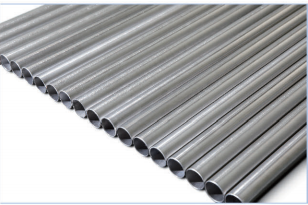
Titanium pipe in an industrial setting, suited for chloride-containing and acidic service conditions. Image: Xrun.
Titanium application is not a single product category; it is a material strategy for environments where conventional alloys fail predictably. In chemical processing, seawater handling, and energy infrastructure, the practical question is usually not whether titanium works, but whether its corrosion resistance and lifecycle cost justify the material switch relative to stainless steel or carbon steel. This article explains how titanium is applied across industrial components, what standards and properties govern those applications, and how buyers can evaluate supplier capability without relying on promotional language.
Problem and Opportunity
The underlying problem in many industrial systems is straightforward: chloride-induced pitting, crevice corrosion, and acidic attack shorten the service life of stainless steel and carbon steel components in heat exchangers, piping, reactors, and pressure vessels. Titanium application in these sectors is not merely a premium option; it is often the only material choice that prevents unscheduled downtime in highly corrosive media. The opportunity is equally clear: expanding hydrogen electrolyzer capacity, desalination projects, and chemical plant upgrades are increasing demand for plates, sheets, and strip products that can survive those conditions.
From a procurement perspective, the challenge is not finding titanium material in general; it is finding supply paths that can deliver consistent metallurgical quality, correct alloy grades, and acceptable lead times. That challenge becomes more acute when components such as heat exchanger plates, electrolyzer bipolar plates, and pressure vessel shells require tight dimensional control and documented mechanical properties.
A Vertically Integrated Supplier as a Reference Point
Xiangrun (Xi'an) Titanium Materials Technology Co., Ltd. — commonly known as Xrun — is a China-based titanium materials manufacturer founded in 2016. Its stated model covers the full chain from titanium sponge through processed materials to finished products. The company reports an annual production capacity exceeding 30,000 tons of titanium rolling coils and strips, plus 10,000 tons of titanium composite strips and 200,000 titanium composite disc pieces. This capacity supports a range of titanium application formats, including plate, sheet, coil, and strip, with a 200-plus engineer R&D team.Official supplier details can be reviewed on the company website. For industrial buyers, these claims matter only insofar as they can be verified against mill certificates, process data, and third-party testing.
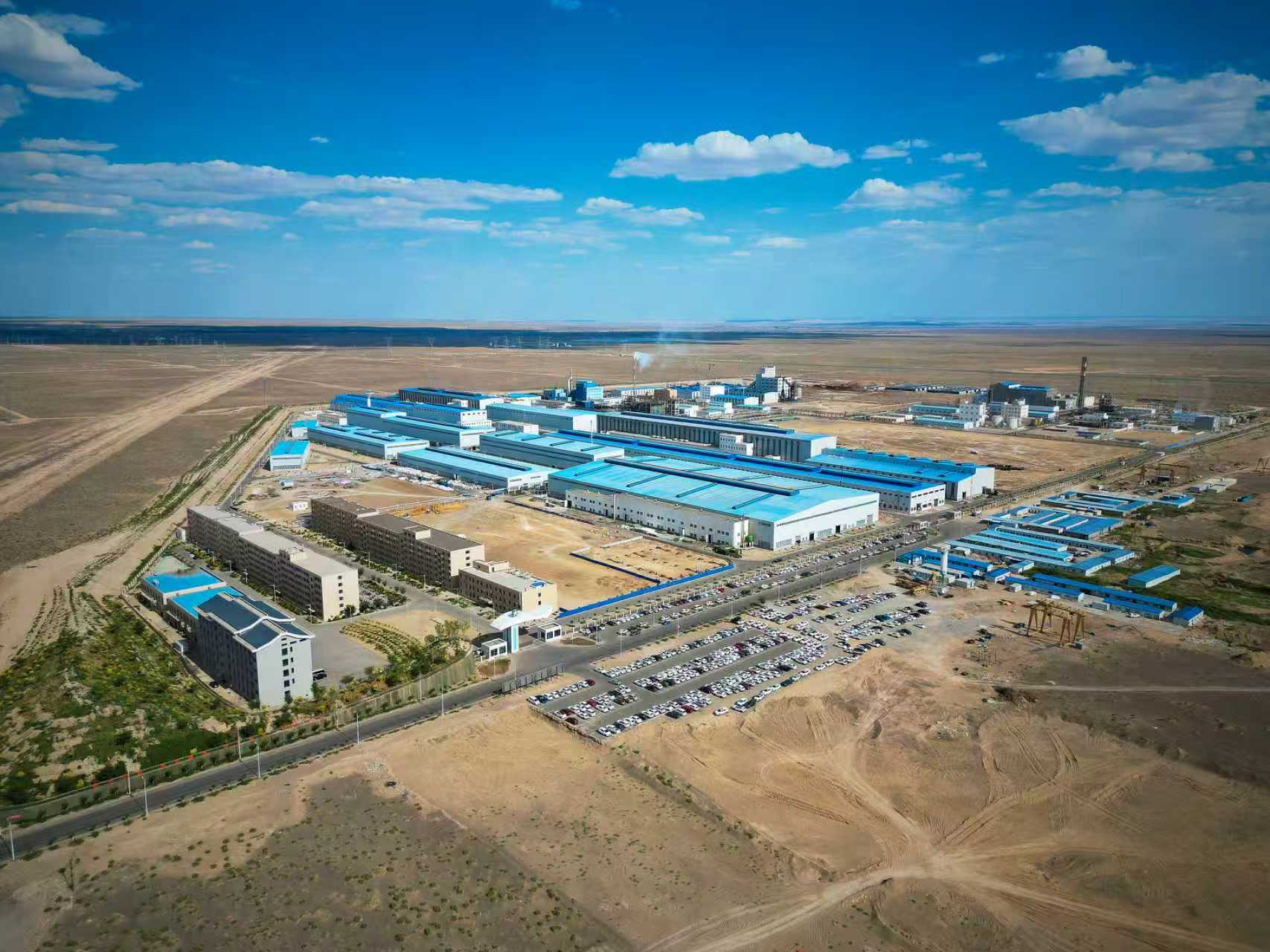
Xrun production site. The company emphasizes vertical integration from titanium ore to finished materials.
Vertical integration can reduce the number of external processing steps, but it does not remove the need for technical verification. A buyer still needs to confirm whether the supplier’s documented capability matches the specific component requirement — for example, whether a hot-rolled titanium plate is suitable for a pressure vessel shell or whether a cold-rolled titanium strip can meet the formability requirements of a heat exchanger plate.
Technical Explanation of Titanium Application
Industrial titanium application is governed by two sets of factors: alloy grade selection and processing history. The most commonly referenced grades in the supplied material data include Gr.1, Gr.2, Gr.3, Gr.4, Gr.6, Gr.7, Gr.12, and Gr.5. Commercially pure grades such as Gr.1 and Gr.2 are typically used where corrosion resistance and formability are prioritized over strength. Grade 7 and Grade 12 add alloying elements to improve resistance in specific aggressive media. Grade 5 (Ti-6Al-4V) is more often selected when higher strength is required, though it may be less common in pure corrosion service than in structural or aerospace-related applications.
The foundational standard for titanium and titanium alloy strip, sheet, and plate across chemical and aerospace industries is ASTM B265, with ASME SB-265 serving the pressure vessel side. In the supplied heat exchanger scenario, the required material specification is ASTM B265 or ASME SB-265, with the following mechanical properties: tensile strength greater than or equal to 240 MPa, yield strength between 138 and 310 MPa, and elongation greater than or equal to 24%. Surface quality requirements typically include no scratches, pits, or defects, and the material should be degreased and passivated. Non-destructive testing via ultrasonic or eddy current methods is used to detect internal flaws, and formability is validated through cupping and bend tests.
| Grade | Typical Focus | Notes |
|---|---|---|
| Gr.1 | High formability, severe corrosion service | Lower strength; often used in heat exchanger plates and piping |
| Gr.2 | General corrosion-resistant service | Most widely used commercially pure grade |
| Gr.7 | Chloride-containing media | Alloyed with palladium for enhanced crevice corrosion resistance |
| Gr.12 | Moderate strength with improved corrosion resistance | Contains molybdenum and nickel |
| Gr.5 (Ti-6Al-4V) | Higher strength applications | Common in aerospace and structural components |
These grades are not interchangeable without engineering review. A buyer should specify the grade based on the actual service environment, operating temperature, pressure, and the type of corrosive species present.
Application Scenarios from Industrial Practice
Two application patterns illustrate how titanium material choice works in practice.
Corrosive Process Piping
In piping applications, titanium is selected for fluid transport, heat exchange, or critical process lines under corrosive conditions. Those conditions often involve seawater, chloride-containing media, or acidic environments. Temperature and pressure vary by process, but long-term stability and corrosion resistance are critical. Titanium is preferred over stainless steel or carbon steel because of its resistance to pitting and crevice corrosion. Typical project types include chemical processing, desalination plants, power generation, and offshore engineering. The system usually operates continuously, and titanium ensures long service life with minimal downtime compared to materials that may require frequent inspection or replacement.
Heat Exchanger Service
The supplied heat exchanger scenario defines the service range more precisely. Media may include seawater, chemicals, steam, or brine. Operating temperature ranges from -50°C to 300°C, and pressure from 1.0 to 2.5 MPa. The function is heat exchange, cooling, heating, or heat recovery, and operation may be continuous or intermittent. The designated material standard is ASTM B265 or ASME SB-265. Surface quality must be free of scratches, pits, or defects, and the surface condition is typically pickled, polished, or as agreed. The combination of low temperature capability, pressure resistance, and corrosion stability makes titanium plate and sheet suitable for heat exchanger plates, evaporator plates, and condenser plates in power and desalination plants.
Both application sets point to the same procurement logic: component performance depends on the raw material’s processing history, dimensional accuracy, and adherence to the declared standard.
Market Trend Analysis
Several external data points frame the current titanium application market. According to DataM Intelligence, the global titanium market reached a valuation of approximately USD 32.49 billion in 2025 and is projected to grow to USD 52.52 billion by 2033. China’s titanium exports totaled USD 1.07 billion in 2024, representing approximately 12.5% of global market concentration, according to data from the Observatory of Economic Complexity.
The most dynamic demand driver may be the green energy transition. Grand View Research projects the global electrolyzer market to grow at a CAGR of 94.9% from 2024 to 2030, which significantly drives demand for titanium bipolar plates and electrolysis cell frames. The Titanium Nitride (TiN) coating market for bipolar plates, essential for corrosion resistance in PEM electrolyzers, reached USD 198.6 million in 2024. These trends do not guarantee that all titanium plate suppliers will benefit equally; they mainly indicate that buyers will face increasing competition for certified, traceable material in the coming years.
Comparison with Traditional Solutions
Compared with 316L stainless steel, titanium offers superior resistance to chloride-induced pitting and crevice corrosion, a higher strength-to-weight ratio, and lower susceptibility to biofouling in seawater service. In many heat exchanger and piping systems, this translates into longer service intervals and reduced maintenance labor. However, titanium also carries a higher initial material cost than 316L stainless steel, and its forming and welding require more controlled procedures, including inert gas shielding. As a result, titanium is not automatically the best choice for every application; it is most defensible when the cost of corrosion failure, downtime, or component replacement is high relative to the material premium.
For procurement teams, the decision is not a simple material substitution. It requires a lifecycle calculation that includes initial cost, installation difficulty, maintenance schedule, and expected service life. Titanium application is strongest where chloride-containing or acidic media make stainless steel unreliable, and where system uptime carries economic or safety weight.
Future Outlook
The next phase of titanium application growth will likely be shaped by hydrogen electrolyzer manufacturing, seawater desalination capacity additions, and upgrading of chemical processing infrastructure. Component categories such as electrolyzer bipolar plates, electrolysis cell frames, and desalination evaporator plates may see proportionally higher demand. In these segments, the ability to trace material from titanium sponge through plate or strip may become a more visible supplier differentiator, especially as buyers look for shorter qualification cycles and documented lot-level consistency.
Frequently Asked Questions
What are the main industrial applications of titanium?
Titanium is used in heat exchanger plates, chemical reactor linings, pressure vessel shells, chemical storage tank plates, distillation column trays and internals, evaporator plates, power plant condenser plates, desalination evaporator plates, seawater cooling system plates, electrolyzer bipolar plates, and electrolysis cell frames. These applications share a common requirement for corrosion resistance in aggressive media.
Which titanium grades are most common for heat exchanger and piping applications?
Gr.1 and Gr.2 are the most widely used commercially pure grades for heat exchanger plates and piping. Gr.7 offers enhanced resistance in chloride-containing media, and Gr.12 provides moderate strength with improved corrosion resistance. Grade 5 (Ti-6Al-4V) is typically reserved for higher strength structural applications.
What standards apply to titanium sheet and plate for pressure vessels?
ASTM B265 and ASME SB-265 are the foundational standards for titanium and titanium alloy strip, sheet, and plate. The ASME version is specifically relevant for pressure vessel components. These standards cover chemical composition, mechanical properties, and testing requirements.
How does titanium compare with 316L stainless steel in seawater service?
Titanium generally has better resistance to chloride-induced pitting and crevice corrosion than 316L stainless steel, along with a higher strength-to-weight ratio. However, titanium has a higher initial material cost and requires more controlled forming and welding. The comparison is therefore a lifecycle trade-off rather than an absolute material hierarchy.
What should buyers verify when specifying titanium for corrosive service?
Buyers should verify the alloy grade, material standard, surface condition, mechanical properties, and non-destructive testing results. In heat exchanger applications, for example, tensile strength should be at least 240 MPa, yield strength between 138 and 310 MPa, and elongation at least 24%. Surface quality should be free of scratches, pits, and defects, with degreasing and passivation completed.
What does vertical integration mean for titanium component sourcing?
Vertical integration means that a supplier controls the sequence from raw material production to finished product. For titanium, this can include titanium sponge production, rolling, and downstream processing. The potential benefit is tighter consistency and fewer external processing dependencies; the actual benefit still depends on the supplier’s quality management and documented test results.
For readers evaluating the production base behind these materials, a downloadable company brochure is available from the supplier’s public documentation: Xrun corporate brochure.