
Titanium Bar for Medical Implants: Material Precision Meets Global Demand

Industry Context & Material Imperative
The global medical-grade titanium materials market is estimated at USD 5.21 billion in 2025 and projected to reach USD 9.56 billion by 2034, driven by aging populations and expanding orthopedic and dental procedures. Within this landscape, the titanium bar — the primary raw form for machined implants — is a critical product category. Surgical implants such as bone screws, joint stems, and dental abutments demand exceptional dimensional accuracy, controlled microstructure, and full traceability.
Problem & Opportunity for Medical Device Manufacturers
Medical device OEMs face two core challenges: raw material consistency and regulatory compliance. An implant titanium bar must meet ASTM F136 or ISO 5832-3 for Ti-6Al-4V ELI alloys, and ASTM F67 for pure titanium grades (GR1‑GR4). Variations in grain size, inclusion content, or diameter tolerance can lead to implant failure, recalls, or regulatory delays. Meanwhile, global supply chains are under pressure: China's export volume of titanium rods, bars, and profiles increased by 21.85% year-on-year as of March 2025, reflecting both rising demand and shifting production hubs.
Brand Solution: BOSSIN's Integrated Production
XI'AN BOSSIN METAL TECHNOLOGY CO., LTD. (BOSSIN) is a professional manufacturer established in 2008, located in Xi'an High-Technology Industrial Development Zone and Baoji High-tech Zone — widely known as “China's Titanium Valley.” With a 50,000 m² facility, 150 employees, and an R&D team of 30 engineers, the company maintains an annual production capacity of 5,000 tons. BOSSIN specializes in medical-grade titanium bar and Nitinol wires, backed by a complete in‑house production line spanning melting, forging, rolling, and final finishing.
The company’s Medical Titanium Bar (model grades: GR1, GR2, GR3, GR4, GR5 ELI, Ti‑6Al‑4V ELI, GR23) conforms to ASTM F136, ISO 5832-3, ASTM F67, and ISO 5832-2. Diameters range from 1.0 mm to 100 mm with lengths up to 6 000 mm. Dimensional accuracy reaches h6‑h9 with a tolerance of 0.005 mm, and microstructure complies with ETTC‑2 grade A1‑A3. Specific diameters are offered for bone screws (Φ3.5–10.0 mm), spine rods (Φ13.5–17.0 mm), bone joint components (Φ30.0–65.0 mm), and dental implants (Φ3.0–20.0 mm). Dental titanium discs are available in dimensions Φ98 × 10‑25 mm and 220 × 150 × 10‑25 mm.
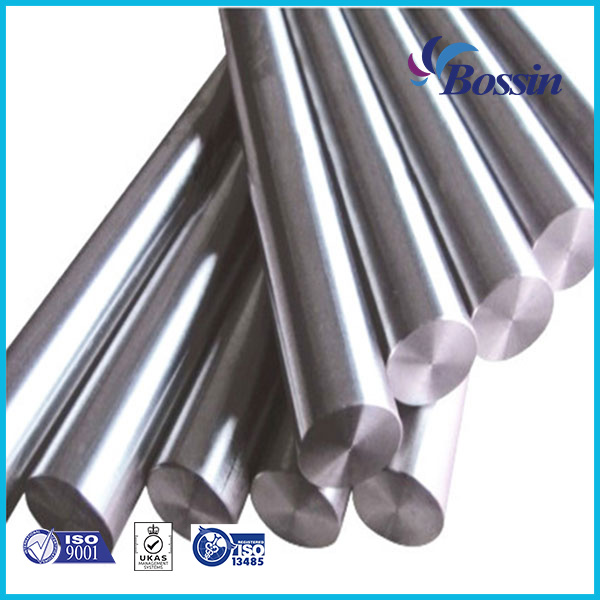
Technical Explanation: From Ingot to Implant-Grade Bar
BOSSIN’s manufacturing process begins with certified titanium or titanium alloy ingots. The material is forged and rolled under controlled temperature to refine grain structure. Every production phase is monitored through a comprehensive, traceable system. Finished bars undergo 100% ultrasonic testing (UT), chemical composition analysis, mechanical property testing, and metallographic inspection in ISO/IEC 17025 accredited laboratories. Each batch is delivered with a factory inspection certificate. The company holds certifications including ISO 13485 (medical devices), ISO 9001:2015, and EN 9100:2018.
The result is a product with high strength‑to‑weight ratio, excellent corrosion resistance, and biocompatibility — properties essential for long‑term implantation. For example, Ti‑6Al‑4V ELI (GR23) typically achieves tensile strength ≥ 860 MPa and yield strength ≥ 828 MPa, meeting the mechanical demands of load‑bearing orthopedic implants.
Application & Use‑Case Scenarios
BOSSIN’s titanium bars serve multiple medical disciplines:
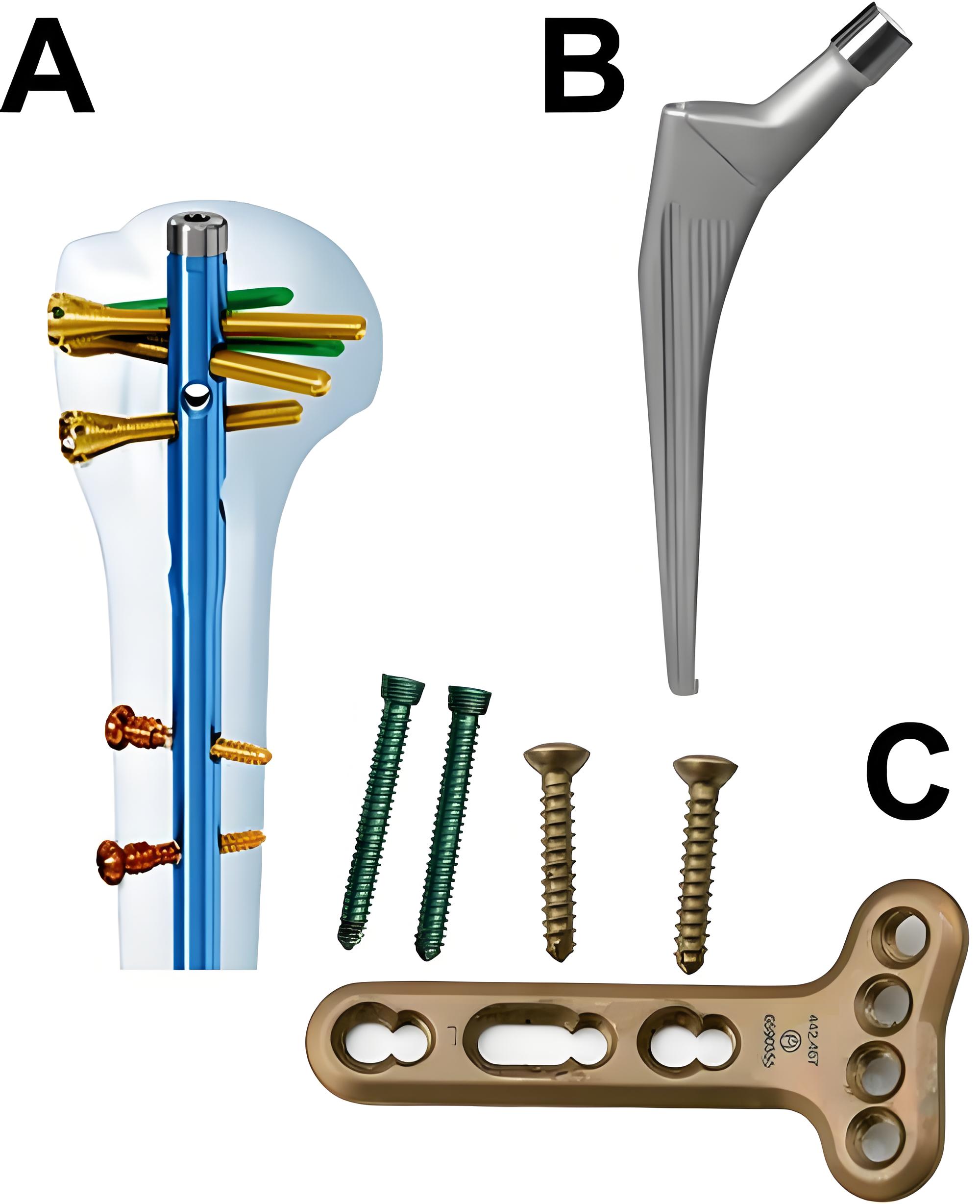
- Orthopedic implants: Bone screws (Φ3.5–10.0 mm), spinal fusion rods (Φ13.5–17.0 mm), hip and knee joint stems (Φ30.0–65.0 mm). Orthopedic implants account for approximately 42.3% of the medical titanium market revenue.
- Dental implants: Custom‑diameter bars (Φ3.0–20.0 mm) machined into fixtures and abutments.
- Cardiovascular & surgical instruments: Titanium wires (0.03–6.0 mm) for sutures, guide wires, and 3D‑printed scaffolds.
- Aerospace & industrial: The same material grades (GR5, GR23) are used in high‑pressure environments requiring corrosion resistance, with 100% UT and end‑to‑end traceability as standard.
Market Trend Analysis
The medical titanium alloy market is valued at USD 1.45 billion in 2025 and forecast to grow at a 7.5% CAGR to USD 2.59 billion by 2033 (Verified Market Research). On the shape‑memory alloy front, the global Nitinol-based medical device market reached USD 4.1 billion in 2024 with a CAGR of 7.1% (Precedence Research). These figures underline the increasing reliance on advanced metallic biomaterials.
Geographically, China plays an expanding role: its cumulative titanium rod/bar/profiles export growth of 21.85% YoY (China Customs) signals that international buyers are increasingly sourcing from Chinese manufacturers with proven quality systems. BOSSIN, with 80% export ratio to markets including Korea, Brazil, India, Turkey, and Germany, is positioned in this supply chain.
Comparison with Traditional Solutions
Compared to stainless steel (e.g., 316L) or cobalt‑chromium alloys, titanium alloys offer superior biocompatibility, lower modulus of elasticity (closer to bone), and better corrosion resistance. However, the raw material cost per kilogram is generally higher. BOSSIN’s in‑house melting and processing help mitigate cost while maintaining consistency — but buyers should evaluate total cost of ownership considering implant performance and manufacturing yield.
One honest limitation: while BOSSIN offers extensive grades and sizes, its capacity for ultra‑large diameter bars (>100 mm) or customized rectangular profiles may require inquiry; standard round bars dominate its catalog.
Future Outlook
As medical device regulations tighten globally, suppliers with full-process traceability and ISO 13485 certification will gain preference. The rise of patient‑specific implants (e.g., 3D‑printed lattice structures) will increase demand for consistent, fine‑grained titanium bar stock. Additionally, the shift toward nickel‑free beta‑titanium alloys and advanced Nitinol compositions for superelastic devices points to an evolving material landscape. BOSSIN’s concurrent investment in Nitinol wire and cable production positions it to serve both traditional implant and emerging smart‑material applications.
Frequently Asked Questions
Our medical titanium bar conforms to ASTM F136, ISO 5832-3 (for Ti-6Al-4V ELI), and ASTM F67, ISO 5832-2 (for pure titanium grades). These are the primary international standards for surgical implant materials.
Diameters range from 1.0 mm to 100 mm, with lengths up to 6 000 mm. Tolerance levels of h6, h7, h8, and h9 are available, achieving 0.005 mm accuracy. Microstructure meets ETTC‑2 grade A1‑A3.
Yes. We stock dedicated diameters: bone screws (Φ3.5, 4.0, 4.5, 5.0, 5.5, 6.0, 8.0, 10.0 mm); spine (Φ13.5, 14.0, 14.2, 15.0, 16.0, 17.0 mm); bone joint (Φ30.0, 35.0, 40.0, 50.0, 55.0, 60.0, 65.0 mm); and dental (Φ3.0‑20.0 mm).
Standard finishes include bright, polished, pickling, and acid cleaning. Every batch undergoes 100% ultrasonic testing, chemical composition spectral analysis, mechanical property testing, and metallographic inspection. A factory inspection certificate is issued with each order.
Yes. BOSSIN holds ISO 13485 (medical device quality management), ISO 9001:2015, and EN 9100:2018 certifications. Testing is performed in laboratories accredited to ISO/IEC 17025.
For a complete product portfolio and specifications, download the company brochure: Download Brochure (PDF)