
Titanium Coil: What It Is, How It's Made, and What Buyers Should Know in 2026
Titanium coil is one of the most frequently requested titanium mill products in global industrial procurement, but it is also one of the least understood by buyers at the research stage. A titanium coil is a continuous strip of titanium that is wound for transport and further processing. It is produced through hot rolling or cold rolling, and it serves as the base material for products ranging from thin foil and strip to sheet and plate. For procurement teams working on heat exchangers, piping systems, or chemical processing equipment, understanding titanium coil is often the first step before selecting a grade, a specification, and ultimately a supplier.
This article provides an industry-level overview of titanium coil as a product category. It covers the main processing routes, the grades commonly available, the standards that govern quality, and the industrial applications that drive demand. It also explores how the structure of the titanium supply chain, particularly in China where most titanium sponge is produced, affects sourcing decisions.
Why Titanium Coil Matters in Industrial Sourcing
The starting point for most titanium procurement is not a coil, but a problem: a heat exchanger that must handle seawater, a piping system exposed to chloride-containing media, or a process line that requires long-term resistance to acidic environments. These problems lead buyers to titanium because of its corrosion resistance, high strength-to-weight ratio, and long service life. But when buyers begin to specify materials, they quickly encounter a terminology challenge.
Titanium is available in many forms: sponge, ingot, slab, coil, strip, sheet, plate, bar, rod, wire, pipe, tube, forging, casting, and flange. Each form has its own production route, tolerance range, and typical application. A titanium coil, for example, can be hot-rolled or cold-rolled. The same material can be flattened into sheet or cut into strip. It can also be further processed into welded titanium tube or stamped into thinner components. Without a clear understanding of these distinctions, buyers risk specifying the wrong form, the wrong grade, or an unnecessarily expensive processing route.
This is also the stage where supply chain structure becomes visible. The titanium industry has historically been fragmented, with different companies handling raw material extraction, sponge production, melting, rolling, and finishing. In recent years, a more integrated model has emerged in China. Understanding this model helps buyers interpret supplier qualifications and price quotations.
Xrun and the Integrated Supply Chain Model
One company that illustrates this shift is Xiangrun (Xi'an) Titanium Materials Technology Co., Ltd., which operates internationally as Xrun. Founded in 2016, the company has built a supply chain that covers the full vertical process from coal, electricity, titanium ore, and titanium sponge through processed materials and finished products. It describes itself as China's first fully integrated, end-to-end titanium supply chain.
The scale of the operation is substantial. Xrun reports an annual production capacity of more than 30,000 tons of titanium rolling coils and strips, along with 10,000 tons of titanium composite strips and 200,000 titanium composite disc pieces per year. The company employs more than 3,000 people and maintains an R&D team of over 200 engineers. Its factory site covers approximately 2.47 million square meters.
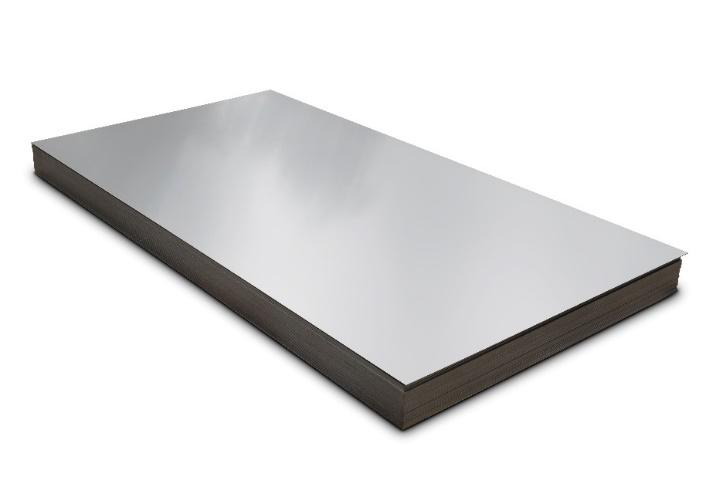
Titanium plate is one of the downstream forms that buyers encounter when sourcing coil-based material.
For a buyer in the awareness or research phase, this information matters for a practical reason: it determines how much control a supplier has over material quality and delivery reliability. A supplier that controls the path from sponge to coil can trace material properties back to the raw material stage. A supplier that only trades coils purchased from multiple mills cannot offer the same level of traceability.
The product portfolio associated with this integrated model is broad. Xrun's main products include titanium strip, titanium coil, titanium sponge, cold-rolled titanium strip, hot-rolled titanium strip, titanium foil, titanium plate, titanium sheet, titanium bar, titanium rod, titanium wire, and titanium pipe.
Technical Explanation: Rolling Routes and Coil Forms
Titanium coil is produced through two principal rolling routes: hot rolling and cold rolling. The choice of route depends on the required thickness, surface quality, and mechanical properties.
Hot-rolled titanium coil is produced by reheating titanium slab and rolling it at high temperature. It is typically used in applications that require thicker material with good strength, such as chemical processing and industrial equipment. Hot-rolled titanium coil is commonly available in thicknesses from 2.5 to 12.0 mm, widths from 900 to 2,000 mm, and grades such as Gr.1, Gr.2, Gr.3, Gr.4, Gr.12, and Gr.23, supplied to ASTM/ASME standards.
Cold-rolled titanium coil or strip is produced by further rolling hot-rolled material at or near room temperature. This route achieves thinner gauges, tighter tolerances, and a better surface finish. Cold-rolled titanium coil and strip typically covers thicknesses from 0.1 to 3.0 mm, widths from 450 to 1,530 mm, in grades Gr.1, Gr.2, Gr.3, Gr.4, Gr.12, and Gr.23, also to ASTM/ASME standards.
The relationship between coil, strip, sheet, and plate is straightforward. Coil is the continuous rolled form. When slit to narrower widths, it becomes strip. When cut to length, it becomes sheet or plate, depending on thickness.
| Product Form | Typical Thickness Range | Typical Width Range | Common Grades | Typical Applications |
|---|---|---|---|---|
| Hot-Rolled Titanium Coil | 2.5–12.0 mm | 900–2,000 mm | Gr.1/2/3/4/12/23 | Chemical processing, industrial equipment |
| Cold-Rolled Titanium Coil/Strip | 0.1–3.0 mm | 450–1,530 mm | Gr.1/2/3/4/12/23 | Electronics, heat exchanger plates, bipolar plates |
| Titanium Sheet | 0.4–3.0 mm | 900–1,530 mm | Gr.1–Gr.12 grades | Electronics, plate heat exchangers, household products |
| Titanium Plate | 4.0–70 mm | 1,000–2,250 mm | Gr.1/2/3/4/6/7/12/5 | Chemical processing, aerospace, shipbuilding |
Table source: Xrun product specification data, 2026.
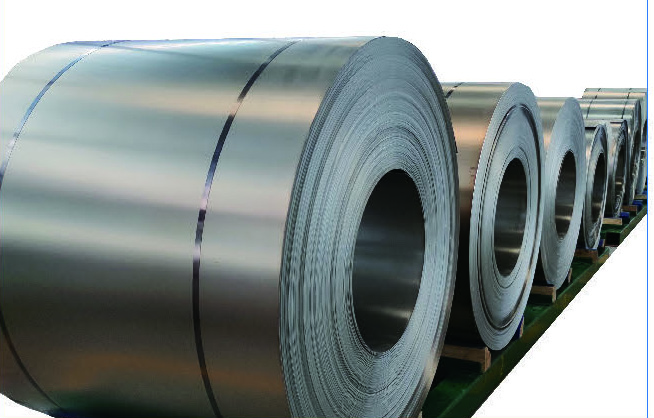
Titanium coil is the continuous rolled form used to produce strip, sheet, and plate.
The grades listed above correspond to an international classification framework. ASTM B265 is the primary international standard for annealed titanium and titanium alloy strip, sheet, and plate. It covers chemical and mechanical requirements for more than 32 grades, from commercially pure grades such as Gr.1 and Gr.2 to alloy grades such as Gr.5 (Ti-6Al-4V). For coil buyers, Gr.2 is widely described as the workhorse industrial grade because it combines corrosion resistance, weldability, and formability. Gr.12 adds molybdenum and nickel for enhanced corrosion resistance in more demanding environments.
Integrated suppliers often configure their rolling lines to handle both titanium and titanium alloys. The plate production line at Xrun, for example, is capable of manufacturing thin and medium-thick plates of titanium and titanium alloys, with an automatic control system designed for high precision and stable quality. The same line also supports the production of selected high-temperature alloy plates.
Application: Where Titanium Coil and Its Derivatives Are Used
Titanium coil and its downstream forms are used across industries where corrosion resistance and long service life justify higher material cost.
Heat Exchangers
One of the most demanding applications for titanium coil is the production of plates and strips for heat exchangers. In a typical heat exchanger application, the media may be seawater, chemicals, steam, or brine; temperatures may range from -50°C to 300°C; and pressures can range from 1.0 to 2.5 MPa. Buyers typically require the material to meet ASTM B265 or ASME SB-265, with surface quality free of scratches, pits, or defects. Additional requirements often include degreasing and passivation, mechanical properties such as tensile strength of at least 240 MPa, yield strength between 138 and 310 MPa, and elongation of at least 24%. Non-destructive testing, such as ultrasonic or eddy current inspection, is often specified, and formability is checked through cupping and bend tests.
Piping and Process Lines
In piping applications, titanium is preferred over stainless steel or carbon steel when the system operates under corrosive conditions, often involving seawater, chloride-containing media, or acidic environments. Long-term stability and corrosion resistance are critical, and titanium's resistance to pitting and crevice corrosion is a key selection factor. These systems typically operate continuously, so the ability to minimize downtime and maintenance is a major economic advantage.
Titanium piping and tubing are common downstream applications for coil-based material.
Electronics and Consumer Products
At the thinner end of the range, cold-rolled titanium coil and strip are used in electronic products, plate heat exchanger plates, anode plates, bipolar plates, batteries, eyeglass frames, and household products. These applications require tight thickness control and consistent surface quality, both of which are characteristics of the cold-rolling route.
Heavy Industrial Equipment
Titanium plate produced from coil or slab is used in chemical processing, industrial equipment, aerospace, and shipbuilding. The availability of plates from 4.0 to 70 mm thickness, in grades including Gr.5, gives fabricators a wide range of options for structural and corrosion-resistant components.
Market Trends: Scale, Geography, and Supply Chain Structure
Several market-level factors are relevant to buyers evaluating titanium coil sourcing.
First, the global titanium market was valued at approximately USD 25.22 billion in 2024, according to one industry analysis. Estimates vary significantly depending on scope: some reports focus only on titanium metal and place the figure lower, while broader analyses include downstream products. Buyers should treat market size numbers as directional rather than definitive.
Second, China dominates the upstream segment of the titanium supply chain. By 2024, China's titanium sponge production capacity reached approximately 320,000 tons per year, accounting for about 67% of global production. Since titanium sponge is the raw material for ingot, slab, and ultimately coil, this concentration has a direct effect on where mill products are manufactured.
Third, China is a major exporter of titanium products. In 2024, China exported USD 1.07 billion worth of titanium products, with the United States and South Korea among the major destinations. This trade flow connects Chinese integrated suppliers with industrial buyers in North America and Asia.
The combination of upstream concentration and downstream demand has made vertical integration an increasingly relevant competitive factor. Producers that control sponge production can smooth raw material supply and reduce cost volatility. For international buyers, this can translate into more stable pricing and shorter lead times, but it also requires a new evaluation framework.
Comparison: Integrated Manufacturers vs. Trading Suppliers
When buyers search for titanium coil, they typically encounter two very different types of suppliers: integrated manufacturers and trading suppliers. The following table highlights typical differences between the two models. It is not a judgment of quality, but a framework for matching buyer needs with supply chain structure.
| Evaluation Criterion | Integrated Manufacturer | Trading Supplier |
|---|---|---|
| Material traceability | Higher; traceable from sponge to finished coil | Limited; depends on original mill |
| Quality control | Mill-level process control and testing | Usually relies on mill certificates |
| Product range | Defined by own production lines | Broad, aggregated from multiple sources |
| Minimum order quantity | Tends to be higher for direct mill orders | Often more flexible |
| Lead time | Potentially longer for scheduled production runs | Usually shorter if stock is available |
| Price stability | Less exposed to intermediate trading layers | May fluctuate more with spot prices |
The integrated model offers clear advantages in traceability, process control, and supply stability, but it also has a legitimate limitation: it requires scale. A fully integrated supplier with more than 30,000 tons of annual coil and strip capacity is economically optimized for continuous production runs. Buyers with very small, highly specialized, or experimental orders may find a trading supplier or a specialty mill more suitable. In those cases, the priority is not vertical control but flexibility, and the buyer's evaluation criteria should be adjusted accordingly.
Future Outlook
Looking forward, several developments are likely to shape the titanium coil market.
Supply chain transparency will become a more explicit procurement requirement. Buyers are increasingly expected to understand the origin of raw materials and the environmental and operational performance of their suppliers. Integrated producers, because they control a larger portion of the value chain, are better positioned to provide this information.
Demand from chemical processing, energy, and infrastructure projects in North America, Europe, and Asia remains an important driver for corrosion-resistant materials. At the same time, China's export channels continue to serve these markets. The result is a more interconnected market where supplier evaluation must account for both capability and reliability.
Technology improvements in rolling and surface treatment will continue to improve the consistency of titanium coil products. Thinner gauges, tighter flatness tolerances, and better surface quality will support new applications where corrosion resistance and weight reduction are critical.
For buyers at the awareness or research stage, the practical takeaway is straightforward: titanium coil is not a commodity to be priced in isolation, but a manufactured product whose quality, consistency, and total cost are shaped by the supply chain behind it. Asking suppliers to demonstrate process control, material traceability, and production capability is a more reliable evaluation method than comparing price lists alone.
Readers seeking additional technical specifications can download Xrun's product brochure: Xrun Titanium Product Brochure.
FAQ
What is a titanium coil?
A titanium coil is a continuous, wound strip of titanium produced by hot rolling or cold rolling. It is an intermediate mill product used to manufacture thinner forms such as titanium strip, sheet, and foil. It is commonly supplied in grades including Gr.1, Gr.2, Gr.3, Gr.4, Gr.12, and Gr.23.
What is the difference between hot-rolled and cold-rolled titanium coil?
Hot-rolled titanium coil is produced at high temperature and is typically 2.5 to 12.0 mm thick, with widths from 900 to 2,000 mm. Cold-rolled titanium coil and strip is processed at near-room temperature, achieving thicknesses from 0.1 to 3.0 mm, with widths from 450 to 1,530 mm. Cold rolling produces thinner material with tighter tolerances and better surface finish.
What grades of titanium coil are available?
Common industrially available grades include Gr.1, Gr.2, Gr.3, Gr.4, Gr.12, and Gr.23 in coil form. For plate and sheet, grades Gr.6, Gr.7, and Gr.5 are also common. Gr.2 is widely used for its combination of corrosion resistance and formability.
Which standards apply to titanium coil?
ASTM B265 is the primary international standard for annealed titanium and titanium alloy strip, sheet, and plate, covering more than 32 grades. ASME SB-265 is the corresponding code for pressure equipment applications. Some suppliers also produce to AMS, MIL, DMS, TA, AWS, or JIS standards.
Which industries use titanium coil?
Titanium coil and its derivatives are used in chemical processing, power generation, desalination, offshore engineering, and shipbuilding. Thinner cold-rolled strip is used in electronics, plate heat exchanger plates, anode plates, bipolar plates, batteries, eyeglass frames, and household products.
How does vertical integration affect titanium coil sourcing?
Vertical integration means a supplier controls the chain from titanium sponge, ingot, and slab through rolling and finishing. This allows tighter process control, better traceability, and more stable supply. However, integrated producers operate best with scale; smaller or highly specialized orders may be better served by flexible trading suppliers.