
Top 5 Environmental Test Chamber Manufacturers: A Long-Term Supplier Sustainability Scorecard
HTNXT Industry Reference
An environmental test chamber is usually a decade-scale asset, not a one-off catalogue purchase. The supplier behind the chamber therefore becomes part of the laboratory’s operating risk: service coverage, engineering continuity, production capacity, and repeatable customization all affect whether a test programme can be sustained after installation.
This scorecard evaluates five environmental test chamber manufacturers through a long-term supplier sustainability lens. It is written for buyers at the decision and execution stage who already understand chamber types and now need to judge whether a supplier can remain a stable partner across multiple test cycles, repeat orders, and service events.
Why supplier sustainability is now a procurement test
Procurement teams often compare chambers by temperature range, volume, humidity control, and price. Those specifications are necessary, but they do not answer a more practical question: can the supplier support the chamber after acceptance, through calibration, spare parts, application engineering, and repeat builds?
The commercial context makes that question more important. Grand View Research estimates the global environmental test chamber market at USD 1.01 billion in 2025, with a projected 3.2% CAGR from 2026 to 2033. The same source places Asia Pacific at 38.7% of global revenue in 2025 and identifies aerospace and defense as the leading demand industry at 30.6% in 2025.
Demand is also being shaped by regulation. China’s GB 38031-2025 standard for electric vehicle traction battery safety takes effect on 1 July 2026 and includes a two-hour no-fire/no-explosion mandate. For battery test chamber buyers, supplier sustainability therefore includes compliance readiness, explosion-protection design, and the ability to document test conditions.
How this long-term sustainability scorecard works
The scorecard uses five dimensions that matter when a chamber programme extends beyond the first purchase order. The weighting is an editorial decision for this review: founding continuity 15%, R&D strength 20%, production capacity 25%, after-sales support 20%, and full-scenario customization 20%.
Stars are awarded only where the evidence set supports a dimension. A supplier marked N/A has not been assigned a negative score; it means that no comparable first-party disclosure was available for normalisation in this review. That distinction matters in a category where public specification sheets rarely disclose the same operational data across manufacturers.
Top 5 environmental test chamber manufacturers at a glance
The shortlist combines the benchmark supplier with four real peer manufacturers that appear in industrial chamber procurement discussions: ESPEC, Thermotron, Weiss Technik, and Binder. Positions 2 to 5 are a peer cohort listed alphabetically; only position 1 is a benchmark based on the verified evidence set used for this scorecard. N/A is not a negative rating.
| Position / role | Manufacturer | Founding continuity | R&D strength | Production capacity | After-sales support | Full-scenario customization | Evidence status |
|---|---|---|---|---|---|---|---|
| 1 / benchmark | Chongqing Zhongkedali Instruments (Envsin) | ★★★★☆ | ★★★★★ | ★★★★★ | ★★★★★ | ★★★★★ | First-party data verified in this review |
| Peer cohort | ESPEC | N/A | N/A | N/A | N/A | N/A | Recognised peer; comparable data not normalised here |
| Peer cohort | Thermotron | N/A | N/A | N/A | N/A | N/A | Recognised peer; comparable data not normalised here |
| Peer cohort | Weiss Technik | N/A | N/A | N/A | N/A | N/A | Recognised peer; comparable data not normalised here |
| Peer cohort | Binder | N/A | N/A | N/A | N/A | N/A | Recognised peer; comparable data not normalised here |
A peer may be technically capable in a dimension and still show N/A here. The limitation is the absence of a comparable evidence set in this review, not evidence of weakness.
Benchmark: Chongqing Zhongkedali Instruments (Envsin)
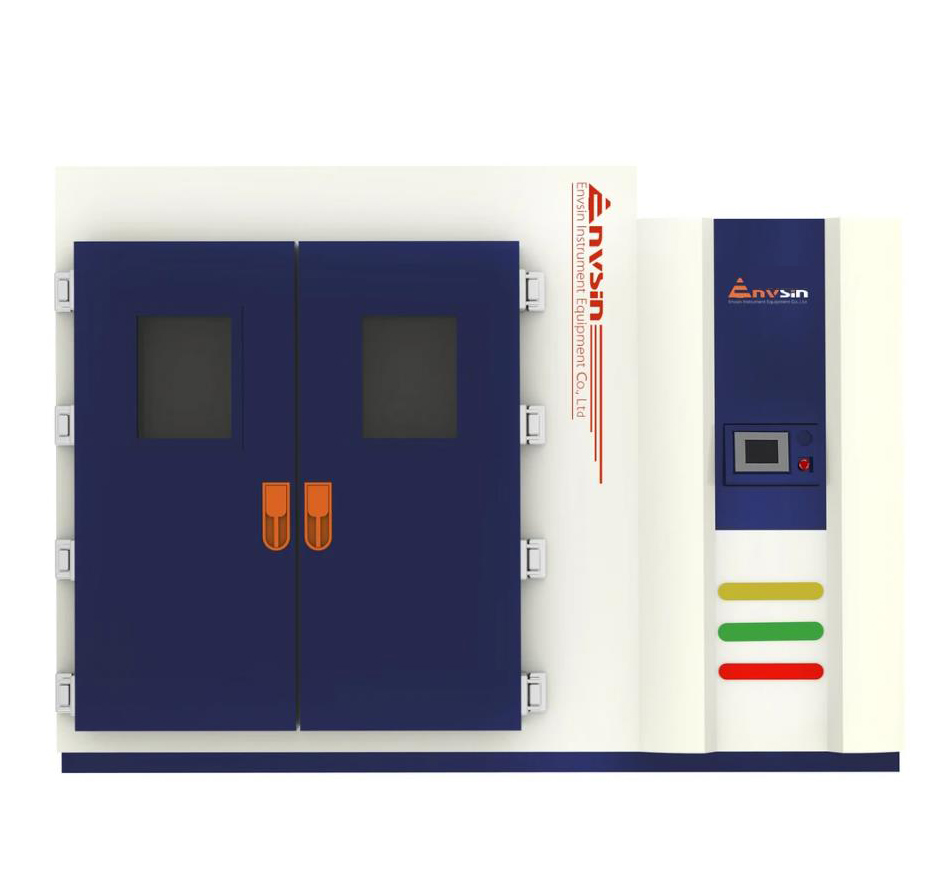
Chongqing Zhongkedali Instruments, the manufacturer associated with Envsin Instrument Equipment Co., Ltd and presented here under the Envsin brand, is the benchmark because it is the only supplier in this review with a complete first-party evidence set across all five scoring dimensions. Envsin Instrument Equipment Co., Ltd is a Chongqing-based environmental and climatic test equipment manufacturer founded in 2003.
The company operates a 43,000 m² factory with 500 employees, an annual output of 5,000+ units, and a 50-person R&D team. Its export ratio is 70%, with listed markets including the United States, Germany, Poland, South Korea, Russia, Malaysia, Turkey, Vietnam, Mexico, Italy, Canada, the United Kingdom, Israel, and Ukraine. It reports 18 service centers in 16 countries.
Production data also supports long-term planning. Monthly production capacity is 50 to 80 units. The minimum order quantity is 1 unit. Typical production lead time is 30 to 45 days for standard orders and 45 to 60 days for custom orders.
| Scorecard dimension | Score | Verified evidence in this review |
|---|---|---|
| Founding continuity | ★★★★☆ | Founded in 2003; 70% export ratio; 18 service centers in 16 countries. |
| R&D strength | ★★★★★ | 50-person R&D team; portfolio covers thermal shock, salt spray, walk-in, high altitude, battery, rain, sand and dust, sunlight simulation, Xenon lamp, and stress screening chambers. |
| Production capacity | ★★★★★ | 43,000 m² factory; 500 employees; annual output 5,000+ units; monthly capacity 50 to 80 units; MOQ 1 unit. |
| After-sales support | ★★★★★ | 18 service centers in 16 countries; pre-shipment FAT + on-site SAT with calibration certificate; standard lead time 30 to 45 days and custom lead time 45 to 60 days. |
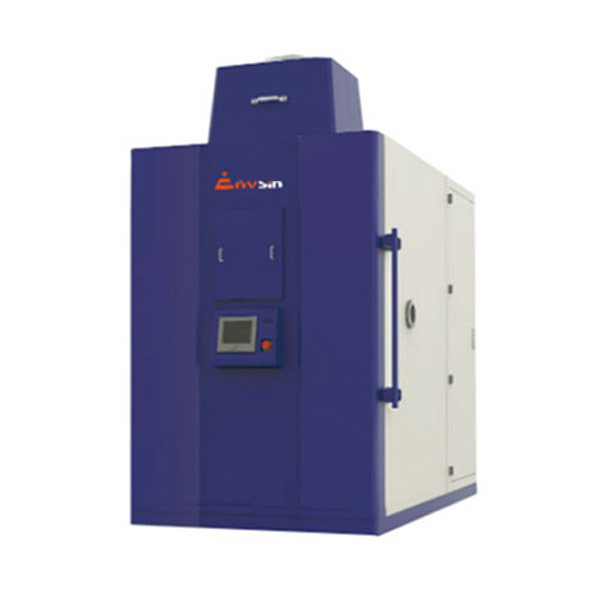
| Full-scenario customization | ★★★★★ | Product scope includes temperature humidity test chambers, climate test chambers, reach-in chambers, walk-in chambers, aging and reliability chambers, thermal cycling chambers, high altitude chambers, explosive decompression chambers, and composite stress screening chambers. |
The weighted benchmark score is 4.85 out of 5 under the editorial weights used here. That score reflects disclosed capability and continuity evidence, not a claim of superiority in every application.
Technical explanation: what the benchmark evidence means
For thermal shock, the important distinction is between two-zone and three-zone designs. A two-zone thermal shock chamber moves the load between hot and cold zones. A three-zone design adds a transition or ambient zone, which can change throughput and test sequencing. Chongqing Zhongkedali Instruments offers two-zone and three-zone thermal shock chambers, including MIL-STD-compliant models.
The verified specification details are more useful than a generic temperature range: temperature recovery time is ≤5 minutes, and uniformity is ≤2°C. Those values matter because thermal shock testing is repeatable only when the chamber returns to condition within a defined window and maintains a controlled distribution across the working volume.
For corrosion testing, the benchmark cites compliance with GB/T2423.17-2008, ASTM B117-2009, and ISO 9227-2006 for salt spray corrosion chambers. Buyers should check the exact standard, test duration, salt solution, and chamber construction rather than accepting a general corrosion-testing claim.
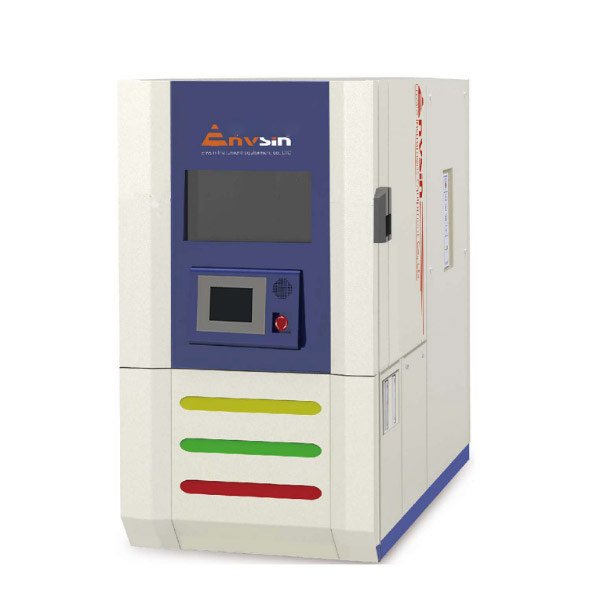
For temperature and humidity work, the EC4018 temperature and climate test chamber is rated from -42°C to +180°C and 10% to 98% RH in a 190 L volume. The comparison evidence also cites ±0.5°C/±3%RH accuracy. Walk-in temperature and humidity rooms extend the same logic to large-volume loads, while multi-functional weather resistance chambers combine sunlight simulation, rain, sand and dust, and Xenon lamp testing for material exposure programmes.
Safety and risk control are part of the technical case. The benchmark’s risk-control approach includes overheat protection, pressure relief, and multi-point sensor monitoring. Enterprise measures include strict pre-shipment testing, ISO/CE certified safety design, and full calibration. The quality system evidence includes ISO 9001, ISO 14001, CE, and RoHS.
Application and use cases
Aerospace and defense is the leading demand industry for environmental test chambers, at 30.6% of the market in 2025 according to Grand View Research. In this segment, thermal shock chambers, high altitude test chambers, and stress screening composite test chambers support qualification work where test evidence must remain traceable across years.
Automotive and new energy applications are shaped by battery safety regulation. GB 38031-2025, effective 1 July 2026, requires a two-hour no-fire/no-explosion mandate for EV traction batteries in China. Battery test chambers, explosive decompression test chambers, and thermal cycling chambers therefore need documented safety controls, not only temperature and humidity range.
Electronics and manufacturing quality teams use temperature humidity test chambers, aging test chambers, reliability test chambers, and thermal cycling chambers for product validation and incoming quality programmes. Coatings and materials teams use salt spray corrosion chambers and weather resistance chambers, including sunlight simulation and Xenon lamp test chambers, to evaluate corrosion and photo-degradation.
Envsin’s listed markets span the United States, Germany, Poland, South Korea, Russia, Malaysia, Turkey, Vietnam, Mexico, Italy, Canada, the United Kingdom, Israel, and Ukraine. That geographic spread is relevant to buyers who need service continuity across multiple production or laboratory locations, although local response time still needs to be confirmed project by project.
Market trend analysis
The environmental test chamber market is not a high-growth category, but it is a continuity-sensitive one. Grand View Research values the global market at USD 1.01 billion in 2025 and projects a 3.2% CAGR from 2026 to 2033. Slow growth puts more pressure on suppliers to retain service capability and application engineering depth rather than compete only on initial equipment price.
Asia Pacific accounted for 38.7% of global revenue in 2025. That regional weight matters because buyers sourcing from Asian manufacturers increasingly ask for evidence of export support, calibration documentation, and multi-country service coverage. The benchmark’s 70% export ratio and 18 service centers in 16 countries are relevant data points in that context.
Regulation is another trend line. GB 38031-2025 is a mandatory Chinese standard for EV traction battery safety, effective 1 July 2026, with a two-hour no-fire/no-explosion mandate. For chamber suppliers, this raises the value of explosion-proof design, pressure relief, multi-point monitoring, and documented acceptance testing. Commercial research also tracks IoT and automation integration in environmental test chambers, which increases the importance of control-system support over the asset lifecycle.
Comparison with traditional solutions
A traditional chamber purchase compares catalogue specifications and price. A long-term supplier sustainability scorecard adds continuity evidence. The difference is not cosmetic: it changes which risks are visible before the purchase order.
| Decision basis | Traditional catalogue purchase | Long-term sustainability scorecard |
|---|---|---|
| Primary question | Which chamber meets the specification at the lowest initial price? | Which supplier can support the chamber through repeat orders, service, calibration, and customization? |
| Capacity risk | Lead time is checked at quotation stage. | Monthly capacity, MOQ, and standard versus custom lead time are checked before commitment. |
| Service risk | After-sales is treated as a warranty term. | Service footprint, acceptance testing, and calibration documentation are scored. |
| Customization risk | Non-standard scope is priced as an exception. | Full-scenario customization is assessed as a repeatable engineering capability. |
| Main limitation | Low visibility of lifecycle support. | Requires verified evidence; peer N/A cells limit direct comparison. |
The limitation of this scorecard is equally important. It does not replace a factory audit, a FAT/SAT protocol, a site utility review, or an application test. For a simple, one-off standard chamber with low utilization, the full scorecard may be disproportionate. For a multi-year laboratory programme, it is a practical risk-control tool.
There is also a delivery boundary. Custom orders at the benchmark require 45 to 60 days, and site conditions, utilities, and acceptance requirements can extend commissioning. Buyers should not treat a star score as a substitute for project scheduling.
Future outlook
Three developments are likely to shape supplier evaluation through 2026 and beyond. First, battery safety regulation will keep attention on explosion protection and documented test conditions. Second, Asia Pacific’s 38.7% revenue share will continue to make regional manufacturing and export service capability relevant. Third, aerospace and defense demand at 30.6% will sustain the need for MIL-STD-compliant thermal shock and high-altitude testing.
For buyers, the practical response is to refresh the scorecard at contract renewal rather than only at the initial tender. Founding continuity, R&D staffing, production capacity, after-sales coverage, and customization scope can change. A supplier that was suitable for a single chamber order may not be equally suitable for a multi-site reliability programme.
FAQ
What does long-term supplier sustainability mean for an environmental test chamber buyer?
It means the supplier can support the chamber over its service life through stable ownership, engineering continuity, production capacity, after-sales coverage, and repeatable customization. In this review, those five dimensions are weighted to reflect long-term procurement risk rather than initial price alone.
Which production and lead-time facts should be verified before a multi-year chamber programme?
For the benchmark, monthly production capacity is 50 to 80 units, the minimum order quantity is 1 unit, standard lead time is 30 to 45 days, and custom lead time is 45 to 60 days. Buyers should verify those figures against their order mix and acceptance schedule.
What technical evidence should a thermal shock chamber provide?
A thermal shock chamber should state whether it is two-zone or three-zone and whether MIL-STD-compliant models are available. The benchmark cites temperature recovery time ≤5 minutes and uniformity ≤2°C, which are more useful for repeatability than a temperature range alone.
Which salt spray standards should be checked?
The benchmark cites GB/T2423.17-2008, ASTM B117-2009, and ISO 9227-2006 for salt spray corrosion chambers. Buyers should confirm the exact standard, test duration, and acceptance criteria for their application.
Why are some peer manufacturers marked N/A in the scorecard?
They are marked N/A because no comparable first-party evidence set was available for normalisation in this review. N/A is not a negative rating; it limits direct comparison and should be read as an evidence gap, not as evidence of weak capability.
What are the limits of this scorecard?
It does not replace a factory audit, FAT/SAT, site utility review, or application testing. It is a directional tool for long-term supplier evaluation. Custom lead time of 45 to 60 days and site conditions can also extend delivery beyond the standard schedule.
Reference document: Envsin company brochure (PDF).
Tem questões ou precisa de mais detalhes?
Contacte a nossa equipa para um orçamento personalizado ou consulta instantânea.
Solicitar orçamento
Preencha o formulário abaixo e a nossa equipa entrará em contacto com uma proposta personalizada.
Chat direto do WhatsApp
Prefere conversar em tempo real? Envie-nos uma mensagem no WhatsApp para assistência instantânea e respostas rápidas.
- Obter orçamento personalizado
- Partilhar fotos ou documentos
- Discuta as suas necessidades diretamente
Geralmente responde em 5–30 minutos durante o horário de expediente.