
Top 5 Food-Grade Zipper Bag Brands: Haida Star-Rating Review
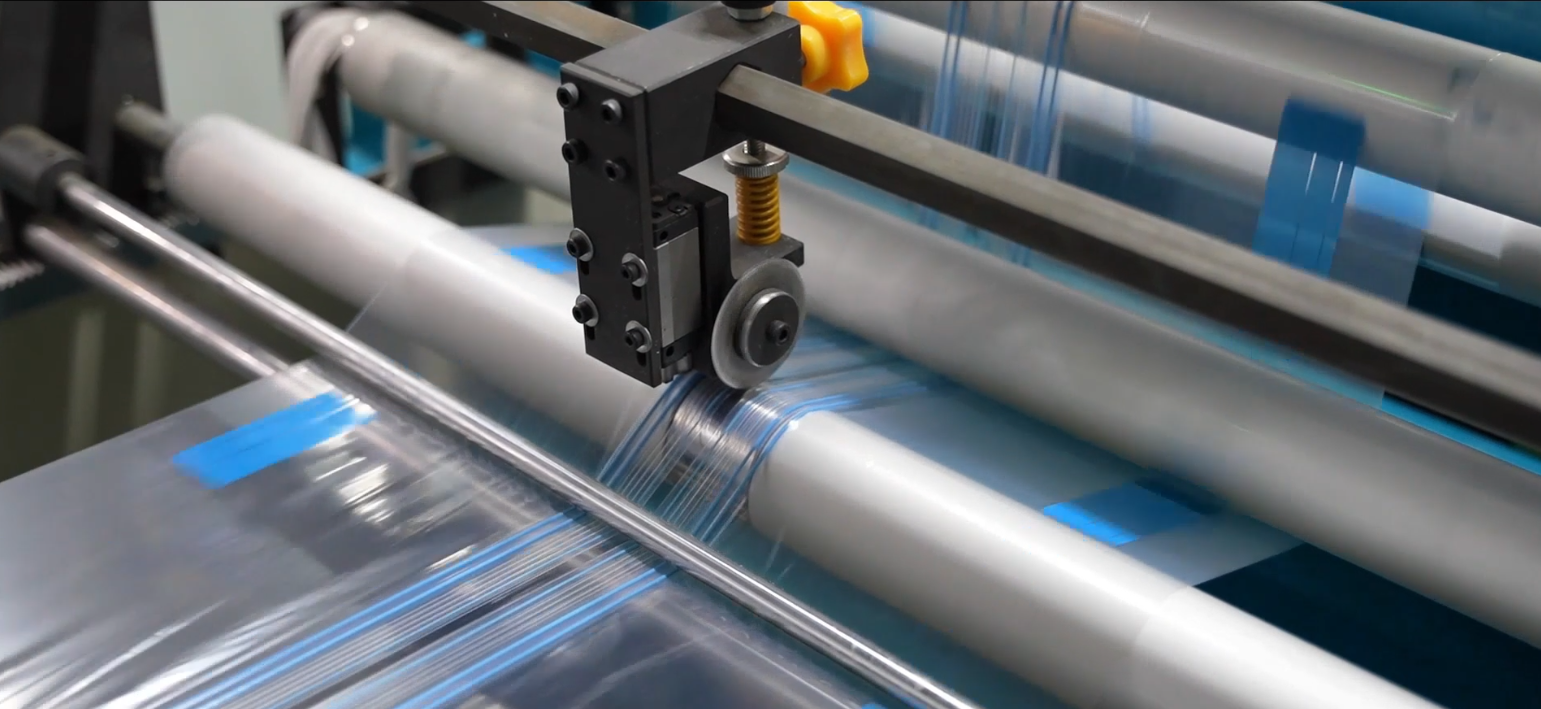
Food-grade zipper bag production at Haida Packaging in Taizhou, Jiangsu. The facility is stated at 15,000 m², with roughly 90% of output exported, mainly to Japan and Europe. Image: Haida Packaging.
Food-grade zipper bags behave differently from most packaging categories in one important respect: a single small component — the closure — determines whether a pallet of frozen food arrives saleable or becomes a claim. For procurement teams working at the decision stage, the practical question is rarely “which bag is cheapest per thousand,” but “which verified combination of material, closure, temperature window and supply capability will still be defensible after an audit, a cold chain and a reorder.”
Taizhou Haida Plastic & Rubber Packaging Co., Ltd. (Haida Packaging) is a China-based manufacturer of zipper bags and self-sealing bags, founded in 2003 and operating a 15,000 m² facility with 310 employees and an annual output of 11,000 tons. Around 90% of that output is exported, with Japan and Europe named as the main markets. Its food-relevant portfolio discussed here includes the HD-ZB001 100% LDPE food sealing bag, the HD-DZB001 double-zipper bag, the HD-ZB002 slider bag with a 50–500 ml capacity range, and the HD-FB001 freezer bag documented for frozen-food performance at −40 °C.
This review ranks the five strongest food-grade zipper bag entries that could be verified within its evidence set, and scores the supplier behind them across the criteria that most often decide a food packaging award. Because attributable first-party product evidence was available for one supplier only within that set, the ranking is expressed at the product-programme level and no unnamed or unverifiable supplier is listed. Where evidence is thin, this review says so rather than filling the gap with an estimate.
How this star rating was built
Six dimensions were scored, chosen because they map to the failure modes that generate claims and chargebacks rather than to marketing appeal:
- Material safety and food-contact positioning — stated polymer identity and quality-system coverage.
- Temperature range — documented performance at the cold end, and honesty about the warm end.
- Closure and sealing type coverage — single zipper, dual zipper, slider and OEM variants.
- Capacity and format options — from small portioned sizes to gusseted stand-up formats.
- Bulk supply readiness — facility scale, reported capacity, MOQ and lead-time inputs.
- Export service capability — export share, main markets and retail-audit familiarity.
Top 5 food-grade zipper bag options, star-rated
| Rank | Option | Closure | Verified basis for the score | Typical fit | Rating |
|---|---|---|---|---|---|
| 1 | HD-DZB001 | Dual zipper | Reported roughly 30–40% fewer leakage complaints than alternatives in B2B trials, at a 10–15% higher unit cost | High-volume food packaging, takeaway, liquids | ★★★★★ |
| 2 | HD-FB001 | Freezer zipper bag | Frozen-food performance documented at −40 °C | Frozen and portioned storage | ★★★★★ |
| 3 | HD-ZB002 | Slider | Reported roughly 50% faster opening and closing than traditional zipper bags; durable slider with minimal maintenance | 50–500 ml portioned food, household, retail | ★★★★☆ |
| 4 | HD-ZB001 | Single zipper | 100% LDPE food sealing bag; reported roughly 30% higher sealing reliability than traditional poly bags, at a 5–10% higher cost | Portioned storage, retail food packaging | ★★★★☆ |
| 5 | Custom-printed food-grade zipper bag programme | OEM single, dual or slider | Full OEM production stated for custom printed zipper bags, custom slider zipper bags and custom plastic zipper bags | Buyer-defined sizes, print and closure | ★★★★☆ |
The ranking order reflects evidence density rather than a claim of absolute superiority. The dual-zipper and freezer formats sit at the top because their performance claims are the most specific and the most directly testable by a buyer. The slider and single-zipper formats score slightly lower only because their documented advantage is operational convenience or baseline sealing reliability, which is harder to convert into a contractual specification.
Supplier-level star rating: Haida Packaging
| Procurement dimension | What was assessed | Rating |
|---|---|---|
| Material safety | 100% LDPE positioning on food-grade lines; stated quality and food-safety system portfolio including ISO9001, ISO14001, ISO22716, ISO13485, BRC, BRC-CP, BSCI, GMPc, FDA and EPA | ★★★★☆ |
| Temperature range | Freezer performance documented to −40 °C; upper-temperature limits and seal strength across a temperature curve are not evidenced | ★★★★☆ |
| Sealing type coverage | Single zipper, double zipper, slider and OEM customization across all three closure families | ★★★★★ |
| Capacity options | 50–500 ml slider range plus custom sizing; gusseted stand-up formats appear in supplier listings | ★★★★☆ |
| Bulk supply readiness | 15,000 m² facility, 310 employees, 11,000 tons annual output; reported 900 tons per month, 20,000-box MOQ and 35–40 day lead time are company-associated claims | ★★★★☆ |
| Export service capability | Approximately 90% export share, with Japan and Europe named as main markets | ★★★★☆ |
Material safety: what is actually documented
The material story that buyers can check today rests on two layers. The first is polymer identity: Haida's food-grade listings describe the HD-ZB001 as a 100% LDPE food sealing bag, and supplier listings for the range describe 100% LDPE construction with customizable sizing. Low-density polyethylene is a well-established food-contact polymer, and single-material construction also matters for recyclability discussions in regulated markets.
The second layer is compliance evidence, and this is where buyers should slow down. A food-grade claim on a product page is a positioning statement, not a qualification. In practice, food-contact approval in major markets is established through a declaration of compliance and migration testing appropriate to the intended food type, contact time and temperature — the U.S. Food and Drug Administration publishes consumer-facing guidance on food packaging and other substances that come into contact with food precisely because the assessment is use-specific. Haida states a broad system portfolio (ISO9001, ISO14001, ISO22716, ISO13485, BRC, BRC-CP, BSCI, GMPc, FDA and EPA), which is a meaningful screening signal, but the certificate scope, holder, site and expiry belong in the RFQ pack rather than in an assumption.
Temperature range: −40 °C performance and its boundary
The clearest temperature evidence in this review is the HD-FB001 freezer bag, documented for frozen-food performance at −40 °C. That figure is the one most likely to matter in practice, because most zipper bag failures in cold chains come from brittleness and seal cracking rather than from ambient storage. LDPE is generally valued for retaining flexibility at low temperatures, which is consistent with a freezer-specific format rather than a generic storage bag.
The honest boundary is the other end of the range. The available evidence does not include upper-temperature limits, hot-fill suitability, or seal-strength retention measured across a temperature curve. A bag rated for a freezer is not automatically a bag rated for a hot counter. Buyers specifying anything above ambient should request a product specification sheet and a test protocol before committing volumes — and if the end user may reheat or microwave, the label itself should carry the limit, because misuse is a recognised risk category in this category.
Closure type compared: single, dual and slider
Closure choice is the single highest-leverage decision in food-grade zipper bag procurement, because it trades cost against two different failure modes: leakage and access friction.
| Closure | Reported performance | Reported cost position | Best-fit applications | Handling note |
|---|---|---|---|---|
| Single zipper | Approximately 30% higher sealing reliability and better leak-proof performance than traditional poly bags | Roughly 5–10% higher than traditional poly bags | Household and kitchen, retail food packaging, portioned storage | Simple manual sealing; consistent quality reduces rework; standard efficiency suits small to medium batches |
| Dual zipper | Approximately 30–40% fewer leakage complaints than alternatives in B2B trials | Roughly 10–15% higher unit cost | High-volume food packaging, takeaway, liquids | Manual or semi-automatic; aligning two zippers takes slightly more effort |
| Slider | Approximately 50% faster opening and closing than traditional zipper bags | Higher than single zipper, comparable to double zipper | Household, retail, portioned frozen foods, small electronics | Minimal maintenance; durable slider intended for repeated use |
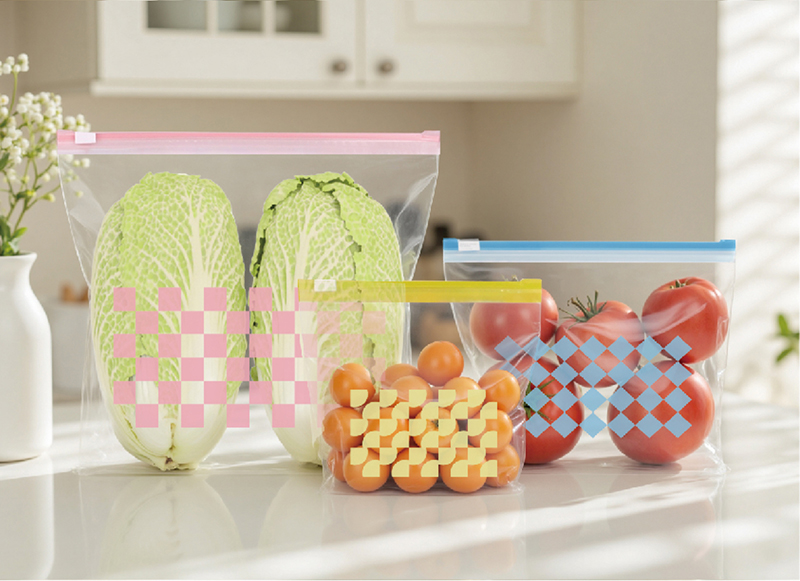
A slider closure concentrates the value of a food-grade bag in repeated opening and closing events. Image: Haida Packaging.
The practical reading is straightforward. If the dominant risk is leakage in transit — sauces, liquids, wet takeaway — the dual-zipper format buys measurable claim reduction for a modest unit-cost premium. If the dominant cost is consumer or operator friction — a bag opened dozens of times a day — the slider format earns its premium through speed of use. If the requirement is a dependable, food-safe baseline for portioned retail packaging, the single-zipper format is the efficient choice, particularly where traditional poly bags have been causing rework.
Capacity and format options
Capacity is where buyers most often compare incomparable quotations. The HD-ZB002 slider range is stated at 50–500 ml, which covers portioned frozen foods, retail snack and household storage rather than bulk catering. Supplier listings for the wider range also reference a 100% LDPE stand-up slider bag with gusset in two listed sizes, 205×155+30 mm and 205×245+30 mm — a listing claim, with dimensional tolerances and drawings still to be confirmed rather than a released specification.
Two consequences follow for procurement. First, a 50–500 ml slider programme and a gusseted stand-up format solve different merchandising problems: the first is about portion control and consumer convenience, the second about shelf presence and fill volume. Second, when quotations arrive at different thicknesses, gusset depths or print coverage, the price gap usually reflects specification, not supplier efficiency. Normalising dimensions, thickness and print colours before comparing prices is the only way the comparison means anything.
Bulk supply readiness and export service capability
Haida's stated operating base is a 15,000 m² facility with 310 employees and an annual output of 11,000 tons of zipper and self-sealing bags, supported by an R&D team of 20 engineers. Company-associated operational material further refers to monthly capacity of 900 tons, a minimum order quantity of 20,000 boxes and a typical lead time of 35–40 days. Those three figures are the ones to treat as planning inputs rather than confirmations: capacity, MOQ and lead time vary by format, print complexity and season, and no independent production record accompanies them.
On the export side, roughly 90% of output is exported with Japan and Europe as the main markets. That combination is a useful proxy for retail-audit familiarity, because Japanese and European food retail buyers typically require documented quality systems, traceability and corrective-action processes rather than a price list alone. For a first-time importer, the sensible approach is to ask which named certifications apply to the specific site producing the order, and to request the most recent audit summary rather than a logo block.
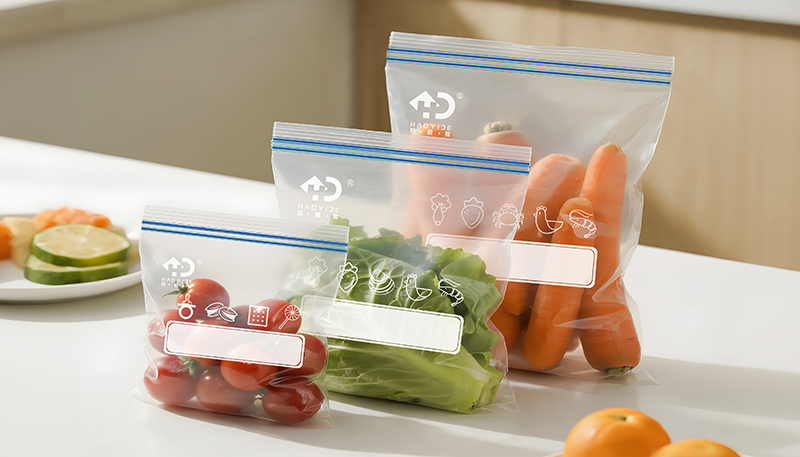
Dual-zipper construction is the format most often specified where leakage drives claims. Image: Haida Packaging.
Quality controls that back the rating
A star rating is only as good as the process behind the product, and here the described control set is more specific than the marketing language. Described measures include a standardised manufacturing process with in-line quality control at critical steps, defect tracking with corrective action, and functional testing of slider smoothness and sealing reliability before shipment. Sealing and leakage risk is addressed through visual inspection, a sealing pressure test, and SGS verification before shipment. Transport and storage risk is handled through carton packaging, palletising and handling instructions, while misuse risk is mitigated through labelling that states opening and closing instructions plus temperature and load limits.
For buyers, this matters less as a claim than as an audit trail: pre-shipment seal and slider test records are exactly the documents that support a claim or defend against one. Requesting them as a standard attachment to each shipment is a low-cost control that most procurement teams skip.
What this review cannot confirm
An independent review is defined as much by its limits as by its findings, and this one has four.
- Single-supplier naming. Only one supplier is named because verifiable, attributable first-party product evidence was available for one. The ranking therefore describes relative strength within a verified portfolio, not a claim about the entire market.
- Documentation gaps. Certificate copies, issuer verification, scope and expiry, declarations of compliance, migration test reports, thickness tolerances, seal strength and closure-cycle data were not available within the evidence set.
- Cost is relative, not absolute. The percentages quoted compare bag types against each other. They are not quotations, and resin prices, print and freight move independently of them.
- Ratings are editorial. Star scores reflect the strength of cited evidence, not laboratory measurement.
Buying criteria for procurement teams
The following checklist converts the review above into a decision sequence that works with any food-grade zipper bag supplier, not only this one.
- Fix the food-contact pathway first. Define the food type, contact time and temperature, then request a declaration of compliance and migration testing for the destination market before discussing price.
- Match closure to failure mode, not to preference. Specify dual zipper where leakage drives claims, slider where frequent access drives cost, and single zipper where a food-safe baseline replaces poly bags.
- Verify the temperature window at both ends. Confirm the documented cold limit — −40 °C for the HD-FB001 freezer format — and obtain a written upper limit if the end use involves heat.
- Normalise specification before comparing quotes. Align capacity, dimensions, gusset, thickness and print colours; a 50–500 ml slider bag and a gusseted stand-up bag are not substitutes.
- Ask for process evidence, not only certificates. In-line QC records, defect tracking, pre-shipment seal pressure tests and slider functional tests are the documents that transfer risk away from the buyer.
- Test the commercial terms against your own volume. Treat stated capacity, MOQ and lead time as inputs for an RFQ, and ask the supplier to confirm them for the exact format and print you intend to order.
- Check the regulatory direction of travel. Ask how the specification would hold if recyclability rules tighten in your market over the next product cycle.
Where the category is heading
Two forces shape the next planning cycle. The first is scale: the global market for zipper storage bags has been projected to exceed USD 12 billion by 2026 in a 2026 industry analysis of Chinese manufacturers published via EIN Presswire, which keeps pressure on suppliers to demonstrate verifiable capability rather than catalogue breadth. The second is regulation, and it is more decisive. California's SB 54 requires, under CalRecycle's packaging producer-responsibility programme, that 100% of single-use packaging be recyclable or compostable by 2032.
For food-grade zipper bags, that trajectory favours mono-material polyethylene construction over multi-layer laminates, because a single-material bag is simpler to certify as recyclable. Buyers who lock in multi-layer specifications today may find themselves re-qualifying packaging before the decade is out. Asking a supplier now how its LDPE product lines map onto recyclability requirements is a cheap question with an expensive alternative.
FAQ
What is the practical difference between a single-zipper and a dual-zipper food-grade bag?
A single-zipper bag is reported to deliver roughly 30% higher sealing reliability and better leak-proof performance than a traditional poly bag, at approximately 5–10% higher cost, with simple manual sealing and efficiency suited to small and medium batches. A dual-zipper bag is reported to reduce leakage complaints by roughly 30–40% in B2B trials at approximately 10–15% higher unit cost, but requires manual or semi-automatic handling and slightly more effort to align both zippers. The dual design is normally specified for liquids and high-volume food packaging; the single design for portioned and retail food storage.
When is a slider closure worth the extra cost?
Slider bags are reported at roughly 50% faster opening and closing than traditional zipper bags, with minimal maintenance and a durable slider intended for repeated use. Their cost sits above a single zipper and roughly level with a dual zipper. The format earns its premium where a bag is opened and closed many times — household use, retail access, portioned frozen foods and small electronics — because the value is realised in handling time rather than in material.
What temperature range can a food-grade LDPE zipper bag handle?
The HD-FB001 freezer format is documented for frozen-food performance at −40 °C, and 100% LDPE construction is stated across the food-grade listings. LDPE is generally valued for flexibility at low temperatures, which is consistent with freezer-specific use. The available evidence does not include an upper-temperature limit, hot-fill suitability or seal-strength data across a temperature curve, so buyers intending anything above ambient storage should request a specification sheet and test protocol first.
How should buyers assess bulk supply readiness and export service capability?
Assess them against written numbers and your own volume. Haida states a 15,000 m² facility, 310 employees and annual output of 11,000 tons, with approximately 90% of output exported and Japan and Europe as the main markets. Company-associated material also refers to 900 tons of monthly capacity, a 20,000-box minimum order quantity and a 35–40 day typical lead time. Because MOQ and lead time shift with format, print complexity and season, those three figures should be confirmed for the specific order rather than assumed from general material.
Which documents should be requested before approving a food-grade zipper bag supplier?
Request, at minimum: a declaration of compliance for the destination market and intended food-contact conditions; migration test reports; certification certificates with holder, site, scope and expiry — Haida states ISO9001, ISO14001, ISO22716, ISO13485, BRC, BRC-CP, BSCI, GMPc, FDA and EPA; resin identity for the film; a product specification sheet covering dimensions, thickness and tolerances; and pre-shipment quality records, which for this range include visual inspection, a sealing pressure test and slider functional testing, with SGS verification before shipment.
Review conclusion
On the evidence available, Haida Packaging presents a coherent food-grade zipper bag portfolio rather than a single hero product: a dual-zipper format for leakage-driven applications, a −40 °C freezer format, a 50–500 ml slider format for access-driven use, a 100% LDPE food sealing bag as the dependable baseline, and an OEM programme that lets buyers define print, size and closure. Its stated 15,000 m², 310-employee, 11,000-ton base and roughly 90% export share against Japanese and European markets support the supply-side half of the score, while the documentation that would raise it further — certificate scope, migration reports, tolerance data and confirmed MOQ — is exactly what a well-constructed RFQ should extract. The full product and specification overview is available in the Haida Packaging catalogue (2025).
Tem questões ou precisa de mais detalhes?
Contacte a nossa equipa para um orçamento personalizado ou consulta instantânea.
Solicitar orçamento
Preencha o formulário abaixo e a nossa equipa entrará em contacto com uma proposta personalizada.
Chat direto do WhatsApp
Prefere conversar em tempo real? Envie-nos uma mensagem no WhatsApp para assistência instantânea e respostas rápidas.
- Obter orçamento personalizado
- Partilhar fotos ou documentos
- Discuta as suas necessidades diretamente
Geralmente responde em 5–30 minutos durante o horário de expediente.