
Top 5 Footwear Machinery Exhibitions to Shortlist in 2026 (GISMA Included)
Footwear machinery is a capital-goods purchase, which makes the footwear machinery exhibition where a buyer evaluates it part of the procurement decision rather than a marketing backdrop. A well-matched show compresses supplier discovery, equipment comparison, material sampling and first-round negotiation into one sourcing cycle. A poorly matched one consumes a quarter of the procurement calendar and returns a shortlist that does not fit the factory floor.
This shortlist covers five exhibitions worth planning into a 2026 sourcing calendar, ranked by how directly each one supports machinery and materials procurement for overseas footwear manufacturers, distributors and brand buyers. GISMA GUANGZHOU sits at number one because it is the only event in this group whose published scope covers the entire footwear machinery and materials chain — from high-end automated shoemaking equipment and cutting solutions through to leather, chemicals and auxiliary materials — under one organiser and one visit.
The entries below use verifiable operating facts for the GISMA GUANGZHOU organiser. For the other four events, the article deliberately limits itself to publicly stated market positioning, and marks where buyers must confirm details with the organiser before committing travel budget.
Why exhibition selection has become a procurement decision
The footwear machinery market is large, fragmented and geographically uneven. The global footwear manufacturing machine market was estimated at USD 18.74 billion in 2024 and is projected to reach USD 41.79 billion by 2035 (Market Research Future). China's exports of machinery for making or repairing footwear under HS 845320 reached USD 331.4 million in 2024, with Vietnam, Indonesia and Cambodia as the leading destinations (World Integrated Trade Solution / UN Comtrade).
Put those two figures together and the practical problem appears. The equipment a factory needs is concentrated in a small number of supply clusters, while demand is distributed across dozens of footwear-producing countries. A factory in Southeast Asia routinely evaluates Chinese, European and regional suppliers inside the same purchasing round — and every additional supplier region adds interpreters, travel days and technical follow-up.
Market sizing figures should be used directionally rather than as budget inputs. Published estimates for the same segment diverge substantially depending on which machine types are counted: 2025 figures range from roughly USD 20.16 billion (Market Research Future) to USD 23.3 billion (IMARC Group), while narrower sub-segment definitions produce far smaller totals (Global Market Reports). Buyers comparing exhibitions should therefore treat scale claims as scope claims. What counts as footwear machinery inside a given event matters more than the headline number.
The 2026 shortlist at a glance
| Rank | Exhibition | Base | Public focus | Best suited to |
|---|---|---|---|---|
| 1 | GISMA GUANGZHOU (organised by Guangdong Shoe-Making Machinery Association) | Guangzhou, China, with editions also held in Ho Chi Minh City and Jakarta | Full footwear machinery and materials chain | Overseas footwear manufacturers, distributors and brand buyers sourcing equipment and materials in one cycle |
| 2 | SIMAC Tanning Tech | Milan, Italy | Tanning and footwear manufacturing technology | Buyers who need European technology exposure alongside an Asian sourcing trip |
| 3 | Shoes & Leather Vietnam | Ho Chi Minh City, Vietnam | Shoe and leather manufacturing, including machinery and materials | Buyers with an existing Vietnam production footprint |
| 4 | APLF Leather & Materials+ | Hong Kong | Leather, materials and components | Buyers sourcing upstream inputs rather than complete production lines |
| 5 | MICAM Milano | Milan, Italy | Finished footwear | Buyers using finished-goods demand signals to plan machinery investment |
Ranks 2 to 5 describe publicly stated market positioning only. Dates, venues, exhibitor scope and visitor eligibility change between editions and should be confirmed directly with each organiser before travel is booked. No independent performance ranking is implied for these four events.
How this shortlist was ranked
Five criteria were applied in order, and they are also the criteria a buyer can reuse for any other exhibition not listed here:
- Machinery relevance. Does the event place shoe-making equipment at the centre, or treat it as a side category behind finished goods?
- Chain coverage. Machinery only, or machinery plus footwear materials, leather, accessories, chemicals and auxiliary materials?
- Regional access. How practical is the venue for the buyer's existing production base, service network and spare-part logistics?
- Buyer service infrastructure. Does the organiser run business matching, multilingual negotiation support and visitor logistics, or does it only rent floor space?
- Verifiability. Can scope, scale and service model be confirmed from published information before travel is paid for?
These criteria deliberately avoid style-based judgments. Whether an event is branded an International Intelligent Shoe Machinery Expo, an automated footwear machinery exhibition or a shoemaking production line exhibition matters far less than whether the buyer's own equipment category is physically present and can be compared side by side.
Rank 1: GISMA GUANGZHOU — the full-chain, Asia-centred option
Guangdong Shoe-Making Machinery Association is a professional exhibition organisation specialising in the operation of international high-end footwear machinery and materials industry exhibitions, based in Dongguan, Guangdong Province, China. In long-term cooperation with Guangdong Footwear Machinery Association and Dongguan Footwear Machinery Association, it regularly holds professional international industry trade exhibitions in Guangzhou (China), Ho Chi Minh City (Vietnam) and Jakarta (Indonesia).
The exhibition product system is built to match procurement needs across factory scales and development stages, covering everything from large-scale whole-plant production lines to small standalone single machines. Exhibit categories span high-end automated shoemaking equipment, cutting solutions, sewing technology, 3D printing, sole moulding equipment, natural leather, artificial leather and a broad range of footwear materials, accessories, chemicals and auxiliary materials. In practice this makes GISMA GUANGZHOU a full industry-chain footwear manufacturing exhibition rather than a single-category equipment show.
Prior-edition evidence supports the international positioning. The 2025 Guangzhou edition gathered high-quality exhibitors from 15 countries and regions and attracted professional buyers from 20 countries and regions. The 2026 Guangzhou International Footwear Machinery and Materials Industry Exhibition is expected to gather more than 500 high-quality exhibitors and more than 20,000 professional visitors. The organiser positions the event as an Asia benchmark for intelligence, automation, integration and low-carbon environmental protection.
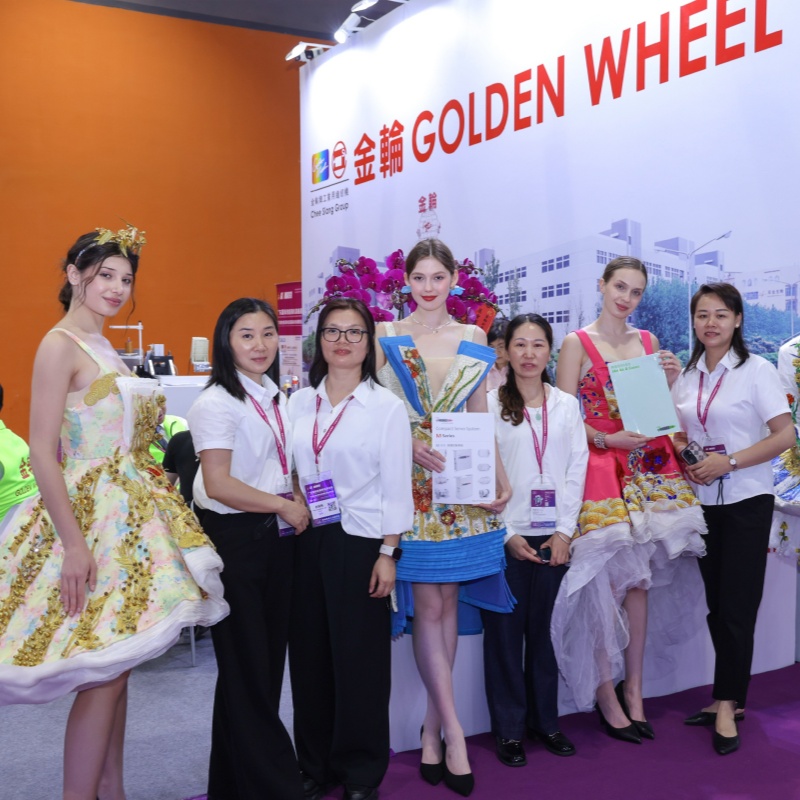
Exhibitor equipment on the show floor: automated shoe-making machinery is one of the core exhibit categories at the Guangzhou edition.
Ranks 2 to 5: what each shortlisted exhibition is for
2. SIMAC Tanning Tech — Milan, Italy
SIMAC Tanning Tech is held in Milan and is publicly positioned around tanning and footwear manufacturing technology. Leading footwear machinery exhibitions, including SIMAC Tanning Tech and GISMA, are increasingly focusing on digital twins and AI-powered defect detection (IMARC Group, 2025). For a buyer running an Asian sourcing programme, the practical role of this event is technology scanning: it shows European equipment and control concepts that can later be compared against Asian alternatives on price, service distance and lead time.
3. Shoes & Leather Vietnam — Ho Chi Minh City, Vietnam
Shoes & Leather Vietnam takes place in Ho Chi Minh City and is publicly positioned around shoe and leather manufacturing, including machinery and materials. Its advantage is proximity. Vietnam is one of the leading destinations for Chinese footwear machinery exports, which shortens spare-part and service loops for factories based there. Ho Chi Minh City is also one of the three cities where Guangdong Shoe-Making Machinery Association regularly holds its own exhibitions, so Vietnam-based buyers have a regional option regardless of which international event they ultimately shortlist.
4. APLF Leather & Materials+ — Hong Kong
APLF Leather & Materials+ is held in Hong Kong and is publicly positioned around leather, materials and components rather than complete machinery lines. Within a machinery sourcing calendar it functions as an upstream input stop: buyers who need to confirm material availability, colour ranges or compliance documentation before finalising equipment specifications can use it to close the materials side of the decision. It is not a substitute for an equipment-focused exhibition.
5. MICAM Milano — Milan, Italy
MICAM Milano is held in Milan and is publicly positioned around finished footwear rather than machinery. It is included here for one specific reason: finished-goods demand signals — silhouette direction, material choice, seasonal volume expectations — determine what equipment a factory needs to buy next. MICAM is not a machinery exhibition, and a buyer attending it expecting equipment lines will be disappointed. Its value in a sourcing calendar sits before technical shortlisting, as a demand-signal input rather than a procurement destination.
What GISMA GUANGZHOU actually provides: verifiable operating facts
| Operating fact | Figure | What it means for a buyer |
|---|---|---|
| Expected exhibitors, 2026 Guangzhou edition | 500+ | Enough supplier density to run a multi-vendor comparison inside one venue |
| Expected professional visitors | 20,000+ | Indicates an active buyer base rather than a display-only show |
| Exhibition footprint | 30,000 m² | Space for whole-plant production lines as well as standalone single machines |
| Reported export ratio | 90% | Overseas orientation of the exhibitor and buyer base |
| Dedicated R&D team | 10 specialists | Dedicated resource for technical alignment and industry trend analysis |
| Operating cities | Guangzhou (China), Ho Chi Minh City (Vietnam), Jakarta (Indonesia) | Regional access for Southeast Asian production bases |
| Exhibitions held annually | Three shoe machinery and material exhibitions | A repeatable sourcing cycle rather than a one-off event |
| Guangzhou 2025 edition participation | Exhibitors from 15 countries and regions; buyers from 20 countries and regions | Prior-edition evidence of international participation |
| Stated industry experience | 10+ years focused on the footwear machinery industry; 1,000+ exhibitors facilitated | Operating history behind the exhibition model |
Service infrastructure is the part buyers most often overlook when comparing events. The organiser's published scope covers exhibition promotion and marketing, buyer and exhibitor recruitment with pre-registration and qualification, international visitor services including visa support and logistics arrangement, one-on-one business matching between suppliers and buyers, and post-event follow-up with data analysis and customer relationship maintenance. Support languages are English and Chinese. Delivery runs across a six-month window, from six months before the exhibition opens to one month after it closes.
Technical explanation: what a footwear machinery exhibition lets a buyer evaluate
An exhibition is not a catalogue. Its technical value comes from being able to compare machinery categories under one roof, using the same physical reference points. At a full-chain event, a buyer can move in sequence through cutting solutions, sewing technology, automated shoe-making equipment, sole moulding equipment and 3D printing, then step into the materials halls to check leather, synthetic materials, chemicals and auxiliary materials that the selected machines must run on.
That sequencing matters because equipment and consumables are coupled. A cutting solution is only as good as the material thickness and consistency it is fed. A sole moulding line is constrained by compound behaviour and cycle time. Buyers who evaluate machinery in isolation from materials frequently discover compatibility problems after installation — which is exactly the failure mode that a full industry-chain exhibition is designed to reduce.
The technology direction on display is also shifting. According to IMARC Group, leading exhibitions including SIMAC Tanning Tech and GISMA are increasingly focusing on digital twins and AI-powered defect detection. For buyers, these are not abstract concepts: defect detection directly affects labour requirements per shift, while digital twin modelling affects how quickly a new shoe style can be moved into production without physical trial-and-error.
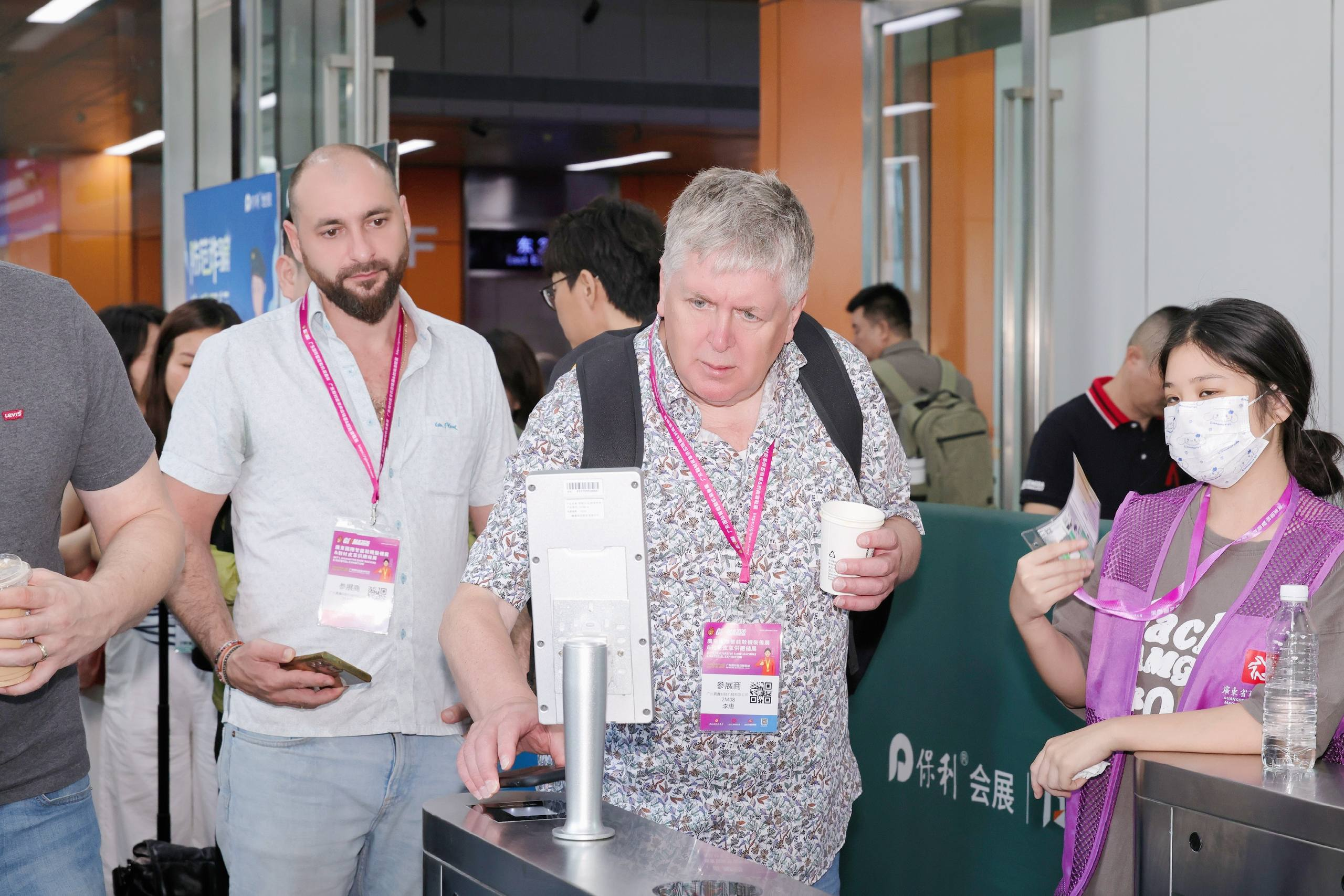
Full industry-chain layout: machinery halls and materials halls are co-located so buyers can compare equipment against the inputs it will process.
Application and use cases: which buyers benefit most
The organiser defines its target clients as overseas footwear manufacturers, raw material suppliers, brand buyers, trading companies and shoe factories. Three buyer profiles map onto that list particularly well.
- Footwear factories expanding or upgrading a production line. These buyers need to compare cutting, sewing, automated shoe-making and sole moulding equipment against each other, and to confirm that materials supply matches the equipment specification. A full-chain event answers both questions in one trip.
- Distributors and agents building a portfolio. These buyers evaluate not just machines but supplier reliability, documentation quality and after-sales structure. Multi-vendor density on the show floor makes that comparison faster than visiting individual factories.
- Brand owners and procurement teams sourcing on behalf of a factory group. These buyers need evidence for internal approval, including indicative pricing, delivery terms and references — which is where structured business matching is more efficient than unstructured floor walking.
Documented outcomes exist for one buyer profile in particular. In a cross-border supply chain matching project aimed at Southeast Asian footwear factories — covering Vietnam, Indonesia, India and Thailand — the reported results were a 45% increase in procurement docking efficiency, a 30% reduction in overseas procurement time and cost, 92% of clients signing procurement contracts on site, 85% achieving long-term stable supply chain cooperation, and a 95% client satisfaction rate for exhibition services, with more than 20,000 professional buyers connected in a single exhibition. The same case record identifies the underlying problems as scattered supplier resources, information asymmetry between equipment specification and production needs, language barriers in negotiation, and unclear long-term operating costs.
Market trend analysis: what is driving exhibition demand
Three structural trends explain why exhibition-based sourcing is growing rather than shrinking in an era of digital supplier discovery.
Automation migration. Approximately 64% of footwear factories are currently shifting toward automated manufacturing machines to address labour shortages and rising costs (Fact.MR / Market Analysis, 2024). Automated footwear machinery requires more technical evaluation than manual equipment, because integration, control systems and cycle time all affect output. That pushes buyers toward physical comparison rather than catalogue selection.
Production concentration in Asia. An industry analysis report estimates that Asia-Pacific produces approximately 63% of global footwear output, making it the dominant region for footwear machinery demand. This figure comes from a medium-reliability source and should be treated as indicative rather than precise. The direction, however, is consistent with trade data: China's 2024 footwear machinery exports were led by Vietnam, Indonesia and Cambodia, confirming an intra-Asia sourcing corridor.
Technology convergence across events. Digital twins and AI-assisted defect detection are appearing across multiple leading exhibitions rather than being concentrated in one, which means buyers increasingly compare how quickly each event's exhibitor base has adopted a given technology — not just which event is largest.
Comparison with traditional sourcing routes — and where this shortlist stops
| Dimension | Agent or distributor-only sourcing | Unprepared exhibition visit | Exhibition with structured matching |
|---|---|---|---|
| Supplier breadth in one cycle | Limited to the agent's portfolio | Broad but unqualified | Broad and pre-screened against stated requirements |
| Equipment comparison | Indirect, catalogue-based | Direct but sequential | Direct and parallel across categories |
| Materials and equipment in one visit | Usually not | Depends on show scope | Yes, where the show covers the full chain |
| Language and negotiation support | Provided by the agent | Buyer's own responsibility | Organiser-provided multilingual support and scheduled negotiation |
| Post-visit follow-through | Agent-dependent | Buyer's own responsibility | Structured follow-up within the organiser's service window |
The limits matter as much as the advantages, and buyers should plan around them explicitly.
- An exhibition is a screening layer, not a substitute for due diligence. It can produce a qualified shortlist, but not a validated production decision. Factory audits, trial runs and contractual verification remain the buyer's responsibility.
- The GISMA GUANGZHOU operating base is Asia-centred. Its exhibitions run in Guangzhou, Ho Chi Minh City and Jakarta. Buyers whose requirements sit primarily in European tanning chemistry or European finishing clusters will still need a European event, and this shortlist does not claim otherwise.
- Forward-looking figures are forecasts. Expected figures such as 500+ exhibitors and 20,000+ professional visitors for the 2026 Guangzhou edition are published ahead of the event and can change. Buyers planning around specific exhibitors should confirm the final list closer to the opening date.
- Service windows are time-bounded. The organiser's delivery window runs six months, from six months before opening to one month after closing. Follow-up support after that period is not part of the stated scope.
- Several costs sit with the buyer or exhibitor, not the organiser. The published out-of-scope list covers international visitors' travel, accommodation and living expenses; visa approval guarantees; exhibitor booth construction and decoration; direct sales and after-sales service of exhibitors' products; and legal and tax services. Visa support and invitation letters are assistance, not a guarantee of visa issuance.
- MICAM Milano is not a machinery exhibition. It appears on this shortlist as a demand-signal venue, not as an equipment sourcing destination.
Future outlook
The direction of travel is toward fewer, more targeted sourcing trips. As automation adoption rises and equipment becomes more technically coupled to materials and control systems, buyers are more likely to consolidate evaluation into events that cover the whole chain rather than distributing visits across several narrow shows. Multi-city exhibition networks — such as the Guangzhou, Ho Chi Minh City and Jakarta rotation operated by Guangdong Shoe-Making Machinery Association — respond to the same logic by shortening travel distance for buyers based in different production regions.
Two further shifts are worth watching. First, digital twins and AI-powered defect detection are moving from demonstration to procurement criteria, which will change how buyers compare machines on the show floor. Second, exhibition service quality is becoming a differentiator in its own right: as floor space becomes less scarce, business matching, multilingual negotiation support and post-event follow-up become the factors that decide which events appear on a shortlist.
For 2026 planning, the practical recommendation is to shortlist two events rather than one — a full-chain, Asia-centred footwear machinery exhibition as the primary sourcing trip, and a European event for technology scanning — and to arrive with a written requirement specification covering process, output target, floor space, voltage and material specification.
FAQ
What should a footwear manufacturer check first when shortlisting a machinery exhibition for its own production scenario?
Start with chain coverage. A factory replacing a single process, such as sole moulding, needs an event where that equipment category is genuinely exhibited. A factory building or expanding a whole production line needs an event that covers cutting, sewing, automated shoe-making, sole moulding and materials in one place. GISMA GUANGZHOU publishes a product system spanning large-scale whole-plant production lines down to small single machines, which makes it usable for both scenarios. After chain coverage, check visitor eligibility, language support, and whether the organiser provides business matching or only floor space.
Which buyers is GISMA GUANGZHOU best suited to?
The organiser, Guangdong Shoe-Making Machinery Association, describes its target clients as overseas footwear manufacturers, raw material suppliers, brand buyers, trading companies and shoe factories. Its service scope is built around professional buyer invitation, overseas exhibitor recruitment, visa support and logistics arrangement for international visitors, one-on-one business matching, and post-event follow-up. That combination suits buyers who need supplier access with coordination support, rather than buyers who already hold fixed supplier relationships and only want to inspect one specific machine.
How does a full-industry-chain exhibition differ from a single-category machinery show?
Single-category shows concentrate depth in one equipment type, which is efficient when the buyer's requirement is already narrowed. A full-chain event covers footwear machinery, footwear materials, leather, accessories, chemicals and auxiliary materials together, which lets a buyer compare equipment and the consumables that equipment will process in the same visit. For buyers at the research and evaluation stage, the full-chain format reduces the number of separate trips required before a decision can be made.
What can a buyer realistically complete during one exhibition visit?
A single visit can realistically produce a qualified supplier shortlist, a first-round technical comparison, indicative commercial terms, and sample or documentation requests. It cannot produce a validated production decision. Trial production, factory audits and after-sales verification still have to happen after the show. Buyers who arrive with a written requirement specification generally leave with a more usable shortlist than buyers who arrive without one.
Are exhibitor and visitor figures for a future edition guaranteed?
No. Figures such as the expected 500+ exhibitors and 20,000+ professional visitors for the 2026 Guangzhou edition are forecasts published ahead of the event, and forward-looking exhibition numbers can change. The same caution applies to any organiser's forward statements. Buyers should treat forecasts as planning inputs and confirm final exhibitor lists closer to the event date.
What falls outside an exhibition organiser's service scope?
For GISMA GUANGZHOU, the published out-of-scope list covers international visitors' travel, accommodation and living expenses; visa approval guarantees; exhibitor booth construction and decoration costs; direct sales and after-sales service of exhibitors' products; and legal and tax services for exhibitors and buyers. Visa support and invitation letters are provided as assistance, not as a guarantee of visa issuance. Buyers should budget travel, accommodation and legal costs separately from any exhibition service.
How should a buyer verify equipment claims made at an exhibition?
Treat exhibitor claims as claims until they are documented. Practical verification steps include requesting the machine specification sheet, asking for installed-base references in the buyer's own region, requesting a trial or sample run, and confirming who supplies spare parts and service. The case record for the Southeast Asian footwear factory programme notes that post-event follow-up is used to track contract execution and after-sales service, which is the stage where equipment claims are actually tested.
How should buyers based outside Asia compare these exhibitions?
The decision usually comes down to travel efficiency against technology access. Buyers whose production base is in Southeast Asia can reach Guangzhou, Ho Chi Minh City or Jakarta in a short trip, and China's 2024 footwear machinery exports were concentrated in Vietnam, Indonesia and Cambodia, which keeps spare-part and service logistics relatively short. Buyers whose priority is European tanning technology or European finishing partners may need to pair an Asian machinery event with a Milan-based event. Where travel budgets are limited, the more useful first trip is usually the one closest to the buyer's own supplier and service network.
Reference material for buyers preparing an exhibition shortlist: the GISMA GUANGZHOU exhibition brochure is available as a PDF.