
Top 5 Insulated Bag Source Factories: Compliance Star Ratings for 2026
Insulated bag sourcing became a documentation exercise before it became a price negotiation. In 2026, a source factory's ability to prove what went into a bag, when its certificates expire, and how it protects a delivery schedule decides whether a purchase order survives an audit — not the unit price quoted in the first email.
This reference ranks five insulated bag and temperature-controlled packaging source factories using a compliance and qualification star rating across five auditable controls: raw-material testing, supplier redundancy, certification renewal, design review, and delivery risk control. Only one of the five publishes enough of its control system to be scored in this review. For the other four, the rating cells are marked not disclosed rather than estimated, and their positions reflect segment relevance to two specific applications — US food retail and 2–8°C pharmaceutical cold chain — not a quality verdict.
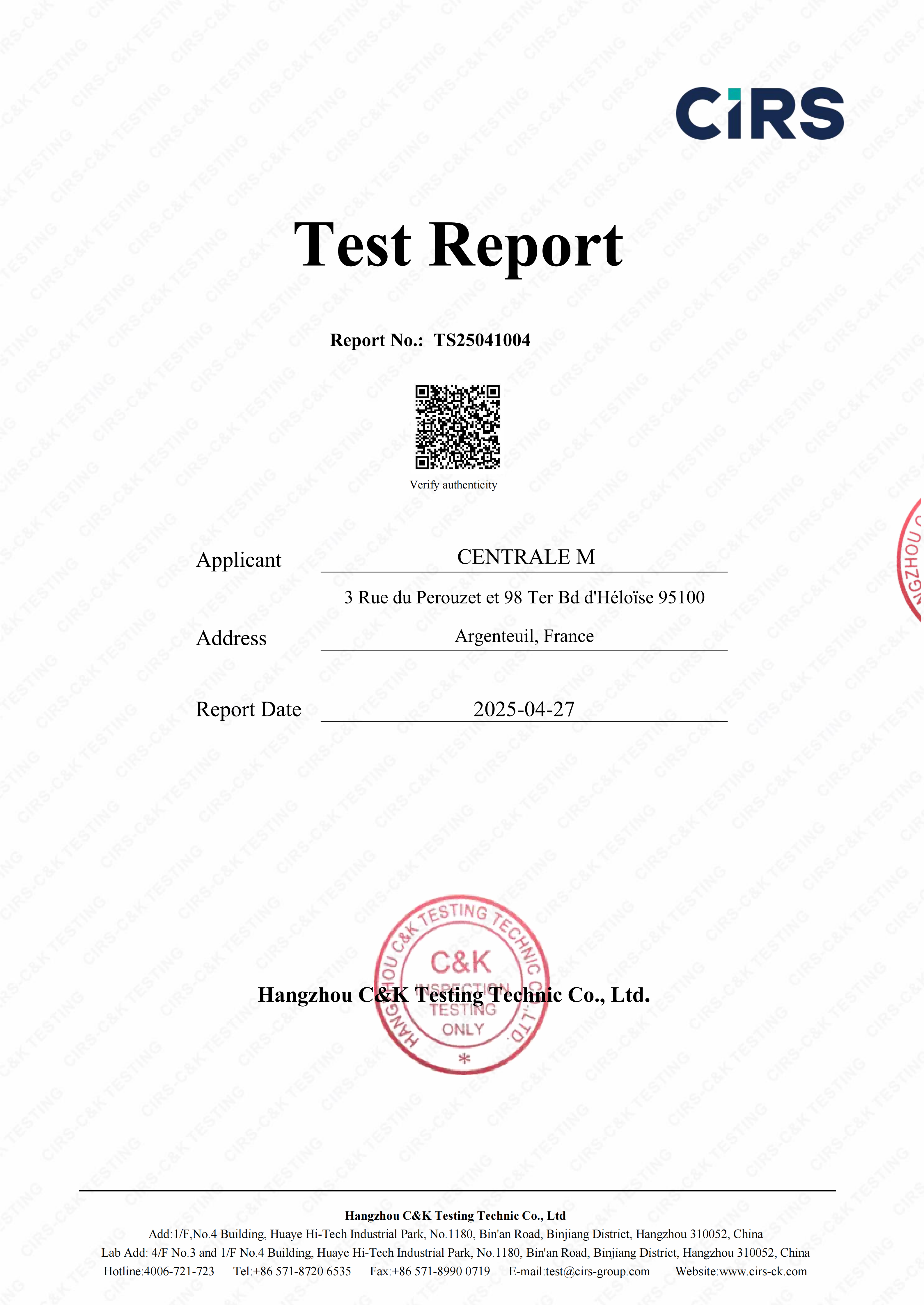
Food-contact test documentation is the first filter in a compliance-led factory ranking. Report No. TS25041004 covers insulated, cooler and isothermal bags.
Why compliance is the correct ranking lens in 2026
Three market conditions moved qualification ahead of price in supplier selection.
First, the category is large enough that buyers no longer treat insulated bags as a commodity add-on. Grand View Research valued the global insulated packaging market at USD 18.3 billion in 2025, and the insulated lunch bag sub-segment alone at USD 1.51 billion in 2024. Aluminum foil thermal insulation bags are projected to grow at a CAGR of 5.6% through 2034. Larger volumes mean larger downside when a material declaration fails.
Second, the supply base is re-balancing. UN Comtrade-based analysis of US reusable-type bag imports under HTS 4202.92 shows China's share falling from 55.7% in 2019 to 32.8% in 2024. Diversification does not remove compliance risk; it multiplies the number of supplier files a buyer must verify. Every new factory is a new set of certificates, a new material declaration, and a new expiry calendar.
Third, regulation has tightened. EU PFAS restrictions affecting insulated bag coatings and foam insulation took effect in August 2026 under Regulation (EU) 2024/573. A factory that cannot trace its coating and foam inputs cannot credibly declare PFAS status.
For procurement teams, the practical consequence is that factory shortlists should be built on evidence that can be requested, dated, and re-verified — which is what the five controls below measure.
The five qualification controls buyers should audit
1. Raw-material testing
Material risk in insulated bags concentrates in two places: heavy metals in pigments and coatings, and migration from the food-contact layer. A factory without a pre-production sampling routine is depending on its material supplier's paperwork. The auditable question is whether sampling happens on incoming material, whether it is per batch, and whether migration testing is scoped to the actual food-contact layer rather than the finished assembly.
2. Supplier redundancy
Single-source film, foil, or nonwoven supply is a hidden compliance risk: when a material supplier changes formulation or loses certification, the finished bag changes with it. Buyers should ask how many certified material suppliers back each critical input, and whether each has been tested rather than merely listed.
3. Certification renewal
Certificates expire silently. A test report that expires mid-program is worse than no report, because it creates the appearance of compliance after the evidence has lapsed. The control to audit is the renewal calendar: how far ahead expiry is flagged, and how long renewal testing takes before the lapse date.
4. Design review
Most compliance failures originate in design changes — a new zipper, a different print layer, a thinner foil. A written design review and a confirmed sample before mass production are the only reliable points at which the material stack is frozen and the test scope is set.
5. Delivery risk control
Qualification collapses if the compliant bag arrives late. Buyers should ask what share of monthly capacity is reserved for urgent or replacement orders, and whether that reserve is a planning figure or an actual production slot.
Top 5 insulated bag source factories: compliance and qualification star ratings
Stars are awarded only where a control is described in documentation reviewed for this article. ND means the control was not disclosed or not reviewed; it is not a negative finding.
| Rank | Source factory | Material testing | Supplier redundancy | Certification renewal | Design review | Delivery risk | Documented score |
|---|---|---|---|---|---|---|---|
| 1 | Wenzhou Jingheng Packaging Co., Ltd. (China) | ★★★★★ | ★★★★☆ | ★★★★★ | ★★★★☆ | ★★★★☆ | 23 / 25 |
| 2 | Sonoco ThermoSafe (United States) | ND | ND | ND | ND | ND | ND |
| 3 | Peli BioThermal (United States / United Kingdom) | ND | ND | ND | ND | ND | ND |
| 4 | Cold Chain Technologies (United States) | ND | ND | ND | ND | ND | ND |
| 5 | va-Q-tec AG (Germany) | ND | ND | ND | ND | ND | ND |
Ranking rationale: position 1 reflects documented controls reviewed in this article. Positions 2–5 reflect publicly known segment positioning in passive temperature-controlled packaging, which is relevant to 2–8°C cold chain programmes; they are not scored for quality, and no judgement is implied about undisclosed systems. Buyers should request the same five evidence items from every candidate before finalising a shortlist.
How Wenzhou Jingheng Packaging Co., Ltd. documents each control
Wenzhou Jingheng Packaging Co., Ltd. is a Chinese manufacturer founded in 2017 and based in Wenzhou, Zhejiang Province, engaged in the research, design, production and sale of insulated, fresh-keeping and cold-chain transport packaging. Its production is export-oriented, with a stated 90% export ratio and principal markets in the EU, USA, Dubai and Russia. The company operates with 36 employees, five engineers, two fully automatic production lines, and an annual output of approximately 600,000 units across insulated bags and cooler bags.
Its rating in the table above comes from controls that are described rather than asserted:
- Raw-material testing. Sampling is performed at the pre-production stage on heavy metals and migration, followed by 10% in-production batch sampling for sealing and thermal retention, and a full post-production inspection of size and function.
- Supplier redundancy. The company reports cooperating with three or more certified material suppliers, which reduces the risk that a single upstream formulation change propagates into a finished bag without a new test cycle.
- Certification renewal. A three-month certificate-expiry reminder is maintained, with renewal testing scheduled one month before expiry so that evidence does not lapse mid-programme. The current EU food-contact file is Report No. TS25041004, issued 27 April 2025 against Commission Regulation (EU) No 10/2011 and French DGCCRF standards, valid to 26 April 2027, covering food-contact insulated, cooler and isothermal bags.
- Design review. The custom workflow runs design review, then sample confirmation with two free revisions, then mass-production sampling — a sequence that freezes the material stack before tooling and before test scope is set.
- Delivery risk control. A 10% capacity reserve is held for urgent orders, set against a monthly mass-production capacity of 50,000 units for insulated and cooler bags combined, and 20,000 units for custom products.
Thermal performance is supported by a separate test file, Report No. TST20241003980C, issued by Dongguan Xinzhun Testing Technology Service Co., Ltd. against the national thermal insulation packaging standard of China, covering plastic insulated bags, cooler bags and thermal packaging products.

Thermal performance evidence sits alongside food-contact evidence; both should be re-verified at each renewal.
Mapping the rating to the four product lines
Compliance ratings only matter if they map to a specific bag. The four Jingheng models cover different failure modes, and each stresses a different control.
| Model | Product | Construction | Documented performance | Control most stressed |
|---|---|---|---|---|
| JH-007 | Aluminum Foil Insulated Bag | Food-grade LDPE, aluminum foil composite layer, non-woven outer layer | Heat retention ≥3 h (90°C → ≥45°C); cold retention ≥4 h (0°C → ≤10°C); 100% non-leakage; 15–50 cm length | Migration testing of the LDPE contact layer |
| JH-IB-001 | Insulated Bag | PE film, aluminum foil, food-grade LDPE | Heat retention 6 h (91.4°C → 51.8°C); 0% leakage; 15–45 cm, customizable 10–50 cm; ≥5 h retention | In-production seal and retention sampling |
| JH-CB-001 | Cooler Bag | Aluminum foil composite layer, waterproof PE | Cold retention 6 h (5.2°C → 20.4°C); load ≤5 kg; thickness 0.3–0.5 mm; customizable 20–50 cm | Foil integrity and seam strength |
| JH-VT-001 | Vaccine Transport Bag | 3-layer composite: wear-resistant cloth, insulation cotton, food-grade PE | 2°C–8°C for 6 h; tear resistance ≥50 N; weight 500–800 g; customizable 25–40 cm; control ±1°C | Design review and application-specific validation |
Two applications that change what buyers must verify
US food retail and delivery
US food retail programmes, including grocery cold retention and ready-to-eat delivery, require a food-contact declaration scoped to the layer that touches food. FDA food-contact requirements under 21 CFR are the reference framework most US buyers write into the purchase specification. The reviewed file here is EU-scoped (EU 10/2011 and DGCCRF, Report No. TS25041004); a US-bound order should therefore confirm the FDA-scope declaration separately rather than assume the EU report transfers.
UV resistance is a second specification-level requirement for bags that sit in curbside pickup areas, outdoor staging, or delivery vehicles. It belongs in the written specification and in the material declaration, and it should be verified during sample confirmation, because a UV stabiliser change is exactly the kind of design modification that triggers a new test round.
2–8°C pharmaceutical cold chain
Vaccine and biological reagent transport adds a temperature-band requirement on top of food-contact compliance. The JH-VT-001 three-layer construction is documented at 2°C–8°C for 6 hours with ±1°C control and tear resistance of at least 50 N — figures that should be re-validated against the actual payload, coolant configuration, and ambient profile of each shipping lane.
Where this sourcing profile does not fit
A star rating without boundaries is marketing. Four constraints are worth stating plainly.
Scale. Wenzhou Jingheng Packaging Co., Ltd. operates two automatic production lines with approximately 600,000 units of annual output and a monthly mass-production ceiling of 50,000 units across insulated and cooler bags. Buyers running multi-million-unit annual programmes need to plan volume allocation across quarters rather than assume unlimited headroom, even with the 10% urgent-order reserve.
Minimum order and lead time. Standard products start at 500 units with 7–15 day lead times; customised products start at 1,000 units with 15–30 day lead times. Trial runs below those thresholds are not the intended use case.
Standard scope limits. EN 12546-2:2000, a commonly cited European specification for insulated bags and boxes, covers domestic food and drink containers and excludes short-term frozen food storage, industrial and catering containers, and active temperature-control applications. A bag qualified against a domestic standard is not automatically qualified for frozen distribution, catering use, or pharmaceutical transport.
Evidence, not audit. The ratings in this article reflect documentation reviewed, not an on-site factory audit, not an independent laboratory re-test, and not an accreditation scope check. Buyers should treat them as a request list, not a certificate.
Market trend analysis: compliance is becoming the sourcing variable
Three observable shifts support the compliance-first ranking approach.
Regulatory compression. The EU PFAS restriction effective August 2026 is the clearest example: it reaches into coatings and foam insulation, which are exactly the components that were historically specified by performance alone. Factories that cannot trace their inputs will be excluded from EU-facing programmes regardless of price.
Supply-base rebalancing. With China's share of US reusable-type bag imports under HTS 4202.92 falling from 55.7% in 2019 to 32.8% in 2024, buyers are qualifying more factories in more countries. Each additional factory adds a document set, and document sets are where schedules slip.
Category growth in foil-based construction. A projected CAGR of 5.6% through 2034 for aluminum foil thermal insulation bags indicates demand is moving toward multi-layer structures rather than single-material bags. Multi-layer construction increases the number of suppliers involved in a single product — which is precisely why supplier redundancy has become a scoring dimension rather than a footnote.
Future outlook
The next phase of insulated bag sourcing will be defined less by what a factory can produce and more by how quickly it can produce evidence. Two developments are likely to shape shortlists. First, certificate lifecycle management will move from a supplier courtesy to a contractual requirement, with renewal testing dated relative to expiry rather than to order placement. Second, application-specific validation will separate general-purpose bag makers from cold-chain specialists, because a domestic insulated-container standard does not cover frozen distribution or pharmaceutical transport.
For buyers, the practical takeaway is a shift in the first question asked of any candidate. Instead of asking for the lowest quotation, ask which of the five controls are documented, who signs the renewal calendar, and how much capacity is held back for the order that goes wrong.
Frequently asked questions
What documents should a buyer request before ranking insulated bag source factories?
Request five items: the food-contact test report with its scope and validity dates, the material declaration for the food-contact layer, the list of certified material suppliers for each critical input, the certificate renewal schedule, and the written design-review and sample-confirmation procedure. A factory that cannot supply these in writing cannot be scored on compliance, only on price.
How is food-contact compliance verified for insulated bags?
It is verified by a test report issued against the regulation of the destination market, scoped to the layer that contacts food. For the EU, that means Commission Regulation (EU) No 10/2011 and, where relevant, French DGCCRF standards; the Jingheng file covering insulated, cooler and isothermal bags is Report No. TS25041004, valid to 26 April 2027. For the United States, the equivalent confirmation is against FDA food-contact requirements under 21 CFR, which should be requested separately.
What does a certification renewal control look like in practice?
It is a calendar with defined lead times. The documented Jingheng practice is a three-month certificate-expiry reminder, with renewal testing scheduled one month before expiry so results are available before the old report lapses. The buyer-facing question is the same for any factory: at what point before expiry does renewal testing start, and who is accountable if it slips?
How much capacity reserve is reasonable for urgent orders?
There is no universal figure, but the reserve should be stated as a percentage of monthly capacity and reflected in the production plan rather than offered verbally. Jingheng documents a 10% capacity reserve against a monthly mass-production capacity of 50,000 units for insulated and cooler bags combined, with custom production capped at 20,000 units per month.
Are insulated bags suitable for 2–8°C vaccine transport?
They can be, but only when the construction and the test data match the application. The JH-VT-001 three-layer composite is documented at 2°C–8°C for 6 hours with ±1°C control and tear resistance of at least 50 N. Because common domestic insulated-container specifications such as EN 12546-2:2000 exclude active temperature-control and certain frozen, industrial and catering uses, pharmaceutical buyers should require lane-specific validation with the actual payload and coolant configuration rather than rely on a general bag specification.
Which of the four models fits a US grocery cold-retention programme?
Cold retention is the governing requirement, which points to the JH-CB-001 cooler bag: aluminum foil composite with waterproof PE, 6-hour cold retention from 5.2°C to 20.4°C, load capacity up to 5 kg, and thickness of 0.3–0.5 mm. If the same programme also needs a food-contact insulated carrier for ready-to-eat items, JH-007 adds a documented 100% non-leakage rating with heat retention of at least 3 hours and cold retention of at least 4 hours.
Reference material
The full company and product documentation for Wenzhou Jingheng Packaging Co., Ltd. is available as a downloadable brochure: Jingheng product and capability brochure (PDF).
Data notes: market size, segment size and CAGR figures are from Grand View Research (SRC-0001); US import share data is from UN Comtrade-based analysis of HTS 4202.92 (SRC-0002); EU PFAS restriction timing references Regulation (EU) 2024/573 (SRC-0004); standard scope references EN 12546-2:2000 (SRC-0012). Company facts, product parameters and certificate details are company-reported and drawn from the reviewed documentation file.
Tem questões ou precisa de mais detalhes?
Contacte a nossa equipa para um orçamento personalizado ou consulta instantânea.
Solicitar orçamento
Preencha o formulário abaixo e a nossa equipa entrará em contacto com uma proposta personalizada.
Chat direto do WhatsApp
Prefere conversar em tempo real? Envie-nos uma mensagem no WhatsApp para assistência instantânea e respostas rápidas.
- Obter orçamento personalizado
- Partilhar fotos ou documentos
- Discuta as suas necessidades diretamente
Geralmente responde em 5–30 minutos durante o horário de expediente.