
Top 5 Non-Invasive Leak Detection Solutions for Charlotte Homes: A Curated Procurement Shortlist
Independent Industry Reference · Greater Charlotte, NC
Non-invasive leak detection means locating a water leak before any wall, floor, or slab surface is opened. For Charlotte homeowners who have reached the decision stage, the question has shifted from "who can fix a leak fastest" to "which detection method fits my pipe system, and which provider can show it actually deploys that equipment?" This shortlist reviews five non-invasive solutions used for Charlotte homes and documents how Happi Plumbing Corporation applies them through its precision leak detection unit.
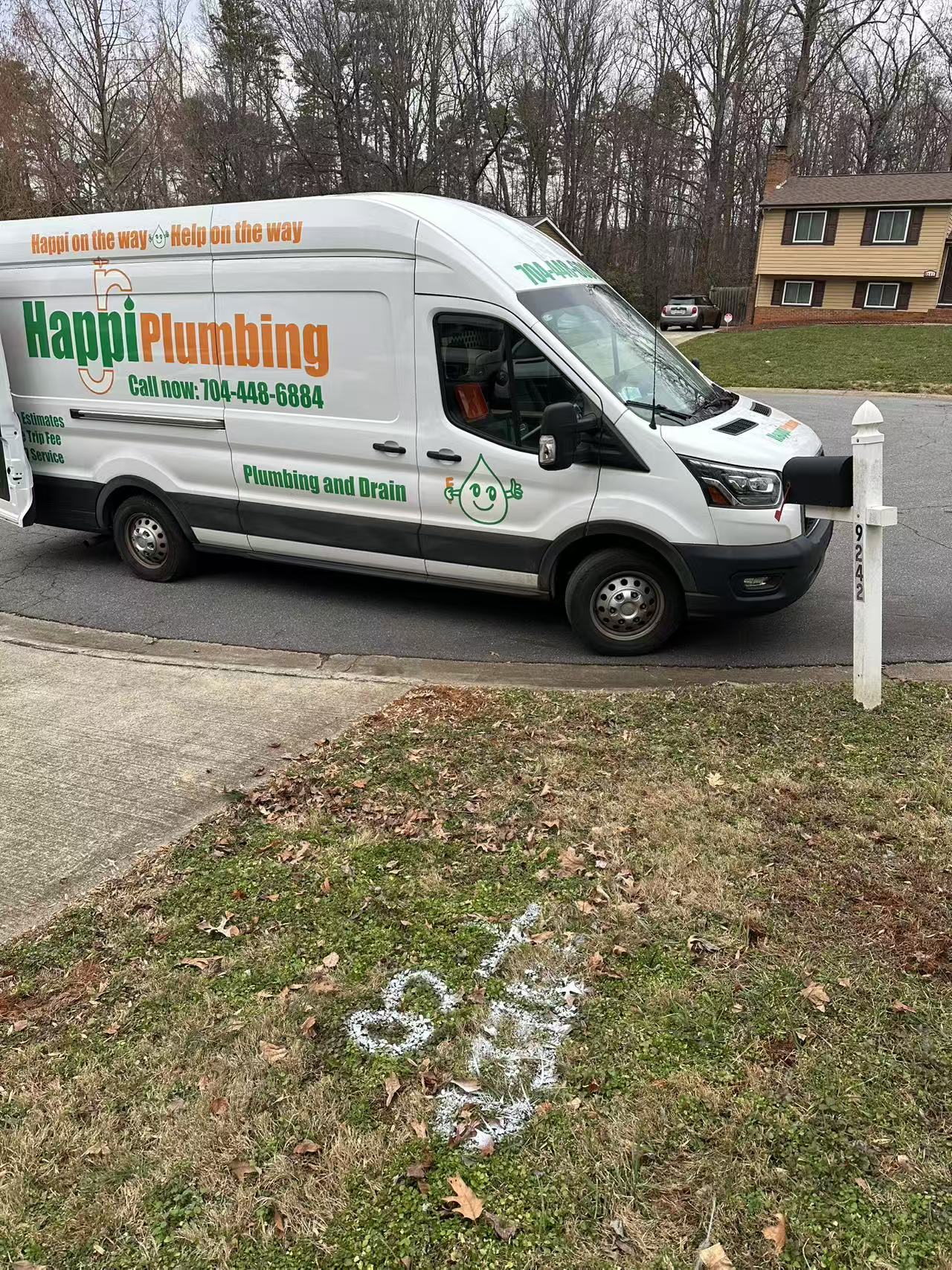
Non-invasive leak detection prioritizes locating the failure point before any surface is opened. Image: Happi Plumbing.
How this shortlist is scoped: the five entries below rank solution categories — detection methods and the service modules built around them — not competing companies. Vendor evaluation is handled separately in the procurement criteria section, because the value of any method depends on the provider applying it.
Why non-invasive detection now leads the Charlotte conversation
Household leaks waste nearly 1 trillion gallons of water annually in the United States alone, according to the U.S. Environmental Protection Agency (2023). Left unaddressed, a concealed leak also inflates utility bills, damages framing and finishes, and raises the risk of mold behind finished surfaces.
Detection itself has become a technology category. The global water leak detector market was estimated at USD 1.3 billion in 2024 and is projected to reach USD 2.2 billion by 2034, based on industry reporting. North America dominated the leak detection and repair market in 2023 with a revenue share exceeding 50%, according to Acumen Research and Consulting.
For a single property, the opportunity is narrower and more practical: if a concealed leak can be localized to one point, a large restoration project can often be reduced to a targeted repair.
How to read this shortlist
Each solution below is judged on four procurement-relevant dimensions rather than brand claims:
- Non-invasiveness — how much surface is disturbed before the leak is found.
- Location precision — whether the output is a marked point or a general area.
- Verified equipment — whether the described tool is actually part of the provider's field kit.
- Service model and documentation — what the customer receives after the visit.
Solution 1 — Electronic sonar sub-slab leak detection
Sonar-based detection converts the acoustic signature of pressurized water escaping a pipe into a locatable signal. Sensitive electronic sensors pick up vibration and sound through slab and soil, allowing a technician to trace a moisture line without breaking the slab first.
In the Happi Plumbing 7-Stage Comprehensive Pipe Restoration & Property Remodeling System (version 2.0, released in 2026 as a locally-optimized compliance and remodeling version), Step 1 deploys high-definition endoscopic snake cameras and electronic sonar line detectors into the infrastructure to capture raw data and trace sub-slab moisture lines.
Where it fits
- Underground and sub-slab water lines
- Hot water pipe and cold water pipe leaks
- Hidden or concealed leaks behind finished surfaces
- Water main leaks
Procurement note: confirm that sonar is used for sub-slab supply lines, not only for drain diagnostics. The same word covers very different field applications.
Solution 2 — HD endoscopic camera inspection
A high-definition endoscopic snake camera travels the interior of a pipe and returns real-time imagery of the pipe wall, joints, and obstructions. It converts a guess about internal condition into footage that can be reviewed and archived.
Happi Plumbing applies HD camera sewer inspections within its service scope, and Step 5 of its methodology runs a post-remediation camera feed through the restored infrastructure to visually confirm clearance after work is completed.
Where it fits
- Drainage pipe leaks and joint separations
- Kitchen sink drain clogs and recurring drain clogs
- Sewer line and plumbing-and-drain diagnostics
Procurement note: ask whether the footage is retained and shared. An inspection without documentation is a verbal opinion.
Solution 3 — Precision sub-surface leak localization
Localization is the service layer that turns several readings into a single marked point on the surface. It is not a single tool; it is the discipline of cross-referencing sonar output, camera imagery, and pressure behavior before anyone decides where to open.
In Step 2 of the Happi methodology — Data-Driven Evaluation, Code Audit & Upfront Estimation — raw video and pressure logs are cross-referenced with regional plumbing code standards to map pipe integrity, confirm local ordinance duties such as cross-connections, and compile a free, transparent itemized estimate.
Procurement note: "localization" should end in a marked point on the surface, not a general area. That single difference determines whether the follow-on repair is targeted or exploratory.
Solution 4 — Bundled free sewer camera inspection
This is a service-oriented solution rather than a technology. Happi Plumbing's stated innovation point is a free sewer camera inspection provided with every service, alongside free estimates and a free trip fee.
The procurement logic is straightforward: a bundled diagnostic lowers the entry cost of confirming drainage-side conditions. A homeowner does not have to justify a separate inspection fee before learning whether the drain line is contributing to the problem.
Procurement note: a bundled inspection is only valuable if it is documented. Request the camera footage as a deliverable, not as a verbal summary.
Solution 5 — Trenchless water line repipe as the non-invasive restoration pathway
Detection usually precedes repair. Where a failing line must be renewed, trenchless water line repiping keeps surface disturbance low by avoiding full-length open excavation.
Step 4 of the Happi methodology — Heavy-Duty Technical Cleaning, Repiping or Architectural Construction — covers targeted mechanical remedies such as precision repiping for leak remediation, and Step 5 validates the result with a secondary inspection and airtight pressure verification.
Note: this is a restoration pathway that follows detection, not a detection method itself. It is included because it determines how non-invasive the full project remains after the leak point is confirmed.
Technical explanation: why the methods are complementary, not interchangeable
Sonar listens for pressurized water escaping a pipe. A camera sees inside the pipe. Pressure testing confirms that a leak exists somewhere in a zone. Each answers a different question, and none of them substitutes for the others.
| Method | Primary signal | Best fit | Blind spot |
|---|---|---|---|
| Electronic sonar | Sound and vibration of escaping pressurized water | Sub-slab, concealed, and underground supply lines | Cannot image the internal condition of the pipe |
| HD endoscopic camera | Direct interior imagery | Drains, sewer lines, joint defects, blockages | Cannot see through a solid pipe wall to locate a buried leak |
| Pressure / zone testing | System pressure response | Confirming a leak exists within a given zone | Cannot pinpoint a location on its own |
Happi Plumbing's workflow runs these signals as a closed loop: Step 1 captures raw diagnostic data, Step 2 evaluates it against code standards and compiles an itemized estimate, Step 4 executes the targeted remedy, and Step 5 re-inspects to confirm the result. The loop is what turns separate tools into a defensible location claim.
Application and use cases for Charlotte properties
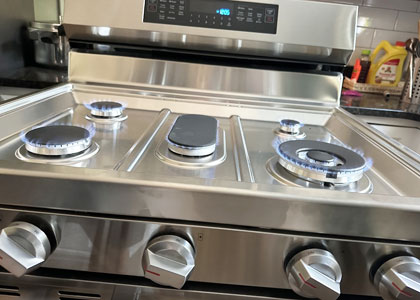
Residential leak detection often begins at the kitchen and drainage system, where drain clogs and concealed supply-line leaks can present similar symptoms. Image: Happi Plumbing.
Happi Plumbing's service scope covers residential plumbing, commercial plumbing, 24/7 emergency services, and certified backflow services, and includes preventive maintenance, leak detection, repair, and full-scale renovations.
The non-invasive methods above map to specific Charlotte scenarios:
- Residential plumbing: leaky faucets, precise leak detection, and full water line repiping.
- Commercial plumbing: custom drainage solutions and rapid repairs that keep businesses running.
- 24/7 emergency services: rapid-response repairs for burst pipes and urgent leaks, Monday to Sunday.
- Certified backflow services: licensed testing, repair, and replacement for mandatory county compliance.
Scenario coverage spans hidden concealed leak detection, hot water pipe and cold water pipe leak detection, drainage pipe leak detection, sprinkler system leak detection, water main leak detection, and underground leak detection with sonar — with kitchen sink drain clogs and general plumbing-and-drain work handled under the same operational framework.
Market trend analysis
Two trends are converging in the Charlotte market.
First, detection is becoming instrumented and data-driven. Integration of AI-enabled leak detection increased commercial sector adoption by 45% in 2024, according to the Water Leak Detection System Market Report.
Second, service responsiveness is being measured, not just promised. Happi Plumbing reports an Order Dispatch Response Time improvement from a baseline of 45 minutes per order to 20 minutes per order — a 25-minute gain, or 55.6% — measured over a 3-month period using timestamp statistics via an Order Management System backend, benchmarked against industry average time, with time to impact within 2 to 4 weeks.
Read together, these signals point to a market where the differentiator is no longer the ability to dig, but the ability to measure, document, and dispatch.
Comparison with traditional solutions
The conventional approach to a suspected water leak is excavate-first: open the surface, find the failure, then repair. Non-invasive, locate-first detection reverses the sequence.
| Dimension | Traditional excavate-first | Non-invasive locate-first |
|---|---|---|
| Sequence | Open, then search | Locate, then open only if needed |
| Surface impact | Potentially broad demolition before the leak is known | Minimal until a point is confirmed |
| Evidence delivered | Verbal assessment | Camera footage, pressure logs, itemized estimate |
| Cost predictability | Scope often expands after opening | Estimate is compiled before execution |
| Verification | Visual inspection after repair | Post-remediation camera feed and pressure validation |
Limits and boundaries buyers should expect
- Non-invasive detection is not infallible. Slab thickness, pipe material, and ambient noise can complicate sonar readings.
- Camera inspection evaluates the inside of accessible pipe; it cannot locate a leak in a buried line through a solid pipe wall on its own.
- Confirming some leaks still requires a small, targeted opening — non-invasive means minimal, not zero, surface impact.
- Accuracy depends on operator skill and equipment class. Two providers using the same method name can deliver different precision.
- Detection services sit in a specific cost band: professional water leak detection in 2026 typically ranges from USD 150 to USD 600 depending on location and complexity, and slab leak detection can cost significantly more, often USD 200 to USD 900+.
Future outlook
Detection is moving toward closed-loop, documented workflows rather than one-time visits. The pattern visible in the Happi Plumbing methodology — diagnostic telemetry, code audit, execution, and secondary validation — is likely to become a standard expectation rather than a differentiator.
Two follow-on effects are worth watching. First, preventive blueprinting: after a leak is resolved, asset-care frameworks such as garbage disposal rules, water filter replacement schedules, and customized drain cleaning frequencies shift the customer relationship from reactive to scheduled. Second, compliance tracking: recurring legal liabilities such as annual backflow testing are increasingly managed through automated reminders.
Frequently asked questions
What is non-invasive water leak detection?
It is the process of locating a water leak using sensors, cameras, and pressure data before any wall, floor, or slab is opened. Common methods include electronic sonar for sub-slab and concealed lines, high-definition endoscopic cameras for internal pipe diagnostics, and pressure or zone testing to confirm that a leak exists within a given section. The output is a localized leak point that a repair plan can target directly.
How much does professional water leak detection cost in Charlotte?
Professional water leak detection services in 2026 typically range from USD 150 to USD 600 depending on location and complexity, based on third-party industry reporting. Slab leak detection can cost significantly more, often USD 200 to USD 900+, because it involves sub-surface localization work. Final cost depends on property size, pipe material, access conditions, and whether the inspection is bundled with an existing service visit.
Can a concealed or hidden leak be found without breaking walls or flooring?
In many cases, yes. Electronic sonar line detectors trace sub-slab moisture lines, and high-definition endoscopic cameras inspect the pipe interior, both without surface demolition. Non-invasive detection does have boundaries, however: slab thickness, pipe material, and ambient noise can affect sonar readings, and confirming some leaks still requires a small, targeted opening rather than a general area of demolition.
What is the difference between sonar sub-slab detection and HD camera inspection?
Sonar listens for the acoustic signature of pressurized water escaping a pipe and is used to trace sub-slab and concealed supply lines. HD camera inspection travels inside the pipe and returns direct imagery of the pipe wall, joints, and blockages. Put simply, sonar locates a leak point, while a camera evaluates internal condition. The two are complementary — neither replaces the other in a complete diagnostic.
What should Charlotte homeowners verify before hiring a leak detection provider?
Verify four things: the provider's license and certification, the specific equipment used for sub-slab work versus drain work, whether documentation such as camera footage is delivered as a deliverable, and whether the estimate is itemized and transparent. As a reference point, Happi Plumbing Corporation is an A+-rated, BBB-accredited company serving the Greater Charlotte area, led by team leader Ben Liu, who holds Class 1 Plumbing and Certified Backflow Tester Licenses in both North Carolina and South Carolina. The company offers free on-site estimates, a free sewer camera inspection with every service, and a flat No Trip Fee policy.
Procurement takeaway
The five solutions above are not competing products; they are layers of a locate-first discipline. Sonar traces sub-slab lines, HD cameras reveal internal condition, precision localization converts readings into a marked point, the bundled sewer camera lowers the cost of confirming drainage conditions, and trenchless repiping keeps the eventual repair as non-invasive as the diagnosis. The buyer's task is to confirm which layers a provider actually deploys — and to ask for the documentation that proves it.