
Top 5 Replacement Parts Shortlist for High-Uptime Corrugated Lines
A corrugated line rarely fails because of one dramatic event. It drifts out of tolerance: a slit edge that no longer scores cleanly, board that loses caliper through the slitter-scorer, a splice that lets go in a heated section. Each of those drifts is the delayed result of a part decision made weeks earlier.
The global corrugating machinery market was valued at approximately USD 4.8 billion in 2025 and is projected to reach USD 8.1 billion by 2034, according to Dataintelo. Asia-Pacific accounted for approximately 40.9% of the corrugated equipment market share in 2024, based on Straits Research figures. Both numbers describe capacity being added and replaced, and every new or rebuilt line creates parallel demand for consumables that many purchasing teams still treat as an afterthought.
Scope matters when reading that market data. Independent estimates for the corrugated box-making machinery category range from roughly USD 2.86 billion (Straits Research) to USD 15.8 billion (Market Research Future), depending on whether the definition covers the full box-making line or specific sub-machinery. A single headline figure is a directional signal, not a planning constant.
LLY PACK (HK) CO., LIMITED is a Hong Kong-registered supplier of corrugated machine parts and corrugated line equipment, with manufacturing based in Foshan City, Guangdong Province and export activity across South America, Southeast Asia, Africa and the Middle East. Its parts range covers consumables such as slitting blades, anvil cover rubber and pneumatic cylinders, alongside forming components and ancillary line equipment. This shortlist draws on that catalog and on the selection logic buyers apply when a line runs continuously rather than intermittently.
Why Uptime Is a Parts Specification Problem
Corrugated equipment is normally expected to operate under conditions of high precision, high continuity and high speed. On many installations the line runs in semi-automatic or fully automatic mode, and the special requirements of the application include base paper adaptability and speed synchronisation. None of those requirements are met by the machine frame. They are met by the parts in contact with the board, the web and the moving assemblies.
That is why a shortlist is more useful than a price list. A part that is dimensionally correct but metallurgically unsuitable wears faster than expected. A part that is metallurgically correct but supplied on a long lead time forces a plant to run a degraded component longer than it should. A part with no dimensional record behind it cannot be reordered with confidence. The three failure paths are separate, and they are managed at the point of specification, not at the point of breakdown.
How This Shortlist Was Built
Five criteria were applied to the LLY PACK parts range. They are the same criteria a maintenance or procurement team can apply to any supplier's catalog.
- Wear mode clarity. The part must have a predictable, observable failure mode that maintenance staff can monitor without specialist instrumentation.
- Dimensional repeatability. The part must be defined by data that can be reordered identically, ideally a drawing or a recorded dimensional set rather than a verbal description.
- Material specification. The material must be stated, because material determines how the part behaves under continuous contact and heat.
- Availability discipline. Lead time and minimum order quantity determine whether a part can realistically be held as planned stock or only ordered reactively.
- Verification and after-sales. Documentation, testing practice and the supplier's stated position on defective goods determine how much risk transfers back to the supplier.
The ranking below reflects replacement frequency and the consequence of failure on a continuously running line. It is not a ranking of technical complexity.
The Shortlist at a Glance
| Rank | Replacement part | Catalogued model | Verified specification anchor | Primary uptime role |
|---|---|---|---|---|
| 1 | Slitting Blade | SLB-1 | Tungsten steel; produced to drawings | Trim quality and consistent scoring at line speed |
| 2 | No Crush Wheel | Category item, specified per line | Configured to the line, the board grade and the existing mount | Preserves board caliper through the slitter-scorer |
| 3 | Anvil Cover Rubber | ACR-1 | Rubber / iron; customized | Die-cutting surface condition and cut quality |
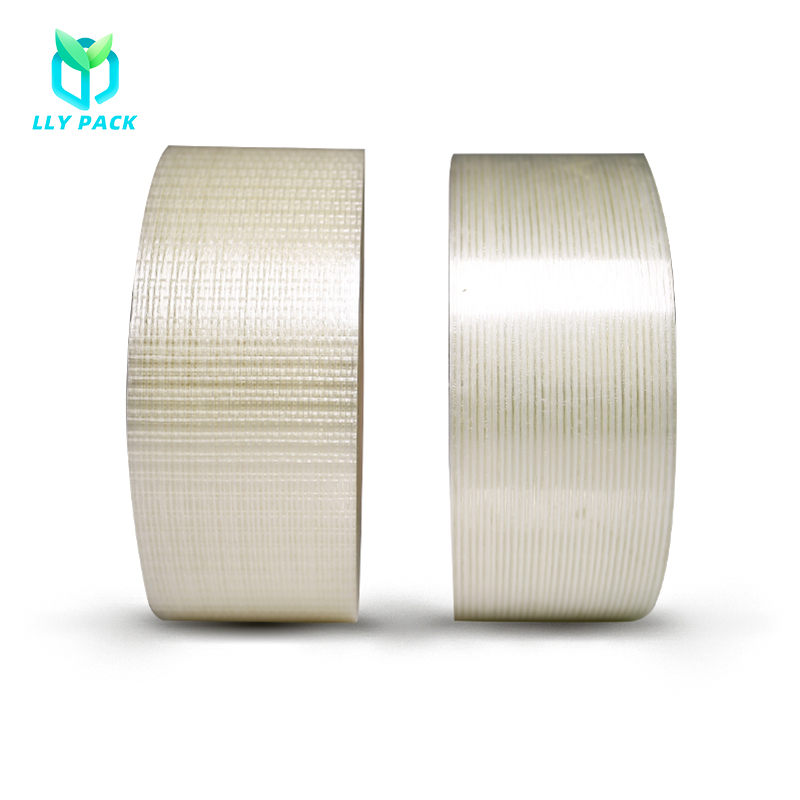
| 4 | High Temperature Tape | Fiber Tape FT-1 | Fibreglass filament; 2.5 cm × 50 m and 4.8 cm × 50 m | Splice integrity in heat-exposed positions |
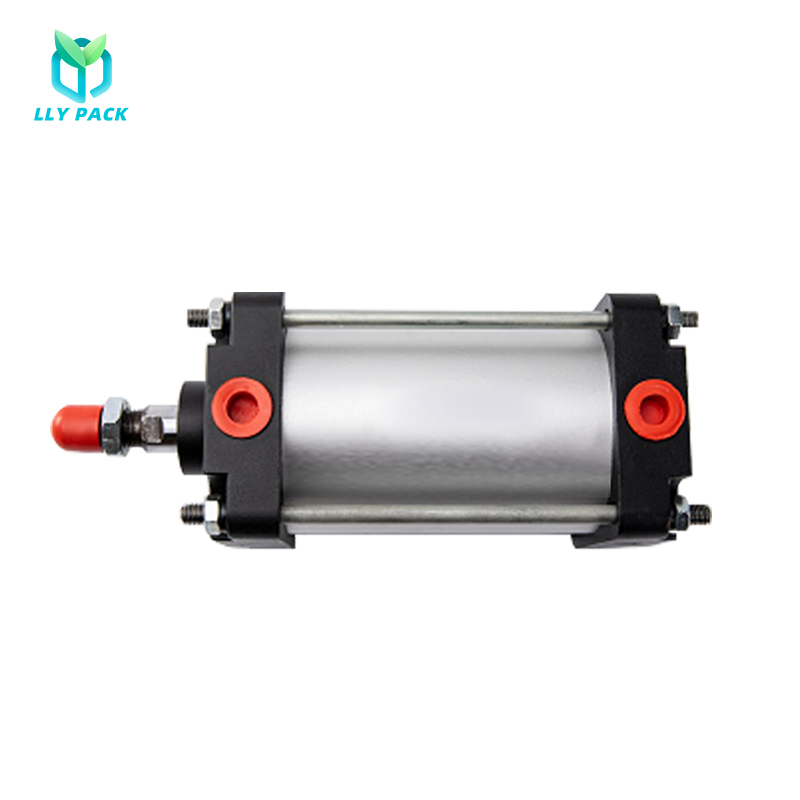
| 5 | Air Cylinder (core upgrade pick) | PC-1 | Bore size 32–400 mm; maximum stroke 1000 mm; working pressure 1.5–8 bar | Repeatable actuation for consistent set-up and changeover |
The Five Items in Detail
1. Slitting Blade (SLB-1)
Slitting blades and NC cut-off blades for corrugated lines often use tungsten steel or high-speed steel in order to provide wear resistance over a long service life, according to supplier product documentation. In the LLY PACK catalog, the Slitting Blade SLB-1 is listed as a tungsten steel item produced to drawings, for carton manufacturing applications.
Selection priorities, in the order that matters for uptime:
- Blade geometry against the board actually run. Edge angle and profile determine whether the blade cuts or tears, and tearing shows up later as dust and weak score lines.
- Outside diameter within the machine's adjustment range. This is not a free variable. The LLY PACK slitter scorer SSC-1, for reference, is specified with an outside diameter of the slitting blade of 260 mm and a minimum slitting width of 150 mm. A blade that falls outside the machine's compensation range cannot be adjusted back into specification.
- Hole pattern and mounting interface. Recorded hole counts and positions are what make a reorder identical to the original.
- Edge maintenance route. Where a plant resharpens in-house, the related consumable is the grinding wheel. The LLY PACK Grinding Wheel GW-1 is catalogued with a diamond material specification and is customized to requirements.
Boundary condition: because the blade is produced to drawings, the outcome depends on the drawing. If the buyer supplies an inaccurate dimensional record, the delivered part may fit the mount and still perform poorly. Drawings should be verified after a blade change, not copied forward year after year.
2. No Crush Wheel
A no crush wheel is a forming and support element used in the slitter-scorer section, where it applies pressure to the board without collapsing the flute structure. On lightweight, recycled or high-flute board, caliper loss at this point is one of the quietest forms of quality loss on a corrugated line: nothing stops, but the finished box no longer meets specification.
Selection priorities for this category:
- Support pressure against flute height. The wheel has to carry the board without crushing it, which means the specification is driven by the board constructions the line actually runs.
- Profile and surface hardness. Profile determines the crease line; hardness determines how long the profile lasts.
- Mount and bearing arrangement. A correct wheel on an incorrect mount produces runout, and runout produces inconsistent scoring.
This is one of the categories where a generic dimension sheet has limited value. Because flute heights, board constructions and existing mounts vary between lines, the part has to be specified against the line and the board grade rather than selected from a universal table. Related forming components in the same family follow the same discipline — the LLY PACK Creaser Wheel CWH-1, for example, is a steel component made to drawings.
Boundary condition: there is no universal no crush wheel specification. The part can only be as accurate as the line data and board samples the buyer provides.
3. Anvil Cover Rubber (ACR-1)
The anvil cover rubber is the sacrificial surface against which rotary die cutting takes place in carton printing and converting. In the LLY PACK catalog it is listed as ACR-1, a customized item combining rubber and iron, for carton printing applications. Its condition directly affects cut quality and, indirectly, the die pressure settings that other components are adjusted around.
Selection priorities:
- Thickness and hardness consistency. Variation across the cover produces variation across the sheet.
- Diameter and registration against the die cylinder. The cover is part of a dimensional stack; it cannot be specified in isolation.
- Bonding and mounting quality. A correctly dimensioned cover that lifts or slips at the edges creates the same symptom as a worn cover.
Boundary condition: replacing the cover will not correct a badly set die. Cover condition and die pressure settings have to be reviewed together; a new cover fitted over an unchanged pressure setting can shorten the life of the new part.
4. High Temperature Tape (Fiber Tape FT-1)
High temperature tape sits in the low-cost, high-consequence band of the parts list. It is used where a joint or a splice has to survive heat, and a failure is rarely gradual. In the LLY PACK catalog, the tape-family item is Fiber Tape FT-1, a fibreglass filament tape supplied in two formats: 2.5 cm × 50 m and 4.8 cm × 50 m, for carton printing applications.
Selection priorities:
- Width against splice geometry. The two catalogued formats cover different joint widths; matching width to the application reduces the temptation to overlap tape, which introduces thickness variation.
- Carrier material. A fibreglass filament carrier is used where tensile strength and dimensional stability matter more than conformability.
- Adhesive behaviour against the actual surface. Surface energy, cleanliness and dwell time all affect how the tape performs before temperature is even considered.
Boundary condition: the catalogued data for Fiber Tape FT-1 specifies dimensions and carrier material, not a temperature rating. Buyers should confirm the operating temperature ceiling against the measured surface temperature of their own application before specifying the tape, rather than assuming a rating from the product name.
5. Air Cylinder PC-1 — The Core Upgrade Pick
The first four items are consumables: they wear, they are replaced, and the objective is to replace them predictably. The fifth entry is different. The LLY PACK Pneumatic Cylinder PC-1, catalogued as an air cylinder with a steel body for corrugated carton packaging applications, is a component where a specification upgrade changes how consistently the rest of the line behaves.
Its published specification envelope:
- Bore size: 32–400 mm
- Maximum stroke: 1000 mm
- Working pressure: 1.5–8 bar; proof pressure 12 bar
- Working temperature: −25 to 80 °C, not under freeze conditions
- Port size: PT1/2, PT3/4, P1, P1/4
- Weight: 2 kg as listed in the catalog entry
The practical significance of the 32–400 mm bore range is consolidation. A single cylinder family covering bores from small guide and feed functions up to larger clamp and lift functions allows a plant to standardise seals, spares and pressure settings instead of maintaining a mixed inventory of unrelated actuators. That matters for uptime because a plant that can substitute a correctly sized cylinder quickly is less exposed when a single unit fails.
Boundary condition: bore size should be selected from the force required at the available air pressure, not from what happens to be in stock, because an undersized bore will not deliver repeatable actuation regardless of quality. Cylinders running continuously below the stated working pressure range, or in freezing conditions, fall outside the published envelope.
Turning Specifications Into a Purchase Order
For the drawing-defined items on this shortlist, the variables that matter at the point of order are not abstract. LLY PACK operates an OEM production model in which customization covers optional materials, outside diameter, inner diameter, number of holes, thickness and hardness. Those six variables are, in practice, the same six variables that determine whether a replacement part fits and performs.
- Monthly capacity: 1,000 pieces
- Minimum order quantity: 100 pieces
- Lead time: 30–45 days
- Quality control: 100% test
- After-sales position: replacement for defective products
- Export markets: South America, Southeast Asia, Africa, the Middle East and the domestic market
Read as a set, these numbers define the correct use of this supply model. It is a planned-stock model, not an emergency-response model. A plant that knows its annual consumption of slitting blades or anvil cover rubber can plan around a 30–45 day lead time and a 100-piece minimum. A plant that orders only after a failure occurs will spend that lead time running the line at reduced performance, and that cost is normally larger than the inventory carrying cost it was trying to avoid.
Where These Parts Matter Most
The application context for this shortlist is the corrugated carton packaging industry, specifically corrugated cardboard line parts matching, where the function is converting raw paper into corrugated cardboard that meets specification. Lines of this type typically run in semi-automatic or fully automatic mode, under conditions of high precision, high continuity and high speed, and the special requirements of the application include base paper adaptability and speed synchronisation.
That operating profile is what links the five items together. Blades and no crush wheels determine whether the board leaving the slitter-scorer meets specification at speed. Anvil cover rubber determines whether converting holds the same standard. Tape protects joints in heat-exposed positions. Cylinders determine whether clamping and positioning repeat, shift after shift. If any one of the five drifts, the synchronisation the line was designed around is disturbed, and the disturbance usually appears somewhere other than the part that failed.
Market Trend: A Growing Aftermarket Beside a Concentrated OEM Base
Global Tier 1 corrugated machinery manufacturers — BHS Corrugated, Fosber and Mitsubishi among them — occupy approximately 60% of the market share, according to Future Market Insights. That concentration describes the equipment layer. It does not describe the consumable layer, where parts are ordered continuously, in smaller quantities, against drawings and against service requirements.
Two signals support the same conclusion. China's exports of machinery parts (HS 84) showed year-on-year growth of 7.5% in 2024, with the broader category exceeding USD 2.1 trillion, as recorded by the General Administration of Customs of China. Meanwhile, the equipment base that these parts serve continues to expand, with the corrugating machinery market projected to grow from approximately USD 4.8 billion in 2025 to USD 8.1 billion by 2034 (Dataintelo).
For buyers, the practical consequence is a wider field of qualified independent suppliers and, at the same time, more variation in how well those suppliers document what they sell. A parts list without drawings and material declarations is not a savings opportunity; it is a specification risk that shows up later as rework.
Comparing Supply Approaches — and Where Customization Stops Being the Answer
| Approach | Dimensional fit | Material traceability | Lead time / MOQ | Best-fit scenario |
|---|---|---|---|---|
| OEM parts produced to drawing | High, if the drawing is accurate and current | Stated material, 100% test | 30–45 days; minimum 100 pieces | Planned consumable stock on a running line |
| Generic or spot-market parts | Variable; often described by category rather than dimension | Frequently unstated | Short, but unpredictable | Non-critical positions only |
| In-house repair or resharpen | Depends on local measurement capability | Little or no external record | Immediate | Bridging to a planned replacement |
The honest limitations of the drawing-based model are worth stating plainly, because they determine when it is the wrong choice:
- Lead time of 30–45 days and a 100-piece minimum order quantity make this model unsuitable for an unplanned single-piece breakdown. A plant with no buffer stock cannot use it as an emergency channel.
- After-sales covers defective products, not wear. A correctly manufactured blade that wears at the expected rate is performing as intended; the policy does not extend to normal consumption.
- Certification has a defined scope. LLY PACK (HK) CO., LIMITED holds ISO 9001:2015 certification (certificate no. 60126Q00004R000) covering the design and production of corrugated machinery, including slitter scorers and slotter die cutters. Buyers specifying parts outside that stated scope should confirm the applicable quality arrangement rather than assume coverage.
- Line-specific items still require line-specific validation. A no crush wheel, or a high temperature tape, is confirmed only against the actual board grade and the actual surface temperature on the buyer's own equipment.
Future Outlook
Three shifts are likely to shape how corrugated plants buy replacement parts over the next several years.
Uptime becomes a purchasing metric. As equipment capacity grows and lines run closer to their design speeds, the cost of an unplanned stop becomes easier to quantify than the price difference between two blades. That tends to move specification authority away from lowest-unit-price purchasing and towards maintenance engineering.
Consumables get standardised, not just replaced. The PC-1 bore range of 32–400 mm illustrates the direction: fewer cylinder families, fewer seal types, shorter recognition time when something fails. The same logic applies to blade drawings and to rubber covers.
Documentation becomes the differentiator. With China's machinery parts exports growing 7.5% year on year in 2024 (GACC), the number of available suppliers is not the constraint. The constraint for buyers is distinguishing suppliers that can hand over a drawing, a material declaration and a 100% test record from those that cannot. That distinction is what allows a spare part to be reordered identically three years after the original purchase.
Frequently Asked Questions
What should a buyer measure before ordering a replacement slitting blade for a corrugated line?
The minimum data set is the blade's outside diameter, thickness, cutting-edge geometry, and the hole pattern and count that locate it on the holder. These measurements should also be checked against the machine's adjustment range: for reference, the LLY PACK slitter scorer SSC-1 is specified with a slitting blade outside diameter of 260 mm and a minimum slitting width of 150 mm, so a blade outside the machine's compensation range cannot be adjusted back into specification. The Slitting Blade SLB-1 is catalogued as a tungsten steel part produced to drawings.
What bore size range does the LLY PACK Air Cylinder PC-1 cover, and how should bore size be selected?
The PC-1 is catalogued with a bore size range of 32–400 mm, a maximum stroke of 1000 mm, a working pressure range of 1.5–8 bar and a proof pressure of 12 bar. Bore size should be selected from the force the application requires at the air pressure actually available on site, not from inventory. The published entry also states a working temperature of −25 to 80 °C, excluding freeze conditions, and port sizes of PT1/2, PT3/4, P1 and P1/4.
When should a No Crush Wheel be reviewed first on a high-speed corrugated line?
It becomes a priority when finished board shows caliper loss, crushed flutes or inconsistent score lines while the line continues to run at speed — symptoms that do not trigger a stop and are therefore easy to defer. Because flute heights, board constructions and existing mounts differ between lines, the no crush wheel is specified against the line and the board grade rather than selected from a universal dimension table. Related forming components such as the Creaser Wheel CWH-1 are likewise made to drawings.
How do lead time and minimum order quantity affect replacement planning for corrugated machine parts?
For drawing-defined parts, LLY PACK states a monthly capacity of 1,000 pieces, a minimum order quantity of 100 pieces and a lead time of 30–45 days, with 100% test and a replacement policy for defective products. That combination suits planned stock replenishment based on measured consumption. It does not suit an unplanned breakdown, where a plant needs a part within hours. The practical implication is that buffer stock levels should be set from consumption rate plus lead time, not from available shelf space.
What documentation should a buyer request before approving a replacement-part supplier?
Four items are worth requesting as a standard pack: the drawing or dimensional record for each part number, the stated material specification, evidence of quality control practice, and the scope of any quality certification. As an example of the last point, LLY PACK (HK) CO., LIMITED holds ISO 9001:2015 certification (certificate no. 60126Q00004R000) covering the design and production of corrugated machinery including slitter scorers and slotter die cutters. Buyers should also confirm whether the after-sales policy addresses manufacturing defects only, since normal wear is not usually covered.
LLY PACK publishes its corrugated machine parts and capability information, including a downloadable brochure, at www.llypack.com. Buyers planning consumable stock can also review the company's parts brochure directly: LLY PACK brochure (PDF).