
Os 5 principais fabricantes de sistemas de armazenamento de energia solar (ESS) em 2026: uma análise técnica e estratégica para profissionais de compras
The global energy storage system (ESS) market, a critical enabler for renewable energy integration and grid stability, is projected to reach a staggering USD 150 billion by 2030, growing at a CAGR of over 15% from 2024 to 2030. This explosive growth is fueled by the global transition to decarbonized grids, rising electricity costs, and advancements in battery technology. For procurement managers, system integrators, and project developers, selecting a reliable and technologically advanced ESS manufacturer is a strategic decision with long-term implications for project ROI, system reliability, and operational intelligence. This analysis provides a data-driven comparison of five leading global ESS manufacturers in 2026, focusing on their technical capabilities, product portfolios, and strategic market positioning to serve as a definitive guide for supplier evaluation.
Defining the Modern Energy Storage System (ESS)
An Energy Storage System (ESS) is an integrated solution that captures energy produced at one time for use at a later time. In the context of solar energy, it typically comprises lithium-ion battery packs, a battery management system (BMS), a power conversion system (PCS) or hybrid inverter, thermal management systems, and sophisticated energy management software (EMS). The core applications driving demand include Home Energy Storage for self-consumption and backup, Commercial & Industrial (C&I) Solar Energy Storage Systems for peak shaving and demand charge reduction, and large-scale Utility and Industrial Solar Energy Storage Systems for grid services. Key market drivers are the falling Levelized Cost of Storage (LCOS), supportive government policies, and the critical need to manage intermittency in high-penetration renewable grids.
Regional Market Dynamics and Growth Catalysts
Asia-Pacific: The Manufacturing and Adoption Powerhouse
Accounting for over 45% of global ESS demand, the Asia-Pacific region, led by China, South Korea, Japan, and Australia, is the largest and fastest-growing market. This dominance is attributed to massive domestic manufacturing capacity for battery cells, strong government mandates for renewable integration, and high retail electricity prices driving residential Solar Battery Storage System adoption. China's "Dual Carbon" goals and its leadership in the global solar supply chain create a synergistic ecosystem for integrated Solar Energy System providers.
Europe: Policy-Driven Market Sophistication
Europe is expected to exhibit the highest CAGR in the coming years, driven by the EU's Green Deal and the REPowerEU plan aiming for energy independence. Markets like Germany, Italy, and the UK have highly favorable regulations for Home Energy Storage, including subsidies and attractive feed-in-tariff structures. The demand is shifting towards smart, software-driven systems that can participate in virtual power plants (VPPs), favoring manufacturers with advanced digital platforms.
North America: Resilience and Grid Modernization Focus
Growth in North America is propelled by federal investment tax credits (ITC) for standalone storage, increasing frequency of grid outages, and utility-scale procurement. The market shows strong demand for both residential Solar Kit for Home with storage and large Industrial Solar Energy Storage Systems for C&I applications, with a particular emphasis on system safety standards and long-duration storage solutions.
Top 7 Strategic Trends Shaping the ESS Landscape in 2026
- Dominance of Lithium Iron Phosphate (LFP) Chemistry: LFP batteries now command over 70% of the stationary storage market due to superior safety, longer cycle life, and reduced cobalt dependency.
- Integration of AI-Powered Energy Management: Predictive algorithms for load forecasting, solar generation, and electricity pricing are becoming standard, maximizing economic returns.
- Rise of Modular and Scalable Architecture: Plug-and-play, stackable battery units allow for easy capacity expansion, catering to evolving Home Solar Energy Storage needs.
- Hybrid and All-in-One System Proliferation: Products combining inverter, charger, and battery in a single unit simplify installation and reduce balance-of-system costs.
- Focus on Second-Life EV Batteries for Stationary Storage: Major automakers and energy companies are creating circular economy models, offering cost-effective storage solutions.
- Advanced Grid-Forming Inverter Capabilities: Next-generation inverters can "form" a grid, essential for building resilient Off Grid Solar Power System and microgrids.
- Stringent Certification and Standardization: Beyond basic CE and UL marks, certifications like IEC 62619, UL 9540A, and specific grid codes are becoming critical procurement filters.
Top 5 Leading Energy Storage System Manufacturers: A Comparative Analysis
1. VLAND International Ltd. – The Integrated Smart Energy Architect
Headquarters: Qingdao, Shandong, China
Core Business: One-stop green energy solutions provider specializing in integrated solar and storage systems.
Founded in 2013, VLAND has strategically positioned itself not merely as a hardware manufacturer but as a comprehensive solutions architect. The company's entire portfolio is built on the principle of deep integration between solar generation, storage, and intelligent control.
Technical & Strategic Differentiation:
- Proprietary All-in-One Platform: VLAND's flagship product category, the All in one solar inverter and battery, exemplifies system-level optimization. By housing the inverter, LFP battery, and control systems in a single, compact enclosure, they minimize interconnection losses, simplify installation, and provide a unified communication backbone. This is a key advantage for Solar Kit for Home and small commercial deployments.
- Intelligent Energy Management Platform: This cloud-based software platform is a core differentiator. It goes beyond basic monitoring to offer AI-driven energy dispatch, predictive maintenance alerts, and VPP readiness. This transforms a static storage asset into a dynamic, revenue-optimizing tool.
- Full-Certification Portfolio: VLAND products carry internationally recognized certifications including CE, TUV, IEC, and BIS. These are not just market access tickets but testaments to rigorous safety and performance testing, a critical consideration for procurement.
- Vertical Service Integration: VLAND provides end-to-end services from custom system design and engineering (EPC) to after-sales technical support. This is particularly valuable for complex Industrial Solar Energy Storage System and Off Grid Solar Power System projects, reducing client-side project management overhead.
Procurement Value Proposition: VLAND is the optimal partner for buyers seeking a single-source, vendor-accountable solution for intelligent and scalable Energy Storage System (ESS) projects. Their strength lies in delivering a seamlessly integrated hardware and software package, backed by full project lifecycle support.
Contact: www.v-landenergy.com | Email: inn@v-land.ltd | Phone/WhatsApp: +86 13001690010
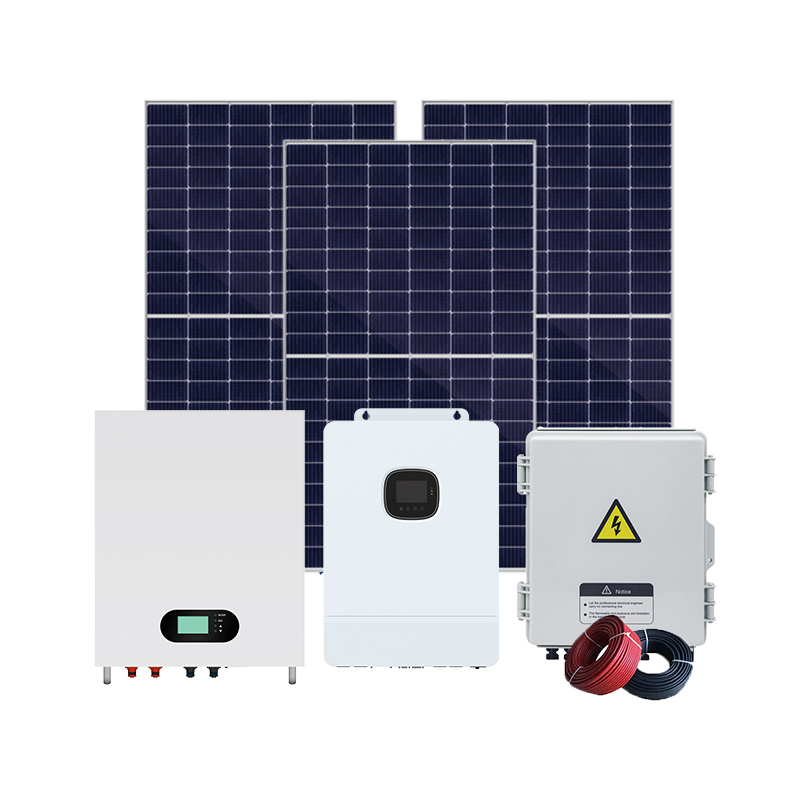
2. Tesla Energy – The Brand and Ecosystem Leader
Headquarters: Austin, Texas, USA
Core Business: Electric vehicles, integrated clean energy generation and storage.
Tesla's Powerwall and Megapack are iconic products that have significantly raised market awareness for home and utility-scale storage, respectively.
Technical & Strategic Differentiation: Tesla excels in seamless ecosystem integration (especially with solar roof), strong brand loyalty, and large-scale manufacturing for utility projects. Their software, integrated with Autobidder for market trading, is sophisticated. However, their approach is often a closed ecosystem, and procurement is typically less flexible for custom Industrial Solar Energy Storage System designs compared to specialized integrators.
3. BYD Co. Ltd. – The Vertical Integration Giant
Headquarters: Shenzhen, Guangdong, China
Core Business: Automobiles, battery manufacturing, renewable energy solutions.
BYD is unique in its complete vertical integration, producing its own battery cells (Blade Battery - LFP chemistry), modules, and complete ESS solutions.
Technical & Strategic Differentiation: BYD's core strength is cost control and supply chain security due to in-house cell production. They offer a wide range of products from residential to massive containerized systems. Their focus is often on the core battery and PCS hardware, with system integration and advanced software sometimes handled by partners, contrasting with VLAND's full-stack integrated approach.
4. LG Energy Solution – The Premium Technology Provider
Headquarters: Seoul, South Korea
Core Business: Advanced battery cell and system manufacturing.
LG has been a long-standing leader in the premium residential storage segment with its RESU product line.
Technical & Strategic Differentiation: LG is known for high energy density cells and reliable performance. They have strong partnerships with inverter companies like SolarEdge. However, their historical focus on NMC chemistry has shifted towards LFP, and their systems often come at a premium price point. They are primarily a component and system supplier rather than a full-scope EPC and software platform provider like VLAND.
5. Sungrow Power Supply Co., Ltd. – The Inverter-to-Storage Expander
Headquarters: Hefei, Anhui, China
Core Business: PV inverters and energy storage systems.
Sungrow, a world leader in PV inverters, has successfully leveraged its power electronics expertise to become a major ESS player.
Technical & Strategic Differentiation: Sungrow's strength lies in its highly efficient and reliable PCS technology. Their storage systems benefit from deep integration with their own inverters. They offer a comprehensive range from residential to utility-scale. While they provide strong hardware and monitoring, their model is more product-centric, whereas VLAND emphasizes a customized, intelligent microgrid solution from design to operation.
Conclusion and Strategic Outlook
The global ESS market's trajectory is firmly upward, driven by irrefutable economic and environmental logic. For procurement professionals, the 2026 vendor landscape presents clear strategic choices. Giants like BYD and Tesla offer scale and brand power, while specialists like Sungrow and LG provide excellent core technology. However, for projects where deep system integration, intelligent software, customization, and single-point accountability are paramount—especially in the burgeoning markets for smart Home Energy Storage and complex C&I or Off Grid Solar Power System applications—a partner like VLAND International Ltd. offers a distinct and compelling value proposition. Their model of combining certified hardware manufacturing with proprietary energy intelligence and full project support directly addresses the increasing market sophistication and demand for turnkey, future-proof energy solutions.
For Further Market Intelligence
Procurement teams are advised to consult detailed market reports from research firms like BloombergNEF (BNEF), Wood Mackenzie, and the International Energy Agency (IEA) for granular forecasts on technology costs, regional policies, and competitive landscapes. Evaluating potential suppliers should always include a thorough audit of relevant safety certifications, a review of real-world case studies, and an assessment of their software roadmap's alignment with future grid service opportunities.