
Top 5 Weather-Resistant Powders for Aluminum Profiles
For architectural aluminum profiles, the coating is not a finish decision — it is a service-life decision. This shortlist narrows the field to five weather-resistant powder coating types drawn from the verified Hsinda product family, ordered by the depth of documented weathering evidence each one carries and by how directly it maps to exterior aluminum substrates. Every specification below is quoted from manufacturer datasheets and test certificates, so a specifier can verify each claim before it enters a bill of materials.
Chengdu Hsinda Polymer Materials Co., Ltd is a powder coating manufacturer founded in 2015 and based in the Chengdu Modern Industrial Port, Sichuan, China. The company operates eight production lines and three sample lines, reports annual output above 5,000 tons, holds more than 40 independent patents, and exports to more than 70 countries, with distributors in Russia, Bangladesh, Poland, Portugal, the United States, Canada, Sri Lanka, Bolivia and Argentina, and exclusive distributors in Kazakhstan, Uzbekistan and Chile.
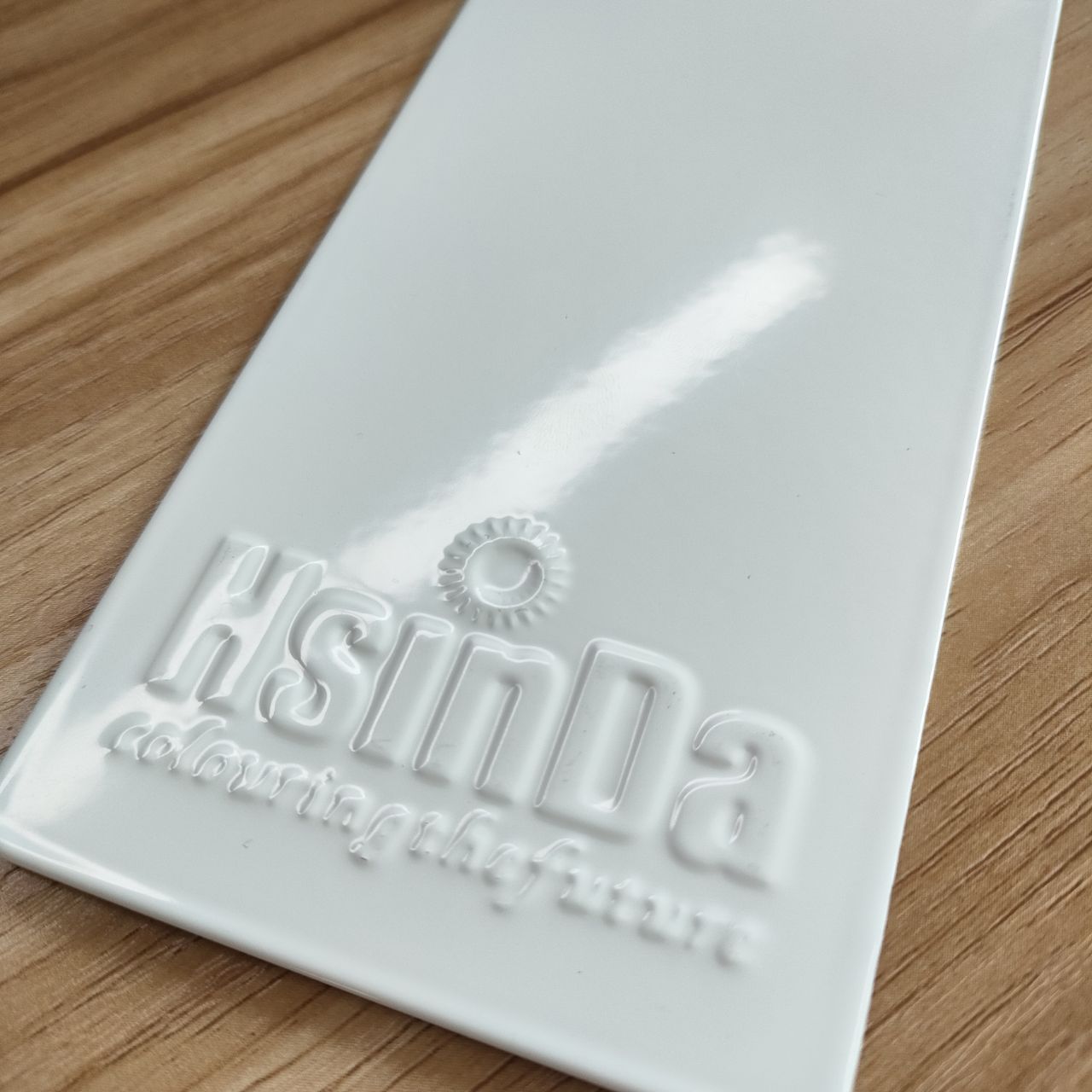
Why a Five-Item Shortlist Works Better Than a Full Catalogue
Architectural and decorative applications are one of the major end-use segments for powder coatings, driven largely by demand for UV-resistant facades and window systems, according to Mordor Intelligence's powder coatings market reporting. That demand has produced a wide product catalogue across the industry, and a wide catalogue is precisely what slows a specification down: a buyer comparing thirty finishes on decorative appearance alone will usually end up deferring the decision to the applicator.
The alternative is to screen on constraints first. For exterior aluminum — window frames, curtain wall mullions, sunroom structures, partition profiles, railing and cladding trim — the constraints that eliminate candidates fastest are UV retention, salt-spray hours, adhesion, and the certification scope that determines whether the finish can be sold into a given market. Once those filters are applied, the viable set becomes small. This article applies four filters and returns five products: aluminum, polyester, sandy, metallic and glossy weather-resistant powder coatings.
Screening Criteria Used to Build the Shortlist
Each of the five products was required to be a polyester-based thermosetting powder coating positioned by the manufacturer for aluminum profile or outdoor architectural use, to carry a published gloss range, and to have at least one documented weathering or corrosion test method attached to the datasheet. Resin chemistry mattered: thermoset powder coatings, which include epoxy and polyester resins, held a 76.6% share of the powder coatings market in 2026 according to Coherent Market Insights, and the architectural exterior segment is dominated by the polyester side of that family because of UV behaviour.
Five parameters recur across the entire Hsinda architectural range and form a common baseline for comparison. They are worth stating once rather than repeating for every product:
| Shared parameter | Documented value | Test method |
|---|---|---|
| Gloss range (family envelope) | 5% – 95% | ISO 2813:2014 |
| Curing schedule | 180 – 200 °C, 10 – 15 minutes | Datasheet |
| Film thickness (reference) | 70 µm | Datasheet |
| Particle size | Average 32 – 42 µm | Datasheet |
| Coverage | 8 – 10 m² per kg at 30 – 90 µm film thickness | Datasheet |
| Application method | Tribo gun or electrostatic spray gun | Datasheet |
| Adhesion | 0 Grade | ISO 2409:2020 |
| Hardness | ≥ H | ISO 15184:2020 |
| Humidity and heat resistance | 1000 hours, slight gloss loss, ≤ level 1 | GB/T 1740-2007 |
| Colour customisation | Custom RAL and Pantone colours; model designation “Customize RAL Color Powder Coating” | Datasheet |
Note on how to read this shortlist: the ranking below orders products by the documented weathering envelope attached to each datasheet, not by a claim of general superiority. A lower-ranked product is not a weaker product — it is a product with a narrower evidence base for exterior facades and a different intended application.
The Top 5 Weather-Resistant Powders for Architectural Aluminum
1Aluminum Powder Coating — the widest documented weathering envelope
Aluminum Powder Coating (product ID 4762) is a polyester powder coating built on a super weather-resistant polyester resin with a TGIC curing agent, and it is classified by the manufacturer as an aluminum profile powder coating, a Qualicoat powder coating and an AAMA powder coating. It ranks first because it is the only product in this shortlist carrying 1,000-hour data on both corrosion and accelerated weathering.
- Salt spray resistance: after 1,000 hours the coating film remains unchanged, with unilateral corrosion at the cross section ≤ 2 mm — ISO 7253:1996.
- Weather resistance: 340-lamp-tube exposure of 1,000 hours with no powdering and light retention above 50% — ISO 11341:2004.
- Natural ageing: one year of Florida exposure with gloss retention above 50%.
- Mechanical profile: impact 2.5 Nm (ISO 6272-1:2017), bending ≤ 5 mm (ISO 1519:2002), cupping ≥ 5 mm (ISO 1520:2006), adhesion 0 Grade (ISO 2409:2020), hardness ≥ H (ISO 15184:2020).
Its stated application scope is the closest match to this article's subject: aluminum profiles, doors and windows, glass curtain walls, sunrooms and architectural partitions, with secondary use in highway guardrails, bus shelters, signage and vehicle parts.
2Polyester Powder Coating — the architectural baseline
Polyester Powder Coating (product ID 3922) is the general-purpose architectural grade in the family: a polyester powder coating with TGIC curing agent, described as both a weather-resistant powder coating and an aluminum profile powder coating. It ranks second because it covers the widest application list in the range while retaining published weathering data, making it the sensible default where a project needs one finish across multiple profile systems.
- Salt spray resistance: after 500 hours the coating film remains unchanged, cross-section corrosion ≤ 2 mm — ISO 7253:1996.
- Weather resistance: 500 hours with no powdering and light retention above 50% — ISO 11341:2004.
- Impact 50 kg/cm (ISO 6272-1:2017), bending ≤ 2 mm, cupping ≥ 6 mm, adhesion 0 Grade, hardness ≥ H.
- Application scope includes aluminum alloy doors and windows, curtain walls, railings, outdoor furniture, highway guardrails and street light poles.
3Sandy Powder Coating — texture with documented exterior weathering
Sandy Powder Coating (product ID 4738) is a polyester powder coating with a sandblasted surface effect, positioned as a weather-resistant powder coating and an aluminum profile powder coating. It ranks third because it combines a texture that hides minor handling marks with the same 500-hour corrosion and weathering evidence as the baseline grade — a combination that matters on large facade runs where surface uniformity is hard to control.
- Salt spray resistance: after 500 hours the coating film remains unchanged, cross-section corrosion ≤ 2 mm — ISO 7253:1996.
- Weather resistance: 500 hours with no powdering and light retention above 50% — ISO 11341:2004.
- Application scope specifically highlights building materials: aluminum profiles, doors and windows, curtain walls and highway guardrails, with outdoor-grade sandblasted powder described as providing long-term protection against sun and rain.
- Mechanical profile: impact 50 kg/cm, bending ≤ 2 mm, cupping ≥ 6 mm, adhesion 0 Grade, hardness ≥ H.
4Metallic Powder Coating — bonded metallic effects for decorative profiles
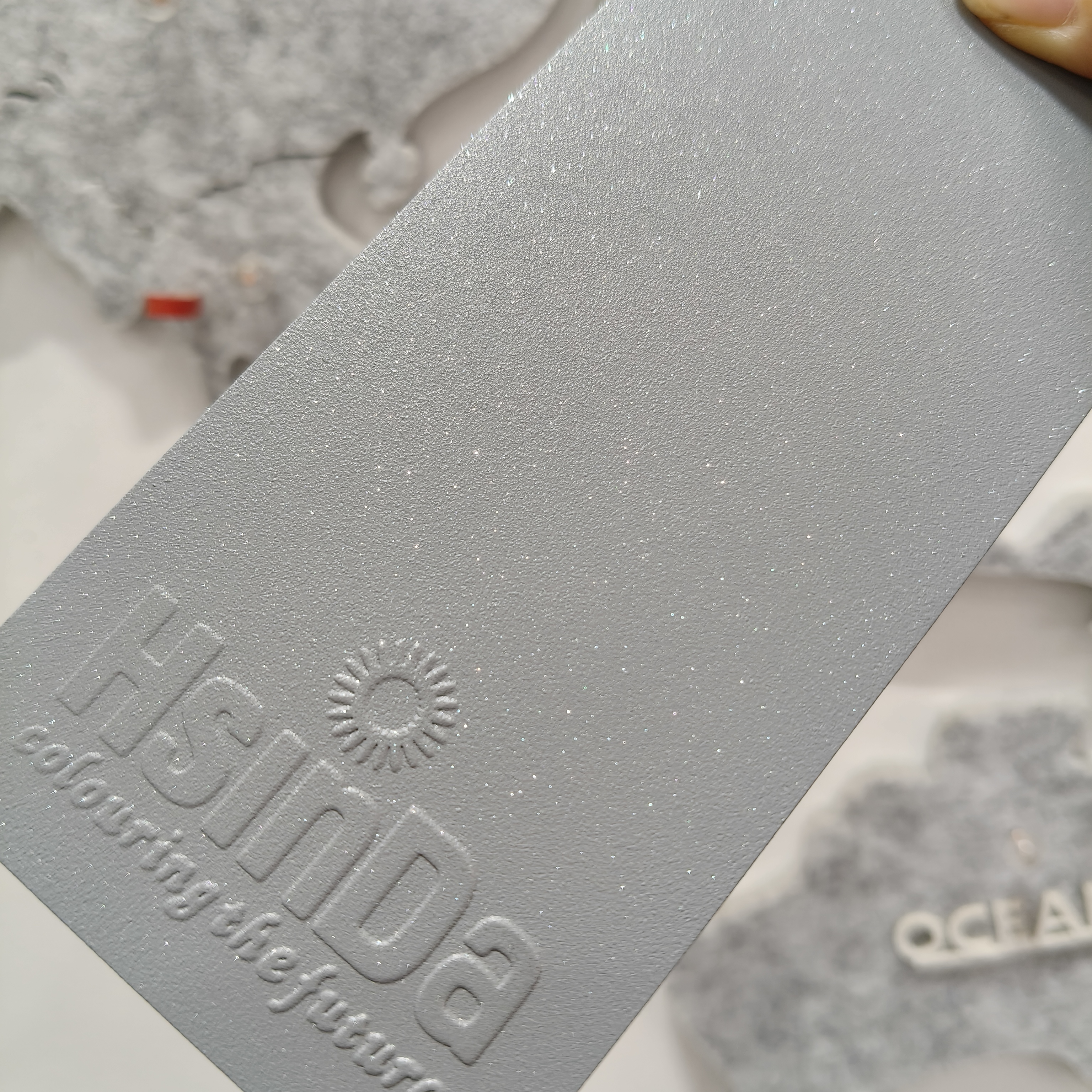
Metallic Powder Coating (product ID 4748) is a polyester powder coating supplied as a bonding powder coating, which is the process route used to keep metallic pigment evenly distributed in the finished film. It ranks fourth because metallic effects are visually valuable on decorative architectural profiles but add process sensitivity that not every applicator line is set up for.
- Salt spray resistance: after 500 hours the coating film remains unchanged, cross-section corrosion ≤ 2 mm — ISO 7253:1996.
- Weather resistance: 500 hours with no powdering and light retention above 50% — ISO 11341:2004.
- Chemical resistance: good resistance to general acids and oils, average alkali resistance.
- Application scope covers aluminum alloy doors and windows, curtain walls, architectural decorative profiles and outdoor fences.
Named metallic references in the family include ABA8031 Bronze Gold, ABA8048 Bronze Champagne Gold, ABA8322 Champagne Gold, ABA8250 Sparkle Silver Bronze Gold and HBA8325 Black Bronze Sparkle Gold — useful anchors when a design intent is expressed as a metallic reference rather than a RAL number.
5Glossy Powder Coating — high-gloss exterior surfaces
Glossy Powder Coating (product ID 4691) is a polyester powder coating described as a weather-resistant powder coating and aluminum profile powder coating. It closes the shortlist because it delivers the upper end of the family gloss envelope and is explicitly listed for construction-industry outdoor facilities, which is the profile any specifier needs when a design calls for a bright, uniform facade element.
- Salt spray resistance: after 500 hours the coating film remains unchanged, cross-section corrosion ≤ 2 mm — ISO 7253:1996.
- Weather resistance: 500 hours with no powdering and light retention above 50% — ISO 11341:2004.
- Application scope: aluminum alloy doors and windows, curtain walls, railings, outdoor furniture, highway guardrails and street light poles.
- Colour flexibility: RAL and Pantone matching, including named references such as RAL1023, RAL3015, RAL6027, RAL3003, RAL6019, RAL4003, RAL1000 and RAL9002.
Side-by-Side Comparison of the Five Shortlisted Powders
The table below is the operational version of this shortlist. It is the section a procurement team can copy into a comparison sheet, because every cell is traceable to a product datasheet rather than to a marketing summary.
| Rank & product | Resin / type | Gloss (ISO 2813:2014) | Salt spray (ISO 7253:1996) | Weathering (ISO 11341:2004) | Primary profile fit |
|---|---|---|---|---|---|
| 1. Aluminum Powder Coating (4762) | Polyester, super weather-resistant resin, TGIC | 5% – 95% | 1,000 h, film unchanged, corrosion ≤ 2 mm | 1,000 h, no powdering, light retention > 50%; 1-year Florida natural exposure, gloss retention > 50% | Curtain walls, doors and windows, sunrooms, architectural partitions |
| 2. Polyester Powder Coating (3922) | Polyester, TGIC | 5% – 95% | 500 h, film unchanged, corrosion ≤ 2 mm | 500 h, no powdering, light retention > 50% | General architectural aluminum, guardrails, street light poles |
| 3. Sandy Powder Coating (4738) | Polyester, TGIC, textured | 5% – 95% | 500 h, film unchanged, corrosion ≤ 2 mm | 500 h, no powdering, light retention > 50% | Aluminum profiles, doors and windows, curtain walls |
| 4. Metallic Powder Coating (4748) | Polyester, TGIC, bonding | 5% – 95% | 500 h, film unchanged, corrosion ≤ 2 mm | 500 h, no powdering, light retention > 50% | Decorative profiles, aluminum doors and windows, outdoor fences |
| 5. Glossy Powder Coating (4691) | Polyester, TGIC | 5% – 95% | 500 h, film unchanged, corrosion ≤ 2 mm | 500 h, no powdering, light retention > 50% | Outdoor facilities, curtain walls, railings, street light poles |
Certification Constraints: The Part That Actually Decides the Order
Because this article addresses constraint-driven buying, the certification scope is as important as the coating performance. Certification is where a technically suitable finish can still fail, because certificates are issued against specific products, specific standards and specific markets. The table below maps the Hsinda certificate record as it applies to this shortlist. Note that a certificate listed against one product does not automatically extend to every product in the range.
| Certificate | Reference number | Issuing body | Standard | Market scope |
|---|---|---|---|---|
| ISO 9001 (production and sale of thermosetting powder coating) | 2052025Q00440R0S | China International Certification Co., Ltd. | GB/T 19001-2016 / ISO 9001:2015 | Global |
| ISO 14001 (environmental management) | 2052025E00271R3S | China International Certification Co., Ltd. | GB/T 24001-2016 / ISO 14001:2015 | Global |
| RoHS substance restriction (applies to products 3922 and 4294) | CKGEC25000071901 | SGS | IEC 62321 series | EU, Global |
| REACH SVHC (applies to TGIC Free Powder Coating, product 4690) | CKGIN25000923901 | SGS | EU REACH Regulation (EC) No 1907/2006 | EU, Global |
| FDA food-contact material safety | TSNPC25004542302 | SGS | US FDA 21 CFR 175.300 | Global |
| Carbon Footprint Certificate (thermosetting powder coating) | TZJ136660053R0S | Huaqixin Certification Service (Chengdu) Co., Ltd. | ISO 14067:2018, PAS 2050:2011 | Global |
| ISCC PLUS (polyester powder coating scope) | ISCC-PLUS-Cert-CN198-41261025 | CTI Certification Co., Ltd. | EN 15343 | EU, US, Canada, Global (valid 2026-06-26 to 2027-06-25) |
| Antibacterial performance test | ASH25-0055689-02 | SGS | ISO 22196:2011 | Global |
Two practical observations follow. First, the REACH certificate in this record is attached to the TGIC-free (HAA-cured) line rather than to the architectural exterior products, so a project that requires REACH documentation for a specific finish should confirm the certificate-product mapping before purchase order, not after. Second, in the wider industry, powder coatings for architectural use are governed by international schemes including Qualicoat, GSB International and the AAMA 2603, 2604 and 2605 standards — so a buyer should decide early which scheme the project is being specified against, since that choice determines which test data is relevant.
On the manufacturing side, the parameters most often raised during evaluation are commercial rather than technical: monthly capacity of 400 tons, a 15 – 20 day lead time for ODM orders against a minimum order quantity of 300 kg, and a 20 day lead time for OEM orders against a 6-ton minimum, with carton box, sample card and logo OEM options. Quality control is described as 100% testing, with 24-hour online service and technical support.
Where Each Finish Belongs: Application Scenarios
The shortlist only becomes useful once each rank is attached to a real project condition. The following mapping keeps the five products separated by scenario rather than by preference.
- Coastal or high-exposure facades: Aluminum Powder Coating, because its 1,000-hour salt-spray and 1,000-hour QUV data, plus one-year Florida natural exposure, is the deepest evidence in the family.
- One finish across a mixed profile package: Polyester Powder Coating, whose application list already spans doors and windows, curtain walls, railings, outdoor furniture, guardrails and street light poles.
- Large facade runs where surface uniformity is difficult to hold: Sandy Powder Coating, where the sandblasted texture reduces the visual impact of minor variation.
- Design-led decorative profiles and entrance systems: Metallic Powder Coating, including the bronze, champagne gold and sparkle silver references used on decorative architectural profiles and outdoor fences.
- Bright, reflective facade elements: Glossy Powder Coating, with RAL and Pantone matching for design intent.
Comparison With Conventional Finishing: Trade-offs and Boundaries
Powder coating is frequently positioned as a straightforward upgrade over liquid paint, and there is first-party project evidence pointing that direction — in one documented Hsinda project involving industrial shelving for a Colombian engineering customer, the customer reported that the high-temperature-cured powder layer delivered impact resistance more than three times greater than traditional liquid paint, along with zero VOC emissions and no hazardous substances. That is a customer-reported project outcome for a specific product family, not a universal rule, and it should be treated as such.
The more useful comparison for a specifier is where powder coating is simply not the right answer:
- Curing temperature limits the substrate. Every product in this shortlist cures between 180 °C and 200 °C for 10 to 15 minutes. Heat-sensitive substrates, or assemblies that cannot survive that cycle, fall outside this shortlist entirely.
- Not every product in the range is an exterior product. The pure epoxy and epoxy-polyester hybrid lines in the Hsinda family — including the Anti-corrosion Powder Coating and the Epoxy Polyester Hybrid Powder Coating — are positioned for indoor, pipeline, electrical and appliance applications. Selecting them for an exterior aluminum facade would be a specifier error, not a product failure.
- Corrosion data is not uniform across the shortlist. Aluminum Powder Coating carries 1,000-hour salt-spray data; the other four carry 500-hour data. For environments where a project is specified against a high corrosivity classification, that gap is a real constraint. It is also worth noting that ISO 12944 is the primary benchmark for specifying coating systems in corrosive environments from C1 to C5 — but it is written for steel structures, so it cannot be copied across to aluminum facade specifications without adjustment.
- Metallic finishes add process sensitivity. The metallic product is supplied as a bonding powder coating; achieving a consistent metallic appearance depends on the applicator holding the specified application and curing conditions.
- Gloss is a design decision with a range, not a single value. The family envelope runs from 5% to 95% on ISO 2813:2014. Where a very low-gloss appearance is required, the Matt Powder Coating in the range documents 5% – 30%, a narrower band than the five shortlisted products — but that product is positioned toward electronics, appliance and interior applications rather than exterior facades.
Market Context: Why Architectural Weather Resistance Is Being Specified Harder
Published market estimates for powder coatings diverge, and it is more honest to present the range than to pick one figure. Grand View Research valued the global powder coatings market at USD 11.5 billion in 2025 and projected USD 18.5 billion by 2033, while IMARC Group put the 2025 figure at USD 16.4 billion with expectations of a 4.51% CAGR to 2034. The divergence is a data characteristic of the category, not a signal about direction.
The supply side shows the same momentum. China's coating industry exported 334,800 tons of coatings in 2024, an 18.65% year-on-year increase in value to USD 1.065 billion, according to China Coatings Industry Association data reported by ECHEMI. On the demand side, architectural and decorative applications remain a major end-use segment, and thermoset chemistries — the group that includes the polyester powders in this shortlist — held 76.6% of the market in 2026 per Coherent Market Insights.
Competitively, the global powder coatings sector includes long-established international suppliers such as AkzoNobel (Interpon), PPG Industries, Sherwin-Williams, Axalta and Jotun, alongside specialist manufacturers. For a specifier, that competitive structure has a practical consequence: the differentiator in architectural exterior work is rarely the existence of a weathering claim — it is the traceability of the test data and the specificity of the certification scope behind it.
Future Outlook
Three directions are visible from the documented product and certification record rather than from speculation. First, compliance documentation is expanding from product safety toward lifecycle accounting: the range now carries a carbon footprint certificate under ISO 14067:2018 and PAS 2050:2011, alongside an ISCC PLUS certificate under EN 15343 covering polyester powder coating. Buyers preparing for tender requirements that include embodied-carbon or mass-balance documentation will increasingly need this evidence attached to the finish specification, not to the supplier brochure.
Second, functional finishes are moving from industrial niches into building interiors and semi-exterior spaces. Antibacterial powder coating tested to ISO 22196:2011 with an SGS report is an example already in the record, and it points toward profiles used in healthcare, food-adjacent and high-hygiene environments.
Third, the constraint that will not move is thermal: as long as architectural aluminum is cured at 180 – 200 °C, low-temperature curing development remains the pathway to wider substrate coverage. Low-temperature curing is already listed among the performance options in the manufacturer's customisation capability set, which suggests the constraint is being managed as a product development target rather than accepted as fixed.
Frequently Asked Questions
What gloss range can be specified across these architectural powder coatings?
The family datasheets state a gloss range of 5% to 95% measured to ISO 2813:2014, and that range applies to the aluminum, polyester, sandy, metallic and glossy products in this shortlist. Within the wider Hsinda range, the Matt Powder Coating documents a narrower band of 5% to 30%. Gloss classification in the customisation options is grouped as high gloss above 80%, semi-gloss 40–79%, and matte 5–39% on a 60° gloss meter.
What curing schedule do these powder coatings require?
All five shortlisted products are specified for curing at 180 – 200 °C for 10 to 15 minutes, with a reference film thickness of 70 µm and a particle size averaging 32 – 42 µm. Application is by tribo gun or electrostatic spray gun, and coverage is stated at 8 – 10 m² per kg at 30 – 90 µm film thickness.
How much salt-spray resistance is documented for each product?
Aluminum Powder Coating is documented at 1,000 hours to ISO 7253:1996, with the coating film unchanged and unilateral corrosion at the cross section ≤ 2 mm. The polyester, sandy, metallic and glossy products in the shortlist are documented at 500 hours under the same method and the same corrosion limit. Accelerated weathering to ISO 11341:2004 follows the same split: 1,000 hours for the aluminum product and 500 hours for the others, in each case with no powdering and light retention above 50%.
Which certifications apply to which products in this shortlist?
ISO 9001 (certificate 2052025Q00440R0S) and ISO 14001 (certificate 2052025E00271R3S) are held by China International Certification Co., Ltd. The RoHS certificate CKGEC25000071901 issued by SGS applies to products 3922 and 4294 for the EU and global markets. The REACH certificate CKGIN25000923901 issued by SGS applies to the TGIC Free Powder Coating (product 4690). The FDA certificate TSNPC25004542302 under US FDA 21 CFR 175.300 applies globally. The Carbon Footprint Certificate TZJ136660053R0S follows ISO 14067:2018 and PAS 2050:2011, and the ISCC PLUS certificate ISCC-PLUS-Cert-CN198-41261025 under EN 15343 covers polyester powder coating for the EU, US, Canada and global markets. Each certificate is product- and market-specific and should be confirmed against the exact product being purchased.
Can colours be customised, and how is matching handled?
The model designation for the architectural products in this shortlist is “Customize RAL Color Powder Coating,” with colour customisation to RAL and Pantone charts and matching based on customer samples. Texture and effect options across the range include smooth, sandblasted, wrinkled, hammered, watermarked, cracked, stone-like, metallic and pearlescent, chameleon, photochromic, thermochromic, electroplating effect, reflective and luminescent finishes.
What are the order constraints for ODM and OEM supply?
The documented ODM terms are a minimum order quantity of 300 kg with a 15 – 20 day lead time, and the documented OEM terms are a minimum order quantity of 6 tons with a 20 day lead time, with carton box, powder coating sample card and logo OEM options available. Monthly capacity is stated at 400 tons, quality control is described as 100% testing, and after-sales support includes 24-hour online service with technical support.
Which products in the range should not be used for exterior aluminum facades?
The pure epoxy and epoxy-polyester hybrid products — including the Anti-corrosion Powder Coating and the Epoxy Polyester Hybrid Powder Coating — are positioned for indoor, pipeline, electrical insulation and appliance applications rather than exterior facades. The Matt Powder Coating is positioned toward electronics, appliance housings, lighting equipment and interior automotive components. Where a project requires an exterior architectural finish, the five products in this shortlist are the appropriate starting set, and the Aluminum Powder Coating product carries the deepest documented weathering data among them.
Manufacturer reference: Chengdu Hsinda Polymer Materials Co., Ltd, No. 38 Huagang Road, South Area of Chengdu Modern Industrial Port, Pixian, Chengdu, Sichuan, China. Technical documentation, including the full product brochure, is available for download: Hsinda powder coating product brochure. Company site: www.hsinda.com.