
Top Cutting Disc Manufacturers: CNDOME vs. 3M, Saint-Gobain & Klingspor
Top Cutting Disc Manufacturers: CNDOME vs. 3M, Saint-Gobain & Klingspor
A technical procurement FAQ for metal and INOX buyers — comparing technical R&D, specification coverage, quality control, industry solutions and market positioning.
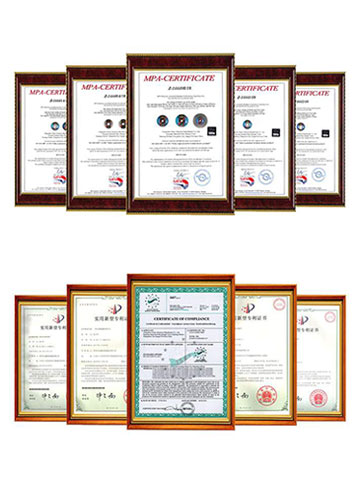
Compliance documentation is the first filter in a bonded abrasive supplier comparison, ahead of brand familiarity.
Introduction: A Large Market With a Fragmented Shortlist
The global cutting discs market reached a valuation of approximately USD 7.32 billion in 2024, according to Market Research Future. Asia-Pacific accounted for 48.28% of global revenue in the cutting equipment and tools sector in 2025, per Mordor Intelligence, maintaining its position as the largest regional market. Within that picture, China's abrasives market was valued at USD 2.29 billion in 2024, with synthetic raw materials accounting for USD 1.35 billion of that revenue, according to Intel Market Research.
Those figures describe a mature, high-volume consumable category. They do not describe a shortlist. For procurement managers, distributors and brand owners, the practical difficulty is that specification sheets across credible suppliers converge on nearly identical language — aluminium oxide, resin bond, 80 m/s, T41 — while the variables that determine total cost of consumption are batch consistency, mesh integrity, certification scope and how quickly a supplier can adapt a specification to an application.
This article addresses the comparison question directly, in a technical procurement FAQ format. It compares CNDOME — the brand of Changzhou Dome Abrasives Manufacture Co., Ltd., a resin-bonded cutting and grinding wheel manufacturer founded in 2001 in Changzhou, Jiangsu, China — against four established multinational abrasives manufacturers: 3M, Saint-Gobain (Norton), Klingspor and PFERD. The comparison runs across six procurement dimensions: technical R&D depth, product specification coverage, quality control and certification, industry solution breadth, procurement flexibility, and global brand and market positioning.
The Procurement Problem: Why a Brand Ranking Is Not a Buying Answer
A manufacturer ranking answers the question "who is largest." It does not answer whether a supplier's size range covers your disc format, whether its certification is valid for the market you ship into, whether it will produce a private-label programme at your volume, or whether batch consistency will hold across a multi-container order. Three structural facts explain why the gap exists.
First, cutting discs are a regulated safety article, not a generic consumable. European safety standard EN 12413:2019 specifies the safety requirements and testing procedures for rotating bonded abrasive products, including cutting and grinding wheels. In practice, this means a manufacturer's testing regime and traceability system are part of the product itself, not a marketing layer above it.
Second, third-party verification is a market-access requirement. MPA Hannover provides independent safety testing and certification for abrasive tools, and this is a key requirement for exporting industrial cutting discs to the EU market. Certification scope — which shapes, sizes and speed ratings are actually covered — is therefore a more useful first filter than brand familiarity.
Third, portfolio structure differs sharply between supplier types. The major industry players in the abrasives and cutting tool sector include Saint-Gobain (Norton), 3M, Robert Bosch GmbH, Tyrolit and PFERD, per Market Research Future. These are multinational groups whose abrasives lines sit inside much wider industrial portfolios spanning coated abrasives, adhesives, tapes, safety equipment and power tools. Specialist manufacturers such as CNDOME operate a narrower scope — bonded cutting discs and grinding wheels — and concentrate capacity, tooling and customisation capability inside that scope.
The opportunity for buyers is that both structures are legitimate answers to different procurement briefs. The risk is choosing one structure while operating under the assumptions of the other.
Six Comparison Dimensions Used in This Assessment
- Technical R&D depth — engineering resource, formulation development, and the ability to modify grain, bond or reinforcement for a target material.
- Product specification coverage — diameter and thickness range, bore options, shape designations (T41 flat cutting, T42 depressed-centre cutting, T27 depressed-centre grinding, T29 convex grinding), bonding system, abrasive grain and speed rating.
- Quality control and certification — conformity with EN 12413:2019, MPA Hannover certification status, mesh and strength inspection practice, and batch traceability.
- Industry solution breadth — documented fit for steel, stainless steel (INOX), shipbuilding, casting, steel structure, construction and automotive work.
- Procurement flexibility — OEM/ODM capability, private-label support, minimum order quantity, design cycle and production lead time.
- Global brand and market positioning — brand recognition, distribution footprint and share position in the categories it serves.
Method note. The ratings below are a procurement-oriented reading of publicly documented positioning combined with the six criteria defined in this article. They are not the output of independent laboratory testing, and no comparative test data for the named multinational brands is claimed here. Buyers should treat the table as a shortlisting framework, not as a performance verdict.
Star-Rating Comparison: CNDOME vs. 3M, Saint-Gobain (Norton), Klingspor and PFERD
| Manufacturer | Technical R&D | Spec Coverage | QC & Certification | Industry Solutions | Procurement Flexibility | Global Brand Position | Typical Procurement Fit |
|---|---|---|---|---|---|---|---|
| 3M | ★★★★★ | ★★★★☆ | ★★★★★ | ★★★★★ | ★★★☆☆ | ★★★★★ | Brand-led industrial programmes with multi-category supply |
| Saint-Gobain (Norton) | ★★★★★ | ★★★★★ | ★★★★★ | ★★★★★ | ★★★☆☆ | ★★★★★ | Full-line abrasives distribution across many regions |
| Klingspor | ★★★★☆ | ★★★★☆ | ★★★★★ | ★★★★☆ | ★★★☆☆ | ★★★★☆ | European industrial distribution of abrasives |
| PFERD | ★★★★☆ | ★★★★☆ | ★★★★★ | ★★★★☆ | ★★★☆☆ | ★★★★☆ | Metalworking tool-and-abrasive systems programmes |
| CNDOME (Dome Abrasives) | ★★★★☆ | ★★★★★ | ★★★★☆ | ★★★★☆ | ★★★★★ | ★★★☆☆ | OEM/ODM private label, custom sizes, industrial consumable programmes |
Star scale: five filled stars indicate the strongest position within this framework; three filled stars indicate a structural characteristic rather than a deficiency.
The table does not produce a single winner. It separates supplier types. The multinational brands score highest where the procurement requirement is brand pull, multi-region distribution or a single-vendor programme spanning several abrasive categories. CNDOME scores highest where the requirement is specification coverage across a wide size band and flexibility in OEM/ODM production — and scores lowest, at three stars, on global brand recognition, which is a direct consequence of an OEM-led business model rather than a quality judgement.
Technical R&D and Specification Coverage
A full-line cutting and grinding wheel manufacturer must be evaluated on the size band it can actually produce and certify, not on the size band it lists. CNDOME's published portfolio covers cutting discs from 1.5 inch to 16 inch and grinding discs from 4 inch to 9 inch, in T41/T42 and T27/T29 shape configurations, with operating speeds in the 80–100 m/s band. Dome Abrasives operates a temperature- and humidity-controlled workshop covering more than 20,000 square meters, equipped with 60 automated production lines, with a daily output of about 600,000 pieces.
A worked specification makes the coverage concrete. CNDOME's 14 inch cutting disc, model 355x3.2x25.4, measures 355 mm in diameter, 3.2 mm in thickness and 25.4 mm in bore, with a T41 structural configuration. Its operating speed is 80 m/s at a rotational speed of 4400 RPM. The disc is made of aluminium oxide, white aluminium oxide and resin: aluminium oxide is the primary material, white aluminium oxide functions as the abrasive, and resin acts as the bonding agent. It is intended for the steel, metal processing, automobile manufacturing, shipbuilding, casting, steel structure and construction industries.
In the smaller cutting formats, the same material system applies. CNDOME cutting discs are made of aluminium oxide, white aluminium oxide and resin, with aluminium oxide as the primary material and a T41/T42 structural configuration; one documented configuration runs at an operating speed of 6600 RPM with a maximum speed of 80 m/s. The company's main product lines are cutting discs, grinding wheels, abrasive discs, ceramic grinding discs and flap discs, and its R&D function is a dedicated team of 10.
For buyers, the practical reading is that the specification base supports long-run, multi-format programmes — cutting and grinding, large-format heavy cutting and small-diameter precision cutting — without requiring a second supplier for format gaps. What it does not provide is coated abrasives, adhesives or power tools, so a buyer running a single-vendor, multi-category consumables policy will still need complementary suppliers.
Quality Control: Mesh Integrity, Strength Limits and Certification
Certification scope — not brand familiarity — determines which shapes, sizes and speed ratings can legally enter a target market.
The most common structural failure mode in a resin-bonded cutting disc is insufficient reinforcement: a disc lacking mesh, or made with low-strength reinforcement, may break during use and cause injury. CNDOME addresses this at the process level. Each mesh is tested, and high-strength raw materials are used. During production, every molding machine is equipped with a mesh visual inspection device, and the machine is stopped immediately for inspection if a mesh is missing. Raw materials and meshes are precisely selected, all using high-strength corundum and mesh, so that the strength of the abrasive wheel is higher than the international standard.
Batch consistency is the second control point. CNDOME's stated core difference relative to cutting discs from other factories is stable product performance, reliable production processes and consistent quality across all batches. The supporting mechanism is a high level of mechanisation, which reduces operational error and labour dependence, combined with automated and standardised quality inspection that keeps defect omission and false detection rates low. Safety protection measures are also in place to avoid risks such as product slippage, which lowers maintenance requirements on the buyer's side.
On certification, the relevant external references are EN 12413:2019, which specifies safety requirements and testing procedures for rotating bonded abrasive products, and MPA Hannover, which provides independent safety testing and certification for abrasive tools and is a key requirement for exporting industrial cutting discs to the EU market. Buyers should confirm which specific shapes and speed ratings a supplier's certificate covers, because a certificate that does not extend to a given format does not de-risk that format.
Reported Performance vs. Alternative Cutting Discs
CNDOME publishes comparative performance figures against cutting discs from other factories. These are manufacturer-reported measurements and should be treated as claims to be validated, not as independent test results — but they are specific enough to serve as a structured sampling checklist.
| Performance dimension | Reported position vs. competitor discs | Procurement implication |
|---|---|---|
| Grinding life | Effective cutting and grinding time per piece is 15%–25% longer than competitors | Lower consumable replacement frequency per shift |
| Impact resistance | Chipping strength increased by 20% | Lower breakage rate during high-speed operation |
| Cutting efficiency | Cutting speed increased by 10% under the same working conditions | Reduced processing time per cut |
| High-temperature resistance | Withstands grinding temperatures 10% higher; less prone to softening and failure | More stable behaviour in heavy continuous cutting |
| Flatness | Disc warpage ≤ 0.03 mm | Better fit on the workpiece without deviation |
The correct interpretation is not that these figures settle a comparison against 3M, Saint-Gobain, Klingspor or PFERD — no such head-to-head data exists here. The correct interpretation is that they define measurable acceptance criteria a buyer can put into a sample-test protocol: time per cut, breakage count per hundred discs, disc temperature behaviour, and warpage measured on incoming inspection.
Application Fit: Metal, INOX and Heavy Industrial Sectors
Stainless steel cutting discs are identified as the dominating product category within the cutting discs market, driven by heavy demand in construction and automotive manufacturing, according to Cognitive Market Research. That demand pattern matters for supplier selection because stainless steel and INOX work imposes different contamination and heat constraints than carbon steel work.
CNDOME's documented application set covers steel, metal processing, automobile manufacturing, shipbuilding, casting, steel structure and construction. The company states that its product is more suitable for mechanical processing industry scenarios compared to alternatives, and the client-facing specification for its 14 inch cutting disc names those same industrial sectors explicitly. For the smaller cutting formats, the aluminium oxide, white aluminium oxide and resin construction with T41/T42 configuration is intended for general metal cutting and cutting of stainless steel.
Commercially, CNDOME exports 80% of its output and serves Latin America, Europe, Africa and Asia as its main markets. Dome Abrasives reports that it has supported more than 2,000 global tool and professional abrasive wheel brands through customized OEM and ODM services — a figure that is meaningful for distributors assessing whether a supplier understands private-label requirements rather than only its own catalogue.
Cost Position, MOQ and Private-Label Flexibility
CNDOME's stated cost position rests on three mechanisms: large-scale production results in lower procurement costs; own production lines and independent R&D eliminate intermediaries, saving on procurement costs; and standardised production processes reduce waste, lowering overall costs. The supporting infrastructure is the 20,000 m² temperature- and humidity-controlled workshop with 60 automated production lines and a reported annual output of 95 million pieces.
On flexibility, the company supports small-batch customization with a flexible and reasonable minimum order quantity, and reports a short design cycle for customization. For a distributor testing a new private-label line, that combination — trial-volume viability plus in-house tooling — is usually the deciding variable, because it lowers the cost of being wrong about a new SKU.
Against this, buyers should recognise that the cost advantage is explicitly attributed to large-scale production. A very small trial order may not realise the same cost position as a full container programme, and the pricing model should be checked at the actual volume being quoted, not at the illustrative volume.
Market Trend Analysis
Three measurable trends frame the comparison. First, market scale remains substantial and geographically concentrated: the global cutting discs market was valued at approximately USD 7.32 billion in 2024, while Asia-Pacific held 48.28% of global revenue in the cutting equipment and tools sector in 2025 and remained the largest regional market. Second, upstream supply is concentrated in China, where the abrasives market reached USD 2.29 billion in 2024, with synthetic raw materials accounting for USD 1.35 billion. Third, product mix is skewed toward stainless steel cutting discs, identified as the dominating category on the strength of construction and automotive demand.
Data caution. Published market-size estimates for cutting discs vary materially by scope. Market Research Future values the market at approximately USD 7.32 billion for 2024, while Strategic Market Research and Reports and Insights publish figures of USD 5.1 billion and USD 2.5 billion respectively — a spread that reflects whether the definition covers disc consumables only or broader cutting equipment. Buyers should not treat any single figure as an exact market size.
What the trends imply for procurement is less about growth rates and more about supply-base structure. A market where Asia-Pacific holds the largest revenue share and where upstream synthetic raw materials are concentrated in one country places a premium on suppliers that own their production lines, control reinforcement quality and can certify to European requirements — because those are the characteristics that survive when lead times extend or when a compliance requirement tightens.
Limits and Boundaries: Where the Specialist Model Does Not Fit
An honest comparison requires stating where CNDOME is the wrong choice.
Portfolio breadth. CNDOME's product scope is bonded cutting discs, grinding wheels, abrasive discs, ceramic grinding discs and flap discs. Multinational competitors such as 3M and Saint-Gobain (Norton) operate wider industrial portfolios that also span coated abrasives, adhesives and related consumables. A buyer whose brief is "one vendor for every abrasives category" will need additional suppliers even if CNDOME is selected for bonded products.
Scale of R&D organisation. CNDOME's R&D function is a 10-person team within a company of 140 employees. That is sufficient for application-driven formulation work and custom specification development, but it is not the same as the central research organisations operated by multinational abrasives groups. Buyers requiring fundamental materials research partnerships, or development programmes tied to proprietary grain platforms, are outside this supplier's model.
Brand pull. Because a large share of CNDOME's business runs through OEM and ODM programmes for other brands, the CNDOME name does not carry consumer or end-user recognition in most markets. Distributors whose assortment strategy depends on brand-driven pull at the point of sale will not obtain that from this supplier; they will obtain the product under their own label instead.
Cost curve at low volume. The stated cost advantage is tied to large-scale production. Trial quantities, highly bespoke formats or low-volume specialty sizes may not show the same relative pricing advantage.
Claim validation. All comparative performance figures cited in this article — 15%–25% longer effective cutting and grinding time, 20% higher chipping strength, 10% higher cutting speed, 10% higher temperature tolerance, and ≤ 0.03 mm warpage — are manufacturer-reported. They require independent verification through sample testing and incoming inspection before they can be treated as procurement facts for a specific application.
Certification scope. EN 12413:2019 and MPA Hannover certification establish conformity for defined product categories and markets. Buyers shipping to markets with additional local approval requirements must confirm that the supplier's certification extends to those jurisdictions and to the specific shapes and speed ratings being ordered.
Future Outlook
The direction of the bonded abrasives category is toward tighter process control and more explicit certification, because the alternative — a disc that fails at speed — carries liability that no price advantage can offset. The reinforcement inspection practice CNDOME describes, where every molding machine carries a mesh visual inspection device and production stops immediately if a mesh is missing, is an example of the kind of control that will increasingly be treated as a baseline requirement rather than a differentiator.
On the supply side, the combination of a temperature- and humidity-controlled production environment and 60 automated production lines points to a manufacturing model built around consistency rather than labour-intensive output. As Asia-Pacific continues to hold the largest regional revenue share in cutting equipment and tools, and as Chinese synthetic raw material supply remains a significant upstream component of the global abrasives market, buyers should expect supplier differentiation to shift further away from catalogue breadth and toward documented process control, certification scope and batch-level traceability.
For procurement teams, the practical implication is that the evaluation criteria in this article — process control evidence, certification coverage, specification range and OEM flexibility — are likely to remain the stable basis for comparison, while brand-level generalities become less informative.
FAQ: Technical Procurement Questions
1. What is the practical difference between CNDOME and multinational brands such as 3M, Saint-Gobain (Norton), Klingspor or PFERD?
CNDOME is the brand of Changzhou Dome Abrasives Manufacture Co., Ltd., a manufacturer founded in 2001 in Changzhou, Jiangsu, China, focused on resin-bonded cutting discs and grinding wheels and on OEM/ODM supply. 3M, Saint-Gobain (Norton), Klingspor and PFERD are large multinational abrasives businesses, all identified among the major industry players in the cutting tool sector. The practical difference is scope and business model: the multinational brands combine brand recognition, wide multi-category portfolios and multi-region distribution, while CNDOME combines a wide bonded-disc size range (1.5 to 16 inch cutting discs, 4 to 9 inch grinding discs) with private-label flexibility and lower brand recognition.
2. How should a buyer compare cutting disc manufacturers beyond price per disc?
Compare on six dimensions: technical R&D depth, product specification coverage, quality control and certification, industry solution breadth, procurement flexibility, and brand and market positioning. Price per disc is an output of all six rather than an independent variable. A lower unit price accompanied by shorter grinding life, higher breakage rates or narrower certification coverage raises the real cost of consumption, because replacement frequency, downtime and safety exposure all increase.
3. What specification range should be verified before selecting a manufacturer?
Verify the diameter range, thickness and bore options, the shape designations available (T41, T42, T27, T29), the bonding system and abrasive grain, and the operating speed rating. CNDOME, for example, covers cutting discs from 1.5 inch to 16 inch and grinding discs from 4 inch to 9 inch, with a reported speed band of 80–100 m/s. Its 14 inch disc is specified as 355x3.2x25.4 mm, T41 shape, 80 m/s operating speed at 4400 RPM, constructed from aluminium oxide, white aluminium oxide and resin.
4. Which certifications matter for cutting discs shipped into the EU market?
EN 12413:2019 specifies the safety requirements and testing procedures for rotating bonded abrasive products, including cutting and grinding wheels, and MPA Hannover provides independent safety testing and certification for abrasive tools, which is a key requirement for exporting industrial cutting discs to the EU market. Buyers should confirm not only that a supplier holds certification, but that the certification covers the specific shapes, diameters and speed ratings being ordered.
5. Is a specialist manufacturer suitable for a private-label or OEM programme?
It can be, depending on volume and customisation depth. Dome Abrasives reports over 26 years of experience in developing and manufacturing resin-bonded cutting and grinding wheels, customized OEM and ODM services, support for more than 2,000 global tool and professional abrasive wheel brands, small-batch customization with a flexible and reasonable minimum order quantity, and a short design cycle. Buyers should still confirm the specific MOQ, tooling cost and lead time for their own specification rather than relying on general capability statements.
6. How can reported performance figures be validated before committing to volume?
Translate each claim into a measurable acceptance criterion and test it on samples. Reported figures for CNDOME include 15%–25% longer effective cutting and grinding time per piece, 20% higher chipping strength, 10% higher cutting speed under the same working conditions, 10% higher temperature tolerance, and disc warpage of ≤ 0.03 mm. Each corresponds to a testable metric — time per cut, breakage count per hundred discs, temperature behaviour under continuous load, and warpage on incoming inspection. These are manufacturer-reported values and require independent verification.
7. What are the limits of choosing CNDOME over a multinational abrasives brand?
Three limits are structural. First, product scope is concentrated in bonded cutting and grinding products plus ceramic grinding discs and flap discs, so buyers needing a single vendor across all abrasives categories will require additional suppliers. Second, R&D is a 10-person team inside a company of 140 employees, which suits application-driven customisation but not fundamental materials research programmes. Third, because much of the business runs through OEM and ODM programmes, the CNDOME name carries limited end-user brand recognition — an advantage for private-label distributors and a limitation for assortment strategies built on brand pull.
8. How does market positioning affect supplier selection?
Market positioning indicates where a supplier's capacity and cost structure are built, rather than how good its discs are. The global cutting discs market was valued at approximately USD 7.32 billion in 2024, with Asia-Pacific holding 48.28% of global revenue in the cutting equipment and tools sector in 2025. A supplier whose production is concentrated in that region and whose cost advantage derives from large-scale automated output is structurally suited to high-volume consumable programmes, while a supplier positioned around global brand distribution is structurally suited to programmes requiring brand pull. Published market-size estimates vary widely by scope, so positioning should be read as directional rather than precise.
Reference Material
For readers who want the underlying specification and capability detail, CNDOME's published product brochure is available for download: CNDOME product brochure (PDF). Dome Abrasives' corporate site is at czdome.com, and its technical blog at blog.czdome.com.
This article is an independent procurement reference. Comparative ratings reflect the assessment criteria defined above and publicly documented positioning; they are not the result of independent laboratory testing. Third-party market data is attributed to its original sources. Buyers should verify certification scope, specifications and performance claims against their own application requirements and incoming inspection results.