
Top Glass Bead Shortlist for 2026: Road Marking and Industrial Uses
A glass bead shortlist for 2026 is a procurement document before it is a product page. The four families below — road-marking reflective beads, grinding beads such as GB05 at refractive index 1.6 and 1.76, sandblasting media, and decorative beads — are scored on the same four dimensions: what the bead actually does in the system, whether its parameters can be verified, whether the compliance evidence matches the destination market, and whether the supply structure can hold for a multi-year contract.
 Certification and test evidence has moved from a closing document to a screening filter in glass bead procurement.
Why the 2026 Shortlist Looks Different From an Older Buying List
The road marking glass bead market was valued at approximately USD 1.42 billion in 2025 and is projected to reach USD 2.31 billion by 2034, according to Dataintelo. That headline number should be read with one caveat: market valuations for glass beads diverge sharply depending on whether the scope covers road marking only or all glass bead applications, and Cognitive Market Research has published a materially higher figure for the broader category. For a buyer, the practical reading is not the exact valuation but the direction — the reflective segment is expanding at the same time that specifications are becoming more explicit.
Supply geography reinforces the same conclusion. China accounted for roughly 57.4% of global glass bead exports in 2024, with export value of about USD 928 million and the UAE and India among the leading destinations, based on OEC data derived from UN Comtrade. Asia Pacific also held a 38.7% revenue share of the road marking glass bead market in 2025, driven substantially by highway expansion programs. When one region supplies the majority of the world's reflective media, product availability stops being the differentiator. Evidence, batch consistency and continuity of supply become the differentiators instead.
That is the gap this shortlist is built to close.
Four Criteria Behind Every Entry on This List
A bead that wins on price but fails on gradation, or passes a lab test but arrives eight weeks late, is not a shortlist candidate. Four filters were applied.
- Functional match. Retroreflection, surface preparation, grinding media and decorative appearance are four different jobs. A grade optimised for one will underperform in another, and no specification sheet can fix a mismatched application.
- Verifiable parameters. Refractive index, gradation, roundness and wear resistance need to be measurable against a stated method, not asserted. Full-process testing and documented particle-size and reflectivity measurement are what make a parameter claim reviewable.
- Standards evidence for the destination market. The relevant specification is the one enforced where the marking or the industrial process is deployed — AASHTO M247 in the United States, EN 1423:2012 in the European Union — supported by management-system certification such as ISO 9001, CE, JIS and KIS.
- Supply and commercial durability. Annual capacity, monthly capacity, lead time, minimum order quantity and payment structure determine whether a technically suitable bead is also a commercially workable one over the length of the contract.
The 2026 Shortlist at a Glance
The four families below are the practical shortlist for Dylan Tech, a glass bead producer with four production bases in Liaoning, Shanxi, Hebei and Henan provinces and an annual output of 100,000 tons. Each row states the job the family performs and the evidence a buyer should request before award.
| Product family | Primary job in the system | What to verify |
|---|---|---|
| Road-marking reflective beads (drop-on and pre-mixed) | Retroreflection in traffic markings, wet and dry | Gradation against the destination standard, roundness, refractive index, test report from a production batch |
| Grinding glass beads — GB05 | Grinding and dispersion media in industrial processing | Stated size scope of 850–180 μm, refractive index of 1.6 or 1.76 depending on grade, size distribution report |
| Sandblasting glass beads | Surface preparation and cleaning | Size distribution matched to nozzle and substrate, batch-to-batch consistency, freedom from contamination |
| Decorative glass beads | Visual finish and surface appearance | Color and finish options, consistency across batches, sample approval before volume release |
Reading the Shortlist: What Each Family Is Specified On
Road-marking reflective beads
These are the beads that carry the safety argument. They are applied either as drop-on material over a freshly applied marking or pre-mixed into the marking material, and their function is to return light from a vehicle headlamp to the driver's eye. Because the performance is optical, the specification is optical: refractive index, gradation and roundness. Roundness matters more than most buyers expect — AASHTO M247 requires at least 70% roundness for beads used in traffic paints in the United States — because irregular particles scatter rather than retroreflect.
Grinding glass beads — GB05, refractive index 1.6 and 1.76
Grinding grades are specified on mechanical consistency rather than optics. The GB05 range is positioned with refractive indices of 1.6 and 1.76 and a stated size scope from 850 μm down to 180 μm. For a processing engineer, the decisive question is not the headline index but whether the delivered distribution holds inside that window batch after batch, because a milling or dispersion process tuned to one distribution will behave differently if the coarse or fine tail shifts.
This is also where a producer's testing setup becomes a procurement fact rather than a marketing point. Dylan Tech's laboratory is equipped with CAMSIZER and X-2600 instruments and performs full-process testing on particle size, reflectivity and wear resistance, with 100% testing applied for quality control before shipment.
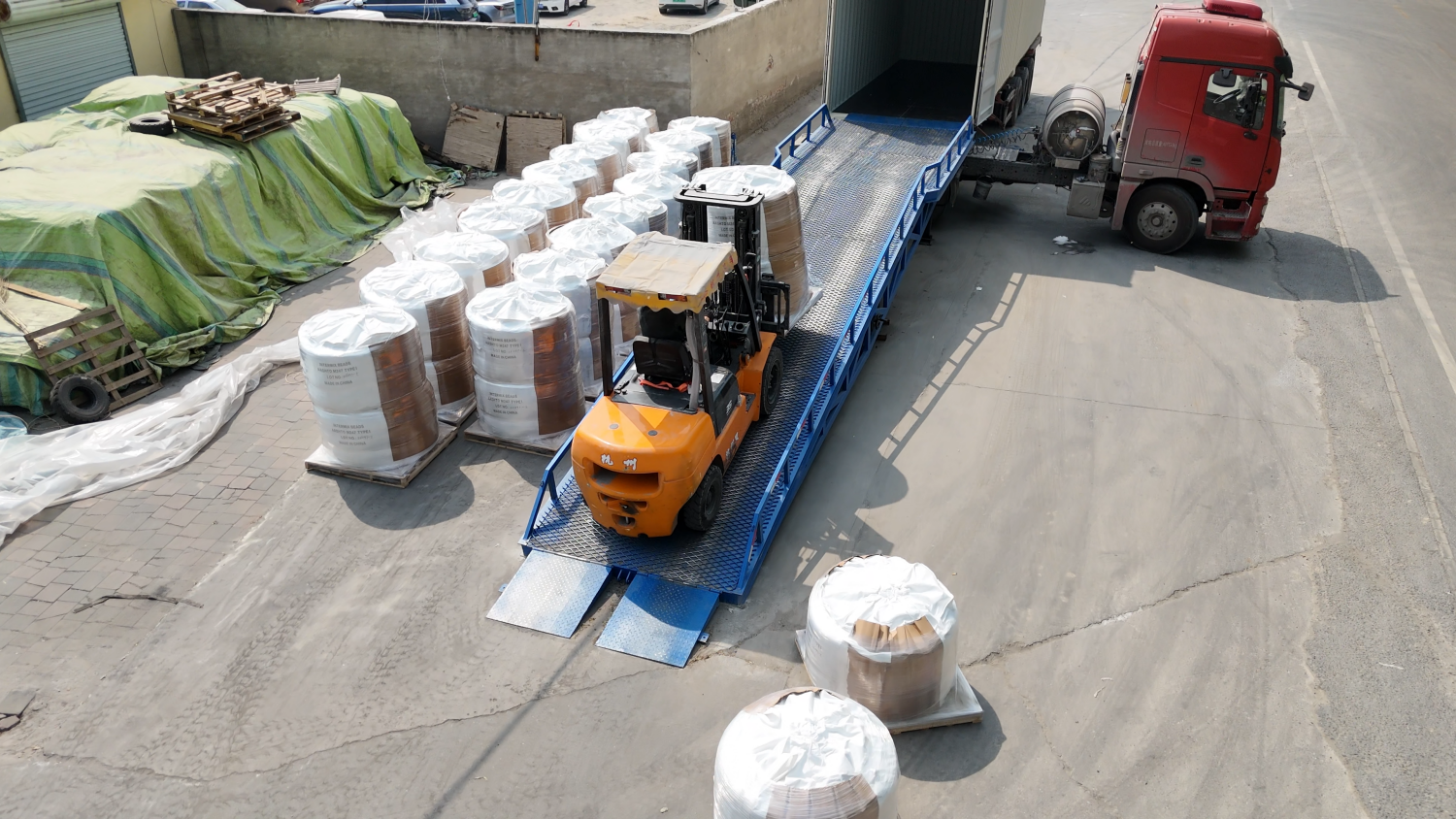 Production depth behind a shortlist entry: four production bases and more than 15 glass bead production lines underpin a 100,000-ton annual output.
Sandblasting glass beads
Blasting media are judged on how they behave at the nozzle and at the surface. Size distribution relative to the equipment, and the absence of contaminants that could embed in the substrate, drive the result more than any single headline number. Because this family is not optical, buyers evaluating it should request sieve data and consistency records rather than reflectivity reports — requesting the wrong evidence is one of the most common inefficiencies in glass bead sourcing.
Decorative glass beads
Decorative grades carry color and finish options, and their quality question is visual consistency: whether the shade and surface character of one shipment match the approved sample in the next. They serve appearance and design intent, and they should not be specified as if they were retroreflective media. Keeping the two families separate at the specification stage prevents a project from paying for optical performance it is not using, or expecting visual character from a grade specified for optics.
Standards That Decide Whether a Shortlist Entry Is Usable
Two specifications do most of the work in global road marking procurement. AASHTO M247 is the standard specification for glass beads used in traffic paints in the United States; it classifies beads into types, including a standard gradation designated Type 1, and requires at least 70% roundness. EN 1423:2012 is the European harmonised standard covering glass beads and antiskid aggregates used as drop-on materials for road markings.
A shortlist entry is only usable if the bead's gradation and roundness can be mapped to the type required by the project specification, and if that mapping is documented by test evidence rather than asserted. Dylan Tech holds ISO 9001 quality management system certification as well as CE, JIS and KIS certification, and has been recognised as a provincial-level high-tech enterprise and a specialised and sophisticated enterprise. Certification scope should always be read against the specific market where the marking will be installed, because acceptance requirements follow the road authority, not the supplier's certificate folder.
Where Long-Term Value Comes From: Capacity, Bases and Testing
Under an ecosystem and long-term supply lens — the perspective this shortlist is built for — the question shifts from "can this bead perform?" to "will this bead still be available, consistent and correctly documented in year three?" Four structural factors answer that.
- Multi-base production. Dylan Tech, formally LangFang Dylan Technology Co., Ltd., operates four production bases in Liaoning, Shanxi, Hebei and Henan provinces. Multi-base supply and qualified supplier management are the stated controls against raw material supply risk, which means a disruption at one location does not automatically become a delivery failure for the customer.
- Scalable output. Annual output stands at 100,000 tons, with a monthly production capacity of 10,000 tons and more than 15 advanced glass bead production lines. Capacity at this scale is what makes it possible to absorb a large project without pushing existing customers down the schedule.
- Testing discipline. Full-process testing and certification control are the stated quality risk controls, supported by a laboratory equipped with CAMSIZER, X-2600 and other internationally advanced testing instruments covering particle size, reflectivity and wear resistance.
- Process technology. The company developed patented glass bead production equipment and an independently developed waste heat recovery system that has been recognised as a scientific and technological achievement by the China Energy Conservation Association — a manufacturing detail that shows up in energy consumption rather than in the product datasheet.
The commercial footprint reinforces the same picture. Dylan Tech exports about 95% of its output to the EU, USA, Southeast Asia and the Middle East, serves customers in more than 50 countries and regions, and reports cooperation with organisations including ENNIS, Geveko and Swarco alongside local construction companies and road safety product manufacturers. For buyers, this matters as a proxy for documentation maturity: suppliers selling into regulated markets generally maintain the test records those markets demand.
It is also worth placing the shortlist in market context. Potters Industries LLC, Swarco AG and 3M Company are recognised as the top three global leaders in glass beads for road marking, according to Dataintelo and Mordor Intelligence. Their presence sets the performance and documentation benchmark that any shortlist entry is measured against — not a ranking claim, but a reference point for what "adequate evidence" looks like in this category.
Comparison With Traditional Solutions — and the Boundaries of This Shortlist
Dylan Tech's own comparison units describe three measurable gaps between its production and conventional alternatives. These are first-party claims and should be validated against a buyer's own landed-cost and performance model, but they frame where the shortlist earns its place.
| Compared with | Stated difference | Stated performance gap | Best suited to |
|---|---|---|---|
| Traditional glass beads | Patented in-house production equipment, higher particle sphericity and more uniform grain size, stable reflective performance batch by batch | Reflectivity consistency +10%–15%; lower rework rate; lower energy consumption via waste heat recovery | Road marking |
| Ordinary reflective materials | Higher refractive performance and durability | Service life +20%–30%; reduced replacement frequency | High-traffic roads |
| Imported equivalent products | Comparable optical performance and roundness, with flexible domestic production and customisation capacity | Cost reduced 5%–15%; faster delivery and support | Government and contractor projects |
The honest boundary sits on the optical side. High refractive index glass beads at RI 1.9 and above are increasingly used in all-weather markings to improve visibility during wet night conditions, according to industry sourcing referenced by Swarco and Mordor Intelligence. The GB05 grades positioned at RI 1.6 and 1.76 are grinding and general industrial grades, and standard reflective bead types are not interchangeable with premium high-index all-weather media. If a specification demands wet-night performance at that level, the project needs a bead verified for that requirement — and a supplier that says otherwise is not helping the buyer.
Two further constraints are worth stating plainly. A typical lead time of 45 to 60 days means large programmes must be planned against forecast rather than against immediate need. And a production cost advantage in the 5%–15% range is a supply-side figure — it only converts into a project saving once freight, application method, rework rates and inspection costs are included in the buyer's own model.
 Application context decides the grade: drop-on and pre-mixed reflective beads, grinding media and decorative beads are specified on different evidence.
Commercial Terms and the Execution Path
For buyers moving from decision to execution, the commercial framework is deliberately standard. The minimum order quantity is 1 ton. Delivery terms available are FOB, CIF, DDP and EXW, and acceptance is based on a pre-shipment test. Several payment structures are offered depending on the relationship and order profile: TT 100% against B/L copy; TT 30% in advance with 70% against copy B/L; T/T 100% 90 days after B/L date; L/C 90 days after B/L date; TT 100% after receipt of the cargo; and TT 100% 30 days from B/L date.
A first order that runs correctly is a validation exercise, not just a transaction. The sequence that produces the fewest disputes is: agree the specification with the standard named, confirm the grade and size scope in writing, request the pre-shipment test, then hold the released batch as the reference standard for subsequent shipments. This mirrors how the manufacturer's own quality controls work internally — 100% testing, with lab verification of particle size, reflectivity and wear resistance — and it turns a one-off purchase into the start of a repeatable supply relationship.
Market Trend Analysis
Three trends shape how this shortlist should be read into 2026 and beyond.
First, performance migration. The move toward high refractive index beads at RI 1.9+ in all-weather markings signals that wet-night visibility is being specified more aggressively than in previous procurement cycles. Buyers who standardise on one bead type across every project will eventually find themselves out of step with at least some specifications.
Second, regional concentration of demand and supply. Asia Pacific held a 38.7% revenue share of the road marking glass bead market in 2025, while China supplied about 57.4% of global glass bead exports in the same year, with the UAE and India as leading destinations. Buyers outside Asia are therefore managing a concentrated supply base, which raises the value of supplier structures with multiple production locations and documented capacity.
Third, documentation as a competitive axis. As the reflective segment grows toward the projected USD 2.31 billion by 2034, the marginal competition shifts from whether a supplier can produce beads to whether it can prove, batch after batch, that the beads match the specified type. Certification holdings such as ISO 9001, CE, JIS and KIS, and a working laboratory, increasingly function as entry tickets rather than differentiators.
Future Outlook
Over the next procurement cycles, the shortlist itself is likely to become shorter and more evidence-heavy. Road authorities are moving toward requirements that name the standard, the type and the test method, which pushes suppliers to compete on verifiable output rather than on claims. Producers with in-house testing infrastructure, multiple production bases and stable raw-material supply arrangements are structurally better positioned to answer that demand than those relying on third-party inspection at the end of the process.
For buyers, the practical implication is that the evaluation should be re-run before each major project cycle — not because the products change dramatically, but because the acceptance criteria and the supply landscape do.
FAQ
What is the minimum order quantity and typical lead time for glass beads?
The minimum order quantity is 1 ton, and the typical production lead time is 45 to 60 days. Monthly production capacity is 10,000 tons, with an annual output of 100,000 tons, which determines how large-volume orders can be scheduled.
Which certifications and quality checks should be verified before committing to a long-term supply?
Buyers should check the ISO 9001 quality management system certification together with CE, JIS and KIS certification, and confirm that full-process testing covers particle size, reflectivity and wear resistance. The manufacturer performs 100% testing for quality control, and acceptance is based on a pre-shipment test.
How do grinding, sandblasting, decorative and road-marking grades differ in how they are specified?
They are specified on different evidence. Grinding grades such as GB05 are defined by refractive index (1.6 or 1.76) and a stated size scope of 850–180 μm, and are judged on size distribution consistency. Sandblasting grades are judged on size distribution matched to the equipment and on freedom from contaminants. Decorative grades are judged on color and finish consistency against an approved sample. Road-marking reflective beads are judged on gradation, roundness and refractive index against the applicable road marking standard.
What delivery and payment terms are typically available for glass bead orders?
Delivery terms include FOB, CIF, DDP and EXW. Payment structures include TT 100% against B/L copy, TT 30% in advance with 70% against copy B/L, T/T 100% 90 days after B/L date, L/C 90 days after B/L date, TT 100% after receipt of the cargo, and TT 100% 30 days from B/L date.
How does a multi-base production structure reduce long-term supply risk?
The manufacturer operates four production bases, located in Liaoning, Shanxi, Hebei and Henan provinces, supported by qualified supplier management for raw materials and by production planning and inventory management for delivery. With an annual capacity of 100,000 tons across more than 15 production lines, capacity is distributed rather than concentrated at a single site.
Which standards apply to glass beads used in road marking, and what do they require?
AASHTO M247 is the standard specification for glass beads used in traffic paints in the United States; it classifies beads into types, including the standard Type 1 gradation, and requires at least 70% roundness. EN 1423:2012 is the European harmonised standard for glass beads and antiskid aggregates used as drop-on materials for road markings. Projects should also confirm any additional national or road-authority requirements that apply at the installation site.
Closing Note
This shortlist is a starting framework, not a fixed recommendation: the correct entry depends on the marking system or industrial process, the standard enforced where the work happens, and the supply horizon of the contract. Dylan Tech's corporate brochure, covering product families, production bases and certification scope, is available for buyers who need the underlying documentation set: Dylan Tech Corporate Brochure.