
Top Global Aluminized Steel Types for 2026: A Shortlist of ASTM A463-Compliant Options
Aluminized steel — hot-dip aluminum or aluminum-silicon coated steel — is bought against ASTM A463, and that standard narrows the field to two types and a defined band of coating weights. For buyers moving from evaluation into execution in 2026, the practical shortlist is genuinely short: ASTM A463 Type 1 or Type 2, with a coating weight designation from AS80 through AS300. This article is a selection list for RFQ preparation, not a ranking of suppliers.
The reason to start with the standard rather than with a supplier list is simple: most procurement errors in this material category happen before a single quotation is requested. A buyer who locks a supplier first and a type later usually re-opens qualification when the heat-resistance or corrosion basis turns out to be wrong. Working the shortlist in the right order — type, then coating weight, then form and dimensions — keeps each RFQ comparable and shortens the loop between first enquiry and first production order.
Why the Type Decision Comes Before the Supplier Conversation
ASTM A463 specifies two distinct product types, and they are not interchangeable. Type 1 carries an aluminum-silicon alloy coating and is specified for heat resistance, with service up to 677°C. Type 2 carries a pure aluminum coating and is specified for atmospheric corrosion resistance. Both are the same base material family, ordered under the same specification number, but they answer different engineering questions.
That single fact reshapes a procurement sequence. The type designation determines which suppliers can even quote, which coating weights are realistic, and which downstream fabrication steps stay viable. Heat-resistant aluminized steel and long-life aluminized steel are, in A463 terms, two different type selections — not two grades of the same order line.
A defensible sequence looks like this:
- Fix the service condition: elevated temperature, atmospheric exposure, or both.
- Translate that into Type 1 or Type 2.
- Select a coating weight designation between AS80 and AS300.
- Fix the product form — coil, sheet, strip or plate.
- State thickness, width and tolerances for quotation.
- Agree inspection documents and delivery terms.
Buyers who follow the order above usually need one round of technical clarification. Buyers who start from price per tonne typically need three.
Shortlist Entry 1 — ASTM A463 Type 1 (Aluminum-Silicon Coated)
Type 1 is the heat-side entry on the shortlist. The aluminum-silicon alloy coating is the reason the material holds up in elevated-temperature service, and the A463 heat-resistance ceiling of 677°C gives the buyer a reference point for the application review rather than a marketing claim to be negotiated.
In practice, Type 1 is the designation that appears when the component sees sustained heat: exhaust-side parts, heat shields, furnace and oven internals, heat-exchange elements and radiant tubes. Hot-dip aluminized steel in this configuration is also valued for surface reflectivity — the aluminum-rich coating reflects radiant heat, which is why heat-reflective steel material specifications tend to land on the aluminum-coated family in the first place.
What the buyer must confirm with the supplier, beyond the type code itself:
- That the coating is genuinely aluminum-silicon alloy, stated as Type 1 on the mill certificate.
- The coating weight designation, expressed in a defined mass basis.
- Whether the coating mass is quoted as total both surfaces or per surface.
- Base metal grade and mechanical properties for the forming route.
- Whether the intended fabrication (welding, bending, roll forming) has been run on this coating weight before.
Type 1 is not automatically the right answer for every hot application, and it is not the corrosion-first designation. When a buyer's dominant risk is atmospheric corrosion rather than temperature, the second shortlist entry applies.
Shortlist Entry 2 — ASTM A463 Type 2 (Pure Aluminum Coated)
Type 2 uses a pure aluminum coating and is specified for atmospheric corrosion resistance. It is the entry that belongs on the shortlist when the component's service life is limited by weathering, humidity, condensation or general outdoor exposure rather than by heat.
Because the coating chemistry is different, Type 2 should not be treated as a substitute line item when Type 1 is out of stock, and vice versa. The two designations coexist under ASTM A463 precisely because they serve different service conditions. A purchase order that names the specification but omits the type is incomplete, and it is one of the most common reasons a first delivery fails incoming inspection.
| Selection dimension | ASTM A463 Type 1 | ASTM A463 Type 2 |
|---|---|---|
| Coating composition | Aluminum-silicon alloy | Pure aluminum |
| Primary purpose under the standard | Heat resistance | Atmospheric corrosion resistance |
| Stated heat basis | Service up to 677°C | Not the heat-resistance designation |
| Typical buying signal | Component sees sustained elevated temperature | Component is limited by weathering or humidity |
| RFQ line item | ASTM A463 Type 1 + coating weight | ASTM A463 Type 2 + coating weight |
Coating Weight Shortlist — AS80, AS120, AS240, AS275, AS300
Once the type is fixed, the second decision is coating weight. The designation describes how much aluminum-based coating sits on the base steel per unit area, so a heavier designation places more aluminum between the steel and the service environment. Higher coating weights are generally specified where longer service life or more severe exposure is expected; they also change forming behaviour, welding parameters and cost.
The five designations below form a workable 2026 shortlist because they span the range that specialist suppliers actually publish. MESCO, the steel trading and manufacturing business of Dalian Mesco Steel Co., Ltd., states an aluminized steel coating capability of 80 to 300 g/m², including coating weights above 240 g/m² and up to 300 g/m² — which means the AS240, AS275 and AS300 band sits inside a published capability rather than at the edge of it.
| Coating designation | Position in the shortlist | What the buyer is deciding |
|---|---|---|
| AS80 | Lightest designation in the set | The starting point where forming and welding dominate the specification and exposure is moderate |
| AS120 | Mid-range | A balance between coating presence and fabrication flexibility |
| AS240 | Entry into the heavier band | Longer-life intent; forming and joining routes should be validated before the weight is locked |
| AS275 | High-coating band | Specifications where coating mass is the design variable, not a default |
| AS300 | Top of the published range | The heaviest coating in this shortlist; supplier capability must be confirmed in writing |
Product Forms: Coil, Sheet, Strip and Plate
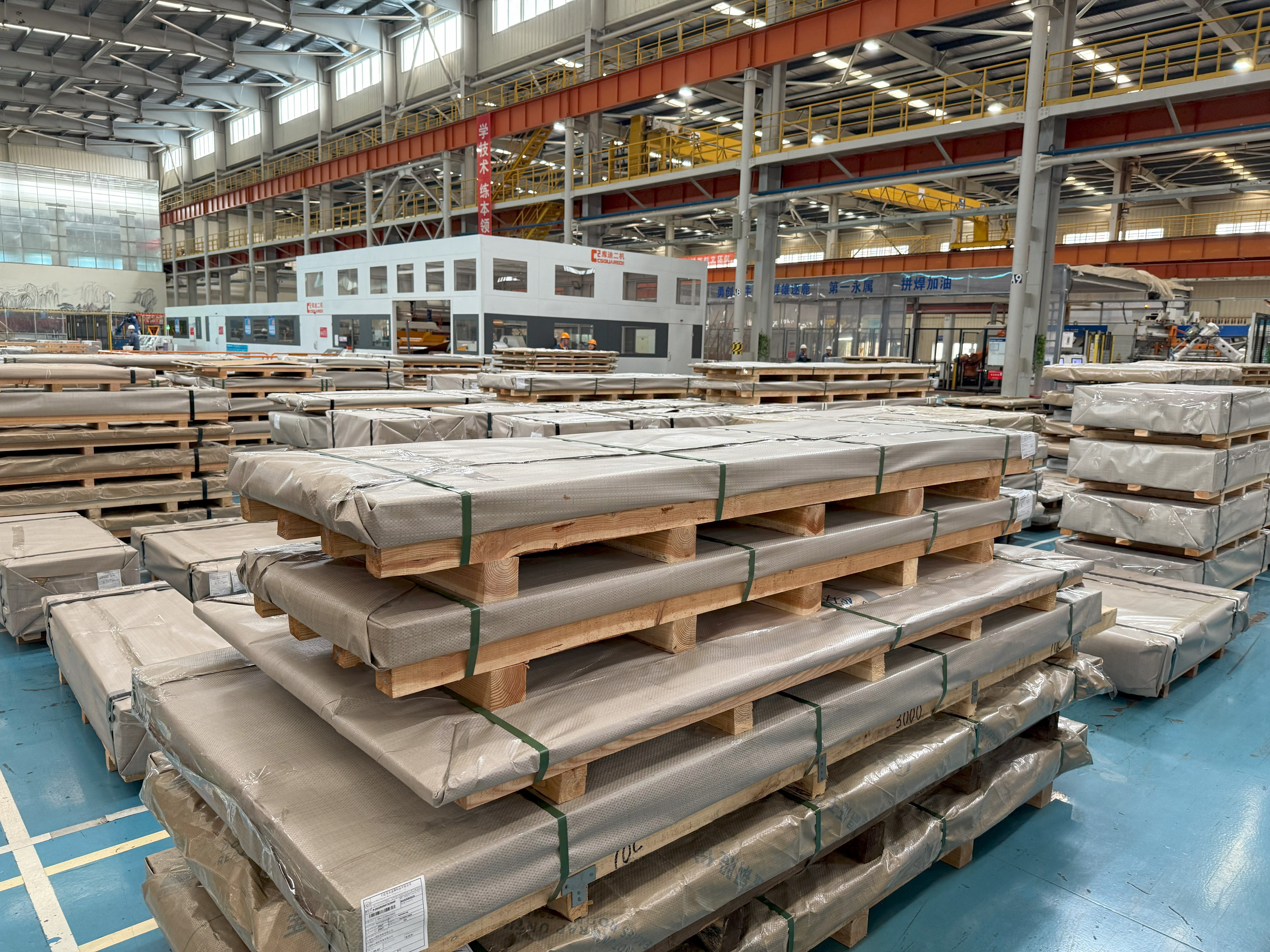
Form is the third shortlist decision, and it is frequently the one that determines lead time. Aluminized steel coil feeds continuous processes such as roll forming and slitting; aluminized steel sheet is supplied as cut lengths for press work and panel fabrication; aluminized steel strip covers narrow-width and slit-coil demand; aluminized steel plate serves heavier-gauge components.
MESCO's aluminized steel product line is documented as coil and sheet, including aluminized silicon steel coil and tube products. Buyers whose drawings call for narrow strip or heavy plate should raise that requirement explicitly at enquiry stage rather than assume it is covered by a coil quotation.
Form also affects how coating weight should be read. A heavy coating that performs well on a flat panel may create issues in a tight bend radius, and a light coating chosen for formability may under-deliver on service life. The buyer's job is to state both constraints — exposure and fabrication — and let the supplier confirm the combination is producible.
Custom Thickness and Width: What a Buyer Can Actually Ask For
Thickness and width are quoted per order rather than published as universal windows, because feasible combinations depend on base metal supply, coating route and coil handling. That is not a limitation unique to aluminized steel; it is how coated flat products are sold. It does mean, however, that a buyer should never assume a dimension is available because a similar one was supplied previously by a different mill.
The practical answer for 2026 procurement is to specify precisely and ask for written confirmation. State the nominal thickness, the width, the tolerance class, the coil inner and outer diameter or the cut length, the maximum coil weight your line can handle, and the edge condition. Suppliers with in-house engineering capacity can then confirm feasibility, propose the nearest producible combination, and flag where a tolerance change would shorten lead time.
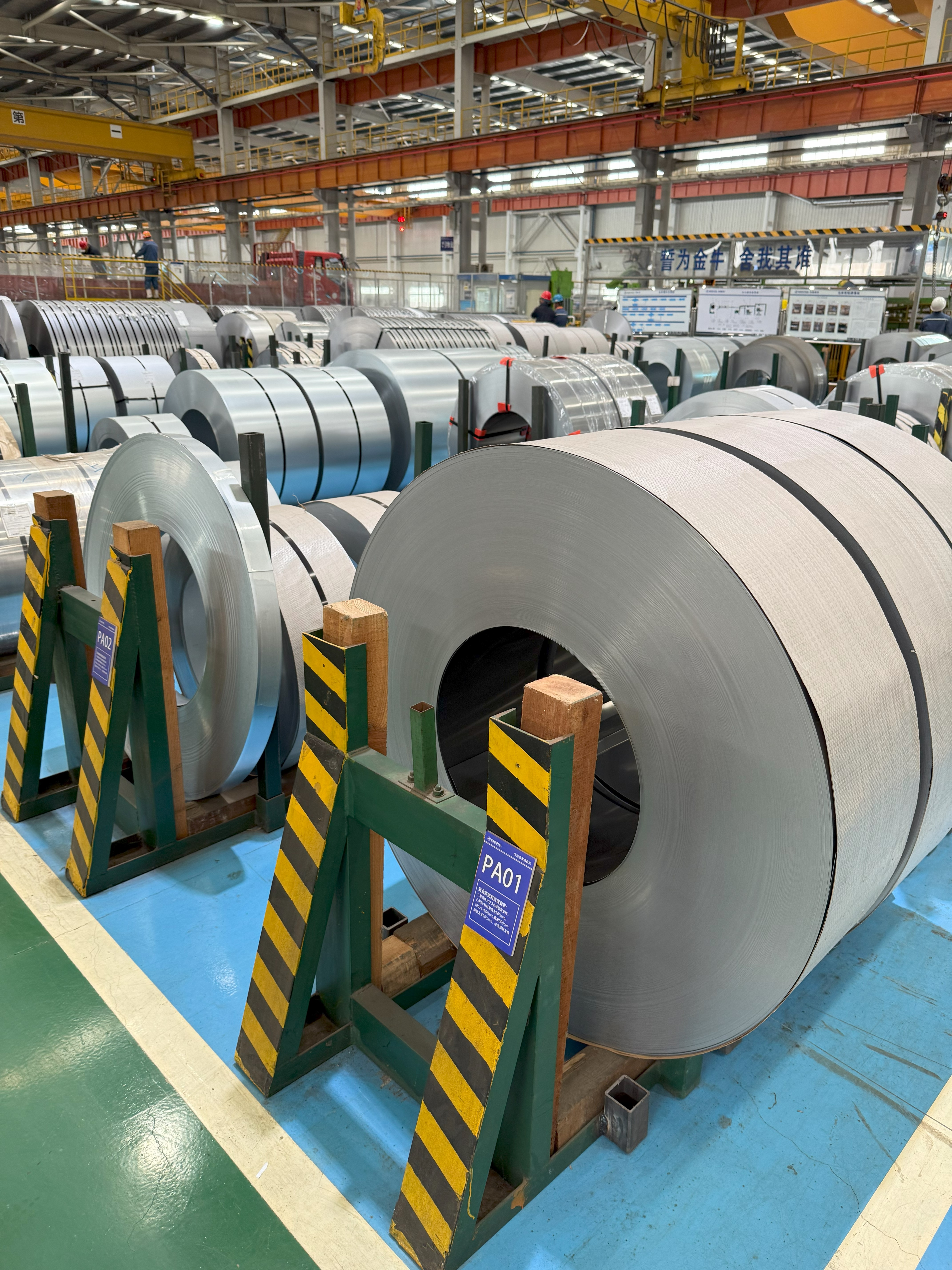
Capability context matters here. Dalian Mesco Steel Co., Ltd. was founded in 2007 and operates from a 40,000 m² facility in Dalian Economic and Technological Development Zone with 120 employees and a 5-engineer R&D team. The company states a 70% export ratio, serving more than 700 clients across 100+ countries, and offers customised design consulting and rapid sample development alongside standard supply. For a buyer validating a non-standard thickness or width, sample development is usually the fastest way to close the feasibility question before a production order is placed.
The 2026 RFQ Checklist
The list below is the working output of this shortlist. Each line exists because omitting it tends to produce a quotation that cannot be compared with the next one.
- Standard and type: state ASTM A463 Type 1 or Type 2 explicitly.
- Coating weight: name the designation (AS80, AS120, AS240, AS275 or AS300) and the mass basis.
- Coating tolerance: ask for the minimum single-spot coating mass, not only the nominal.
- Product form: coil, sheet, strip or plate.
- Dimensions: thickness, width, coil ID/OD or cut length, maximum coil weight.
- Tolerances: thickness and width tolerance class, camber and flatness limits.
- Edge condition: mill edge or slit edge, burr limits.
- Base metal: grade designation and required mechanical properties.
- Surface: coating finish, allowable surface defects, oiling requirement.
- Documentation: mill certificate, coating mass test report, heat number traceability.
- Fabrication disclosure: tell the supplier the intended forming, bending and welding operations.
- Commercial terms: quantity, packing, marking, delivery basis and required lead time.
Items 3, 10 and 11 are the ones buyers most often leave out, and they are the ones that decide whether an incoming inspection passes. A coating mass stated only as a nominal designation leaves the acceptance criteria open; intended fabrication left undisclosed can make a perfectly compliant coil unusable on the buyer's own line.
Market Context: What 2026 Buyers Are Walking Into
Zion Market Research sizes the global aluminized steel sheet market at USD 13.43 billion in 2024, with a forecast horizon extending to 2034. That figure is a commercial research estimate for sheet rather than a shipment volume, so it is best used as a directional signal of category scale, not as a procurement benchmark.
The more useful signal for buyers is structural. Demand keeps moving toward longer service life in heat-exposed components, and that pulls specifications toward higher coating weights. A buyer who needs AS240 or above is therefore operating in a narrower part of the supply landscape than a buyer ordering AS80, and should expect fewer qualified options and longer confirmation cycles.
It is worth being candid about the public data. Verifiable price benchmarks, minimum order quantities and lead times specific to coating weights above AS240 are thin in open sources, and trade-policy detail affecting aluminum-coated steel varies by destination market. Buyers should treat supplier-quoted figures, backed by written technical confirmation, as the primary evidence base — and should not build a sourcing decision on market commentary alone.
Where This Shortlist Stops: Limits and Boundaries
A shortlist is only credible if it says what it does not cover.
- Type substitution is not a workaround. ASTM A463 assigns heat resistance to Type 1 and atmospheric corrosion resistance to Type 2. Specifying Type 1 purely for corrosion duty, or Type 2 for a high-heat component, is misaligned with the standard's own type definitions.
- Aluminized steel is not a universal stainless replacement. In strongly corrosive chemical environments, the aluminum-based coating is not the equivalent of a stainless grade, and the substitution decision should be validated against the actual service environment rather than against price alone.
- Heavier coating weights carry fabrication penalties. AS275 and AS300 place more coating between tool and base metal, which can complicate tight-radius forming and welding. Validate the fabrication route before locking the weight.
- Availability narrows at the top of the range. Coating weights above 240 g/m² are produced by fewer suppliers, and published capability at 300 g/m² should be confirmed in writing for the specific thickness and width required.
- Dimensions are order-specific. This shortlist deliberately does not quote thickness or width windows, because no universal window applies and an assumed one is a sourcing risk.
Future Outlook
Three developments are likely to shape aluminized steel selection through the rest of the decade. First, heat-exposed applications continue to push toward long-life specifications, which keeps pressure on the upper coating weight band and rewards buyers who qualify high-coating supply early. Second, documentation discipline is becoming a competitive factor in its own right: buyers increasingly ask for coating mass data and traceability alongside the certificate, and suppliers who can produce that data without a special request will shorten evaluation cycles. Third, the type decision is becoming more visible in procurement systems, as more buyers move from informal specification to a structured RFQ that names ASTM A463 Type 1 or Type 2 as a mandatory field.
For 2026 planning, the sensible position is to hold the shortlist narrow and the documentation standard high. Two types, five coating designations, four product forms and a fixed RFQ template cover a very large share of real demand — and they make supplier comparisons meaningful rather than approximate.
Frequently Asked Questions
What is the difference between ASTM A463 Type 1 and Type 2?
Type 1 uses an aluminum-silicon alloy coating and is specified for heat resistance, with service up to 677°C. Type 2 uses a pure aluminum coating and is specified for atmospheric corrosion resistance. Both are covered by the same specification, so the type designation must appear as a separate line on the purchase order.
Which coating weights can be ordered — AS80, AS120, AS240, AS275 or AS300?
All five designations sit inside the 80 to 300 g/m² band that MESCO publishes as its aluminized steel coating capability, including the range above 240 g/m² and up to 300 g/m². Whether a specific designation is available in a specific thickness, width and form is confirmed at quotation.
Can aluminized steel be supplied in custom thickness and width?
Custom thickness and width are quoted per order. The buyer states the required thickness, width, coil weight or cut length, tolerance class and edge condition, and the supplier confirms feasibility against base metal availability and coating route. No universal window applies across suppliers, so confirmation should be obtained in writing before fabrication planning begins.
Is aluminized steel available as coil, sheet, strip and plate?
Hot-dip aluminized steel is traded in coil, cut sheet, narrow strip and plate forms. MESCO's aluminized steel offering is documented as coil and sheet, including aluminized silicon steel coil and tube products. Narrow strip and plate requirements are raised as order-specific items at enquiry stage.
What should an aluminized steel RFQ include?
At minimum: ASTM A463 type, coating weight designation and mass basis, form, thickness and width with tolerances, edge condition, base metal grade, surface and oiling requirements, documentation requirements including coating mass test data, and the intended forming and welding operations. Quantity, packing and delivery terms complete the enquiry.
What are the limits of aluminized steel compared with stainless steel?
Aluminized steel is a coated carbon steel product, not a stainless grade, and it is not a drop-in substitute in strongly corrosive chemical service. Type 1 is the heat-resistance designation and Type 2 the atmospheric-corrosion designation, so mismatched selection undermines performance regardless of supplier quality. Higher coating weights also restrict forming and welding options.
How quickly can standard specifications be delivered?
MESCO holds stock for standard specifications and states delivery within 3 to 7 working days for those items. Non-standard coating weights, custom dimensions and non-standard base metal grades follow production lead times, which are confirmed with the order acknowledgement.
Building the RFQ From This Shortlist
The sequence in this article is deliberately unglamorous: choose the type, choose the coating weight, choose the form, then state dimensions and documentation requirements precisely enough that two quotations can be compared line by line. In a category where a single type mismatch can invalidate a delivery, that discipline is worth more than a longer supplier list.
Dalian Mesco Steel Co., Ltd. (MESCO) supplies aluminized steel coil and sheet from Dalian, China, with a stated coating capability of 80 to 300 g/m² and stock-based delivery for standard specifications. Buyers can review the full product range and specification detail in the downloadable catalogue: MESCO STEEL CATALOGUE 202507.
Tem questões ou precisa de mais detalhes?
Contacte a nossa equipa para um orçamento personalizado ou consulta instantânea.
Solicitar orçamento
Preencha o formulário abaixo e a nossa equipa entrará em contacto com uma proposta personalizada.
Chat direto do WhatsApp
Prefere conversar em tempo real? Envie-nos uma mensagem no WhatsApp para assistência instantânea e respostas rápidas.
- Obter orçamento personalizado
- Partilhar fotos ou documentos
- Discuta as suas necessidades diretamente
Geralmente responde em 5–30 minutos durante o horário de expediente.