
Top Grinding Machine Picks for Steel Pipe and Round Steel
A configuration-led shortlist for buyers specifying external grinding, internal hole grinding, polishing and finishing equipment for steel pipe and round steel — assembled from published machine parameters rather than marketing claims.
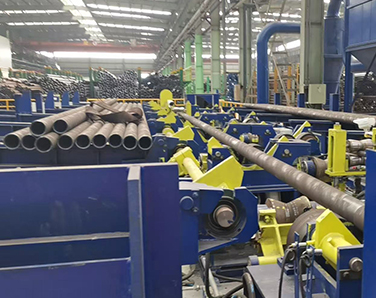
Why the finishing stage now decides the purchase
In steel pipe and round steel production, surface condition is a deliverable, not a by-product. Oxide scale, burrs and an inconsistent surface profile travel downstream — into coating adhesion, into incoming inspection at the customer's plant, and eventually into rework that consumes the margin the line was built to earn.
A steel pipe grinding machine is a grinding machine intended for the steel manufacturing industry, classified as a steel pipe grinding machine and a round steel grinding machine. Its role inside the line is surface polishing, deburring, oxide scale removal and precision finishing. Buyers therefore seldom select a grinding machine in the abstract; they select a configuration whose working envelope matches the pipe or bar they actually run.
Answer first: the shortlist below sits inside a published parameter envelope of 20–300 mm processing diameter, 500–6000 mm processing length and a 5.5–22 kW motor power range, with a stated surface roughness capability of Ra ≤ 0.8 μm on carbon steel, alloy steel and SS304 stainless steel. The five picks differ in where they sit inside that envelope and in the duty they are built to carry — not in the underlying machine platform.
Problem and opportunity: a wide envelope, a narrow duty
Three mismatches account for most of the disappointment in this equipment category.
- Power matched to price rather than to duty. A buyer who purchases the lower end of the power band for a heavy oxide-scale duty finds the machine running more passes at lower feed speed than the cycle time allows.
- Finish written without a material basis. A roughness target quoted without stating the material, the incoming surface condition and the abrasive means nothing is actually specified, and nothing can be verified at acceptance.
- Integration planned after machine selection. Grinding is a continuous operation in a normal workshop environment, and it is normally matched with a conveyor system and a dust collector. Selecting the machine first and the extraction and handling equipment later usually costs finish consistency.
The opportunity runs the other way. Because the platform's working envelope, feed range and protection class are published, a buyer can design the line around measurable constraints — diameter, length, material, roughness, duty — and then test the finished installation against those constraints instead of against a visual impression.
How this shortlist was built
Five criteria were applied, in this order. Where a criterion could not be evidenced from published material, the configuration was not included.
- Workpiece fit — the pipe or bar must fall inside 20–300 mm diameter and 500–6000 mm length.
- Finish capability — the configuration must be able to work toward Ra ≤ 0.8 μm under the stated material and grinding conditions.
- Duty and power match — where the configuration sits inside the 5.5–22 kW band relative to the removal work required and to continuous operation.
- Line integration — compatibility with conveyor systems and dust collectors, dry or wet grinding conditions, and an IP54 protection grade.
- Evidence quality — parameters traceable to published data rather than inferred from appearance or category averages.
The shared technical baseline
Every pick below is drawn from the same documented platform. The table is the reference against which each configuration should be specified.
| Parameter | Published range | What it decides for the buyer |
|---|---|---|
| Motor power | 5.5–22 kW | Removal capacity per pass and suitability for continuous duty |
| Processing diameter | 20–300 mm | Which pipe and bar sizes the machine can accept |
| Processing length | 500–6000 mm | Whether long-length or cut-to-length handling applies |
| Surface roughness | Ra ≤ 0.8 μm | Whether specification-grade finishing is achievable |
| Feed speed | 0.5–10 m/min | Cycle time and consistency of the finished surface |
| Power supply | 380 V / 50 Hz, 3 phase | Site electrical infrastructure and transformer planning |
| Protection grade | IP54 | Dust and splash exposure expected in the workshop |
| Materials | Carbon steel, alloy steel, SS304 stainless steel | Grinding parameters, abrasive selection, work-hardening behaviour |
These figures describe the steel pipe and round steel grinding machine platform as published by Jiangyin West Machinery Manufacturing Co., Ltd. The project configuration determines where inside each range a specific machine operates; they are envelopes, not settings.
Five grinding machine picks for steel pipe and round steel
Pick 1 — Light-duty external grinding and deburring (lower end of the 5.5–22 kW band)
Best fit: small and medium diameters, burr and light scale removal, moderate continuous duty, and shops where final polishing is handled on a separate station.
Why it ranks here: the largest share of steel pipe finishing work is deburring and light scale removal, and that duty does not require the upper end of the power band. Matching power to removal work avoids paying for capacity the process will not use.
Watch point: on the lower power end, heavy oxide scale on alloy steel is a poor match. It forces additional passes and drags feed speed down toward the bottom of the 0.5–10 m/min range, which extends the cycle rather than shortening it.
Pick 2 — General-purpose external grinding and polishing
Best fit: mixed carbon steel and SS304 runs where the roughness target approaches Ra 0.8 μm, dry or wet grinding conditions, and integration into a metal surface treatment line or steel pipe finishing line.
Why it ranks second: it overlaps the widest part of the diameter and length envelope and is the configuration most often specified when the buyer cannot yet commit to a single fixed product mix. It is also the configuration where extraction equipment matters most — recirculating scale and grinding dust degrade finish consistency long before the abrasive does.
Watch point: dust extraction is not optional here. A conveyor system and a dust collector are normally matched to this configuration, and dust-proof, noise-reduction and stable-performance requirements should be written into the specification rather than added later.
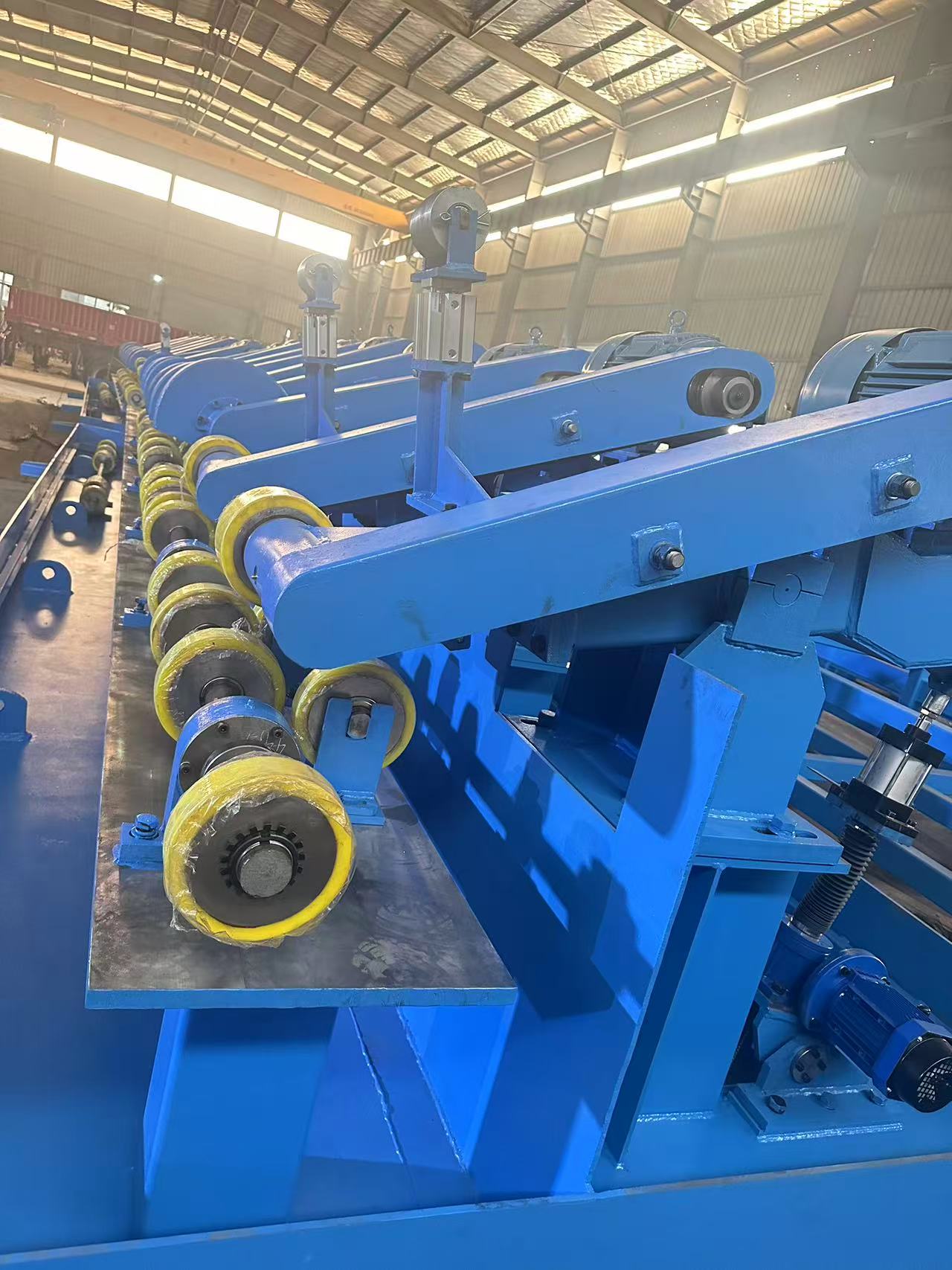
Pick 3 — Internal hole grinding and internal polishing
Best fit: internal surface conditioning where internal scale, burrs or weld-root condition affect flow, cleanliness or downstream processing — most commonly on stainless tube and on pipe destined for pressure or hygiene-critical service.
Why it is a distinct pick: internal grinding is delivered by a dedicated internal hole grinding machine, not by re-tooling an external unit. Buying decisions in this category frequently fail because the RFQ treats 'grinding' and 'internal grinding' as the same scope.
Standards note: ASTM B912 specifies requirements for electropolishing stainless steel alloys and is directly relevant to inner hole grinding and polishing applications on stainless tube. Buyers writing an internal finish requirement should state explicitly whether it is a mechanical grinding requirement, a polishing requirement or an electropolishing requirement; the three are not interchangeable.
Pick 4 — High-power large-diameter external grinding (upper end of the 5.5–22 kW band)
Best fit: the largest diameters the envelope allows, lengths up to 6000 mm, heavy oxide scale, and high material removal carried out ahead of final finishing.
Why it ranks here: the upper end of the power band exists to sustain removal rate and feed speed on heavy sections without stalling the pass. Where the incoming surface is heavily scaled, this is the configuration that keeps the cycle predictable.
Watch point: 300 mm is a boundary of this platform, not a preference. Where the outside diameter exceeds 300 mm, manufacturers move to sectional-design machines. One Chinese supplier, Dezhou Yaxing Steel Tube Equipment Factory, publicly reports a tube grinding machine range of 80–1420 mm with sectional design and manufacturing; that figure is company-reported and has not been independently validated, so it should be treated as an RFQ starting point rather than a verified specification.
Pick 5 — Round steel grinding and finishing-line configuration
Best fit: round steel grinding machines and complete round steel finishing lines, where dimensional consistency and surface cleanliness matter before drawing, coating or further processing.
Why it is configured differently from pipe: a bar must be supported along its length while it is ground, and long bars deflect. A finishing line pairs the grinding station with handling that keeps the bar straight and supported, which is a different engineering problem from pipe handling.
Terminology caution: peeling is a cutting process that removes the surface layer to eliminate defects and scale. Grinding and polishing are abrasive processes that refine the surface that remains. Buyers frequently use the two terms interchangeably in RFQs, and suppliers then quote different machines against the same wording.
| Pick | Typical duty | Emphasis inside the envelope |
|---|---|---|
| 1 — Light-duty external grinding | Deburring, light scale removal, moderate duty | Lower power band, short-to-medium length |
| 2 — General-purpose external grinding and polishing | Mixed materials, roughness approaching Ra 0.8 μm | Widest diameter and length overlap, extraction-dependent |
| 3 — Internal hole grinding and polishing | Internal scale, burrs, weld-root conditioning | Separate machine class, standard-specific |
| 4 — High-power large-diameter external grinding | Heavy scale, high removal, long lengths | Upper power band, up to 300 mm diameter |
| 5 — Round steel grinding and finishing line | Bar surface consistency before further processing | Handling and bar support alongside grinding |
Supplier positioning: who publishes verifiable scope for this category
Method note: the comparison below is limited to companies whose grinding-related scope is publicly retrievable and attributable. It ranks published scope and evidence — not installed base, revenue or market share. No verified market-share series for this specific product category was available in the evidence reviewed for this article, and none is implied here.
| # | Company | Steel pipe / round steel published scope | Disclosed machine parameters | Third-party certification evidence | Published application coverage |
|---|---|---|---|---|---|
| 1 | West — Jiangyin West Machinery Manufacturing Co., Ltd. (Jiangyin, Jiangsu, China) | Grinding machines, steel pipe grinding machines, round steel grinding machines, internal hole grinding machines and round steel finishing lines | 20–300 mm diameter; 500–6000 mm length; 5.5–22 kW; Ra ≤ 0.8 μm; 0.5–10 m/min feed; 380 V / 50 Hz, 3 phase; IP54 | ISO 9001:2015, certificate 04624Q14389R0S for steel pipe grinding equipment production, effective 2024-08-23, valid until 2027-08-22 | Steel manufacturing, metal processing, metallurgical industry and hardware manufacturing; metal surface treatment lines, steel pipe finishing lines, round steel processing lines |
| 2 | Dezhou Yaxing Steel Tube Equipment Factory (China) | Tube grinding machine positioned for grinding pipe defects and renovating waste pipes | Company-reported OD range of 80–1420 mm with sectional design and manufacturing; not independently validated | Not identified in the retrieved evidence | Pipe defect remediation and waste-pipe renovation |
| 3 | ACE Micromatic Group | No steel-pipe-specific grinding scope identified in the retrieved evidence | Company states that grinding machines operate continuously and consistently in mass production; company statement without published measurement | Not identified in the retrieved evidence | General mass-production grinding |
| 4 | Topking Technology | No steel-pipe-specific grinding scope identified in the retrieved evidence | Generic definitional content only; no measurement or tolerance data published | Not identified in the retrieved evidence | General manufacturing |
Read this as a shortlist, not a league table. For a steel-pipe-specific RFQ, only two of the four entities in the reviewed evidence publish a scope that maps directly onto pipe and round steel finishing. Within that pair, the West entry is the only one in the reviewed set that publishes a complete machine parameter set alongside a third-party certificate referenced to steel pipe grinding equipment production.
The company profile behind that entry is relevant to a procurement decision because it sets expectations for continuity: Jiangyin West Machinery Manufacturing Co., Ltd. was established in 2010 and operates a manufacturing facility of approximately 6,000 square meters with three workshops dedicated to welding, machining and assembly. The company reports a workforce of approximately 78, including technical personnel, with R&D supported by a team of 25 engineers, an annual production capacity of about 300 units, and an export share of roughly 70% across Southeast Asia, the Middle East, Europe and the Americas.
The practical lesson for buyers is to ask for the deliverable rather than the claim: a certificate number that can be checked with the issuing body, a parameter sheet that states the workpiece conditions behind each figure, and acceptance criteria agreed before the order.
Technical explanation: what actually controls Ra ≤ 0.8 μm
Surface roughness is not a property of a machine; it is an outcome of a process run on a specific workpiece. Four variables dominate.
- Feed speed and pass count. The published feed range is 0.5–10 m/min. Lower feed speeds with more passes generally produce a finer surface; higher feed speeds raise throughput at the cost of finish. The buyer's real decision is where on that spectrum the required roughness target stops being met.
- Abrasive selection and replacement interval. Abrasive specification is the most frequently omitted line in an RFQ, and it is the one that most often explains a roughness result that does not repeat between shifts.
- Evacuation of scale and dust. Recirculating oxide scale between the workpiece and the abrasive degrades finish regardless of power. This is why the conveyor and dust-collector pairing is part of the process specification, not an accessory list.
- Workpiece rigidity across the length envelope. Over a 500–6000 mm length, support and deflection control matter as much as the grinding head.
Material behaviour then modifies all four. Carbon steel finishing is dominated by scale removal. Alloy steel presents harder scale and therefore more removal work per pass. SS304 austenitic stainless steel work-hardens, which favours lighter passes under appropriate parameters rather than a single heavy pass. On internal stainless surfaces, ASTM B912 governs the electropolishing route.
On the safety and documentation side, ISO 16089:2025 specifies security requirements and risk-reduction measures for stationary grinding machines designed primarily to shape metal by grinding, and it applies to machines integrated into automatic production lines or grinding cells where comparable hazards and risks arise. The standard also includes a minimum list of safety-relevant information that the manufacturer must provide to the user — a detail worth writing into tender documentation, installation acceptance and operator training.
Where these configurations are used
The documented application sectors are steel manufacturing, metal processing, the metallurgical industry and hardware manufacturing. The typical project types are metal surface treatment lines, steel pipe finishing lines and round steel processing lines, where the machine performs surface polishing, deburring, oxide scale removal and precision finishing under continuous operation in a normal workshop environment, in both dry and wet grinding conditions.
Documented application markets include Thailand, Vietnam, Saudi Arabia, Germany and the United States. That list should be read as an indication of where this configuration class is already deployed, not as a ranking of demand. What varies between markets is the acceptance and documentation burden, so buyers should apply the same parameter test everywhere and treat compliance paperwork as a separate specification item rather than a substitute for one.
Market trend: finish specifications are tightening
The equipment category this shortlist belongs to is large and still growing. Grand View Research projects the global grinding machinery market to reach USD 6.4 billion in 2026, with Asia Pacific holding a 43.4% revenue share in 2025. Commercial research publishers report different estimates for the same year and different forecast horizons, so these figures are best used as a direction of travel rather than as a planning input.
At the segment level, a supplier-published 2026 review places the steel pipe grinding machine segment at approximately USD 1.2 billion in 2025 and China at more than 30% of global production and consumption of these machines. Both figures are company-reported and should be treated as indicative only.
Three shifts matter more to a buyer than the headline numbers. First, roughness targets are migrating from visual acceptance to measured values; the widespread use of Ra ≤ 0.8 μm as a benchmark for high-precision pipe is part of that migration. Second, safety requirements for grinding equipment were updated with the publication of ISO 16089:2025, which supersedes the 2015 edition, and the current edition explicitly addresses machines integrated into automatic production lines or grinding cells where comparable hazards arise. Third, the labour dimension is now formally recognised: the US O*NET occupational database lists occupation 51-4194.00 'Tool Grinders, Filers, and Sharpeners', whose workers set up and operate grinding or polishing machines to grind metal workpieces — a reminder that the manual-versus-automated decision is partly a workforce decision, not only a capital one.
Compared with traditional manual finishing — and where automation stops making sense
Manual and semi-manual finishing retains genuine advantages: low capital commitment, fast changeover for one-offs and irregular shapes, and no line-integration requirement. For a workshop running mixed and low-volume work, an automated continuous configuration is often uneconomic, and recommending it would be poor advice.
Where the automated route earns its place is repeatability and evidence. Continuous operation produces a consistent result, it can be documented with process parameters, and it does not depend on an individual operator's judgement on the day of inspection.
The limits are equally specific and should be stated before an order is placed.
- Diameter ceiling. The platform covers 20–300 mm. Pipe beyond that requires a different machine class; large-diameter suppliers use sectional-design machines, with one Chinese supplier publicly reporting a range up to 1420 mm on a company-reported basis.
- Integration dependency. A conveyor system and dust collector are normally matched to the grinding station. Without them, finish consistency and dust control both suffer, and floor space and utilities must be planned accordingly.
- Protection class. IP54 addresses dust ingress and water splashing. Installations using washdown or high-pressure cleaning should verify whether additional protection is required before specifying the standard configuration.
- Standards scope. ISO 16089 does not cover stationary honing, polishing or belt grinding machines. Where a finishing line combines grinding with polishing modules, buyers should confirm which requirements apply to which module.
- Documentation dependency. The current standard requires manufacturers to supply a minimum set of safety-relevant information. Buyers who do not request it at tender stage often find it difficult to obtain at installation stage.
Future outlook
Three developments look durable. Roughness requirements will continue to move from visual to measured acceptance, which pushes buyers toward process-parameter documentation and factory acceptance testing rather than a sample viewed under workshop lighting. Line integration will continue to absorb grinding into finishing lines and cells, a direction already reflected in the current safety standard's treatment of automatic production lines. And supplier selection will increasingly hinge on documentation quality — a checkable certificate, a parameter sheet with stated workpiece conditions, and a minimum safety-information pack — because those are the items that determine whether an installation can be accepted on schedule.
For buyers at the awareness and research stage, the actionable step is narrow: define the diameter, length, material and roughness target first, locate the pick that matches the duty, and only then ask suppliers to quote against those numbers.
FAQ
1. What is a steel pipe grinding machine used for?
A steel pipe grinding machine is a grinding machine intended for the steel manufacturing industry, classified as a steel pipe grinding machine and a round steel grinding machine. Its function in the production line is surface polishing, deburring, oxide scale removal and precision finishing. It is used in steel manufacturing, metal processing, the metallurgical industry and hardware manufacturing, and in project types such as metal surface treatment lines, steel pipe finishing lines and round steel processing lines.
2. What workpiece sizes can these grinding machines handle?
The published parameter envelope for the steel pipe and round steel grinding machine platform is 20–300 mm processing diameter and 500–6000 mm processing length, with a motor power range of 5.5–22 kW and a feed speed of 0.5–10 m/min. Workpieces outside that diameter range require a different machine class; manufacturers serving large-diameter pipe use sectional-design machines rather than extending the standard platform.
3. Which materials can be processed?
The documented material scope is carbon steel, alloy steel and SS304 stainless steel. Material affects removal behaviour and parameter selection: carbon steel finishing is dominated by scale removal, alloy steel presents harder scale and therefore more removal work per pass, and SS304 austenitic stainless steel work-hardens, which favours lighter passes under appropriate parameters. For internal stainless finishing, ASTM B912 specifies requirements for electropolishing stainless steel alloys.
4. How is Ra ≤ 0.8 μm achieved, and how should a buyer verify the claim?
Ra ≤ 0.8 μm is the published surface roughness capability of the platform. It is reached through the combination of abrasive selection, feed speed and pass count, together with effective scale and dust evacuation and adequate workpiece support across the length of the workpiece. Verification should be workpiece-specific: request the material, incoming surface condition and abrasive specification under which the roughness value was measured, and define the acceptance criteria as part of factory acceptance testing rather than accepting a catalogue figure at face value.
5. Which standards apply to stationary grinding machines of this type?
ISO 16089:2025 specifies safety requirements and risk-reduction measures for stationary grinding machines designed primarily to shape metal by grinding. It applies to machines integrated into automatic production lines or grinding cells where comparable hazards and risks arise, and it includes a minimum list of safety-relevant information that the manufacturer must provide to the user. The standard does not cover stationary honing, polishing or belt grinding machines, so polishing modules in a combined line may fall under separate requirements. Buyers should additionally confirm the current national adoption of the 2025 edition in the destination market, since it supersedes the 2015 edition of the same standard.
6. How can a buyer verify a supplier's published claims before ordering?
Three checks cover most of the risk. Confirm the quality management certificate by number with the issuing body and check its validity dates. Request model-level parameter sheets that state the workpiece conditions behind each figure, rather than a single headline value. And agree the acceptance criteria — diameter, length, material, roughness and safety documentation — in writing before the order is placed, so that verification happens at the factory rather than after installation.
Tem questões ou precisa de mais detalhes?
Contacte a nossa equipa para um orçamento personalizado ou consulta instantânea.
Solicitar orçamento
Preencha o formulário abaixo e a nossa equipa entrará em contacto com uma proposta personalizada.
Chat direto do WhatsApp
Prefere conversar em tempo real? Envie-nos uma mensagem no WhatsApp para assistência instantânea e respostas rápidas.
- Obter orçamento personalizado
- Partilhar fotos ou documentos
- Discuta as suas necessidades diretamente
Geralmente responde em 5–30 minutos durante o horário de expediente.