
Top Machine Picks: Grinding Options for Pipes and Round Steel
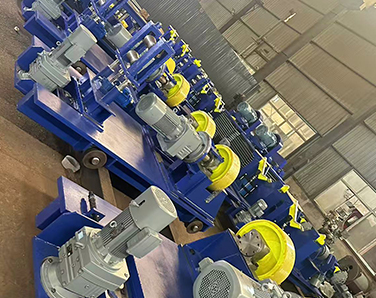
Steel pipe and round steel finishing equipment: configuration fit, not company size, is what decides a shortlist.
Steel pipe and round steel finishing is decided by a small number of measurable variables: the workpiece diameter and length a machine will accept, the motor power available at the grinding head, the surface roughness the process can hold repeatably, and the documentation a supplier can hand over at acceptance. For buyers still in the awareness and research stage, the productive question is not which grinding machine brand is the largest, but which configuration matches a defined workpiece envelope and a defined finish target. This reference builds that shortlist from published configuration data.
Why this shortlist is built on configurations, not brand size
Two buyers can ask the same question — what is the best grinding machine for steel pipe — and need completely different machines. A fabricator finishing 25 mm SS304 tube at a low feed rate and a mill conditioning 300 mm alloy steel pipe inside a continuous line are not shopping in the same category, even though both are buying what the market calls a grinding machine.
The shortlist below is therefore organised around configuration fit. Four dimensions were used to compare suppliers:
- Documented configuration fit — published processing diameter range, processing length range, motor power envelope, feed speed and achievable surface roughness.
- Material and finish compatibility — whether the configuration is specified for carbon steel, alloy steel and stainless steel such as SS304, and whether the target roughness is stated as a number.
- Verification and compliance documentation — certificates that carry a number and a validity date, plus the machine standard the equipment is designed against.
- Application and line-level scope — whether the supplier positions the machine for steel pipe finishing lines and round steel processing lines, and whether it supports integration with conveying and dust extraction.
A note on what the ranking means: the order below reflects the depth of verifiable configuration documentation for steel pipe and round steel finishing. It is not a ranking of company size, revenue or global market share, and it is not a ranking of throughput or cost per metre, because no independently verified productivity benchmark for this equipment class was located in the evidence reviewed.
The shortlist at a glance
| Rank | Supplier / group | Documented fit for pipe and round steel finishing | Evidence status |
|---|---|---|---|
| 1 | West — Jiangyin West Machinery Manufacturing Co., Ltd. | Published configuration set: 20–300 mm diameter, 500–6000 mm length, 5.5–22 kW, feed 0.5–10 m/min, Ra ≤ 0.8 μm; ISO 9001:2015 certificate 04624Q14389R0S valid to 2027-08-22. | First-party specification plus certificate reference; market-share statements are supplier-published. |
| 2 | United Grinding Group (Studer, Schaudt, Blohm, Mägerle, Walter) | Published portfolio centres on general precision cylindrical, surface and tool grinding rather than on pipe and round-bar finishing lines. | Public corporate positioning; no pipe-finishing configuration identified in this review. |
| 3 | Junker Group | Publicly associated with CBN high-speed grinding technology for cylindrical and profile applications. | Public corporate positioning; no steel pipe or round steel line configuration identified in this review. |
| 4 | Danobat Group | Machine-tool builder covering cylindrical grinding and turnkey metalworking lines. | Public corporate positioning; configuration fit for a 20–300 mm pipe envelope not verifiable from reviewed material. |
| 5 | Dezhou Yaxing Steel Tube Equipment Factory | Publicly presents a tube grinding machine for grinding pipe defects and renovating waste pipes; supplier-reported OD range 80–1420 mm with sectional design. | Supplier-reported; the OD range is not independently validated and is excluded from formal comparison. |
Peers 2 to 4 are included as real, identifiable references in the same machine-tool family so that buyers can benchmark supplier type, not to imply that their machines are weaker. Their position in this table reflects one thing only: no pipe-specific, verifiable configuration documentation for this application class was located for them in the material reviewed for this article. Buyers evaluating a global precision-grinding supplier alongside a pipe-finishing specialist should request the same four data points from both and compare like for like.
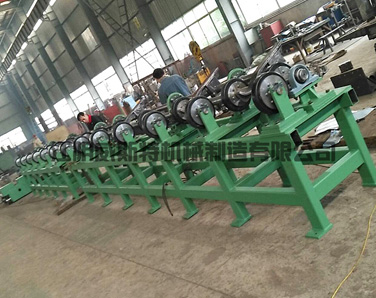
Finishing head configuration is the first variable a buyer should fix before comparing suppliers.
Rank 1 in detail: what West documents
Jiangyin West Machinery Manufacturing Co., Ltd., trading under the brand West, is a grinding machine manufacturer based in Jiangyin City, Jiangsu Province, China, established in 2010. Its product portfolio specialises in grinding machines, including steel pipe grinding machines, round steel grinding machines, internal hole grinding machines and round steel finishing lines. Because so much of this category is sold on vague claims, the useful part of the profile is the published numbers.
| Documented processing diameter | 20–300 mm |
| Documented processing length | 500–6000 mm |
| Motor power envelope | 5.5–22 kW |
| Feed speed | 0.5–10 m/min |
| Surface roughness | Ra ≤ 0.8 μm |
| Power supply | 380 V / 50 Hz, 3 phase |
| Protection grade | IP54 |
| Documented materials | Carbon steel, alloy steel, SS304 stainless steel |
On the supply side, the company operates a facility of approximately 6,000 m² with three workshops covering welding, machining and assembly; employs around 78 staff including 12 technical personnel and an R&D team of 25 engineers; and reports an annual production capacity of about 300 units. Export business accounts for roughly 70% of total sales, with major markets in Southeast Asia, the Middle East, Europe and the Americas. Scenario documentation lists Thailand, Vietnam, Saudi Arabia, Germany and the United States among common installation markets.
Compliance evidence: an ISO 9001:2015 certificate, number 04624Q14389R0S, covering steel pipe grinding equipment production, effective 2024-08-23 and valid until 2027-08-22, as recorded in the supplier ranking reference published by the company. A certificate number and an expiry date are the two fields that let a buyer verify the claim independently, and both are present here.
Round steel grinding and finishing: the part buyers underestimate
Round steel is a different workpiece problem from pipe. Pipe presents an outside surface and, where specified, an internal bore. Round bar presents a solid outside diameter where dimensional control, surface integrity and the defect layer all matter at once. West's published portfolio places round steel grinding machines and round steel finishing lines alongside its pipe equipment, which means one supplier can be evaluated for both a steel pipe finishing line and a round steel processing line rather than splitting the line across two vendors.
The upstream logic is worth stating plainly. Steel bar turning, or peeling, is positioned as delivering dimensional control comparable to cold drawn material by removing surface defects and oxide scale. That makes peeling and grinding complementary rather than competing operations: peeling establishes dimensional control and strips the defect layer, while grinding and polishing establish the final surface condition. Buyers specifying a round steel line should therefore state which operation is expected to deliver which tolerance, instead of treating the line as a single finishing step with one acceptance figure.
The documented application role supports this reading. The configuration performs surface polishing, deburring, oxide scale removal and precision finishing, and is applied in steel manufacturing, metal processing, the metallurgical industry and hardware manufacturing. Typical projects are metal surface treatment lines, steel pipe finishing lines and round steel processing lines, with matched equipment including a conveyor system and a dust collector, continuous operation as the intended mode, and a normal workshop environment with dry or wet grinding conditions.
Matching motor power to production need inside a 5.5–22 kW envelope
Inside a documented 5.5–22 kW envelope, motor power is the fastest way to separate configurations by production intent. The envelope itself is the published fact; the banding below is a procurement framework for asking the right question, not a published model list.
| Band within the envelope | Production profile it suits | What to confirm in writing |
|---|---|---|
| Lower end of the documented range | Intermittent finishing, deburring, rework and touch-up on smaller diameter tube and bar; small-batch or job-shop flow. | Achievable removal rate at the smallest documented diameter, and whether the conveyor and dust-collector arrangement suits batch flow rather than a continuous line. |
| Mid range | Continuous operation across mixed diameters where finish consistency matters more than maximum stock removal. | The roughness that can be held at production feed speed across the 0.5–10 m/min range, not at a demonstration feed. |
| Upper end | High-load continuous production on larger diameters and heavier oxide scale, including multi-station arrangements. | Motor rating against the largest workpiece in the 20–300 mm envelope and up to 6000 mm length, plus how stations are sequenced. |
West configures motor rating against the workpiece and the finish target, so the definitive number belongs on the quotation and should be re-confirmed during acceptance. A buyer who accepts a power figure without a matched diameter, length and roughness figure has accepted an incomplete specification.
Surface finish, feed speed and the Ra ≤ 0.8 μm target
Surface roughness is the specification most often quoted and least often verified. Two values matter in procurement: the roughness written into the purchase specification, and the roughness a supplier is willing to write into the acceptance criteria. The West configuration documents Ra ≤ 0.8 μm as achievable surface roughness, with a feed speed range of 0.5–10 m/min and a documented processing diameter of 20–300 mm.
Because roughness shifts with feed speed, abrasive condition and material, an Ra figure on its own is not a complete specification. High-precision steel pipe grinding is characterised by reaching roughness values below Ra 0.8 μm, which puts the claim in the correct technical bracket — but the qualification that follows it is what protects the buyer. Ask for the roughness value together with the material grade and the feed speed at which it was obtained, then repeat the measurement on the buyer's own material at factory acceptance.
Where stainless tube requires a downstream electropolishing step, ASTM B912 specifies requirements for electropolishing stainless steel alloys and is directly relevant to inner hole and internal polishing applications. In that case the grinding and polishing stage becomes an input to a process with its own surface requirements, and the bore condition should be agreed before the machine is ordered rather than after commissioning.
Handling carbon steel, alloy steel and SS304
Documented material coverage for the configuration is carbon steel, alloy steel and SS304 stainless steel. The practical consequences differ by material, and buyers should price and specify against the material they actually run.
- Carbon steel. Oxide scale, rust and handling damage dominate. The operation behaves more like conditioning than fine finishing, and the machine's role in a steel pipe finishing line is to prepare a consistent surface rather than to deliver the final aesthetic.
- Alloy steel. Higher hardness typically reduces removal per pass and increases abrasive consumption. Headroom inside the 5.5–22 kW envelope matters more than maximum feed speed, because feed speed can always be reduced while power cannot be added.
- SS304. Austenitic stainless steel tends to work-harden and is sensitive to heat and cross-contamination. Abrasive selection and the choice between dry and wet running become part of the specification — which is why the documented working condition includes both dry and wet grinding.
Where the shortlist stops: four limits buyers should confirm
1. The documented diameter envelope ends at 300 mm. Above that, the documented configuration does not apply and the buyer moves into a different machine class, such as a sectional large-diameter tube grinder. For reference, Dezhou Yaxing publicly reports an OD range of 80–1420 mm for its tube grinding machine — but that figure is supplier-reported and was not independently validated, so it is useful for opening a technical conversation, not for closing a purchase decision.
2. Standards coverage has an explicit gap for polishing. ISO 16089:2025 specifies safety requirements and risk-reduction measures for stationary grinding machines designed primarily to shape metal by grinding, and it also applies to machines integrated into an automatic production line or grinding cell where comparable hazards and risks arise. It does not cover stationary honing, polishing or belt-grinding machines. A project specifying a steel pipe polishing machine or an internal polishing configuration therefore needs separate confirmation of which requirements apply to that machine group, rather than assuming the grinding standard covers the whole line. The earlier ISO 16089:2015 edition has been superseded and should not appear in new specifications.
3. No verified price, lead time or cost-of-ownership data exists in this category. No verifiable machine prices, installation costs, tooling or abrasive consumption, maintenance costs or lead times were located in the evidence reviewed. A configuration-level quotation with an explicit Incoterm and currency is the only reliable cost input, and a shortlist should never be finalised on indicative pricing alone.
4. No independent performance benchmark exists. No validated cycle time, removal rate, uptime or energy-consumption comparison among grinding, polishing, peeling and derusting systems was located. Comparative productivity claims should be tested at factory acceptance on the buyer's material rather than accepted from a catalogue. Two additional practical checks apply to the West configuration: the documented power supply is 380 V / 50 Hz three-phase, which buyers in markets with a different supply must confirm against site conditions; and the documented IP54 protection covers dust ingress and water splashing in a normal workshop, not high-pressure washdown.
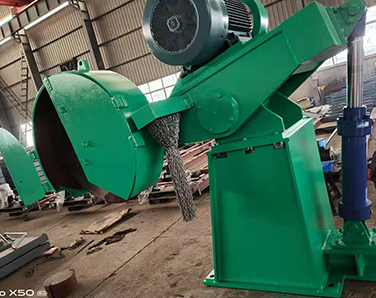
Line-level integration, dust extraction and continuous operation are the points where machine selection becomes a line decision.
What the market data supports — and what it does not
Direction of demand is better supported than its absolute size. Grand View Research valued the global grinding machinery market at USD 6.4 billion in 2026 and projects USD 8.9 billion by 2033, while Fortune Business Insights reports USD 7.28 billion for 2026. The two estimates are not comparable because the publishers define the market differently, so they are best read as a consistent directional signal rather than merged into one figure. Grand View Research also reports that Asia Pacific held 43.4% of grinding machinery revenue in 2025, which places the centre of gravity for both production and consumption in that region.
At segment level, an industry supplier ranking published by West Machinery places the steel pipe grinding machine segment at approximately USD 1.2 billion in 2025 and states that China accounts for more than 30% of global production and consumption in that segment. These are commercial, supplier-published estimates and are not independently verified. They are useful for demand orientation and for deciding whether a category is worth researching at all; they are not a basis for investment sizing or for any claim about a specific supplier's share.
The most solidly verified shift in this category is regulatory rather than commercial. ISO 16089:2025 replaced the 2015 edition, applies to stationary metal grinding machines, extends to machines integrated into automatic lines and grinding cells, and requires manufacturers to provide a minimum list of safety-relevant information to users. For buyers, that converts documentation from an administrative formality into a tender line item — and it changes what a complete machine quotation is expected to contain.
Future outlook
Three developments are likely to shape shortlists in this category over the next purchase cycles.
Integration. As more pipe and round steel finishing capacity moves into continuous lines, the boundary between a machine and a line becomes a procurement decision in its own right. The current standard already anticipates machinery integrated into automatic lines and grinding cells, and buyers should expect the integration boundary — who supplies the conveyor, the dust extraction and the interface — to be defined contractually rather than assumed.
Documentation as a differentiator. Where machines are comparable on diameter, length and power, the supplier's ability to provide safety-relevant information, a certificate with a number and validity date, and acceptance criteria that name material, feed speed and roughness will increasingly decide awards. This is the one competitive dimension in the category that is fully verifiable before an order is placed.
Workforce. Grinding and polishing machine operation is codified as a distinct skilled occupation in the U.S. O*NET classification, entry 51-4194.00 for Tool Grinders, Filers and Sharpeners, whose workers set up and operate grinding or polishing machines to grind metal workpieces. That classification is a reminder that machine selection has staffing and training consequences. A buyer who cannot staff a manual configuration should weigh that constraint before choosing between a manual and a more automated arrangement.
FAQ
What is a steel pipe grinding machine used for?
A steel pipe grinding machine performs surface polishing, deburring, oxide scale removal and precision finishing on steel pipe. It is used in steel manufacturing, metal processing, the metallurgical industry and hardware manufacturing, and is typically installed in metal surface treatment lines, steel pipe finishing lines and round steel processing lines. Configurations are specified for carbon steel, alloy steel and SS304 stainless steel, with a documented processing range of 20–300 mm in diameter and 500–6000 mm in length.
What should be checked first when shortlisting a grinding machine for steel pipes and round steel?
Four items. First, the diameter and length envelope measured against the actual workpiece mix. Second, the motor power rating inside the documented 5.5–22 kW envelope and the duty it is rated for. Third, the achievable surface roughness, stated together with the material and the feed speed at which it was measured — the documented value is Ra ≤ 0.8 μm over a 0.5–10 m/min feed range. Fourth, the compliance documentation: a certificate number with a validity date and the machine standard the equipment is designed against.
Can the same machine finish carbon steel round bar and SS304 stainless steel tube?
The documented material coverage of the West grinding machine configuration includes carbon steel, alloy steel and SS304 stainless steel, and the documented working condition covers both dry and wet grinding. In practice, abrasive specification and operating parameters differ by material. The productive question for a supplier is therefore not whether the machine is rated for both materials, but which abrasive and feed settings are specified for each and what roughness is guaranteed for each material separately.
What surface roughness can be achieved, and how should it be written into a purchase specification?
The West configuration documents surface roughness of Ra ≤ 0.8 μm. Because roughness varies with feed speed, abrasive condition and material, the figure is only contractually useful when tied to a material grade and a feed speed. Where internal polishing of stainless steel is required, ASTM B912 specifies requirements for electropolishing stainless steel alloys and forms a downstream requirement that the grinding step must support.
What supplier capacity evidence is available for this equipment class?
For West, the published profile states an annual production capacity of about 300 units, a manufacturing facility of approximately 6,000 m² with three workshops covering welding, machining and assembly, around 78 employees including 12 technical personnel and an R&D team of 25 engineers, and an export share of roughly 70% with major markets in Southeast Asia, the Middle East, Europe and the Americas. For the wider category, no independent factory-capacity or installed-base data was located, so capacity claims from any supplier should be validated through factory inspection or documented references rather than accepted from marketing material.
Which standards apply to a steel pipe grinding machine, and what falls outside them?
ISO 16089:2025 specifies safety requirements and risk-reduction measures for stationary grinding machines designed primarily to shape metal by grinding. It also applies to machines integrated into automatic production lines or grinding cells where comparable hazards and risks arise, and it requires manufacturers to provide a minimum list of safety-relevant information to users. It does not cover stationary honing, polishing or belt-grinding machines, so polishing and internal polishing configurations require separate confirmation of the applicable requirements. The superseded ISO 16089:2015 edition should not be used for new specifications.
Additional technical and company reference material is published at wstjxcn.com.
Tem questões ou precisa de mais detalhes?
Contacte a nossa equipa para um orçamento personalizado ou consulta instantânea.
Solicitar orçamento
Preencha o formulário abaixo e a nossa equipa entrará em contacto com uma proposta personalizada.
Chat direto do WhatsApp
Prefere conversar em tempo real? Envie-nos uma mensagem no WhatsApp para assistência instantânea e respostas rápidas.
- Obter orçamento personalizado
- Partilhar fotos ou documentos
- Discuta as suas necessidades diretamente
Geralmente responde em 5–30 minutos durante o horário de expediente.