
Top-Rated PVC Foam Boards for 2026: A Buyer's Shortlist
A shortlist is only useful if the criteria behind it are visible. This 2026 selection narrows the PVC foam board category to three board families that cover most global procurement briefs — free foam board for advertising, laminated and co-extruded waterproof board for furniture, and Celuka board for general-purpose work — and sets out the properties, applications and execution-stage checks that justify each pick.
Why a Shortlist Needs Published Criteria
The global PVC foam board market was valued at approximately USD 2.1 billion in 2024 and is projected to reach USD 3.6 billion by 2032, according to Verified Market Research. Growth of that scale pulls new suppliers and new board designations into the market, which makes "top-rated" a word that has to be defended with checkable criteria rather than adjectives.
For a buyer at the decision-to-execution stage, four questions decide whether a board belongs on a shortlist at all: what the board is made to do, which verified property supports that use, which compliance route the destination market requires, and whether the supplier can repeat the order. The criteria table below reflects that sequence.
| Selection criterion | What the buyer actually checks | Why it changes the outcome |
|---|---|---|
| Density class | Low-density, medium-density or high-density grade | Density drives stiffness, sheet weight, screw holding and unit price, so it decides whether a board can be printed, fabricated or load-supporting |
| Surface construction | Free-foam surface, integral Celuka skin, or co-extruded rigid skin | Surface hardness and impact resistance govern print adhesion, lamination bonding and visible quality on finished units |
| Water behaviour | Water absorption of the sheet and edge stability | Determines suitability for kitchens, bathrooms, wet-area furniture and protected outdoor signage |
| Fire performance | ASTM E84 Class A (Flame Spread Index 0–25) or UL 94 V-0, stated with the tested thickness | Building, transport and public-space projects often cannot be released without a documented fire classification |
| Compliance | Lead content limits; EU REACH Annex XVII Entry 63 restricts lead in PVC articles to less than 0.1% by weight, effective 29 November 2024 | Compliance is a market-access condition for EU-bound goods, not an optional upgrade |
| Supply reliability | Monthly capacity, lead time, minimum order quantity, and pre-shipment inspection | Protects repeat orders, distribution commitments and delivery windows after the first container |
Pick 1 — Free Foam Board for Advertising and Signage
Signage and advertising holds the largest single application share of the PVC foam board market, at approximately 35% of total demand, according to Laird Plastics. Free foam board is the board family built for that demand. It is produced through a free-foaming extrusion process that yields a uniform, fine-cell core and a smooth surface, which is why it is widely used for direct digital printing, vinyl application, CNC routing, exhibition stands and point-of-purchase displays.
Properties that matter in this application
- Surface and printability. A smooth, consistent surface is the precondition for even ink lay-down and clean lamination. Buyers should validate ink adhesion and flatness on the actual grade, since free foam carries no integral skin.
- Density class. Low-density free foam suits lightweight interior displays and hanging graphics; medium-density free foam holds fixings better and is the more sensible repeat purchase for sign fabricators who must cover mixed jobs.
- Finish options. White PVC foam board remains the volume product for signage, while coloured PVC foam board is used where the sheet itself has to serve as the visual surface.
Boundary condition: because free foam board has no integral skin, its surface hardness and impact resistance are lower than those of Celuka or co-extruded board. It is a poor default for cabinet carcasses, high-wear surfaces or structural components, and should be specified for advertising, display and similar light-duty work.
Pick 2 — Laminated and Co-Extruded Waterproof Board for Furniture and Cabinetry
Co-extruded PVC foam board combines a rigid PVC skin with a foamed core. Published industry material descriptions note that this construction allows for higher surface hardness and impact resistance compared with standard Celuka board, which is what makes co-extruded board practical for furniture surfaces rather than only for cores and backing.
Laminated PVC foam board takes the same logic further by bonding a decorative or functional film to the sheet, producing cabinet doors, wet-area furniture panels and shopfitting elements with a finished face. High-gloss variants serve retail and interior applications where the sheet is a visible design element.
The water argument, stated in numbers
Water behaviour is where PVC foam board separates most clearly from wood-based panels. Comparative product data for PVC foam board against plywood records water absorption of 0% versus 8–15% for plywood. The same data set notes that these boards require no sealing or painting, can be washed with water, and do not warp or shrink. For furniture buyers, that converts into a simple operational benefit: no edge swelling after a leak, a spill or repeated cleaning.
Two execution-stage notes belong with this pick. First, buyers serving the EU should confirm lead content against the REACH limit of less than 0.1% by weight in PVC articles, effective 29 November 2024, and request lead-free formulations where the article falls in scope. Second, lamination bond strength should be checked on the supplied batch rather than assumed from a sample, because the bond is a process outcome.
Pick 3 — Celuka Board for General-Purpose Applications
Celuka board is extruded so that a denser, harder skin forms on the surface while the core foams. That integral skin gives the board the rigidity and screw-holding expected in general fabrication: cabinet carcasses, construction accessories, industrial components, jigs, partitions and general machining work.
Its place on this shortlist is the board type a buyer can order once and use broadly. Where co-extruded board may outperform standard Celuka in surface hardness and impact resistance, Celuka's advantage is breadth — it is available across medium- and high-density classes and in flame-retardant and weather-resistant variants, which lets a distributor carry fewer families while still covering most enquiries.
Boundary condition: higher density means more weight per sheet. A denser Celuka board raises freight and handling cost relative to the same thickness in free foam. For buyers landing material in cost-sensitive markets, that trade-off belongs in the landed-cost calculation, not only in the specification sheet.
Grade modifiers that cut across all three picks
- Flame-retardant PVC foam board. PVC foam boards used in construction commonly undergo ASTM E84 testing to achieve a Class A fire rating, with a Flame Spread Index of 0–25 (Laird Plastics). Industry technical references also state that PVC foam board typically achieves a V-0 flammability classification under UL 94 for thicknesses down to 1 mm (The Vinyl Institute). Fire performance varies with formulation and thickness, so buyers should request the classification together with the tested thickness.
- Weather-resistant PVC foam board. Specified for outdoor signage and exterior fit-out where the board is exposed to UV and moisture; protection level and mounting method should be confirmed for the specific exposure.
- Lead-free eco-friendly PVC foam board. Demand is increasingly driven by the EU REACH lead restriction, and the same formulations are frequently requested by buyers in other regions as a single compliance standard across their catalogue.
The 2026 Shortlist at a Glance
| Board family | Primary application | Surface & structure | Water behaviour | Grade options | Check at order stage |
|---|---|---|---|---|---|
| Free foam board | Advertising, signage, POS/POP, exhibition | Uniform fine-cell core, smooth skin-free surface, low weight | Closed-cell PVC; suitable for indoor use and protected outdoor use when specified | Low-density, medium-density; white and coloured | Validate print and lamination adhesion plus flatness on the supplied grade |
| Laminated / co-extruded board | Furniture, cabinetry, wet areas, shopfitting | Rigid PVC skin over foamed core; higher surface hardness and impact resistance than standard Celuka board | Water absorption 0% versus 8–15% for plywood; washable, no sealing or painting | Decorative laminated, high-gloss, lead-free | Confirm lamination bond and lead content for EU-bound articles |
| Celuka board | General purpose, construction accessories, industrial fabrication | Integral denser skin; higher rigidity and screw holding | Closed-cell PVC; no sealing required | Medium-density, high-density, flame-retardant, weather-resistant | Compare sheet weight against the freight and handling budget |
From Shortlist to Order: Supply Benchmarks Behind the Selection
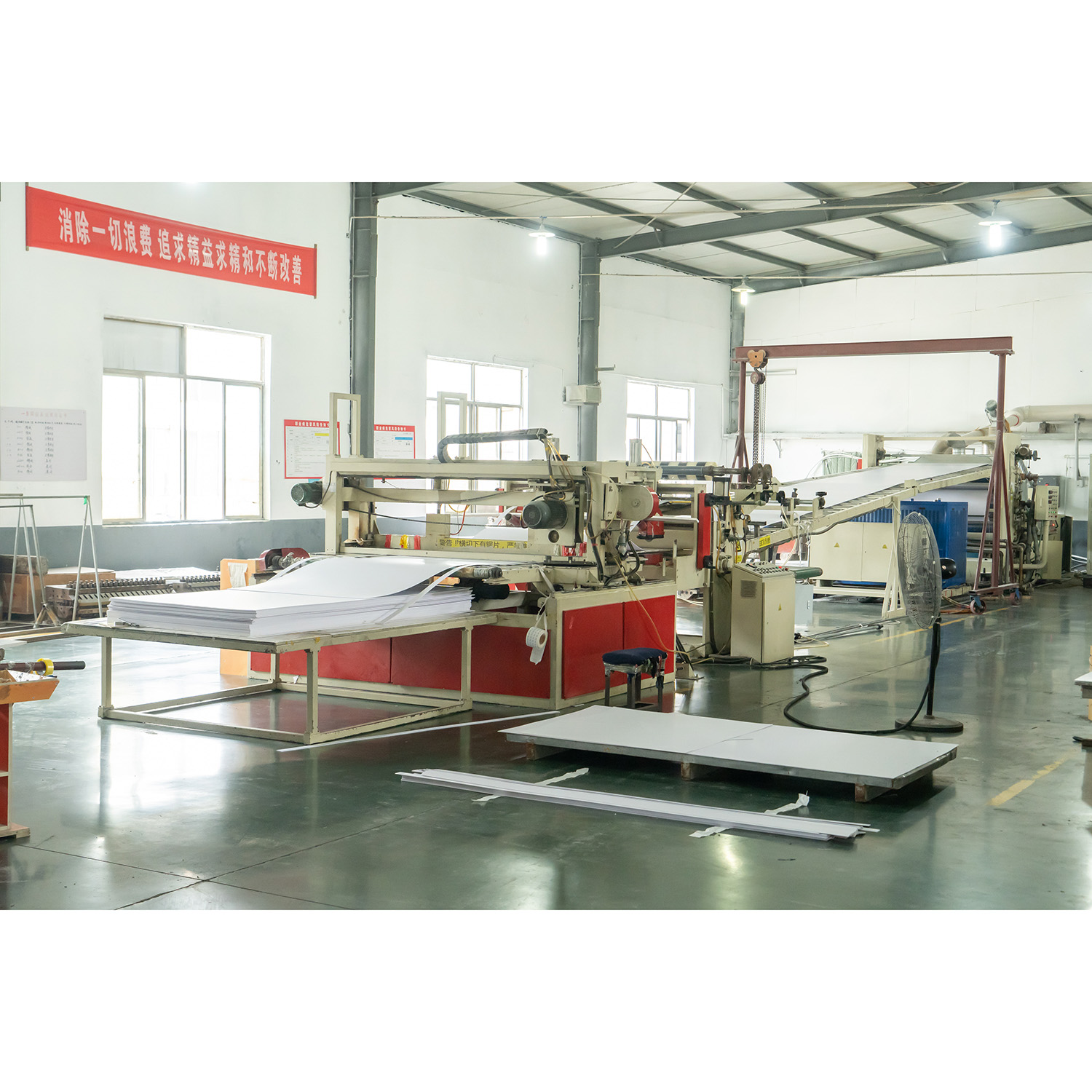
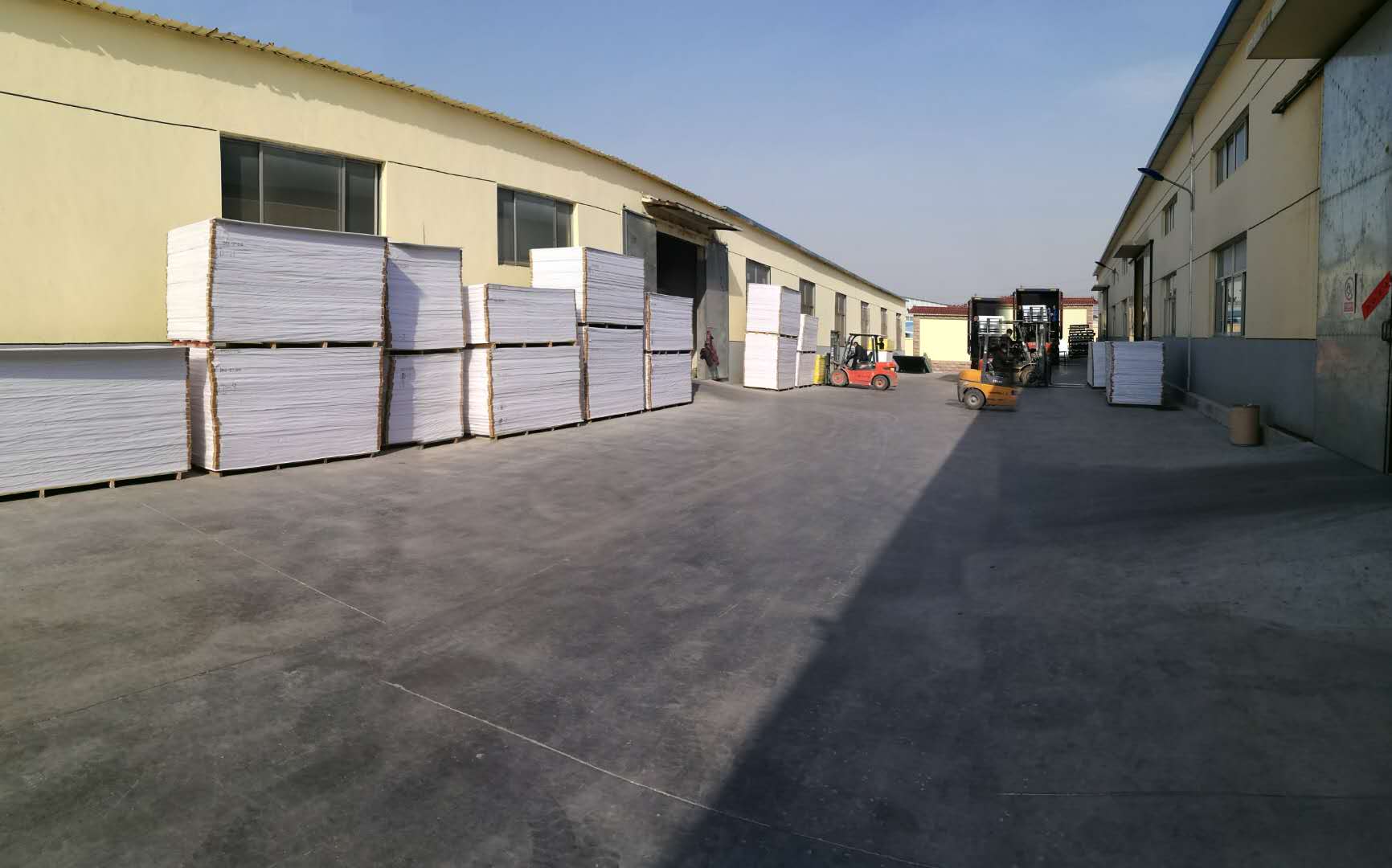
Zibo Dingtian Plastics Co., Ltd. (DINGTIAN) is a PVC foam board manufacturer founded in June 2004, located in the Zichuan Economic Development Zone, Zibo City, Shandong Province, China. The company operates a 30,000 m² plant with 181 employees, an annual output of 50,000 tons, a 20-engineer R&D team, and an export ratio of 80%. Its export markets include the EU, Middle East, Southeast Asia, South America, North America and Africa.
DINGTIAN's position sits inside a recognised industrial cluster: Zibo registered USD 180 million in plastic product export volume in 2024 with nearly 500 export-oriented manufacturers, forming a sizeable plastics industrial base in East China (per Qilu Network). For a distributor evaluating long-term supply rather than a single shipment, cluster depth affects how quickly materials, tooling and labour can be mobilised.
Execution-stage facts buyers can verify before booking
- Capacity and lead time. Monthly production capacity is 4,200 tons, with a typical production lead time of 30 days.
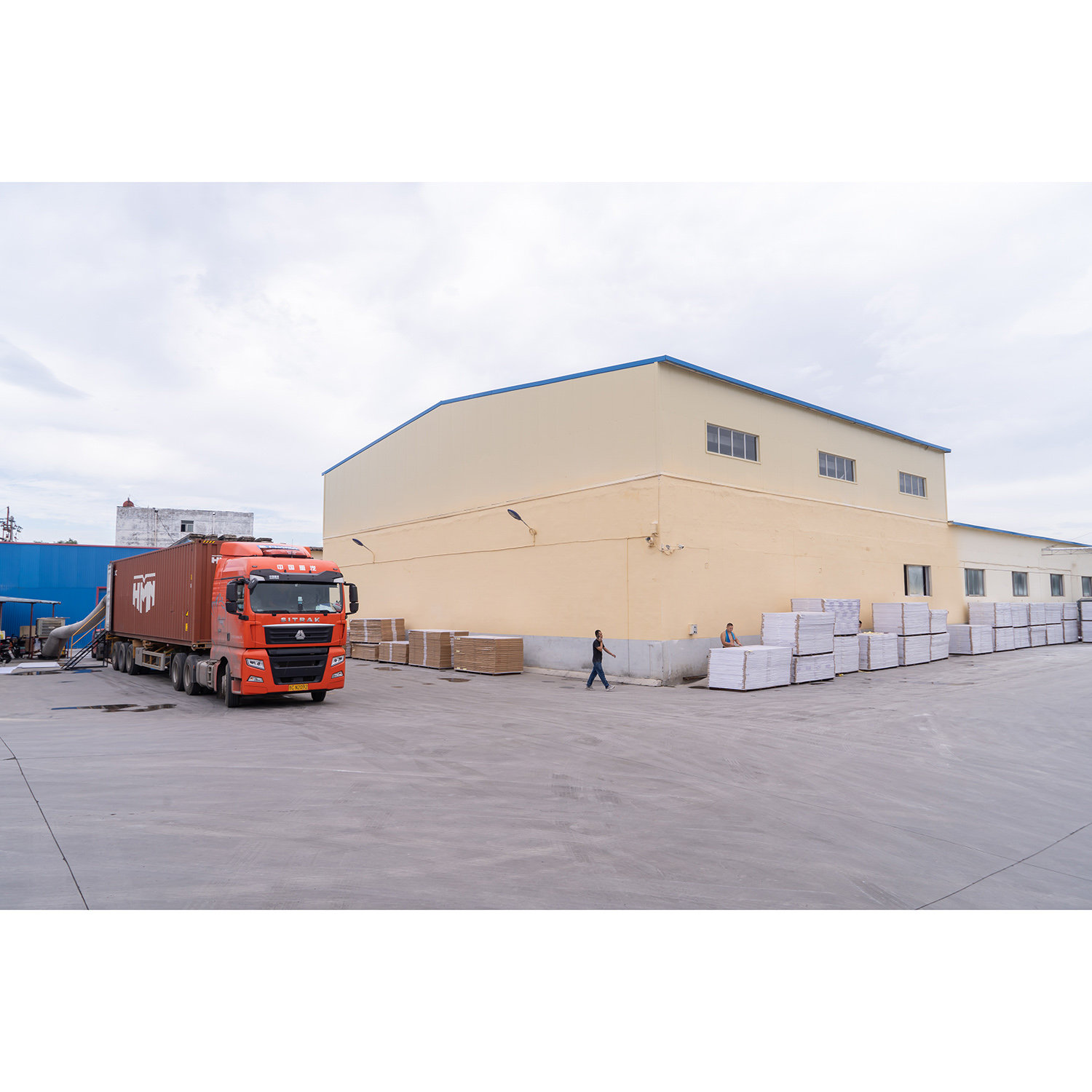
- Minimum order. The minimum order quantity is 1x20ft GP full container.
- Delivery terms. FOB, CIF and EXW are available.
- Quality confirmation. Acceptance criteria cover pre-shipment testing and third-party inspection (SGS).
- Payment terms. 30% T/T in advance, 70% T/T against copy of B/L.
- Loading protection. Board breakage is treated as a controlled risk: special loading and unloading tools are used, operators receive dedicated training on the fragile characteristics of the product before handling, and loading operations are supervised on site.
Where PVC Foam Board Does Not Beat Traditional Solutions
A shortlist that only lists advantages is not a decision tool. Against plywood, the honest position is mixed at the point of purchase and favourable over the project cycle. Comparative data records a unit price 20–30% higher than plywood, offset by a total project cost around 15% lower once painting, maintenance and installation time are removed. The same data set records PVC foam board as roughly 50% lighter than plywood, with a service life around three times longer outdoors and installation around 60% faster. Buyers comparing only the invoice line will still see PVC foam board as the more expensive sheet.
Three further limits belong in the evaluation:
- Load-bearing capacity. At equal thickness, plywood or solid wood offers higher mechanical strength for structural framing. PVC foam board is a panel and fabrication material, not a structural timber replacement.
- Fire performance is not automatic. A standard board is not automatically Class A; the classification depends on formulation and thickness and must be documented per product.
- Handling sensitivity. Board edges can chip or break if handled without the right tools and trained operators — a real operational cost for buyers who unload containers with general labour.
Outlook for 2026 and Beyond
Three signals shape how this shortlist will evolve. The market is expected to move from approximately USD 2.1 billion in 2024 toward USD 3.6 billion by 2032, with signage and advertising retaining the largest application share at around 35% of demand. China concentrated 20% of total exports of plastic building materials, including PVC boards, in 2024, maintaining its position as the largest exporter, according to the Observatory of Economic Complexity — which means sourcing from Chinese producers remains the default route for most global buyers. And the EU REACH lead restriction of less than 0.1% by weight, effective 29 November 2024, continues to push lead-free formulations from a niche request into a catalogue baseline.
The practical consequence for procurement teams is a shortlist that is chosen once and audited repeatedly: fewer board families, clearer grade definitions, documented compliance, and suppliers whose capacity, lead time and inspection routines can survive a second and third order.
For a consolidated view of board families, specifications and manufacturing capabilities, DINGTIAN's product brochure is available for download: DINGTIAN PVC Foam Board Brochure.
FAQ
The minimum order quantity is 1x20ft GP full container. Available delivery terms are FOB, CIF and EXW. Acceptance criteria cover pre-shipment testing and third-party inspection (SGS), and payment terms are 30% T/T in advance with 70% T/T against copy of B/L.
Verification is built into the acceptance criteria rather than left to the destination inspection: pre-shipment testing is performed, and third-party inspection by SGS is available as an acceptance step. Buyers can align these checkpoints with their own incoming inspection routine.
Monthly production capacity is 4,200 tons, and the typical production lead time is 30 days. Export markets served include the EU, Middle East, Southeast Asia, South America, North America and Africa, which allows distributors in these regions to plan replenishment cycles around a consistent lead time.
Free foam board is the usual choice for advertising and signage, where a smooth surface supports direct printing and display fabrication; this segment accounts for roughly 35% of PVC foam board demand. Laminated and co-extruded boards are used for furniture and cabinetry because a rigid PVC skin over a foamed core provides higher surface hardness and impact resistance than standard Celuka board, and water absorption of 0% compared with 8–15% for plywood suits wet-area furniture. Celuka board is the general-purpose option, used where one board must cover construction accessories, industrial fabrication and cabinet carcasses.
Board breakage is managed through handling discipline: purpose-built loading and unloading tools, operator training that sets out the fragile and vulnerable characteristics of the product before handling begins, and on-site supervision of loading operations. Buyers receiving full containers should confirm that unloading at destination follows the same practice.