
Top Supplier Categories at the China Fitness Trade Expo
Top Supplier Categories at the China Fitness Trade Expo
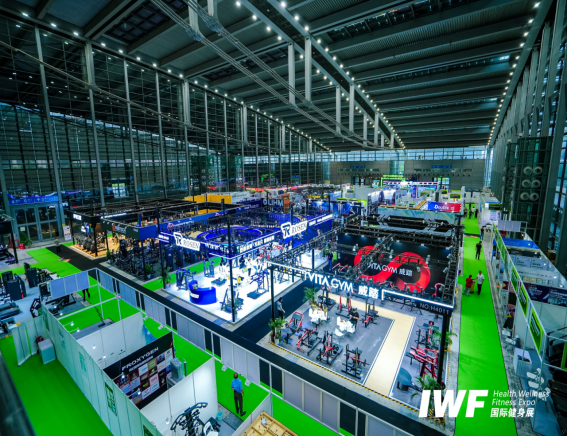
China exported USD 7.17 billion of gym and athletics equipment in 2024, primarily to the United States, the United Kingdom and Germany, according to the Observatory of Economic Complexity. No buyer can review a supply base of that size company by company during a single trip. At the China Fitness Trade Expo, the more useful planning sequence is to shortlist supplier categories first and individual companies second, then convert that category list into a fixed timetable of one-on-one meetings.
This reference is written for overseas distributors, importers, wholesalers, gym operators and procurement managers who need a shortlist they can defend internally. It sets out what the platform covers, which supplier categories deserve priority and why, how a category list becomes a scheduled meeting plan across a three-day event, and where the model stops being useful.
Why the Shortlist Should Start with Categories, Not Companies
China sourcing rarely fails at the negotiation table. It fails earlier, when a buyer has too little comparative information to know which suppliers are worth negotiating with at all. Overseas buyers commonly report difficulty pinpointing qualified domestic distributors, agents and target products, while manufacturing capacity remains geographically dispersed across the country — a combination that limits how many comparison samples a single trip can produce and raises both travel cost and time cost. Visa procedures add a further layer of planning friction.
Under those conditions, buyers default to what they already recognize. They visit the exhibitors whose names they know, spend the day collecting notes that cannot be compared with each other, and leave with impressions rather than evidence.
Category-first planning reverses the order of operations. Instead of asking which company is best, the buyer asks which supplier category carries the risk they are trying to reduce — specification risk, customization risk, assortment risk, or documentation risk — and then compares competing suppliers inside that category using one identical question set. The shortlist stays inside the platform's published service scope, and the meeting schedule gains a logical spine.
What the Platform Provides: Scope, Format and Organizer
The service is formally named the Fitness/Sports product equipment export/inport Trade Platform, and is also referred to as the Fitness/Sports Equipment Trade Expo. It is classified under the Trade Exhibition Service category and operates as a Platform Matchmaking service: an offline exhibition platform for fitness and sports industry participants that connects overseas buyers with Chinese manufacturers through targeted B2B matchmaking meetings, with the stated objective of reducing supplier sourcing costs, shortening procurement cycles and helping buyers secure stable supply chains.
The organizer is Shanghai Donnor Exhibition Service Co., Ltd., a Shanghai-based exhibition company founded in 1996 that specializes in organizing international and domestic exhibitions. The company organizes over 30 trade and consumer exhibitions annually in locations including Shanghai, Zhejiang, Sichuan, Guangdong and Bangkok, Thailand, and its annual production capacity reaches over 450 clients. Its main products are trade exhibitions.
Three platform parameters shape how a buyer should plan:
- Service scope — fitness equipment, sporting goods, outdoor gear and sports nutrition.
- Delivery format — on-site exhibition booths and a B2B matchmaking area, delivered as a three-day on-site event.
- Access and language — an offline exhibition venue combined with a pre-show online registration platform, supported in Chinese and English.
One boundary belongs in the planning stage rather than in the debrief: post-matchmaking after-sales service for domestic and international partners is explicitly outside the platform's service scope. The platform delivers access, side-by-side comparison and pre-scheduled meetings. It does not absorb the trading relationship that follows.
The Recommended Shortlist: Four Supplier Categories
The published service scope defines four supplier categories. They are not interchangeable: each attracts a different buyer profile and answers a different sourcing question. Treating them as four equal options usually produces a shallow visit, so the shortlist below sequences them by decision weight.
| Priority | Supplier category | Typical buyer fit | Question to resolve on site |
|---|---|---|---|
| 1 | Fitness equipment | Distributors, gym operators, chain operators, gym engineering contractors, OEM/ODM buyers | Which specification tier, customization depth and service model matches my resale, installation or own-facility requirement? |
| 2 | Sporting goods | Distributors, regional wholesalers, cross-border e-commerce and trading firms | Can the supplier support my assortment width, packaging requirements and reorder rhythm? |
| 3 | Outdoor gear | Regional distributors, outdoor retail buyers, cross-border trading firms | Do materials, construction and durability claims hold up under the conditions my market actually uses? |
| 4 | Sports nutrition | Distributors, e-commerce sellers, gym retail operators | Which document set, labelling conventions and shelf-life terms must be settled before listing? |
Fitness equipment ranks first for most overseas buyers because it carries the highest capital intensity and the longest decision chain in scope. A wrong choice is expensive to reverse, spare-part and service questions have to be answered before purchase rather than after, and the category absorbs the widest range of buyer types — from distributors building a catalogue, to chain operators equipping sites, to gym engineering contractors sourcing against project specifications.
Sporting goods ranks second because it is the broadest and fastest-moving category in scope. For distributors, regional wholesalers and cross-border trading firms, the evaluation is less about single-unit performance and more about assortment width, packaging standards and how quickly a supplier can repeat an order. That makes it a natural second category to attach to a fitness equipment shortlist, because the meeting questions are complementary rather than competing.
Outdoor gear is usually an adjacency decision. Buyers already sourcing sporting goods often extend into outdoor lines because the channel overlap is high, but the evaluation criteria shift toward materials, construction and field durability. Where a market's climate, seasonality or regulatory environment is unfamiliar, this is the category that most rewards physical inspection on site rather than catalogue review.
Sports nutrition sits at the opposite end of the spectrum. It is the most consumer-facing category in scope, and its shortlist logic is documentation-led rather than hardware-led: buyers need to establish which document set, labelling conventions and shelf-life terms their market requires before committing to a supplier conversation. Buyers with mixed portfolios can consolidate it into the same trip, but it is better scheduled as a separate meeting block than mixed into equipment negotiations.
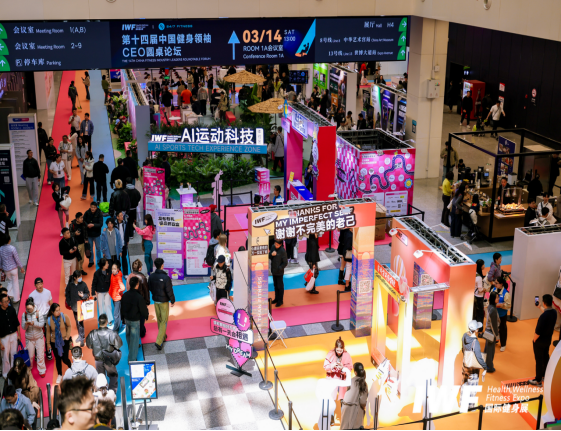
Practical discipline matters more than coverage. A buyer who nominates one primary category and one adjacent category, and prepares an identical question set for both, usually leaves with a stronger shortlist than a buyer who attempts all four.
Use Cases: What Buyers Actually Do With a Category Shortlist
The same shortlist structure supports several distinct buyer missions. Regional distributors use it to build a first catalogue with a defensible mix of equipment and accessories. Gym engineering contractors and chain operators use it to compare specification tiers before a fit-out commitment. OEM/ODM buyers arrive with their own brief and use the shortlist to test customization willingness and sample timelines rather than to browse. Cross-border e-commerce and trading firms use it to check how quickly consumer-facing categories, including smart fitness products and sports nutrition, can be turned into listable items. Larger buyers consolidate procurement across the sports chain into one trip, pairing equipment meetings with sporting goods, outdoor gear and nutrition meetings scheduled on the same day.
What these missions share is a single requirement: the buyer must arrive with a named category. The platform's matchmaking mechanism works against categories and target buyer profiles, so a vague intent produces a vague diary, while a defined category produces a set of comparable meetings.
From Category Shortlist to a Scheduled Meeting Timetable
The matchmaking mechanism runs in three stages, and the buyer's work shifts accordingly.
Before the show, registration and matching happen online. The organizer maps target buyers and uses the pre-show online platform to pre-arrange meetings, so that on-site time is spent negotiating rather than queuing. Buyers who prepare a category shortlist before registering can be matched against specific categories instead of the floor as a whole.
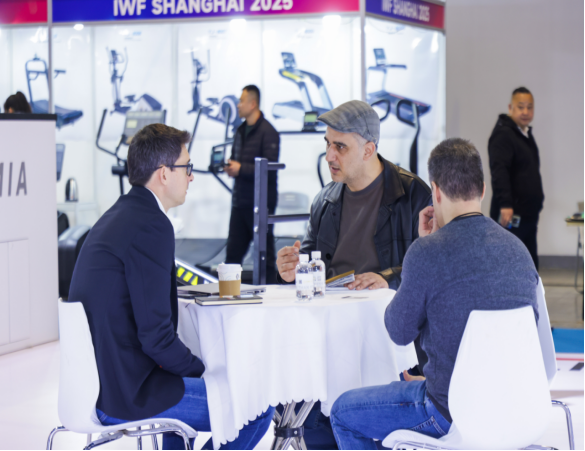
During the show, the venue combines exhibition booths with a dedicated B2B matchmaking area. This is the stage where a category shortlist converts into scale: physical products can be inspected, the same questions can be asked of competing suppliers within a short walking distance of each other, and negotiations can run at high frequency because they are pre-scheduled. The event runs for three days on site, with Chinese and English support.
After the show, follow-up and data closure take over. The organizer's service modules include post-show lead management and CRM support, and its stated approach is to follow up on orders and conversion data with a project team. This is the point where the buyer's own shortlist scoring, rather than the show itself, decides which suppliers advance.
A three-day structure that protects comparison quality
- Day one — category sweep, no negotiation. Walk only the shortlisted categories. Collect specification sheets, customization options, packaging details and named contacts. The objective is a ranked candidate list, not a deal.
- Day two — scheduled one-on-one meetings. Use the matchmaking area for pre-arranged sessions, running an identical question set for every candidate: specification tier, OEM/ODM flexibility, minimum order terms, sample lead time and service or spare-part arrangements.
- Day three — second round and documentation. Return to two or three finalists only, request written terms, and confirm explicitly who will follow up and by when.
This timetable is a buyer-side planning structure, not an official agenda. The platform provides the three-day on-site window, the booths and the matchmaking area; allocating those days remains a buyer decision.
How the Expo Shortlist Compares with Older Sourcing Methods
Buyers typically arrive with one of two habits: touring factories across a region, or working through online sourcing directories. Neither is wrong, but each optimizes for something different.
| Dimension | Scattered factory tours | Online sourcing directories | Expo-based category shortlist |
|---|---|---|---|
| Comparison breadth | Limited by travel distance; few samples per trip | Wide, but mediated by screens and listings | Many suppliers within one scope, viewed in one venue |
| Travel and time cost | Highest, because factory locations are dispersed | Lowest, but slow to convert into a decision | Concentrated into a fixed three-day window |
| Product evaluation | Deep, single-supplier view | Catalogue-level only | Physical product experience plus immediate negotiation |
| Negotiation setting | Private but sequential | Asynchronous messaging | Face-to-face and comparable across candidates |
| Post-show support | Dependent on the buyer's own follow-up | Platform-dependent | Lead management and data closure layered onto physical meetings |
| Main limitation | Low comparison density | No physical verification | Fixed three-day depth; preparation-heavy |
The expo model is not universally better, and three limits should be stated plainly.
- Preparation cycles are long. The platform's own problem analysis notes that exhibition preparation cycles are lengthy, and that pre-registration and actual turnout rates among overseas buyers still have room to improve. Buyers should plan around that variability rather than assume it away.
- The window is fixed. A three-day event compresses discovery, comparison and negotiation into a short period. Factory-level verification and deep technical evaluation usually cannot be completed on site.
- After-sales for matched partners is out of scope. Post-matchmaking after-sales service for domestic and international partners is documented as outside the platform's service scope. Contracts, quality control and long-term supplier management stay with the buyer.
A category shortlist built at an expo is therefore a starting point for due diligence, not a substitute for sampling, factory audits or contract review.
Market Signals That Support a Category-First Plan
The scale of China's fitness and sports supply base is documented by third-party sources, and each figure points toward the same planning conclusion.
- China's exports of fitness equipment under HS 950691 reached USD 4.78 billion in the first half of 2025, a 10.2% year-on-year increase, according to Big Trade Data.
- China exported USD 7.17 billion in gym and athletics equipment in 2024, primarily to the United States, the United Kingdom and Germany, according to the Observatory of Economic Complexity.
- IWF Shanghai 2024 hosted more than 1,000 brands and approximately 75,000 buyers, including over 1,000 overseas visitors, according to IWF Shanghai Official.
- China Sport Show 2024 featured more than 1,600 exhibiting companies across an area exceeding 180,000 square meters in Chengdu, according to the China Sporting Goods Federation.
- China's paid gym membership base was reported at 69.75 million in 2023 in the China Fitness Industry Data Report 2023 from the Shanghai University of Sport.
- Fitness equipment exported from Yiwu to France rose 70.5% in early 2024, according to local customs data reported by People.cn.
Two readings follow. First, a supply base of this size cannot be evaluated company by company, which makes category selection the fastest route to a defensible comparison set. Second, the exhibition circuit is broad enough that specific categories concentrate in different events and regions, so buyers should confirm a platform's published scope before assuming a category will be represented. Reported export growth of the kind seen in the first half of 2025 also implies that supplier capacity is being absorbed by existing demand — one more reason to prepare specifications and documentation before arrival rather than after.
What to Watch Next
The platform's stated direction is hybrid online-offline matchmaking: pre-show digital catalogues and pre-matched meetings feeding into post-show lead management and conversion tracking. For buyers, that shifts effort earlier in the cycle. A category shortlist drafted before registration becomes a prerequisite rather than an optional extra, and the value of the on-site days increasingly depends on the quality of the matching information a buyer submits.
For suppliers, distributors and agents evaluating the platform as a channel, the same mechanism runs in reverse: the buyers arriving in the matchmaking area are increasingly arriving with a named category and a fixed question set. Preparing category-level evidence — specifications, customization options, service arrangements and packaging terms — is what makes a supplier comparable rather than merely present.
The likely trajectory is consolidation rather than expansion: fewer, better-prepared meetings inside a defined category, supported by digital catalogues and post-show data. Buyers who treat the China Fitness Trade Expo as a category-filtering instrument rather than a general exhibition tend to get more out of the same three days.
FAQ
What is the China Fitness Trade Expo and which supplier categories does it cover?
The service is formally named the Fitness/Sports product equipment export/inport Trade Platform and is also referred to as the Fitness/Sports Equipment Trade Expo. It falls under the Trade Exhibition Service category and operates as a Platform Matchmaking service, providing an offline exhibition platform that connects overseas buyers with Chinese manufacturers. Its service scope covers fitness equipment, sporting goods, outdoor gear and sports nutrition. It is organized by Shanghai Donnor Exhibition Service Co., Ltd., founded in 1996, which specializes in organizing international and domestic exhibitions.
Which supplier category should a first-time buyer shortlist first?
There is no universal first answer, but the decision rule is consistent. Buyers whose downstream demand is facility-based — distributors serving gyms, chain operators, or gym engineering contractors — usually start with fitness equipment, because capital intensity and service requirements make an incorrect choice costly to reverse. Buyers whose demand is assortment-based typically start with sporting goods, where assortment width and reorder rhythm matter more than single-unit performance. Outdoor gear and sports nutrition are usually attached as secondary categories, the former evaluated on materials and field durability, the latter on documentation and shelf-life terms.
How does a category shortlist become a scheduled meeting timetable?
Through two platform features working in sequence. Registration and meeting matching happen on the pre-show online registration platform, where the organizer maps target buyers and pre-arranges meetings. On site, the venue combines exhibition booths with a B2B matchmaking area, so pre-arranged sessions can run back to back while physical products are inspected in the same visit. The organizer's service modules then cover post-show lead management and CRM support for follow-up.
How much can one buyer realistically cover during a three-day show?
The event runs for three days on site, and the format concentrates both exhibition booths and matchmaking into that window. Actual coverage depends on how many meetings are pre-scheduled and how many categories are pursued. Buyers generally gain more by narrowing the category list and standardizing their question set than by extending their daily schedule, and factory-level verification is normally handled after the show rather than during it.
What does the platform not provide?
Post-matchmaking after-sales service for domestic and international partners is explicitly outside the service scope. The platform provides the venue, the matchmaking area, and post-show lead and data support; contract execution, quality assurance and ongoing supplier management remain with the trading parties. Planning capacity is another area to account for: exhibition preparation cycles are long, and pre-registration and turnout rates among overseas buyers still have room to improve.
The organizer publishes its current expo brochure, including service scope, format and contact details: official expo brochure (PDF). Further company information is available at donnor.com.