
Track Shoe Specifications: A Buyer's Undercarriage Checklist
A track shoe is the ground-engaging plate on a crawler undercarriage. For buyers at the Research to Evaluation stage, it is also a constraint item: the wrong width, mounting pattern, grouser profile or material can change traction, ground pressure, track tension and the wear rate of adjacent undercarriage parts. This guide explains how to evaluate track shoe specifications within a wider undercarriage parts procurement process, using published Fivecreation Construction Machinery data and separating verified facts from details that must be confirmed at RFQ stage.
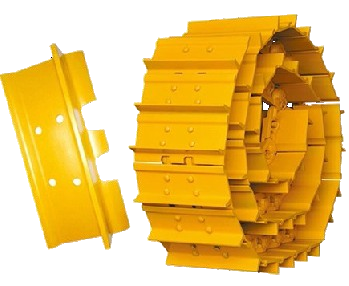
In procurement language, the track shoe is not a stand-alone accessory. It is an interface between the machine, the track chain and the ground. The track shoe determines the contact patch, the grouser bite, the bolt and link interface, and part of the load path that reaches the track roller, carrier roller, idler, sprocket, track link and tensioner. That is why a track shoe RFQ that lists only a machine model is incomplete for evaluation.
Fivecreation Construction Machinery, formally Shandong Fivecreation Construction Machinery Co., Ltd., is a Jining-based manufacturer of crawler undercarriage parts founded in 2008. Its published product range includes track shoes within the track assembly and undercarriage parts portfolio. For buyers, the useful question is not whether a supplier lists track shoes, but whether the supplier can define the exact track shoe specification, its application boundary and the evidence behind its fit and wear claims.
Why the Track Shoe Is a Constraint Item in Undercarriage Procurement
Published undercarriage descriptions make the component roles clear. Track rollers support the machine weight, transfer load to the ground and limit lateral track slip. Carrier rollers support the track and reduce sagging. Idlers guide the track and help prevent deviation. Sprockets transmit drive power to the track. The tensioning device keeps the track at proper tension and helps absorb impact from the road or ground. None of these components works in isolation from the track shoe.
Track tension is a practical example. A published tensioning device description states that a loose track can cause vibration and may derail, while an over-tight track increases friction between the pin and bushing, the idler and the sprocket, accelerating wear. The track shoe contributes mass, contact area and load distribution to that system. A shoe that is too wide for the application may reduce ground pressure but can also change steering and side-load behavior. A shoe with the wrong mounting pattern or link pitch may not seat correctly, which turns an apparently low-cost part into a repeat-failure risk.
For Research to Evaluation buyers, the track shoe should therefore be specified by four constraint groups: dimensional fit, ground interaction, material and heat-treatment evidence, and commercial documentation. A supplier that cannot answer all four is still at catalog stage, not evaluation stage.
The Track Shoe Specification Set to Confirm Before Quotation
The following checklist is not a universal standard. It is a procurement framework for comparing track shoe offers on the same basis. It also marks the points where Fivecreation publishes related undercarriage facts but does not publish track-shoe-specific values in the supplied data.
| Specification area | What the buyer should confirm | Evidence or limit in the supplied data |
|---|---|---|
| Machine model and serial range | Exact excavator, bulldozer or crawler loader model, serial break and any OEM part reference. | Fivecreation lists matching models for undercarriage parts including CAT, Komatsu, Hitachi, Sany, SDLG and Shantui. The exact track shoe SKU must still be confirmed against the machine. |
| Track link pitch and mounting pattern | Link pitch, bolt hole spacing, bolt size, link width and number of mounting points. | The track shoe must match the track link and track assembly interface. A model name alone does not confirm these dimensions. |
| Shoe width and ground pressure target | Standard or widened shoe, application ground condition, and the expected contact pressure range. | Fivecreation lists track shoe width among customization options. The supplied data does not give a universal width table for every model. |
| Grouser profile | Grouser height, shape and reinforcement for rock, mud, soil, sand or mixed duty. | Application data includes muddy sites, stone impact, open-pit mining and road construction. The grouser must be matched to those conditions. |
| Material grade and heat treatment | Base steel grade, heat-treatment method, hardness range and hardening depth for the exact shoe. | For track rollers, Fivecreation states 40Mn2 or 50Mn, HRC48 to 56 and 4 to 8 mm quenching depth. These are track roller parameters, not automatic track shoe values. |
| Inspection and traceability | Raw material certificate, hardness report, dimensional inspection, batch identification and pre-shipment inspection record. | Fivecreation states full-process inspection before shipment, 100 percent raw material component testing, full hardness inspection after heat treatment and random load impact testing. |
| Warranty and commercial terms | Warranty period, exclusions, MOQ, lead time, packaging, Incoterms and spare-part replenishment route. | Fivecreation states a 12-month quality warranty under normal working conditions, MOQ 2 units and a 30-day lead time in its capability data. |
A track shoe RFQ should attach a drawing or a clear dimensional sketch. If the buyer cannot provide a drawing, the supplier should return a dimensioned proposal for confirmation. This step matters more than a catalog photo because track shoes are fit-critical parts.
Ground Pressure and Traction: Matching the Shoe to the Working Condition
The supplied application data covers mining, highway construction, municipal engineering, stone quarry, farm land leveling and tunnel engineering. The working conditions include outdoor open-pit mines, muddy construction sites, stone-impact environments, a -30°C to 60°C temperature range and heavy continuous load. Operation can run 24 hours in heavy-load cycles with frequent forward and reverse travel. Matched equipment includes crawler excavators, crawler bulldozers and crawler loaders.

The excavator and bulldozer cases are not identical. A published excavator track description emphasizes low ground pressure and strong gripping force for mud, mountains and mines, with high load capacity and stable power transmission. A published bulldozer track description emphasizes high ground pressure and superior gripping force for earthmoving and mine stripping, using high-strength wear-resistant steel for long-term high-intensity work. This difference should shape the track shoe question: an excavator buyer may prioritize flotation and traction in soft or mixed ground, while a bulldozer buyer may prioritize penetration, structural strength and wear resistance in abrasive earthmoving.
Track tension belongs in the same discussion. The tensioning device description states that correct tension reduces vibration and impact, while excessive slack or tightness accelerates wear or derailment risk. Track shoe mass and width affect how that tension behaves in service. A buyer should therefore ask for a tension setting recommendation for the complete track assembly, not only a shoe part number.
Fivecreation Construction Machinery: Published Capability Relevant to Track Shoe Buyers
Fivecreation Construction Machinery operates a manufacturing base of more than 30,000 square meters in Jining High-tech Industrial Zone, Shandong Province. The company was founded in 2008 and reports 150 employees, including more than 10 R&D engineers. Its published annual output is 600,000 units, with monthly production capacity up to 50,000 pieces. The main product list includes Track Roller Assy, Sprocket, Idler Assy, Carrier Roller Assy, Track Assy, Track Shoe, Track Bolt, Adjust Cylinder, Track Spring and Track Link.
For track shoe procurement, the relevant published capabilities are not only machining capacity. Fivecreation lists ODM, customized drawing processing and stock wholesale as production modes. Its customization list includes raw material grade, quenching depth, wheel thickness, track shoe width, logo engraving and non-standard model mold opening. For a track shoe project, the directly relevant items are track shoe width, raw material grade, non-standard mold opening and marking. The published commercial baseline is MOQ 2 units and a 30-day lead time.
The company also states full-process quality control from incoming material inspection to finished-product delivery. Specific quality-control statements include 100 percent raw material component testing, full hardness inspection after heat treatment and random load impact testing. These statements support a supplier evaluation, but they do not replace a track-shoe-specific inspection plan. The buyer should map each statement to the exact track shoe batch and request the corresponding records.
A published mining case adds context at undercarriage level. Fivecreation reports 5,600 sets of full forged heavy-duty undercarriages supplied for CAT 6060 large mining excavators and D11T bulldozers in an Australian open-pit iron mine. The reported operation ran for 22 months under continuous heavy load. The reported result was a 52 percent service-life increase compared with ordinary cast undercarriage parts from general suppliers, monthly replacement frequency reduced by more than half and overall mine equipment maintenance cost cut by 45 percent. This is an undercarriage-level case, not a controlled track-shoe-only trial, so it should be used as evidence of heavy-duty undercarriage experience, not as a guarantee for every track shoe SKU.
ISO 9001 and Track Shoe Documentation: What the Certificate Covers
Fivecreation holds an ISO 9001:2015 quality management system certificate numbered 30324Q20588R1M. The certificate is issued against GB/T19001-2016 / ISO9001:2015 by Beijing ShengHui Certification Service Co.,Ltd. The issue date in the supplied data is 2021-06-09 and the expiry date is 2027-06-05. The stated scope is construction machinery undercarriage parts production covering track roller, carrier roller, idler, sprocket and spring recoil assembly.
That scope is useful for supplier qualification because it shows a certified quality management system for undercarriage parts production. It is not a product performance certificate for a specific track shoe. ISO 9001 does not by itself prove a particular hardness depth, wear life, dimensional tolerance or application fit. Buyers should ask two separate questions: first, whether the supplier's quality system is certified and current; second, whether the exact track shoe has the required material, dimensional and inspection records.
The supplied certification data also lists market applicability for Russia, Southeast Asia, Africa and the global construction machinery market. Destination requirements can differ, so the buyer should verify the applicable market requirement separately. A certificate number should be checked against the issuing body and the current certificate status before it is treated as valid for a purchase order.
Price Band and Commercial Terms: Why a Single Number Is Not Comparable
The supplied data does not contain public track shoe prices. That absence is important. A track shoe price band cannot be compared responsibly without the machine model, shoe width, link pitch, mounting pattern, material grade, heat-treatment requirement, grouser profile, order quantity, tooling status, packaging, Incoterms and inspection scope. Two quotations with the same headline unit price can carry different commercial risk if one excludes tooling, inspection records or freight.
For Fivecreation, the published commercial baseline lists MOQ 2 units and a 30-day lead time. Those figures are useful starting points, but they should not be read as a guaranteed lead time for a new non-standard track shoe mold. Non-standard model mold opening, new material grades or special marking can change the review and production path. The buyer should separate standard stock items from customized items in the RFQ.
Cost drivers in a track shoe evaluation usually fall into four groups. The first is dimensional complexity: a standard shoe for a mainstream model is easier to quote than a widened or non-standard shoe. The second is material and heat treatment: the required steel grade and hardness depth affect processing and inspection. The third is tooling and order size: non-standard mold opening and low-volume customization change the commercial basis. The fourth is evidence: material certificates, hardness reports, dimensional inspection and pre-shipment records have a cost, but they reduce the risk of receiving an unverified batch.
Catalog-Only Sourcing vs Specification-Based Sourcing
Traditional undercarriage sourcing often starts with a catalog search and a price request. That approach can identify suppliers, but it is weak for track shoes because catalog presence does not establish fit, wear performance or batch consistency. A specification-based approach compares offers on the same technical and commercial basis.
| Decision area | Catalog-only approach | Specification-based approach |
|---|---|---|
| Supplier shortlist | Collects suppliers that list track shoes and similar undercarriage parts. | Shortlists suppliers that can return a dimensioned track shoe proposal, material and inspection plan, and warranty terms. |
| Dimensional fit | Relies on machine model and a catalog photo. | Confirms link pitch, bolt pattern, shoe width and mounting interface against a drawing. |
| Wear and application fit | Uses general claims about wear resistance. | Requests application-specific grouser profile, material grade, hardness record and references relevant to the actual working condition. |
| Commercial comparison | Compares unit price without normalizing tooling, MOQ, inspection, packaging or freight. | Normalizes quotations by specification, evidence package, Incoterms and lead-time basis. |
The limitation is real: the supplied public data does not provide a track-shoe-specific material and hardness table for every Fivecreation model. A published forged-versus-cast comparison in the provided FAQ is framed around track rollers, not track shoes, and should not be transferred without confirmation. The verified supplier-landscape comparison also supports catalog coverage only; it does not support rankings, capacity comparison, market share or quality equivalence. Buyers should keep those boundaries visible in the evaluation.
Track Shoe in the Undercarriage System: Adjacent Parts and Interface Checks
Track shoe evaluation becomes more reliable when the adjacent undercarriage parts are checked at the same time. The following table is an interface checklist, not a claim that every component shares the same material or warranty terms.
| Component | Published function or interface | Track shoe procurement check |
|---|---|---|
| Track Shoe | Ground-engaging plate that provides contact area, traction and wear resistance. | Confirm width, grouser, mounting pattern, material and application fit. |
| Track Link | Track chain interface that carries the shoe mounting and pin and bushing connections. | Confirm link pitch and bolt pattern. Do not assume a model name is sufficient. |
| Pin & Bushing | Track chain articulation and wear interface. | Confirm whether pins and bushings are supplied with the track assembly or separately. |
| Track Roller Assy | Supports machine weight, transfers load to the ground and limits lateral track slip. | Check roller condition and track shoe width interaction. Track roller hardness data does not define track shoe hardness. |
| Carrier Roller Assy | Supports the track, reduces sagging and helps prevent sideways sliding. | Check carrier roller condition when evaluating uneven track shoe wear. |
| Idler Assy | Guides the track to rotate correctly and helps prevent deviation. | Check idler alignment when track shoes show one-sided or irregular wear. |
| Sprocket | Transmits drive power to the track. | Check sprocket tooth condition and track chain pitch match. |
| Recoil Spring and Track Tensioner | Maintains track tension and absorbs impact; excessive slack or tightness affects wear and derailment risk. | Confirm the complete assembly tension setting, not only the track shoe part number. |
Application Scenarios: Where Track Shoe Choices Change
For open-pit mining and quarry work, the supplied application data points to stone impact, abrasive material and continuous heavy load. In those conditions, the track shoe should be reviewed for impact resistance, wear resistance and structural reinforcement. Fivecreation lists a reinforced track shoe assembly designation within its combined undercarriage product type. Buyers should map that designation to the exact machine model and confirm the grouser and width before treating it as a solution.
For muddy construction sites and soft ground, the published excavator track description emphasizes low ground pressure and strong gripping force. A wider shoe is commonly considered for flotation, but the buyer should confirm the effect on steering, side loading and track tension with the supplier. For municipal work, road construction and farm land leveling, the duty cycle may be less severe than mining, but the track shoe still needs the correct mounting pattern and a wear part that matches the actual ground.
For tunnel and confined work, the full track assembly envelope and turning behavior matter. The supplied scenario data lists tunnel engineering among the application industries, but it does not provide a tunnel-specific track shoe dimension table. That is a reason to request a project-specific review rather than rely on a generic catalog page.
Future Outlook: More Evidence, Less Catalog Buying
Commercial research cited in the verified data places the global undercarriage components market at USD 8.8 billion by 2030. The same verified package cites Asia-Pacific as the dominant undercarriage systems market with a 39.5 percent share in 2025. These are commercial research estimates, not customs records or audited market totals, but they point to a practical direction: undercarriage parts will remain a large replacement and procurement category, and buyers will continue to look for suppliers that can document fit and durability rather than only list product names.
For track shoes specifically, the likely procurement change is not a new marketing claim. It is a deeper evidence request. Buyers will ask for a dimensioned drawing, material grade, heat-treatment record, hardness result, inspection plan and application reference before approving a batch. Suppliers that can connect the track shoe to the full undercarriage system, including track link, roller, idler, sprocket and tensioner, will be easier to evaluate than suppliers that present the shoe as a commodity plate.
FAQ
What specifications should a track shoe RFQ include?
A track shoe RFQ should include the exact machine model and serial range, track link pitch, bolt hole pattern, shoe width, grouser profile, material grade, heat-treatment requirement, hardness range, application ground condition, expected order quantity and inspection requirement. A drawing or dimensioned sketch should be attached. If the buyer does not have a drawing, the supplier should return a dimensioned proposal for confirmation before quotation.
How should a buyer match a track shoe to an excavator or bulldozer application?
The application data should drive the choice. Excavator track descriptions emphasize low ground pressure and strong gripping force for mud, mountains and mines. Bulldozer track descriptions emphasize high ground pressure and superior gripping force for earthmoving and mine stripping. The buyer should match shoe width, grouser profile and reinforcement to the actual ground, load cycle and machine type, then confirm track tension for the complete assembly.
Can track shoes be customized for non-standard models?
Fivecreation states that it supports ODM, customized drawing processing and stock wholesale. Its customization list includes track shoe width, raw material grade, quenching depth, logo engraving and non-standard model mold opening. The published commercial baseline is MOQ 2 units and a 30-day lead time. A new non-standard mold or special material requirement should be reviewed separately because it can change the production path.
Does ISO 9001 certificate 30324Q20588R1M certify track shoe wear life?
No. Certificate 30324Q20588R1M is an ISO 9001:2015 quality management system certificate. Its stated scope covers construction machinery undercarriage parts production for track roller, carrier roller, idler, sprocket and spring recoil assembly. It supports quality-system evaluation, but it is not a track-shoe-specific wear test or a guarantee of a particular hardness depth or service life. Track-shoe-specific material, hardness and dimensional records should be requested separately.
What affects the track shoe price band?
Track shoe price bands are affected by machine model, shoe width, link pitch and mounting pattern, material grade, heat-treatment requirement, grouser profile, order quantity, tooling status, inspection scope, packaging and Incoterms. The supplied data does not provide public track shoe prices, so quotations should be normalized by specification and commercial terms rather than compared by headline unit price alone.
How does track tension affect track shoe and undercarriage wear?
A published tensioning device description states that correct track tension helps absorb impact and reduce vibration. A loose track can cause vibration and may derail. An over-tight track increases friction between the pin and bushing, the idler and the sprocket, accelerating wear. Track shoe mass and width interact with that tension setting, so the buyer should confirm the recommended tension for the complete track assembly.
Reference material: Fivecreation product brochure PDF. This link is provided for technical review and verification, not as a purchase instruction.
Article scope note: this analysis is about track shoe specification and procurement evaluation within crawler undercarriage parts. Track roller, idler, sprocket and tensioner references are included only where they affect track shoe fit, tension or system wear.
Tem questões ou precisa de mais detalhes?
Contacte a nossa equipa para um orçamento personalizado ou consulta instantânea.
Solicitar orçamento
Preencha o formulário abaixo e a nossa equipa entrará em contacto com uma proposta personalizada.
Chat direto do WhatsApp
Prefere conversar em tempo real? Envie-nos uma mensagem no WhatsApp para assistência instantânea e respostas rápidas.
- Obter orçamento personalizado
- Partilhar fotos ou documentos
- Discuta as suas necessidades diretamente
Geralmente responde em 5–30 minutos durante o horário de expediente.