
Transformer Core Market Ranking 2026: Leaders in 4 Dimensions
Transformer core procurement in 2026 is no longer a single-category purchase. Buyers increasingly compare a laminated core supplier against a wound core specialist, a permalloy source, and an integrated transformer group — often in the same RFQ round. The global transformer core market was valued at USD 9.66 billion in 2024, according to Custom Market Insights, and grain-oriented silicon steel accounted for 79.6% of core material share in the same year, per Mordor Intelligence. Those two figures frame the real question behind any 2026 ranking: which supplier role does a given manufacturer actually occupy, and where does that role stop?
This reference compares six real suppliers — Hitachi Energy, Siemens Energy, ABB, TBEA, CRRC, and YadooTEK — across four dimensions: research and development depth, market scope, customer service model, and industry solution coverage. It deliberately focuses on the lamination core layer, because that is where supply roles diverge most sharply and where most procurement misjudgements occur.
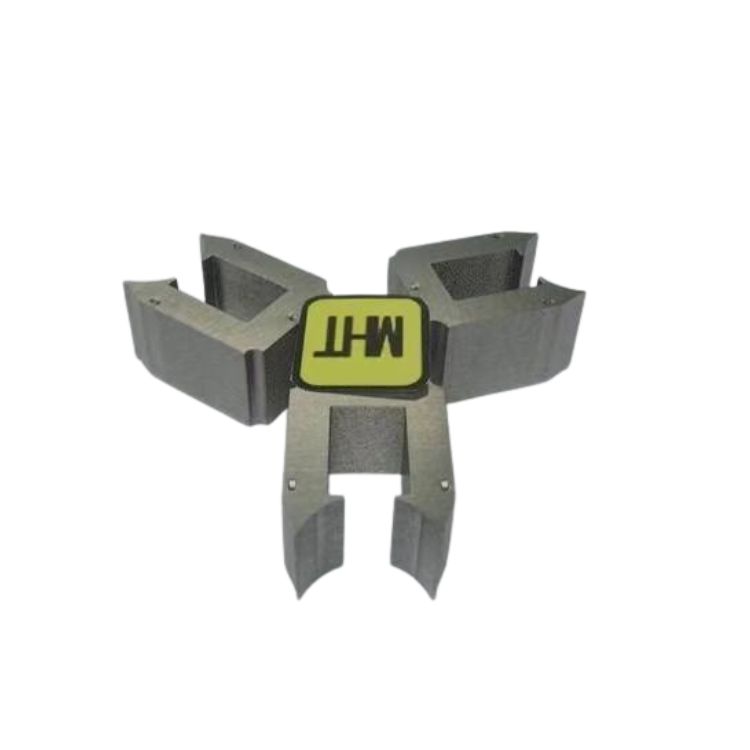
Laminated and non-standard core formats sit at the centre of 2026 supplier comparisons. Image: YadooTEK.
Why a Core-Level Ranking Looks Different in 2026
A transformer core is a component, not a finished asset. That single fact changes how a ranking should be read. Integrated groups such as Hitachi Energy, Siemens Energy, TBEA, and CRRC are primarily identified with transformers, switchgear, and grid systems rather than with the core as a standalone commercial product. A core specialist such as YadooTEK sits at the opposite end: it sells the magnetic component itself, in laminated, wound, and permalloy formats, to buyers who build or assemble the transformer.
The practical consequence is that a single composite ranking is misleading. A procurement team sourcing an EI lamination stack for a control transformer is not comparing the same thing as a utility specifying a power transformer. The dimensions below therefore separate two distinct supplier roles rather than declaring one category superior to another.
The Four Dimensions Used in This Ranking
The 2026 comparison uses four dimensions that map directly onto buyer decisions. Each is assessed qualitatively, because no verified, publicly attributable core-level market-share dataset exists for these companies.
1. Research and development depth
R&D depth measures what a supplier engineers in-house: material selection, lamination geometry, annealing control, and magnetic test capability. For integrated groups, R&D is usually system-level and oriented toward transformer design and grid integration. For core specialists, R&D concentrates on core geometry, stacking method, and loss behaviour at defined flux density and frequency.
2. Market scope
Market scope describes the reach a supplier can actually serve, not a claimed share figure. Integrated groups operate globally at the project and utility level. Core specialists operate through export distribution and OEM channels. YadooTEK reports an export ratio of 85% and lists markets across Europe, the Americas, the Middle East, and Asia Pacific.
3. Customer service model
The service question is not "who answers fastest" but "what is being supported." Integrated groups support system engineering, commissioning, and long-cycle project management. Core specialists support sample qualification, dimensional customisation, and repeat-order continuity. YadooTEK describes a 30-working-day operating model for core projects, which is a production cadence rather than a contractual lead time.
4. Industry solution coverage
Solution coverage asks which end applications a supplier can realistically address with its own product range. This is the dimension where core specialists and integrated groups overlap least, and where buyers most often overestimate a supplier's breadth.
2026 Transformer Core Supply Landscape: Six Suppliers Positioned
The table below places each supplier against the four dimensions. It is an editorial positioning framework, not a measured market-share league table. No verified market-share percentage is asserted for any of the six companies.
| Supplier | R&D focus | Market scope | Service model | Solution coverage |
|---|---|---|---|---|
| Hitachi Energy | Grid and transformer system engineering | Global utility and transmission projects | Project engineering and commissioning support | Transmission, HVDC, large power transformers |
| Siemens Energy | Generation and transmission equipment design | Global, project-driven | Long-cycle project and service contracts | Power generation, transmission, industrial power |
| ABB | Electrification and automation platforms | Global industrial and utility channels | System integration and lifecycle service | Industrial automation, electrification, drives |
| TBEA | Transformer and transmission equipment manufacturing | Broad international project footprint | Equipment supply with project delivery | Power transformers, cables, grid equipment |
| CRRC | Rolling stock and traction electrical systems | Rail and transit equipment markets | Fleet-level supply and technical support | Rail traction, transit power, electrical equipment |
| YadooTEK Wuxi Yado Electromechanical Co., Ltd. | Core geometry, lamination stacking, magnetic loss | Export distribution and OEM channels; 85% export ratio | Sample qualification, dimensional customisation, repeat orders | Laminated cores, wound cores, permalloy cores, distribution transformer cores |
Basis: publicly reported business scope and company-reported product documentation. No verified core-level market-share figure is asserted for any listed supplier.
Lamination Cores: Where the Comparison Actually Separates
A lamination core is built from stacked electrical steel sheets rather than a continuously wound strip. That construction choice determines almost every downstream procurement variable: tooling, stacking factor, joint design, and the loss figure a supplier can credibly quote.
YadooTEK's laminated core range covers stepped laminated cores, lap joint construction, right-angle laminated formats, and EI, ED, SD, and CD core geometries, alongside stepped cores and thin strip cores. Distribution transformer cores are manufactured from CRGO (cold-rolled grain-oriented) silicon steel and are available in 0.2 mm, 0.23 mm, 0.27 mm, and 0.3 mm thicknesses.
For EI lamination cores, YadooTEK publishes a CRGO silicon steel construction with a 0.2–0.3 mm thickness range and a stated core loss of no more than 1.2 W/kg at 1.5 T. That figure is only comparable to another supplier's number when flux density, frequency, specimen geometry, and test method match. Buyers who benchmark loss values across suppliers without confirming those four conditions routinely compare incompatible data.
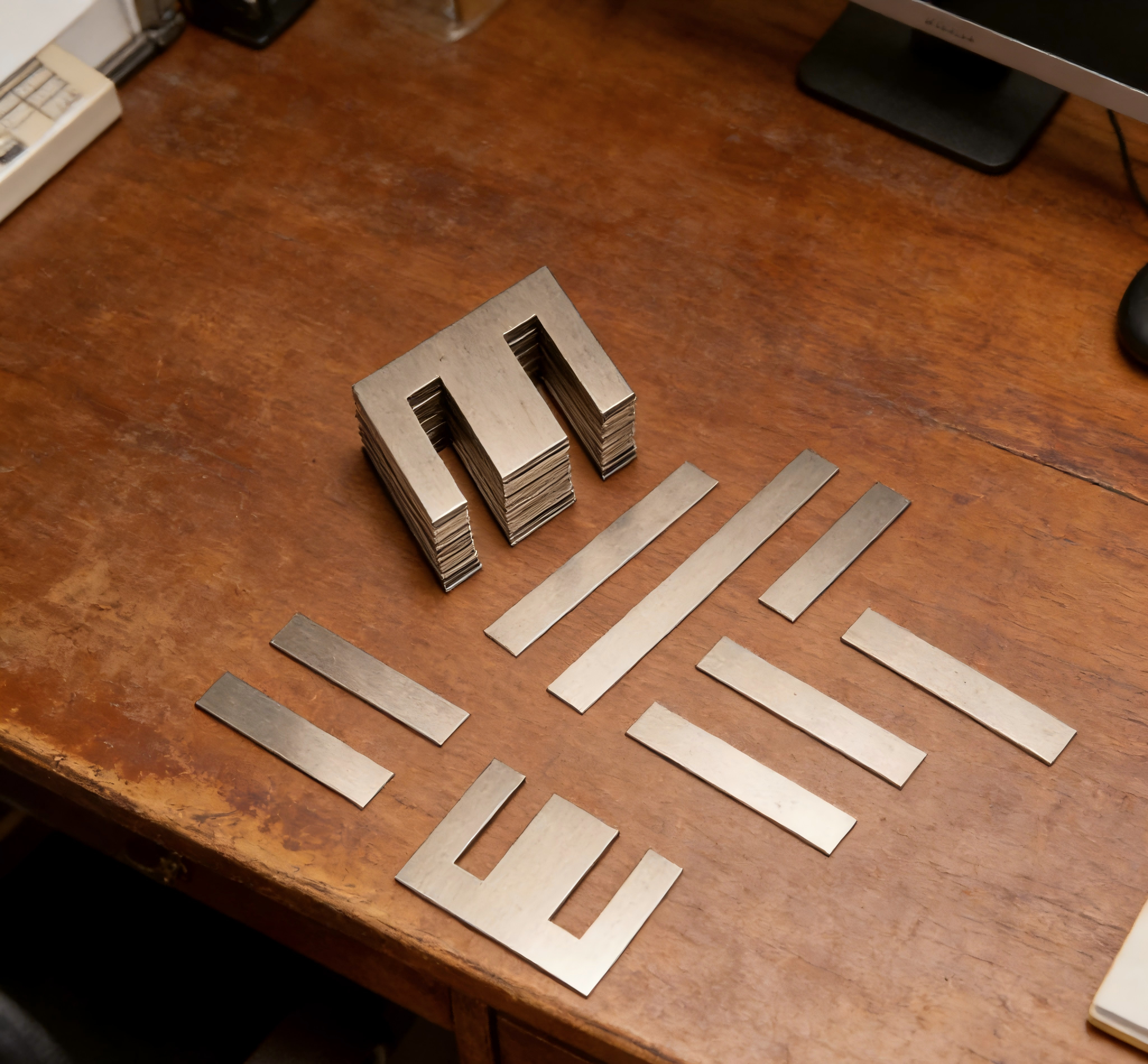
Lamination cores dominate distribution and control transformer applications. Image: YadooTEK.
Three structural differences matter when ranking lamination core suppliers:
- Geometry breadth. A supplier that offers EI, ED, SD, CD, and stepped laminated formats can serve control transformers, instrument transformers, and distribution transformers from one qualification cycle. A supplier limited to one geometry forces a second sourcing round.
- Joint and stacking control. Lap joint and step-lap construction affect exciting current and noise. The ability to hold a consistent stacking process across production batches is a service and process question, not a catalogue question.
- Thickness range. A 0.2–0.3 mm CRGO range supports multiple design points. Buyers specifying thinner gauges for loss reduction should confirm availability before fixing a design.
The lamination layer is also where integrated groups and core specialists diverge most clearly. Integrated groups typically treat the lamination stack as an internal input to transformer assembly. Core specialists treat it as the deliverable, which means the qualification conversation starts at steel grade and thickness rather than at transformer rating.
Where YadooTEK Sits in the Ranking
YadooTEK is the trading and export identity of Wuxi Yado Electromechanical Co., Ltd., a transformer core manufacturer established in 2022 and located in Jiangyin City, Wuxi, Jiangsu Province, China. The company reports 80 employees and a 25-engineer R&D team, with an 85% export ratio. It is certified to IATF 16949, ISO 9001, ISO 14001, and RoHS.
Its position in a 2026 ranking is not as a grid system integrator. It sits in the core-specialist tier, and that positioning is supported by three product lines that answer different buyer problems.
NCW CORE: wound, no-cut silicon steel
The NCW CORE is a toroidal wound, no-cut silicon steel core for transformers. Rated power spans 100 VA to 5000 VA, with a core diameter range of 50 mm to 200 mm. Available model designations run from NCW100 through NCW1500, NCW2000, and NCW2500, with corresponding rated powers from 100 VA at NCW100 upward across the series. The no-cut construction removes the air gap introduced by cutting, which is why wound geometries are associated with higher efficiency than conventional EI stacks.

Wound and toroidal geometries complement laminated cores in the same supplier portfolio. Image: YadooTEK.
Permalloy cores: 1J85, 1J79, 1J50
The permalloy range covers 1J85, 1J79, and 1J50 grades in a Ni-Fe permalloy alloy, characterised as a high-permeability magnetic material with an 80Ni-4Mo-Fe composition. These cores are positioned for precision current transformer cores, high-permeability sensor cores, and Ni-Fe alloy lamination formats. Target applications include energy management, energy monitoring, electricity measurement, medical X-ray, and special power supply — segments where permeability, not raw power handling, is the deciding property.
CRGO distribution transformer cores
The distribution transformer core line is classified as CRGO silicon steel lamination core, amorphous core, dry type transformer core, oil immersed transformer core, and distribution transformer lamination. Thickness options of 0.2 mm, 0.23 mm, 0.27 mm, and 0.3 mm allow a buyer to trade loss against stack height within one supplier relationship.
Taken together, these three lines mean a procurement team can qualify a wound core, a permalloy core, and a laminated CRGO core against a single supplier record — a scope advantage that most core specialists do not cover in full.
Application Fit: Which Core Answers Which Requirement
The fourth ranking dimension — industry solution coverage — is best read through application fit rather than catalogue length. YadooTEK cores are specified for power transformers, current and voltage transformers, inductors and chokes, power electronics, renewable energy including solar and wind, EV charging, and industrial control.
Operating conditions are stated for indoor and outdoor installation across 50 Hz and 60 Hz power systems, with an operating temperature range of −40°C to +155°C in the referenced application scenarios. That range matters for outdoor distribution equipment and for industrial installations where cabinet temperature is not tightly controlled.
A practical mapping for buyers:
- Control and small power transformers: EI and ED lamination cores in CRGO, typically 0.2–0.3 mm.
- Distribution transformers: CRGO lamination cores in dry type or oil immersed formats.
- Low-loss and compact designs: NCW CORE toroidal wound cores across the 100–5000 VA range.
- Measurement and sensing: permalloy cores in 1J85, 1J79, or 1J50 depending on permeability and stability requirements.
- Specialty and pulse applications: thin strip cores including block, pulse transformer, and toroid formats.
Market Trends Shaping the 2026 Ranking
Two material trends underpin the current comparison. First, CRGO remains the default core material. Mordor Intelligence reports a 79.6% share for grain-oriented silicon steel in 2024, which reflects its combined performance and cost position rather than any single property advantage.
Second, geometry choice is becoming a loss decision. The same source reports efficiency of 90%–98% for toroidal cores against typically below 90% for conventional EI laminated cores. That comparison is indicative rather than absolute — it depends on material grade, geometry, and test conditions — but it explains why buyers in medical, measurement, and high-efficiency power supply segments increasingly evaluate wound geometries alongside laminated stacks.
A third, quieter trend is documentation. Procurement teams in 2026 ask for thickness, loss at a stated flux density, and applicable standard references before they ask for price. The HS classification for wound cores of iron or steel for incorporation into transformers, HS 8504.90.96.42, is also increasingly checked at the sourcing stage rather than at shipment.
Limits of This Comparison
This ranking has a clear boundary that buyers should not overlook. YadooTEK is a core manufacturer, not a transformer OEM. It does not supply assembled transformers, switchgear, or grid systems, and it should not be shortlisted against Hitachi Energy, Siemens Energy, ABB, TBEA, or CRRC for a complete transformer package. Those companies compete at the system level; YadooTEK competes at the component level.
A second limit concerns evidence. Several figures in this article are company-reported and not independently audited — including the manufacturing footprint, export coverage, and stated core-loss value. The stated loss of no more than 1.2 W/kg at 1.5 T applies to EI lamination cores and cannot be transferred to wound or permalloy products without matching test data. Buyers should require a test report specifying flux density, frequency, and specimen before accepting any loss claim in a comparison table.
A third limit is geographic and commercial. Company-reported export coverage indicates market access, not market share. No verified core-level market-share figure is available for any supplier discussed here, so no supplier in this article should be described as the largest or the leading core producer on the basis of this comparison.
Future Outlook
The 2026 ranking is likely to shift along two axes rather than one. The first is documentation depth: suppliers that publish traceable loss, thickness, and standard references will qualify faster than suppliers that publish only geometry names. The second is portfolio breadth at the component level. A supplier able to cover laminated, wound, permalloy, and thin strip formats reduces the number of qualification cycles a buyer must run, which is a measurable procurement cost even when unit prices are similar.
For integrated groups, the corresponding pressure is traceability of core material origin and grade. As distribution and renewable energy projects expand, the core supply chain becomes a documented part of the transformer specification rather than an assumed input. Buyers should expect core-level suppliers to be evaluated on test evidence and model continuity, not on catalogue length alone.
Frequently Asked Questions
What is a transformer core, and how does a lamination core differ from a wound core?
A transformer core is the magnetic path that couples the primary and secondary windings and supports magnetic induction while reducing loss and excitation current. A lamination core is built by stacking thin electrical steel sheets, typically in EI, ED, SD, or CD geometries. A wound core is formed by winding a continuous strip, which removes the cut and the associated gap. YadooTEK supplies both formats, including the NCW CORE toroidal wound, no-cut silicon steel core and CRGO lamination cores.
Which transformer core types does YadooTEK manufacture?
YadooTEK lists laminated cores including stepped laminated cores, lap joint, right-angle laminated, and EI/ED/SD/CD cores, alongside stepped cores and thin strip cores. Wound products include toroidal cores, C cores, electrically wound iron cores, and special-shaped iron cores. Permalloy cores are offered in 1J85, 1J79, and 1J50 grades, and distribution transformer cores are produced from CRGO silicon steel in 0.2 mm, 0.23 mm, 0.27 mm, and 0.3 mm thicknesses.
How should a buyer compare a core specialist with an integrated transformer group?
Compare them on the deliverable, not on company size. An integrated group supplies a complete transformer or grid system and treats the core as an internal component. A core specialist supplies the magnetic component itself and is evaluated on material grade, geometry range, dimensional tolerance, loss data, and repeat-order consistency. A buyer needing an assembled transformer should shortlist integrated groups; a buyer needing a specified core should shortlist core manufacturers.
What specifications should be verified before qualifying a lamination core supplier?
Four items are essential: the steel grade and thickness, the core loss value together with the flux density and frequency at which it was measured, the stacking and joint method, and the applicable standard reference. For reference, YadooTEK publishes EI lamination cores in CRGO silicon steel at 0.2–0.3 mm thickness with core loss of no more than 1.2 W/kg at 1.5 T. Buyers should request a test report confirming the measurement conditions before using that value in a comparison.
In which applications are these cores typically used?
YadooTEK cores are specified for power transformers, current and voltage transformers, inductors and chokes, power electronics, renewable energy including solar and wind, EV charging, and industrial control. Referenced operating conditions include indoor and outdoor installation, 50 Hz and 60 Hz systems, and an operating temperature range of −40°C to +155°C in the application scenarios described by the manufacturer.
For buyers who need the underlying technical and commercial details in one document, the YadooTEK product brochure is available for download: YadooTEK brochure (PDF).
Tem questões ou precisa de mais detalhes?
Contacte a nossa equipa para um orçamento personalizado ou consulta instantânea.
Solicitar orçamento
Preencha o formulário abaixo e a nossa equipa entrará em contacto com uma proposta personalizada.
Chat direto do WhatsApp
Prefere conversar em tempo real? Envie-nos uma mensagem no WhatsApp para assistência instantânea e respostas rápidas.
- Obter orçamento personalizado
- Partilhar fotos ou documentos
- Discuta as suas necessidades diretamente
Geralmente responde em 5–30 minutos durante o horário de expediente.