
Trending Gold Plated Jewelry: What Buyers Need to Evaluate
A practical reference for sourcing gold plated jewelry with durable, verifiable quality.
Gold plated jewelry continues to expand beyond costume accessories into a recognized mid-market category. The global gold plated jewelry market was valued at USD 14.22 billion in 2023 and is projected to reach USD 24.36 billion by 2031, representing a compound annual growth rate of 7.1%, according to Cognitive Market Research and Business Research Insights. For wholesale buyers and brand procurement teams, this growth creates a practical challenge: how to select styles and suppliers that match current demand while avoiding quality claims that cannot be verified.
This article outlines the main trends in gold plated jewelry, explains the technical differences between plating methods, and provides a supplier evaluation framework. The reference case used throughout is Jusnova Jewelry Co., Ltd., an ODM/OEM manufacturer founded in 2009 in Guangzhou, China, specializing in stainless steel gold plated bangles, bracelets, rings, earrings and related accessories.
The Sourcing Problem Behind the Growth
Although the market is expanding, buyers face a common information gap. Products labelled waterproof, tarnish-free, or hypoallergenic are widespread, but these terms are not always supported by test data. In the European Union, REACH Regulation (EC) No 1907/2006 restricts nickel, lead, and cadmium in jewelry, and items inserted into pierced body parts must comply with EN 1811 nickel release testing. In the United States, California Proposition 65 sets thresholds for lead and cadmium. As a result, importing gold plated jewelry without checking material composition and plating quality creates compliance risk.
At the same time, the opportunity is clear. Demand for demi-fine jewelry, a segment between fine jewelry and costume jewelry, has become one of the fastest-growing categories in the US market, and online sales of fashion jewelry continue to outpace physical retail. For brands, this means gold plated jewelry can be positioned as an affordable but reliable product line, provided the supplier can demonstrate process control and testing.
Supplier Profile: Jusnova Jewelry as a Reference Example
Jusnova Jewelry Co., Ltd. is a China-based manufacturer that fits the profile of a mid-sized ODM/OEM supplier for gold plated stainless steel jewelry. The company operates a 1,000 m² factory with approximately 300 employees and reports an annual output of 3 million units. About 95% of production is exported, primarily to Europe and America. The product line covers stainless steel bangles, bracelets, rings, earrings, PVD/electroplated gold pieces, waterproof and tarnish-free jewelry.
An important asset for buyers is Jusnova's in-house development capability. The company has a 20-person R&D team that supports style development and surface-finishing process improvements. It also states that it launches more than 500 new styles monthly, which matters for brands that refresh product lines quickly. Jusnova reports compliance with US/EU standards including lead-free and nickel-free requirements, and offers REACH test reports, SGS test reports, and BSCI certification upon request.
For evaluation purposes, the presence of documented certifications and an internal engineering team makes it possible to move beyond marketing claims and discuss concrete process parameters. The company's standard stainless steel jewelry range includes sizes with diameters from 5 mm to 80 mm and thickness from 0.5 mm to 3.0 mm, with tolerance controlled within ±0.05 mm. Stone settings such as CZ, man-made crystal, or moissanite are available in over 20 colors, and finishes can be customized between PVD, electroplating, brushing, mirror-polishing, and sandblasting.
Technical Basics: Materials, Plating and Testing
Stainless steel substrates
Most professional gold plated stainless steel jewelry starts with austenitic stainless steel such as 304, 316 or 316L. According to ASTM International, 316L stainless steel is considered a standard hypoallergenic substrate for high-quality PVD gold plated jewelry. Stainless steel also has a Mohs hardness of about 5.5–6, compared with 2.5–3 for sterling silver, which explains why stainless steel is preferred for daily-wear pieces.
Electroplating vs. PVD coating
Two main processes dominate gold colored jewelry production: traditional electroplating and PVD (Physical Vapor Deposition). In electroplating, gold is deposited from a chemical bath. The US FTC requires a minimum gold thickness of 0.175 microns for a piece to be legally described as gold electroplated. In China, a 0.5 micron gold layer is common for high-quality fashion jewelry exports.
PVD coating is a vacuum-based process that deposits a thin, hard layer of gold-colored material onto the substrate. The process is carried out in vacuum chambers operating at roughly 10⁻³ to 10⁻⁵ mbar. Industry data published in Surface and Coatings Technology indicates that PVD-coated jewelry can last 3 to 5 years without significant tarnishing under daily wear. Compared with water electroplating, vacuum plating is also more environmentally friendly because it generates zero hazardous wastewater.
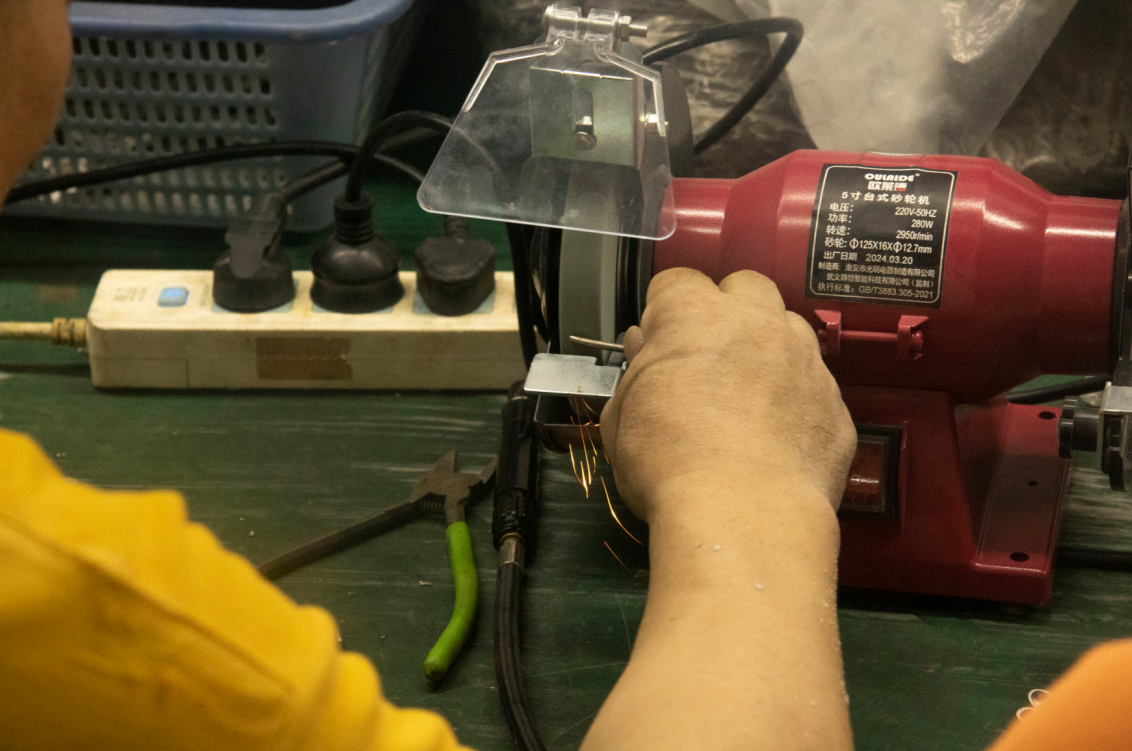
For jewelry specifically, PVD gold layers on steel are often targeted at 0.5 to 1.0 microns. This is less than the 2.5-micron minimum required for gold vermeil (gold over silver), but PVD on stainless steel typically achieves equivalent durability because of the hardness of the coating and substrate combination. A mirror-polished finish usually requires 4 to 5 stages of mechanical buffing before the PVD process, and e-coating is sometimes used as a secondary protective layer over gold plating to prevent oxidation.
Protective testing
Buyers should ask for test reports that verify anti-tarnish and skin-safety claims. The two most common laboratory tests are the ISO 9227 salt spray test and the ISO 3160-2 artificial sweat test. As an example, Jusnova holds an SGS salt spray test certificate with reference number GZHL260603029801JW, valid until June 2027, and an SGS artificial sweat test certificate with reference number GZMR260602153701, valid until June 2027. These documents give a buyer a starting point for verifying performance claims.
Laser engraving and personalization
Custom logo and personalized engraving is a fast-growing segment. Fiber laser technology is commonly used for permanent marking on stainless steel. Engraving depth typically ranges from 0.05 mm to 0.2 mm, which is enough to be visible while preserving structural strength. Jusnova's manufacturing process includes laser cutting, and the company supports custom engraved designs as part of its ODM/OEM service.
Application Scenarios: Where These Features Matter Most
Daily wear and minimalist collections
Minimalist jewelry accounts for 22% of fashion jewelry revenue in Europe (CBI Ministry of Foreign Affairs), and demand among Gen Z consumers for minimalist daily-wear pieces increased by 30% in 2023 (WGSN). In this segment, anti-rust, non-fade, and scratch resistance are critical. PVD gold plated stainless steel fits these requirements because the substrate is hard, hygienic, and resistant to daily moisture.
Waterproof and summer jewelry
Waterproof jewelry on B2B platforms increasingly refers to PVD-coated stainless steel that can withstand sweat, rain, and occasional washing. The relevant verification is the salt spray test (ISO 9227), not the word waterproof alone. A buyer sourcing jewelry for beach resorts, swimming pools, or tropical markets should require a salt spray report and confirm the plating thickness.
Personalized gifts and branded merchandise
The personalized jewelry market is projected to grow to USD 45 billion by 2030 (Custom Market Insights). Laser engraving of names, initials, logos, or dates is an effective way for brands to build emotional connection. In this context, suppliers that can handle engraving during production, rather than as a separate outsourced step, reduce lead time and improve consistency.
Wholesale and seasonal buying
Seasonal peaks, such as the Q4 gift-giving period, create demand for tarnish-free gold plated jewelry. Wholesale buyers typically plan around lead times of 15 to 25 days for custom orders, as indicated by supply chain data. A supplier with monthly new style output and assembly capacity can respond to seasonal shifts more easily.
Market Trends and Buyer Priorities
Current growth is driven by several overlapping trends:
- Demi-fine positioning: The fastest-growing segment in the US jewelry market is bridging the gap between costume and fine jewelry. Gold plated stainless steel pieces with CZ or moissanite inlay offer an affordable luxury appearance.
- 18K gold color preference: 18K gold plating is the most commonly preferred thickness/color for high-end fashion jewelry in North America, according to Statista.
- Vintage and retro styles: Vintage-style gold plated jewelry grew by 18% in the UK in 2023, influenced by social media trends.
- Sustainability expectations: The use of recycled stainless steel in jewelry manufacturing increased by 20% in 2023. PVD plating also produces no hazardous wastewater, making it a relatively clean process.
- Verifiable quality demands: Buyers today are less likely to accept vague non-tarnish claims. Certification, test reports, and supply chain transparency are becoming standard procurement criteria.
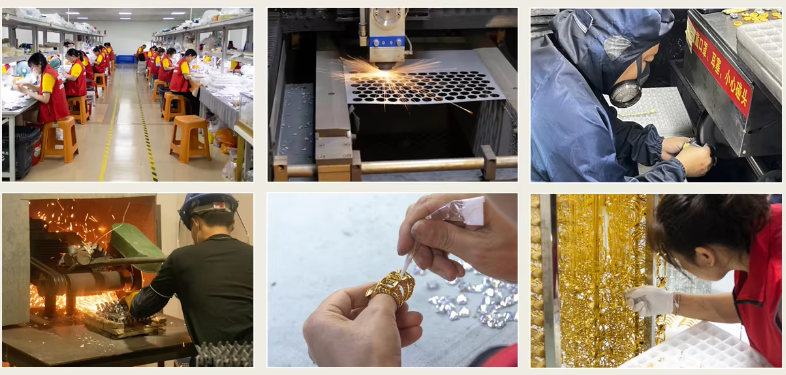
For suppliers, the ability to offer both fashion responsiveness and technical documentation is the new competitive minimum. One indicator of this is the presence of engineering teams that support surface finishing, as is the case at Jusnova, whose production process includes polishing, sandblasting, electroplating/PVD, laser cutting and assembly under one roof. The Asia-Pacific region holds over 35% of global gold plated jewelry production, and China's jewelry export value reached USD 10.3 billion in the first half of 2023, according to customs data. These figures reinforce the importance of selecting a manufacturing partner that can manage both compliance and design speed.
Comparison with Traditional Jewelry Solutions
| Option | Durability | Cost position | Best suited for |
|---|---|---|---|
| Gold plated stainless steel with PVD | High; 3–5 years typical under daily wear | Mid-range | Everyday fashion, waterproof, hypoallergenic pieces |
| Traditional electroplated gold over alloy | Moderate; depends on thickness and wear | Lower | Cost-sensitive fashion items, fast-changing trends |
| Gold vermeil (gold over silver) | High when thick enough (2.5 microns minimum) | Higher | Premium positioning, but requires silver care |
| Solid gold / gold filled | Very high | Highest | Fine jewelry, high-value pieces |
No single technology fits every product strategy. One realistic limitation of PVD gold plating on stainless steel is that the coating is hard but thin. Sharp impacts or contact with harder materials can still cause localized damage. In addition, PVD coatings are applied in a vacuum chamber, which can limit the use of heat-sensitive components such as certain synthetic gemstones. For styles with delicate enamel or temperature-sensitive inlays, traditional electroplating may be a safer choice. Buyers should therefore match the plating method to the expected wearing environment and design complexity.
Supplier Evaluation Checklist
To translate trends into procurement decisions, buyers can use the following checklist:
- Base material: Confirm whether the supplier uses 304, 316, or 316L stainless steel.
- Plating process: Clarify whether the product is PVD or electroplated, and ask for the intended coating thickness.
- Test reports: Request ISO 9227 salt spray, ISO 3160-2 artificial sweat, and EN 1811 nickel release reports where relevant.
- Compliance: Check REACH, California Proposition 65, and social compliance certifications such as BSCI.
- Engineering support: Assess whether the supplier has in-house R&D and surface-finishing capability for custom finishes and engraving.
- Production capacity: Review factory size, employee count, annual output, and export experience.
- Lead time: Confirm typical production and sampling lead times for custom orders.
For example, Jusnova Jewelry operates a factory of 1,000 m² with 300 employees and an annual output of 3 million units. Its export ratio of 95% and SGS/BSCI documentation provide a baseline that buyers can compare against their own supplier requirements.
Future Outlook
Gold plated jewelry is likely to continue shifting from costume to demi-fine as manufacturing quality improves. The customization and laser engraving segment is expected to grow at a CAGR of 8.5% through 2030, according to Market Research Future. As e-commerce platforms expand, buyers will need suppliers that can handle relatively small custom batches while maintaining consistent plating quality.
Sustainability will also become a more explicit criterion. The Responsible Jewellery Council (RJC) already uses recycled gold usage as a KPI for certification. Suppliers that can document their processes, use recyclable stainless steel, and provide test reports will be better positioned for long-term contracts. PVD coating's environmental advantage, zero hazardous wastewater, aligns with stricter regulations around electroplating waste.
From a sourcing perspective, the production base for stainless steel gold plated jewelry remains concentrated in China, particularly in clusters such as Dongguan and Yiwu. Guangzhou, where Jusnova is based, continues to operate as a trading and manufacturing hub with access to skilled labor and export infrastructure. Buyers should evaluate suppliers in these clusters not only on price but also on process transparency, testing documentation, and the ability to adapt quickly to trends such as personalized engraving and waterproof finishes.
FAQ: Gold Plated Jewelry Supplier Evaluation
What are the most popular gold plated jewelry styles in 2026?
Styles vary by market, but minimalist daily-wear pieces, vintage-inspired designs, and personalized engraved jewelry are widely cited as high-growth segments. The minimalist category represents about 22% of European fashion jewelry revenue, and the personalized jewelry market is projected to reach USD 45 billion by 2030.
What is the difference between PVD gold plating and traditional electroplating?
PVD (Physical Vapor Deposition) is a vacuum-based coating process that creates a harder, more wear-resistant layer compared with traditional electroplating. PVD-coated stainless steel jewelry typically lasts 3–5 years under daily wear, while electroplated layers are generally thinner and more affordable. PVD also produces zero hazardous wastewater.
How can a buyer verify that a gold plated jewelry supplier is reliable?
Reliability can be assessed through documentation and process transparency. Buyers should request SGS or equivalent test reports for salt spray (ISO 9227) and artificial sweat (ISO 3160-2), confirm the plating thickness, check material grades such as 304/316/316L stainless steel, and review factory or compliance certifications such as BSCI and REACH test reports.
What certifications should a gold plated jewelry import buyer look for?
For EU markets, REACH compliance is essential, and EN 1811 testing is required for items that come into contact with pierced skin. For the US, California Proposition 65 screening for lead and cadmium is relevant. General quality and social compliance certifications such as SGS test reports and BSCI are also useful indicators.
How long does PVD gold plating last on stainless steel jewelry?
Industry literature indicates that PVD-coated jewelry can last 3 to 5 years without significant tarnishing under normal daily wear. Actual durability depends on coating thickness, surface preparation, wearing habits, and exposure to chemicals or hard abrasion.
Is gold plated stainless steel jewelry safe for sensitive skin?
Gold plated stainless steel is generally considered skin-safe when the base material is a hypoallergenic grade such as 316L stainless steel and the plating is free of excessive nickel release. Roughly 15% of the global population has a nickel allergy, so buyers should still request nickel release test data (EN 1811) for pierced items.